Kristin Baker
Kristin Baker Paints Speed Into Being
Artist Spotlight · The Collection Editorial
There is a particular moment in motor racing when the world collapses into pure sensation, when speed becomes so total that the eye can no longer parse individual forms and everything dissolves into streaked light and compressed space. Kristin Baker has spent the better part of two decades making paintings that live inside that moment. With a growing international exhibition history and a dedicated collector base drawn to the fierce originality of her practice, Baker stands as one of the most compelling abstract painters working in America today, an artist whose canvases feel simultaneously ancient and urgent, rooted in the physical reality of bodies in motion. Baker was born in 1975 and came of age during a period when American painting was navigating its way through the long aftermath of postmodernism, searching for new reasons to believe in gesture, surface, and scale.
Kristin Baker
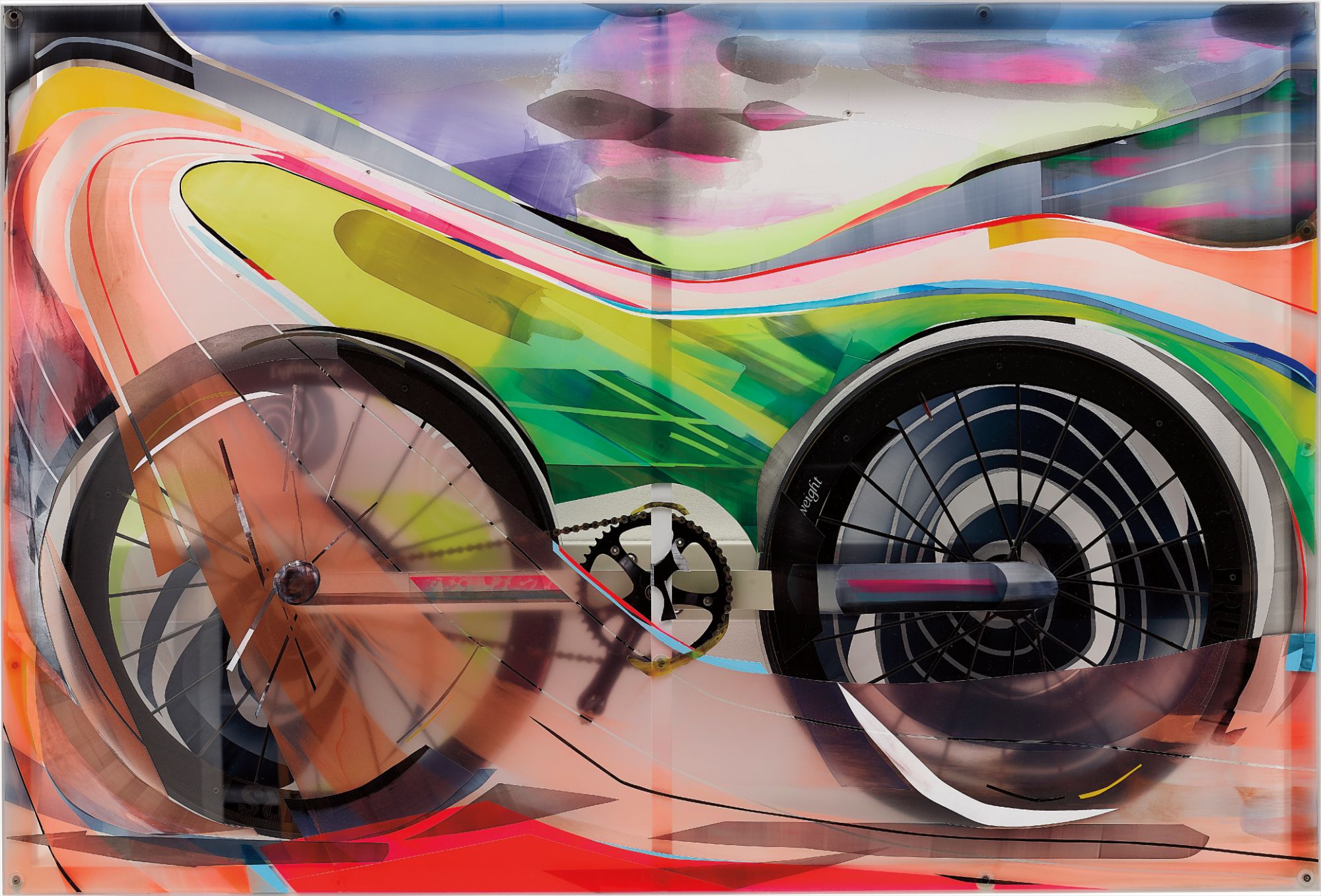
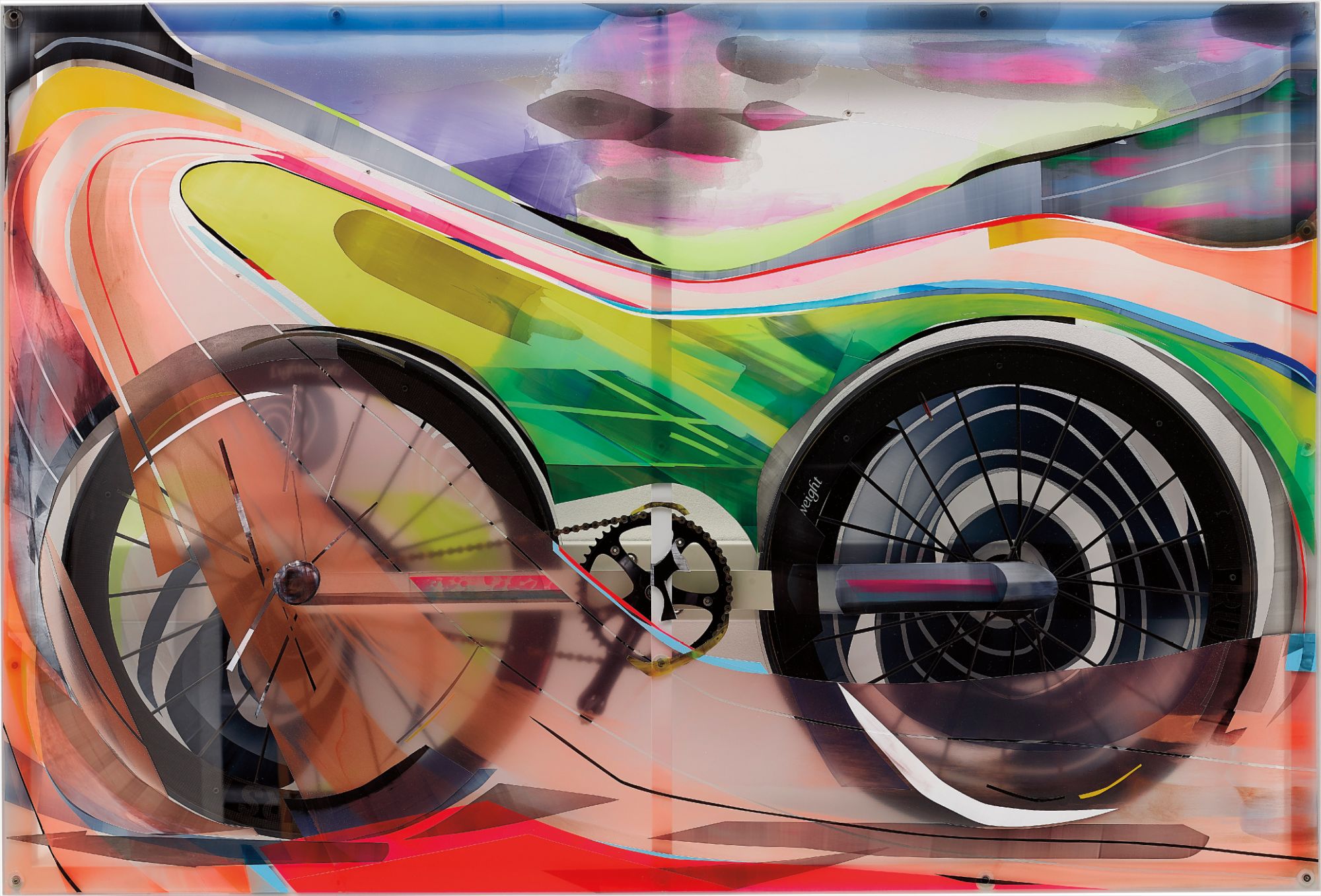
Cheras to Dunc Gray, 2011
She studied at the School of Visual Arts in New York and later at Yale University, where she earned her MFA, and it was in those formative years that she began to understand abstraction not as a retreat from the world but as a direct encounter with its most overwhelming experiences. The visual culture of extreme sports, particularly the photographic and televisual language of racing and motorsports, offered her a vocabulary that felt genuinely alive: blurred, kinetic, saturated with risk. What distinguishes Baker's development as an artist is the rigor with which she has pursued a specific set of material questions. Her process involves pouring, squeegeing, and scraping acrylic paint across surfaces, building up and destroying layers in a physical performance that mirrors the controlled violence of the sporting events that inspire her.
Over the years she has expanded her material choices well beyond traditional canvas, embracing Mylar, PVC, and aluminium as supports, each of which transforms the way light moves through and across her work. This willingness to think of the painting as an object with its own physical presence, not simply a picture on a wall, has kept her practice in constant productive tension with the history of abstract painting. Among the works available through The Collection, several stand out as particularly revelatory examples of what Baker can achieve. "Cheras to Dunc Gray," created in 2011, is an especially ambitious piece, combining acrylic and acrylic powder on aluminium, steel, and rubber to create something that hovers between painting and sculpture.
Kristin Baker
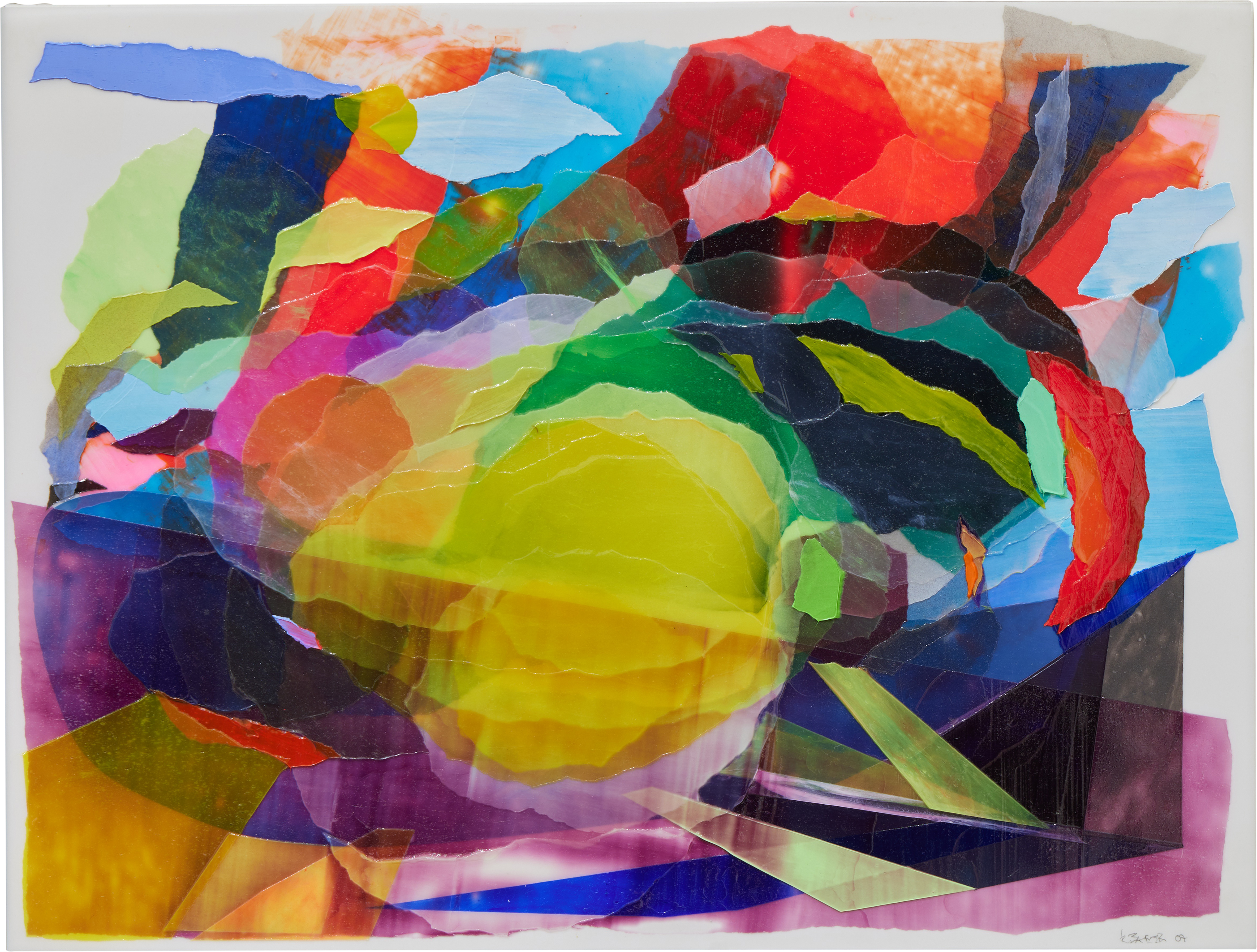
Untitled, 2007
The title references real cycling infrastructure, the Cheras highway in Malaysia and the Dunc Gray Velodrome in Sydney, and the work carries a geographical imagination to match its physical ambition. "New Dawn Fades," from 2009, mounts acrylic on acrylic within a powder coated steel freestanding structure, turning the painting into an architectural event in the room. The title, borrowed from the Joy Division song, adds a layer of emotional resonance that deepens the work beyond pure formal investigation. Works from the Minum series of 2012, each executed in acrylic on PVC, show Baker at her most concentrated, distilling her language into smaller, fiercely focused units that reward extended looking.
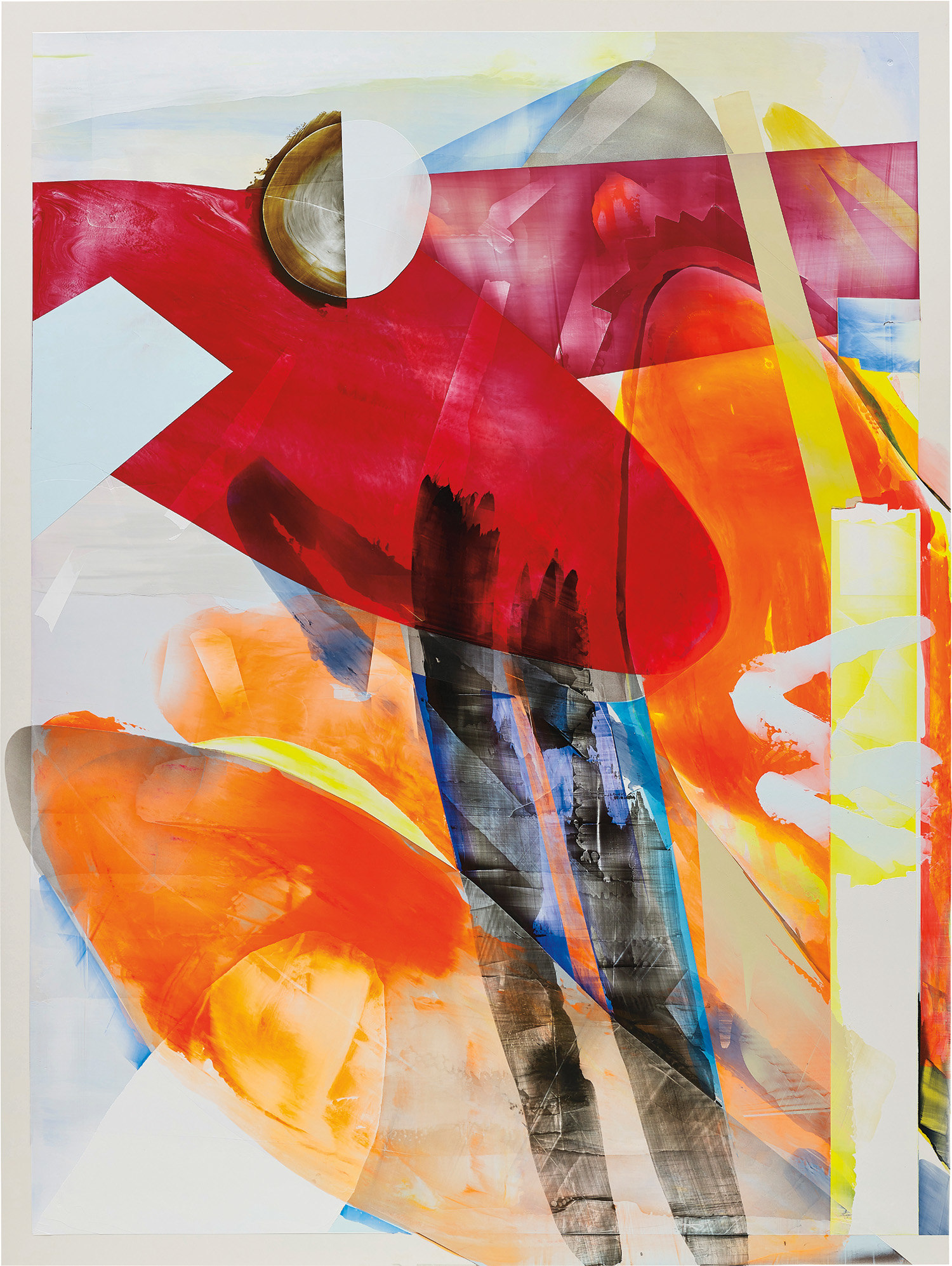
For collectors, Baker's practice offers something increasingly rare in contemporary painting: a body of work that is conceptually coherent, materially inventive, and genuinely beautiful in ways that accumulate over time rather than exhausting themselves on first encounter. Her choice of supports, PVC, Mylar, aluminium, means that her works have a physical presence and luminosity that reproduction simply cannot capture. Seeing a Baker in person is a different experience from seeing it documented, which is part of what drives collector enthusiasm. Works like "Spiritual Volleyball Player" (2011) and "Wheedle Wherin Winnow" (2012), both acrylic on PVC, demonstrate her ability to find surprising poetic registers within what might seem like an entirely formal enterprise.
Kristin Baker
Spiritual Volleyball Player, 2011
The titles themselves, playful and oblique, suggest an artist with a rich inner life that extends well beyond the racetrack. Within the broader context of contemporary painting, Baker belongs to a generation of artists who reclaimed abstraction from the theoretical exhaustion of the 1980s and early 1990s and returned it to a place of genuine physical and emotional investment. Her sensibility connects her to painters like Julie Mehretu, who similarly uses speed and cartographic layering to compress vast amounts of information into a single surface, and to the lineage of process oriented abstraction that runs from Helen Frankenthaler through the Minimalists and into the more recent work of artists like Monika Sosnowska, who also thinks carefully about how painting can become three dimensional space. Baker's specific contribution is her insistence on the body as the primary instrument and primary subject, the body racing, the body perceiving, the body overwhelmed.
Kristin Baker's significance in the history of American abstraction will only become clearer with time. She has developed a practice that is entirely her own while remaining deeply engaged with the longest conversations in painting about surface, gesture, light, and space. The works she has produced across her career represent a sustained and serious inquiry into what painting can do that no other medium can replicate. For anyone building a collection with an eye toward both the pleasures of looking and the rewards of long term significance, Baker's work deserves serious and enthusiastic attention.
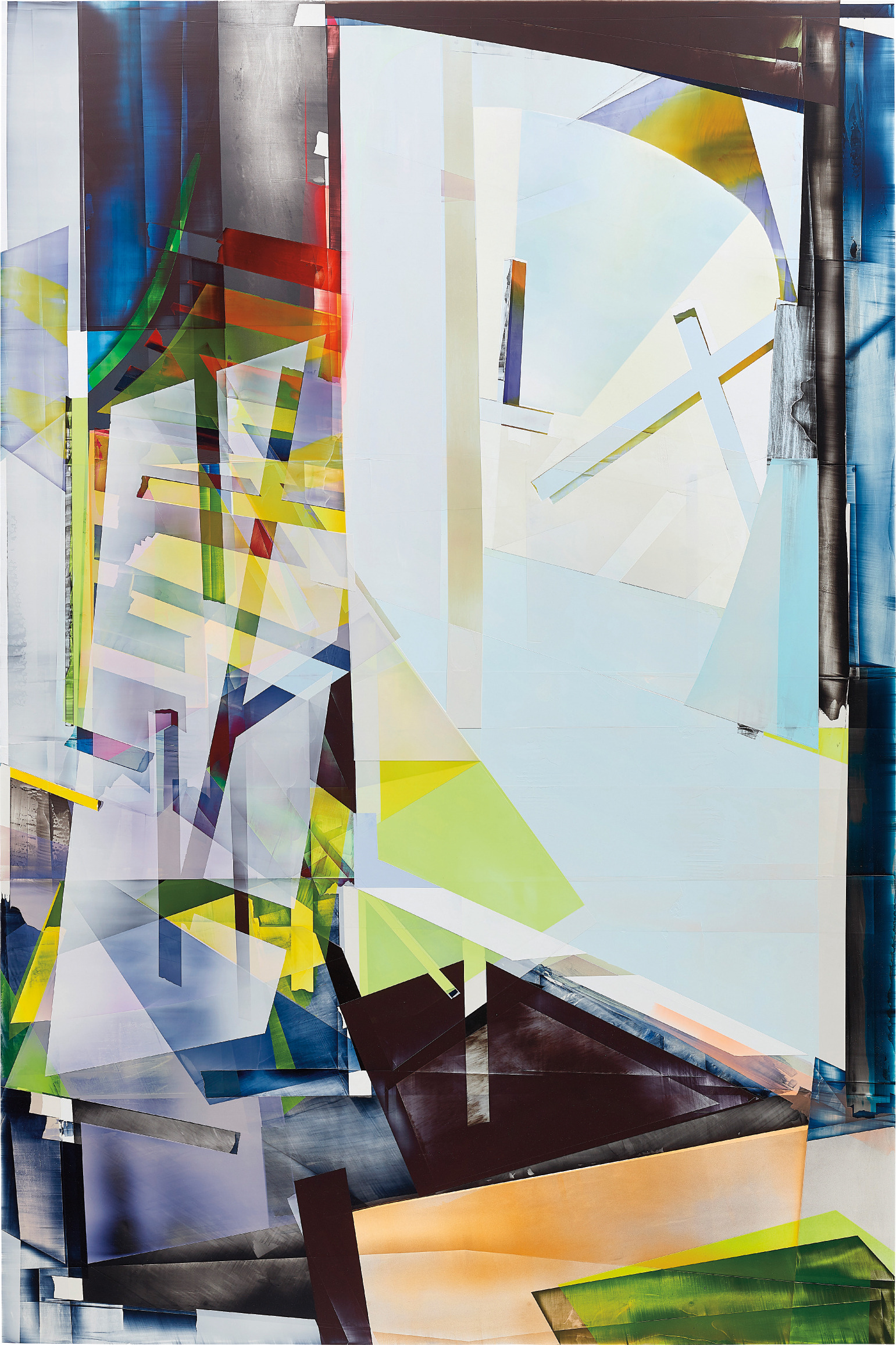
Kristin Baker
Wheedle Wherin Winnow, 2012
To acquire a Baker now is to own a piece of one of the most distinctive pictorial imaginations at work in contemporary art.