Kour Pour
Kour Pour Weaves Worlds Beautifully Together
Artist Spotlight · The Collection Editorial
Something quietly magnetic is happening in contemporary painting, and Kour Pour sits at its very center. The British American artist, born in 1987 with Iranian heritage that runs deep through his practice, has built a body of work that feels both ancient and urgently present. His canvases, panels, and reliefs pull at threads from Persian carpet traditions, Western art history, and the lived experience of cultural displacement, weaving them into compositions that reward sustained looking. Collectors, curators, and institutions across Europe and North America have taken notice, and the momentum around his work continues to build with each new presentation.
Kour Pour
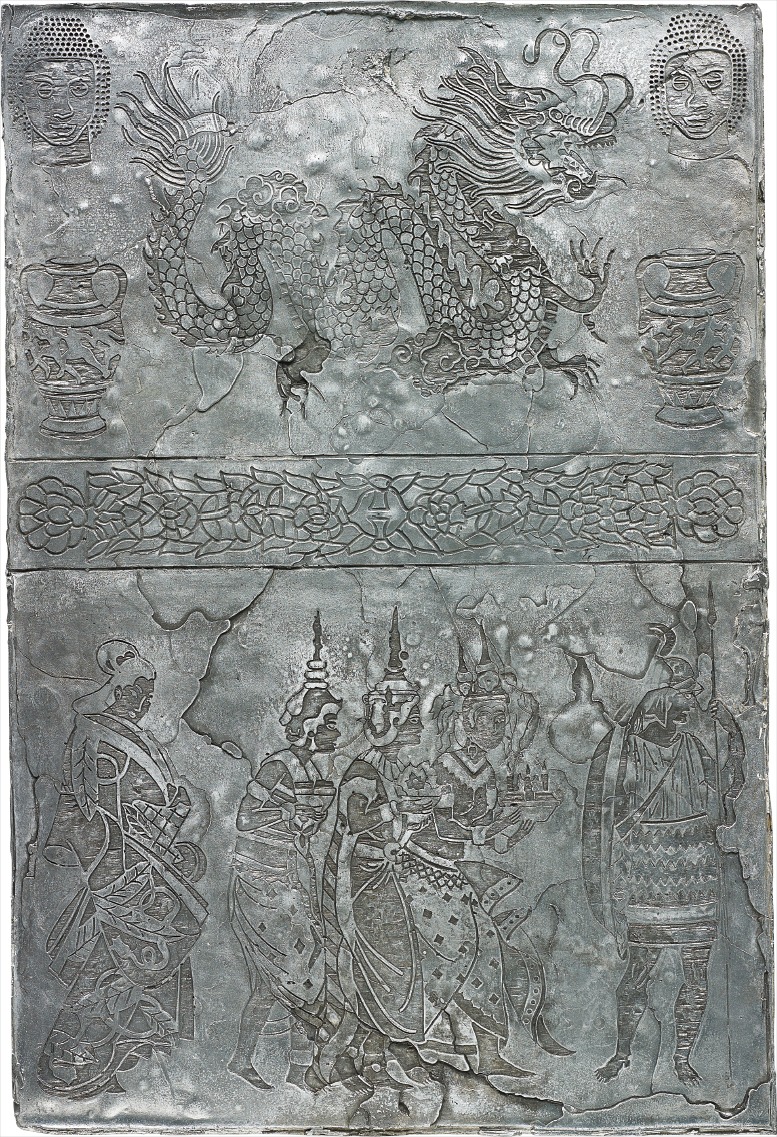
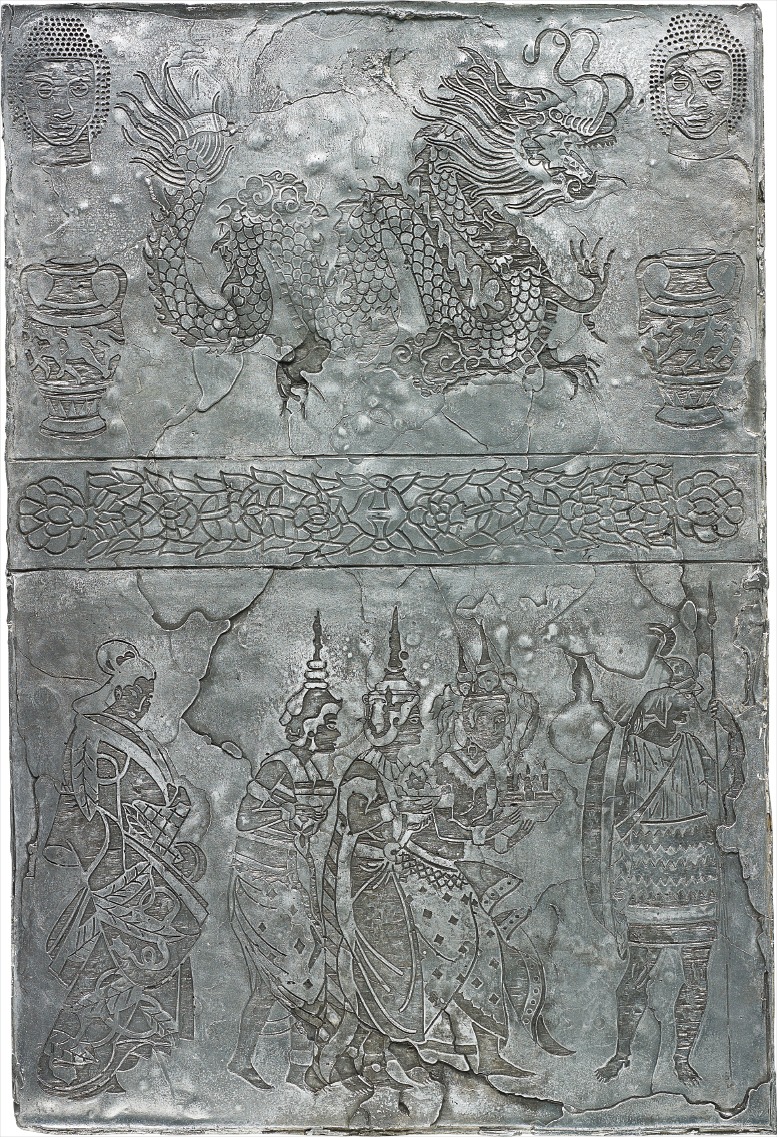
ye Mighty, and Despair!, 2014
Pour grew up navigating two cultural worlds, shaped by his Iranian background and his formation within Western artistic and educational contexts. This dual inheritance was never a source of conflict so much as a generative tension, a productive doubling that would eventually define his entire artistic project. He studied painting and developed a fluency in the languages of both traditions, learning not to choose between them but to find the places where they overlap, collide, and create something entirely new. That early awareness of being between cultures, of belonging fully to more than one place at once, gave him a subject matter that has only deepened in resonance as questions of diaspora and hybridity have moved to the center of global cultural conversation.
His practice is technically adventurous in ways that set him apart from contemporaries working in similar conceptual territory. Pour moves fluidly between digital manipulation and traditional hand painting, using the computer as both a compositional tool and a conceptual device before translating imagery back onto physical surfaces. This movement between the digital and the handmade echoes the broader movement between cultures that underpins his work. He works across acrylic on canvas, inkjet printing, woodblock printing on linen, and aluminium relief, never settling into a single medium and always allowing the choice of surface and process to carry meaning.
Kour Pour
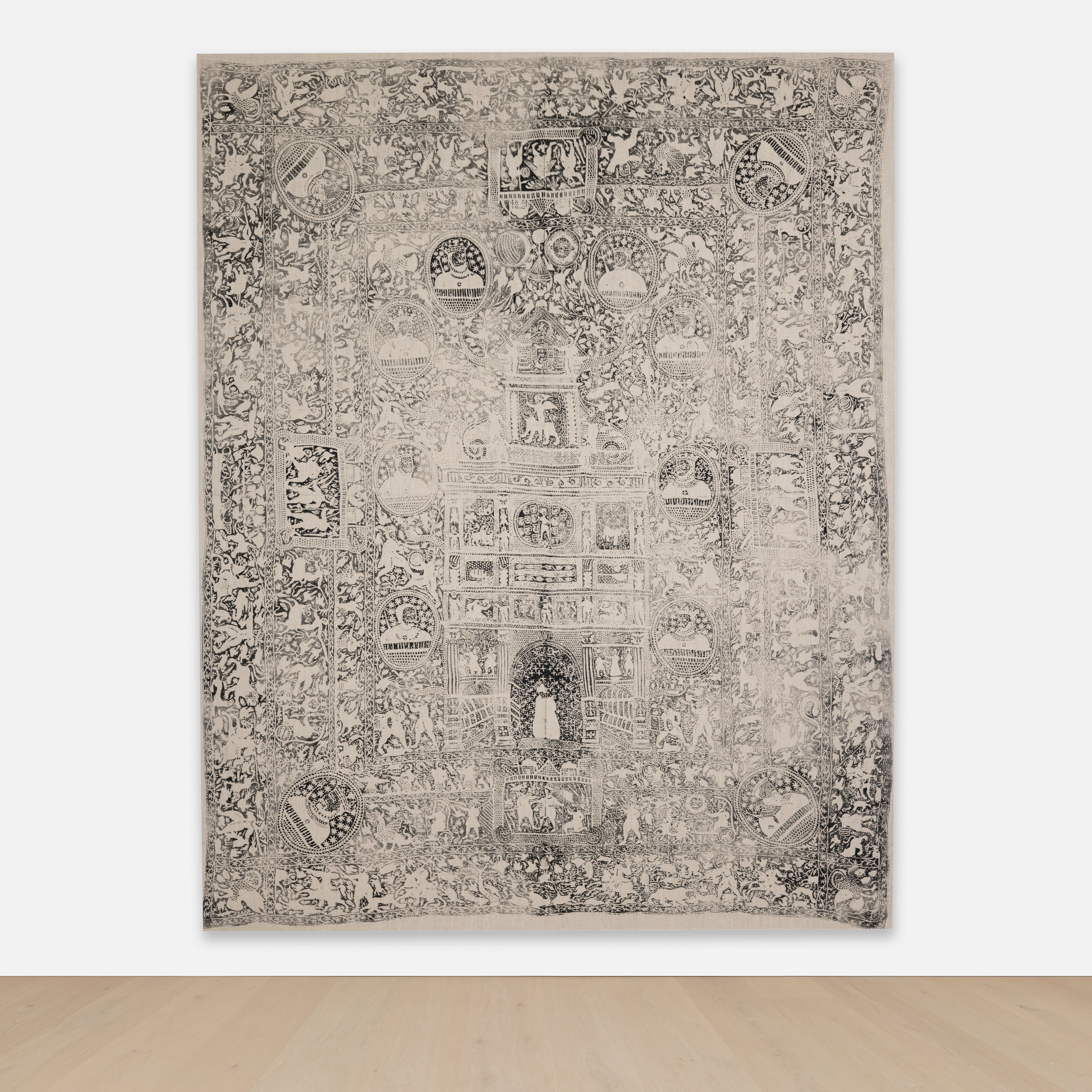
Triumphal Arch (Made in Bengal), 2014
The result is a practice that feels genuinely exploratory rather than formulaic. Among his most discussed works are a group of pieces from 2014 and 2015 that announced the full ambition of his vision. "Triumphal Arch (Made in Bengal)" from 2014 brings together imperial architectural imagery with the decorative traditions of South Asian textile production, layering histories of colonialism, trade, and craft into a single densely worked surface. That same year he produced an aluminium relief titled "ye Mighty, and Despair," which takes its reference from Percy Bysshe Shelley's Ozymandias and transforms the poem's meditation on hubris and ruin into a material object of unexpected beauty.
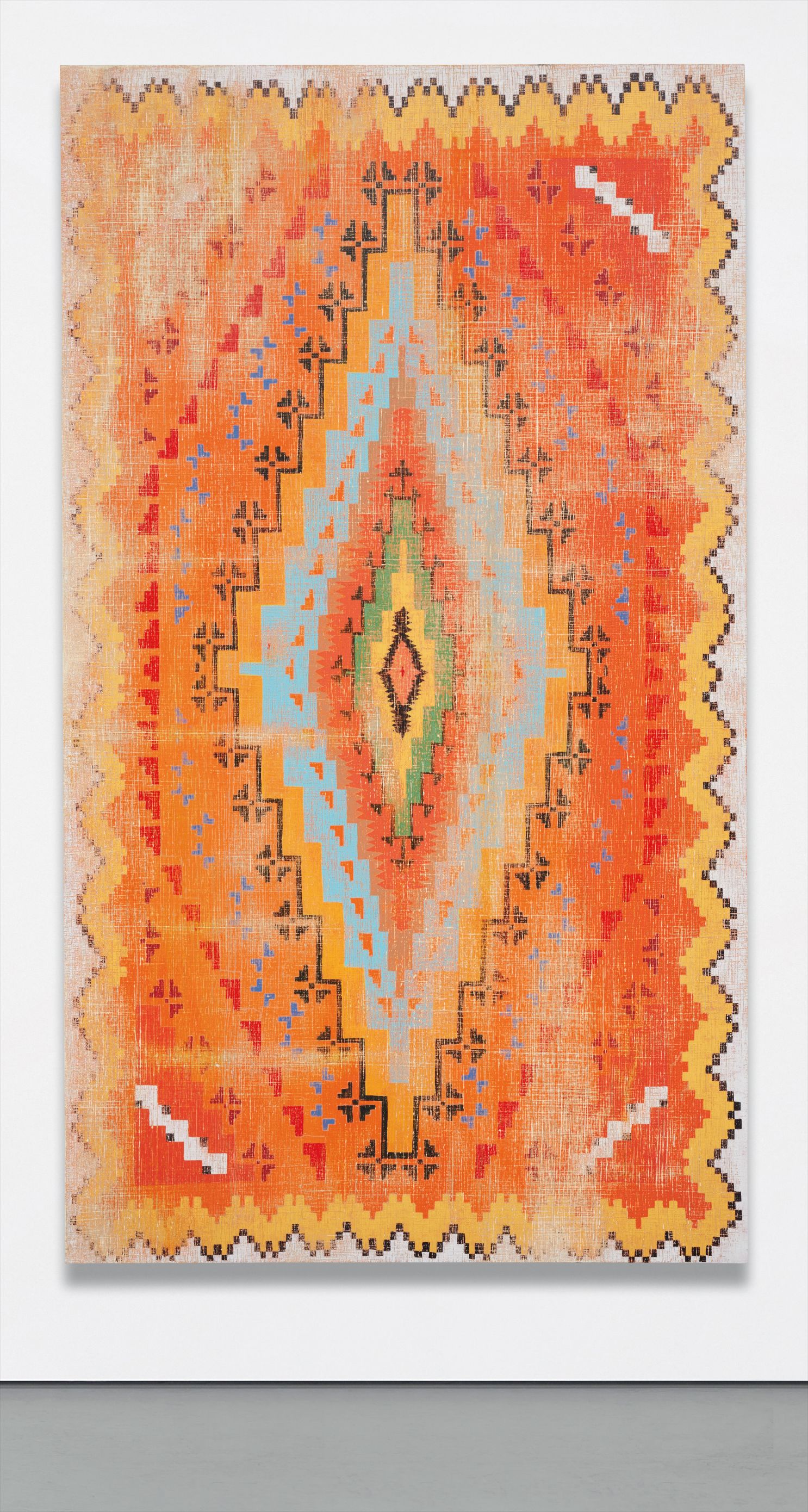
A 2015 work, "They typically depict Classical, Biblical, and Hindu themes," extends this project of encyclopedic cultural cross referencing, its title functioning almost as a scholarly footnote that the painting then proceeds to beautifully contradict and complicate. These works together read as a kind of manifesto, declaring that no single tradition owns the territory of meaning. Other works reveal a more playful but no less rigorous sensibility. "Tetris," executed in acrylic on canvas laid on panel, imports the visual logic of the famous video game into the space of abstract painting, finding unexpected formal rhymes between the game's geometric pieces and the repeated modules of carpet pattern.
Kour Pour
Tetris
"Hunting Party" and "Mousepad" extend this willingness to bring low and high, digital and handmade, into productive friction. "Mousepad" is particularly striking in its use of inkjet printing combined with acrylic on canvas, a pairing that literalizes the conversation between screen based image making and the physical act of painting. Each of these works rewards close attention and repays return visits, revealing new layers of reference and formal decision making on each encounter. For collectors, Pour's work occupies a distinctive and increasingly valuable position in the contemporary market.
He operates in a space where a small number of artists are working seriously with questions of cultural hybridity through the specific language of pattern, ornament, and abstraction. Artists such as Rashid Johnson and Monique Mouton share a commitment to investigating how identity is constructed through visual and material culture, and Pour belongs in that conversation, though his particular synthesis of Persian decorative tradition with Western modernist painting history is genuinely singular. Collectors who have followed his career from early in his trajectory have watched his institutional profile grow steadily, with works entering major contemporary collections. The variety of his working methods also means that entry points into his practice exist at different scales and price levels, making him accessible to collectors at different stages of their collecting journey.
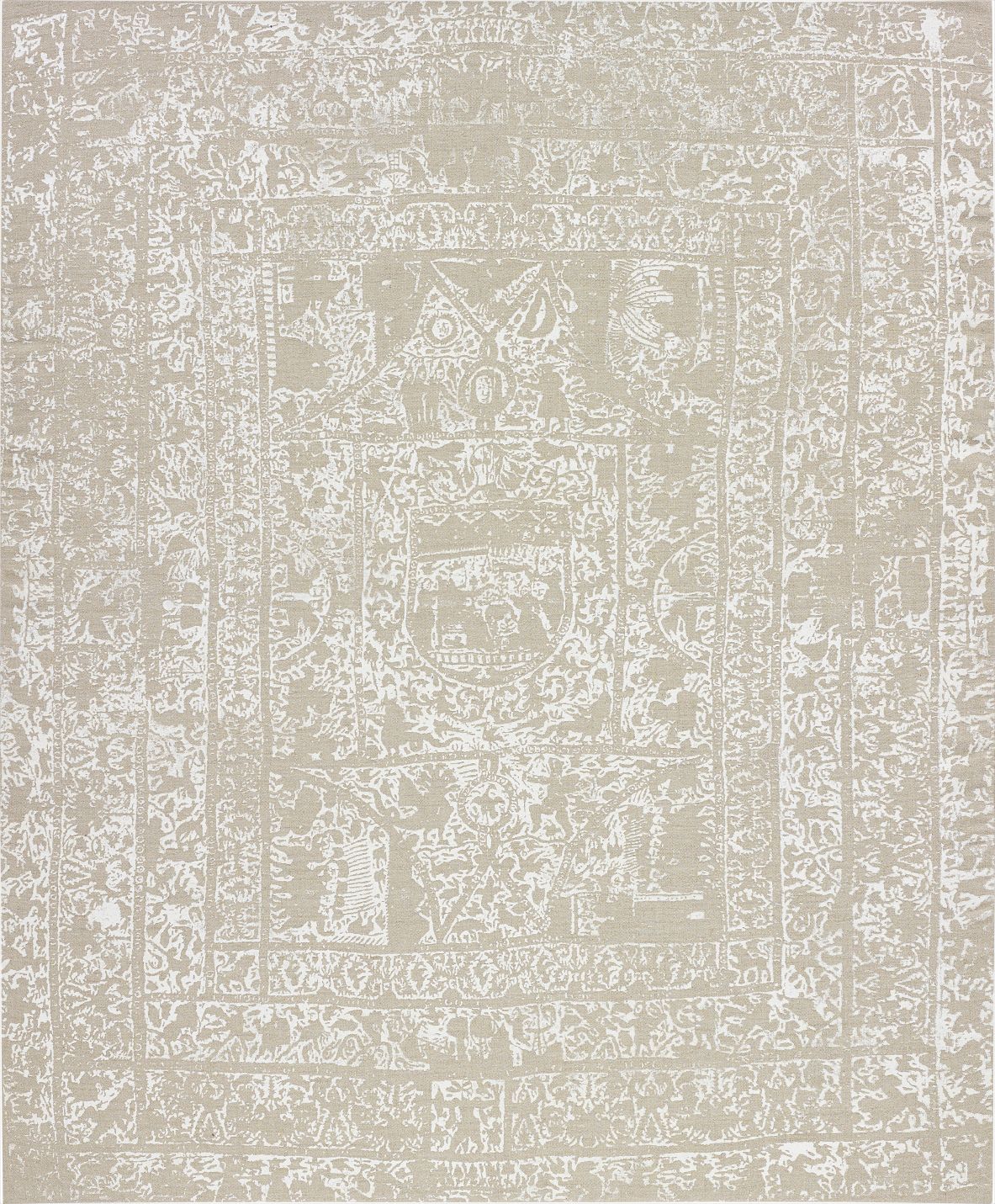
Kour Pour
They typically depict Classical, Biblical, and Hindu themes, 2015
The art historical context for Pour's practice is rich and worth tracing. The integration of decorative and fine art traditions has a long and complex history in Western modernism, from Matisse's engagement with Islamic ornament to Frank Stella's later maximalist abstractions. But Pour comes to this conversation from a different angle, not as an outsider borrowing from another culture but as someone who carries multiple traditions simultaneously as birthright. This shifts the ethical and aesthetic stakes of his project considerably, and it is part of what gives his work its particular authority.
He is not interpreting Persian carpet design from a distance but living inside its logic while also living inside the history of Western painting, and the work he makes from that doubled position is unlike what anyone working from a single vantage point could produce. Kour Pour matters right now because the questions his work addresses have never felt more alive. How do we hold multiple cultural inheritances at once. How do we make images that honor complexity rather than flattening it.
How do pattern, decoration, and ornament carry meaning across time and distance. His paintings do not answer these questions so much as they embody them, making visible through colour, texture, and composition a way of being in the world that many people recognize but rarely see reflected back at them in art of this ambition and quality. For collectors, institutions, and anyone paying attention to where painting is genuinely going, Kour Pour is an artist whose moment is fully and deservedly here.
Explore books about Kour Pour