Konstantin Ivanovich Gorbatov
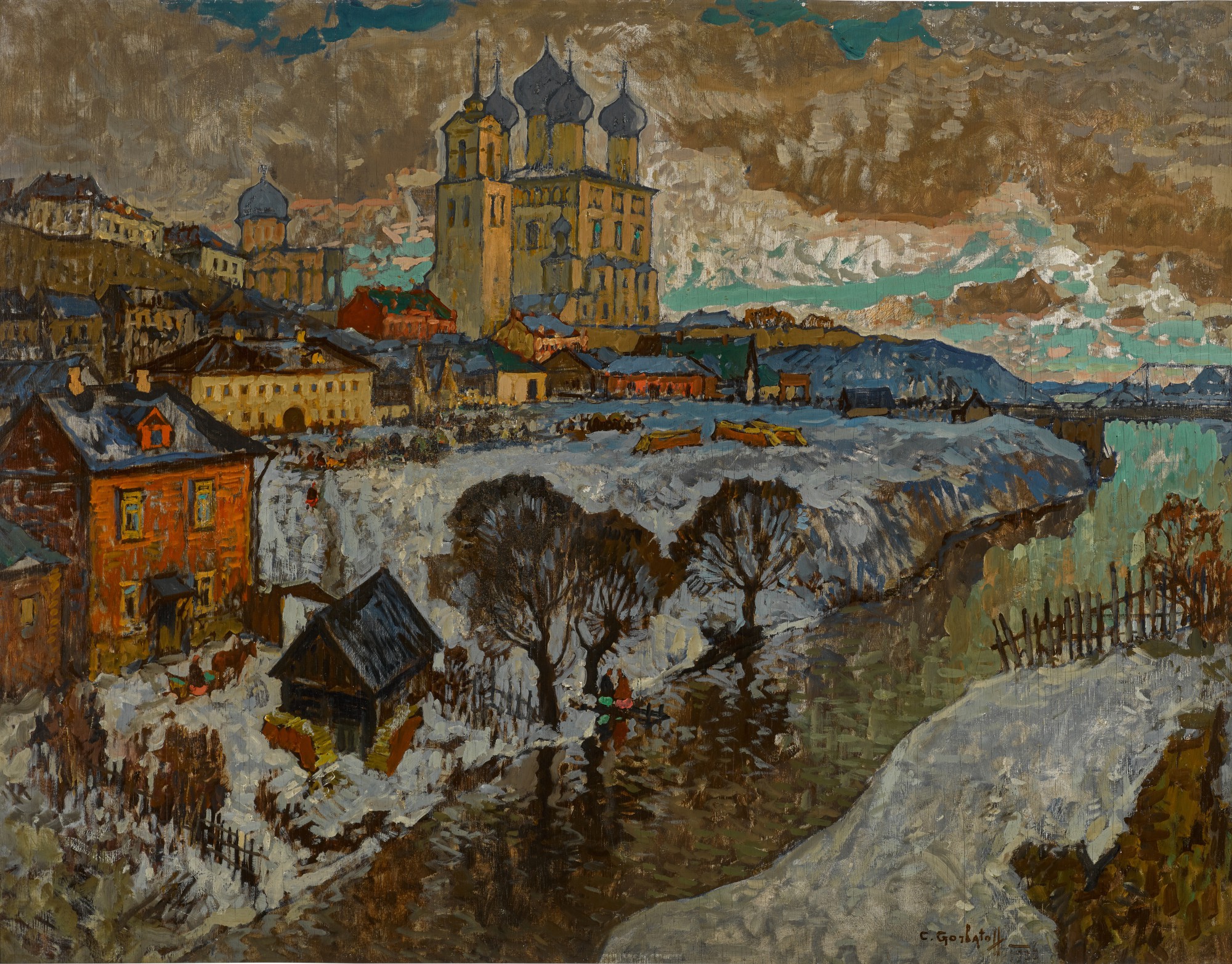
Gorbatov: Light Made Permanent, Beauty Made Timeless
Artist Spotlight · The Collection Editorial
When a luminous winter scene attributed to Konstantin Ivanovich Gorbatov crosses the auction block at MacDougall's or Sotheby's, the room tends to hold its breath. In recent years, his canvases have drawn sustained and passionate bidding from collectors across Europe, Russia, and North America, a testament to the enduring power of a painter who spent his life chasing the quality of light as though it were something that could be caught and kept forever. His reputation, long cherished among specialists in Russian émigré art, has been growing steadily in the broader international market, with institutions and private collectors alike recognising him as one of the most gifted colorists of his generation. Gorbatov was born in 1876 in Stavropol, a city on the Volga, and his early years were shaped by the vast, open landscapes and the particular luminosity of the Russian interior.
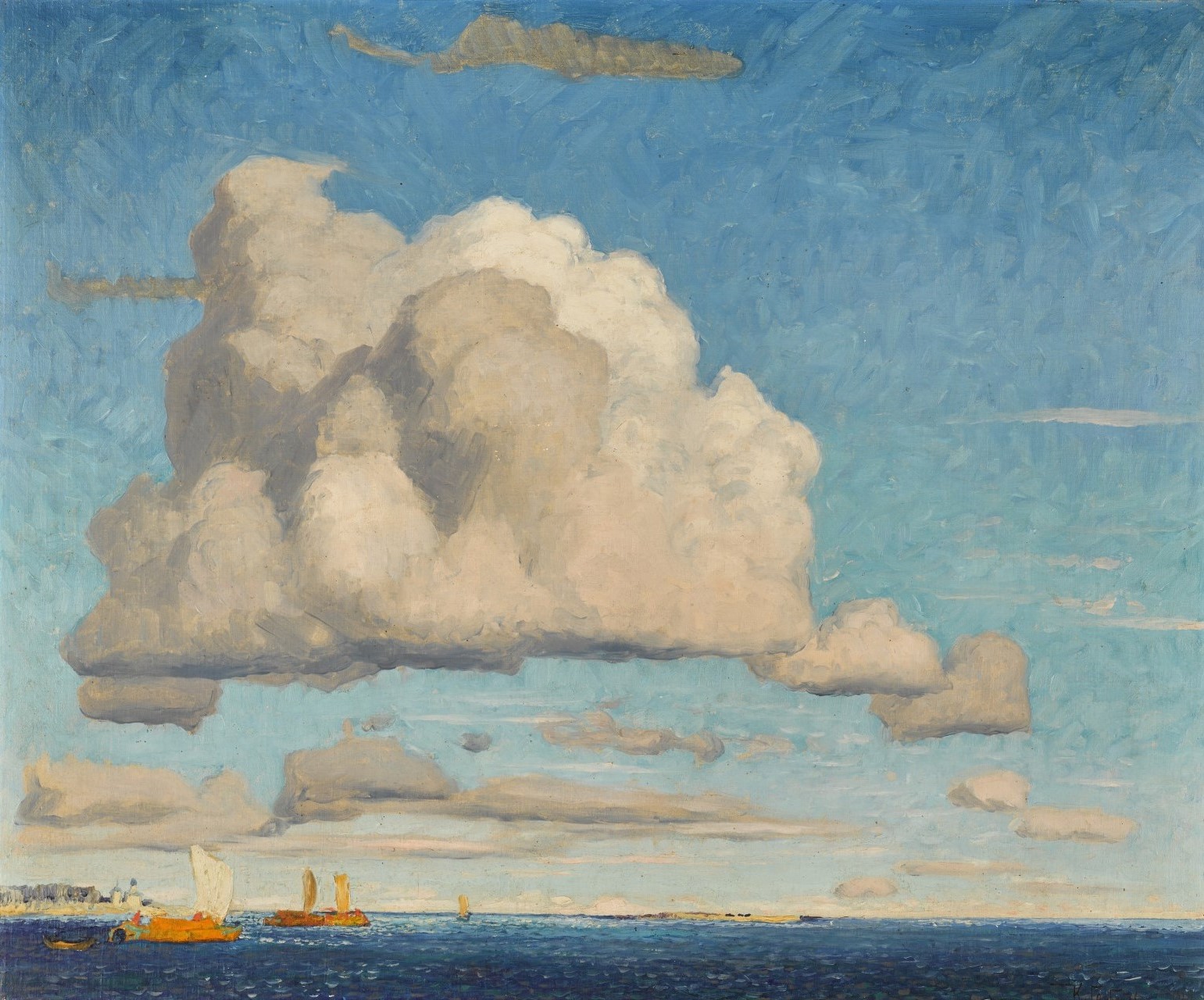
Konstantin Ivanovich Gorbatov
Clouds over a Lake
He came of age as an artist during a remarkable period of transformation in Russian cultural life, when the Academy was simultaneously a bastion of tradition and a site of restless experimentation. He trained first at the Kazan Art School, grounding himself in the disciplined fundamentals of drawing and composition before earning a place at the Imperial Academy of Arts in St. Petersburg. There he studied under Nikolai Dubovskoy, one of the preeminent landscape painters of the era and a master of atmospheric naturalism.
That lineage mattered enormously. Dubovskoy taught Gorbatov to look at the world with patience and precision, to understand that a sky was never simply blue and that water was never simply still. His development as an artist accelerated when he began travelling abroad in the years before the First World War, a period that would prove transformative. Italy captured him completely.
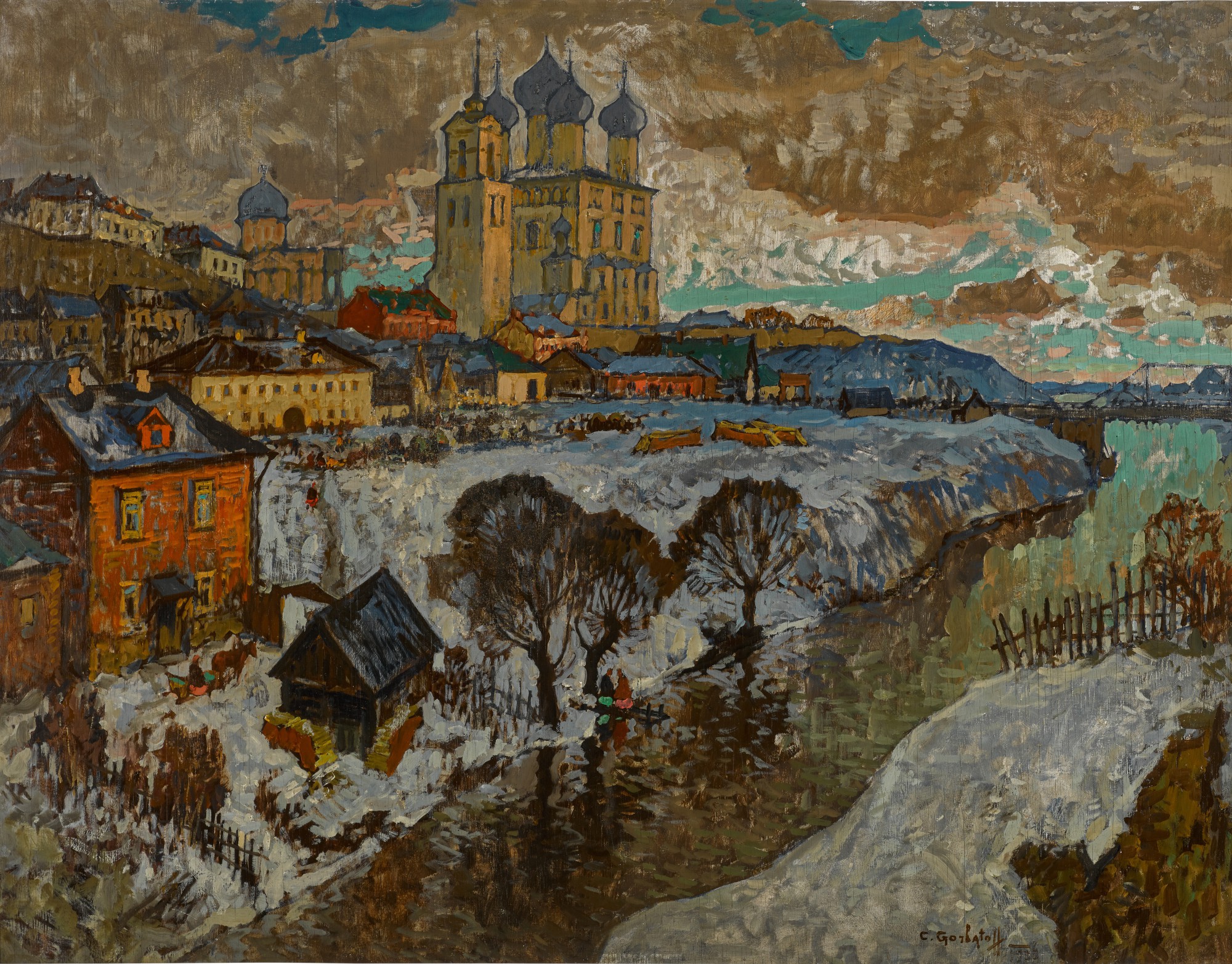
Konstantin Ivanovich Gorbatov
View of Pskov Showing the Trinity Cathedral
Venice and Capri, in particular, became laboratories for his evolving practice, places where the quality of Mediterranean light forced him to rethink everything he understood about color and reflection. He was not alone in this. Russian painters of his generation frequently sought out Italy as a crucible for artistic growth, but Gorbatov brought to those southern shores a sensibility that remained distinctly and movingly Russian, a predisposition toward the elegiac, toward the beauty of things that seem always on the verge of passing. His Venetian paintings shimmer with an almost physical warmth, the canals catching the afternoon sun in strokes that feel spontaneous and deeply considered at once.
The Russian Revolution of 1917 changed everything, as it did for so many artists of his world. Gorbatov eventually emigrated, settling in Europe and spending significant time in Germany, where a substantial Russian émigré community had gathered in cities like Berlin. Separation from Russia did not diminish his connection to his homeland. If anything, distance intensified it.
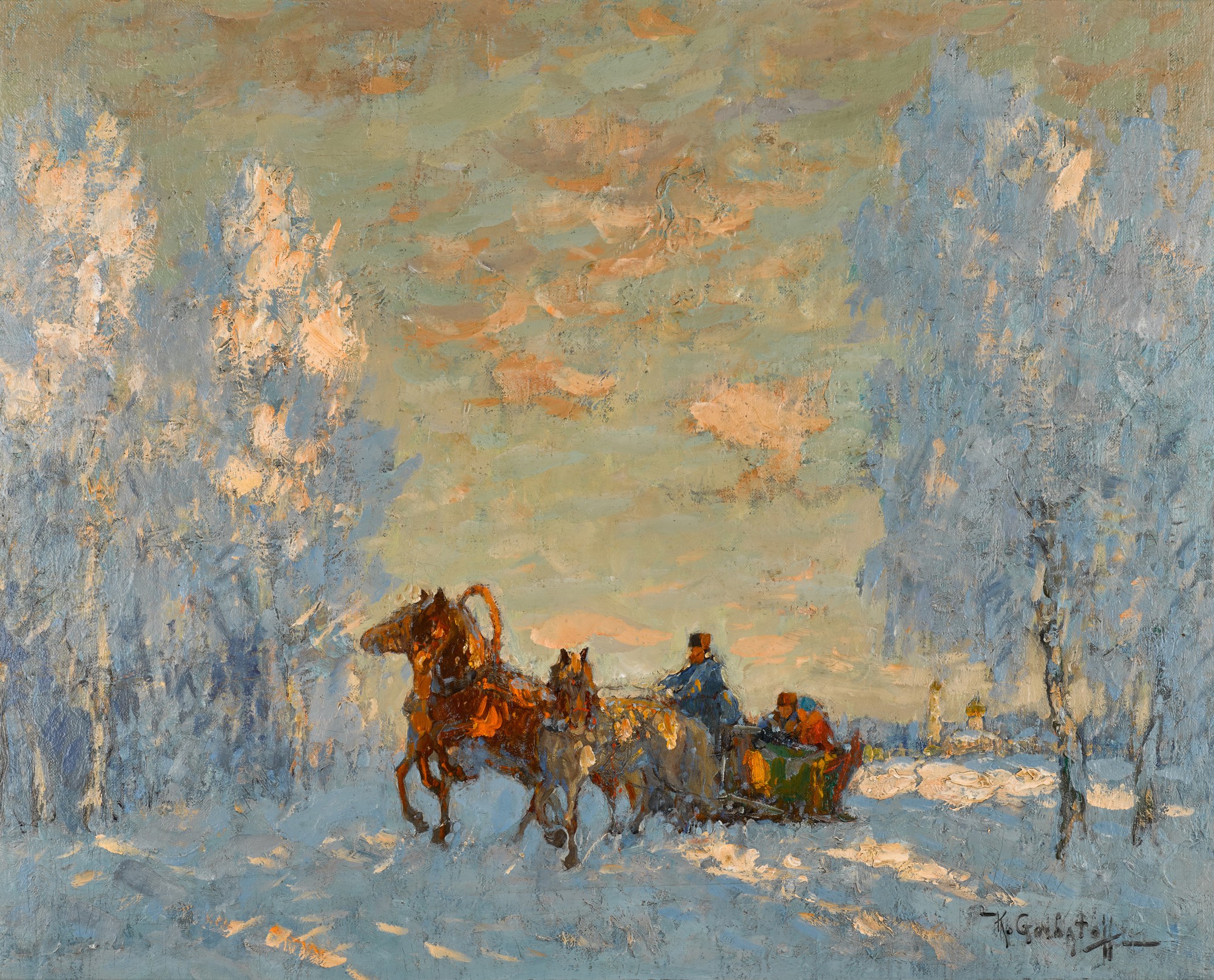
Konstantin Ivanovich Gorbatov
Troika
His paintings of old Russian towns, those beloved depictions of Pskov and Novgorod with their ancient churches and snow laden rooftops, carry within them a quality of longing that is inseparable from their beauty. These are not merely topographical records. They are acts of memory, painted with the precision of love. Works such as his celebrated view of Pskov showing the Trinity Cathedral demonstrate how completely he absorbed the architectural poetry of medieval Russia, rendering stone and reflection and winter sky with an authority that feels both documentary and deeply personal.
Across his body of work, certain qualities recur with the consistency of a signature. Gorbatov was above all a painter of light as event, light as the animating force of a scene rather than merely its illumination. Whether depicting a troika crossing a frozen Russian plain, a Capri terrace drowsy with afternoon heat, or a still life arranged with quiet domestic confidence, he brought to each subject the same fundamental question: where is the light coming from, and what does it touch? His oil paintings on canvas and on wood and on canvasboard reveal a technical range that collectors have come to admire, with each support offering its own textural contribution to the final image.
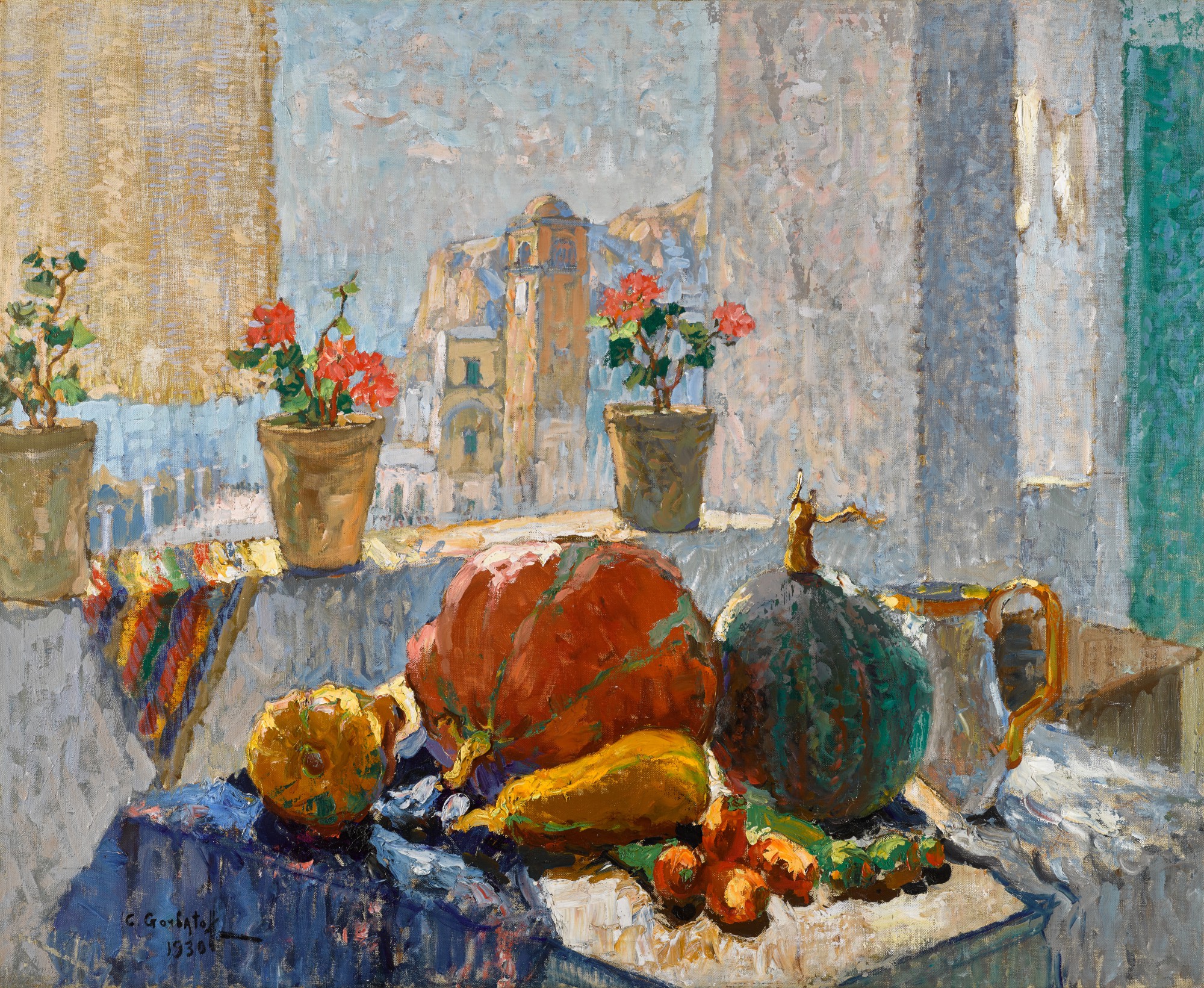
Konstantin Ivanovich Gorbatov
Still Life
The intimacy of his smaller panels and his works on canvasboard make them particularly appealing to those building private collections, while his larger canvases command the attention of institutional buyers and major auction rooms alike. From a market perspective, Gorbatov occupies a fascinating position. He is well established enough to carry genuine historical weight and sufficiently underappreciated outside specialist circles to represent real opportunity. MacDougall's, the London auction house that has done more than any other to bring Russian art to international collectors, has been a consistent venue for his work, and results there have repeatedly demonstrated that serious collectors are willing to compete seriously for quality examples.
Christie's and Sotheby's have also handled significant works. Collectors drawn to the Russian émigré tradition, to artists like Nikolai Bogdanov Belsky, Boris Kustodiev, and Ivan Bilibin, frequently find their way to Gorbatov as a natural extension of those enthusiasms. His work also resonates with admirers of the broader European impressionist and post impressionist traditions, collectors who appreciate the way he absorbed influences from French and Italian painting without ever surrendering the essential character of his Russian formation. To place Gorbatov within the wider arc of art history is to appreciate how richly cross cultural his achievement was.
He belonged to a generation of Russian painters who were neither confined by the Academy nor fully absorbed into the European avant garde. They found their own path, rooted in observational landscape painting but open to the lessons of impressionism, plein air practice, and the decorative refinements that came with sustained engagement with Italian and Mediterranean visual culture. In this he shares something with contemporaries like Konstantin Korovin, another brilliant colorist whose work bridges Russian lyrical realism and something closer to the French sensibility. But Gorbatov is finally his own thing entirely, a painter whose emotional register is his own, whose love for the places he depicted, whether Russia or Venice or Capri, produced work of genuine and lasting tenderness.
His death in 1945 came at the end of a period of immense historical disruption, and for some years his reputation was caught in the complexities that surrounded émigré Russian culture more broadly. But time and the patience of discerning collectors and scholars have done their work. Today, Gorbatov is understood as a painter of genuine importance, a bridge between the great Russian landscape tradition of the nineteenth century and the more emotionally nuanced, light saturated practice that would carry that tradition forward into a changed world. For collectors fortunate enough to encounter his work, whether a shimmering Venetian canal, a snow bright Russian townscape, or a quietly radiant still life, the experience is of a sensibility that sought beauty not as an escape from the world but as the deepest possible form of attention to it.