Kohei Nawa
Kohei Nawa Transforms the World Anew
Artist Spotlight · The Collection Editorial
“I think of the surface as a kind of screen, a place where inside and outside meet.”
Kohei Nawa, interview with Dazed
In the spring of 2023, visitors to the Grand Palais Éphémère in Paris encountered something genuinely difficult to categorize. Kohei Nawa's monumental foam installation, a cascading, slow moving landscape of white polyurethane that resembled both primordial foam and digital simulation, stopped people mid stride. It was the kind of encounter that the art world had come to associate with Nawa over two decades of practice: the sudden, vertiginous sensation of not knowing quite where matter ends and idea begins. That moment, multiplied across institutions from Tokyo to London to New York, has confirmed what collectors and curators have long understood.
Kohei Nawa
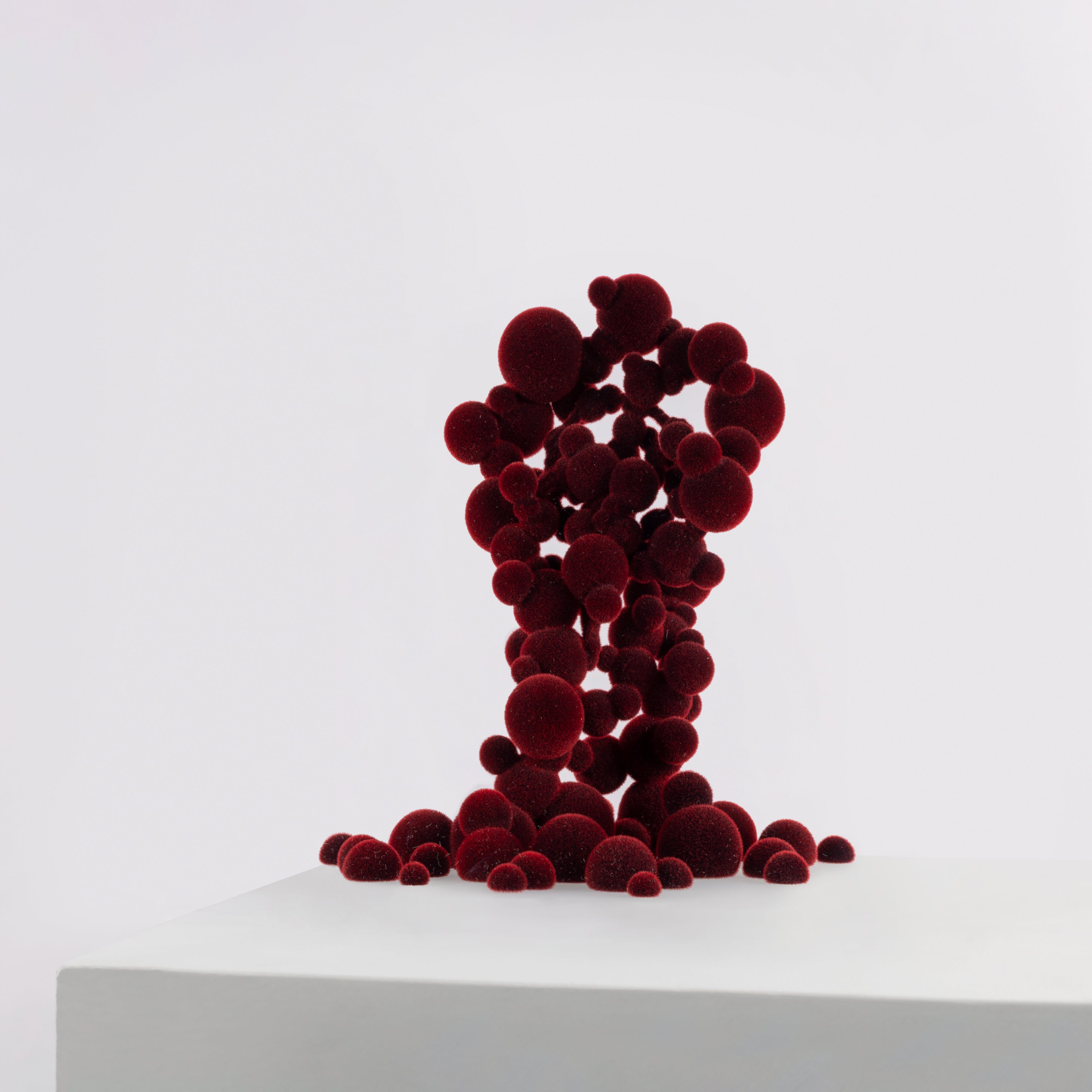
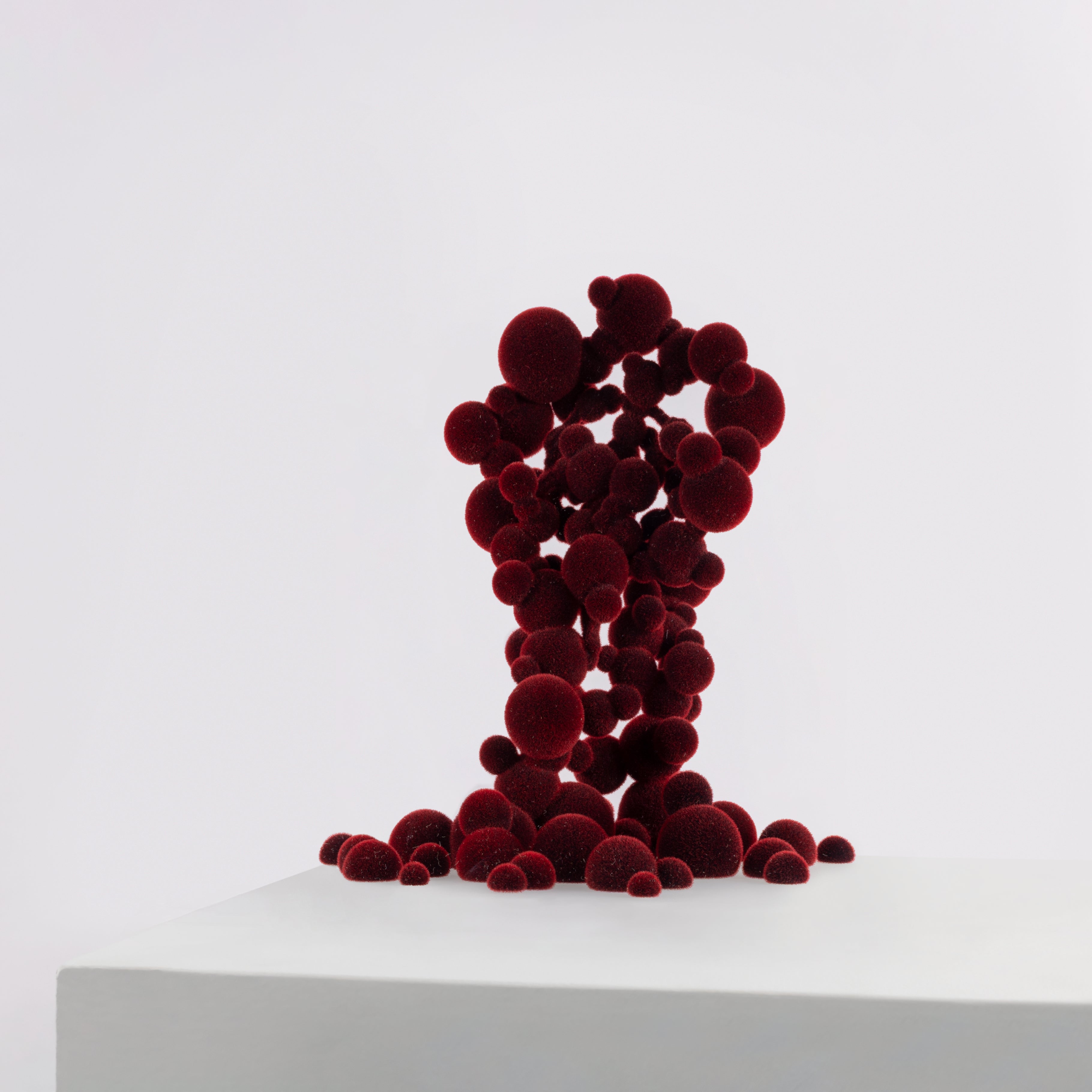
Velvet Rai (R)
Nawa is one of the most formally inventive and philosophically serious sculptors working anywhere in the world today. Kohei Nawa was born in 1975 in Osaka, Japan, a city whose energy and mercantile vitality have long made it a counterpoint to Tokyo's more self consciously rarefied cultural atmosphere. He studied sculpture at Kyoto City University of Arts, an institution with a deep commitment to craft and material tradition, and later completed postgraduate studies there as well. Kyoto itself proved formative in ways that go beyond formal education.
The city's layered relationship with surface, from the lacquered screens of its temples to the precisely raked gravel of its Zen gardens, seems embedded in Nawa's thinking about how objects present themselves to the eye. He went on to found Sandwich, a creative platform and studio space in Kyoto in 2009, which functions as both a workshop and an interdisciplinary laboratory, drawing collaborators across sculpture, architecture, design, and performance. Nawa's breakthrough came with the PixCell series, which he began developing in the early 2000s and which remains the conceptual spine of his entire practice. The conceit is deceptively simple: objects, often sourced from online auction sites or thrift stores, are encased in clusters of transparent glass and crystal spheres of varying sizes.
Kohei Nawa
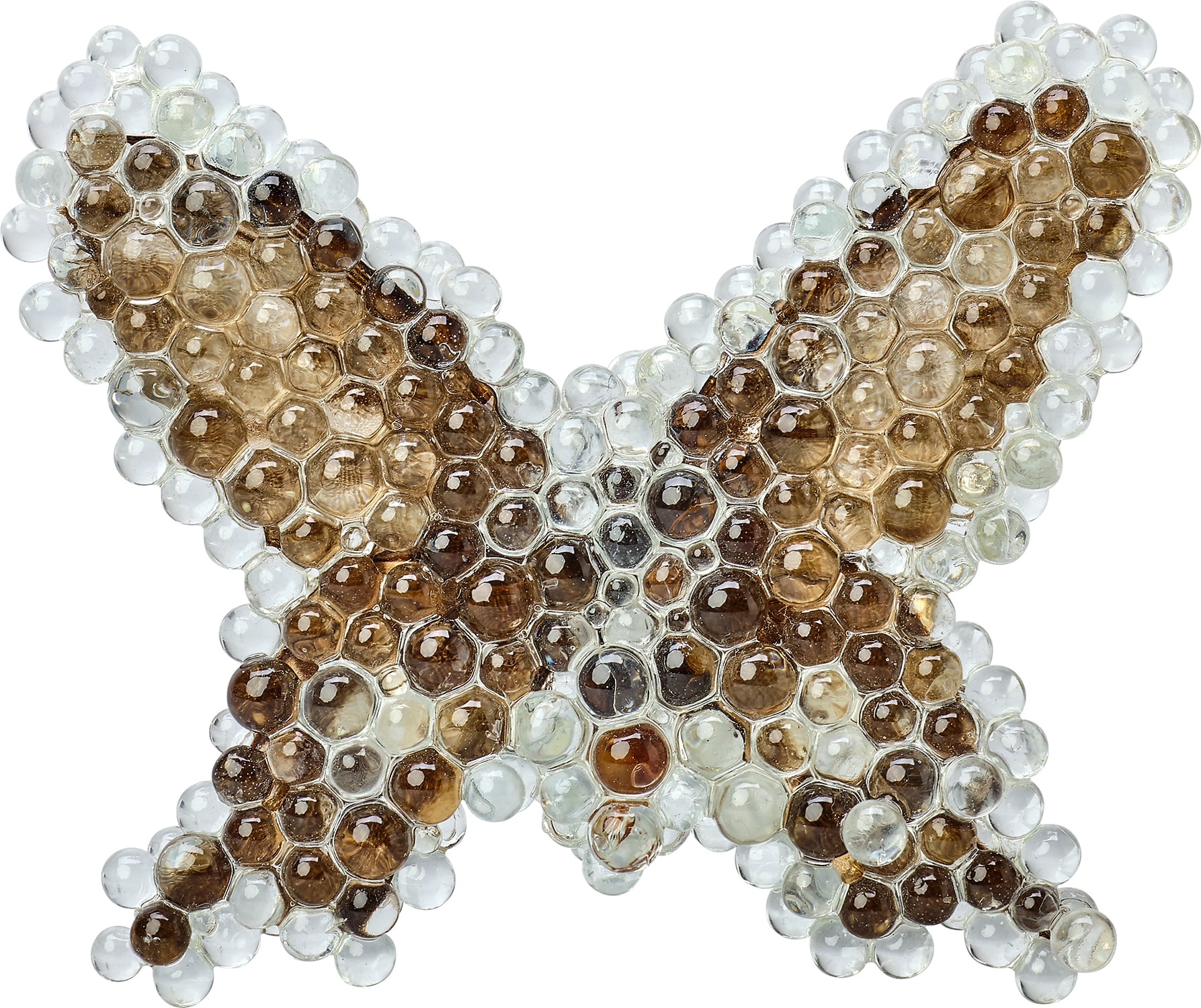
PixCell-Butterfly #3
A taxidermied deer, a toy, a piece of fruit, a butterfly pinned behind glass, each becomes a new kind of entity when coated in these refractive globes. The spheres act like pixels, the smallest unit of digital perception, and the word PixCell is itself a compression of pixel and cell, suggesting both the grammar of screens and the biology of living things. The result is that familiar objects become simultaneously more vivid and more elusive, closer and further away at once. The series has produced some of Nawa's most celebrated individual works.
PixCell Deer #8, created in 2008, uses a taxidermied deer head encased in glass, acrylic, and crystal beads to produce an image of extraordinary stillness and strangeness. The deer, already a loaded symbol in Japanese culture with resonances ranging from Shinto ritual to childhood innocence, becomes something otherworldly under Nawa's treatment. PixCell Deer #21, from 2009, extends this vocabulary, and PixCell Deer #40, completed in 2015, demonstrates how richly the concept has evolved over more than a decade. Earlier works like PixCell Apple from 2005 and PixCell Toy Egg Plant from 2006 show the series in its formative stages, already fully realized in its logic if still expanding in its ambition.
Kohei Nawa
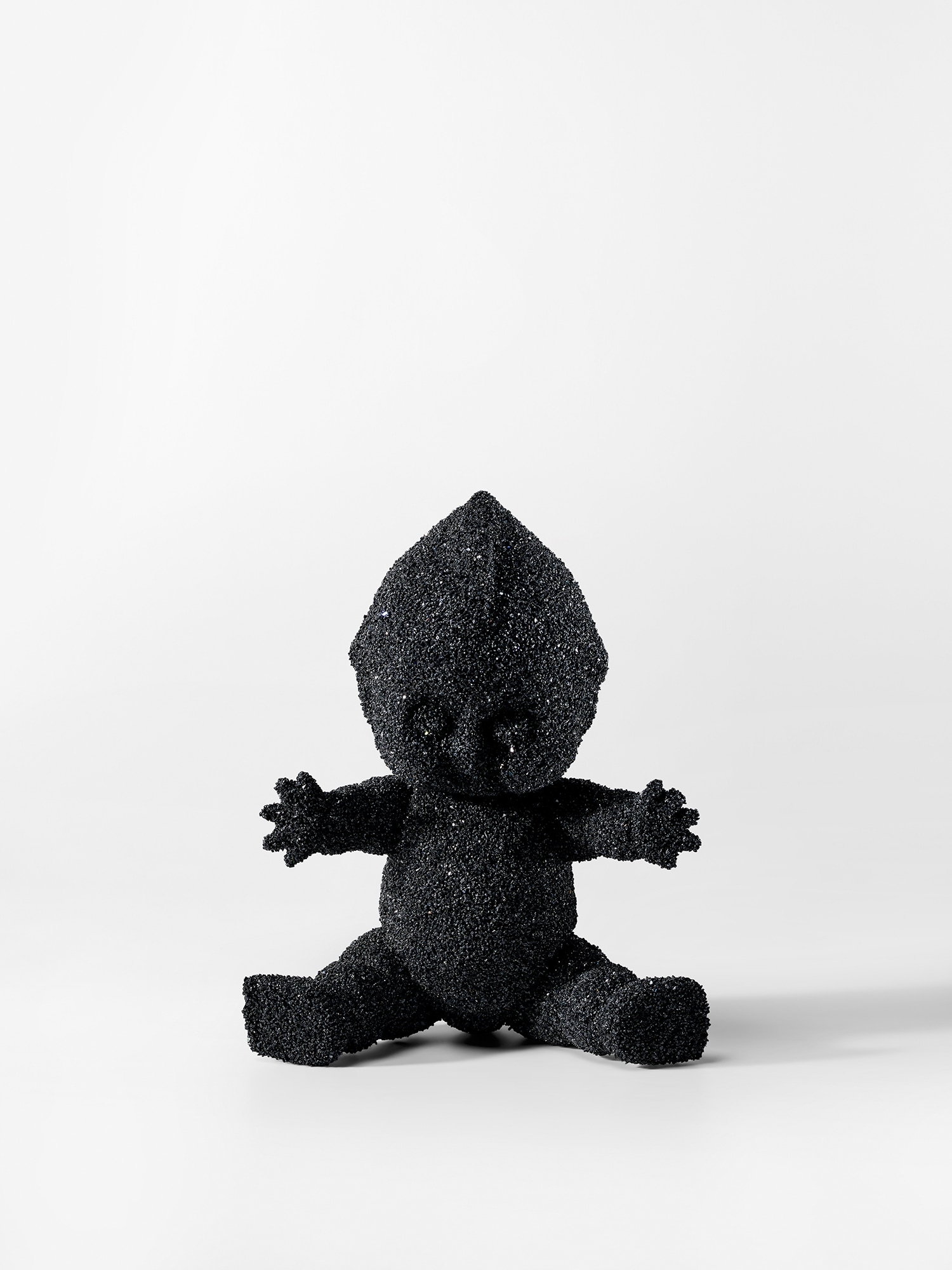
Particle-Kewpie, 2017
PixCell Butterfly #3 and Particle Kewpie from 2017 reveal Nawa's range within the series, moving from the gravely totemic to the playfully uncanny. Beyond PixCell, Nawa has consistently pushed his practice into new material territories. His Velvet works, which include pieces such as Velvet Rai (R) and Velvet Mol (flora, R), apply an electrostatically charged fiber coating to sculptural forms, producing surfaces of extraordinary tactile intensity that seem to both absorb and repel the gaze. These works, often presented with an original perspex case and accompanied by the artist's book Metamorphosis, are among the most refined objects in his output.
The book itself is not merely supplementary documentation but an extension of the artwork, a meditation on transformation that enriches the physical object it accompanies. The Foam series, in which polyurethane expands and hardens into vast organic formations, and the Direction series of directional sculptures in polyurethane and silicon, extend his investigation into what material can say about perception, time, and presence. Nawa's institutional relationships have been as strong in Japan as they have been internationally. SCAI The Bathhouse in Tokyo, one of Japan's most discerning and internationally connected contemporary art venues, has been a long standing exhibition partner, providing the kind of intimate, focused context in which his works reveal their full intelligence.
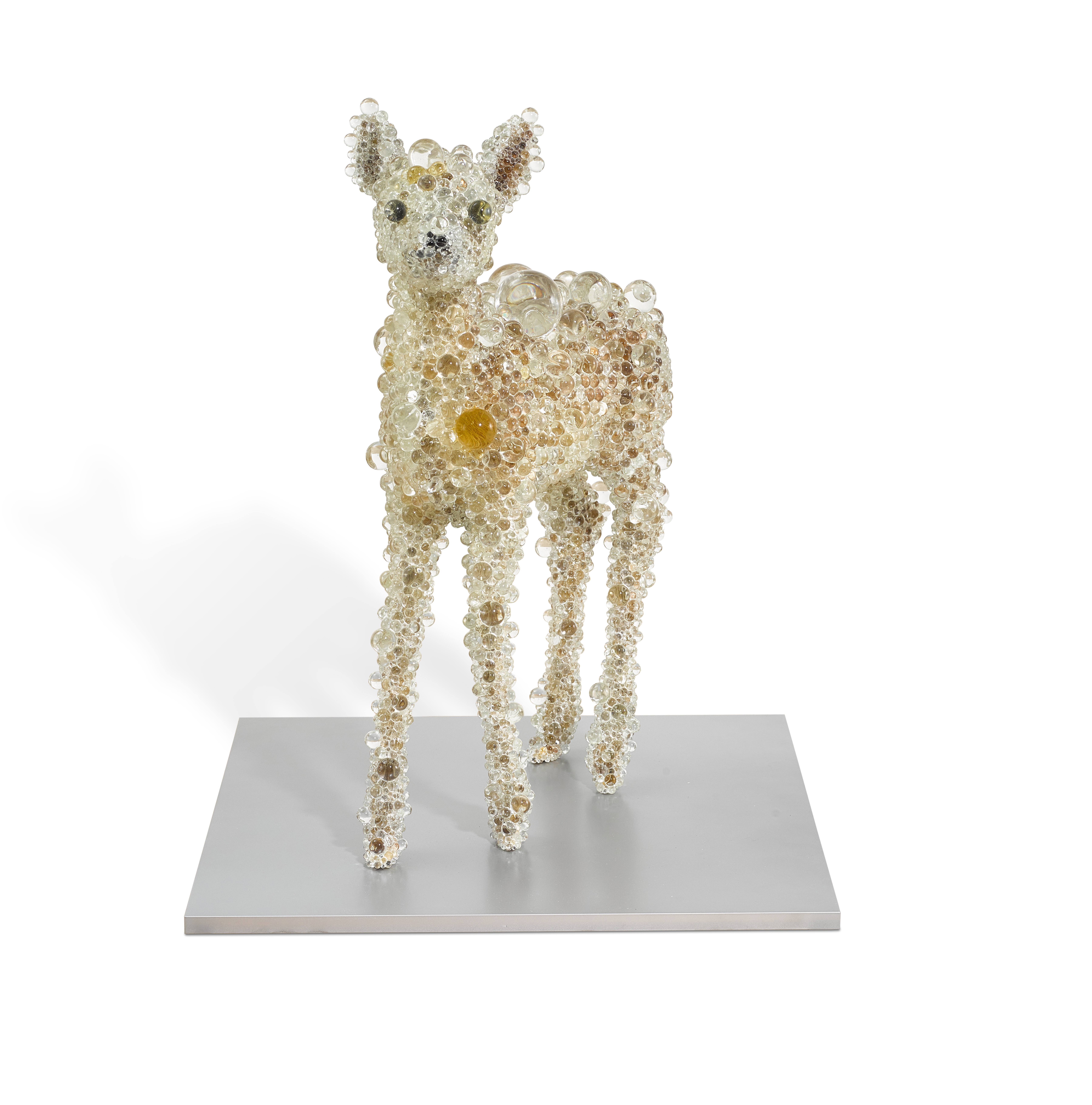
Kohei Nawa
Kohei Nawa 名和晃平 | PixCell-Bambi #15 PIXCELL系列 - 小鹿斑比15號, 2016
The Museum of Contemporary Art Tokyo has also given his practice the institutional framing it warrants. Internationally, his works have been exhibited at major venues across Europe and the United States, and his participation in significant group exhibitions has placed him in conversation with artists thinking seriously about technology, materiality, and the boundaries between the natural and the artificial. For collectors, Nawa's work represents a compelling intersection of intellectual depth and aesthetic pleasure that is relatively rare at this level of conceptual ambition. The PixCell works, particularly the Deer series, have become genuinely sought after, with secondary market interest reflecting both the limited availability of key works and the durability of the concept.
The Velvet works, with their tactile opulence and elegant presentation, appeal strongly to collectors who want works that reward close, sustained attention in a domestic environment. Nawa sits comfortably within a broader international context that includes artists such as Damien Hirst in his use of taxidermy and biological material, and Takashi Murakami in his navigation of Japanese popular culture and global contemporary art. But Nawa's sensibility is distinctly his own, quieter and more philosophically precise than either, and rooted in a specifically Japanese attentiveness to the quality of surfaces and the nature of perception. What makes Nawa genuinely important to art history, and not merely to the contemporary market, is his insistence that questions about how we see are also questions about how we live in the world.
The PixCell series arrived precisely as digital imaging and online commerce were transforming the relationship between objects and their representations, and it remains one of the most lucid and beautiful artistic responses to that transformation. His work does not mourn the analogue or celebrate the digital. It holds both in a kind of productive suspension, asking the viewer to slow down and attend to the space where one becomes the other. As his practice continues to evolve, with new material investigations and an expanding international presence, Nawa stands as one of the defining sculptural voices of his generation, a artist whose best work feels both entirely of this moment and somehow already timeless.