Koen van den Broek
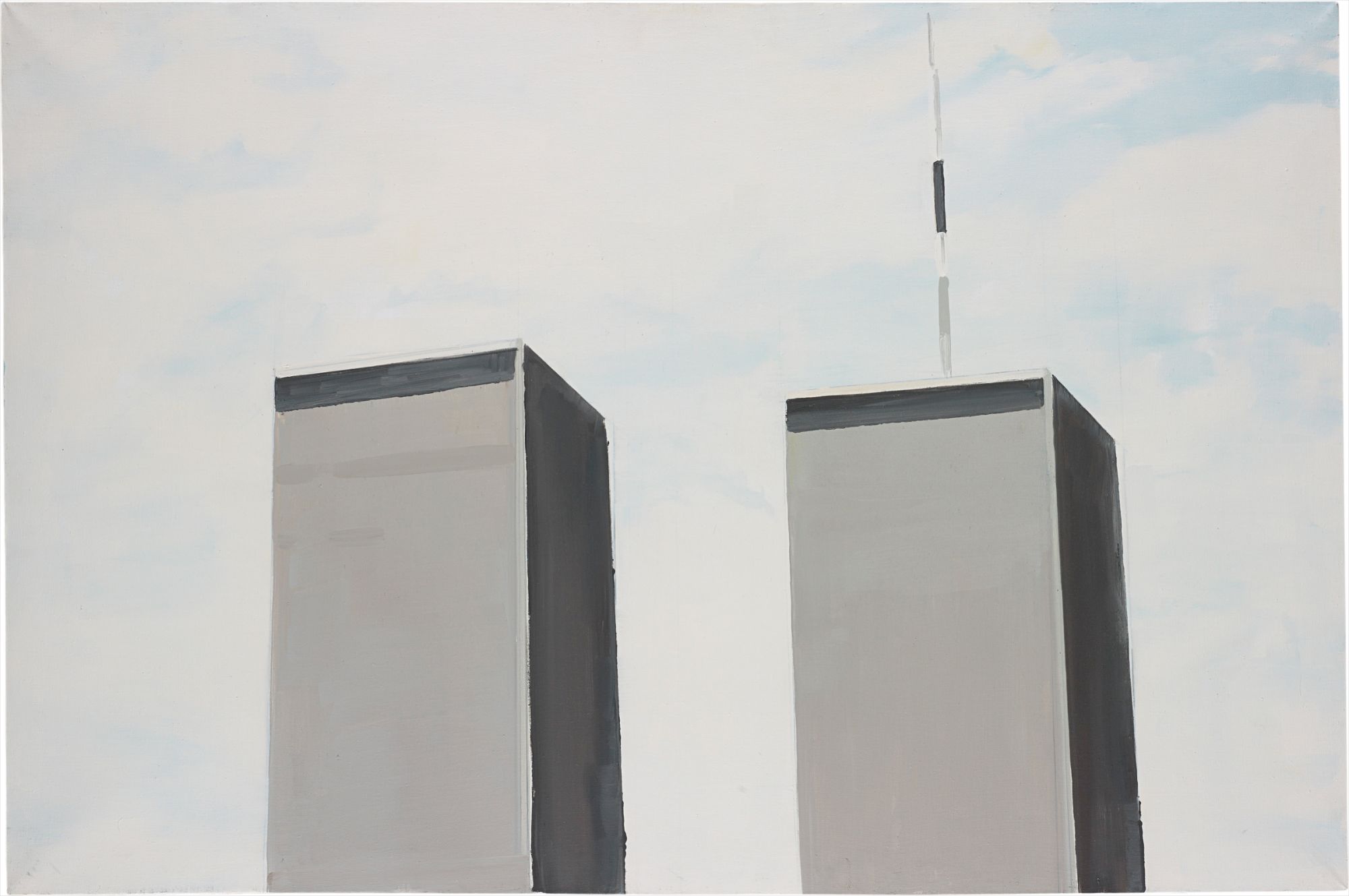
Koen van den Broek Reimagines the Familiar World
Artist Spotlight · The Collection Editorial
There is a particular kind of silence that settles over the paintings of Koen van den Broek, a Belgian artist whose work has earned serious critical attention across Europe and North America over the past two decades. His canvases do not shout. They wait. Whether depicting a crumbling urban kerb, the shadow geometry of a highway overpass, or the dusty stillness of an American road, his paintings hold the viewer in a state of suspended attention that feels increasingly rare in contemporary art.
Koen van den Broek
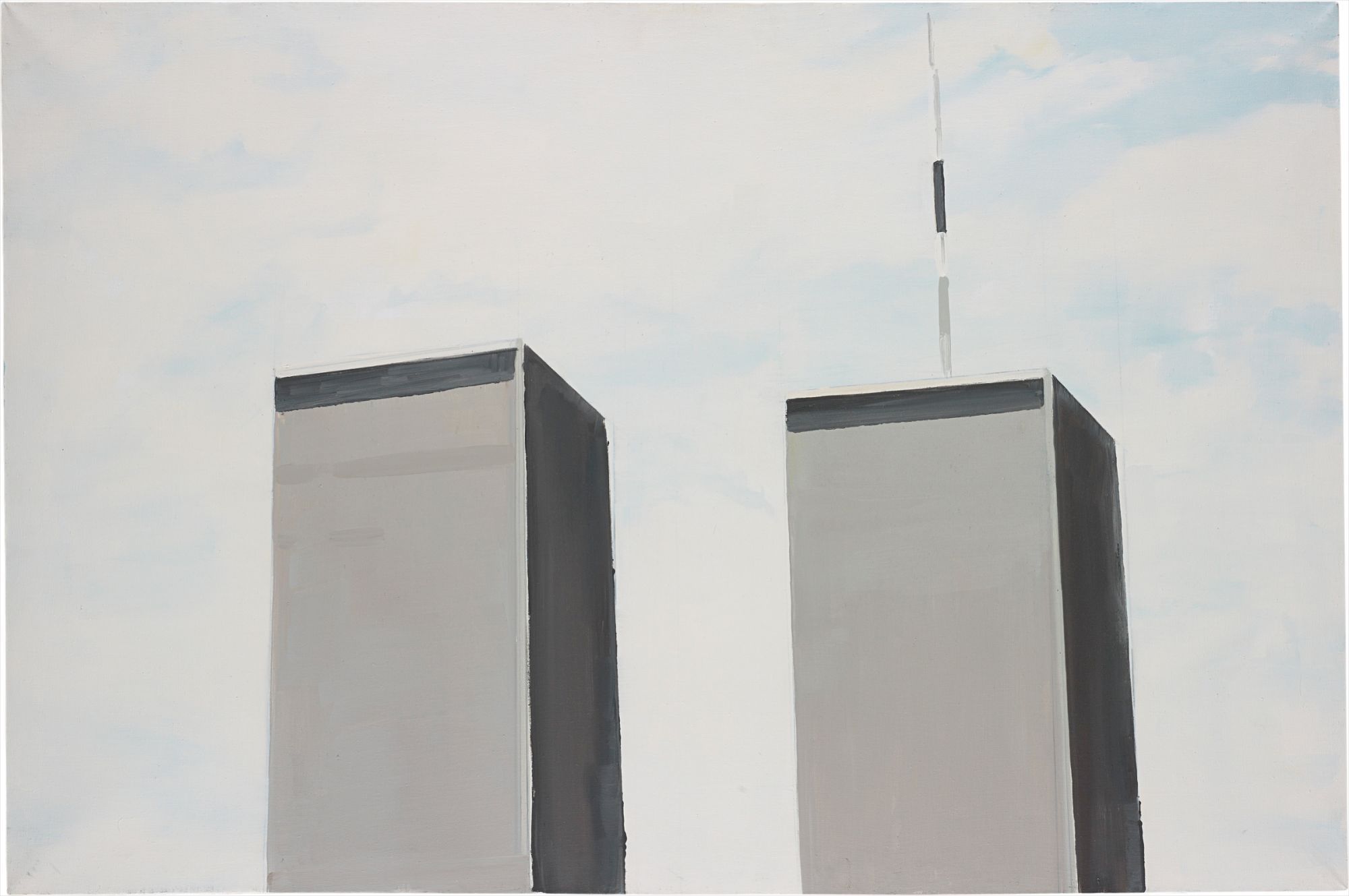
Twin Towers
Exhibitions at galleries including Zeno X in Antwerp, one of Europe's most respected platforms for serious painting, have confirmed his position as one of the most thoughtful painters working in his generation. Born in Belgium in 1973, van den Broek came of age during a period when European painting was reassessing its own possibilities, navigating the aftermath of conceptualism and the early tremors of digital culture. He studied at the Royal Academy of Fine Arts in Antwerp, an institution with a deeply rooted tradition in formal training, and later traveled extensively in the United States, a journey that would prove formative. The vast American landscape, its roadways and parking structures, its vernacular architectures and the democratic bluntness of its built environment, entered his visual vocabulary and never fully left.
This encounter between European painterly sensibility and the raw materiality of American space gives his work its distinctive, quietly charged atmosphere. Van den Broek's practice centers on a deceptively simple question: what happens when painting slows down and looks carefully at things we normally pass by without seeing? He is drawn to transitional spaces, the cracks in pavement, the geometry of a tent, the reflective surface of a vehicle, the anonymous facade of a garage. These are not glamorous subjects, yet in his hands they acquire a strange and compelling dignity.
Koen van den Broek
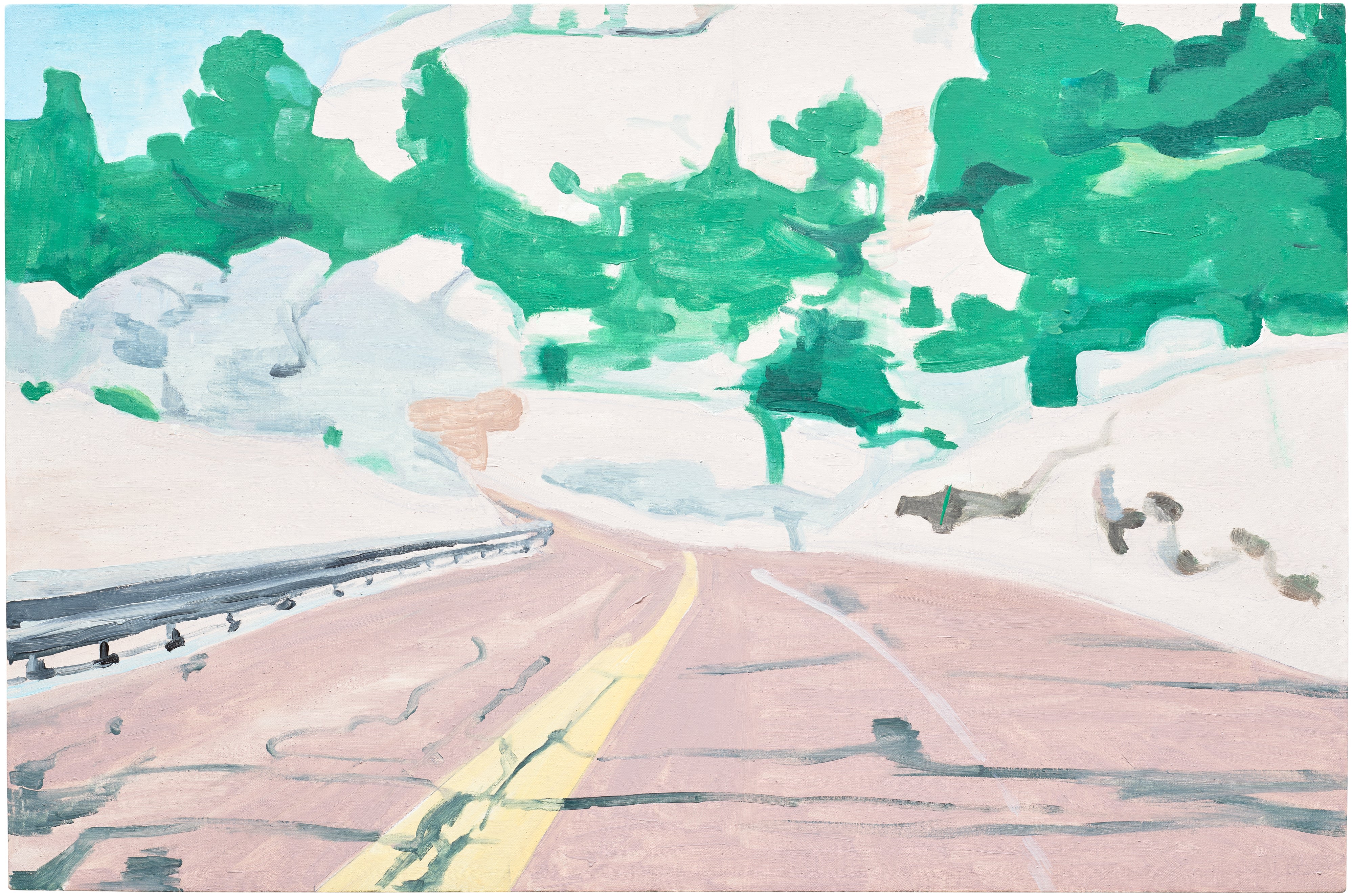
Zion, 2002
His technique balances crisp formal clarity with an almost meditative restraint, flattening perspective in ways that owe something to both photography and to the great tradition of twentieth century abstraction, while remaining stubbornly, beautifully representational. Among the works that have defined his reputation, the painting known as Twin Towers stands as a significant touchstone. Rather than depicting the towers in any literal or documentary sense, van den Broek approaches the subject through his characteristic method of formal reduction and emotional compression, stripping the imagery down to its architectural and psychological essentials. Zion, an oil on linen from 2002, demonstrates his early mastery of vast spatial feeling within a spare compositional framework, evoking the American Southwest with a clarity that borders on the visionary.
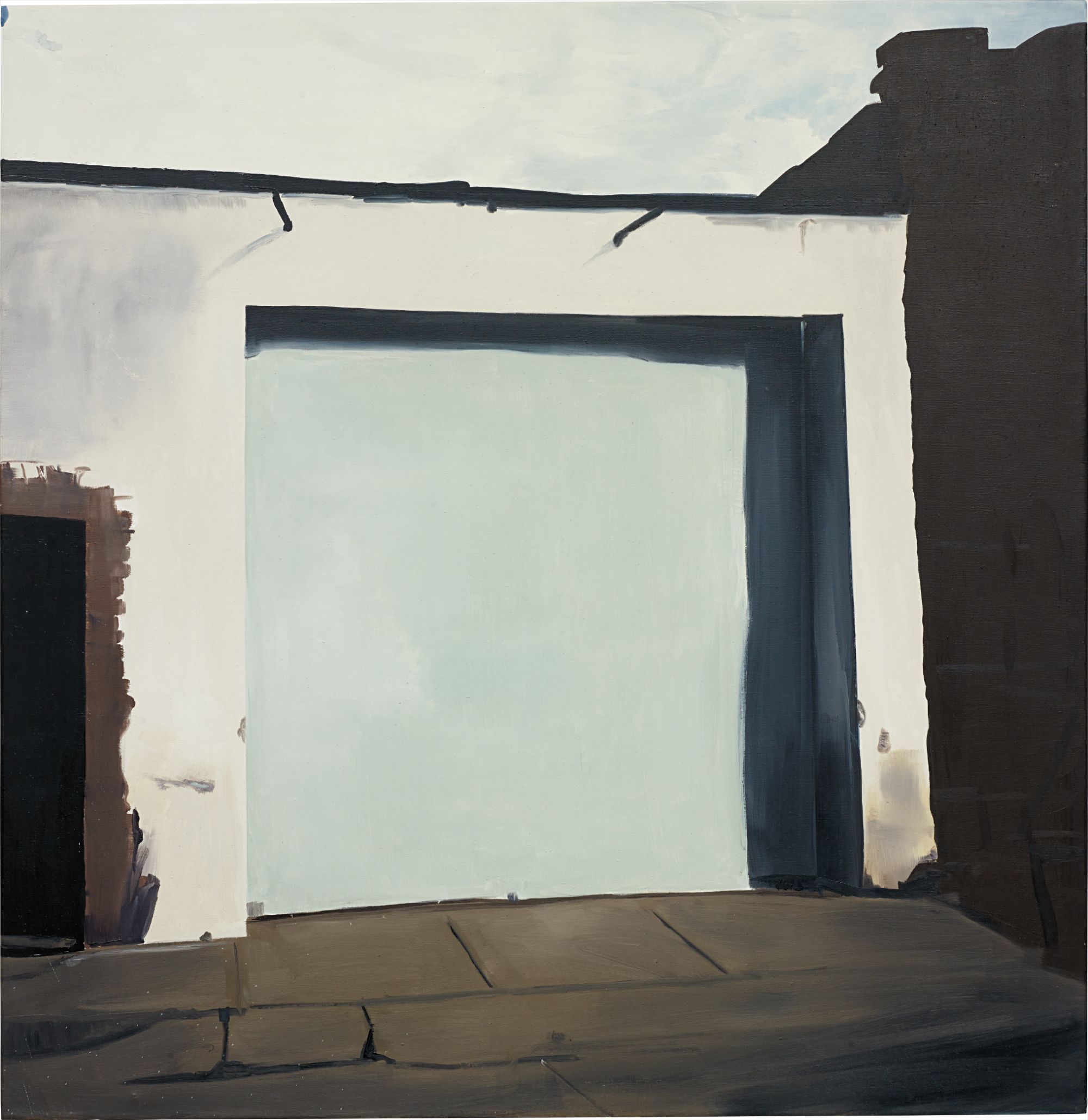
The 2004 work 1000 Cracks is perhaps his most quietly radical painting, transforming a subject that might seem purely incidental into something that reads almost as an abstract meditation on rupture, time, and the persistence of surfaces. Hummer, a 2010 work in acrylic and graphite on paper, shows his willingness to work across media and scales, bringing the same focused attention to the gleaming body of a consumer vehicle that other painters might reserve for a portrait or a landscape. The range of van den Broek's titles tells its own story. Garage, Cohesion, Tent Number 2, these are not lyrical or metaphorical titles in the conventional sense.
Koen van den Broek
Garage
They are designations, almost procedural, which creates a productive tension with the quiet emotional intensity that his paintings actually deliver. This gap between the mundane word and the luminous painted surface is part of what makes his work so rewarding to live with. Collectors who have brought his paintings into their homes often speak of the way these works reveal themselves slowly, offering new details and new layers of feeling over months and years. In terms of market positioning, van den Broek occupies a compelling space for collectors who value rigorous contemporary painting with a strong critical foundation.
His work has been shown internationally and is held in serious private collections across Belgium, the Netherlands, and beyond. He works with Zeno X Gallery in Antwerp, a program that has historically been associated with artists of exceptional longevity and intellectual seriousness. For collectors considering entry points into his practice, works on paper such as Hummer offer an accessible way to engage with his sensibility, while major oil paintings represent the full expression of his ambitions. The consistency and distinctiveness of his vision across more than two decades of work suggests strong long term value, both cultural and financial.
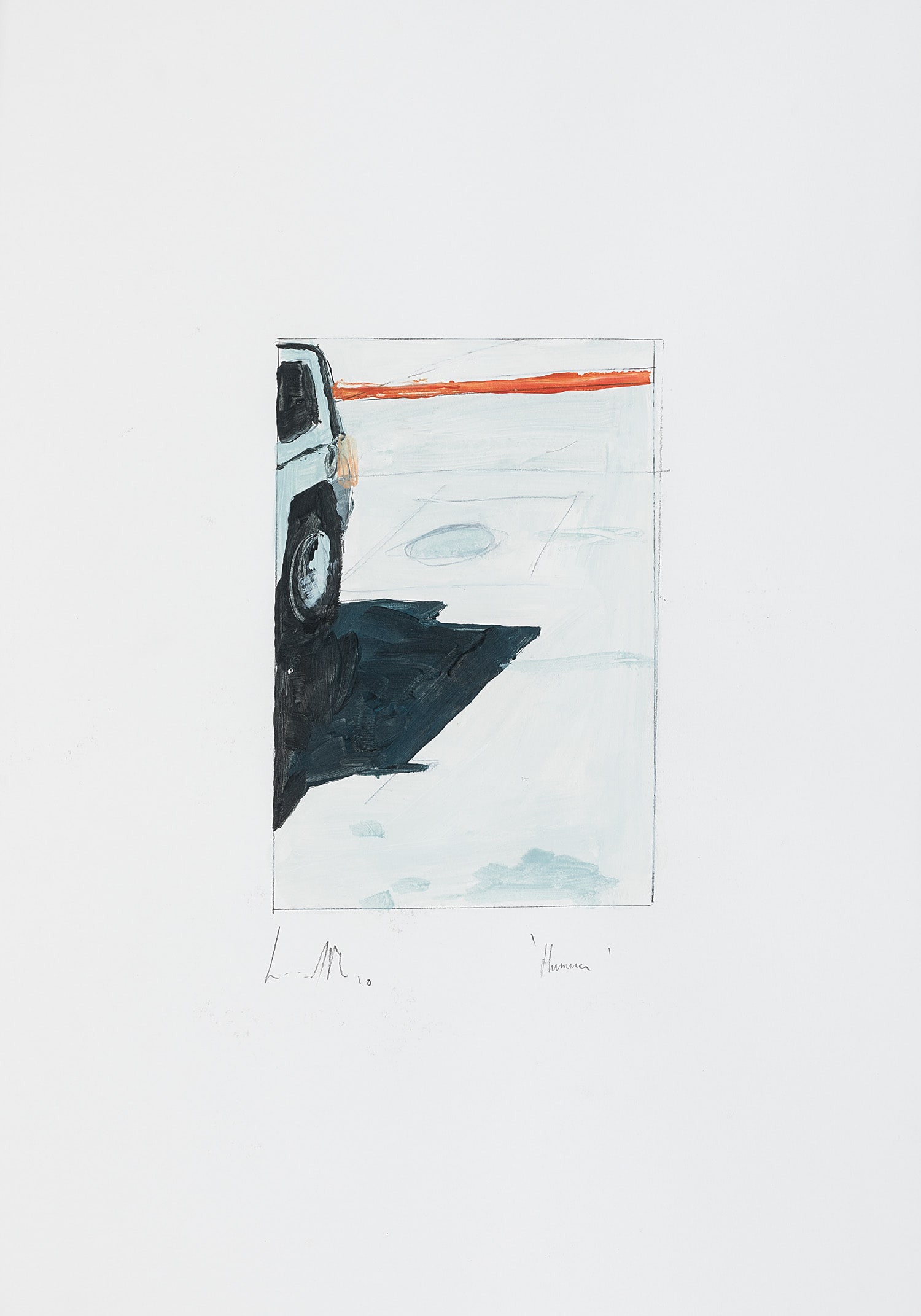
Koen van den Broek
Hummer, 2010
It is useful to think about van den Broek alongside painters such as Luc Tuymans, his fellow Belgian whose work similarly mines the seemingly ordinary for deeper and sometimes unsettling resonance, or the American painter Edward Ruscha, whose engagement with the vernacular landscape of roads, parking lots, and commercial architecture anticipates many of van den Broek's own preoccupations. There is also a kinship with the German painter Peter Doig in the way both artists use landscape and environment to carry psychological and historical weight without ever becoming illustrative or literal. Van den Broek holds his own distinctly in this company, bringing a quietude and a formal precision that are entirely his own. What makes Koen van den Broek matter today is precisely his insistence on painting as a form of attentive looking in an age of relentless distraction.
His work asks us to pause before the cracked sidewalk, the parked vehicle, the empty road, and to find there something worth sustained attention. In doing so, he participates in a long and honorable tradition of painting that finds the monumental in the overlooked. For collectors, institutions, and anyone who cares about where contemporary painting is going, his work represents not only a rewarding aesthetic experience but a genuine and enduring contribution to the art of our time.
Explore books about Koen van den Broek