Khari Turner
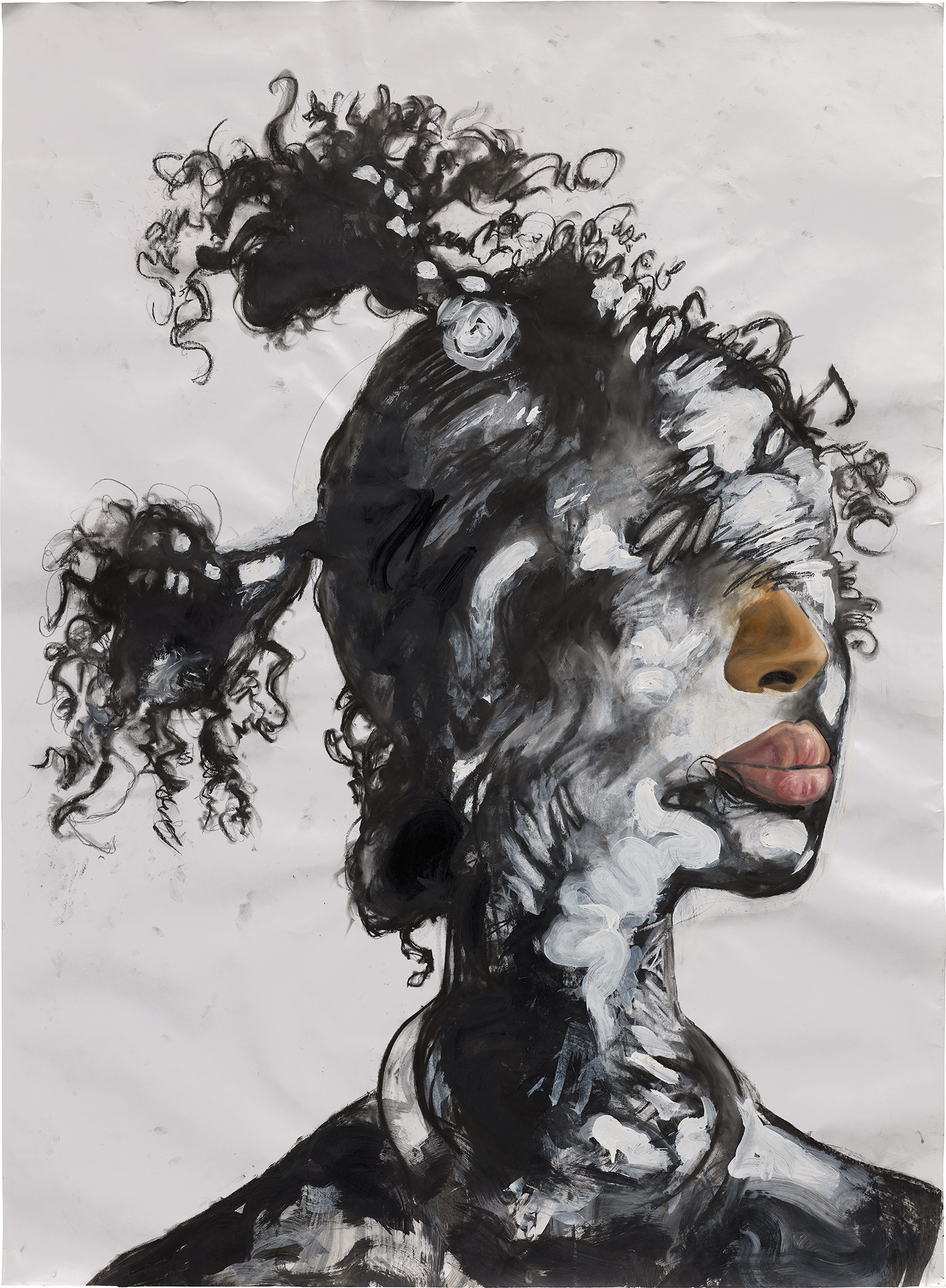
Khari Turner Paints the World Luminous
Artist Spotlight · The Collection Editorial
There is a particular quality of attention that runs through the best of Khari Turner's paintings, a sense that the artist has leaned in very close to the people he depicts and refused to look away. That quality has been drawing collectors, curators, and fellow artists to his work with increasing urgency over the past several years. Born in 1993, Turner has emerged as one of the more compellingly original figurative painters working in the United States today, and the appetite for his canvases and works on paper has grown steadily as the broader art world catches up to what a devoted circle of early believers already knew. Turner's formation as an artist is inseparable from the landscapes and communities that shaped him.
Khari Turner
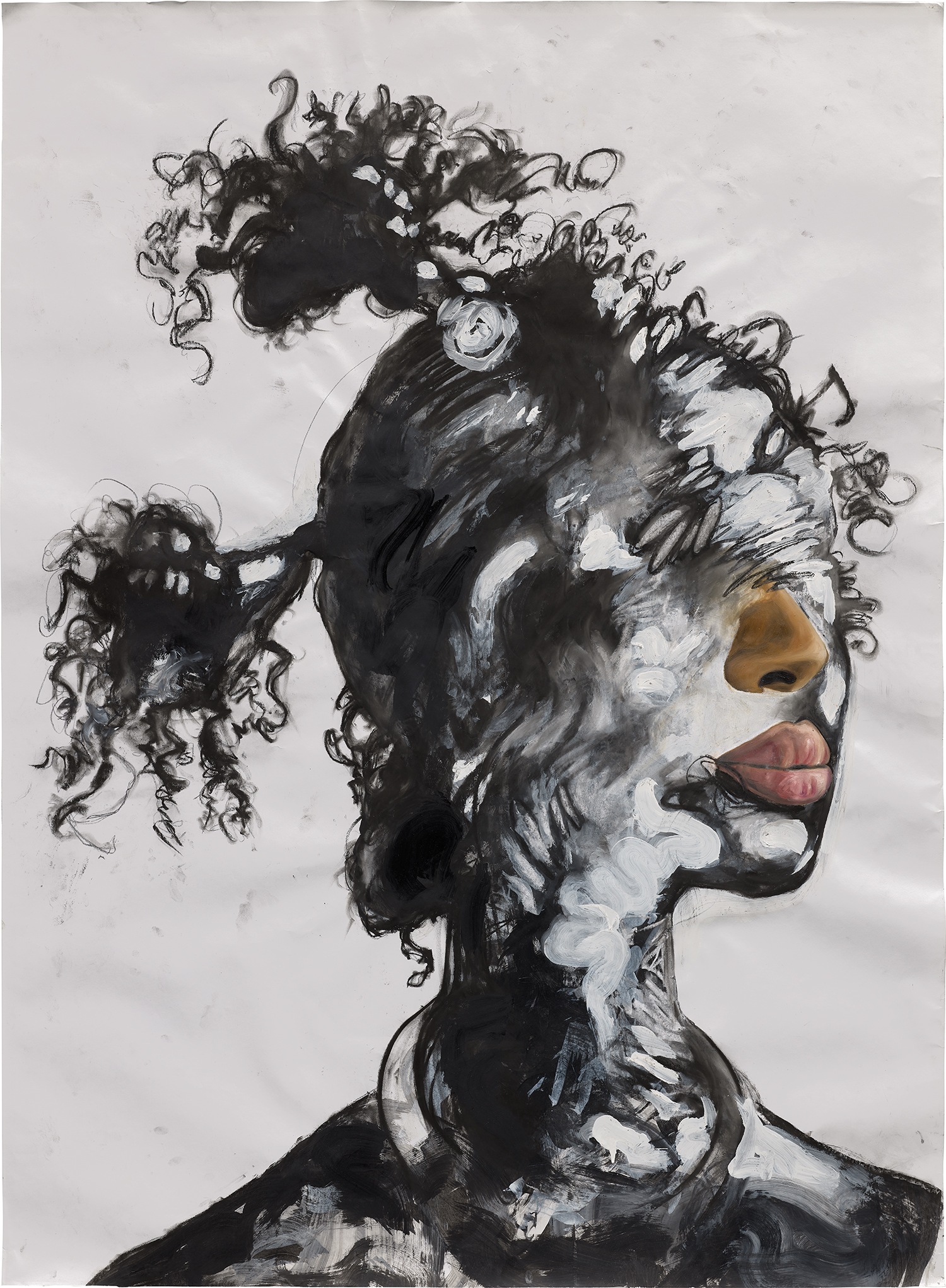
Entering Hope Adjacent, 2020
His American upbringing gave him a deep fluency in the textures of everyday Black life, the kind of intimate, unheroic moments that so much of Western art history has historically overlooked or rendered through the distorting lens of the outsider. From an early point in his development, Turner seemed to understand that these moments, a figure resting, a gathering in a familiar space, the particular quality of light in a domestic interior, carried enormous weight. His project has been to find a visual language worthy of that weight. The development of that language involved a sustained engagement with the expressive traditions of twentieth century painting.
Turner works with gestural brushwork that carries echoes of the New York School's commitment to urgency and physical presence, but his canvases are never mere formal exercises. He layers acrylic, oil, ink, and charcoal with a freedom that feels both deliberate and instinctive, building surfaces that seem to hold time within them, records of the thinking and feeling that went into their making. Color in his work is never decorative. It is emotional, structural, and at times almost confrontational in its vibrancy.
Khari Turner
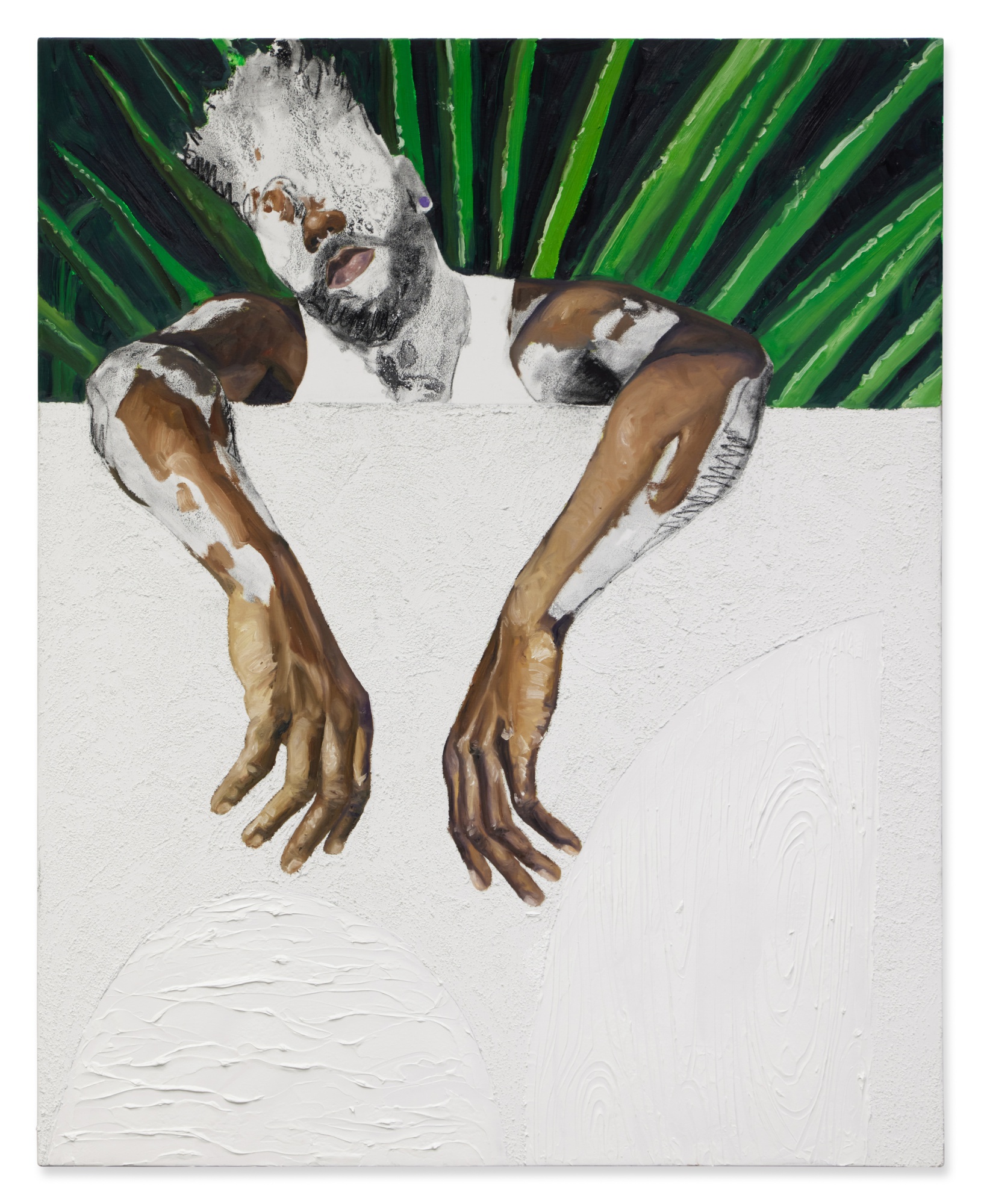
Untitled, 2021
Among his most discussed works is Entering Hope Adjacent, completed in 2020, a piece executed in acrylic, oil, ink, and charcoal on paper. The work exemplifies Turner's ability to conjure psychological depth through relatively spare means. The title itself does a great deal of work, suggesting proximity to a state of being rather than its full possession, and the painting honors that nuance with a visual intelligence that rewards sustained looking. Then there is a remarkable untitled canvas from 2021, one of the most materially ambitious works in his body of work to date.
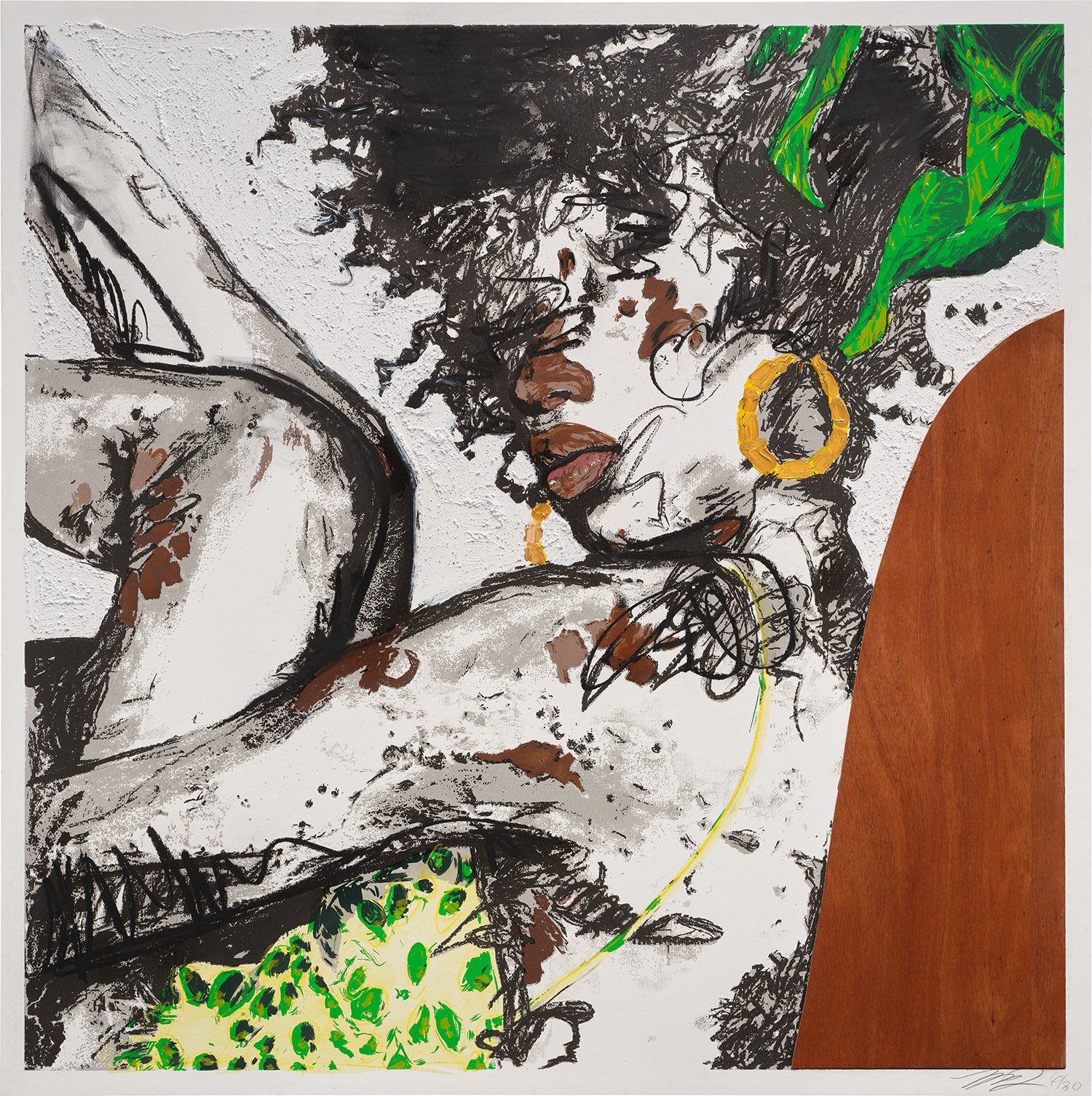
Into its surface Turner incorporated, alongside oil, acrylic, ink, charcoal, and sand, water gathered from a set of locations of personal and historical resonance: the coast of Senegal, the lower Manhattan docks, Lake Michigan, the Milwaukee River, and the Pacific Ocean. The gesture transforms the painting into something close to a reliquary, a container for geographies and the histories they carry. It is the kind of conceptual ambition that elevates craft into meaning. His screenprint Rest and Wellness, extensively hand worked with charcoal, wax pastels, wood veneer, and paint mixed with sand on heavy board, demonstrates his fluency across print and mixed media, showing that his sensibility loses none of its force when he moves away from the stretched canvas.
Khari Turner
Rest and Wellness
For collectors, Turner's work presents an opportunity that comes along rarely: entry into a body of work that is already fully formed in its vision and ambitions, yet still in the earlier chapters of its public story. The artists with whom he is most naturally in conversation include Jordan Casteel, whose tender attention to Black subjects in intimate settings shares something of Turner's spirit, and Henry Taylor, whose painterly directness and commitment to representing community life with honesty and warmth resonates throughout Turner's practice. One might also cite the influence of Kerry James Marshall's project of restoring Black figures to the center of art historical representation, though Turner's approach is more expressionistically raw, less concerned with the monumental and more drawn to the provisional, the in between moment, the figure caught between states. These are not derivative connections but contextualizing ones.
Turner belongs to a generation of painters who have inherited the theoretical and political gains of their predecessors and are now free to push the work in more personal and formally experimental directions. In terms of market positioning, Turner sits at an interesting inflection point. His works on paper and his mixed media pieces on board offer collectors a range of entry points, while the major canvases, particularly those with the kind of material complexity seen in the 2021 untitled work, represent the kind of ambitious statement pieces that anchor serious collections. Collectors drawn to figurative work with genuine conceptual underpinning, who are building around names like Casteel, Salman Toor, or Toyin Ojih Odutola, will find in Turner a natural and important addition.
The critical and institutional conversation around his generation is still building toward its full volume, which is precisely when attentive collectors have historically made their most meaningful acquisitions. What Turner is ultimately doing, across every medium and surface he works with, is insisting on the full humanity of his subjects and the communities they represent. At a moment when figurative painting has returned to the center of the contemporary art conversation, his voice stands out for its emotional honesty and its formal sophistication in equal measure. He is not painting symbols or arguments.
He is painting people, their rest, their hope, their presence in the world, and doing so with a level of care that turns each canvas into an act of genuine witness. That is a rare thing, and it is the quality that will keep his work relevant long after the current enthusiasm for figuration has run its course through market cycles and critical fashions. Khari Turner is painting for the long record, and the long record is paying attention.
Explore books about Khari Turner
Khari Turner: Visionary Works and Cultural Impact
Dr. Margaret Chen
The Turner Aesthetic: Form, Color, and Social Commentary
James Mitchell
Khari Turner: Retrospective and Critical Essays
Museum of Contemporary Art Editorial Board
Turner's Vision: Innovation in Contemporary Art Practice
Dr. Patricia Williams and Robert Cole
The Life and Work of Khari Turner
Angela Foster