Kevin Beasley
Kevin Beasley Gives Sound Its Body
Artist Spotlight · The Collection Editorial
In the spring of 2018, visitors to the Whitney Museum of American Art in New York encountered something that defied easy categorization. Kevin Beasley had transformed the museum's fourth floor into a living, breathing environment built around a working cotton gin motor salvaged from a Virginia farm. The installation, titled "A view of a landscape," was not merely an artwork on display but an event unfolding in real time, with the motor's vibrations moving through the gallery floor and into the bodies of everyone present. It was one of the most talked about museum commissions of that year, and it announced Beasley as one of the most important voices in contemporary American art.
Kevin Beasley
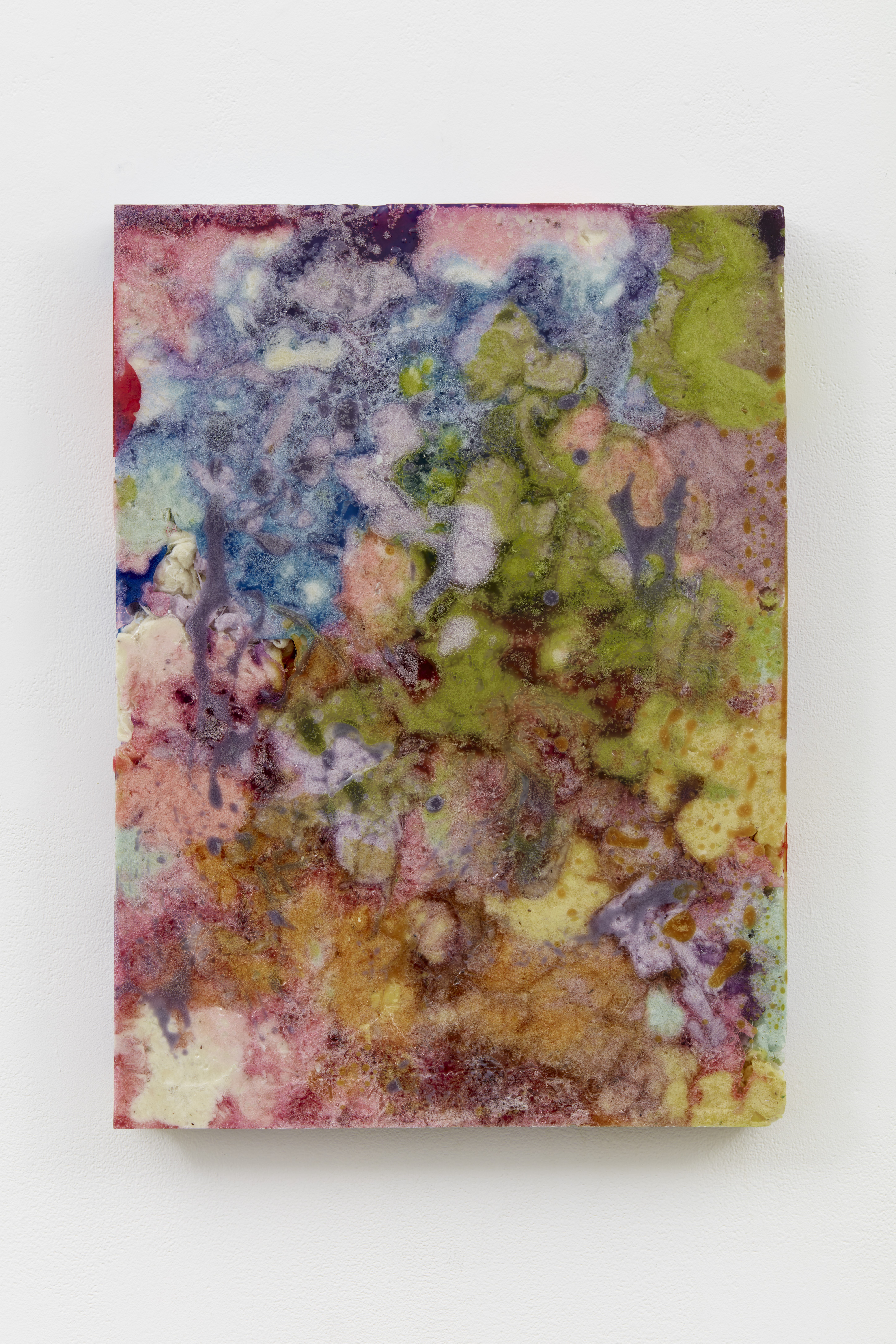
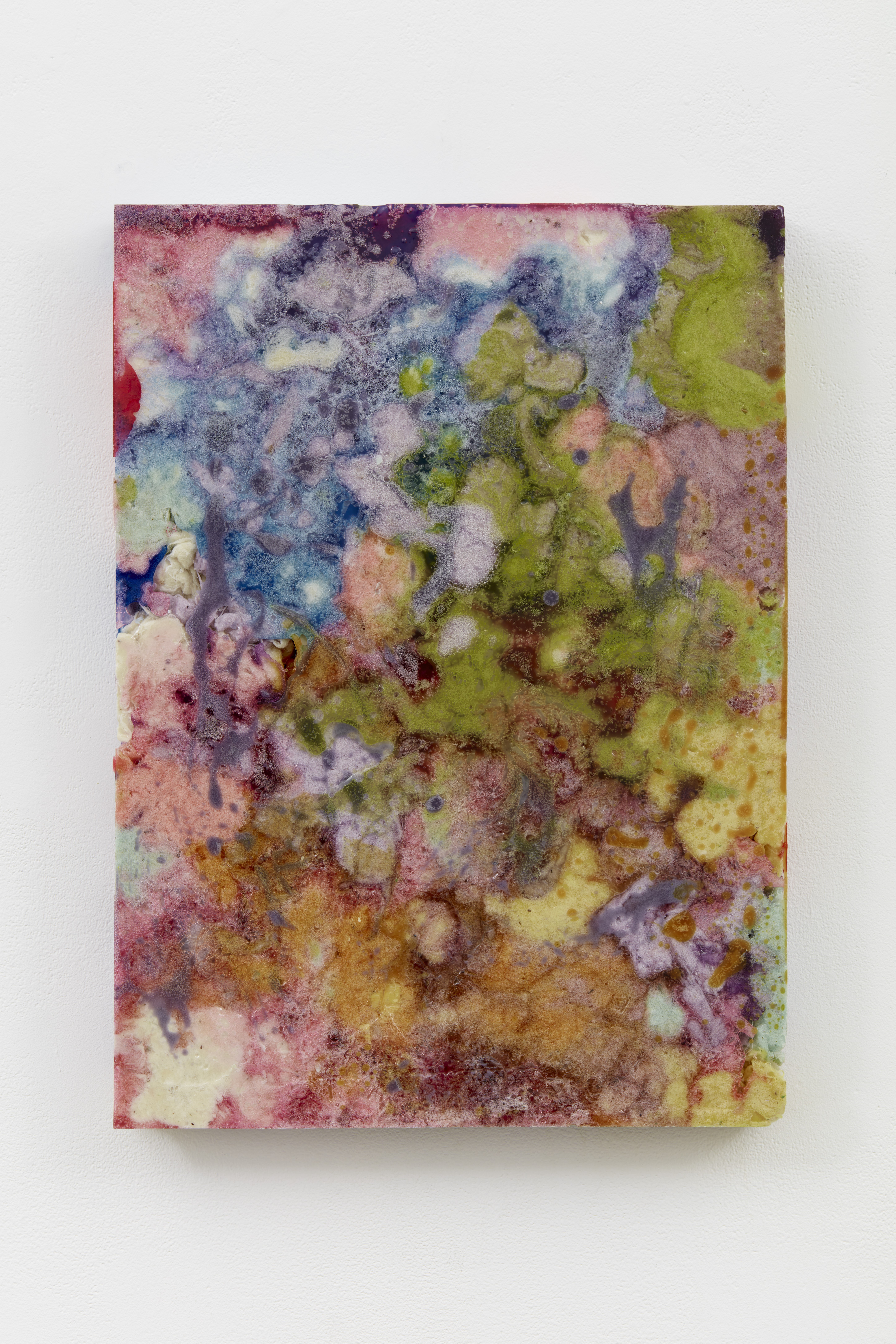
Residue VII, 2023
Beasley was born in 1985 and grew up in Earlham, Virginia, a small town whose agricultural history and deep roots in the American South would prove foundational to everything he would later make. The landscape of Virginia, with its complicated layering of beauty and historical violence, seeped into his consciousness early. He went on to study at the College for Creative Studies in Detroit before earning his MFA from Yale School of Art in 2012, where he trained alongside a generation of artists who would go on to reshape the conversation around race, materiality, and American identity. Yale gave him a rigorous conceptual framework, but it was his own biography and the textures of the world he had grown up in that gave his practice its emotional urgency.
After graduate school, Beasley began developing the dense, layered approach to sculpture and sound that would define his mature work. He became known for embedding objects, fabrics, and personal artifacts within masses of polyurethane resin, creating sculptures that feel simultaneously preserved and entombed. Garments belonging to family members, fragments of clothing worn during significant moments, everyday materials gathered from communities with specific historical weight: all of these become part of a physical and sonic archive. He also developed a practice of constructing custom audio equipment and sound suits, performing with and through materials in ways that collapsed the boundary between sculpture and musical instrument.
Kevin Beasley
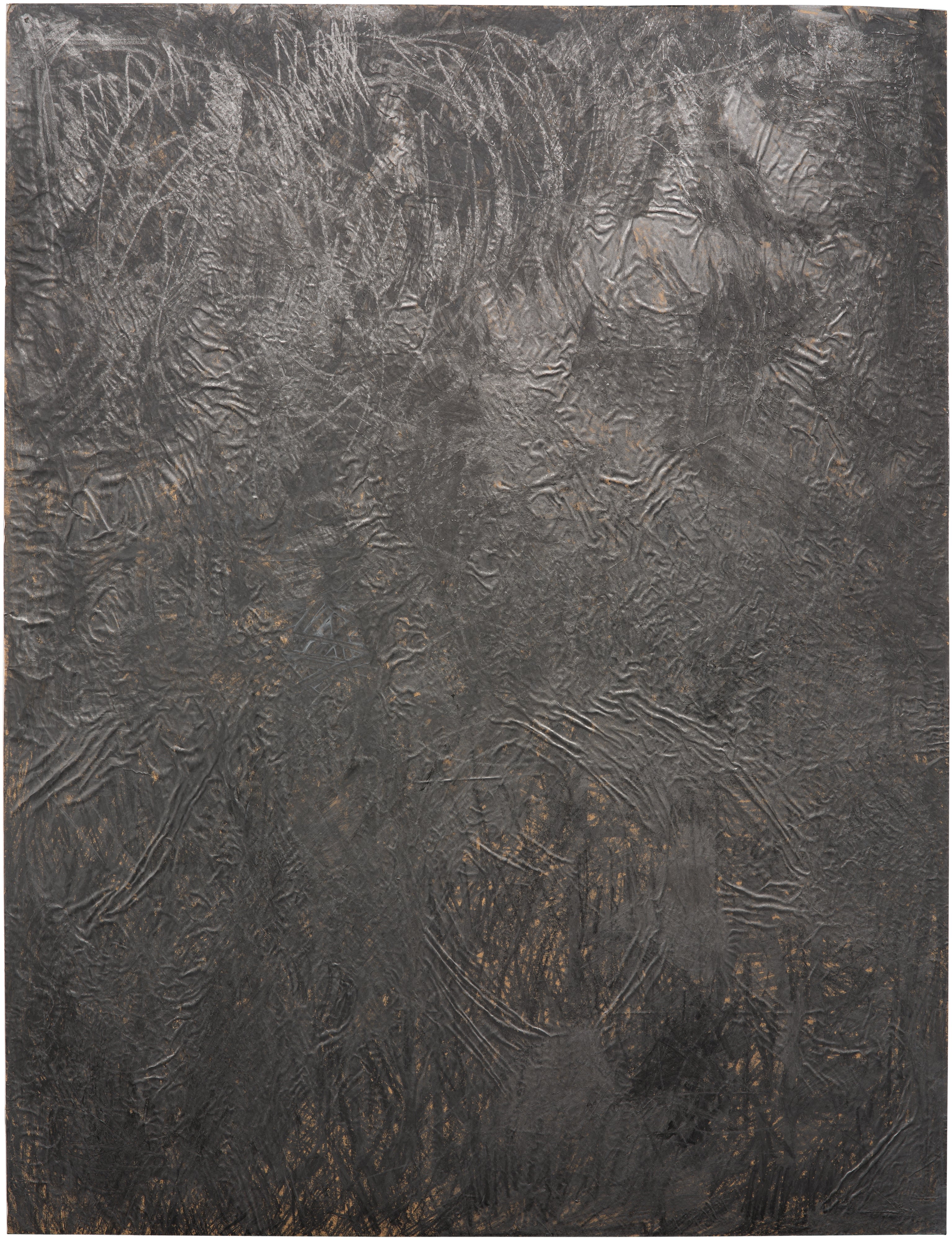
It Black Ostrich Feathers On The Head. Surmounted By Plooms Of L, 2020
The 2018 Whitney commission brought all of these threads together in a spectacular and deeply moving way. The cotton gin motor at the center of the work was not a metaphor sitting safely at a distance. It was a real machine with a real history, connected to the cotton industry that defined the labor and suffering of enslaved Black Americans for generations. By activating it within the institutional space of the Whitney, Beasley refused to let that history remain abstract or comfortable.
The sound and vibration of the motor became a kind of embodied testimony, something felt in the chest as much as heard with the ears. Critics and curators responded with genuine awe, and the work secured his reputation internationally. Among the works available to collectors today, "Residue VII" from 2023 offers a compelling point of entry into Beasley's ongoing engagement with material memory. Constructed from raw Virginia cotton and polyurethane resin, it continues the central dialogue of his practice: the way that humble, historically loaded materials can be transformed into objects of startling presence.
The cotton here is not decorative but structural, embedded within the resin like something caught mid transformation. Also of significant interest is the 2020 work on paper titled with the extended, almost incantatory phrase beginning "It Black Ostrich Feathers On The Head," executed in graphite, ink, and acrylic medium. Works on paper from Beasley offer collectors a more intimate window into his visual and conceptual thinking, with a directness that the large sculptures can sometimes hold at a grander remove. Collectors drawn to Beasley's work tend to be those with a genuine appetite for art that does not resolve easily into decoration or status.
His pieces ask something of the rooms they inhabit. They carry weight, both physical and historical, and they reward sustained attention rather than a quick glance. The market for his work has grown steadily since the Whitney commission, with increasing institutional interest driving awareness among private collectors in the United States and Europe. Galleries including Casey Kaplan in New York have represented his work and brought it to major art fairs, helping to build a committed base of serious collectors who understand they are acquiring something of lasting significance.
In terms of art historical context, Beasley occupies a rich and generative position within a lineage of artists who have used found materials and sound to address the specificities of Black American life. He is in conversation with the legacy of David Hammons, whose use of humble and charged materials redefined what sculpture could carry, and with the sonic investigations of artist and musician Julius Eastman. His work also resonates with that of Theaster Gates, who similarly transforms the material residue of specific communities into monumental artistic statements. Beasley brings a distinct sensibility to this company: a focus on the body, on vibration and frequency, and on the way that history is not merely remembered but physically inhabited.
What makes Kevin Beasley a figure of enduring importance is the seriousness and integrity with which he pursues questions that are far from resolved in American life. He does not offer consolation or clean resolution. Instead he offers presence, the insistence that certain histories be felt rather than simply acknowledged. As his practice continues to evolve in the 2020s, with new works extending the material and sonic investigations that have defined his career, collectors and institutions alike are paying close attention.
To engage with his work now is to participate in an artistic conversation that will only deepen in resonance with time.