Kerry James Marshall
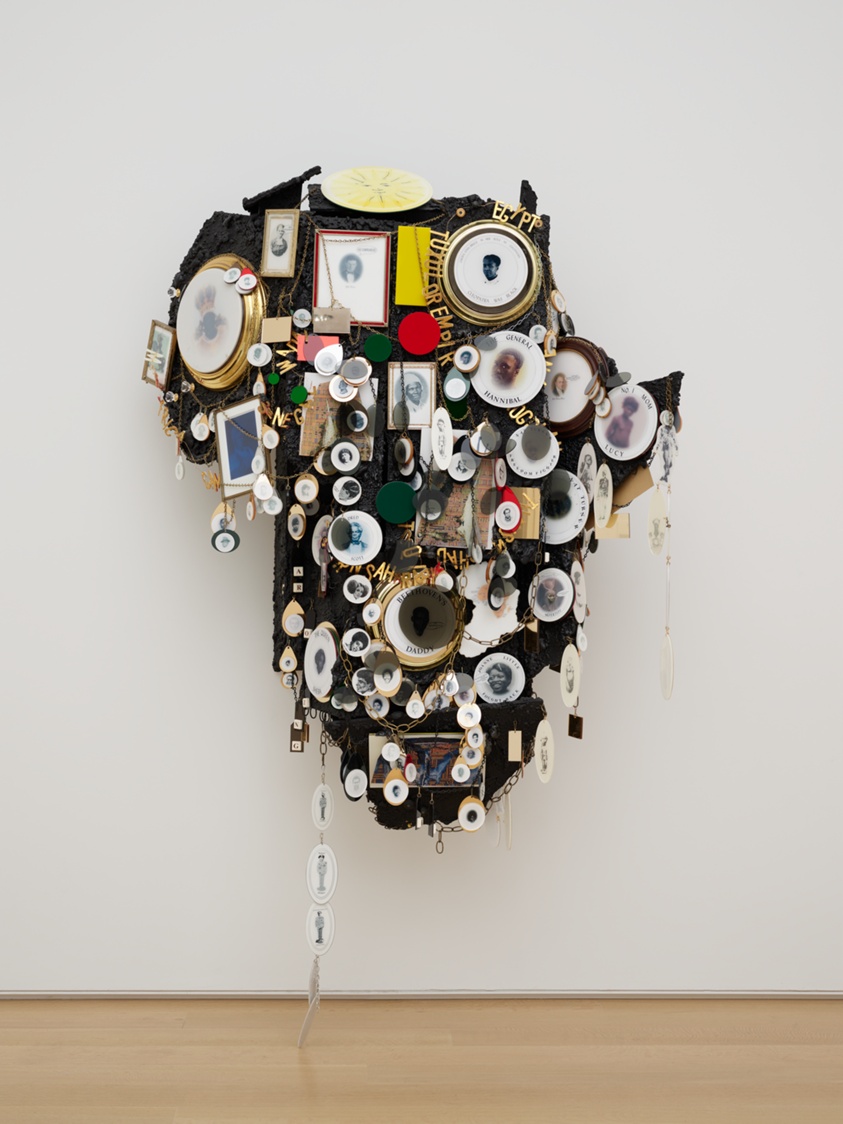
Kerry James Marshall Rewrites Art History Beautifully
Artist Spotlight · The Collection Editorial
“I want to be as good as any painter who ever lived. That is the standard I hold myself to.”
Kerry James Marshall, Interview Magazine
When the Museum of Contemporary Art Chicago opened 'Kerry James Marshall: Mastry' in the fall of 2016, something shifted in the art world that cannot be undone. The retrospective, which traveled to the Museum of Modern Art in New York and the Museum of Contemporary Art Los Angeles, drew enormous crowds and critical rapture in equal measure. It was not merely a career survey. It was a reckoning, a joyful and authoritative one, with the entire Western painterly tradition.
Kerry James Marshall
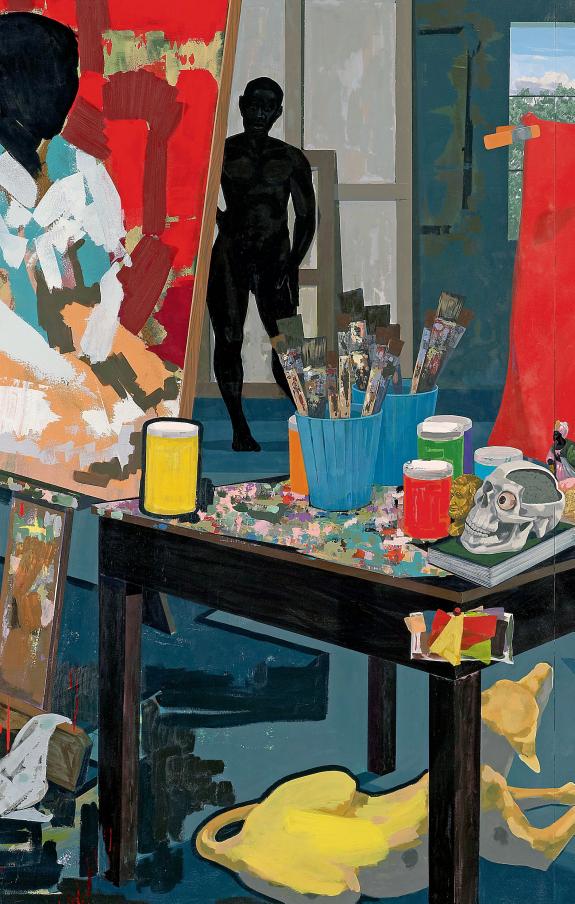
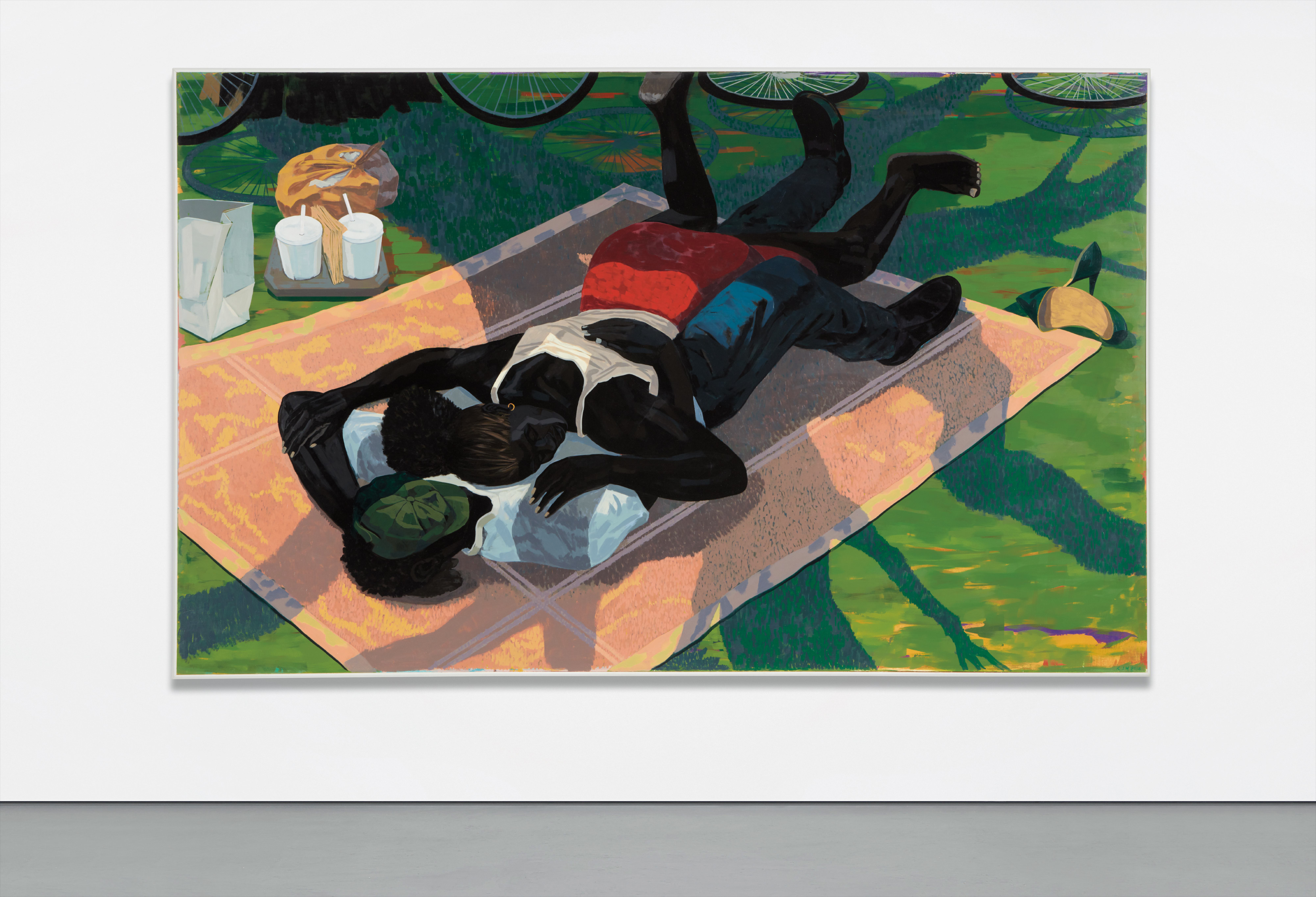
As timely as it is visually stunning, Kerry James Marshall’s epic, 2014
Marshall arrived at that moment not as a newcomer but as an artist who had been quietly, persistently, and brilliantly building one of the most important bodies of work in contemporary American art. Kerry James Marshall was born in Birmingham, Alabama in 1955, and his early years carried the full weight and vitality of that particular American experience. His family moved to Los Angeles when he was a child, settling in Watts, and Marshall came of age in the years immediately following the 1965 Watts uprising. He has spoken openly about the formative power of that landscape and that moment, about growing up in public housing and understanding from an early age that his community was largely invisible within the cultural institutions that shaped American identity.
He studied at the Otis Art Institute in Los Angeles, where he encountered the history of Western painting and began to ask, with growing urgency, why Black figures were so systematically absent from it. What emerged from that question was not anger in any narrow sense, but something far more creatively ambitious. Marshall decided that the answer to erasure was presence, and not a tentative or apologetic presence but an overwhelming, technically masterful, historically fluent one. He developed a practice rooted in the grand traditions of European painting, drawing on the compositional language of Manet, Velazquez, and the Dutch masters, while centering Black life with an uncompromising and luminous specificity.
Kerry James Marshall
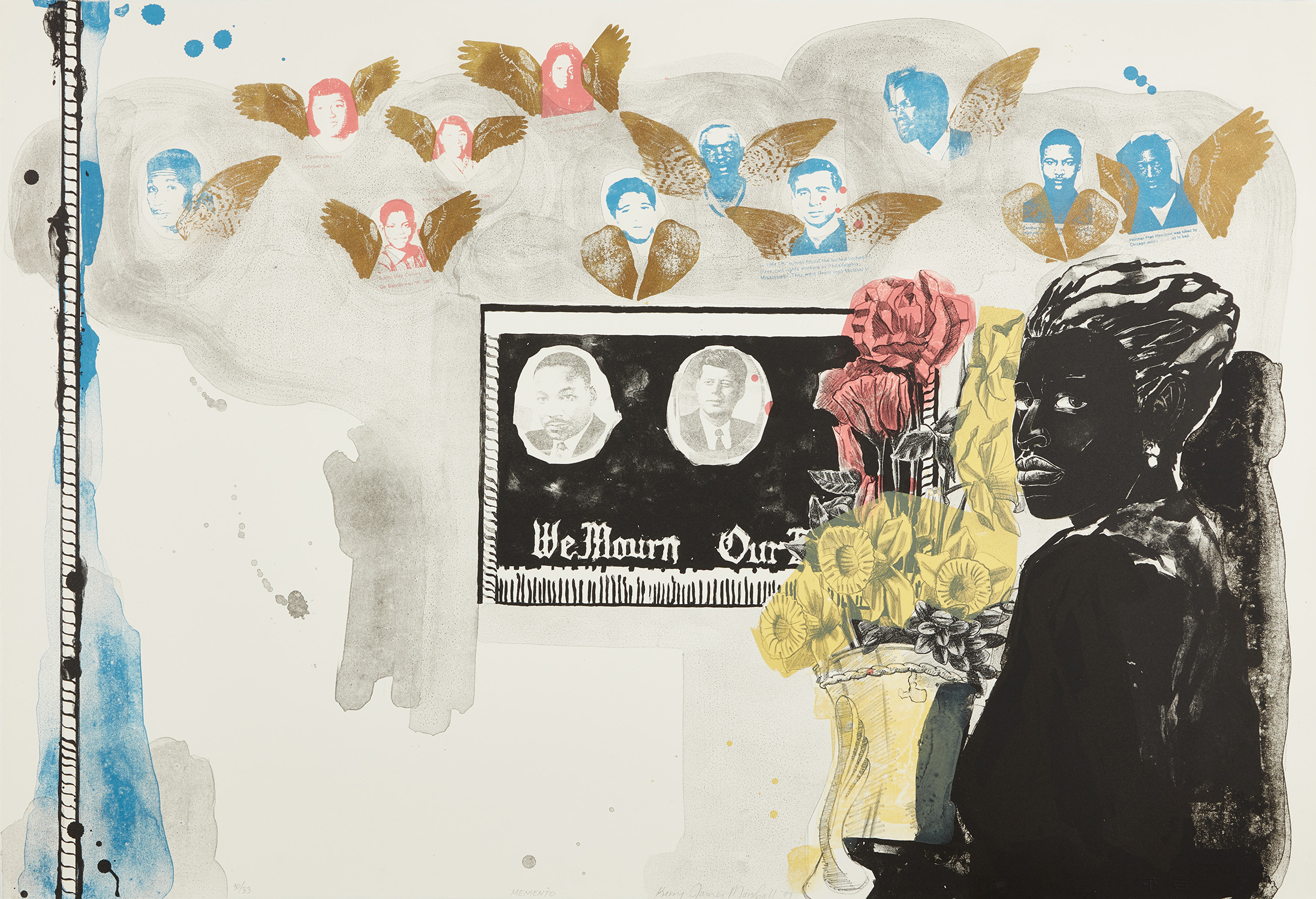
Memento (T. 96-367)
The figures in his paintings are rendered in the deepest possible blacks, a deliberate and profound artistic choice that refuses any softening or ambiguity about race, identity, and visibility. His signature works from the 1990s onward established the terms of his project with extraordinary clarity. 'We Mourn Our Loss' from 1997, worked in acrylic, glitter, and graphite on Masonite, brings the decorative vernacular of everyday Black life into dialogue with the language of memorial and civic painting. The glitter, which might read as kitsch in other hands, here becomes genuinely moving, catching light and insisting on beauty even within grief.
“There is no way for me to make work that does not have a Black person in it.”
Kerry James Marshall, The Guardian
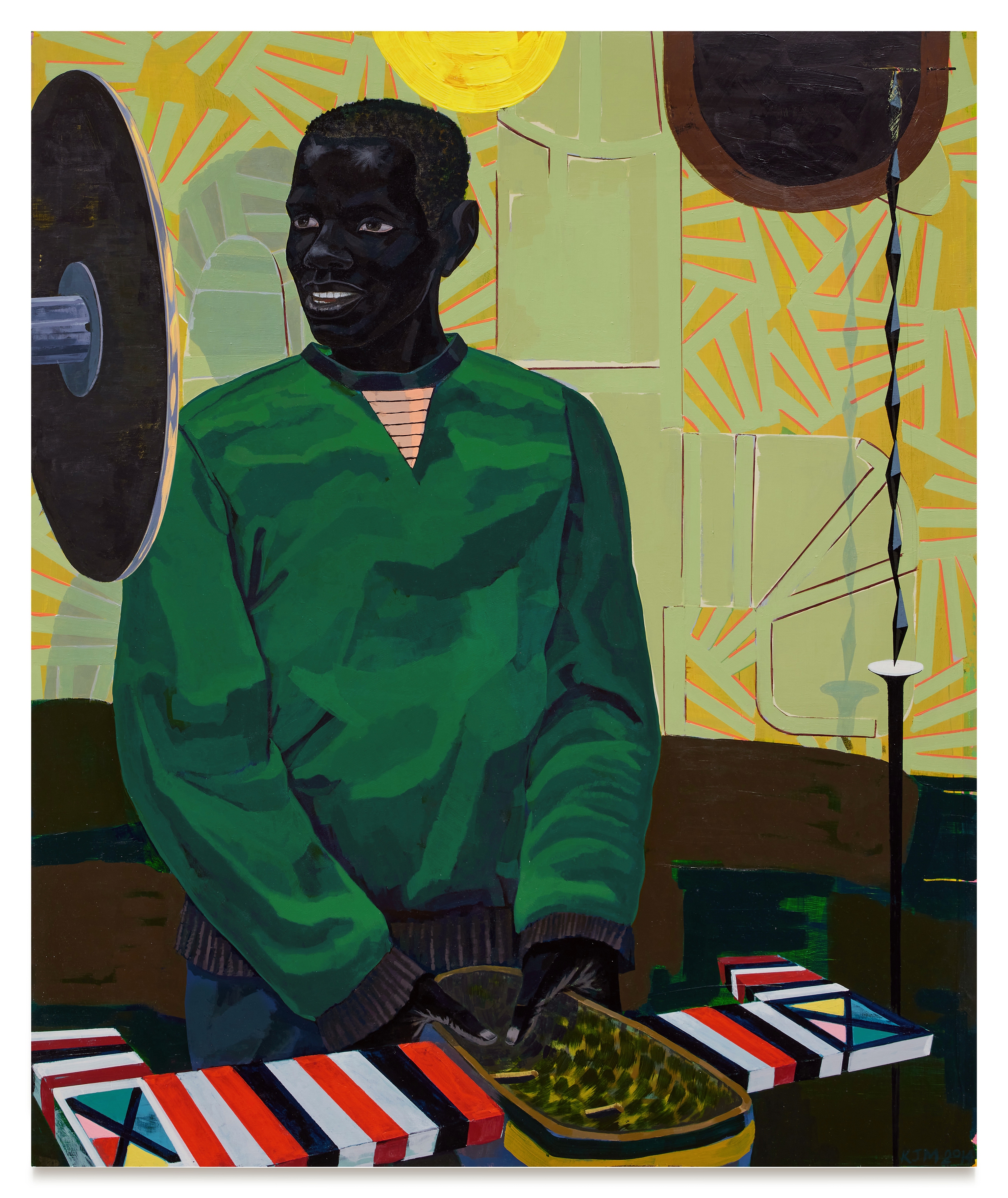
Works like 'Untitled (Mask Boy)' from 2014, in acrylic on PVC panel, demonstrate his command of surface and scale, while his works on paper, including 'Untitled (Stono Drawing)' and the haunting 'Preliminary Sketch for Black Painting' from 2002, reveal a draftsmanship of the highest order. These works on paper are not studies in the secondary sense. They are finished statements, intimate in scale but monumental in intention. Marshall's printmaking practice deserves particular attention from collectors, and the works available through The Collection offer an exceptional window into this dimension of his art.
Kerry James Marshall
Untitled (Mask Boy), 2014
Pieces like 'Brownie' from 1995, a lithograph on Somerset paper, and 'Memento' demonstrate that Marshall brings to the print medium the same conceptual rigor and historical awareness that defines his painting. His screenprints, including 'Dailies' on Rives BFK paper, carry the full authority of his vision in a form that is both intimate and collectible. 'Souvenir I,' a digital screenprint on cotton pillow sham, is among the more conceptually audacious of his multiples, collapsing the distance between fine art and domestic object in a way that feels entirely deliberate and entirely Marshall. On the auction market, Marshall has achieved records that reflect a long overdue recognition of his stature.
In 2018, his painting 'Past Times' sold at Sotheby's for just over 21 million dollars, setting a record at auction for a living Black American artist. That sale was a cultural event as much as a market one, widely discussed and celebrated as a signal of changing values within the collecting world. Collectors who hold his work understand that they are participating in something beyond financial appreciation. They are stewards of a body of art that is rewriting the canon in real time, and the institutional validation of that work, from the Met to Tate Modern, confirms what discerning private collectors have long known.
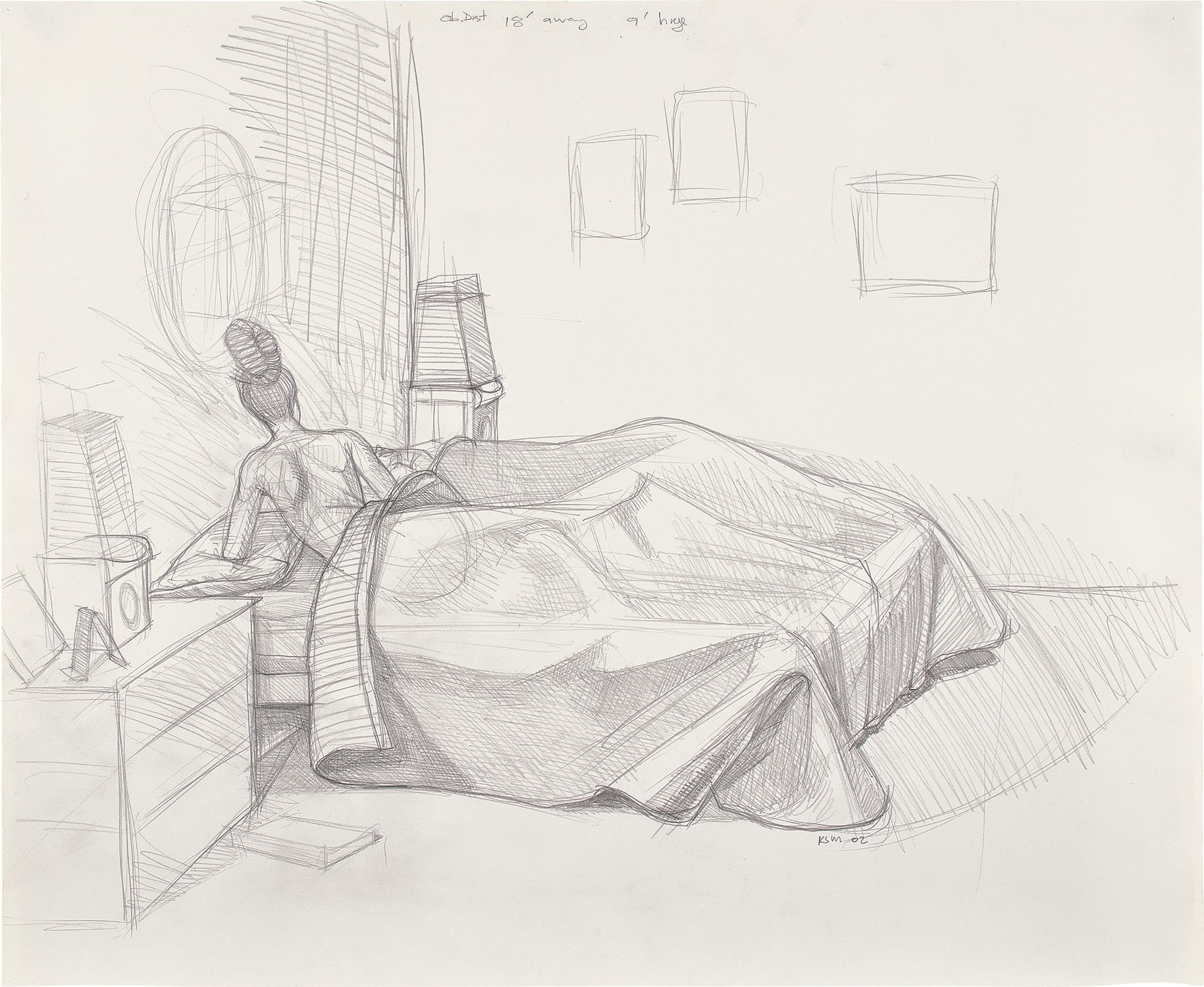
Kerry James Marshall
Preliminary Sketch for Black Painting, 2002
Within art history, Marshall occupies a singular position, though his work gains resonance when considered alongside a broader constellation of artists who have engaged with questions of race, representation, and the politics of visibility. Artists such as Kara Walker, Glenn Ligon, and Lynette Yiadom Boakye share something of his concern with Black figuration and the weight of historical absence, though each approaches the problem through a distinct formal and conceptual lens. Marshall's particular commitment to the conventions of Western painting, his embrace of its grandeur rather than its rejection, places him in a direct and transformative conversation with the entire tradition from Titian to the Hudson River School. He is not working outside that tradition.
He is expanding it from within. The legacy that Kerry James Marshall is building is one of those rare things in contemporary art: genuinely popular and genuinely serious at the same time. His work speaks to broad audiences without condescending to them, and it satisfies the most rigorous art historical scrutiny without becoming academic. He has described his project as an act of correction, filling the gaps in a visual history that was never as complete as it claimed to be.
To hold a work by Marshall is to hold a piece of that correction, a contribution to a more honest and more beautiful account of what painting can do and who it can speak for. That is a privilege, and collectors who recognize it are among the most thoughtful in the field today.
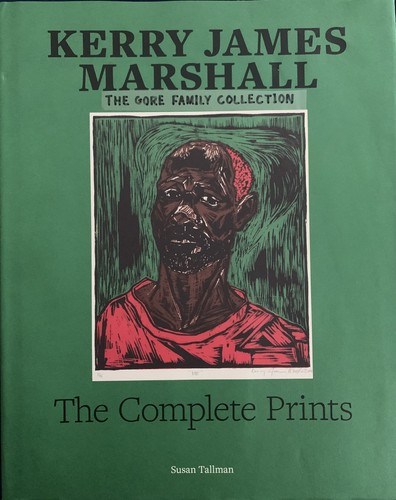
Explore books about Kerry James Marshall