Keltie Ferris
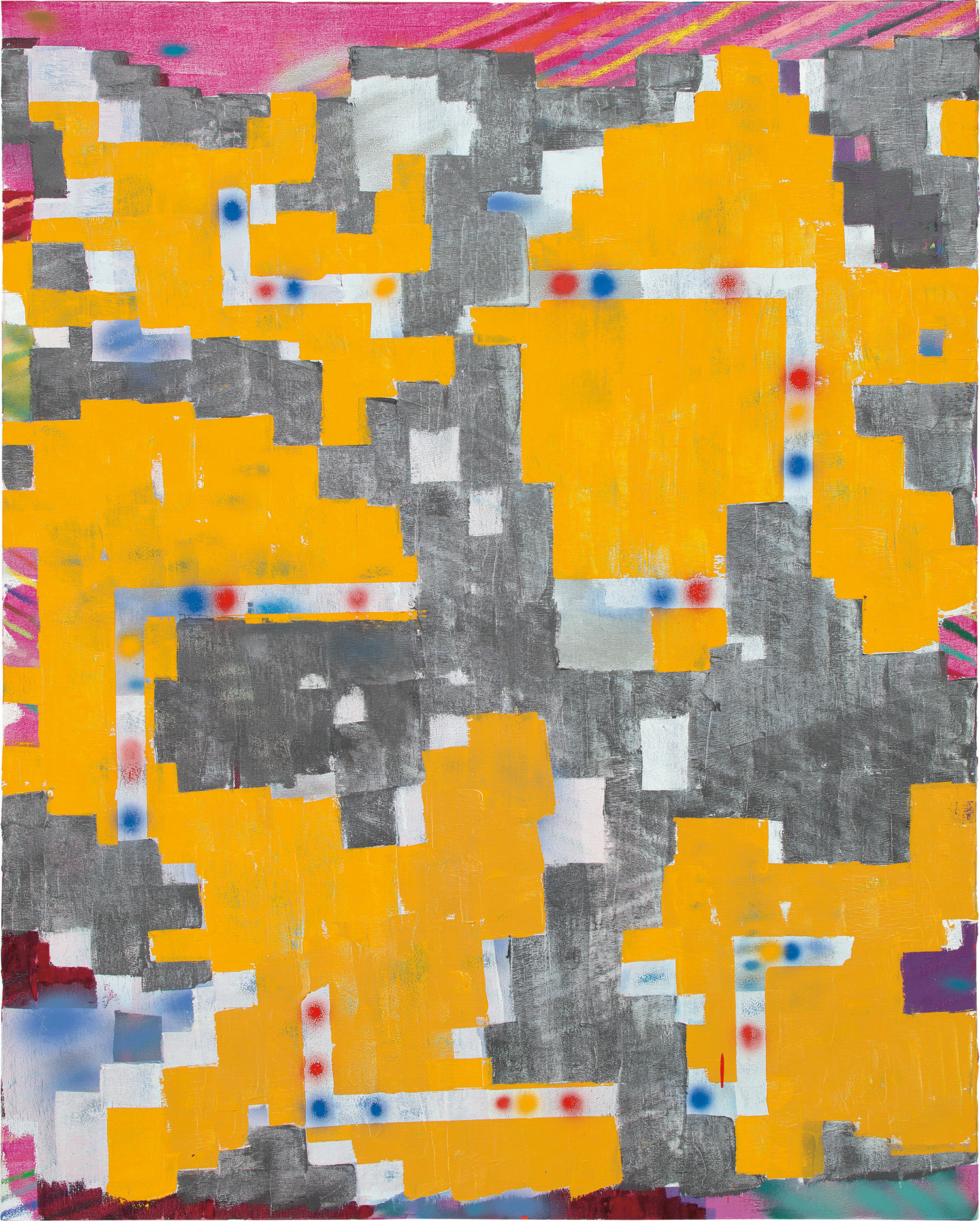
Keltie Ferris Paints the Digital Sublime
Artist Spotlight · The Collection Editorial
When the Whitney Museum of American Art turned its attention to Keltie Ferris, it was already clear that this Louisville born painter had staked out entirely singular territory in contemporary abstraction. Working at the intersection of gestural tradition and the visual grammar of screens, code, and digital light, Ferris had built a body of work that felt both urgently of this moment and deeply rooted in the long history of paint on canvas. The art world took notice, and collectors followed, drawn to paintings that pulse with an energy that is almost impossible to ignore in person. Ferris was born in 1977 and came of age as the internet was reshaping how humans see and process visual information.
Keltie Ferris
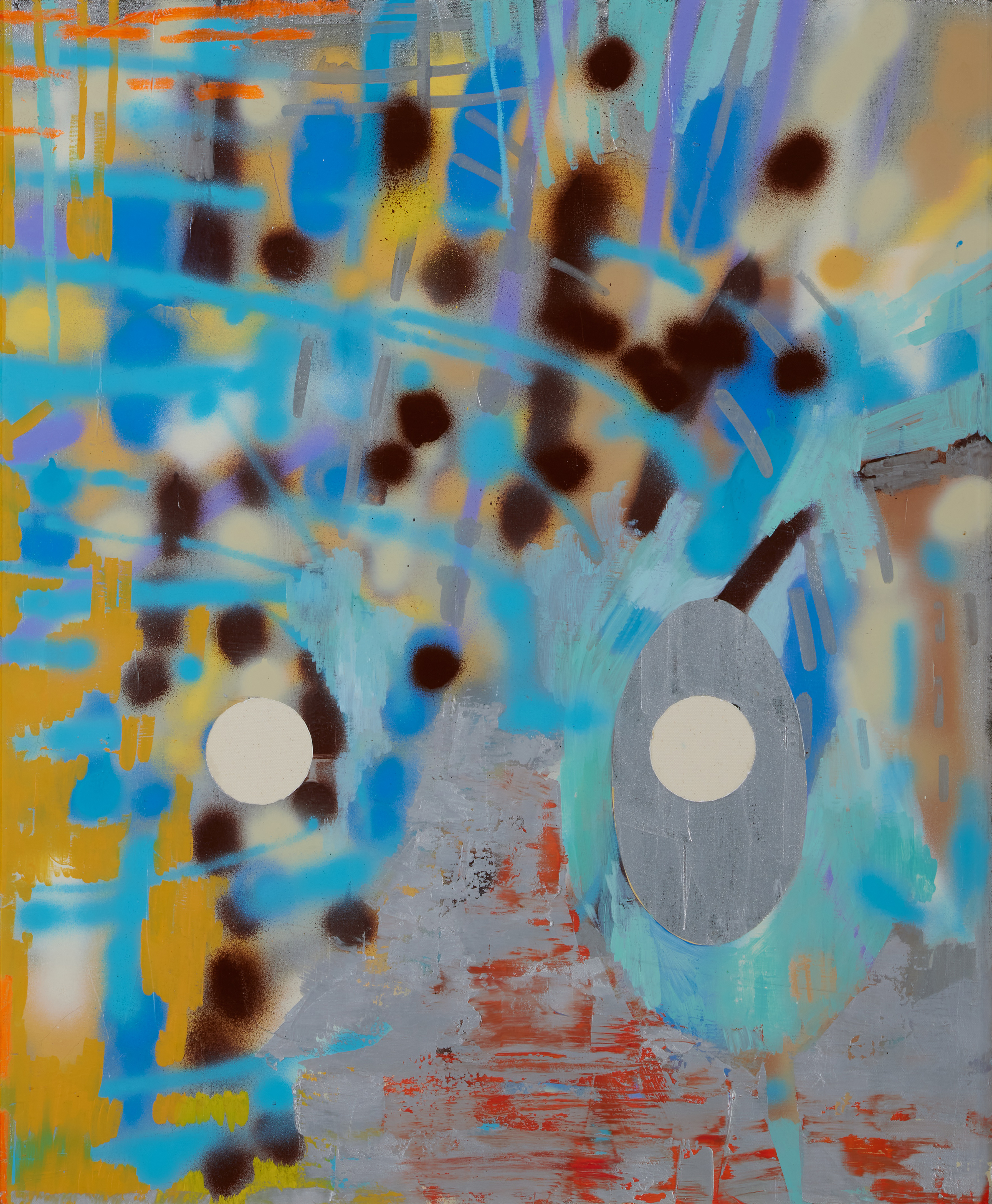
The Night Looker, 2007
That formative experience of watching analog and digital realities bleed into one another left a permanent mark on their sensibility. Trained as a painter with a serious grounding in art history, Ferris absorbed the lessons of Abstract Expressionism, Color Field painting, and the gestural traditions of the New York School, then subjected all of it to the pressure of a generation that had grown up staring at glowing rectangles. The result was not pastiche or commentary but something genuinely new: a painterly language that could hold both worlds at once. The development of Ferris's practice over the course of the 2000s represents one of the more compelling artistic evolutions in American painting of that decade.
Early works like The Night Looker from 2007 show a painter already thinking seriously about the body in space, about how a viewer orients themselves before a large canvas, and about the way light can be constructed rather than simply depicted. As the work matured into the early 2010s, Ferris began incorporating spray paint alongside oil, acrylic, and pastel, building surfaces of extraordinary physical richness that somehow also read as luminous and weightless. The spray paint, applied in halftone and gradient patterns drawn from the vocabulary of digital printing and screen imaging, introduced a productive tension with the handmade gestural marks beneath and around it. The paintings from 2010 to 2015 represent what many consider the heart of Ferris's achievement so far.
Keltie Ferris
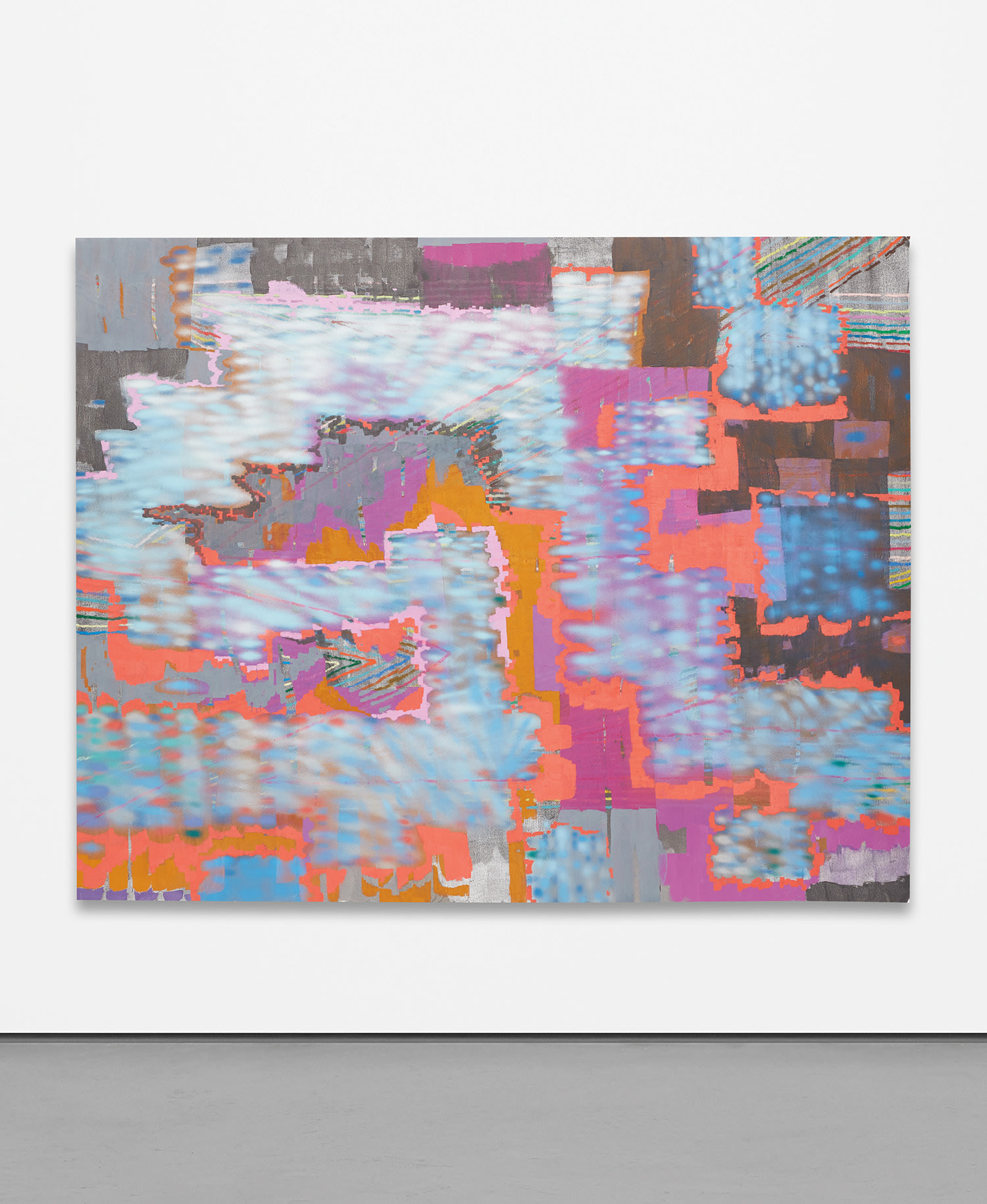
++++****))), 2012
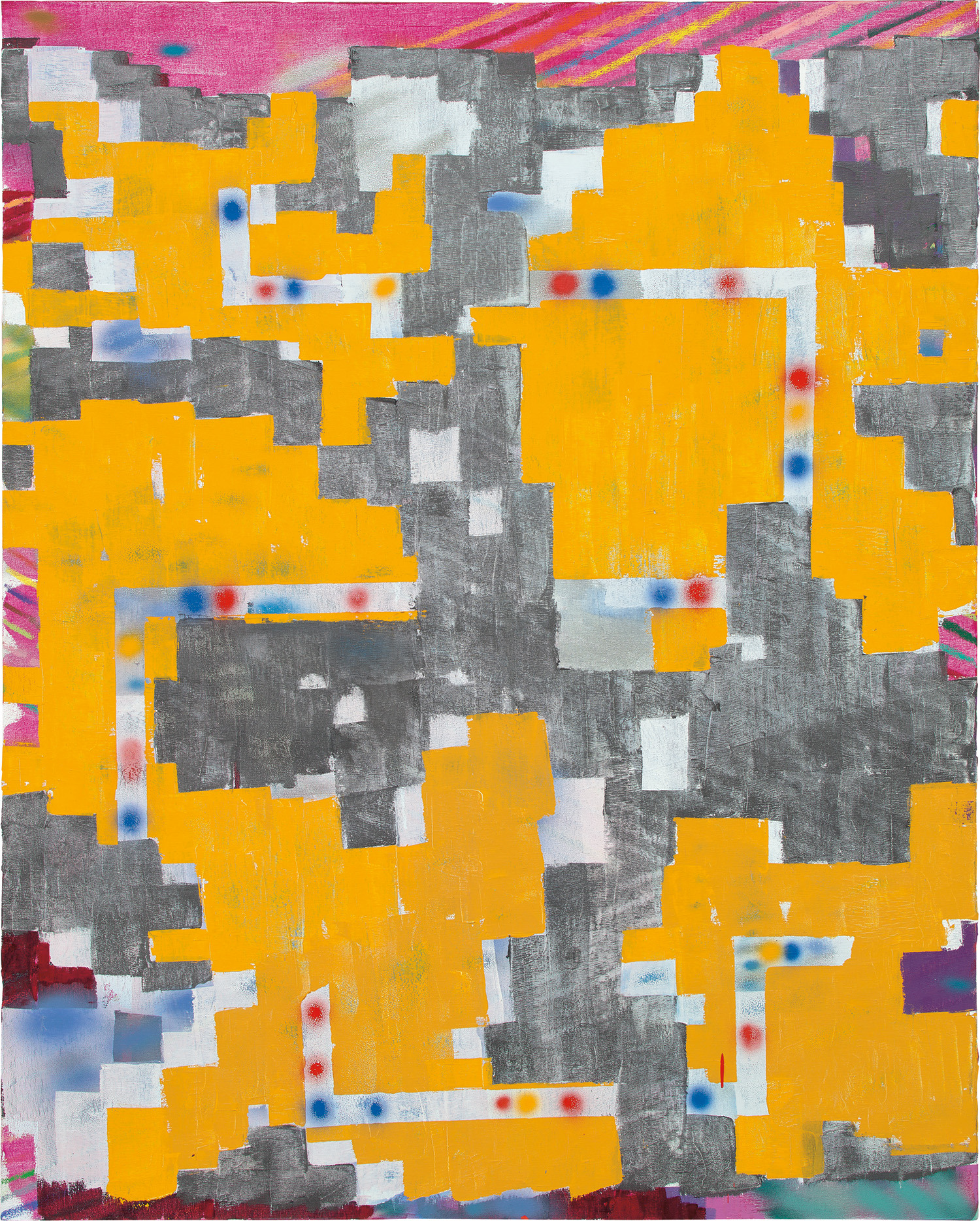
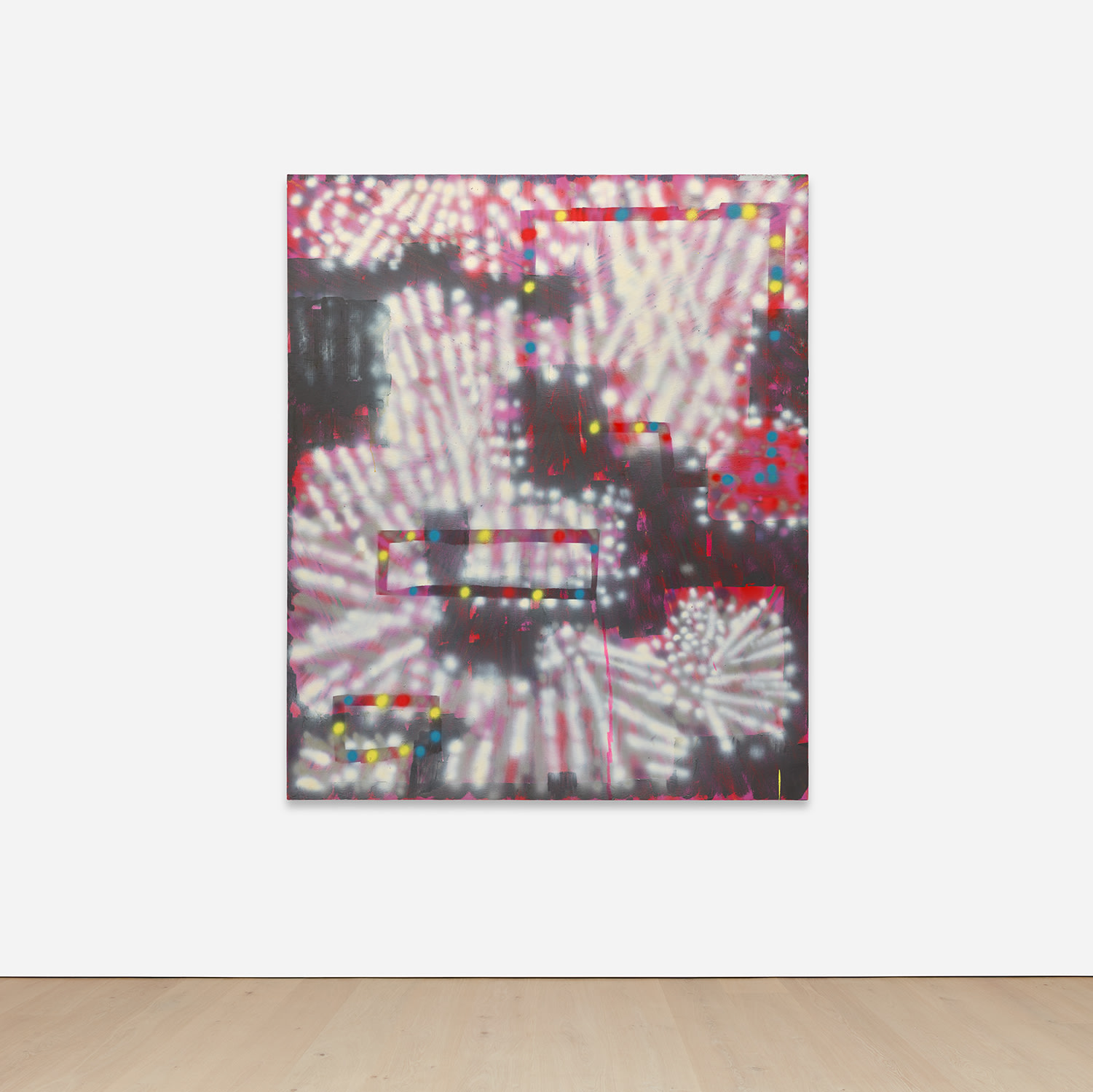
Works such as Kf + Cm 4ever and Kf + Pg 4ever, both from 2010 and made with oil, acrylic, oil pastel, and spray paint on canvas, carry titles that feel like something scrawled on a notebook cover or texted between friends, intimate and slightly juvenile in the best sense, a refusal of the grandiose that makes the visual ambition of the canvases all the more striking. ++++****))), Greater Than or Equal to, and !@#$%^and and*() push even further into the territory of keyboard characters and typographic symbols, treating the punctuation marks of digital communication as a kind of abstract poetry. These works ask what it means that the marks we now use most frequently in daily life are not letters or numbers but symbols born on circuit boards and keypads.
The large canvas W(A(V)e)s from 2015 demonstrates a further refinement of Ferris's formal thinking, with its nested parenthetical title performing the same kind of layering and enclosure that the painting itself enacts visually. The surface builds through multiple registers: gestural passages that recall the physicality of de Kooning or Joan Mitchell, spray painted atmospheric zones that suggest digital fog or the bloom of a monitor, and moments of raw canvas that remind the viewer that what they are looking at is, finally and always, a physical object with weight and texture. Fangs Out and Turn Turn Step Step show the same fearlessness, canvases that seem to be in motion even when standing still. For collectors, Ferris's work presents a rare combination of intellectual rigor and immediate sensory impact.
Keltie Ferris
Greater Than > or Equal to =, 2012
The paintings reward sustained attention, revealing layers of decision making and painterly incident that are not visible at first glance, but they also hit with a force that needs no explanation. The scale of the major works commands a room, making them genuine architectural presences rather than objects that politely hang on walls. Collectors with serious commitments to contemporary abstraction have recognized that Ferris occupies a position with very few peers: an artist who can speak fluently to the history of painting while producing work that could only have been made now, in this particular technological and cultural moment. In the broader context of contemporary abstraction, Ferris's work enters into productive dialogue with a range of artists who have wrestled with the legacy of gestural painting in the digital age.
The ambition of the project recalls Cecily Brown's commitment to revitalizing the physicality of paint, while the engagement with technology and pattern finds resonances with Wade Guyton and Laura Owens, artists who have pushed painting into conversation with digital processes from their own distinct angles. Ferris is also in conversation with the Color Field painters who preceded them, with Alma Thomas's celebration of optical energy and Frank Stella's willingness to treat the canvas as a space for system and sensation simultaneously. What distinguishes Ferris is the particular warmth and humanity that runs through even the most formally rigorous work, a sense that there is a person on the other side of each mark. The legacy of Keltie Ferris is still very much being written, which is part of what makes this such an exciting moment to be paying attention.
Keltie Ferris
Kf + Cm 4ever, 2010
The FLAG Art Foundation has been among the institutional voices that have helped define the critical conversation around this work, and international gallery exhibitions have extended Ferris's reach well beyond the New York context in which the practice first flourished. At a moment when questions about the relationship between physical and virtual experience feel more urgent than ever, when the boundary between embodied and screened reality has become genuinely difficult to locate, Ferris's paintings offer something rare: not answers, but a place to stand and look and feel the whole complicated situation at once. That is what the best painting has always done, and it is what Ferris continues to do with generosity, intelligence, and unmistakable joy.