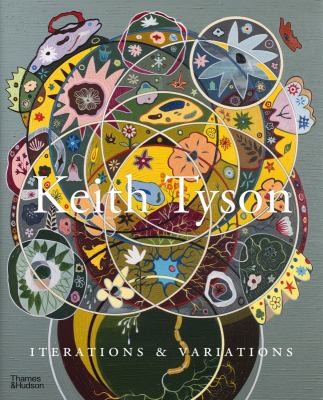
Keith Tyson
Keith Tyson: Where Science Meets Sublime Wonder
Artist Spotlight · The Collection Editorial
“I want the work to be a genuine journey of discovery, not just an illustration of ideas I already have.”
Keith Tyson, interview with Frieze
In the spring of 2024, a Keith Tyson aluminium panel sold at auction in London, drawing competitive bidding from collectors across Europe and the United States, a reminder that his reputation continues to grow in the secondary market more than two decades after he first electrified the British art world. Tyson occupies a singular position in contemporary art: a former engineering student who became one of the most intellectually ambitious painters of his generation, weaving together complexity theory, evolutionary biology, philosophy, and chance into works of startling visual and conceptual richness. To encounter his practice is to stand at the intersection of art and science, where the universe's grandest questions are addressed with paint, ink, and an almost reckless intellectual generosity. Born in Ulverston, Cumbria, in 1969, Tyson grew up in a region better known for its landscape than its galleries.
Keith Tyson
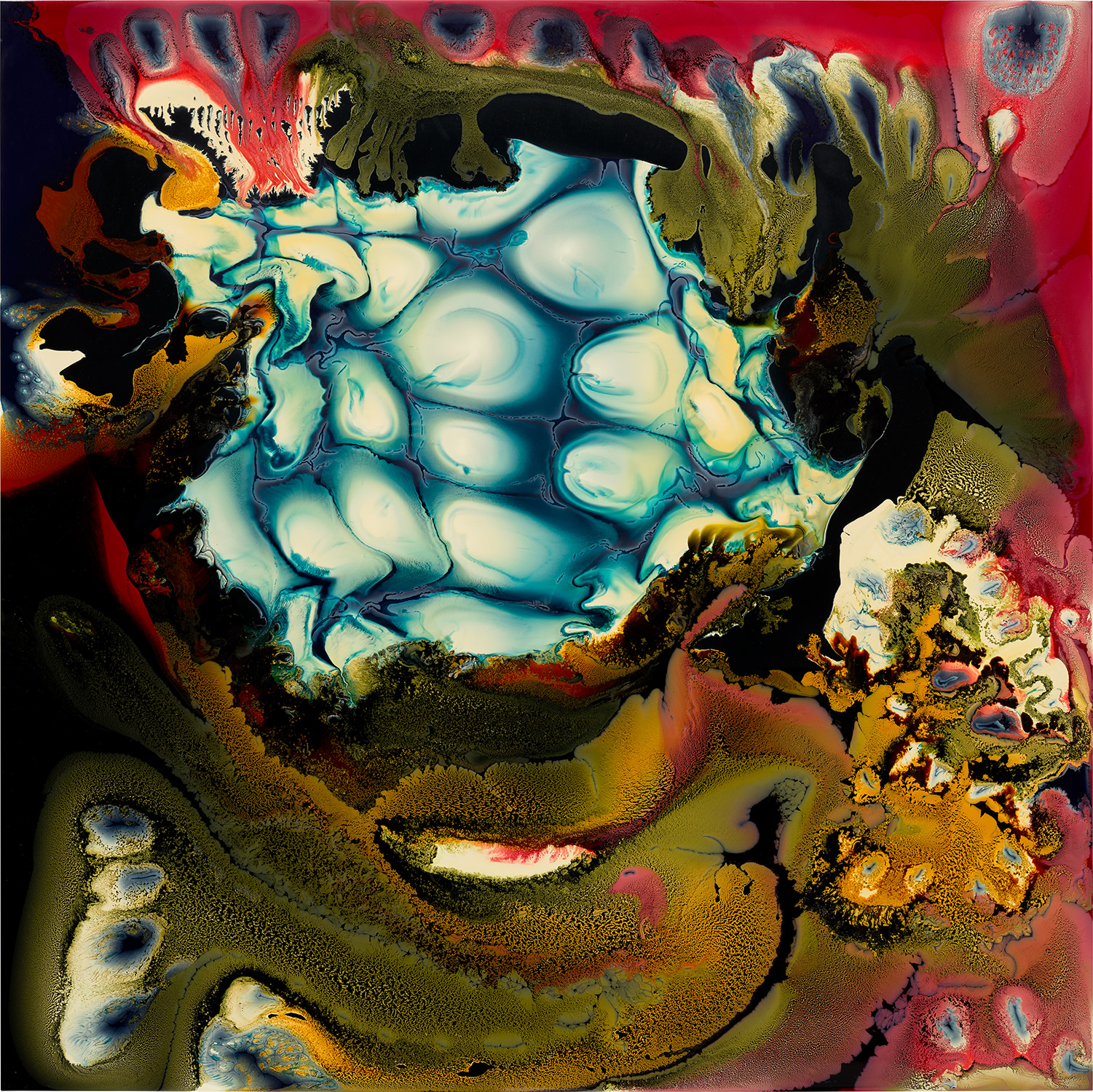
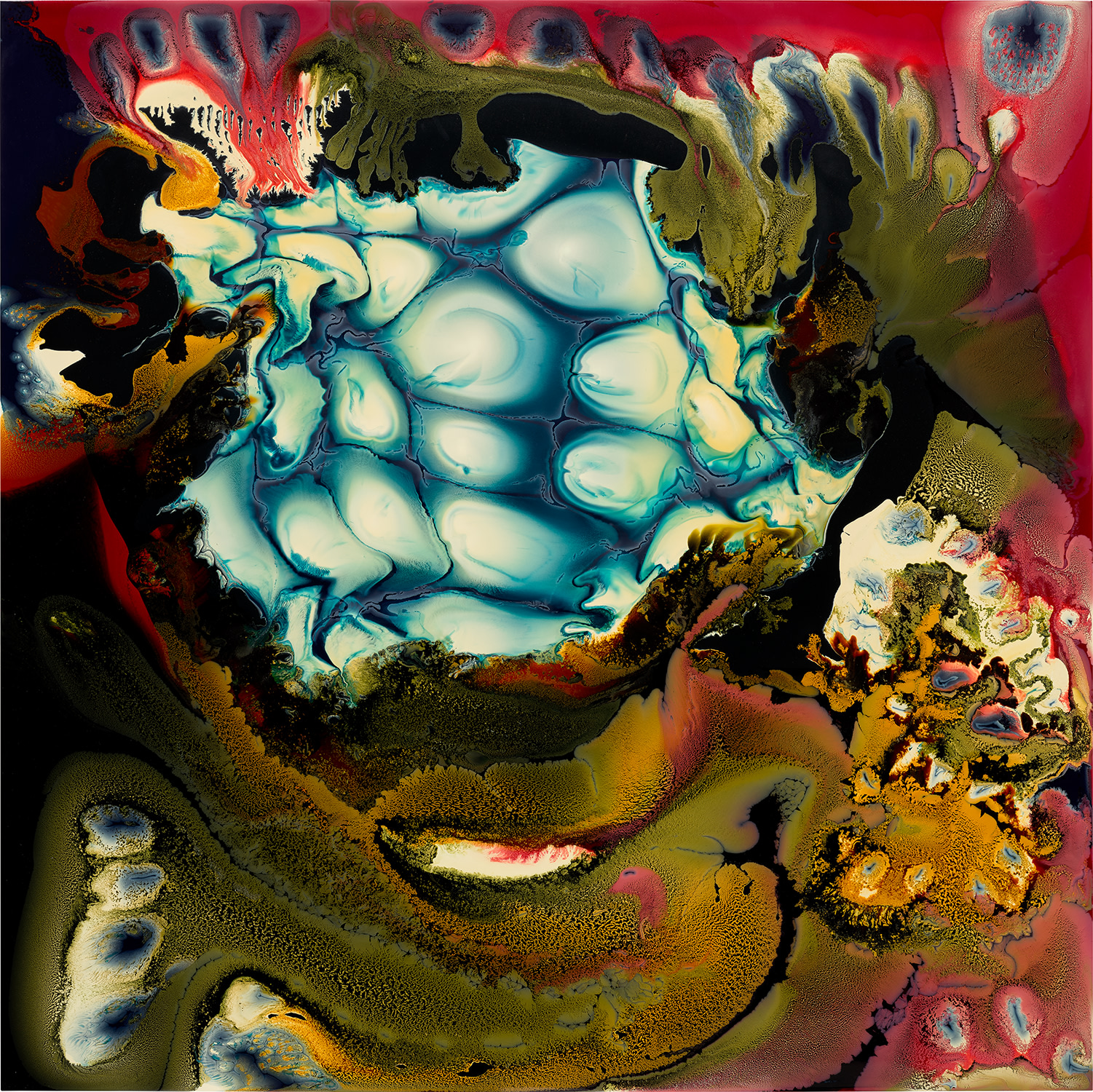
Nature Painting (Nested), 2008
He trained initially as an engineering draughtsman before studying fine art at the University of Brighton and then at the Royal College of Art in London, graduating in the early 1990s. That unusual educational path from technical drawing to fine art left a permanent mark on his sensibility. Precision and systems thinking coexist in his work with a genuine appetite for the irrational and the accidental. He arrived in London at a moment when the Young British Artists were dominating the conversation, but Tyson was always doing something fundamentally different: less interested in provocation for its own sake than in the genuinely vertiginous feeling of confronting the full complexity of existence.
Tyson first came to international attention through his Artmachine, a conceptual apparatus he developed in the early 1990s as a kind of generative engine for making art. The Artmachine was a set of rules, algorithms, and logical operations that he fed propositions into, receiving instructions for works in return. It was a radical gesture, one that challenged authorship and intentionality at their roots, but the results were never cold or mechanical. Works emerging from the Artmachine had a warmth and strangeness that suggested genuine discovery rather than mere procedure.
Keith Tyson
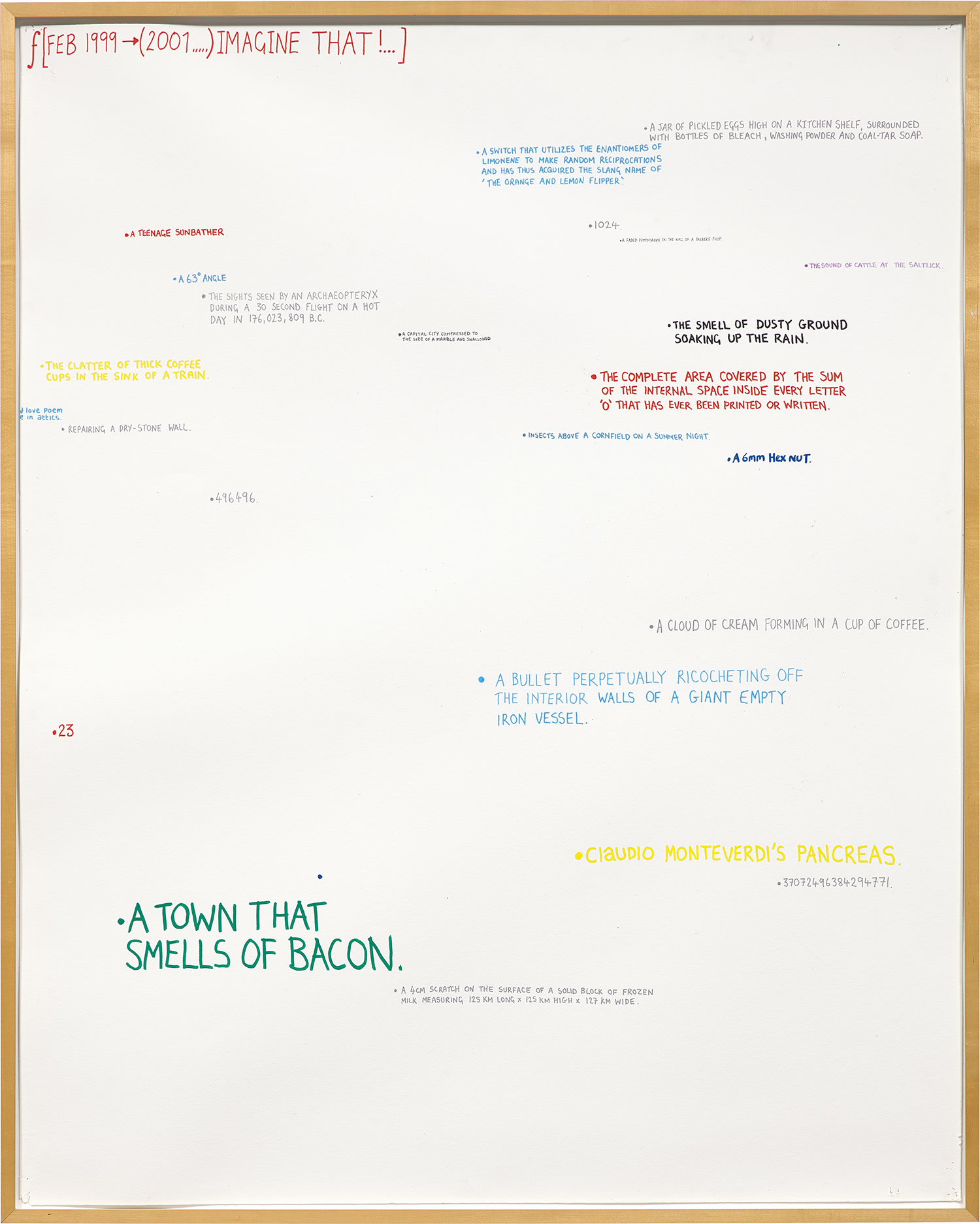
Imagine That from Studio Wall Drawing
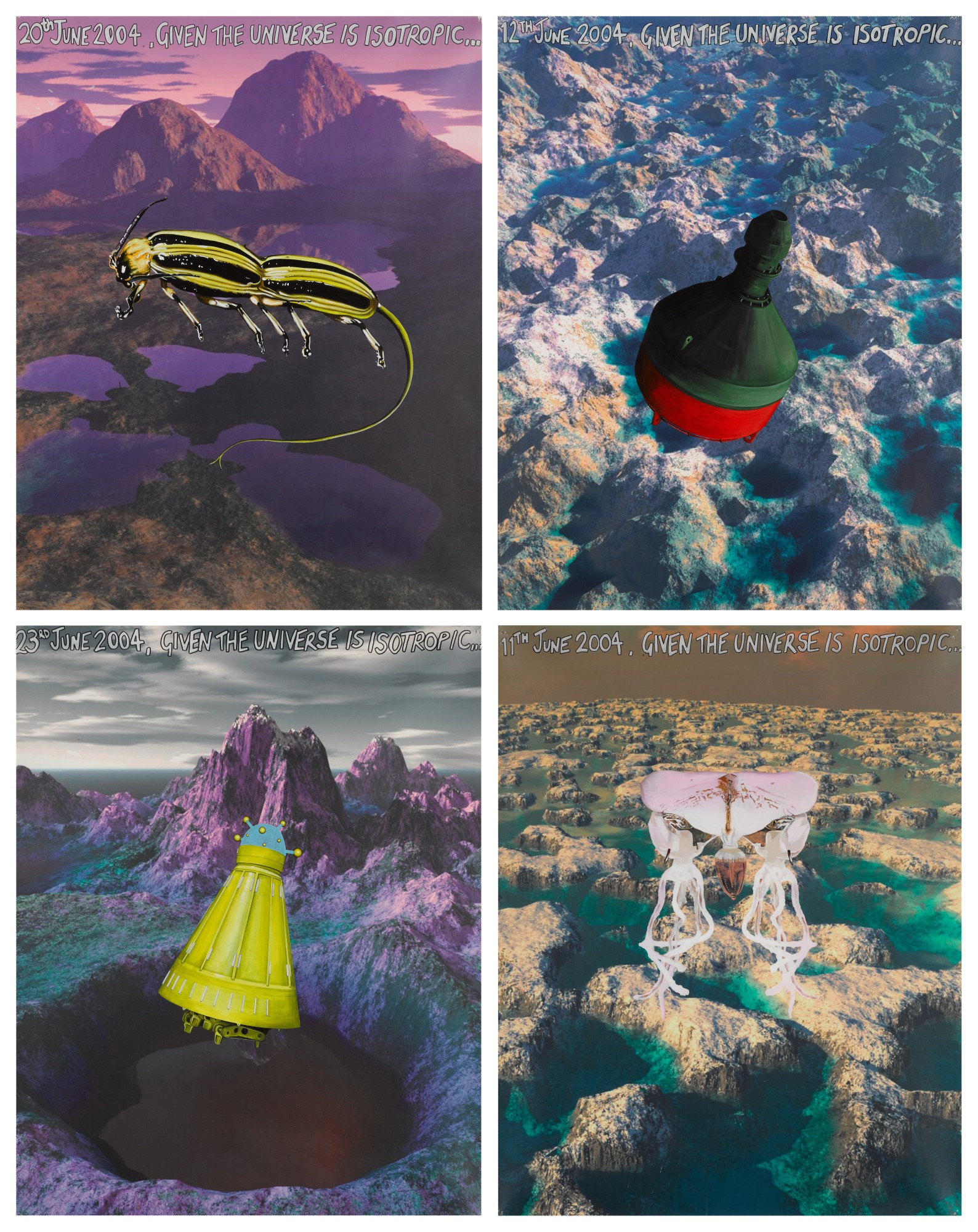
The Studio Wall Drawings that document this period, including the 1999 drawing for the Artmachine iteration known as Lazy Lung Investigates the 16th Century, are dense, delirious accumulations of diagrams, notations, and imagery that feel like a mind thinking in real time. The Turner Prize in 2002 brought Tyson's work to a wider public. He was awarded the prize that year, a moment of institutional recognition that felt entirely deserved to those who had been following his development. His nomination highlighted the Studio Wall Drawings alongside other works, and the critical response acknowledged not just the visual energy of these pieces but the seriousness of the ideas animating them.
Around the same time, works such as The Polar Pie Chart from 2002 demonstrated his ability to transform scientific and statistical forms into objects of genuine aesthetic pleasure. These are not illustrations of data: they are meditations on how human beings impose order on the overwhelming abundance of phenomena. The Nature Paintings, which Tyson began developing in the mid 2000s, represent a deepening of his practice into questions of biology, ecology, and the systems that govern living things. Executed in mixed media on aluminium, works such as Nature Painting Nested from 2008 and Pascal's Triangle Nature Painting bring together mathematical structures and organic imagery in compositions that feel simultaneously ancient and utterly contemporary.
Keith Tyson
Studio Wall Drawing: Given the Universe is Isotropic
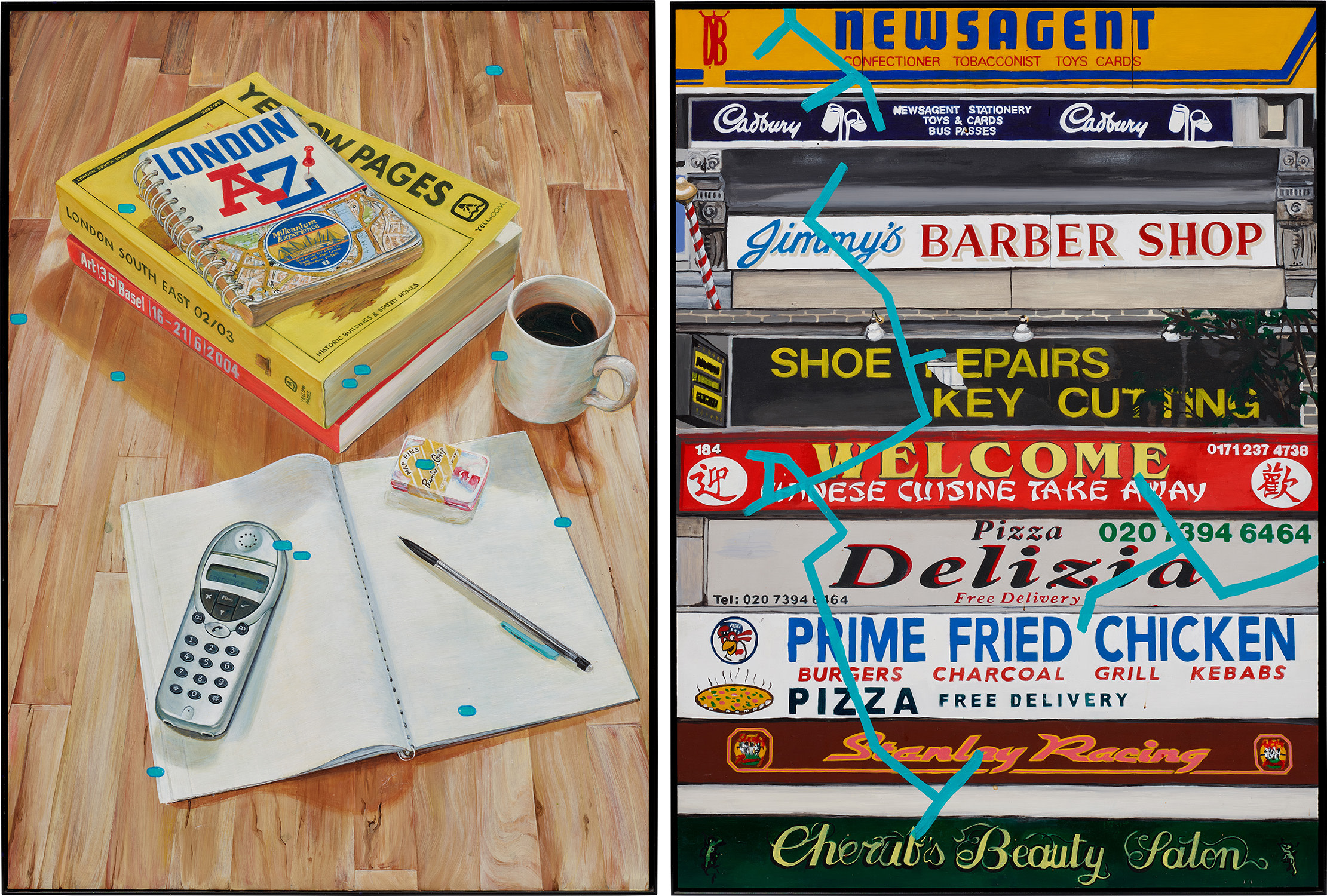
The aluminium support is important: it gives the surface a luminosity and durability that speaks to permanence, while the mixed media layering introduces chance, accident, and process. The Geno Pheno Paintings from the same period, including the striking My Street Selector from 2004 in acrylic on aluminium, explore the relationship between genetic potential and expressed reality, between what might be and what is. These are paintings about contingency, about the near infinite number of paths that were not taken to arrive at any single moment or form. The Operator Paintings, such as Shells and Sheep from 2006 in oil and mixed media on aluminium, extend this fascination with systems and relationships.
The title itself gestures toward mathematical logic, the idea of an operator as something that transforms one state into another, but the imagery is rooted in the physical world, in creatures, textures, and surfaces encountered in ordinary experience. Tyson has always insisted on keeping one foot in the tangible even as his conceptual ambitions soar. The Lecture Painting, executed in acrylic on aluminium, similarly bridges the discursive and the visual, presenting the structure of an argument as a painterly event. There is something genuinely generous about this approach: Tyson wants the viewer to think, not just to look, but he also wants them to feel the pleasure of thinking.
Keith Tyson
Geno Pheno Painting: “My Street Selector”, 2004
For collectors, Tyson's work offers an exceptionally rewarding combination of intellectual substance and visual quality. The aluminium panel works in particular have proven to be resilient and desirable in the market, their scale and material ambition making them significant presences in any collection. The works on paper, including the Studio Wall Drawings, are more intimate but no less complex, and they offer a window into the generative processes that underlie the larger canvases. Collectors drawn to artists who engage seriously with science and philosophy, figures such as Damien Hirst, Mark Wallinger, or perhaps more unexpectedly Sol LeWitt and Sigmar Polke, tend to find Tyson's practice deeply compelling.
His work sits comfortably in conversation with both the conceptualist tradition and the more recent wave of artists exploring complexity and emergence. Tyson's legacy is still being written, but its outlines are already clear. He is an artist who refused the false choice between thinking and feeling, between systems and sensation, between the scientific and the poetic. In an era when the relationship between human intelligence and computational systems grows ever more fraught and fascinating, his long engagement with algorithmic thinking and generative processes looks increasingly prescient.
The works gathered across major collections and the secondary market represent not just a body of paintings but a sustained philosophical project, an attempt to make art adequate to the full bewildering complexity of the world we inhabit. For anyone who believes that art should enlarge the mind as well as please the eye, Keith Tyson is an essential figure.
Explore books about Keith Tyson