Keith Sonnier
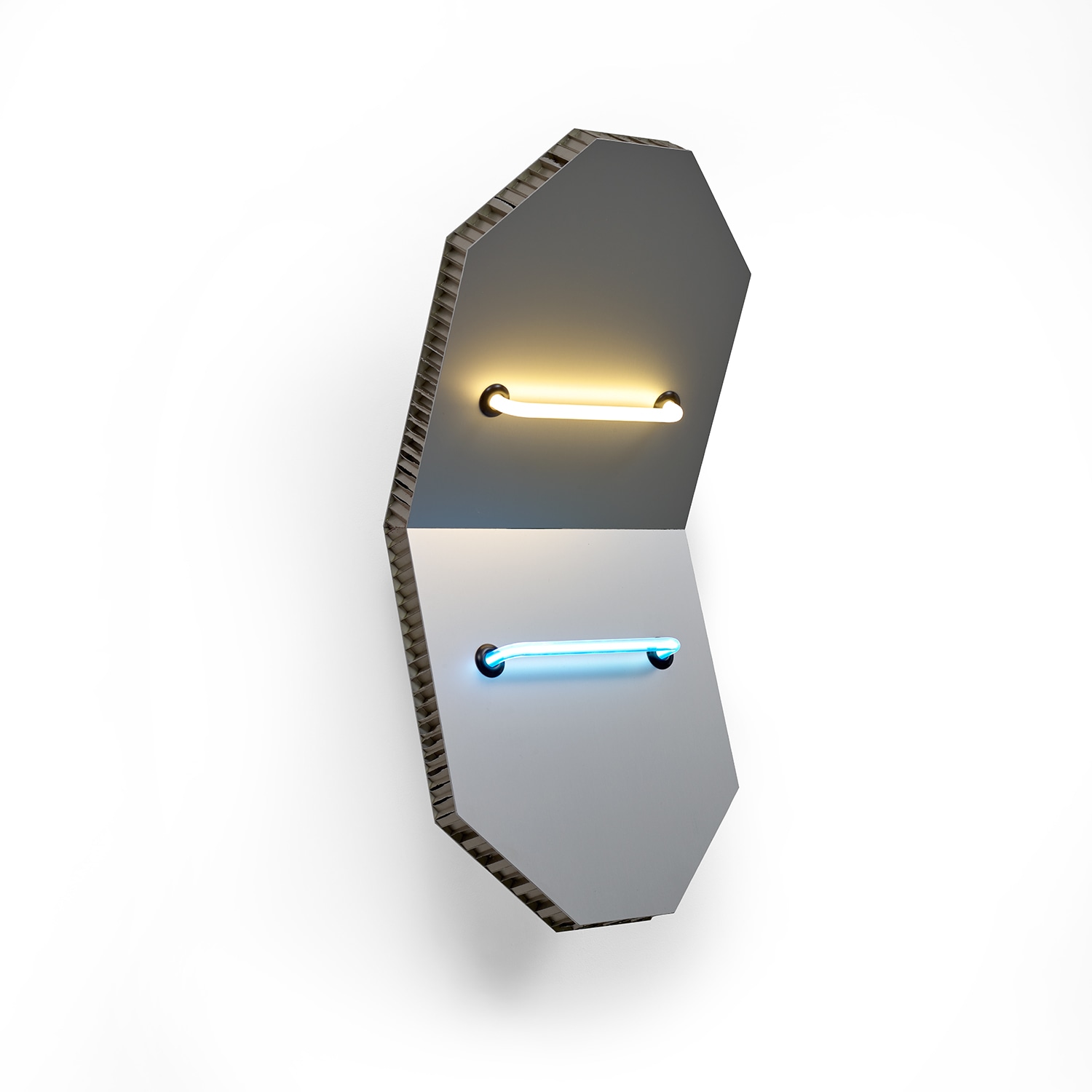
Keith Sonnier: Light Made Gloriously Alive
Artist Spotlight · The Collection Editorial
There is a particular quality of light that belongs entirely to Keith Sonnier. It hums. It radiates outward from bent glass tubes in blues and reds and greens that feel simultaneously industrial and intimate, as though electricity itself has been persuaded to become tender. When the Museum of Modern Art and the Centre Pompidou each chose to hold his work in their permanent collections, they were recognizing something that collectors and curators had sensed since the late 1960s: Sonnier was not merely using light as a material.
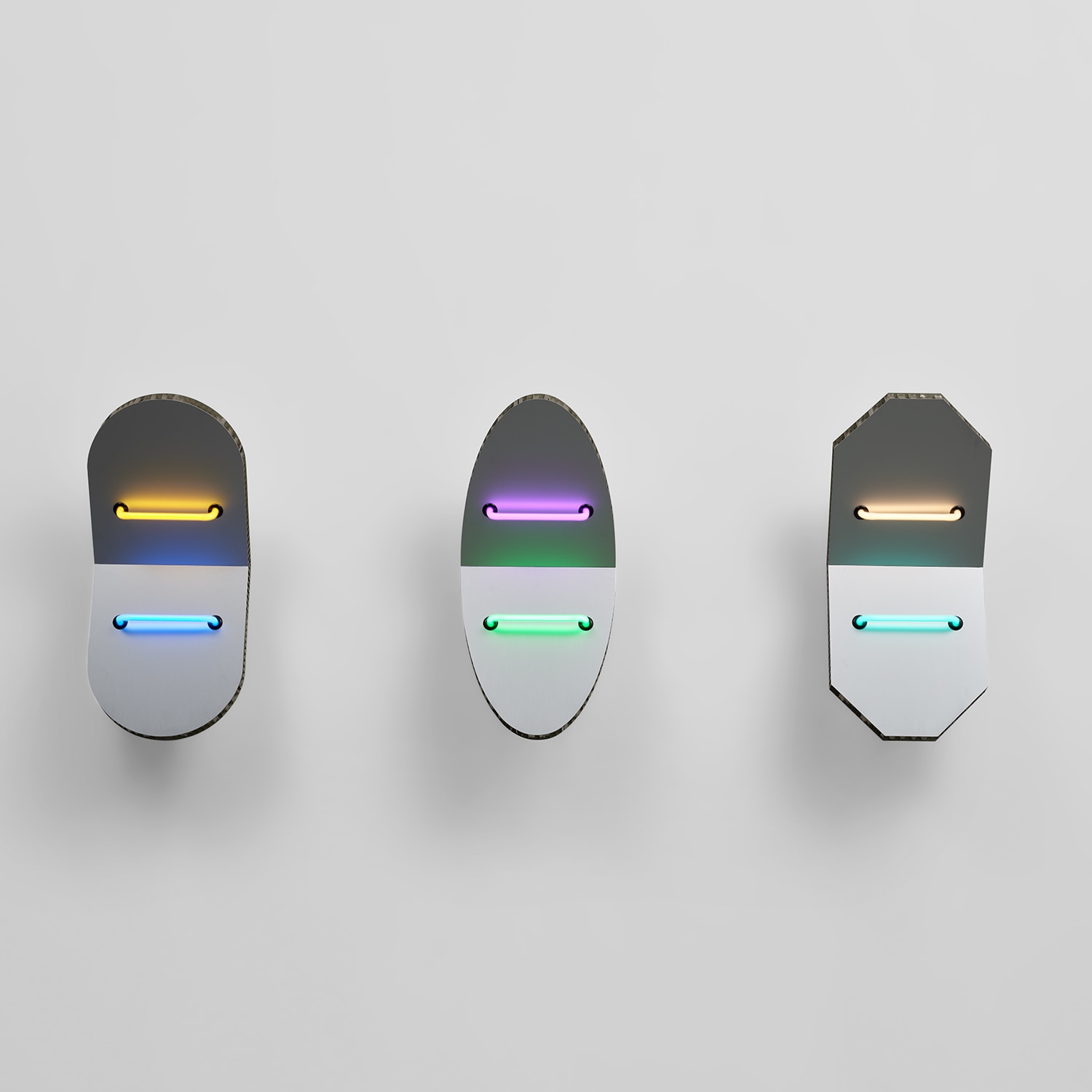
Keith Sonnier
Elliptical Shield Series V: three works
He was redefining what sculpture could feel like, what it could do to a body standing before it in a room. Keith Sonnier was born in 1941 in Mamou, Louisiana, a small town deep in the Cajun heartland, and that origin was never incidental to his art. He grew up surrounded by the rituals and visual culture of a community defined by French Creole tradition, Catholic ceremony, and the humid, sensory abundance of the Louisiana landscape. That upbringing left a permanent imprint on how he thought about presence, atmosphere, and the relationship between materials and meaning.
He studied at the University of Southwestern Louisiana before traveling to France, where he attended the Villa Arson in Nice and encountered the European avant garde firsthand. He then completed his graduate studies at Rutgers University in New Jersey, arriving in New York at precisely the moment when the art world was cracking open. The New York that Sonnier entered in the mid 1960s was electric with possibility. Minimalism was the dominant critical framework, but a generation of younger artists was already chafing against its austerity, its insistence on pure geometric form and industrial neutrality.
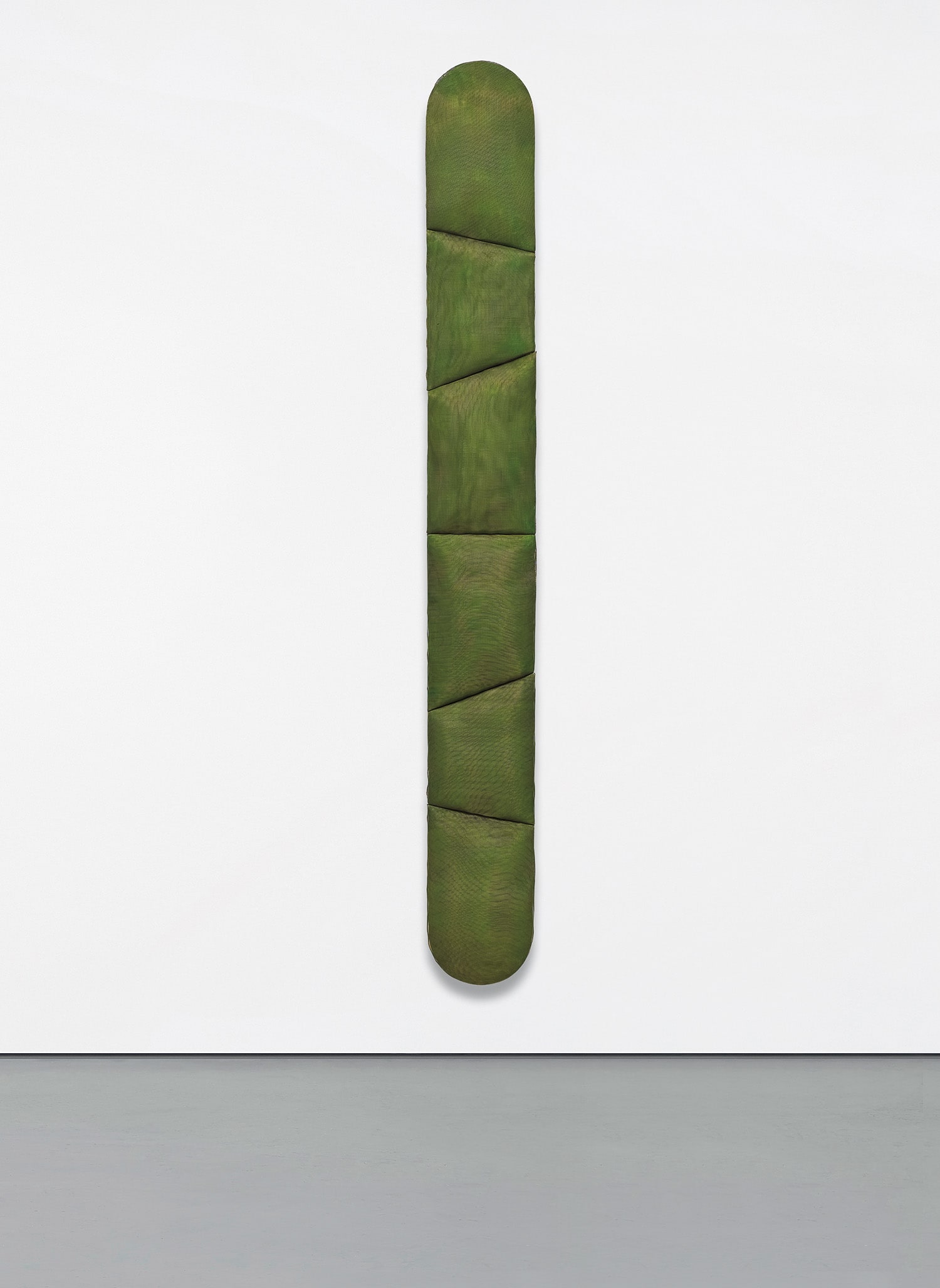
Keith Sonnier
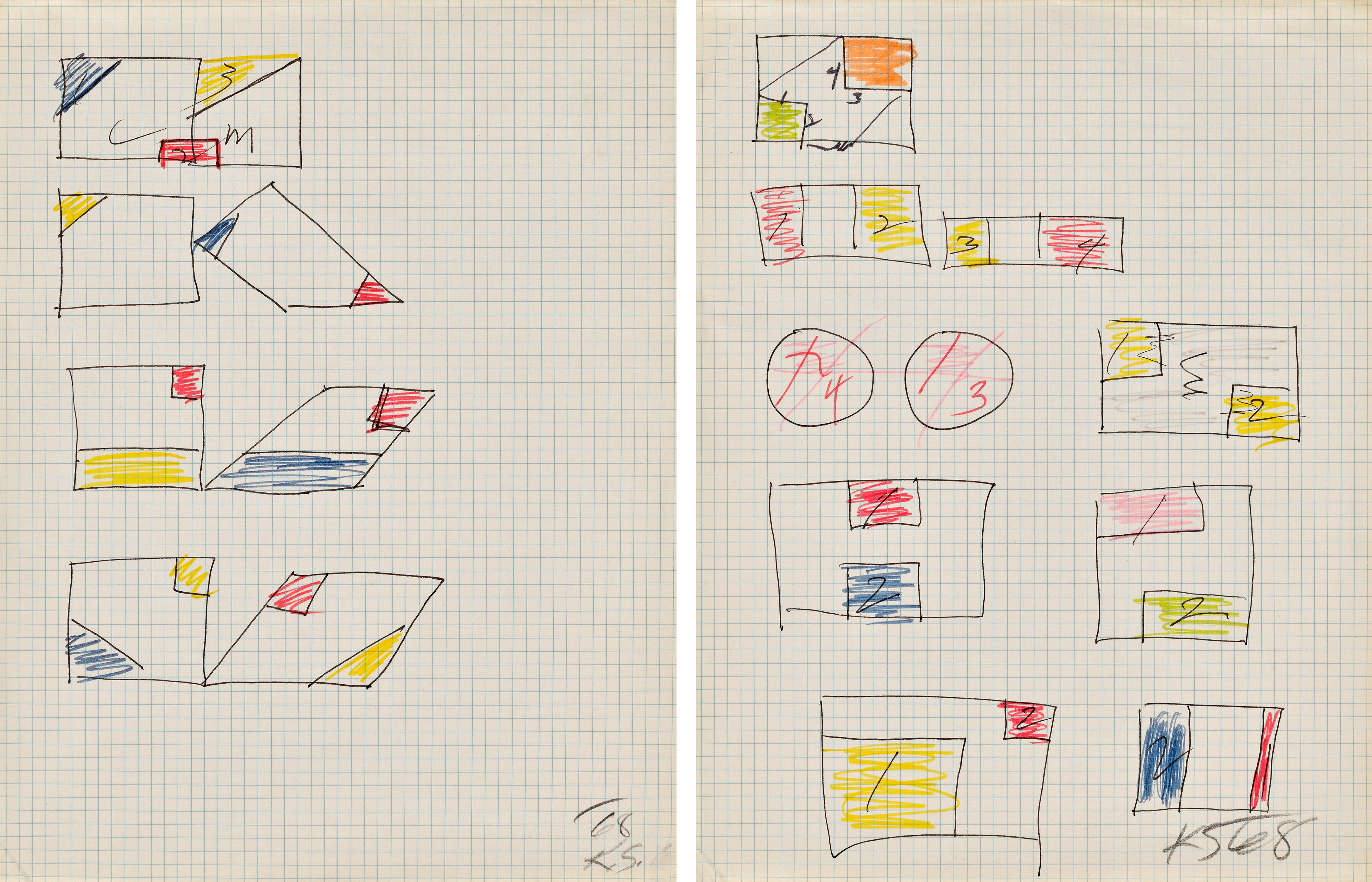
Green File, 1968
Sonnier was among those who would come to be grouped under the banner of Post Minimalism, a loose and generative tendency that sought to reintroduce the body, process, sensation, and material seduction into the conversation. His early works used rubber, cloth, latex, and wire in ways that felt organic and even vulnerable, quite unlike the cool steel and aluminum of his Minimalist predecessors. By 1968, works like his acrylic and wire constructions on wood were already signaling an artist deeply interested in the poetic resonance of modest materials. The breakthrough came when Sonnier turned to neon.
Beginning in the late 1960s, he began bending neon tubing into forms that bore no resemblance to commercial signage, instead becoming lyrical, gestural, almost calligraphic presences that transformed whatever space they inhabited. Where other artists of the period approached industrial materials with a certain conceptual distance, Sonnier treated neon with a sculptor's sensibility, attending to how light fell on adjacent surfaces, how color shifted perception across a room, how the low electrical hum of the tubes contributed to the total sensory experience of the work. These were not installations in the dry, theoretical sense. They were encounters.
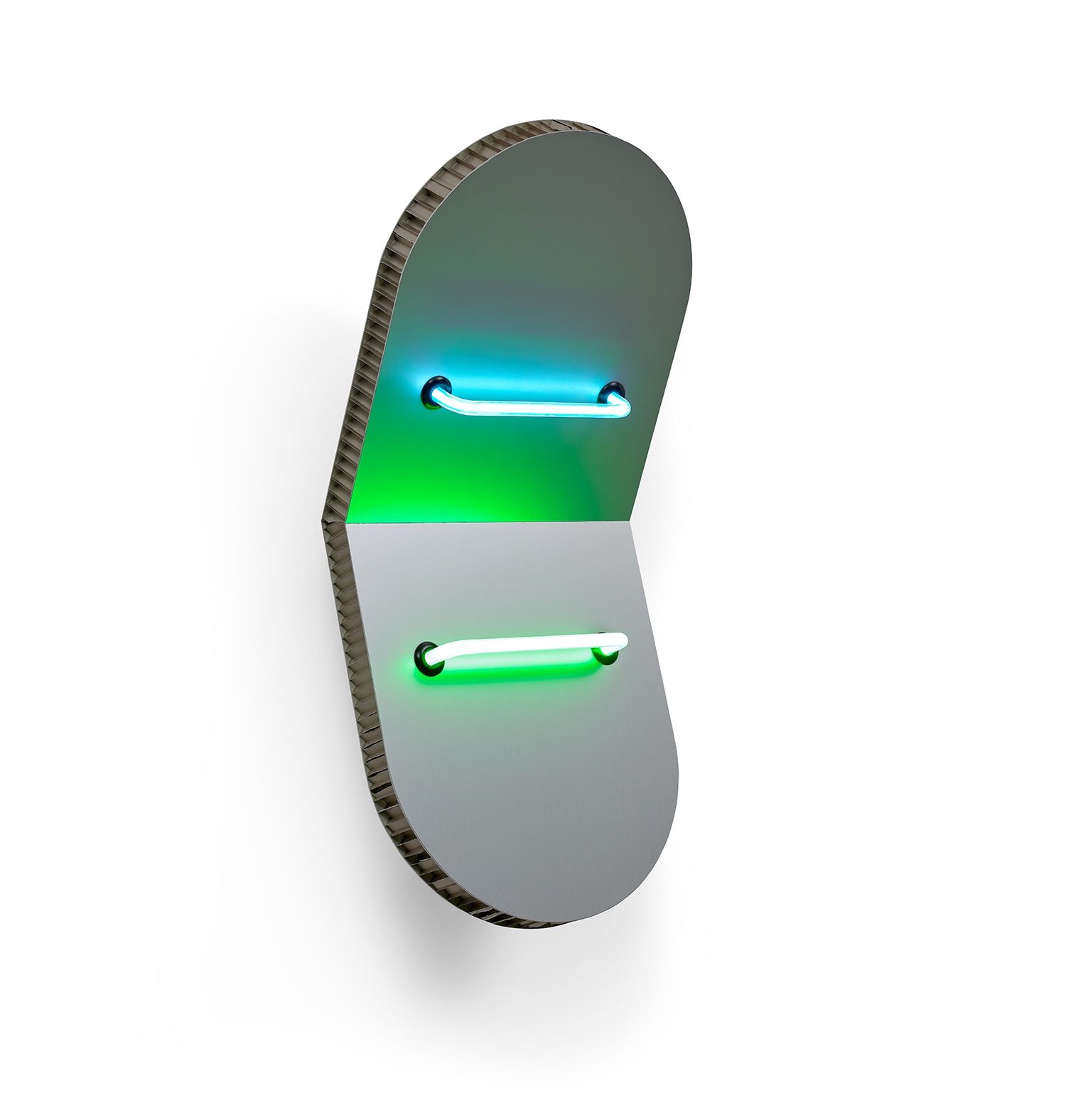
Keith Sonnier
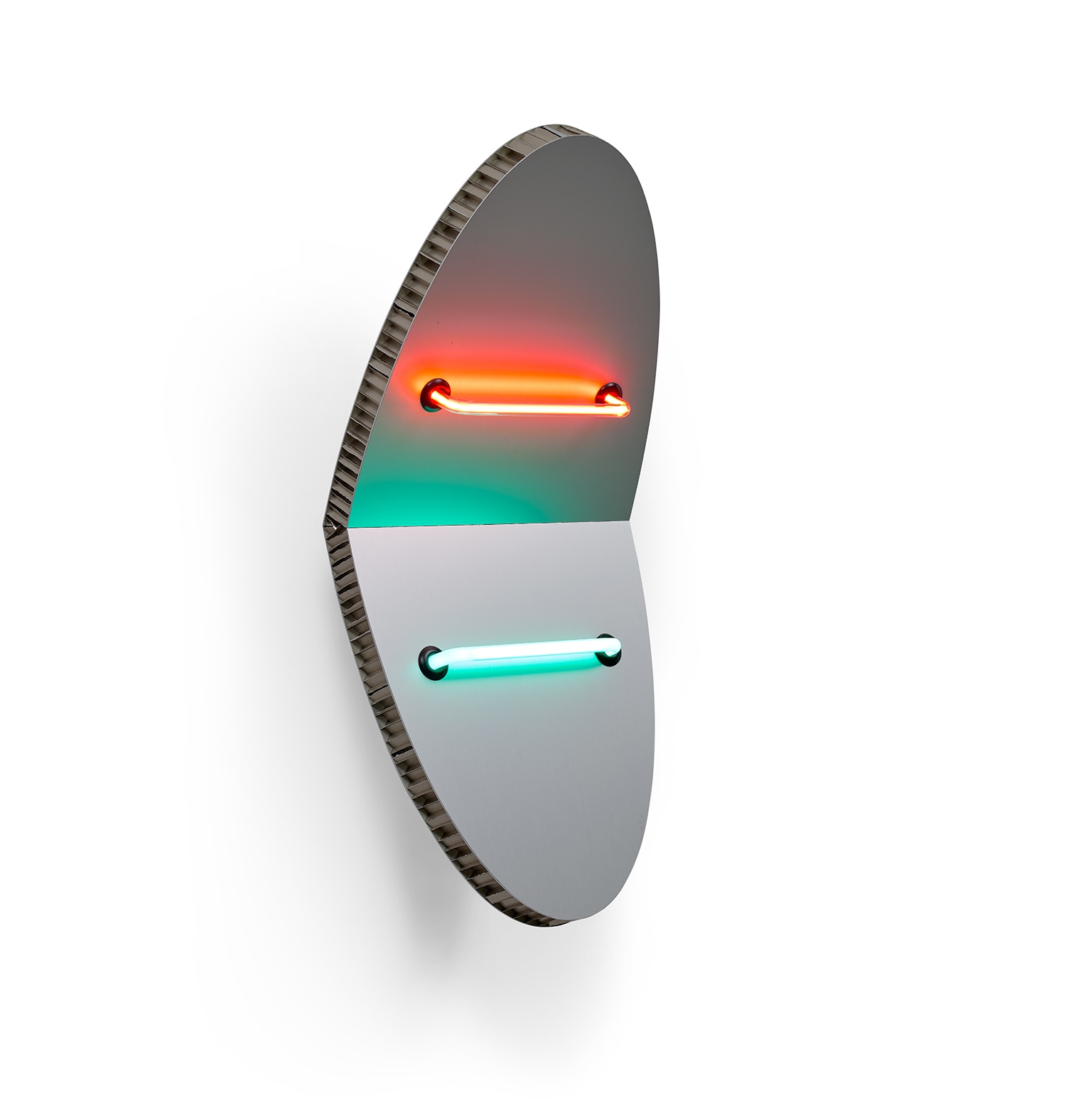
Circular Suite #9, from Elliptical Shields Series V
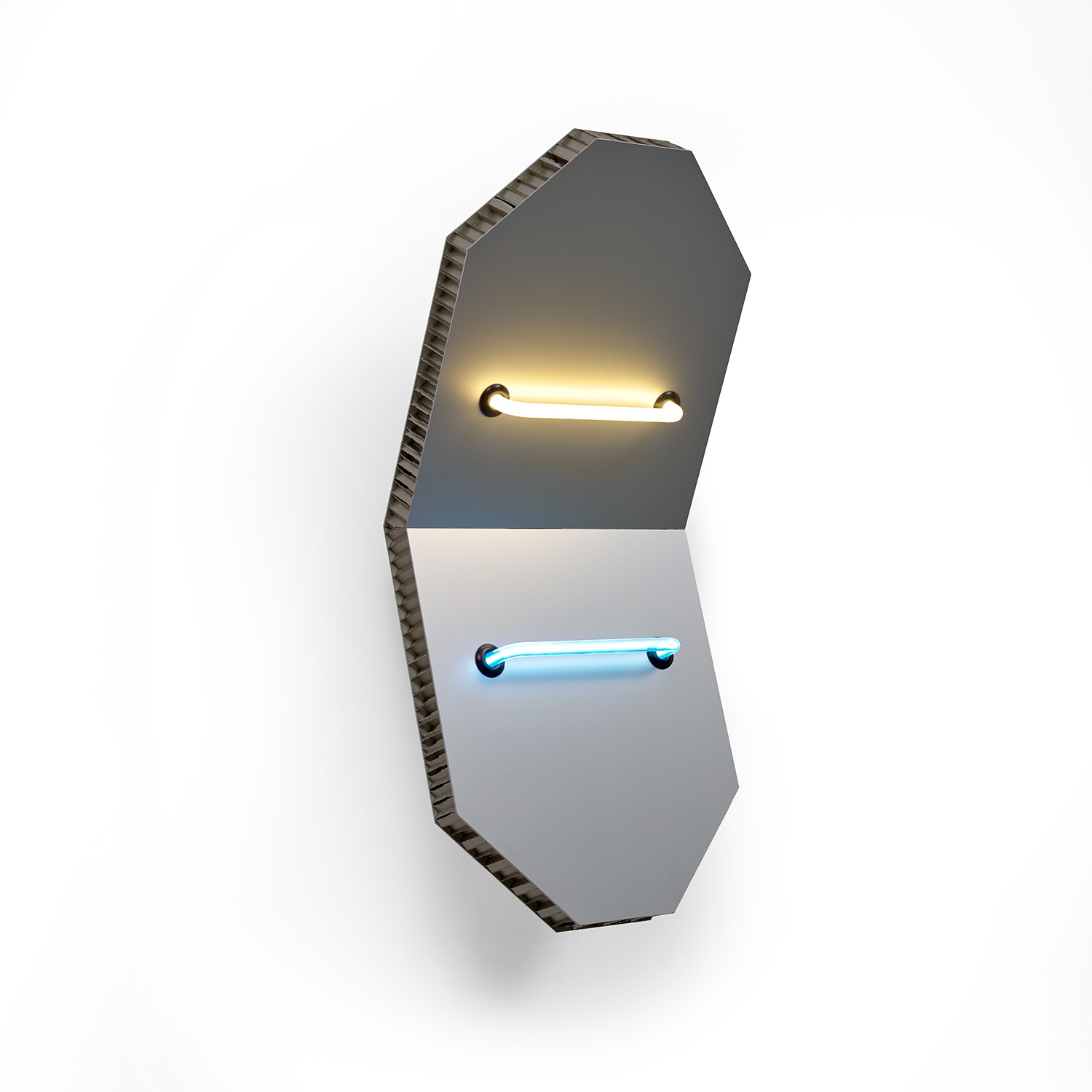
His early neon works were shown in New York galleries and quickly drew serious critical attention, situating him alongside figures such as Bruce Nauman, Richard Serra, and Eva Hesse as among the most inventive artists of his generation. The works from the Elliptical Shields Series V stand as some of the most compelling expressions of Sonnier's mature vision. Each piece in this series is built on a foundation of honeycomb core aluminium, a material that is at once lightweight and structurally precise, whose surface carries light differently than any conventional sculptural substrate. Onto these panels Sonnier affixes neon tubes in carefully chosen color combinations: warm white paired with clear blue, clear red alongside a turquoise designated E 21, clear blue with a green registered as E 10.
The pairings are not arbitrary. Sonnier understood color temperature and optical interaction with a depth that rivals any colorist working in paint, and the effect of two neon sources playing against a reflective aluminium field is one of extraordinary subtlety and warmth. These are works that reward sustained looking, that change character as the viewer moves in relation to them, and that carry within them decades of refined thinking about how light can be sculptural. For collectors, Sonnier represents a particularly meaningful category of postwar American art: work that is historically significant, intellectually rigorous, and genuinely beautiful to live with.
Keith Sonnier
Elliptical Suite #8, from Elliptical Shields Series V
His neon and mixed media pieces occupy a space between the monumental and the intimate, and the Elliptical Shields works in particular are conceived at a scale that suits both private and institutional settings. Sonnier's market has grown steadily among informed collectors who recognize that his contribution to the history of light based art has been undervalued relative to some of his contemporaries. His works have appeared at major auction houses including Christie's and Phillips, attracting interest from European and American collectors alike, and his institutional presence, with holdings at MoMA, the Pompidou, and appearances at documenta and the Whitney Biennial, provides the kind of provenance that serious collectors seek. Early works on paper and works on board from the late 1960s, such as the color pencil and pen drawings on graph paper from 1968, offer an accessible entry point into his practice while also documenting the formative thinking of a crucial period in his development.
To understand Sonnier fully it helps to place him within a constellation of artists who were collectively reimagining what sculpture and installation could be. Dan Flavin was working with fluorescent light at the same moment, but with a more austere conceptual framework. James Turrell and Robert Irwin were pursuing phenomenological investigations of light and perception on the West Coast. In Europe, Yves Klein had already established light and immateriality as serious sculptural concerns.
Sonnier absorbed all of this and synthesized it with something distinctly his own: a sensuality rooted in his Louisiana origins, a willingness to let materials be seductive, and a sustained interest in how technology could carry emotional content. His video and transmission works, in which he explored communication across distance, added another dimension to a practice always concerned with connection and presence. Keith Sonnier passed away in 2020, leaving behind a body of work that grows more significant with each passing year. The current renewed interest in light based and installation practices, the reappraisal of Post Minimalism by a new generation of curators and collectors, and the particular hunger for art that engages the senses as well as the mind have all conspired to bring his work back to the center of the conversation where it belongs.
He gave us an art that glows and hums and persists, one that asks us to slow down, to look carefully, and to feel the peculiar joy of standing in a room made luminous by human ingenuity and care. That is a rare and lasting gift.
Featured Works
Explore books about Keith Sonnier