Kazuyoshi Usui
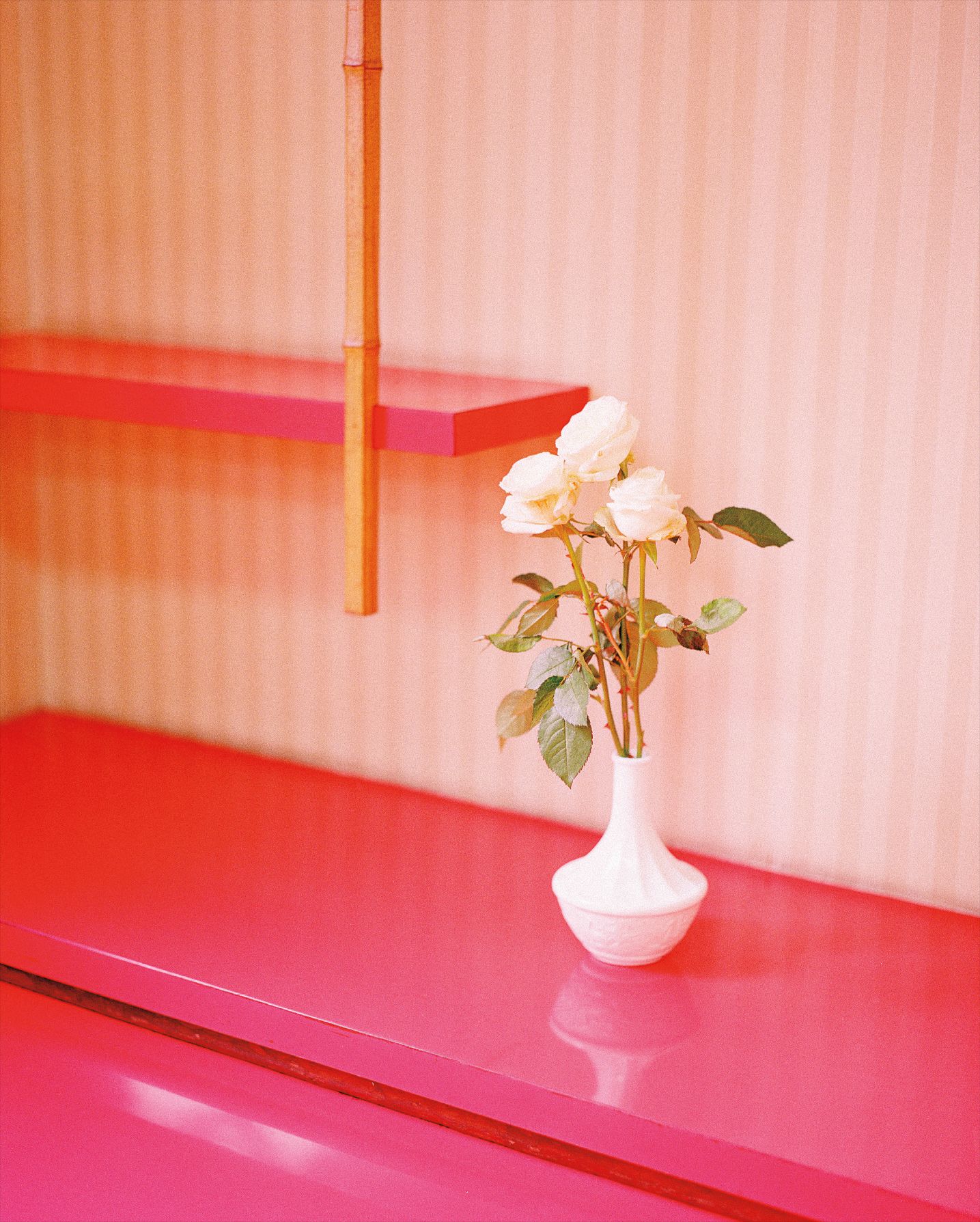
Kazuyoshi Usui Finds Beauty in Stillness
Artist Spotlight · The Collection Editorial
There is a particular kind of attention that Japanese art demands of its viewer, a willingness to slow down, to sit with silence, and to allow meaning to arrive at its own pace. Kazuyoshi Usui understands this better than almost anyone working in contemporary printmaking today. As international interest in mid career Japanese artists continues to accelerate through the auction market and across private collecting circles, Usui has emerged as one of the most quietly compelling voices in a generation that is redefining what it means to work between tradition and the contemporary moment. Usui was shaped by the deep cultural inheritance of Japan, a country whose visual traditions have long prioritized restraint, the beauty of the incomplete, and the resonance of empty space.
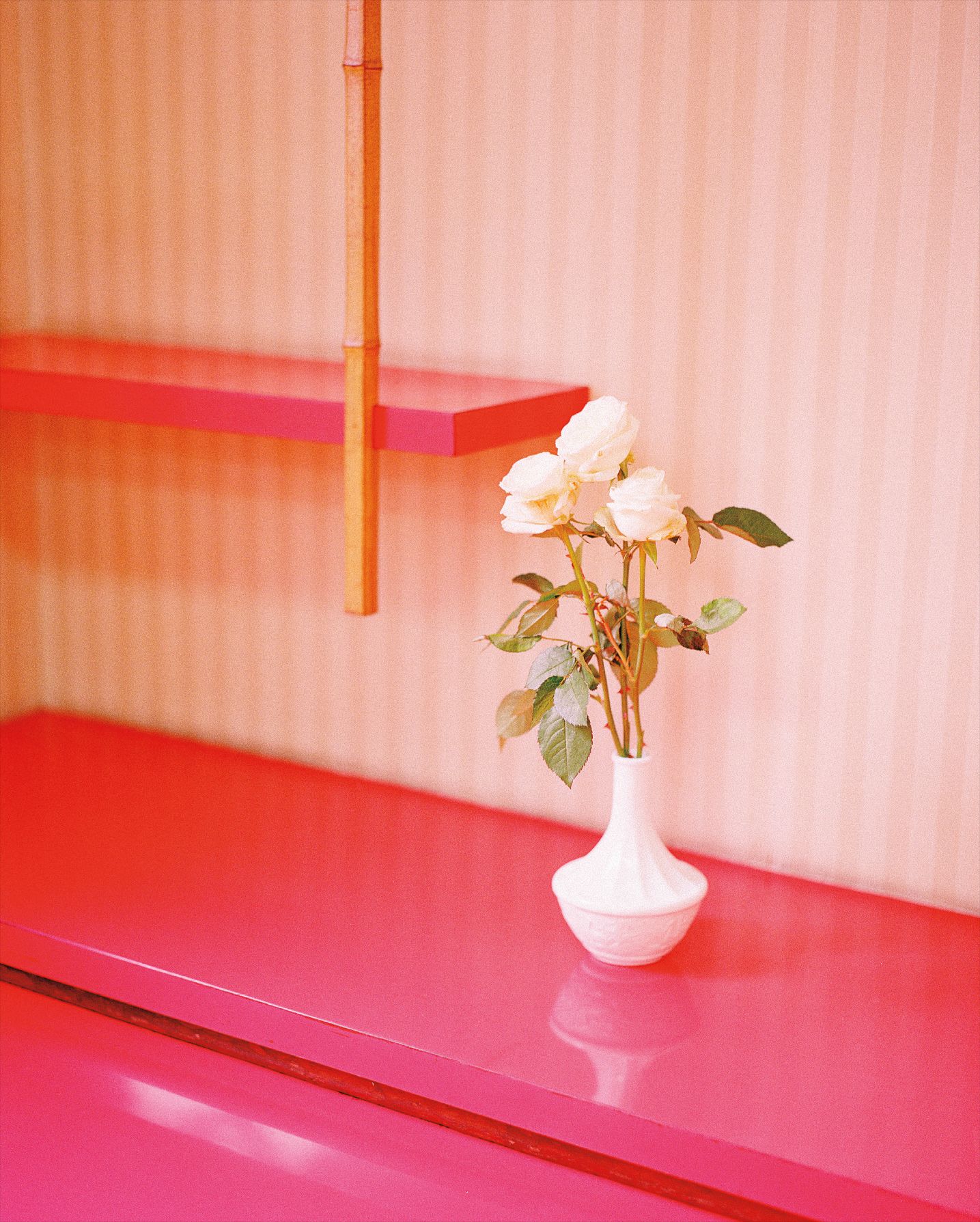
Kazuyoshi Usui
White Roses from Showa88
Japanese aesthetics carry within them concepts like ma, the meaningful interval between things, and mono no aware, a gentle awareness of impermanence. These are not abstract philosophical ideas for Usui. They are structural principles, embedded into how he composes an image, how he chooses his materials, and how he determines what to leave out. His formation as an artist was grounded in this lineage, and it gives his work a sense of rootedness that distinguishes it from artists who adopt Japanese visual language as surface rather than substance.
The development of Usui's practice reflects a sustained engagement with printmaking as a medium capable of carrying both precision and poetry. Printmaking in Japan has an extraordinarily rich history, from the woodblock traditions of the Edo period through the sosaku hanga movement of the twentieth century, in which artists asserted the printmaker as a fully creative individual rather than a craftsman serving a separate designer. Usui works within that lineage of artistic autonomy while pushing the medium into dialogue with photographic and pigment based processes. His willingness to work across archival pigment printing and chromogenic printing signals an artist who sees technology not as a departure from tradition but as another tool for pursuing timeless concerns.
![Kazuyoshi Usui — Bōzu [Thugs] from Showa88](https://rtwaymdozgnhgluydsys.supabase.co/storage/v1/object/public/artwork-images/auction-lots/UK040116-192016-lot1774364913891.jpg)
Kazuyoshi Usui
Bōzu [Thugs] from Showa88
Among the most significant bodies of work Usui has produced is the series known as Showa88, a project whose title alone carries layered meaning. The Showa era, which spanned the reign of Emperor Hirohito from 1926 to 1989, represents one of the most turbulent and transformative periods in modern Japanese history, encompassing war, defeat, reconstruction, and an extraordinary economic rise. By appending the number 88 to the era name, Usui extends the Showa period imaginatively beyond its historical end, creating a kind of parallel or speculative timeline. Within this framework he places images that feel simultaneously nostalgic and timeless.
White Roses from Showa88, presented as an archival pigment print and flush mounted with meticulous care, offers a meditation on beauty, fragility, and the persistence of natural forms across historical rupture. The roses carry the weight of both celebration and elegy without insisting on either reading. Alongside it, Bōzu from Showa88, a chromogenic print also flush mounted, introduces a more charged register. The word bōzu carries multiple meanings in Japanese, including a term for a young Buddhist monk but also, in certain contexts, a slang reference to toughs or thugs.
That productive tension between the sacred and the street, the spiritual and the worldly, gives the work a complexity that rewards sustained looking. For collectors, the appeal of Usui's work operates on several levels simultaneously. On a purely sensory level, his prints are objects of considerable beauty. The flush mounting technique he favors for works in the Showa88 series gives them a sculptural presence, a cleanness of surface that aligns the photographic and the painterly.
The archival quality of the pigment printing means these works are made to endure, a consideration that serious collectors rightly factor into decisions about acquisition. Beyond the material qualities, there is the deeper draw of an artist who is genuinely thinking, who is using the image as a site of inquiry rather than decoration. As the international art market has increasingly looked toward Japan for fresh perspectives, works by artists like Usui represent an opportunity to engage with a practice that is both culturally specific and universally resonant. Auction appearances by mid career Japanese artists working across printmaking and painting have shown steady and growing interest from collectors in Europe, North America, and across Asia.
To understand Usui's position in contemporary art history, it is useful to consider the broader tradition of Japanese lyrical abstraction and its relationship to international movements. Artists such as Katsutoshi Yuasa and Yoshihiro Suda have similarly navigated the space between careful observation of the natural world and a more conceptual or meditative practice. The sosaku hanga printmakers of the mid twentieth century, figures like Shiko Munakata and Kiyoshi Saito, established a precedent for the Japanese printmaker as a fully sovereign artistic voice, and that inheritance runs through Usui's approach. At the same time, his use of photographic printing technologies places him in conversation with international artists who have explored the space between photography and fine art, a conversation that has become increasingly central to collecting in the twenty first century.
What Usui offers, in the final accounting, is something genuinely rare. He makes work that is quiet without being passive, restrained without being cold, and historically aware without being nostalgic in a limiting sense. The Showa88 series, with its invented temporal space and its pairing of natural beauty with social complexity, suggests an artist who is not merely reflecting on the past but reimagining it as a place where unresolved questions can still breathe. In a contemporary art world that often prizes volume and velocity, Usui's patient practice stands as a reminder of what sustained attention can produce.
For collectors who value work that continues to reveal itself over time, his prints represent exactly the kind of investment, both intellectual and aesthetic, that defines a considered collection.