Katy Moran
Katy Moran Paints the World Feeling
Artist Spotlight · The Collection Editorial
There is a particular kind of attention that Katy Moran's paintings demand. You do not stand back and process them from a distance. You lean in, drawn by layers of acrylic and watercolour and collaged paper, by surfaces that seem to hold time within them like sediment. In recent years, her work has found an increasingly devoted audience among collectors who prize intimacy over spectacle, and in 2024 her paintings continue to circulate through some of the most respected galleries in London and beyond, reaffirming her place as one of the most quietly magnetic voices in contemporary British painting.
Katy Moran
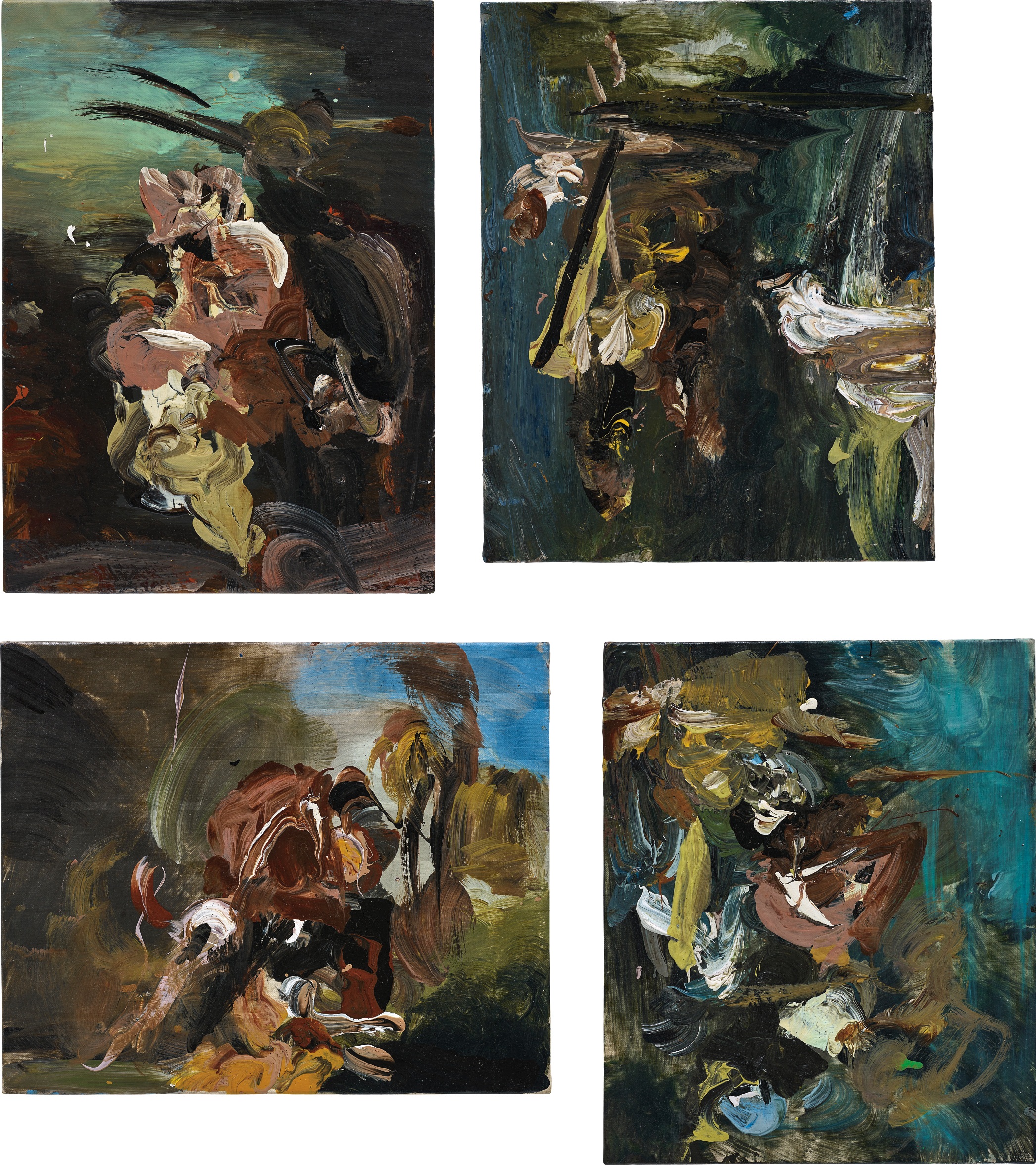
Tall and Proud, 2006
Moran was born in 1975 and grew up in Britain during a period when painting itself was being loudly debated, dismissed, and then fiercely reclaimed. She studied at the University of the West of England in Bristol before completing her postgraduate studies at Goldsmiths, University of London, graduating in 2000. Goldsmiths in that era was a charged environment, shaped by the long shadow of the Young British Artists and a culture of conceptual rigour. That Moran emerged from it as a committed, sensuous painter says something about the strength of her own instincts.
She was never interested in irony for its own sake. She was interested in feeling. The early years of her practice were defined by a process of discovery, finding out what paint could do when pushed toward the edge of legibility. Her oil paintings from around 2000, including works such as American Tan and Jerry Hall, show a young painter already comfortable with ambiguity, using titles that carry cultural resonance and personal affection in equal measure.
Katy Moran
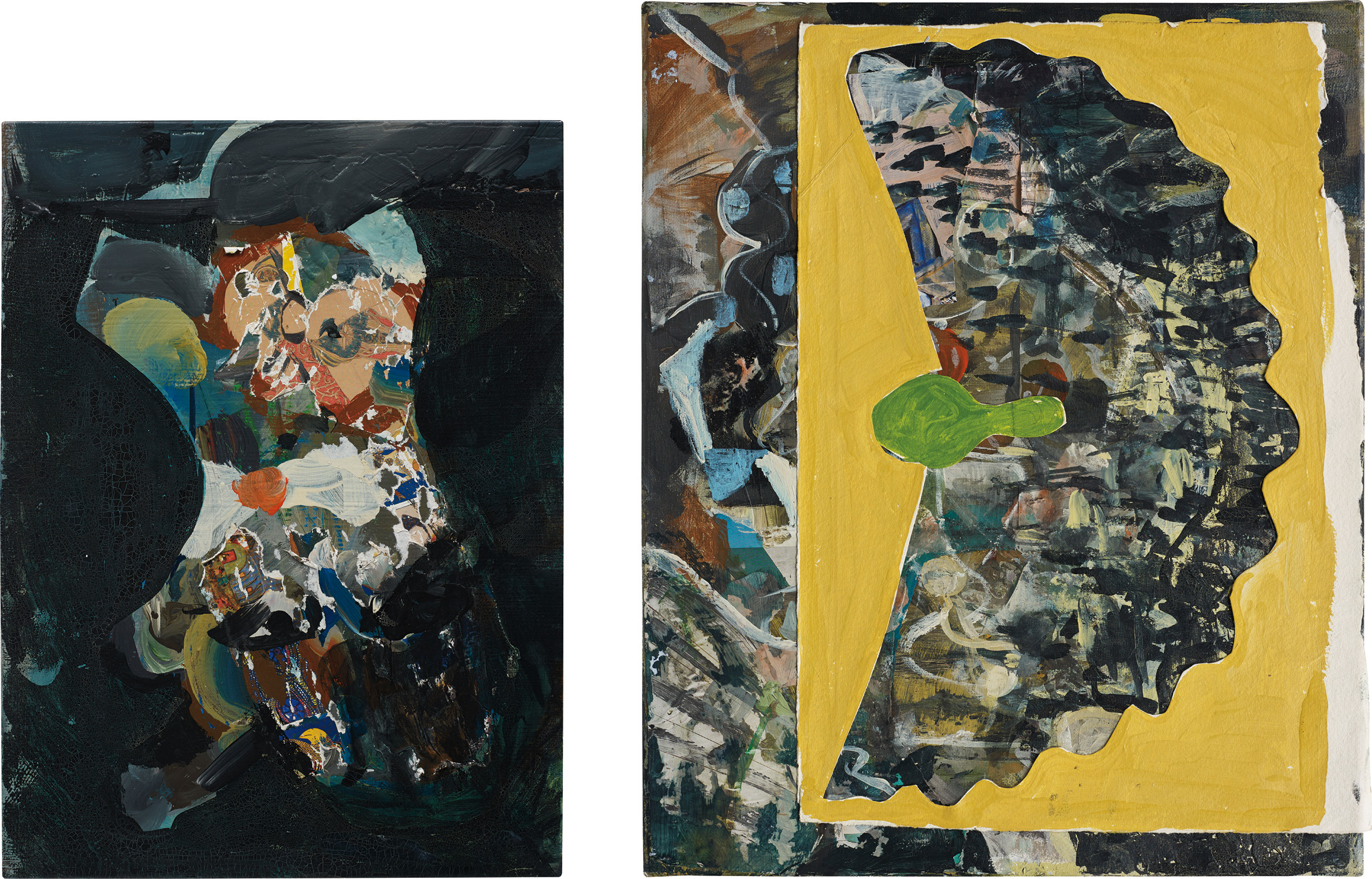
moonmen, 2010
These works are small, loaded, and oddly tender. They do not explain themselves. They invite you to sit with them and let association do its work. That quality of open invitation has never left her painting.
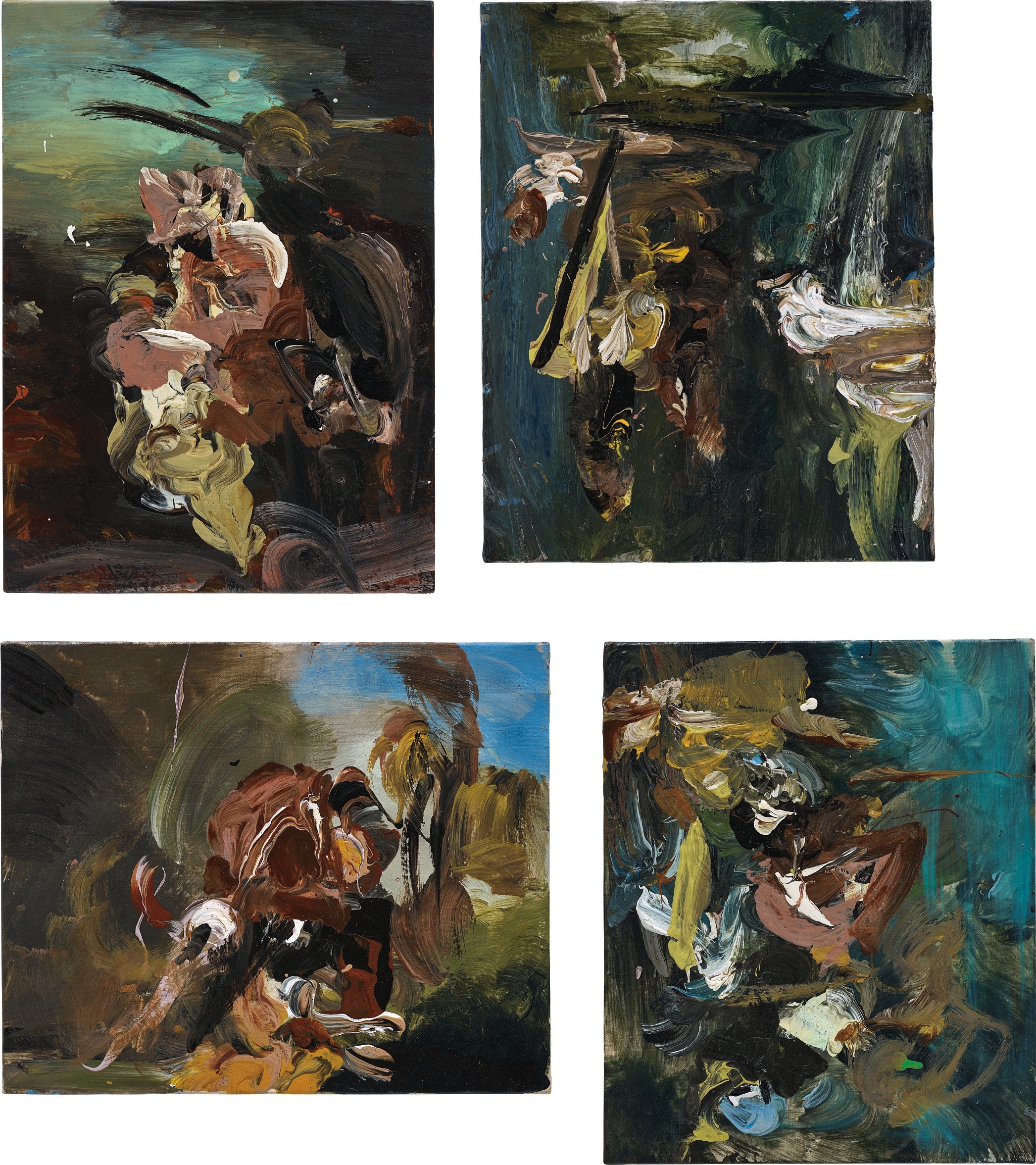
By the mid 2000s, Moran had developed the practice that would bring her wider recognition. Working at a deliberately intimate scale, she built up surfaces through repeated applications of acrylic, sometimes incorporating watercolour and collage, allowing each layer to show through the next like memories overlapping. Tall and Proud from 2006, a work in four parts, exemplifies this approach beautifully. There is a structural confidence to the composition even as the surface remains restless and unresolved in the most productive sense.
Katy Moran
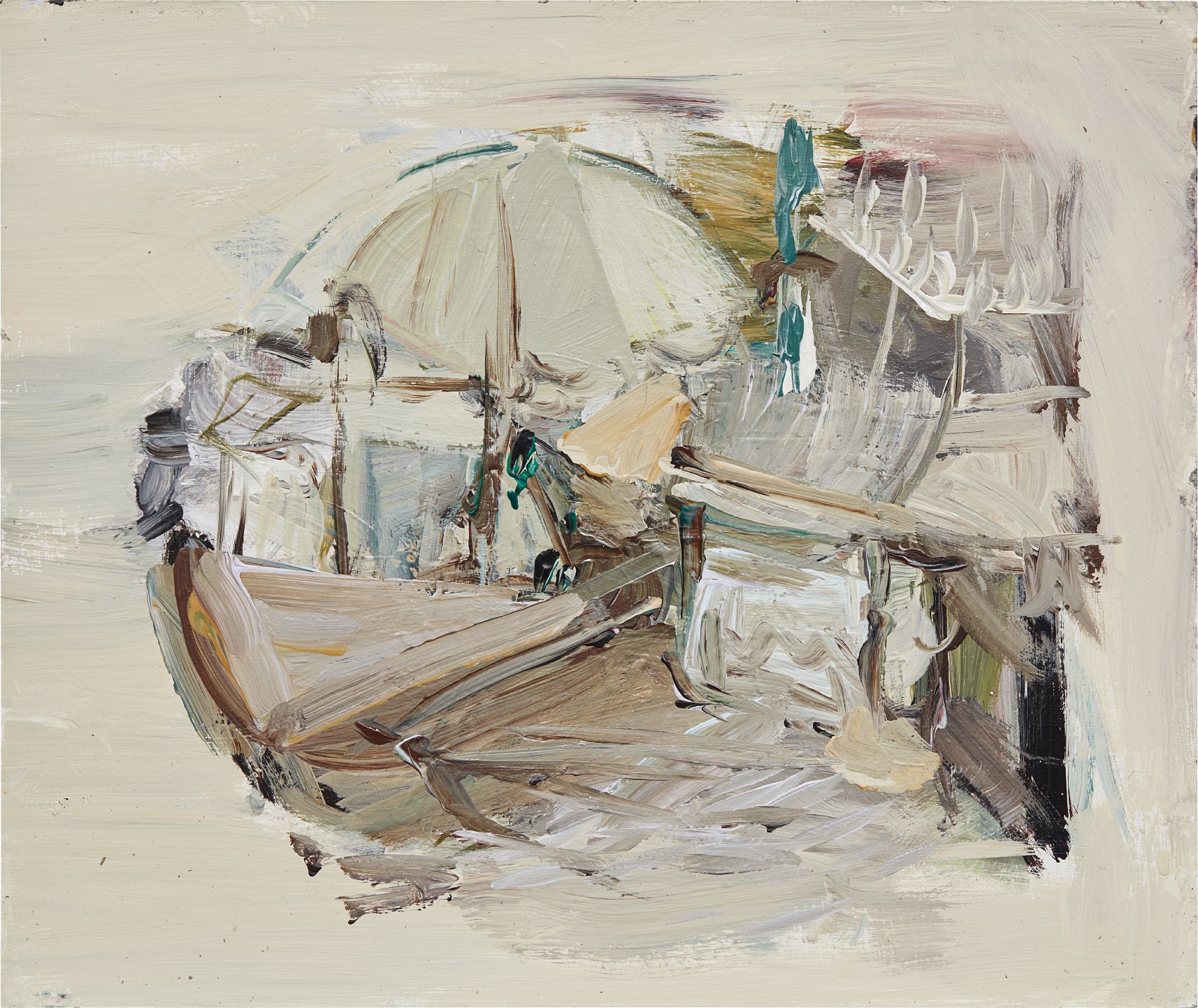
Over at Willy Werners, 2008
Moonlight on Doublebass from 2007 and Over at Willy Werners from 2008 show her at full command of her language, balancing warmth and strangeness in titles and images alike. These are paintings that feel named rather than titled, as though each one is a person or a place she knows well. The diptych moonmen from 2010 represents something of a milestone in her development. The combination of acrylic, watercolour, and paper collage on canvas opens the surface further, introducing a kind of archaeological texture that rewards close looking.
Figures seem to emerge and dissolve. Landscape and emotional state become interchangeable. Moran has spoken about painting as a form of thinking rather than a form of illustrating, and works like moonmen make that philosophy visible. The canvas becomes a field of inquiry, not a record of conclusions.
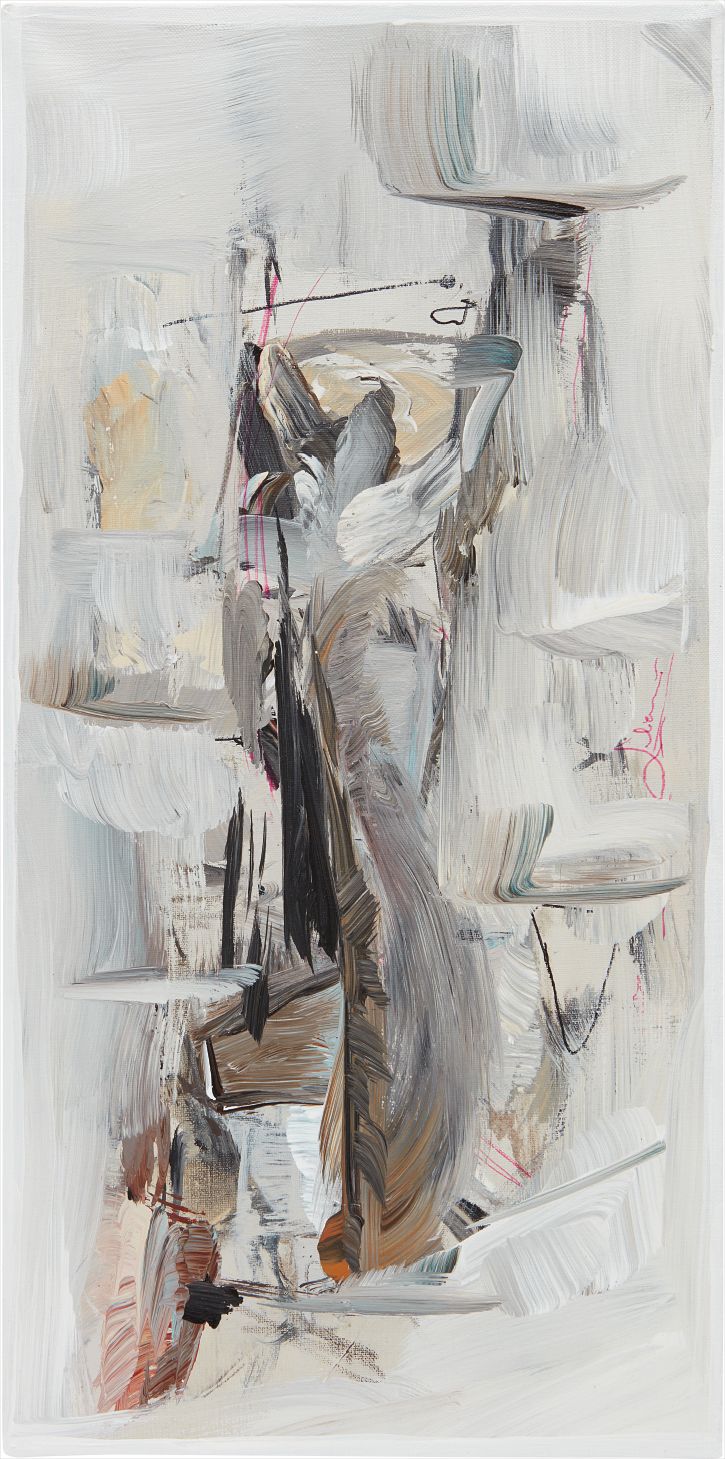
Katy Moran
Mancini Sunday, 2008
This is also what makes her work so generative for collectors who return to it over years and find it still changing. Her gallery relationships have been central to how her work has reached collectors. She has shown with Alison Jacques Gallery in London, a space with a strong commitment to painters who work outside the mainstream of critical fashion, and her exhibitions there have been consistently praised for the way they use the intimacy of scale to create an almost overwhelming cumulative effect. Walking through a room of Moran's paintings produces something closer to an emotional experience than an aesthetic one, which is not to diminish the aesthetic achievement but to locate it correctly.
The paintings are also genuinely beautiful objects, and beauty has never been an embarrassment to her. For collectors, Moran's work offers a rare combination of accessibility and depth. Her canvases are small enough to live intimately with, to place at eye level in a domestic space and encounter daily. Yet they do not exhaust their meaning on first looking.
Works like Mancini Sunday and Alex Went and the tender, curious Rufus carry the kind of personal energy that makes a painting feel like a relationship rather than a purchase. The titles alone are a pleasure, chosen with the same instinctive rightness as the colours. Collectors who come to her work often describe a feeling of recognition, of having been seen by something they cannot entirely name. In the context of contemporary British painting, Moran occupies a position that is genuinely her own while remaining in conversation with a rich lineage.
Her small scale and gestural intensity invite comparison with artists such as Cecily Brown, whose career has followed a parallel arc of critical respect and collector devotion, and with the late, great Lynette Yiadom Boakye in terms of the emotional precision she brings to figures that hover between representation and abstraction. Further back, the influence of Philip Guston is legible in her willingness to be awkward and funny and sad all at once, and her use of layered paint has something of the excavatory quality found in the work of Cy Twombly. She belongs to a tradition that values the mark of a hand and the evidence of thought. Katy Moran matters today because painting like hers insists on the value of the individual emotional encounter at a moment when art is often asked to perform at scale.
Her work does not shout. It does not seek to overwhelm through size or spectacle. Instead it waits, patient and dense with feeling, for the viewer who is willing to slow down. In an art world still learning to value quietness, that patience looks increasingly like wisdom.
For collectors building collections that are meant to be lived with rather than simply owned, her paintings represent something close to essential.