Katrin Fridriks
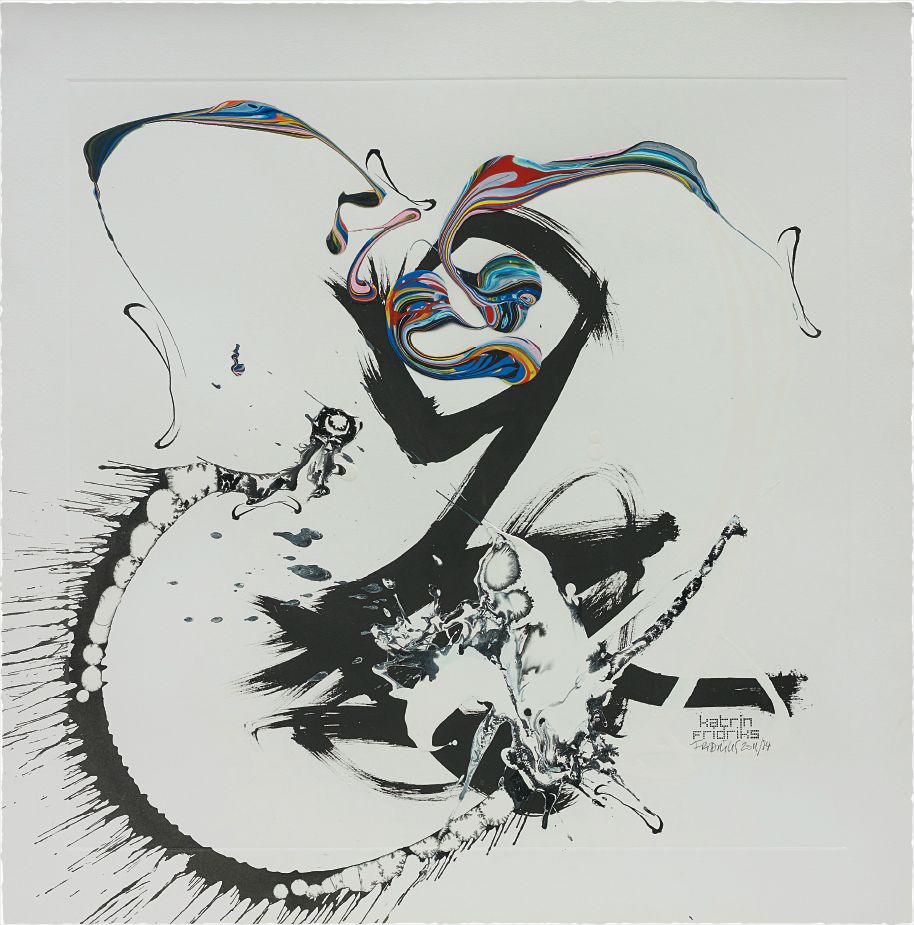
Katrin Fridriks: Energy, Earth, and Transcendence
Artist Spotlight · The Collection Editorial
In the past decade, Icelandic artist Katrin Fridriks has moved steadily from the volcanic periphery of the contemporary art world to its luminous center, her canvases appearing in major European galleries and international art fairs with an increasing urgency that feels less like institutional momentum and more like a natural force asserting itself. Born in Iceland in 1974, Fridriks has built a practice rooted in the visceral, geological drama of her homeland, translating it into a visual language so immediate and so physically charged that standing before one of her large scale works is less an act of viewing and more an act of being moved. Her presence on the international circuit has grown markedly in recent years, with collectors across Europe, Asia, and the Americas recognizing in her work something rare: abstraction that carries genuine emotional weight without sacrificing formal rigor. Iceland shaped Katrin Fridriks in ways that are inseparable from the work she makes.
Katrin Fridriks
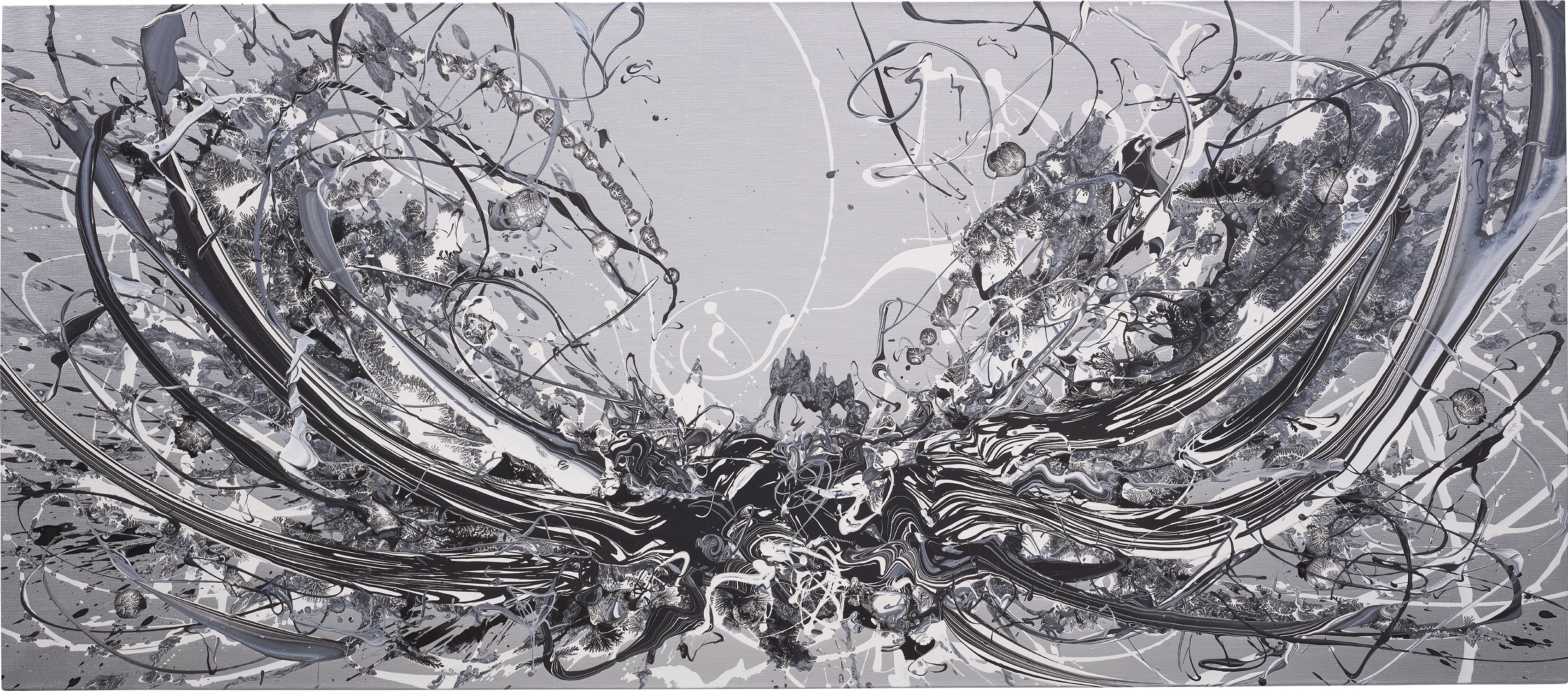
Stendhal Syndrome- Silver, 2013
Growing up in a landscape defined by geothermal activity, vast lava fields, glaciers, and the kind of natural extremity that reminds human beings of their proper scale, she absorbed an understanding of energy that was not metaphorical but literally geological. The country's light, which shifts from near permanent darkness in winter to continuous luminosity in summer, trained her eye to see color as a dynamic, living quantity rather than a static property. This sensibility did not emerge in a vacuum: Fridriks pursued her artistic formation with seriousness and purpose, drawing on the European tradition of postwar abstraction while remaining deeply anchored in her own northern origins. Her artistic development traces a compelling arc from the gestural intensity of her earliest mature works through an evolving engagement with scale, material, and conceptual depth.
The series that brought her to wider attention, the Mother Nature canvases begun around 2010, established the signature approach that collectors and critics have since come to regard as distinctly hers. Working at speed, using a process of dynamic mark making that involves rapid, full body gestures across large format surfaces, Fridriks builds up atmospheric fields of layered color that simultaneously suggest geological strata, cosmic weather, and pure painterly feeling. The velocity of her method is not theatrical: it is technical, a means of capturing something that slower, more deliberate handling would inevitably lose. Among the works that most clearly articulate her ambition, the Stendhal Syndrome series occupies a special place.
Katrin Fridriks
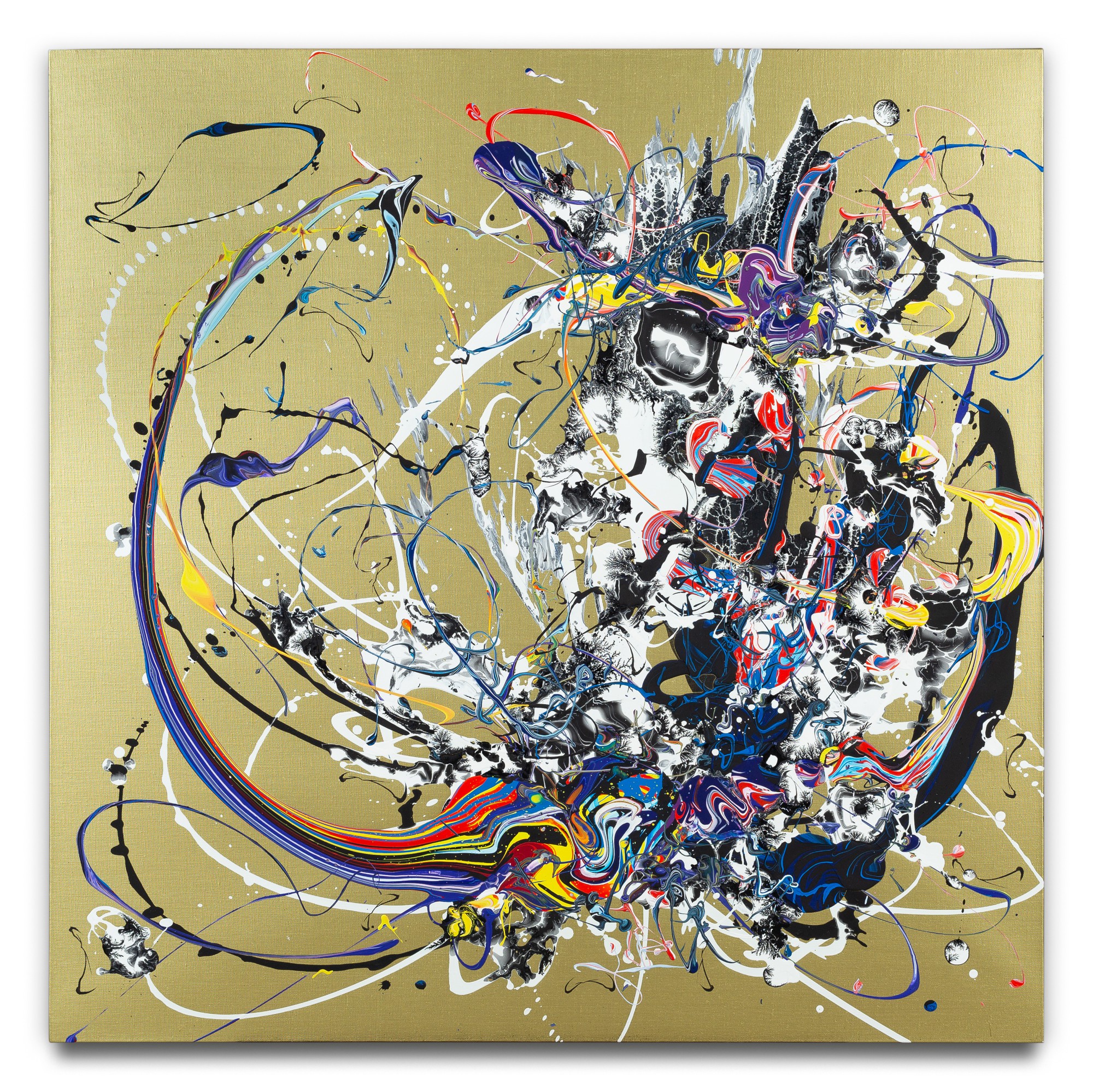
Classic golden awareness
The title itself is telling: Stendhal Syndrome refers to the overwhelming physical and emotional response that can occur when confronting great art or natural beauty, a kind of aesthetic vertigo. That Fridriks would choose this as her conceptual frame is entirely coherent. Her paintings are designed to produce exactly that response, to overwhelm the viewer's defenses and deliver something felt before it is understood. "Stendhal Syndrome Silver" from 2013 and "Stendhal Syndrome No.
7" from 2009 demonstrate the range she commands within a single thematic framework, moving between cool metallic luminosity and warmer, more turbulent compositional fields. The Interstellar Stargate from 2018 extends her reach outward from geology into cosmology, reflecting an ongoing expansion of her conceptual vocabulary without abandoning the core energy of her practice. The Mother Nature series, including works such as "Mothernature N56," "Mother Nature No. 20," and "Mothernature Awakening Force," forms the emotional heart of her output.
Katrin Fridriks
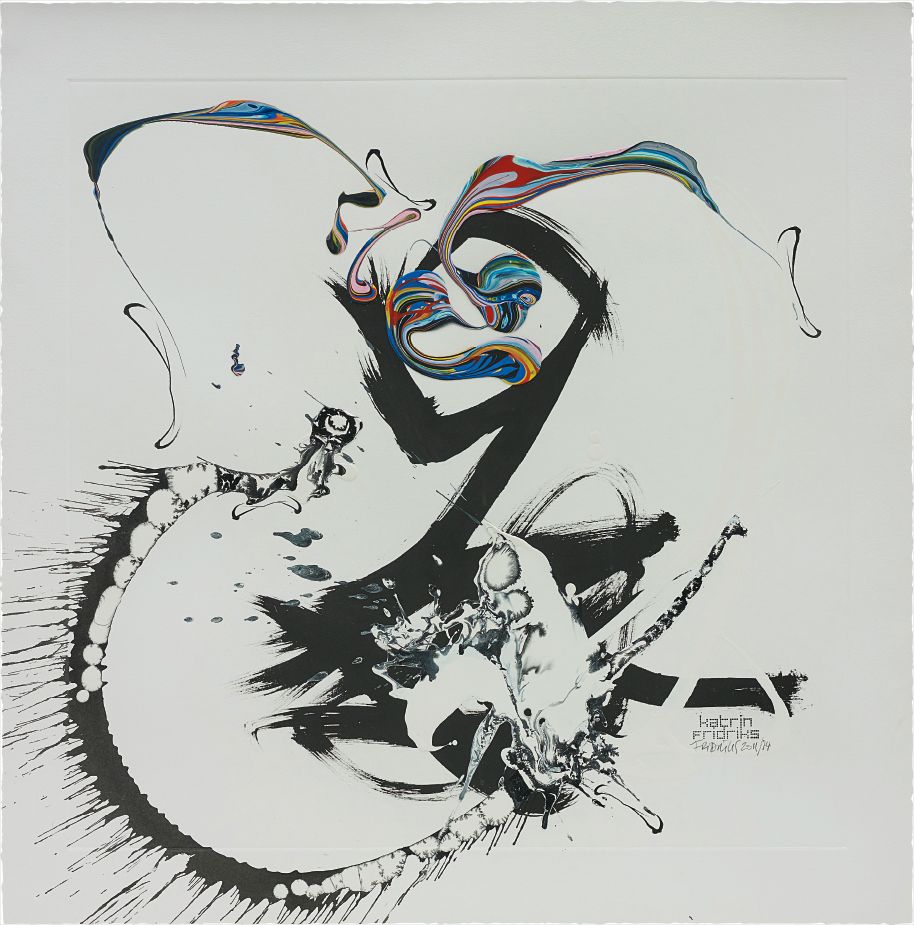
Bells Are Ringing Nr. 14, 2011
These canvases engage directly with questions of environmental force and natural transformation at a moment when such themes carry enormous cultural and political weight. Fridriks does not illustrate these concerns: she embodies them. The paintings feel like events rather than representations, occurrences of color and movement that carry the same unmistakable authority as weather. This is a difficult thing to achieve in abstract painting, where the temptation toward mere decoration or empty gesture is always present, and it speaks to the seriousness of her training and the depth of her commitment that she navigates this terrain with such consistent success.
For collectors, Fridriks offers a genuinely compelling proposition. Her works exist at the intersection of several currents that serious collectors currently find most vital: the return of painting as a primary medium, the growing market for abstraction that carries conceptual weight, and a particular appetite for artists whose work connects contemporary concerns with enduring natural and philosophical questions. Her use of acrylic on canvas and related supports gives her works a physical presence that photographs and digital reproductions simply cannot capture. Collectors who have acquired her paintings frequently speak of the way they change in different light conditions, the layered surfaces revealing new depths and movements as the quality of illumination shifts.
Katrin Fridriks
Mothernature N56, 2011
This quality of sustained discovery is one of the marks of serious work, and it rewards long term ownership in ways that more immediately legible art does not. In the context of art history, Fridriks belongs to a tradition of Northern European and Scandinavian abstraction that stretches back through artists such as Asger Jorn and the CoBrA movement, through the action painting traditions of postwar America that her gestural approach clearly acknowledges, and forward into a contemporary moment shaped by artists like Cecily Brown and Mark Bradford, whose practices also negotiate between raw painterly energy and conceptual seriousness. What distinguishes Fridriks within this lineage is the specifically geological and environmental quality of her imagery, the sense that her paintings are not about landscape but are themselves landscape, not representations of natural force but instances of it. Katrin Fridriks matters today because she has built a body of work that holds its ground in a crowded and demanding field.
Her paintings do not make concessions to trend or to easy legibility. They ask something of the viewer: attention, patience, a willingness to be affected rather than simply entertained. In an art world that sometimes seems to reward the clever and the ironic above all else, there is something bracing and genuinely exciting about an artist who stakes everything on the proposition that painting can still move us, that color and gesture and physical scale can still reach something essential in human experience. For collectors seeking work that will remain vital across years and decades, and for anyone who believes that art at its best is a form of encounter with what is most alive in the world, Katrin Fridriks is an artist whose moment is emphatically now.