Kati Horna
Kati Horna, Poetry Made Visible
Artist Spotlight · The Collection Editorial
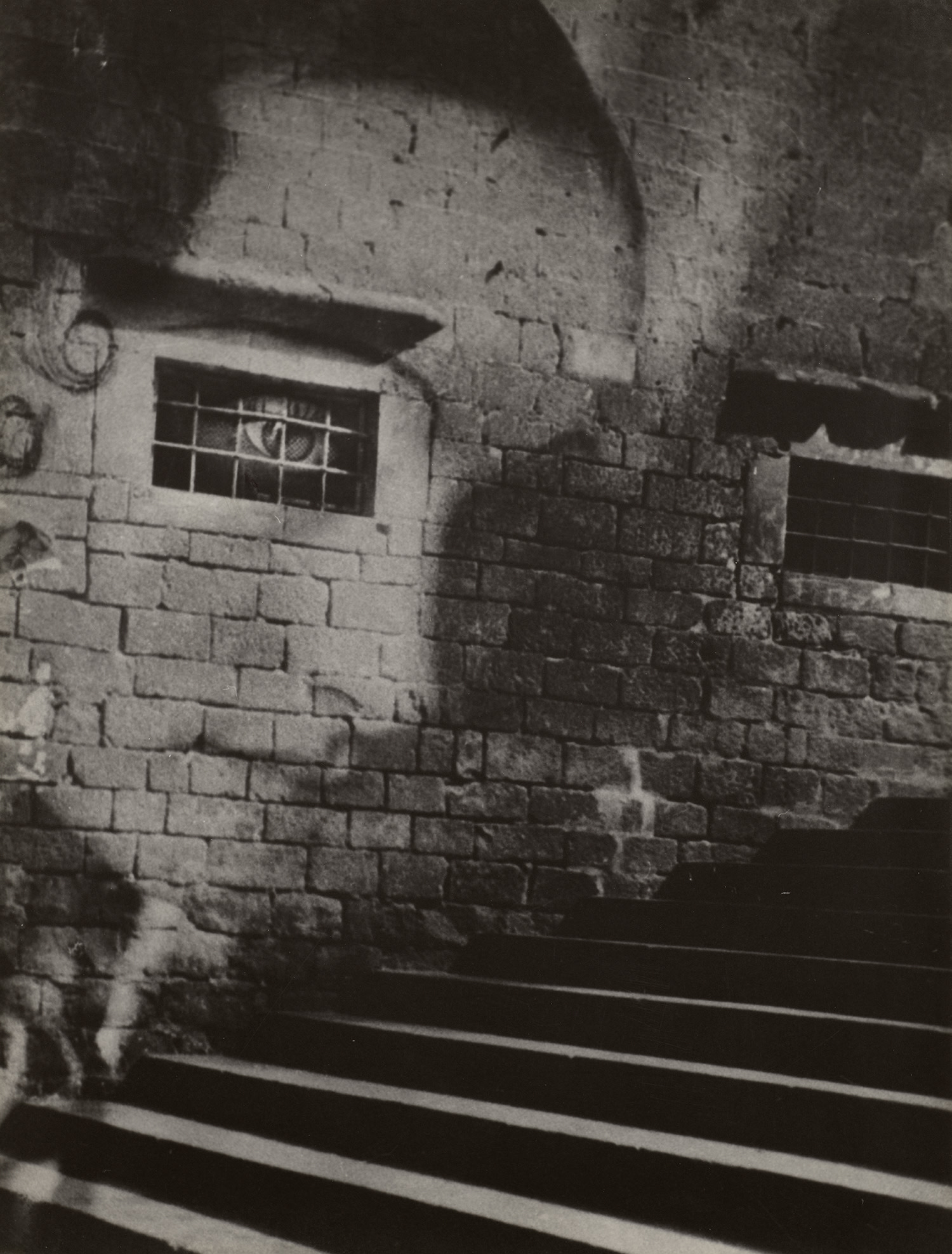
There is a photograph that stops you cold. A woman stands in the ruins of a Barcelona cathedral, her figure ascending stone steps as light floods in from above, the geometry of destruction transformed into something almost sacred. Kati Horna made this image during the Spanish Civil War, a conflict that pulled her across Europe and eventually to the other side of the world. That photograph, known as Subida a la catedral, Barcelona, remains one of the most quietly devastating documents of that era, and it captures everything essential about Horna: the instinct to find transcendence inside catastrophe, the eye that could not help but make beauty from the broken.
Kati Horna
Subida a la catedral, Barcelona
Kati Horna was born Katalin Deutsch in Budapest in 1912, into a Jewish intellectual family that gave her early access to ideas, politics, and the arts. She came of age in an era when European cities were laboratories for radical thought, and she absorbed it all. She studied photography in Berlin in the early 1930s under the influence of the Hungarian avant garde tradition, a lineage that included figures such as László Moholy Nagy and André Kertész. That formation gave her both a rigorous compositional intelligence and a willingness to treat the camera as a tool for exploration rather than simple documentation.
When political conditions in Germany made life untenable, she moved to Paris, where she fell into the orbit of the Surrealists and found a community that matched the restlessness of her imagination. It was in Paris that Horna encountered the ideas and personalities that would define her artistic sensibility for the rest of her life. She worked alongside figures in the anarchist and leftist press, contributing photographs to publications that understood images as instruments of conscience. When the Spanish Civil War broke out in 1936, she traveled to Spain to document the conflict for anarchist organizations, producing a body of work that stands apart from the war photography of her contemporaries.
Kati Horna
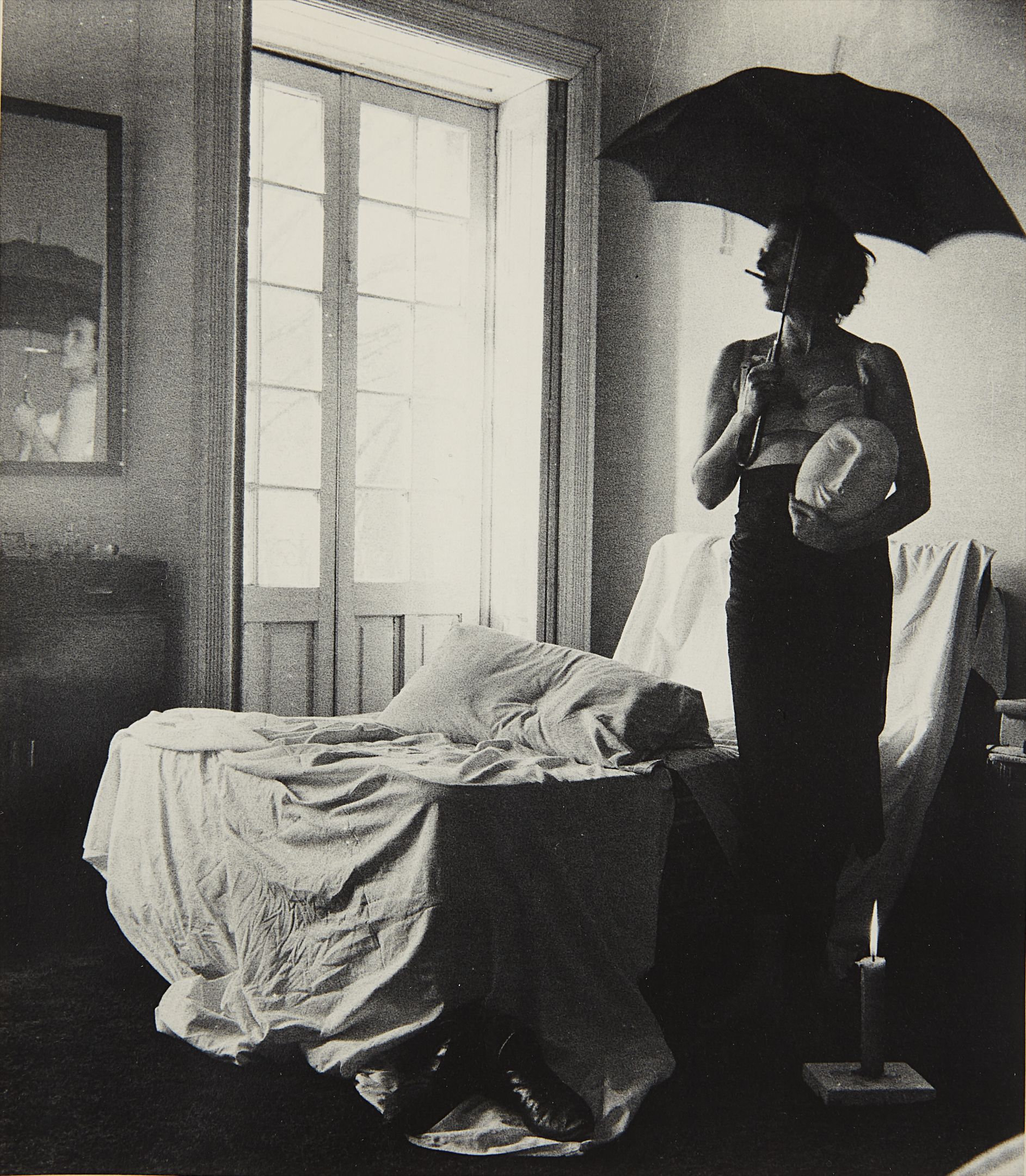
Leonora
Where others sought the drama of the frontline, Horna turned toward the civilian, the domestic, and the quietly surreal. Her images of Spanish villages, of women and children navigating a world coming apart at its seams, carry a tenderness that never collapses into sentiment. After the fall of the Spanish Republic, Horna returned to Paris briefly before the broader catastrophe of World War II forced another displacement. In 1939 she arrived in Mexico, a country that was then receiving a remarkable wave of European exiles including artists, writers, and intellectuals fleeing fascism.
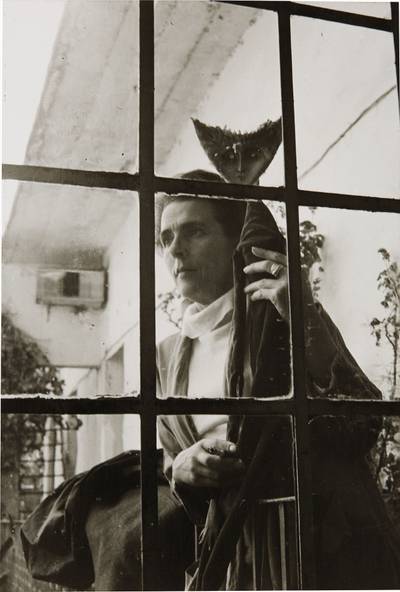
Mexico City in those years was an extraordinary crossroads, and Horna settled into it with the ease of someone who had always known how to make a home in transit. She joined a circle that included Remedios Varo, Leonora Carrington, Benjamin Péret, and Edward James, figures who were building a distinctly Mexican chapter of Surrealism that was wilder and more deeply rooted in the uncanny than its Parisian predecessor. Horna photographed all of them, and in doing so created an archive of one of the most creative communities of the twentieth century. Her portraits of Leonora Carrington are among the most celebrated works in her output, and two of them represent the depth of her achievement.
Kati Horna
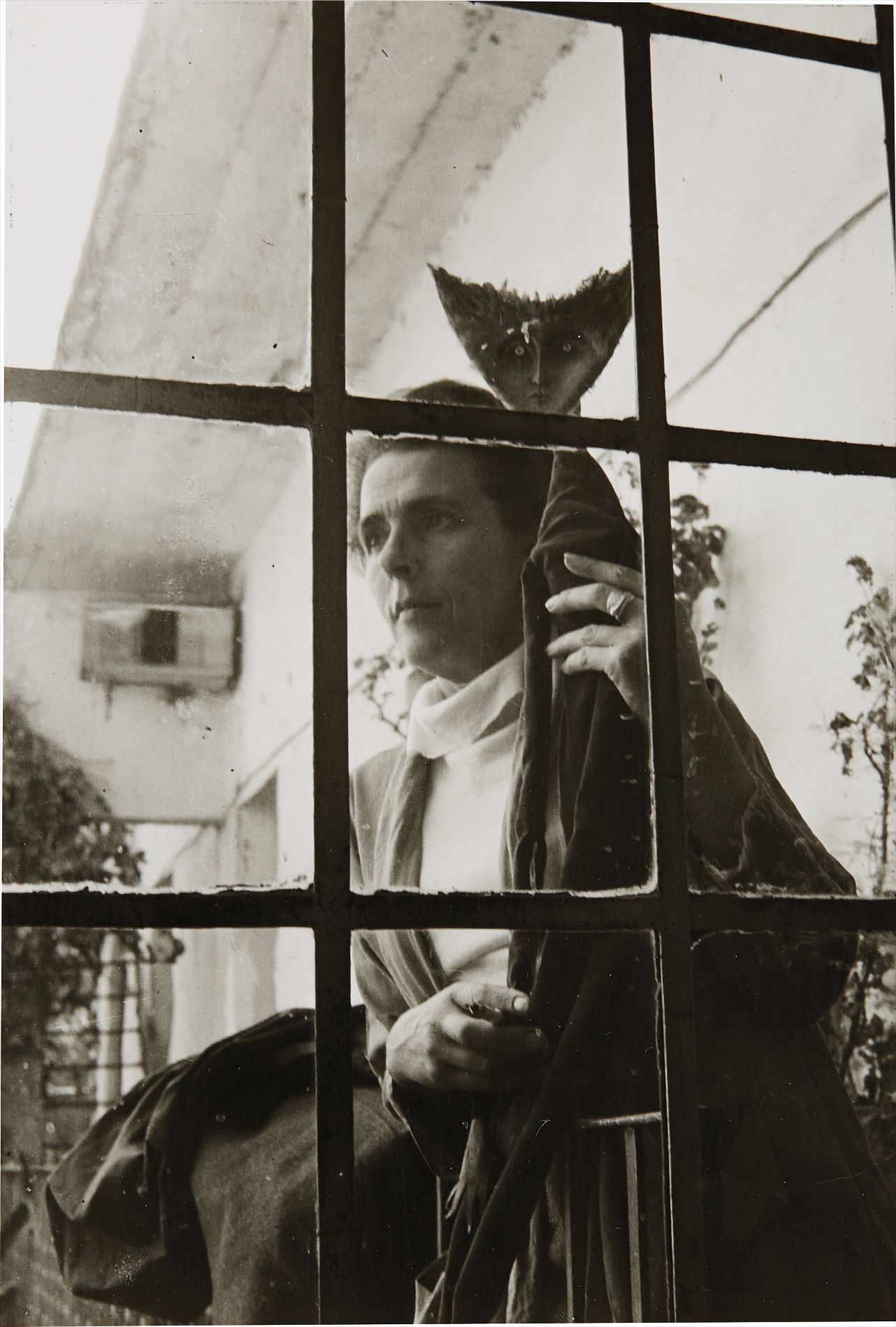
Leonora Carrington with Doll
In Leonora and in Leonora Carrington with Doll, Horna photographs the painter not as a subject to be observed but as a collaborator in the construction of an image. Carrington appears strange, radiant, and completely herself, the doll in the second image adding a layer of psychological complexity that feels both playful and unsettling. These are not simply portraits. They are acts of recognition between two women who shared a way of seeing the world as a place full of hidden meanings and metamorphic possibility.
The photographs demonstrate Horna's greatest gift: the ability to transform a moment between friends into something that belongs to art history. For collectors, Horna's work occupies a genuinely rare position. She was prolific but not commercially oriented, and her photographs circulated primarily through publications and personal networks rather than through the gallery system during her lifetime. Her gelatin silver prints carry the tactile warmth characteristic of mid century photographic craft, and those printed later under her supervision retain the compositional authority of her original vision.
As interest in women Surrealists has surged over the past two decades, driven in part by landmark exhibitions at institutions including the Tate Modern and the Museum of Modern Art, Horna's market has strengthened considerably. Her work now appears regularly at major auction houses, and private collections in Europe, Mexico, and the United States have come to regard her prints as among the most significant photographic documents of Surrealism available to the market. Within art history, Horna belongs to a constellation of women photographers who used the medium to push against the boundaries of documentary convention. Lee Miller, Dora Maar, and Gerda Taro all occupied adjacent terrain, blending journalistic purpose with a surrealist sensibility that transformed reportage into something closer to poetry.
But Horna's particular combination of political engagement, intimate portraiture, and metaphysical curiosity gives her a distinct position in that company. Her Mexican years, which stretched from 1939 until her death in 2000, also connect her to a tradition of cross cultural exchange that enriched both European modernism and Mexican visual culture simultaneously. She taught photography at the Universidad Iberoamericana in Mexico City for decades, and her influence on generations of Mexican photographers is profound and lasting. Kati Horna lived long enough to see her early work rediscovered and celebrated, and to understand that the photographs she made in Spain and Mexico would outlast the circumstances that produced them.
She died in Mexico City in 2000 at the age of eighty eight, having spent more than half a century making images that asked the viewer to look again, to look harder, and to accept that the world is stranger and more luminous than it first appears. For those who encounter her work now, whether in a museum gallery, an archive, or through the gelatin silver prints that carry her singular vision forward, the experience is one of genuine revelation. She photographed the world as if she had been entrusted with a secret about it, and the secret was that beauty and sorrow are not opposites but companions.
Explore books about Kati Horna
Kati Horna: Fotografía y Compromiso
Peter Bunnell
Kati Horna: Una Vida de Pasión por la Fotografía
Isabel Aranda
Kati Horna: Photographer
Sarah M. Lowe
Kati Horna in Mexico
Olivier Debroise