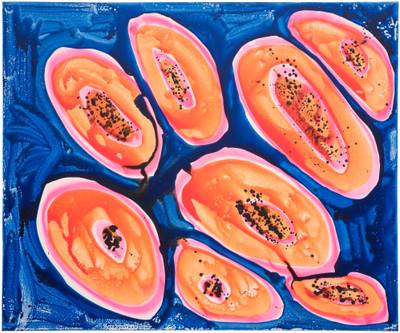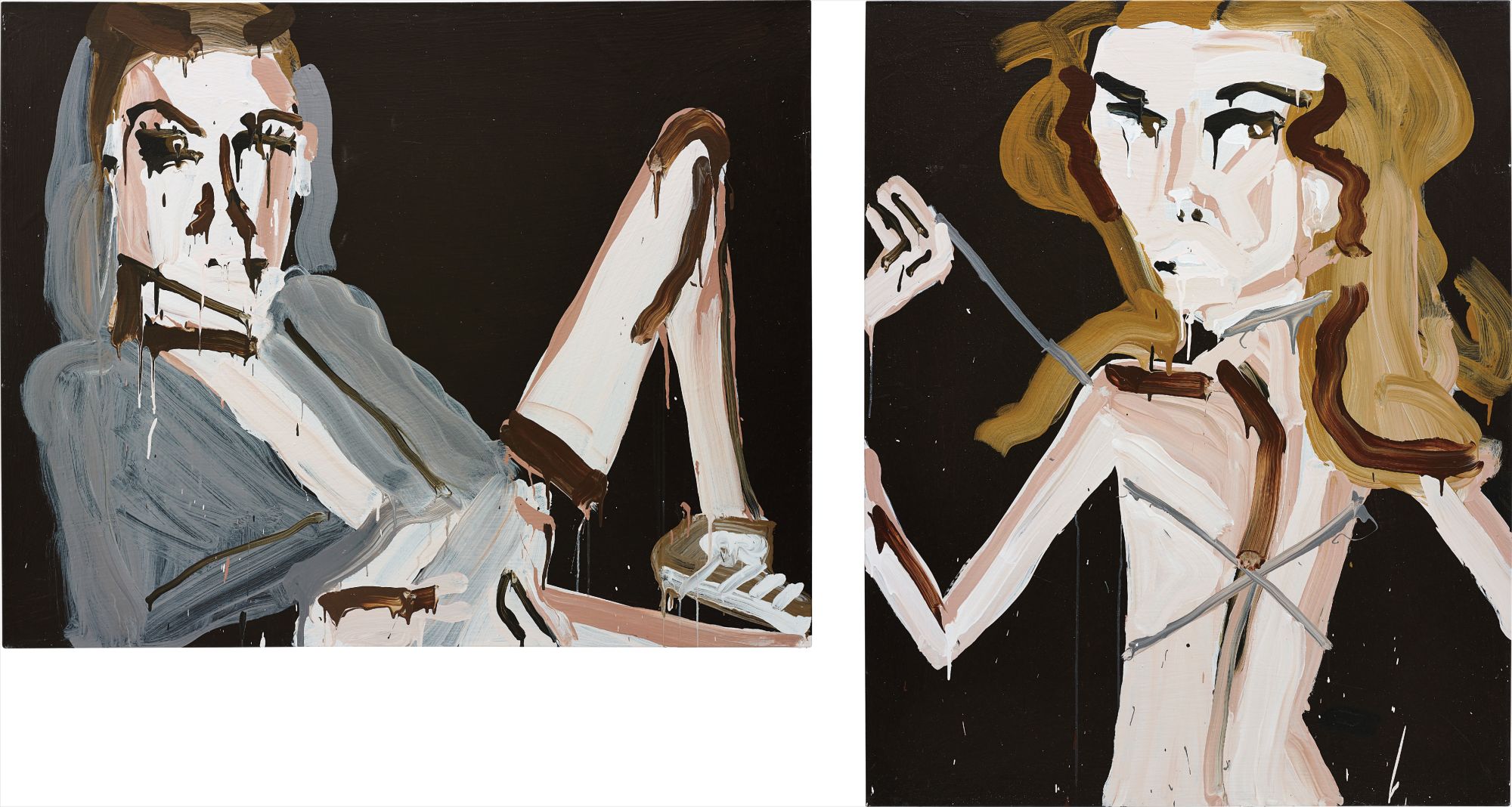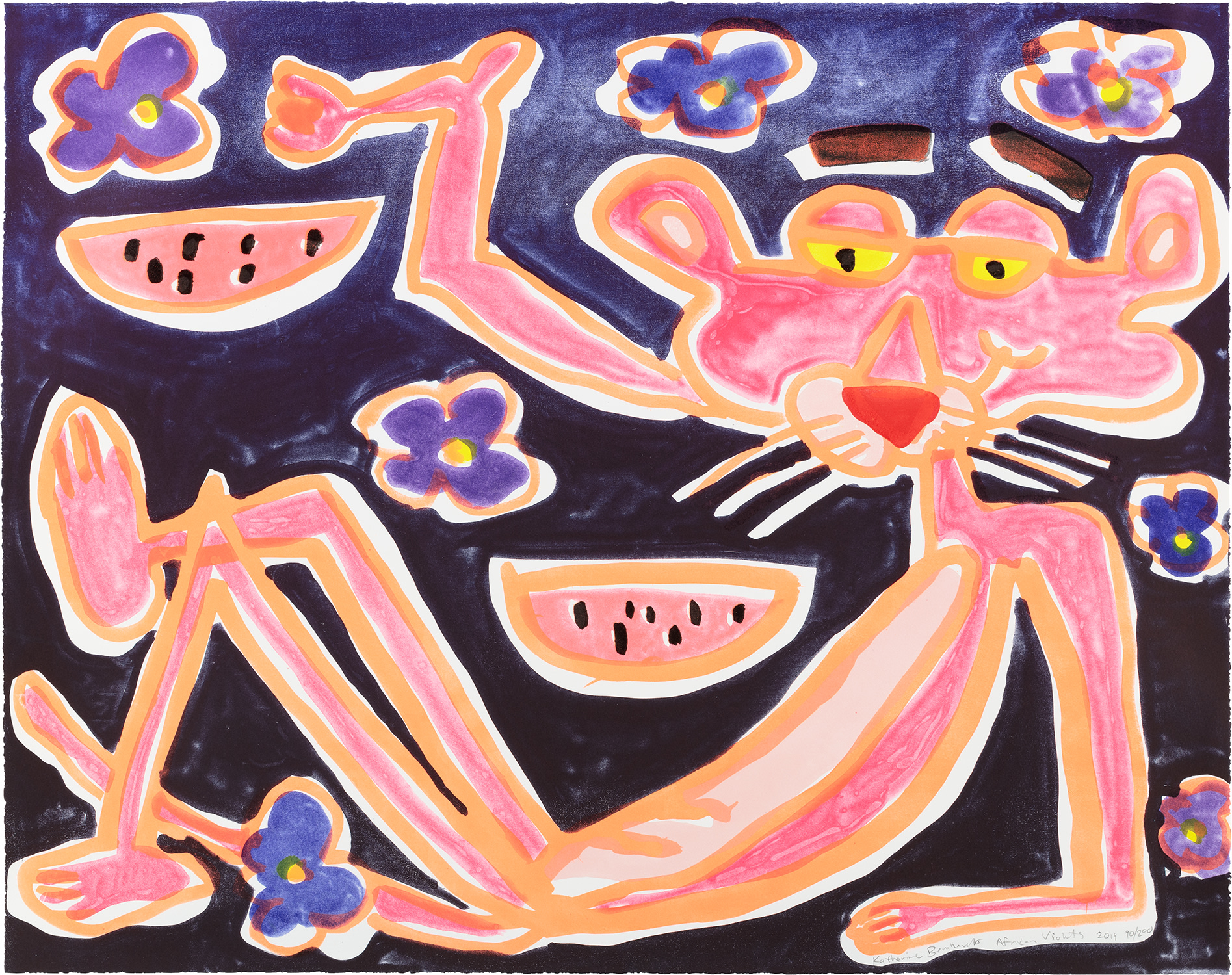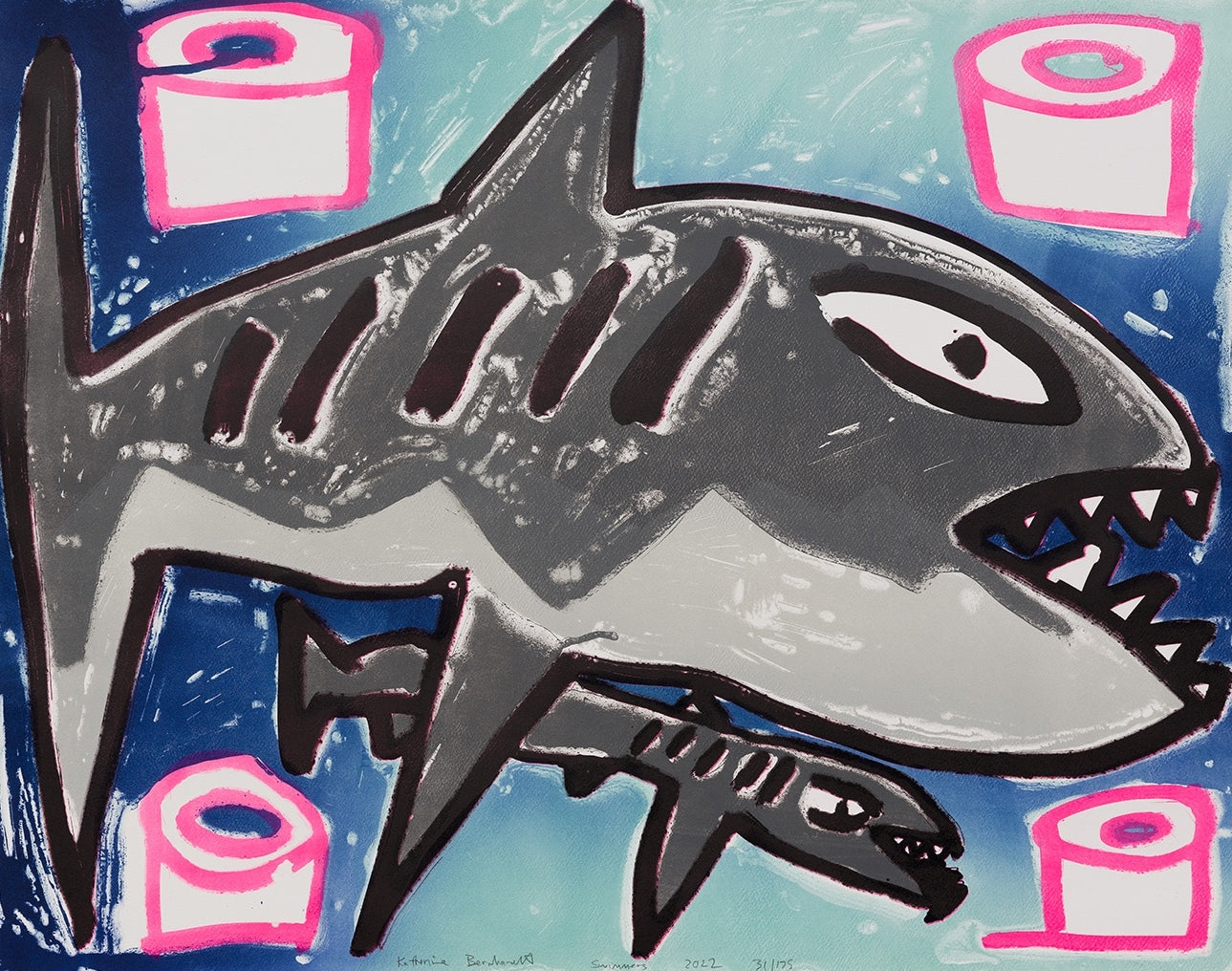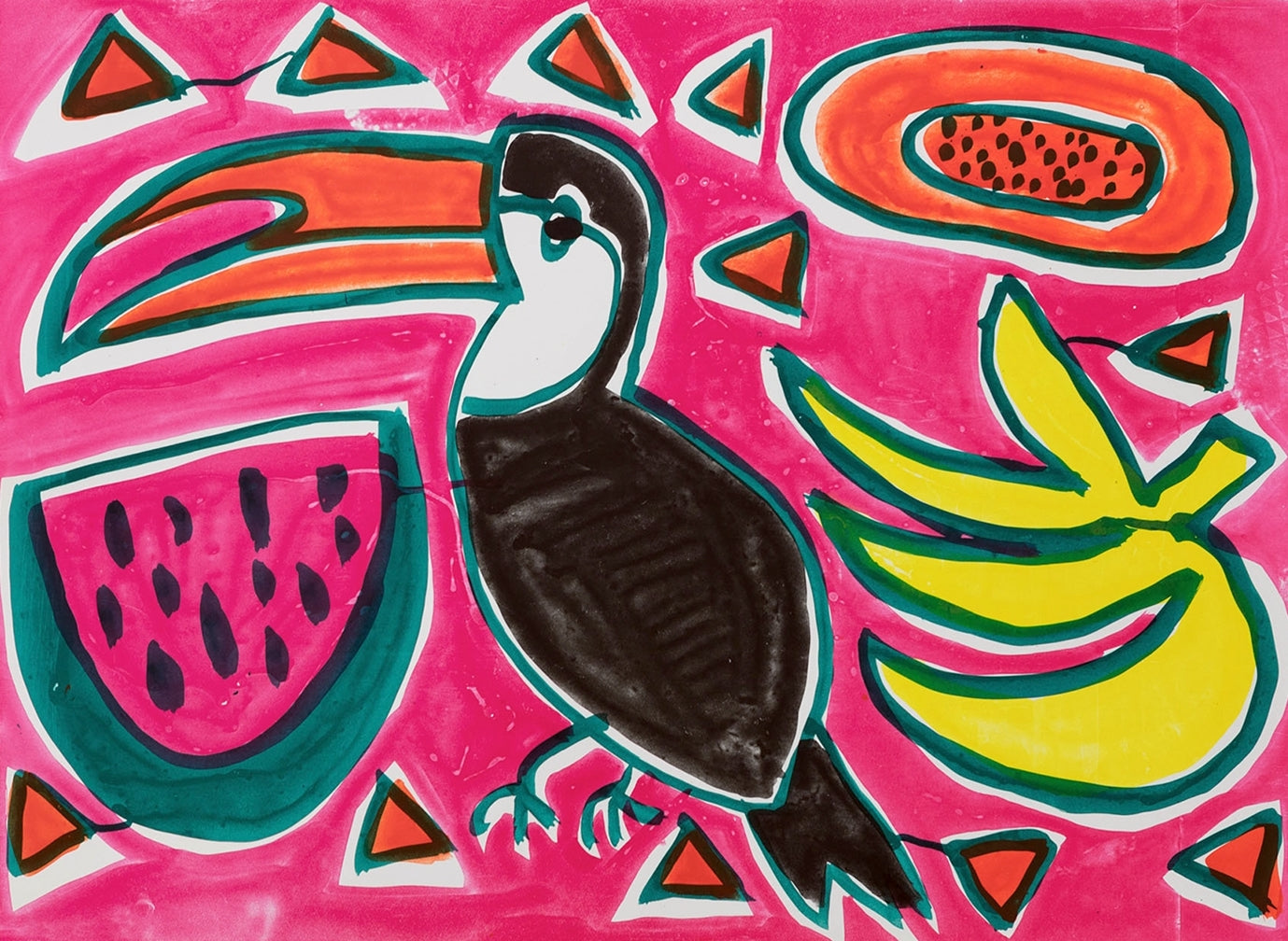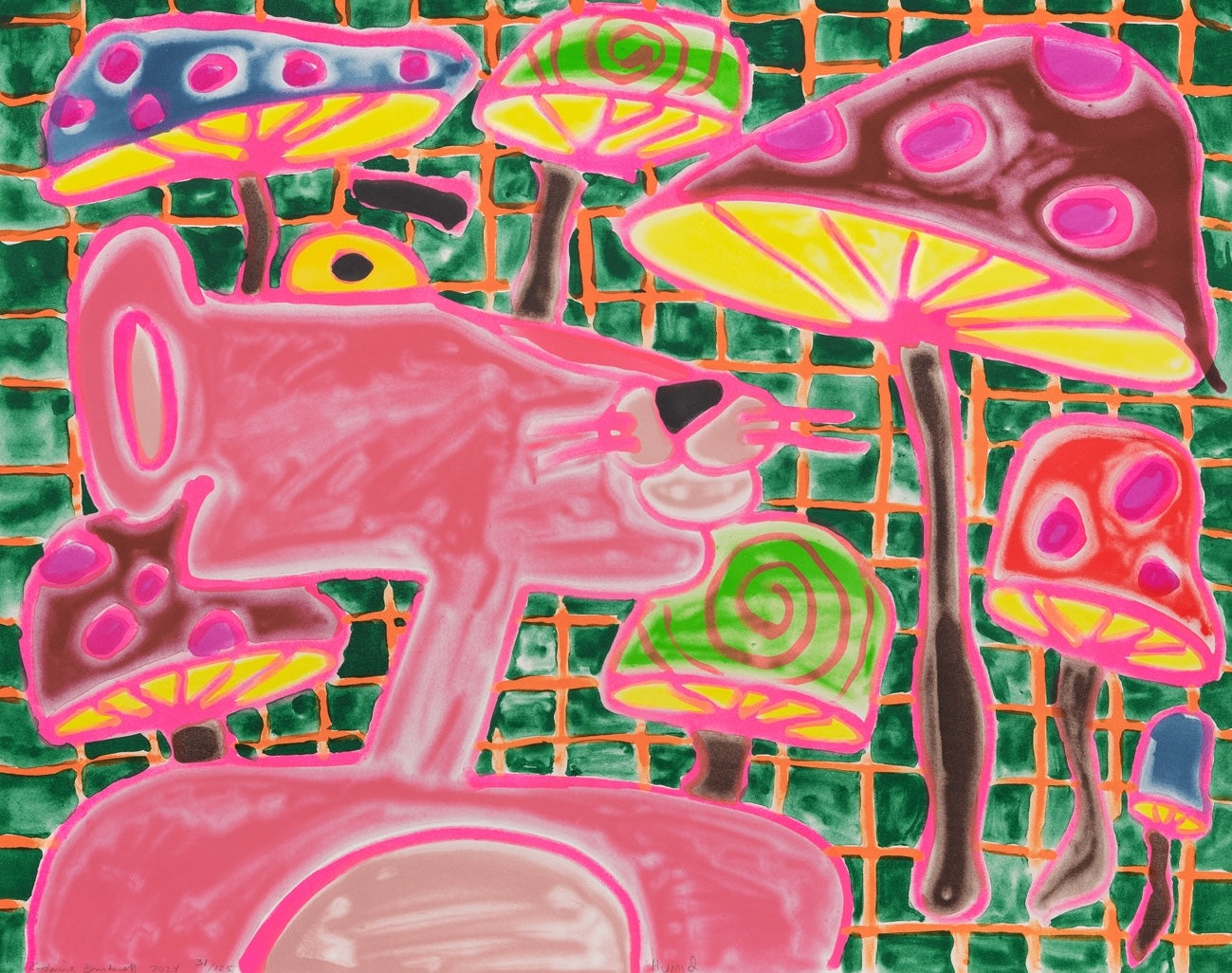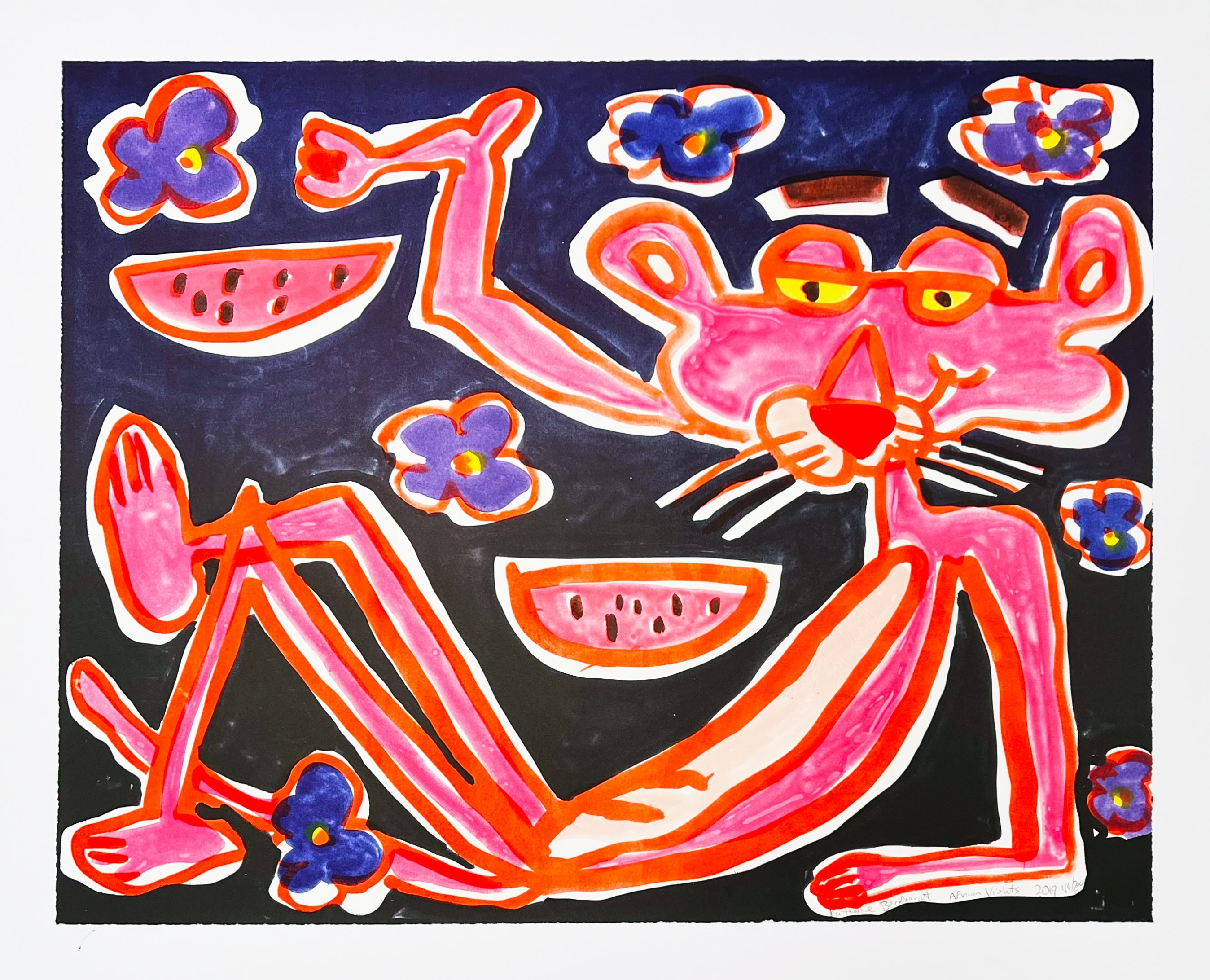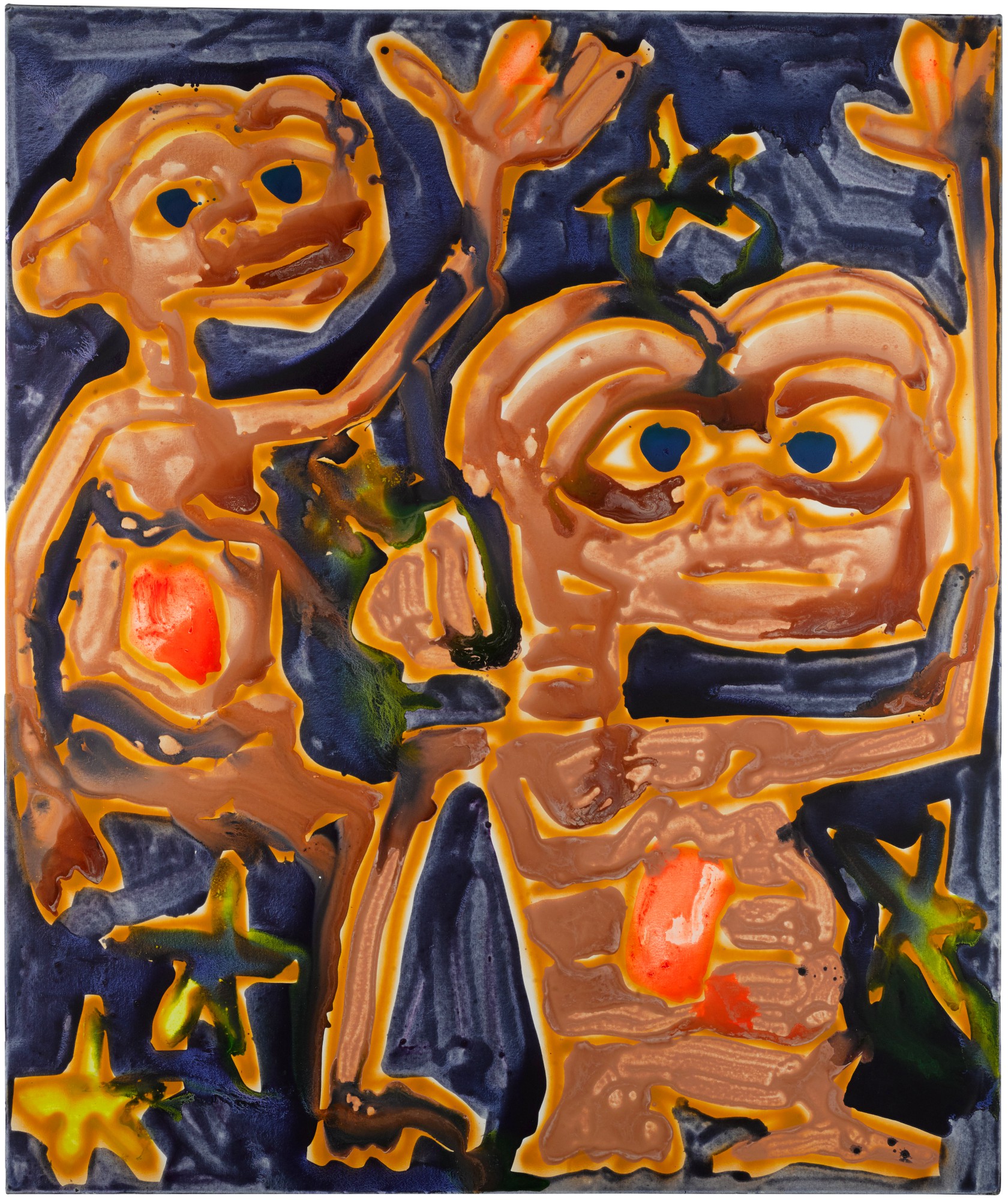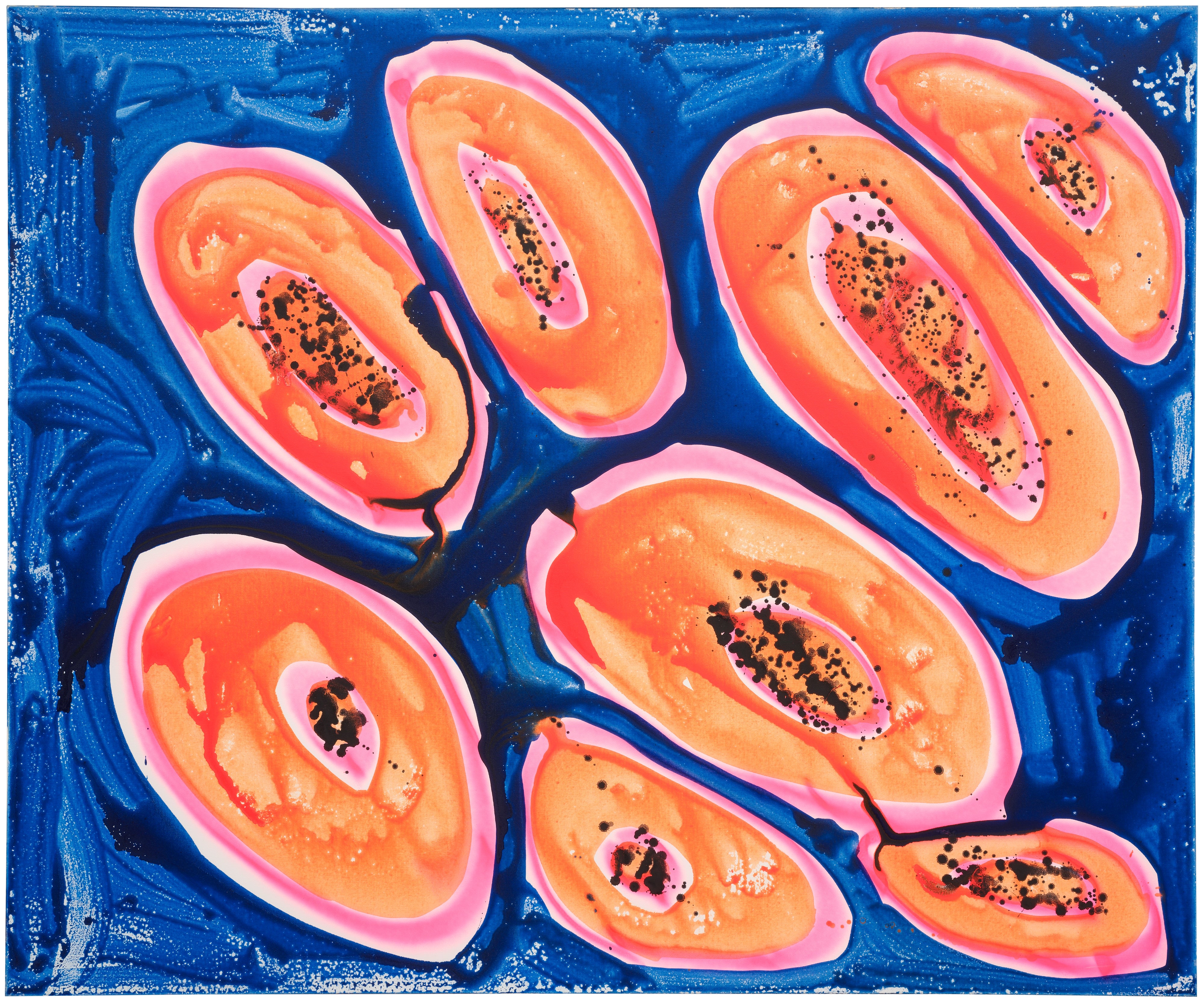
Few painters working today make the act of looking feel quite so alive as Katherine Bernhardt. In recent years her work has moved steadily from the devoted attention of downtown New York insiders to the walls of major institutions and the conversation of serious collectors worldwide. Her 2023 and 2024 exhibitions continued to affirm what admirers have long understood: that her seemingly effortless canvases are in fact the product of a rigorous, deeply considered sensibility, one that treats pleasure, color, and the flotsam of daily consumer life as entirely legitimate subjects for serious painting. Bernhardt has arrived at a moment when the art world is ready to receive exactly what she has always offered. Bernhardt was born in St. Louis, Missouri in 1981, and her midwestern upbringing gave her an eye attuned to the ordinary rather than the elevated. She went on to study at the School of Visual Arts in New York City, entering a program that placed her in direct contact with the restless energy of a city that was still, in the early 2000s, processing the legacies of pop art, graffiti, and the downtown scene that had produced Jean Michel Basquiat and Keith Haring. New York gave her ambition and speed. The streets gave her a visual vocabulary drawn from signage, fashion magazines, and the bright packaging of things consumed and discarded. She absorbed all of it without apology. Her early practice drew heavily from the world of fashion photography and advertising, and she spent time working with photographers and within environments where image making was industrial, rapid, and saturated with commercial intent. This exposure proved formative rather than corrupting. Where another painter might have retreated from that glossy world toward something more austere, Bernhardt leaned in, finding within it a genuine richness of color and symbol. Her breakthrough came as she began moving away from more representational, fashion oriented imagery toward the loose, sprawling compositions of recurring motifs that would define her mature work. Cigarettes, tropical fruits, cartoon characters, brand logos, houseplants, and candy began appearing together on enormous canvases, rendered in acrylic and spray paint with a speed and confidence that made the pictures feel both immediate and mysteriously inevitable. The signature Bernhardt canvas is a thing of genuine visual generosity. Works like Watermelon, Basketballs, Popsicles, and Cigs from 2014 and Tacos and Money from 2013 announce her vocabulary with absolute clarity: objects from the everyday world, stripped of hierarchy, arranged in loose grids or scattered constellations across fields of raw or barely tinted canvas. The spray paint bleeds and halos. The acrylic is applied in strokes that are quick and declarative, never labored. There is a debt to Andy Warhol in the embrace of consumer iconography, a debt to Philip Guston in the willingness to let humble things be painted seriously, and something of the spirit of Henri Matisse in the sheer chromatic confidence. Yet the synthesis is entirely her own. Her 2018 canvases, including Minnie and Tres Parajos, show a painter fully in command of her vocabulary, layering humor with a formal intelligence that rewards sustained looking. PepsiCo from 2019 takes a corporate logo and dissolves it into something closer to a field painting, brand identity unraveling into pure color event. For collectors, Bernhardt represents one of the more compelling propositions in contemporary painting. Her market has grown steadily and organically, supported by her long association with Canada gallery in New York, a program known for championing painters who operate outside fashionable critical frameworks. Works on canvas have performed well at auction, with prices reflecting both the strength of her primary market and the genuine enthusiasm of collectors who respond to work that is difficult to fake and impossible to ignore. Her prints, including lithographs such as African Violet and I Know My Rights, produced on Somerset paper, offer an accessible point of entry that carries the full force of her visual thinking. These editions are not afterthoughts; they are works in which her instinct for bold, flat color and her delight in found iconography translate beautifully into the graphic medium. Collectors drawn to artists such as Laura Owens, Henry Taylor, or Joe Bradley will find in Bernhardt a practice that shares their commitment to painting as an arena for genuine feeling and formal risk. Within the broader history of painting, Bernhardt occupies a position that feels both newly won and historically grounded. She belongs to a generation of painters who came of age after the so called death of painting debates had exhausted themselves, and who simply got on with making pictures without apologizing for the enterprise. Her engagement with pop imagery connects her to a lineage running from Warhol through Haring and on through the neo pop movements of the 1990s, yet her handling of paint is too physical and too gestural to be contained by any strictly pop reading. There is also a feminist dimension to her practice worth noting: her choice of subjects, domestic, commercial, and cartoonish, reclaims territory that fine art culture has historically treated as beneath serious consideration, and she reclaims it with an ease that makes the reclaiming feel like the most natural thing in the world. What makes Katherine Bernhardt matter, finally, is not only what she paints but how her paintings make people feel. There is a warmth and a democratizing generosity in her work that is increasingly rare in contemporary art, a sense that the world she depicts, with all its kitsch and color and cheerful absurdity, is worth celebrating rather than critiquing from a safe ironic distance. Her canvases ask nothing of the viewer except attention, and they reward that attention with the particular pleasure of encountering a vision that is both completely familiar and entirely fresh. As her presence in collections and institutions continues to grow, Bernhardt stands as one of the essential painters of her generation, an artist whose joy is serious, whose ease is earned, and whose pictures will endure.