Kasing Lung
Kasing Lung, Where Folklore Finds Form
Artist Spotlight · The Collection Editorial
In the spring of 2024, something remarkable happened in the world of contemporary collecting. Images of a small, pointy toothed, furry creature began appearing in the handbags of celebrities, on the wrists of teenagers, and in the display cases of serious art collectors across Asia, Europe, and the Americas. The creature was Labubu, the mischievous elf born from the imagination of Hong Kong artist Kasing Lung, and its sudden omnipresence announced not merely a trend but the arrival of a genuinely new kind of cultural object: one that dissolves the boundary between fine art, toy culture, and global mythology. Lung was born in Hong Kong in 1980, and his early years were shaped by a city of extraordinary creative friction.
Kasing Lung
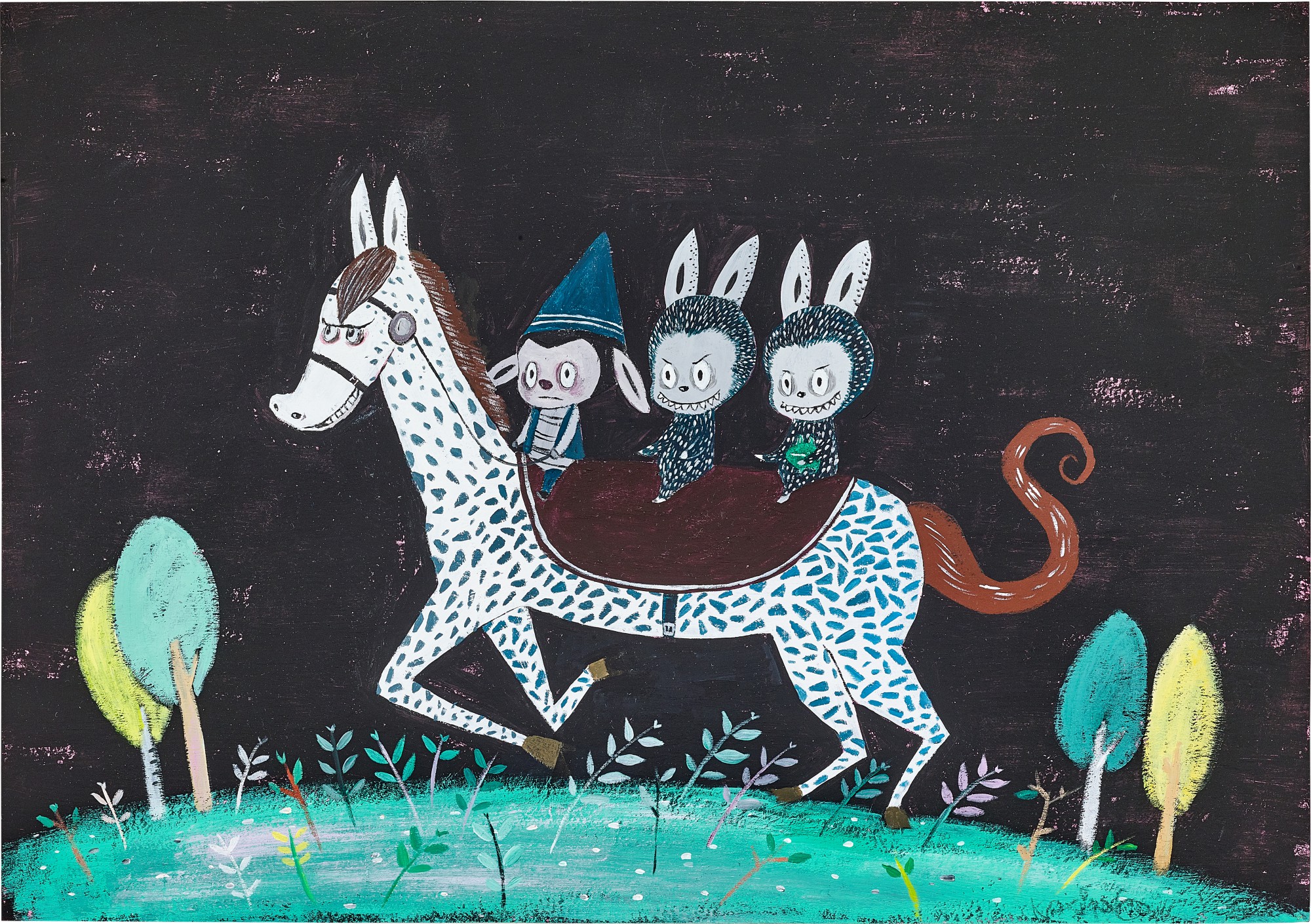
夜中漫步, 2015
Hong Kong in the 1980s and 1990s was a place where Eastern and Western visual cultures collided and cross pollinated constantly, where Japanese manga sat alongside British storybooks, and where a restless, inventive commercial art scene gave ambitious young designers both a training ground and a creative challenge. Lung absorbed all of it. Yet the deeper currents of his imagination were fed by something less expected: the folklore and fairy tales of Northern Europe. The dark forests, mischievous spirits, gnomes, and trolls of Scandinavian and Germanic tradition captured his sense of wonder in a way that felt personal and lasting, planting seeds that would eventually grow into an entirely distinctive creative world.
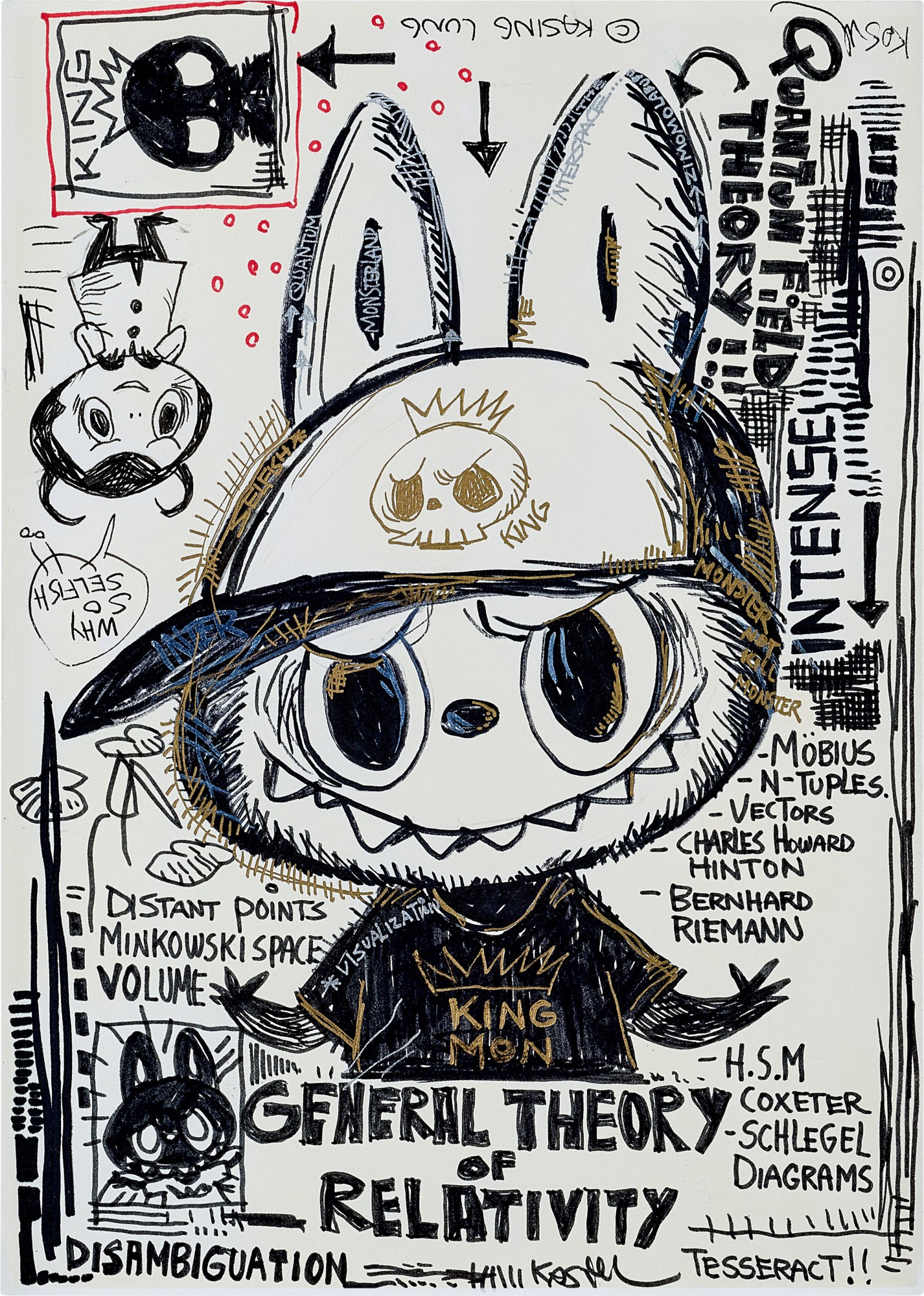
After building a career as a graphic designer and illustrator, Lung began developing the characters and narratives that would define his fine art practice. His early paintings on paper and canvas reveal a deeply literary sensibility. Works such as the acrylic on paper piece titled "夜中漫步" from 2015 demonstrate a painter who thinks in stories, composing atmospheric nocturnal scenes with the layered symbolic logic of illustrated fables. The ink and marker on paper work "天堂" from 2018 shows the same instinct pushed further, combining the gestural freedom of mark making with a compositional intelligence that draws on both Asian ink traditions and the flat, bold color fields of Western graphic design.
Kasing Lung
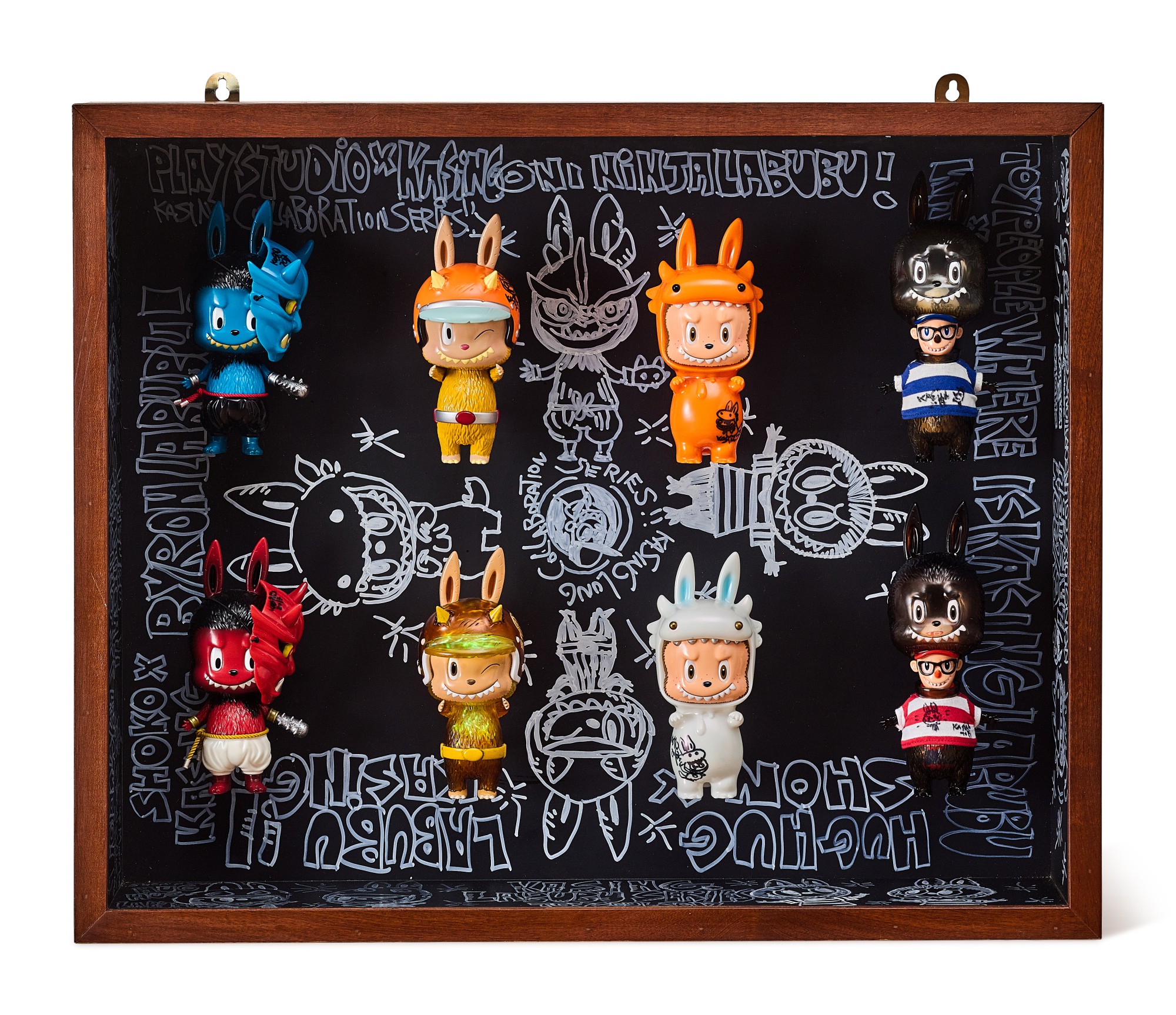
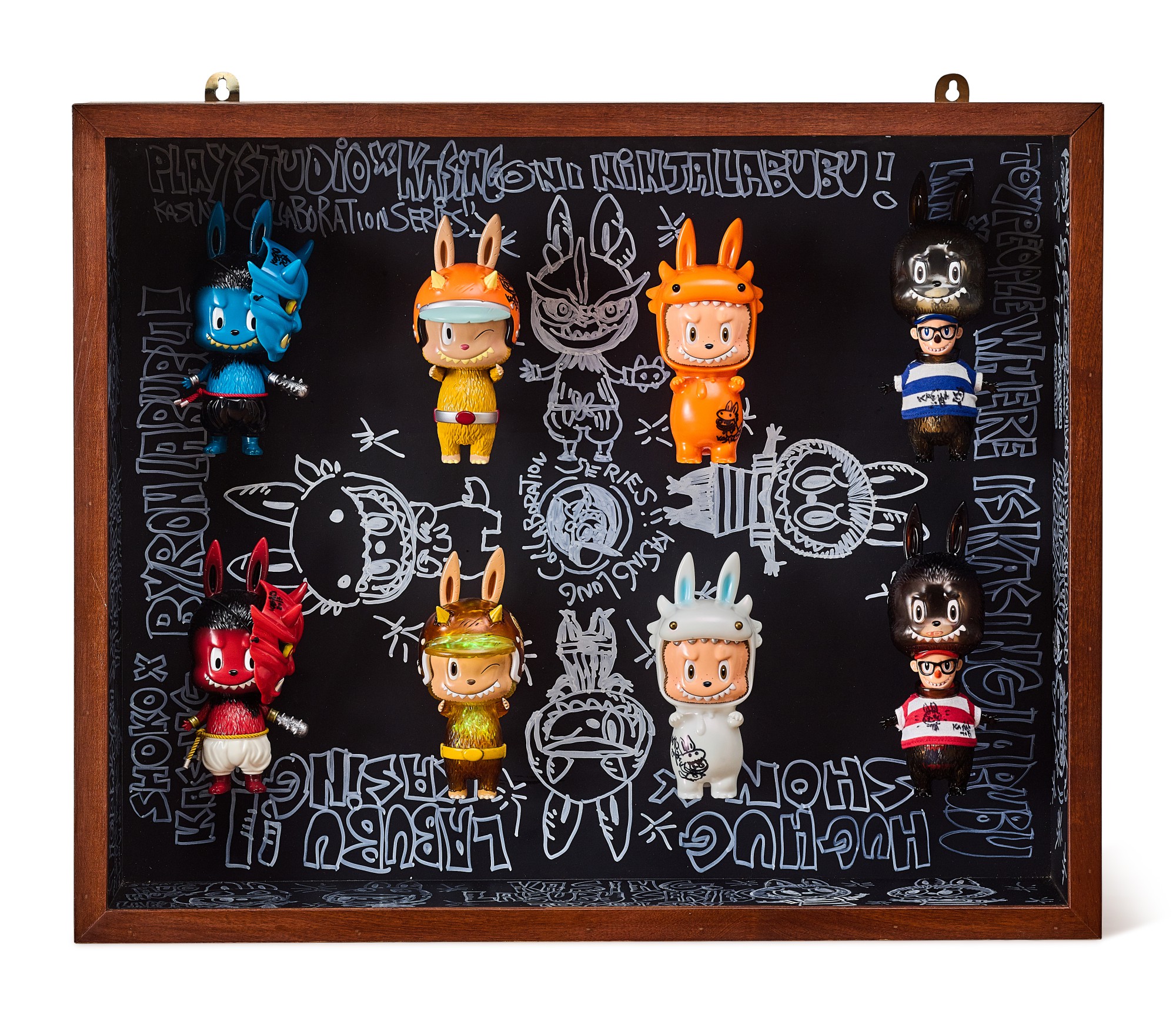
Labubu 限量手板模型一組八件(龍家昇手繪陳列櫃), 2017
These paintings are not illustrations of his toy characters; they are the imaginative territory from which those characters emerge. The creation of Labubu and the broader "The Monsters" series marked a turning point that few artists experience so clearly. Lung conceived Labubu as a creature of genuine ambiguity: neither wholly good nor wholly bad, grinning with teeth that suggest both delight and mischief, inhabiting a space between the comforting and the unsettling that is precisely where the best folklore has always lived. The 2017 work "Labubu 限量手板模型一組八件(龍家昇手繪陳列櫃)" is a landmark object in his career, a set of hand finished prototype figures presented within a hand painted wooden display cabinet, the work collapsing the distinction between sculptural object, painting, and collectible in a single unified gesture.
It is the kind of work that reveals how thoughtfully Lung has always understood the full context of what he makes. His subsequent collaboration with Pop Mart brought Labubu to a global audience at a scale that transformed the landscape of designer toy culture entirely. The paintings and works on paper in Lung's output deserve particular attention from collectors who are still learning his practice. "Mon" in acrylic on canvas and the oil on canvas diptych "生辰之時 1 號" and "生辰之時 2 號" reveal a painter of real feeling and skill, someone for whom the canvas is not a secondary medium but an equal one.
Kasing Lung
天堂, 2018
The mixed media works on skate decks, including "袖珍星" and "雙星", show an artist uninterested in maintaining traditional hierarchies between surfaces and supports, treating each substrate as its own kind of stage. The 2022 work "SOM" and the "We Create Chaos 2" from 2019 further demonstrate the range of a practice that moves fluidly between intimate works on paper and more assertive, larger statements. The offset lithograph "Paradise 15th Anniversary (Labubu)" occupies a different register again, a work designed to reach many hands while retaining the warmth and precision of Lung's visual language. For collectors, Lung's work offers something genuinely rare in the current market: a practice that is simultaneously accessible in spirit and sophisticated in execution, backed by a cultural moment that shows every sign of deepening rather than fading.
The fine art works, particularly the paintings and unique hand finished objects, command serious attention precisely because they predate and underpin the mass cultural phenomenon. Collectors who understand his development recognise that the paintings and ink works are not merchandise adjacent to the toys; rather, the toys are the popular expression of a vision that was fully formed in paint and paper first. Related figures in the broader conversation around collectible art and toy culture include KAWS, whose career arc from street art to gallery to mass collaboration offers a useful parallel, and Takashi Murakami, who similarly built a world of characters that move between fine art and popular culture without losing coherence or ambition. Within the tradition of artists who draw on folklore and fairy tale, Lung finds company with figures such as Brian Froud and the illustrative painters of the early twentieth century symbolist tradition, though his sensibility is entirely his own.
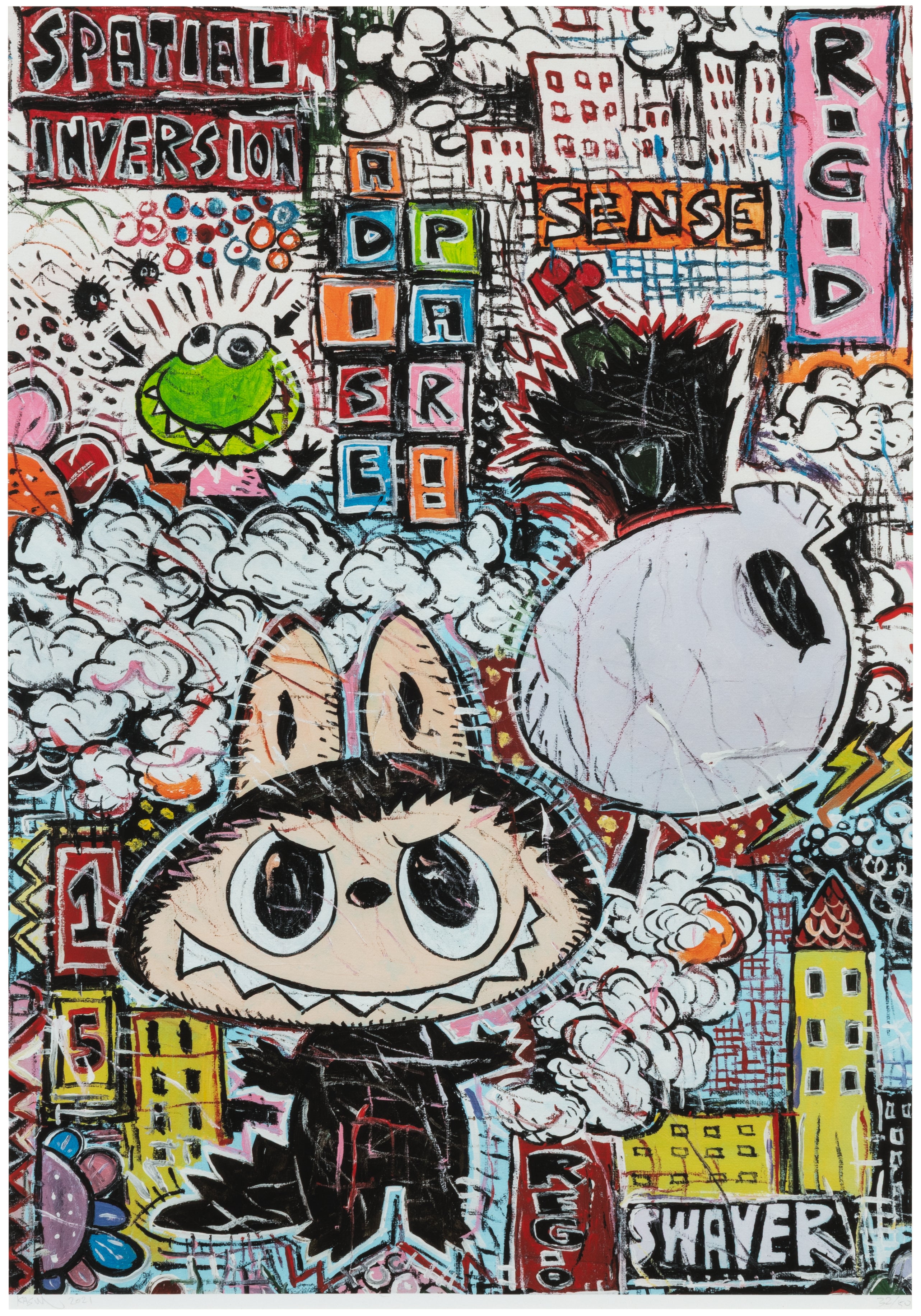
Kasing Lung
Paradise 15th Anniversary (Labubu)
What makes Lung matter now, and what will ensure his place in any serious account of early twenty first century art, is the clarity and consistency of his vision across every scale and medium he works in. He has not chased relevance; relevance has found him because his work is rooted in something genuine: a lifelong fascination with the creatures that live at the edge of human imagination, the ones that frighten and delight in equal measure, the ones that remind us that the world is stranger and more alive than we usually allow ourselves to believe. In a market flooded with irony and conceptual distance, Lung makes work that wants to be loved, and earns that love honestly. For collectors at every stage, from those acquiring their first work to those building serious holdings in contemporary Asian art, his practice represents one of the most compelling and warmly human bodies of work in the field today.