Karl Wirsum
Karl Wirsum: Chicago's Wildly Inventive Visual Poet
Artist Spotlight · The Collection Editorial
There are artists who work within the traditions handed to them, and then there are artists who gleefully invent their own language from scratch. Karl Wirsum belongs emphatically to the second category. In recent years, major institutional surveys of Chicago Imagism have brought renewed critical attention to Wirsum and his peers, with the Art Institute of Chicago and the Museum of Contemporary Art Chicago both revisiting the movement's outsized influence on American art. For collectors and scholars alike, the reassessment has been thrilling: here is a body of work that feels not only historically significant but urgently alive, as contemporary in its energy as anything being made today.
Karl Wirsum
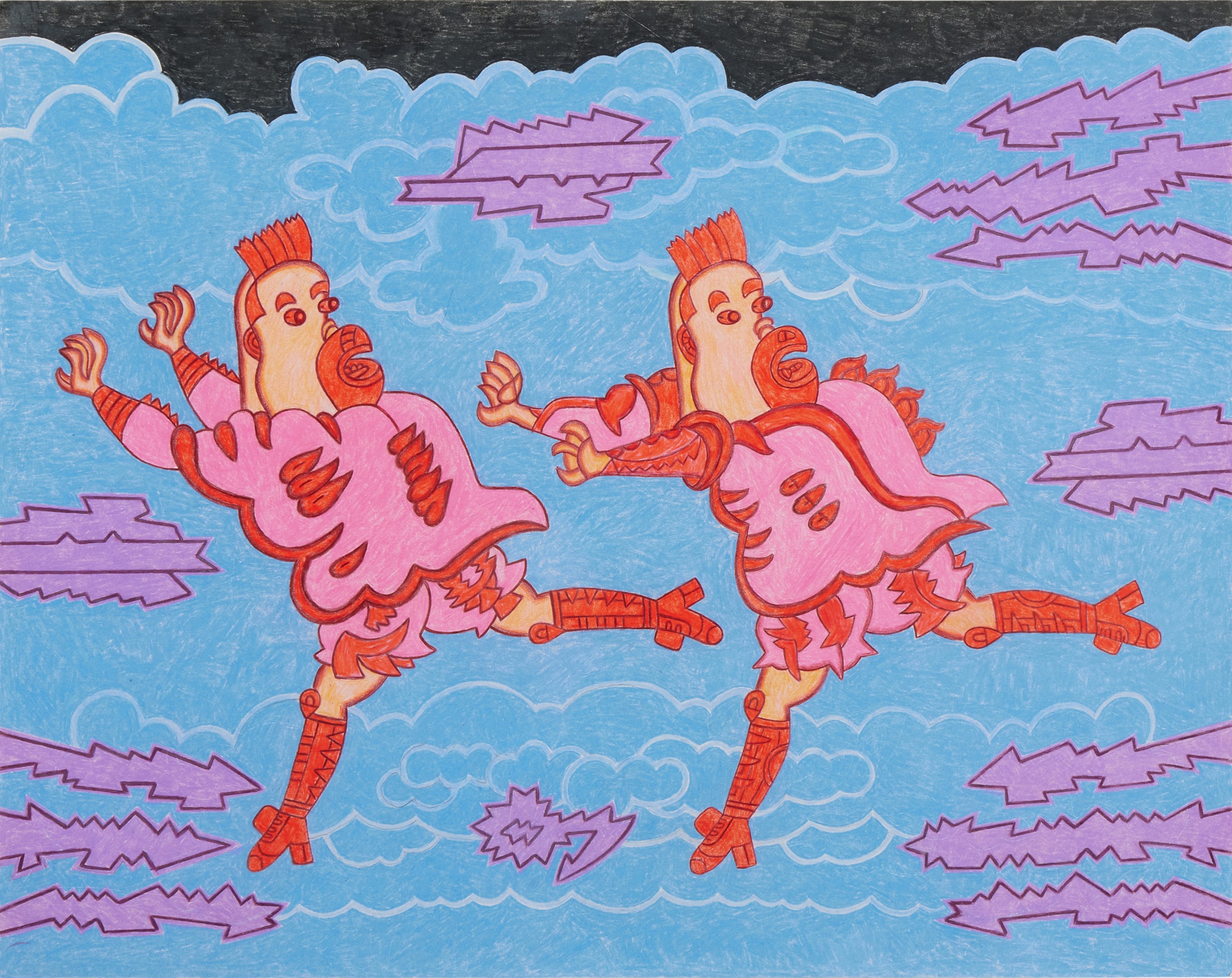
Twin Shin Splint Sprint, 2017
Wirsum was born in Chicago in 1939, and the city shaped him in ways that go beyond geography. He came of age in a metropolis saturated with vernacular visual culture: blues clubs on the South Side, neon signage, carnival graphics, storefront churches, and the raw commercial energy of mid century American streets. He studied at the School of the Art Institute of Chicago, graduating in 1961, and it was there that he encountered the teachers and fellow students who would help him understand that Chicago's visual landscape was not a distraction from high art but the very substance of it. The institution gave him formal grounding; the city gave him everything else.
In 1966, Wirsum became a founding member of the Hairy Who, a group of six artists who showed together at the Hyde Park Art Center in Chicago. The group included Jim Nutt, Gladys Nilsson, Suellen Rocca, James Falconer, and Art Green, and their exhibitions were deliberately raucous, irreverent, and anti establishment. They printed comic book style catalogues rather than conventional brochures, and they hung work floor to ceiling with the density of a carnival sideshow. The shows were unlike anything happening in New York, where Minimalism and Conceptualism were defining the critical conversation.
Karl Wirsum
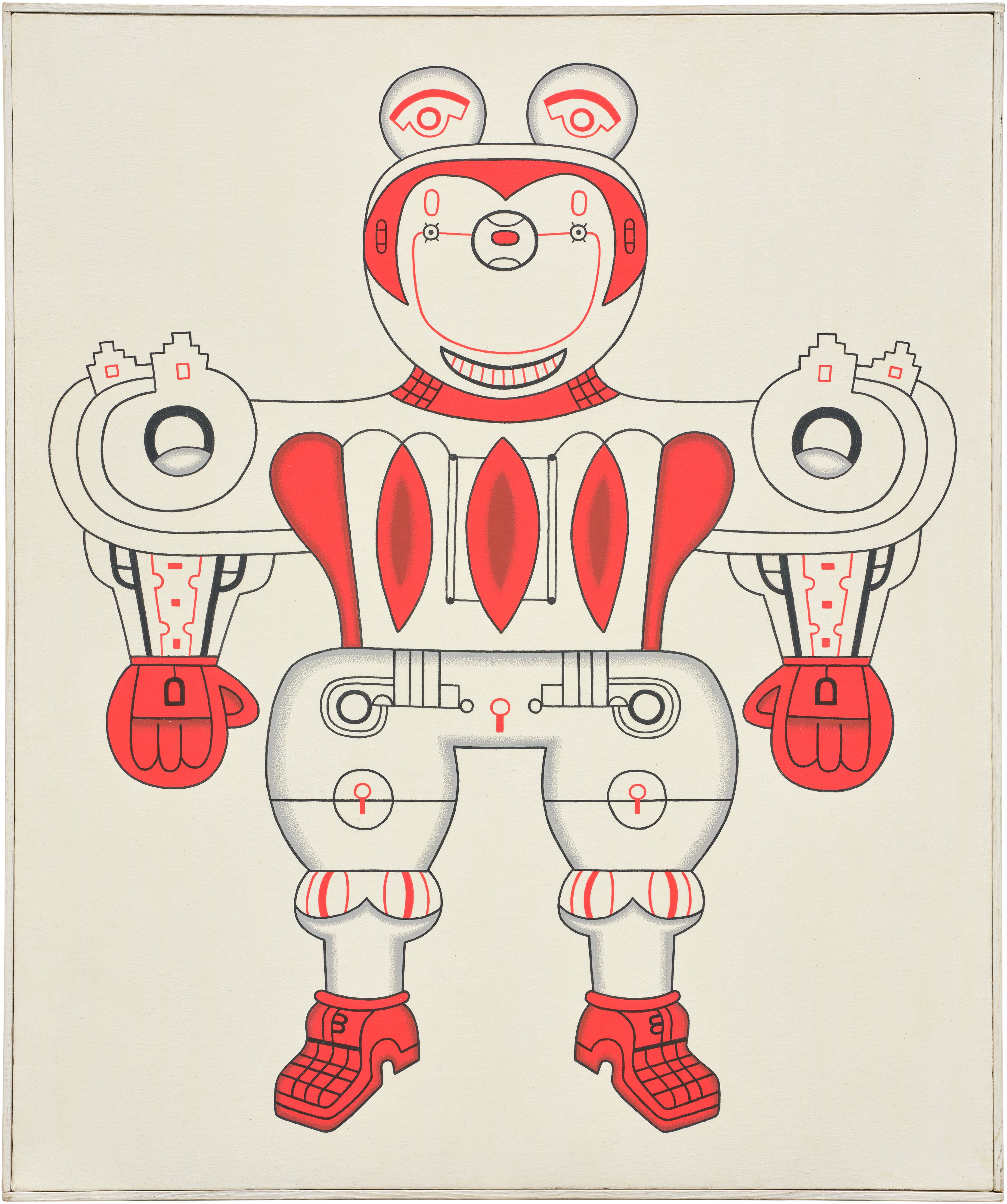
Count Fasco's Mouse Piece Whitey Jr. #2, 1983
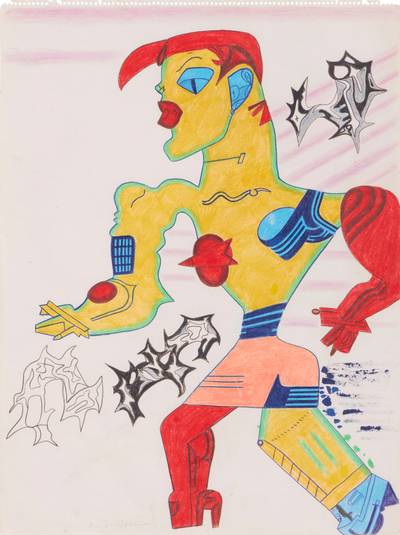
The Hairy Who did not care. They were making something ferociously their own. Wirsum's artistic development through the late 1960s and 1970s saw him forge a visual style so distinctive that it is essentially unmistakable. His figures, often frontal and symmetrical, are built from flat planes of saturated color with the graphic punch of a silk screen and the structural logic of Pre Columbian art and African masks.
He drew deeply from comic books and animated cartoons, from blues iconography and tattoo culture, assembling these sources not as pastiche but as a coherent and personal mythology. His line is always deliberate and assertive, and his color choices, typically vibrant oranges, electric blues, acid yellows, and hot pinks, create a visual intensity that keeps the eye in constant, pleasurable motion. Among the works that best demonstrate the full range of his practice, "Ahh Macy's Grazed" from 1976 stands as a confident statement of his mature voice, its acrylic surfaces alive with the kind of commercial graphic energy that Wirsum transforms into something genuinely strange and personal. "Count Fasco's Mouse Piece Whitey Jr.
Karl Wirsum
Karl Wirsum
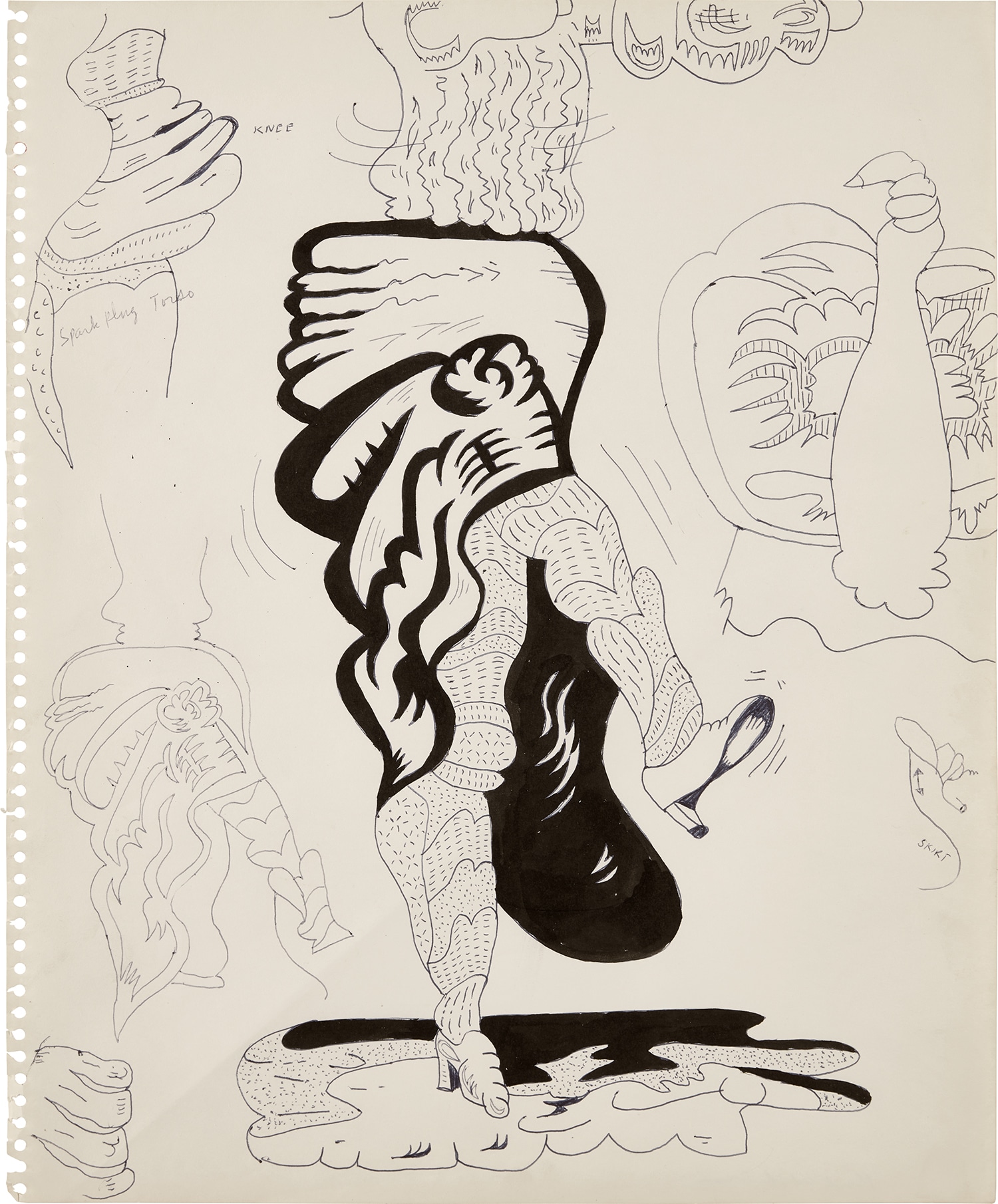
2" from 1983 showcases his love of invented characters with their own implied narrative worlds, figures that seem to have arrived from some parallel universe where folk art, vaudeville, and ancient Mesoamerican sculpture coexist without contradiction. The 1987 colored pencil work "It's Not a Crack That's Just the Way I Part My Hair" reveals how his wit operates in intimate formats as well as on canvas, the title itself a wry verbal riff that mirrors the visual punning of the image. And "Twin Shin Splint Sprint" from 2017 demonstrates that decades into his career, Wirsum's inventive drive remains entirely undiminished. For collectors, Wirsum represents a particularly compelling proposition.
His work sits at the intersection of art historical importance and genuine visual pleasure, and it has the quality of work that rewards long acquaintance. The more time you spend with a Wirsum painting or drawing, the more you find: visual jokes that only reveal themselves slowly, structural decisions that turn out to be surprisingly rigorous, and color relationships that are bolder than they first appear. His works on paper, including graphite and crayon studies and his ballpoint pen and ink drawings, offer an accessible entry point into the practice while demonstrating the same formal intelligence at work in his larger paintings. Collectors who have focused on the Chicago Imagist circle more broadly, drawn to Jim Nutt or Gladys Nilsson, consistently find that Wirsum rewards equally serious attention.
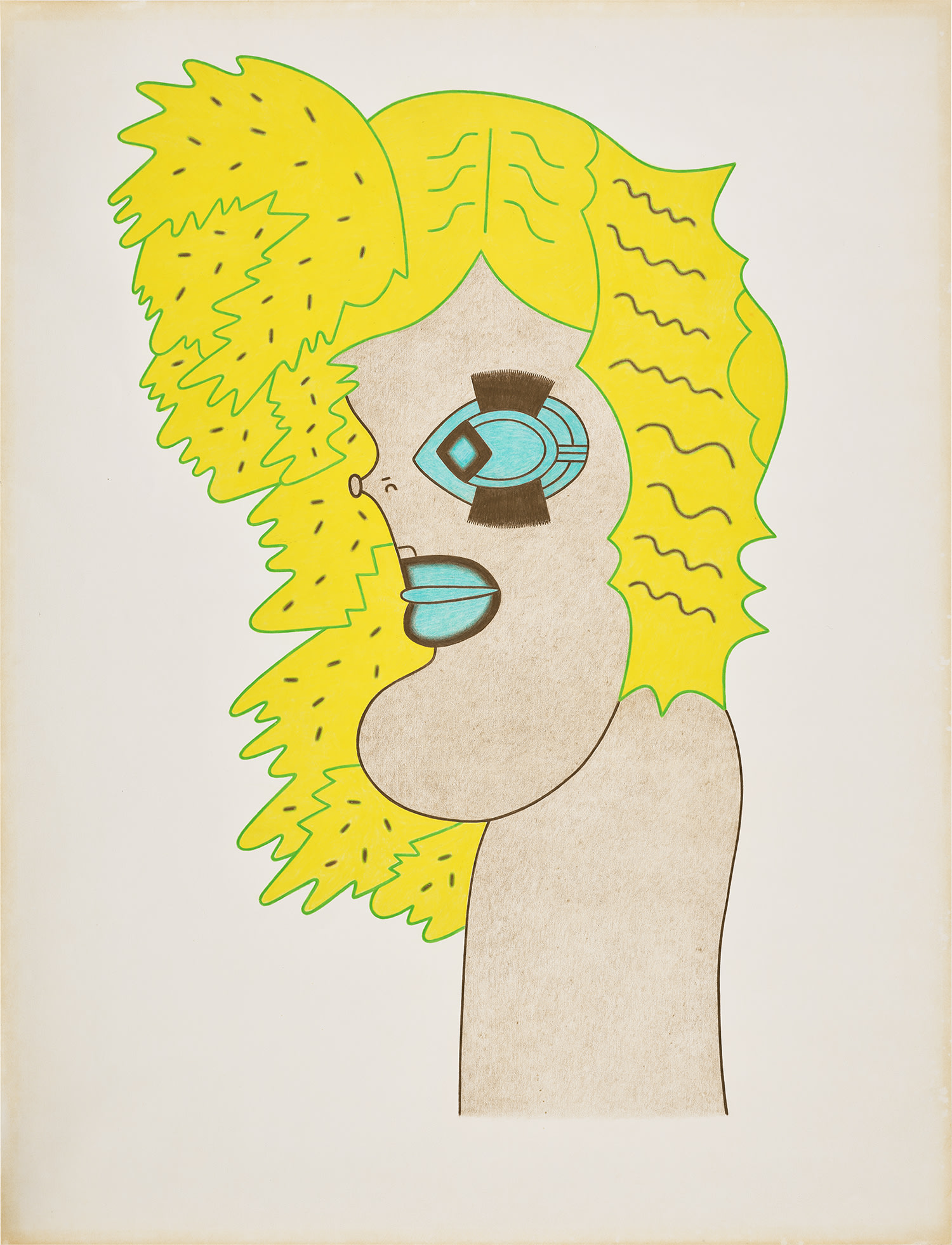
Karl Wirsum
It's Not a Crack That's Just the Way I Part My Hair, 1987
In the broader context of postwar American art, Wirsum and the Chicago Imagists occupy a position that historians are still working to fully account for. For too long, the dominance of the New York critical establishment meant that movements emerging from other centers were treated as regional curiosities rather than major contributions to the national conversation. That understanding has shifted substantially. Artists like Peter Saul, who shared the Imagists' taste for grotesque figuration and pop cultural irreverence, and West Coast figures associated with the Funk Art movement in California, demonstrate that there was a widespread and serious counter tradition to Minimalist orthodoxy flowering across American cities in the 1960s and 1970s.
Wirsum is one of its essential voices. What makes Wirsum's legacy feel particularly vital today is the way his work anticipates so much of what younger generations of artists are now celebrated for. The embrace of vernacular culture and graphic design as legitimate artistic sources, the use of flat color and bold outline, the blurring of boundaries between fine art and illustration, the interest in non Western visual traditions as equal partners in a global conversation rather than exotic borrowings: all of this was present in Wirsum's practice fifty years ago. He was not ahead of his time so much as he was operating on a different timeline altogether, one that has taken the art world decades to fully appreciate.
For those fortunate enough to live with his work, that appreciation arrives fresh every morning.
Explore books about Karl Wirsum