Karl Lagerfeld
Karl Lagerfeld: The Eternal Art of Line
Artist Spotlight · The Collection Editorial
“I am very much down to earth, just not this earth.”
Karl Lagerfeld
There is a particular kind of genius that refuses to be contained by a single discipline, and Karl Lagerfeld embodied this restlessness more completely than almost anyone else in the twentieth century. When Christie's Paris offered a curated selection of his original fashion sketches in recent years, the response from collectors was immediate and deeply felt. These were not simply design documents or archival curiosities. They were artworks in the fullest sense, works charged with personality, speed, and an almost musical sense of proportion.
Karl Lagerfeld
Croquis de mode original, 2009
The sustained collector enthusiasm for Lagerfeld's drawings confirms what many in the art world had long suspected: that his hand was one of the most gifted of his era. Karl Otto Lagerfeld was born on September 10, 1933, in Hamburg, Germany, into a prosperous family. His father was a businessman who had made his fortune in condensed milk, and his mother was a formidably cultured woman whose influence on her son's aesthetic sensibility was profound and lasting. The young Karl showed an early and obsessive appetite for drawing, for books, and for the kind of refined European visual culture that would later become the very oxygen of his working life.
He moved to Paris as a teenager, arriving in 1952, and the city immediately became his true home. He won the International Woolmark Prize in 1954 alongside Yves Saint Laurent, an early triumph that announced to the fashion world that something extraordinary had arrived. His formation as a designer unfolded across some of the most storied houses in Paris. He worked under Pierre Balmain and then Jean Patou before embarking on a long and creatively fertile relationship with the Roman house of Fendi, where he began working in 1965.
Karl Lagerfeld
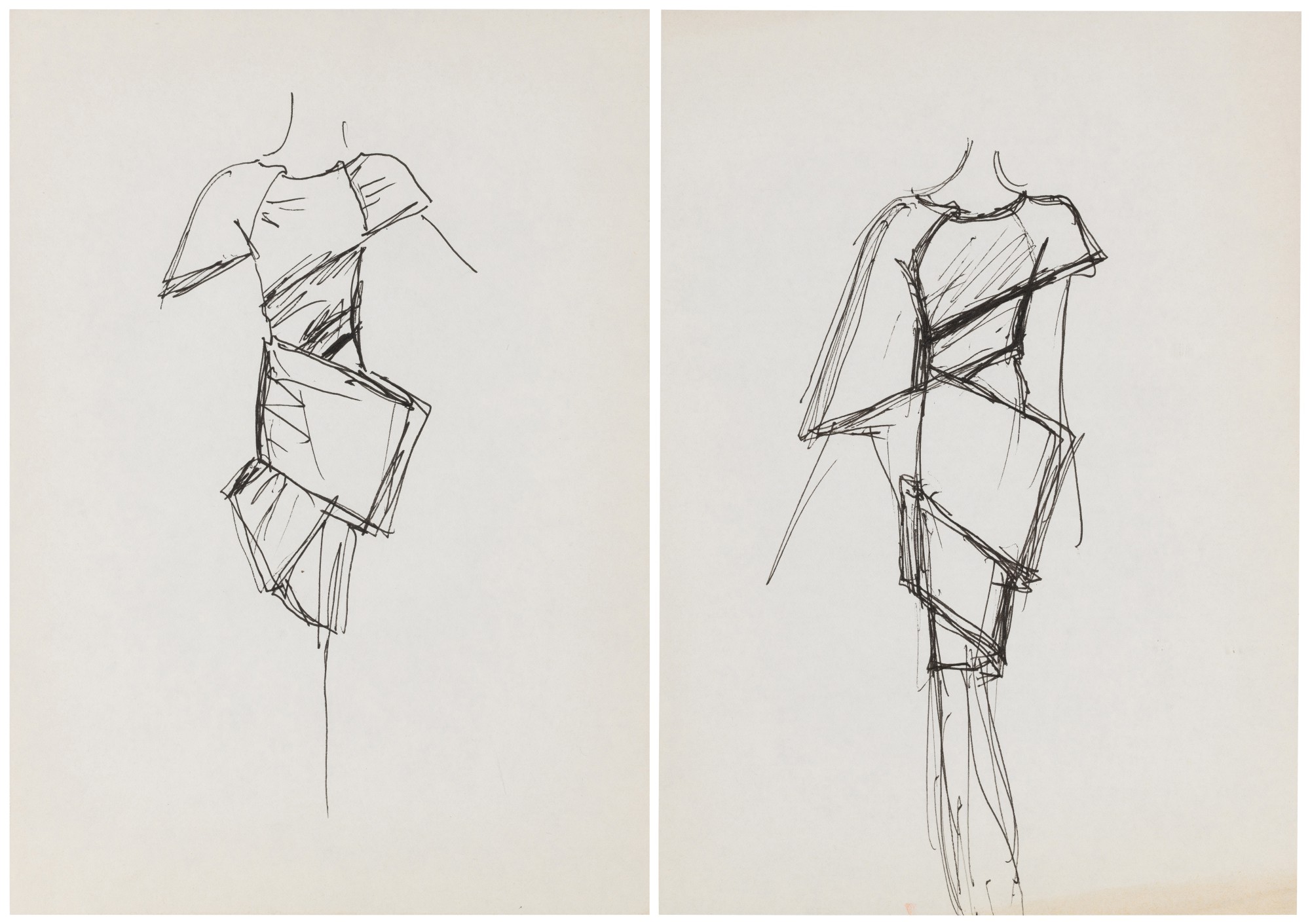
Deux croquis de mode originaux, vers les années 1990
The Fendi association would last more than fifty years and proved to be one of the great sustained collaborations in the history of luxury. In 1983 he took the creative helm at Chanel, at that point a house resting on its heritage but somewhat adrift in the contemporary market. What followed was one of the most remarkable acts of creative stewardship in fashion history, a decades long reinvention that made Chanel relevant to successive generations while honoring the structural brilliance of Gabrielle Chanel's original vision. Yet running through all of this, like a quiet river beneath the spectacle of the runway, was Lagerfeld's identity as a draftsman.
“Don't use the past as a cage. Use it as a reference.”
Karl Lagerfeld
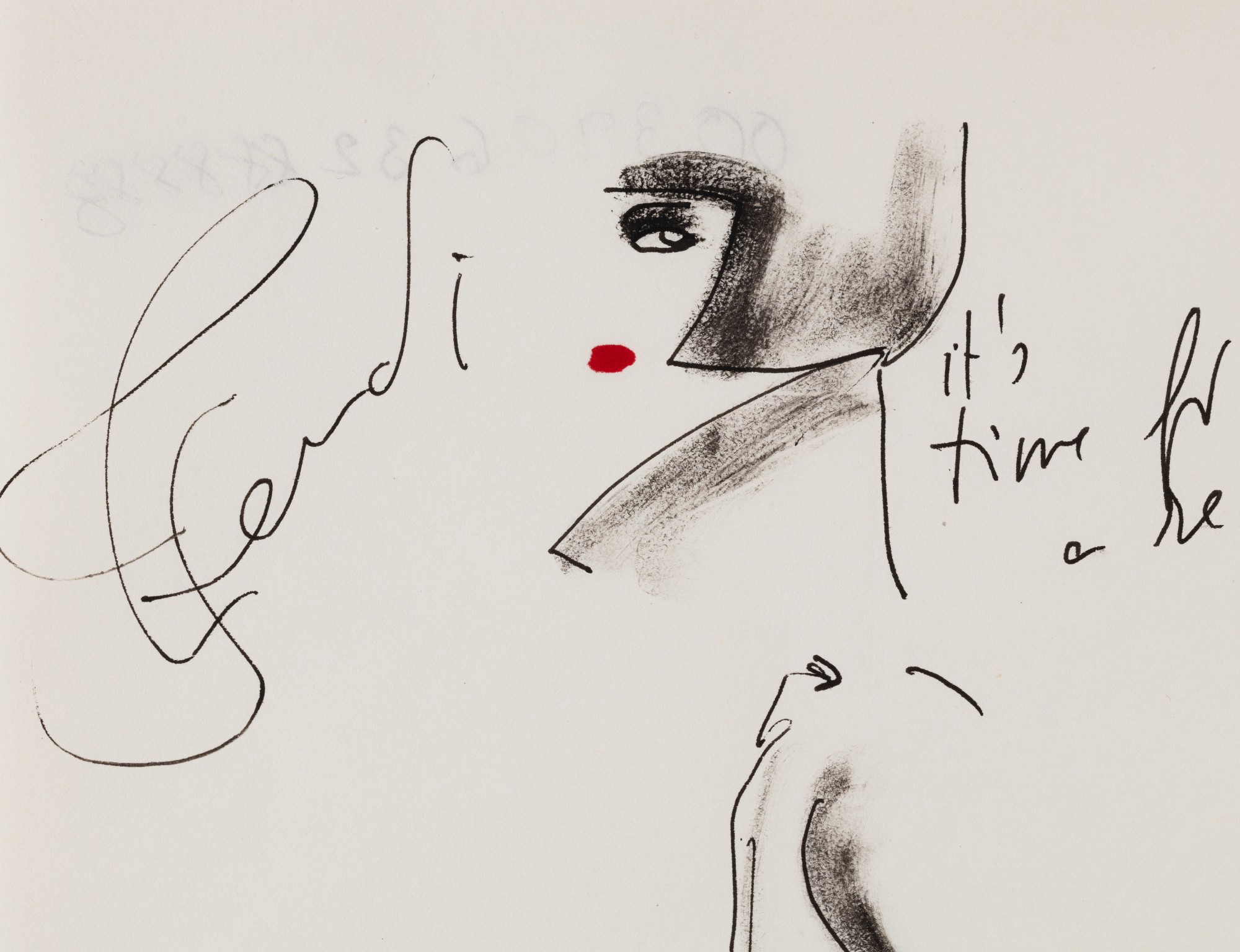
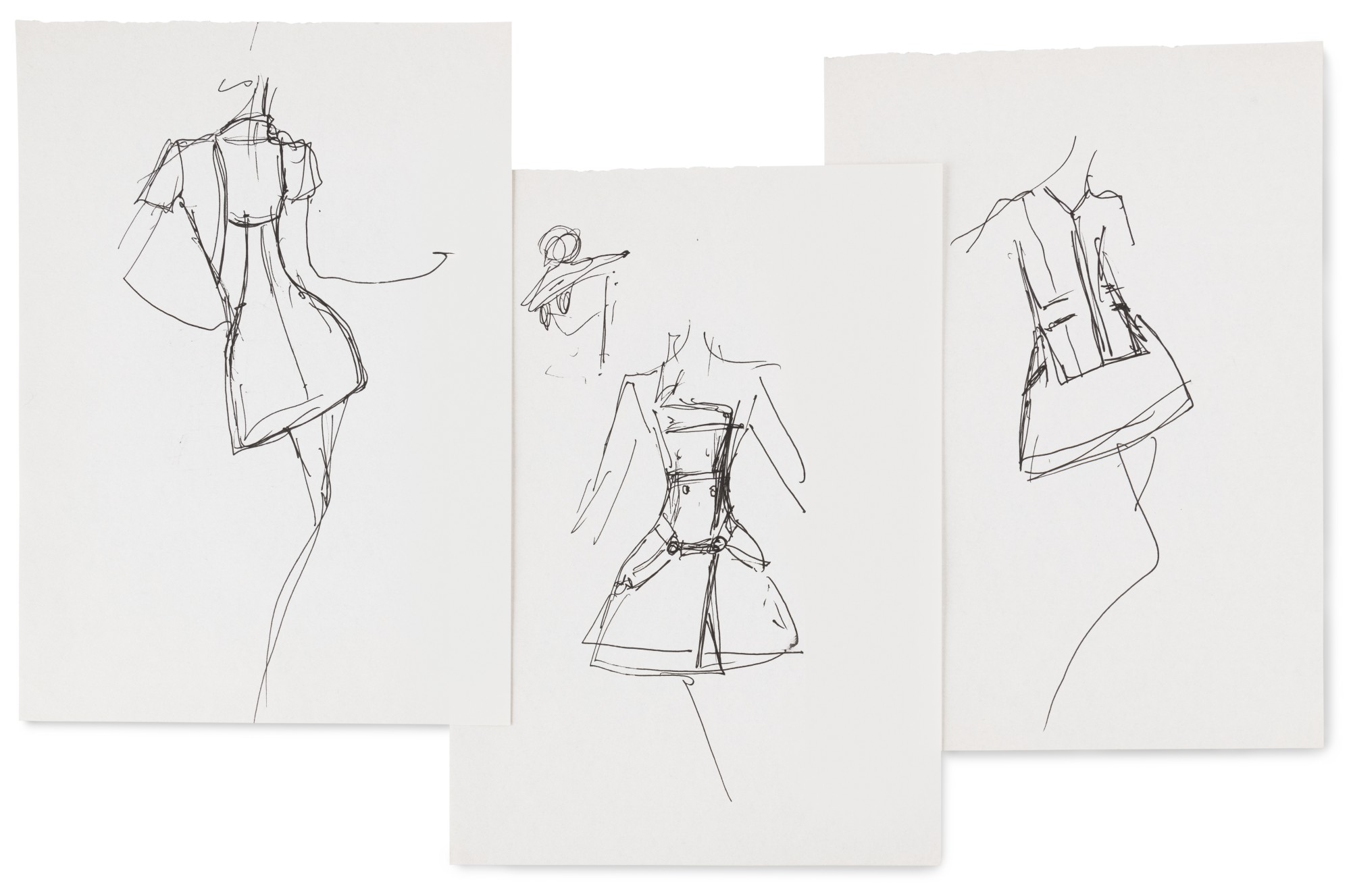
His sketches were not preparatory afterthoughts. They were primary acts of creation, the place where his thinking happened in real time. Working most often in ink on paper, sometimes layering grease pastel, felt pen, or pencil to build atmosphere and shade, Lagerfeld produced drawings of astonishing fluency. A single line might suggest the drape of a sleeve, the attitude of a shoulder, the particular way a woman holds herself in a garment that has given her confidence.
Karl Lagerfeld
Three original sketches for fashion Trois croquis de mode originaux
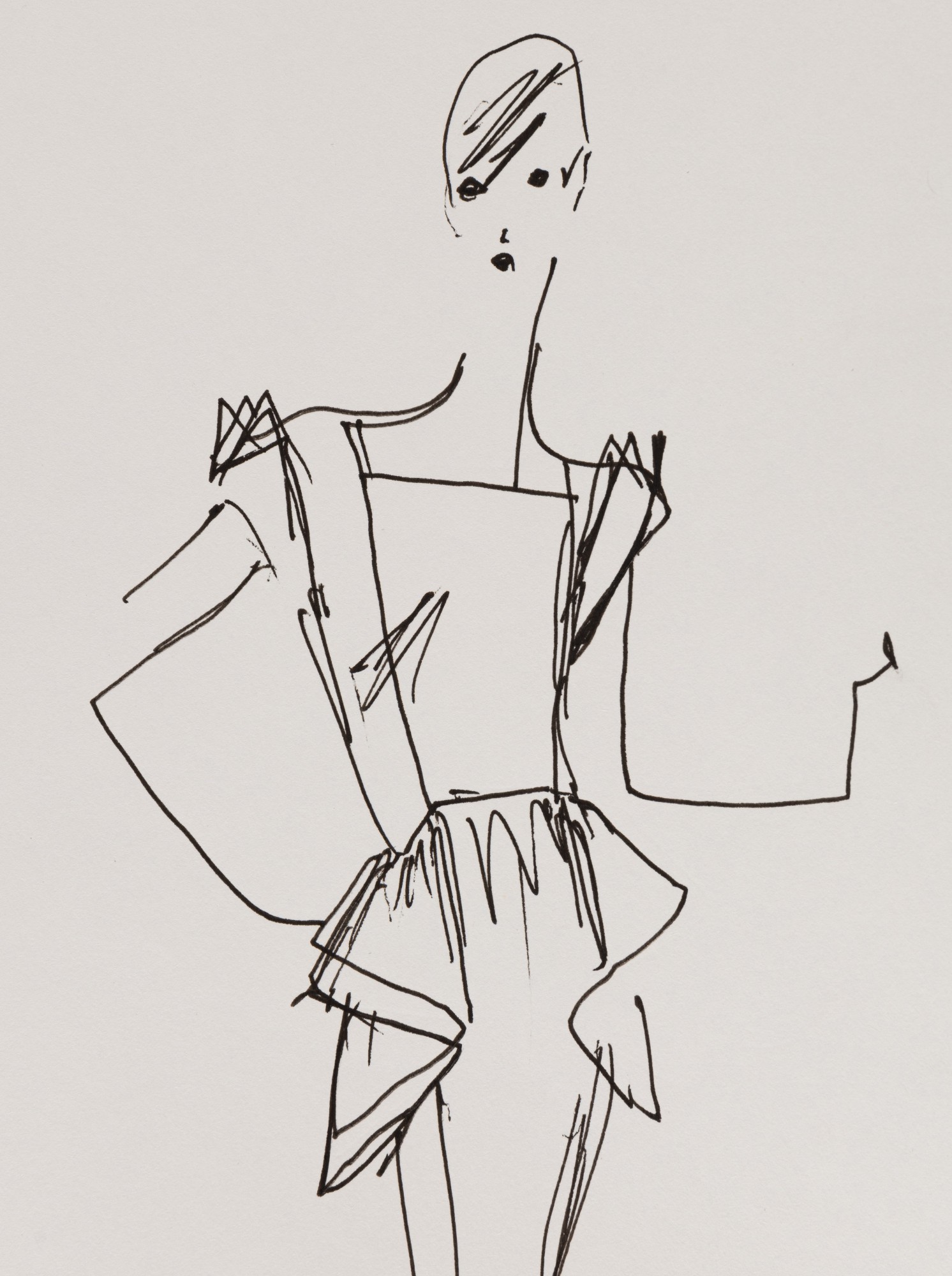
His figures are elongated, almost architectural, with faces that carry mood and intelligence in a few economical strokes. Works such as his ink and grease pastel compositions from the 2000s and 2010s show the full maturity of his draftsmanship, where economy and expressiveness exist in perfect balance. Earlier pairs of sketches from the 1990s, often framed together and executed in pure ink, reveal a slightly more angular energy, a younger urgency that is enormously appealing. For collectors, Lagerfeld's works on paper occupy a genuinely distinctive position.
“Sweatpants are a sign of defeat. You lost control of your life.”
Karl Lagerfeld, Interview Magazine
They sit at the intersection of fashion history and fine art, which means they attract two distinct but overlapping communities of buyers. Those drawn to the history of twentieth century style find in these sheets an unmediated record of creative thought at the highest level. Those whose primary interest is works on paper as an art form respond to the quality of the mark making itself, which can stand comfortably alongside the drawings of artists working in strictly fine art contexts. The works that tend to generate the most sustained interest are those from the 1990s through the 2010s, which represent the full creative maturity of his practice at Chanel.
Karl Lagerfeld
Deux croquis de mode originaux
Condition and provenance are important factors, and works that retain strong contrast in the ink and clear legibility of the fashion concept alongside expressive draftsmanship are particularly sought after. Framed pairs and groupings of sketches have proven especially collectible, offering a sense of the creative rhythm and variety that characterized his working process. To understand Lagerfeld's drawings in art historical terms, it helps to think about the long tradition of the artist as total visual thinker, someone whose creativity flows across multiple forms. One thinks of figures such as Andy Warhol, whose early career was built on illustration and who always maintained a profound relationship between commercial image making and fine art production.
Closer to Lagerfeld's own world, the fashion sketches of Christian Bérard and René Gruau represent a tradition of the drawn fashion image as genuine art object, a tradition that Lagerfeld carried forward with his own unmistakable voice. His photography, which he pursued with serious dedication throughout his life, adds further dimension to his identity as a visual artist of genuine range. In this sense he belongs to a lineage of creators for whom the boundary between applied and fine art was simply not an interesting or useful distinction. Lagerfeld died on February 19, 2019, in Paris, leaving behind a body of work of staggering breadth and a cultural legacy that continues to deepen with each passing year.
The fashion world mourned the loss of its most protean figure, but the art world recognized something else: the passing of a draftsman whose best works had always deserved a place on the wall as well as in the archive. His sketches carry within them the entire atmosphere of a particular moment in the history of elegance, a moment when Paris was still the center of a certain kind of beauty and a man with a pencil and an inexhaustible eye was its most eloquent witness. To own a Lagerfeld drawing is to hold a piece of that world, alive and crackling with intelligence, as immediate as the day it was made.
Explore books about Karl Lagerfeld