Kara Walker
Kara Walker Illuminates History With Radical Grace
Artist Spotlight · The Collection Editorial
“I work in the tradition of artists who attempt to describe the indescribable, to give form to the formless.”
Kara Walker
In 2014, the former Domino Sugar refinery in Brooklyn became the site of one of the most talked about public art installations in recent memory. Kara Walker filled the vast industrial space with a monumental sphinx like figure, a towering woman constructed from resin coated sugar and polystyrene, her body conjuring both the grandeur of ancient civilizations and the brutal history of the Atlantic sugar trade. The piece, titled A Subtlety, or the Marvelous Sugar Baby, drew hundreds of thousands of visitors over its brief run and cemented Walker's status not merely as one of the most significant artists of her generation, but as a sculptor of collective memory itself. That a single temporary installation could provoke such sustained national conversation speaks to the particular power Walker commands.
Kara Walker
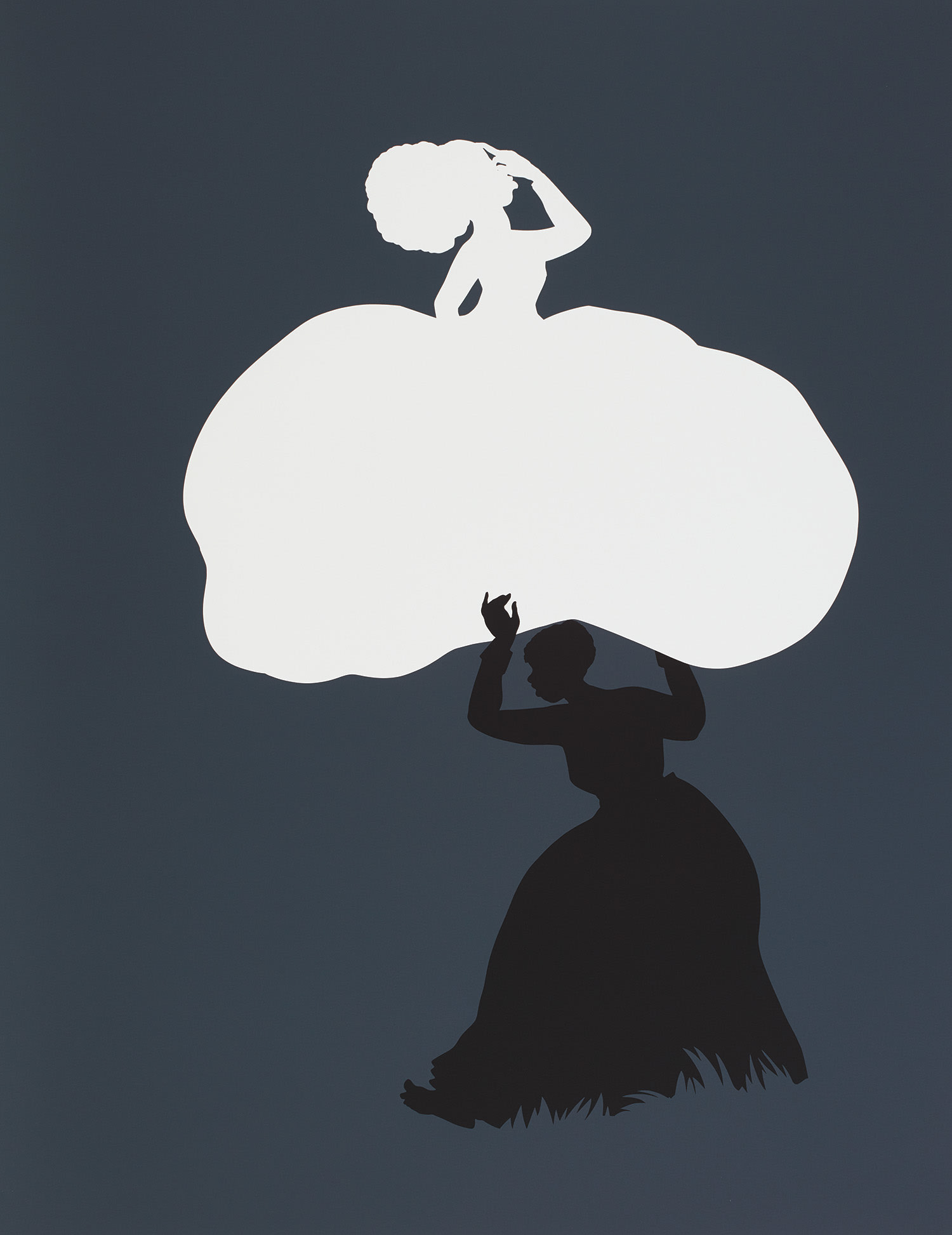
The Emancipation Approximation (scene #18)
Kara Walker was born in Stockton, California in 1969, and spent her formative years in Atlanta, Georgia after her father, the painter Larry Walker, took a faculty position at Georgia State University. The move south proved formative in ways that would reverberate through every chapter of her career. Immersed in a landscape dense with the living residue of American racial history, Walker absorbed the contradictions of the post civil rights South with a keen and restless intelligence. She went on to study at the Atlanta College of Art before earning her MFA from the Rhode Island School of Design in 1994, a training that grounded her in a rigorous tradition of image making even as she was already developing a distinctly subversive visual language.
Walker's breakthrough arrived with astonishing speed after graduate school. By 1994 her large scale cut paper silhouette installations had already begun attracting serious institutional attention, and in 1997 she became one of the youngest recipients of the MacArthur Foundation Fellowship, often called the genius grant, an acknowledgment of how swiftly and completely she had redefined what contemporary art could do. Her chosen medium, the silhouette, was itself a kind of provocation. A form historically associated with polite parlor entertainment and sentimental portraiture, Walker commandeered it entirely, filling its elegant black shapes with scenes of antebellum violence, desire, and fantasy drawn from the darkest chapters of American history.
Kara Walker
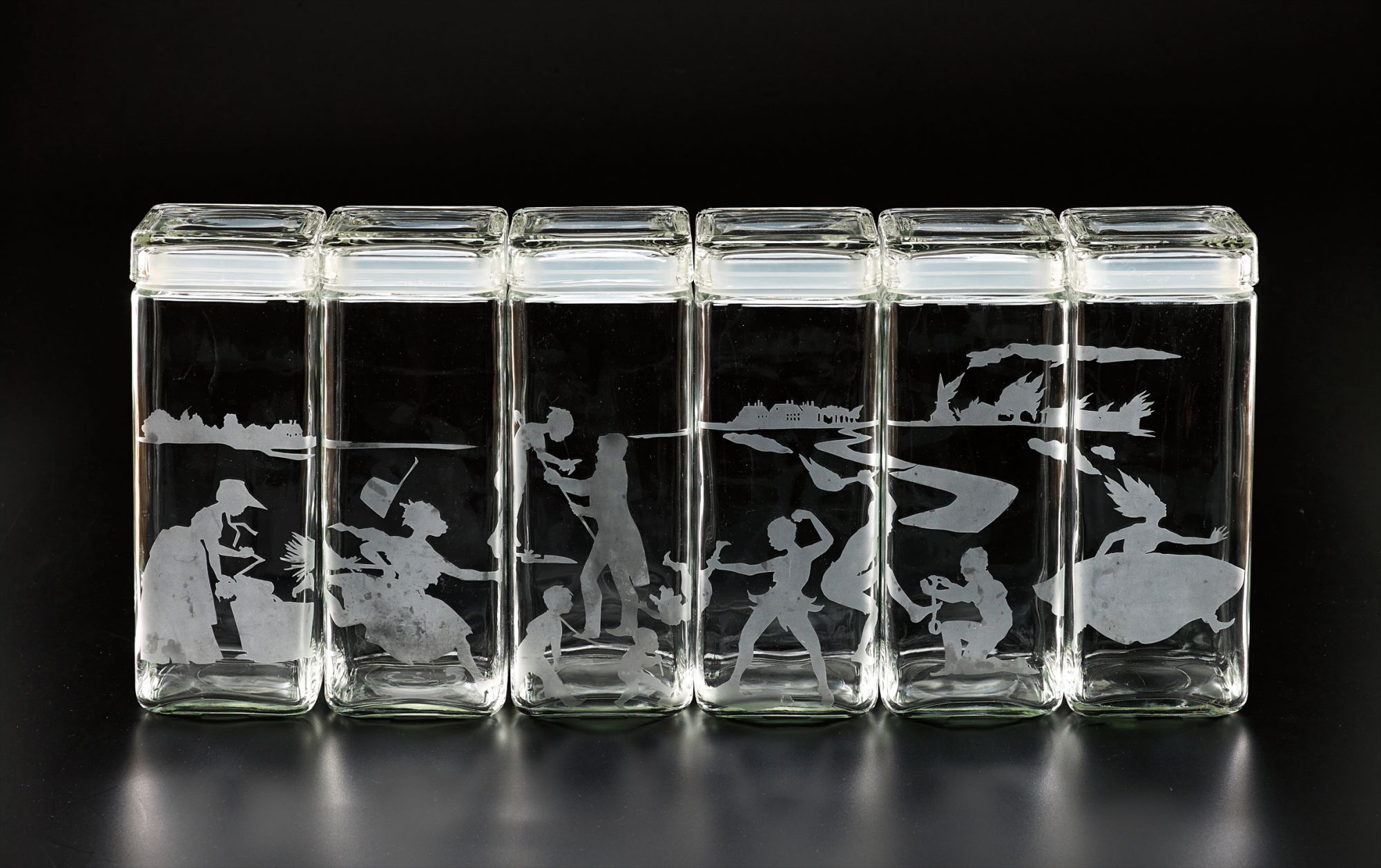
Canisters
The contrast between the decorative refinement of the format and the rawness of its content became the central engine of her work. The silhouette installations for which Walker first became celebrated unfurl across gallery walls in panoramic friezes that draw the viewer into a world simultaneously seductive and deeply unsettling. Works from her series The Emancipation Approximation exemplify this quality, using the formal vocabulary of nineteenth century illustration to excavate stories of enslaved people, slaveholders, and the mythology that grew up around the antebellum South. Her screenprints on Somerset paper, including multiple scenes from The Emancipation Approximation, show how thoroughly she extended this language into the printmaking tradition, producing editions of considerable art historical weight.
“My work emerges from living in a world that has yet to come to terms with its own history.”
Kara Walker
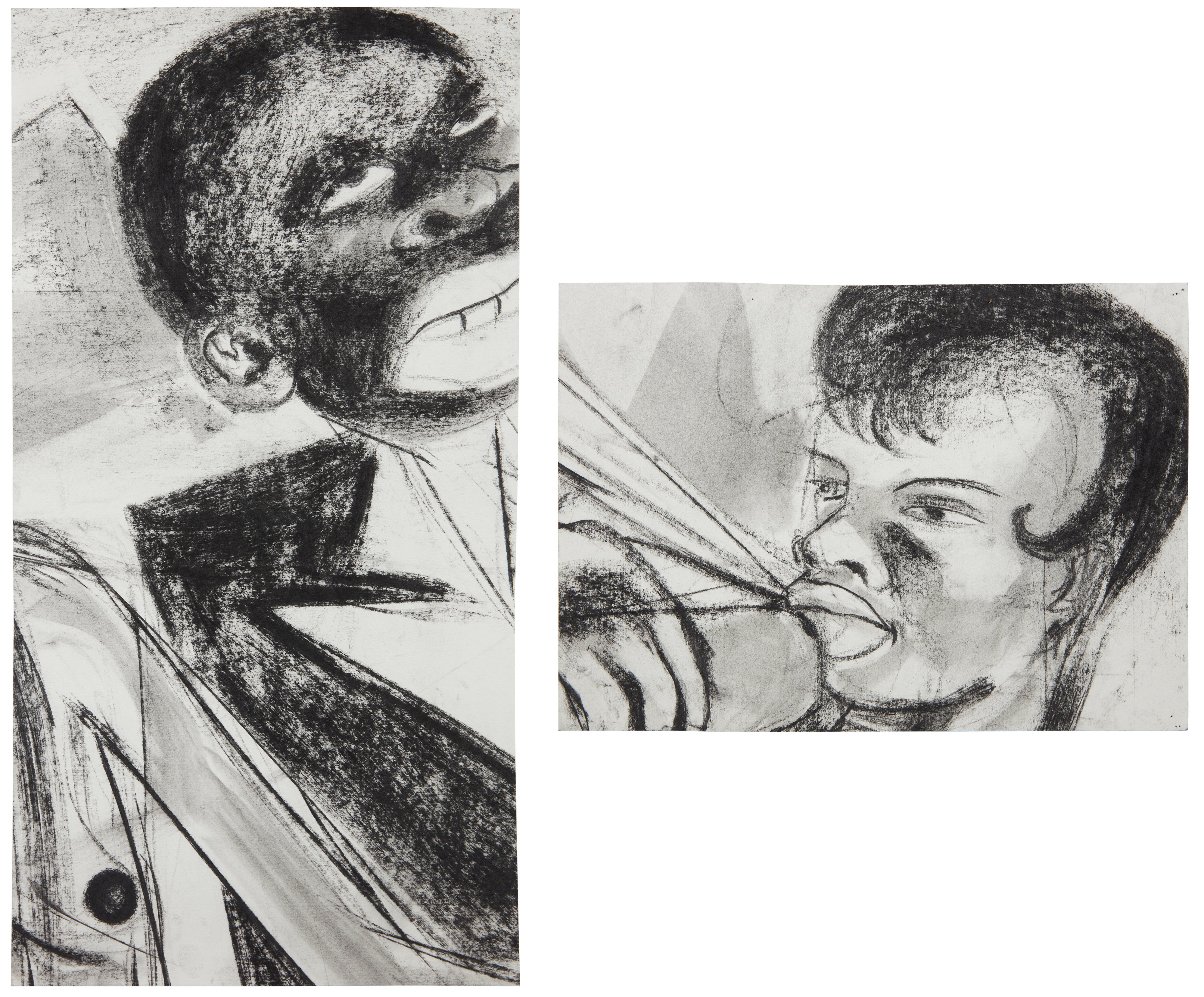
Works on paper such as Cover of My Negro Novella, rendered in graphite and pastel, and Axed, a paper collage with acrylic, demonstrate her command of intimate scale alongside monumental ambition. Each piece, regardless of size, carries the same quality of unflinching historical reckoning. For collectors, Walker's work occupies a position of unusual intellectual and aesthetic richness. Her prints and works on paper offer access to a practice that is both critically celebrated and historically significant, and they reward sustained looking in the way that only the most serious art does.
Kara Walker
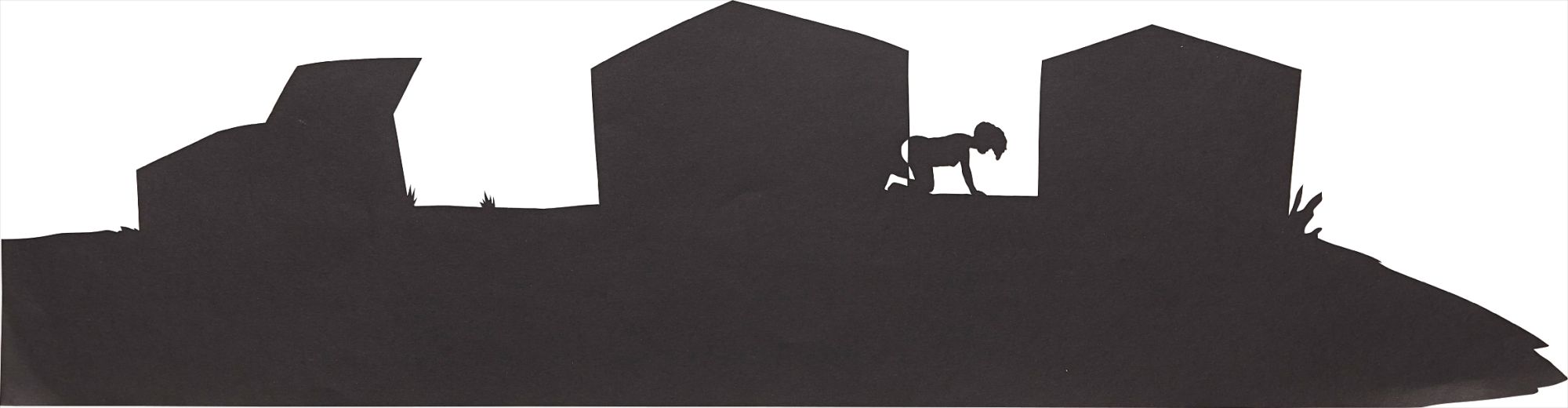
Bureau of Refugees: July 26 Jno. Dunn beat freedwoman severely, trial a farce
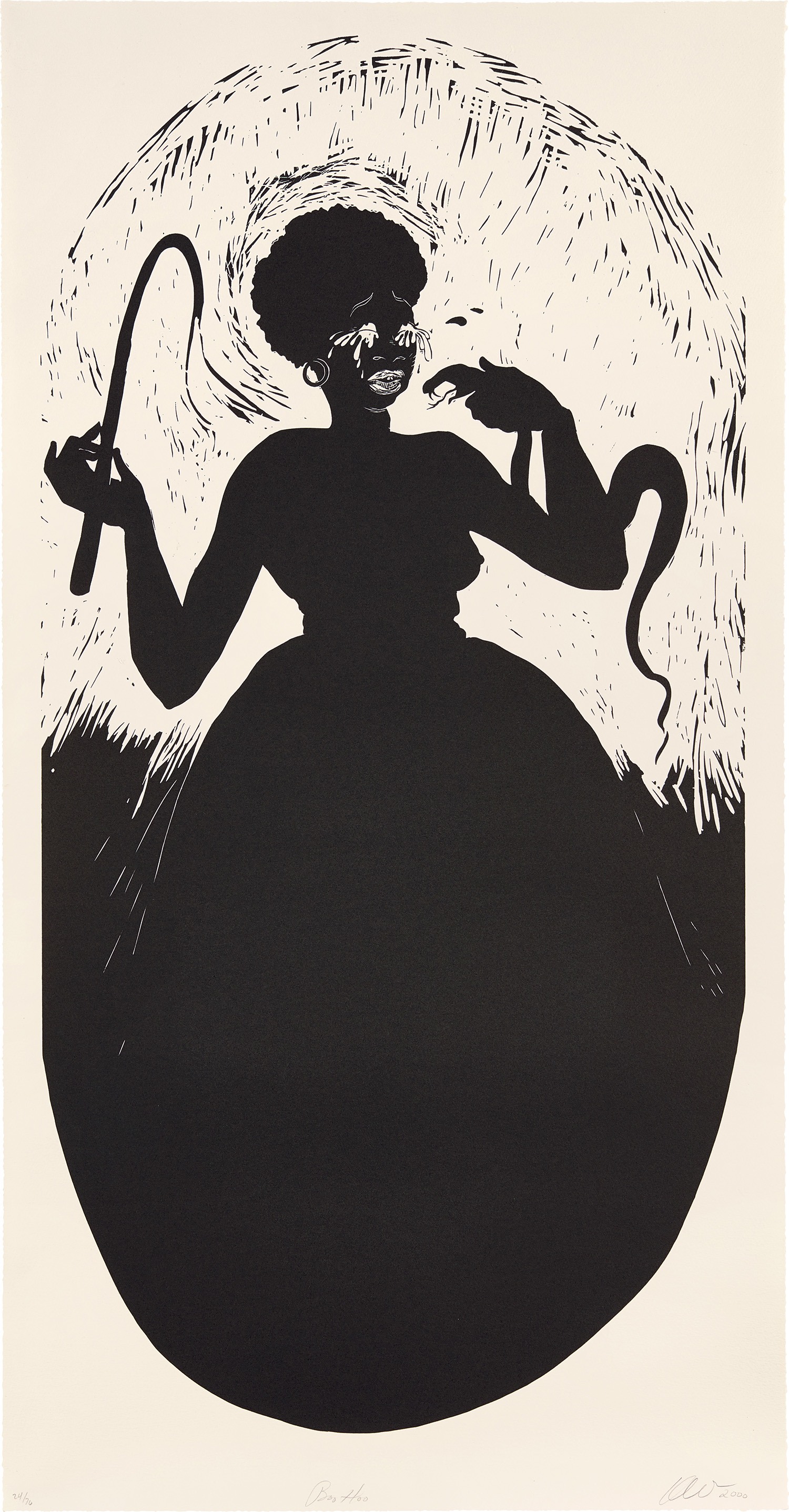
Editions such as the Parkett published Boo hoo and the wall works published by Edition Schellmann in Munich and New York represent collaborations with some of the most respected publishers in the field, lending additional institutional weight to her multiples. The market for Walker has grown steadily and with remarkable consistency, reflecting the breadth of institutional support she commands: her work is held by the Museum of Modern Art, the Whitney Museum of American Art, the Tate Modern, and virtually every major museum with a commitment to contemporary American art. Auction results have confirmed what curators and advisors have long argued, that Walker is among the most consequential artists working today and that her works appreciate in both cultural and financial terms. To situate Walker within art history is to trace a lineage that moves through Romare Bearden's collaged mythologies of Black American life, through the conceptual provocation of Adrian Piper, and toward the narrative intensity of artists like Kerry James Marshall and Ellen Gallagher, who share her commitment to excavating race, history, and representation with formal rigor and intelligence.
Like Faith Ringgold before her, Walker understands that the visual traditions of American art have often erased or distorted Black experience, and her response has been not to mourn that erasure but to flood the frame with an excess of image and narrative that refuses to be ignored. She belongs to a generation of artists who transformed the 1990s art world by insisting that identity and history were not secondary concerns but the very substance of contemporary practice. What makes Walker's legacy so durable is precisely the combination of formal mastery and moral seriousness that runs through every dimension of her work. She has never allowed her art to settle into the comfort of simple critique or easy celebration; instead, she insists on the complexity of historical experience, on the way desire and violence and fantasy and grief are always entangled in American memory.
Kara Walker
Boo-hoo (P. 59)
Her 2019 work Fons Americanus, a large scale fountain commissioned by the Tate Modern for the Turbine Hall, demonstrated that her ambition continues to expand alongside her inquiry, drawing connections between the transatlantic slave trade, colonial monuments, and contemporary reckoning with public history. Collectors who live with her work report that it continues to deepen over time, revealing new layers of meaning as the cultural conversation around race and history in America evolves. That ongoing vitality is the mark of art that is not merely of its moment but genuinely ahead of it.
Explore books about Kara Walker
Kara Walker: Narratives of a Negress
Kara Walker, Isabella M. Selby
Kara Walker: A Retrospective
Philippe Vergne, Kara Walker
Kara Walker: Sikkema Jenkins & Co. 2000-2009
Kara Walker
Kara Walker: Dust Jackets for the Niggerati
Kara Walker, Richard Shiff

Kara Walker: Extreme Abstraction
Klaus Kertess, Kara Walker
Kara Walker: Sikkema Jenkins & Co.
Kara Walker, Elisabeth Sussman
Black Like You: Blackface, Whiteface, Insult & Imitation in American Popular Culture
David R. Roediger