Justin Adian
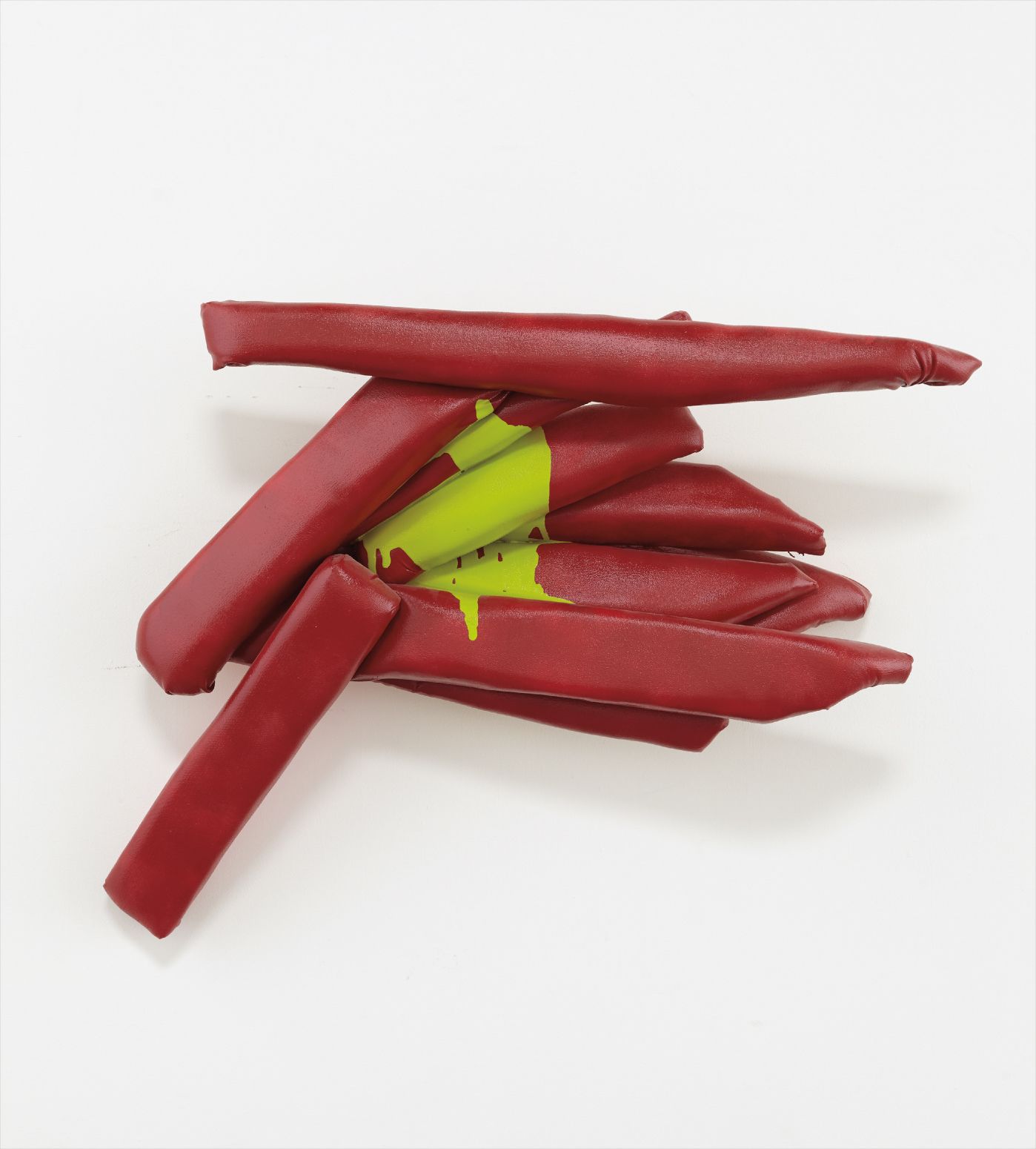
Justin Adian Makes the Canvas Breathe
Artist Spotlight · The Collection Editorial
Something quietly radical is happening on the walls of galleries across New York and beyond. Objects that read at first as paintings reveal themselves, upon closer inspection, to be something altogether more alive: swelling, sighing, pressing outward from the wall as if filled with breath or longing. These are the works of Justin Adian, and in the current cultural moment, when collectors and institutions alike are hunting for artists who genuinely expand the possibilities of the medium, his name keeps rising to the surface. Born in 1980, Adian has spent the better part of two decades building a practice that sits at one of the most fertile intersections in contemporary art, where painting meets sculpture, where the flat meets the volumetric, and where a deceptively playful surface conceals serious formal ambition.
Justin Adian
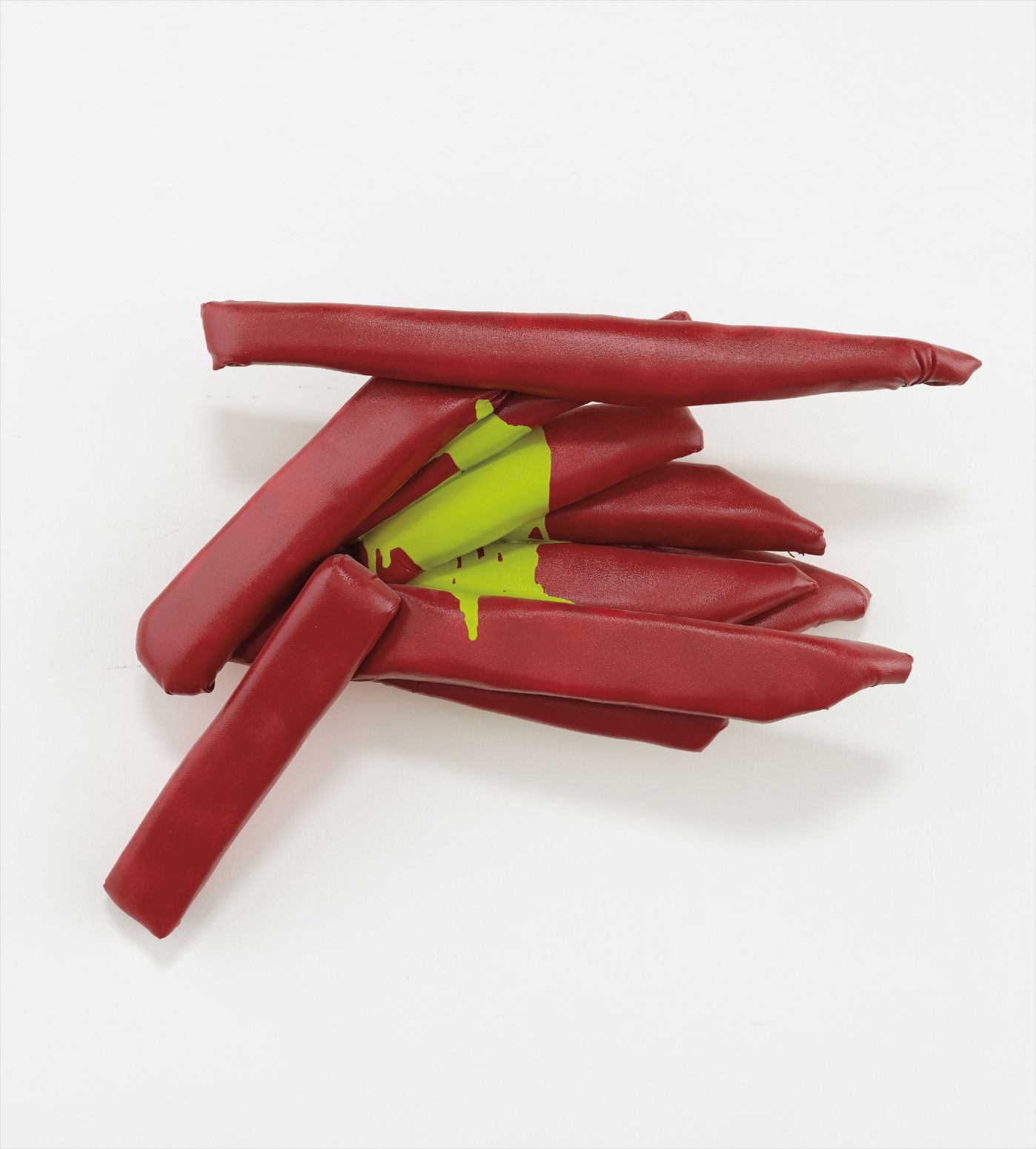
Big Fish
Adian grew up in Texas, a background that carries its own particular aesthetic freight. The vastness of that landscape, the particular quality of light, the culture of vernacular color found in roadside signage and domestic interiors all seem to echo in the saturated, decisive palette he would later bring to his canvases. He went on to study at the School of Visual Arts in New York, arriving in a city that was, in the early 2000s, in the midst of a spirited re examination of what painting could do. New York in that era was a place where abstraction was being reinvestigated with fresh eyes, and Adian absorbed that energy while developing a sensibility that was distinctly his own.
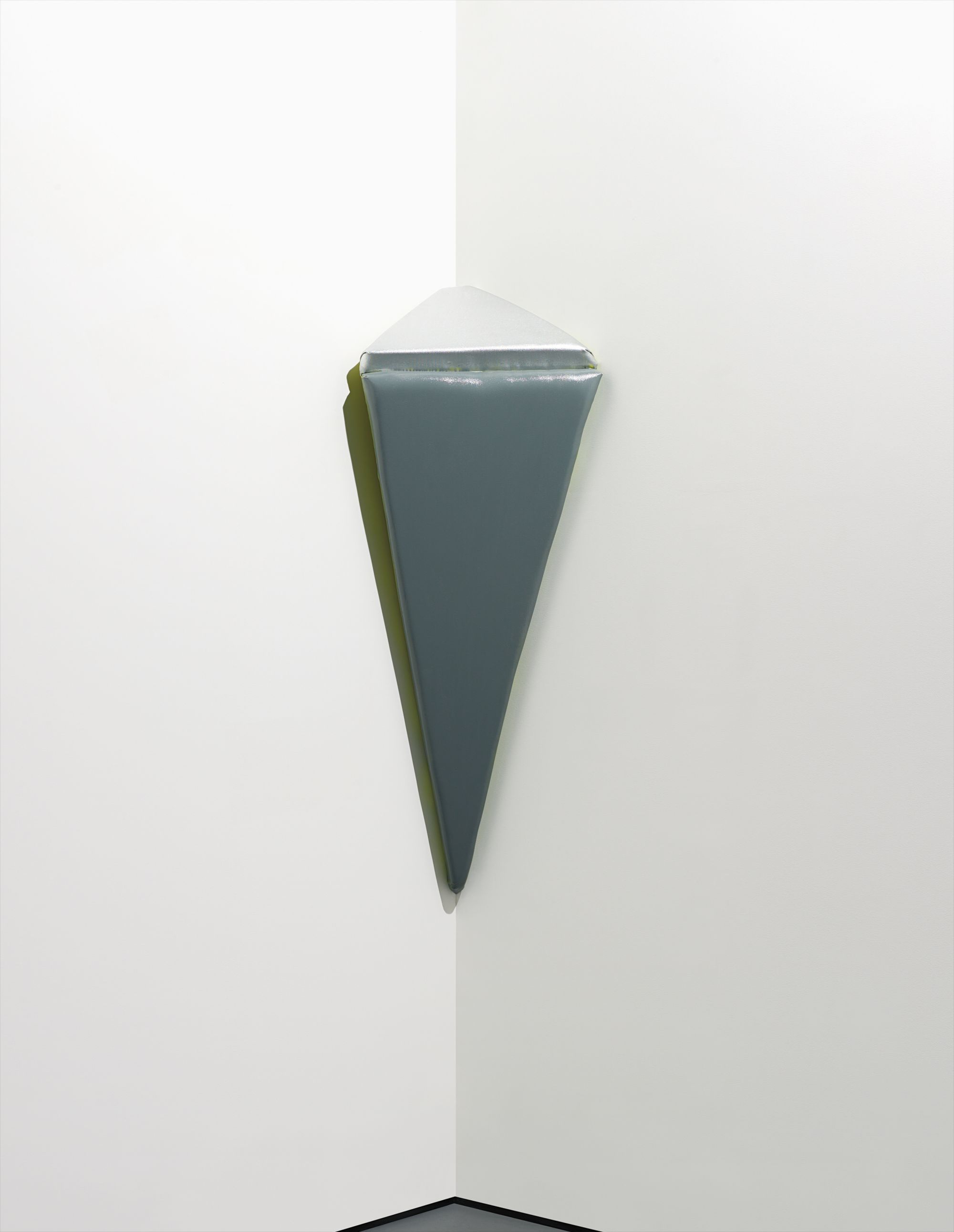
The move from Texas to New York was not just geographic but conceptual: a shift toward a more rigorous engagement with art history and the possibilities of material experimentation. The breakthrough that defines Adian's practice emerged from a remarkably simple but transformative decision: to introduce foam padding beneath his canvases before stretching them, allowing the fabric to take on organic, rounded, pillow like forms. The result is a body of work that refuses easy categorization. These are paintings in the traditional sense, in that they involve the application of color to canvas, but they are also objects, things that occupy space and cast shadows, things that you want to reach out and press with a palm.
Justin Adian
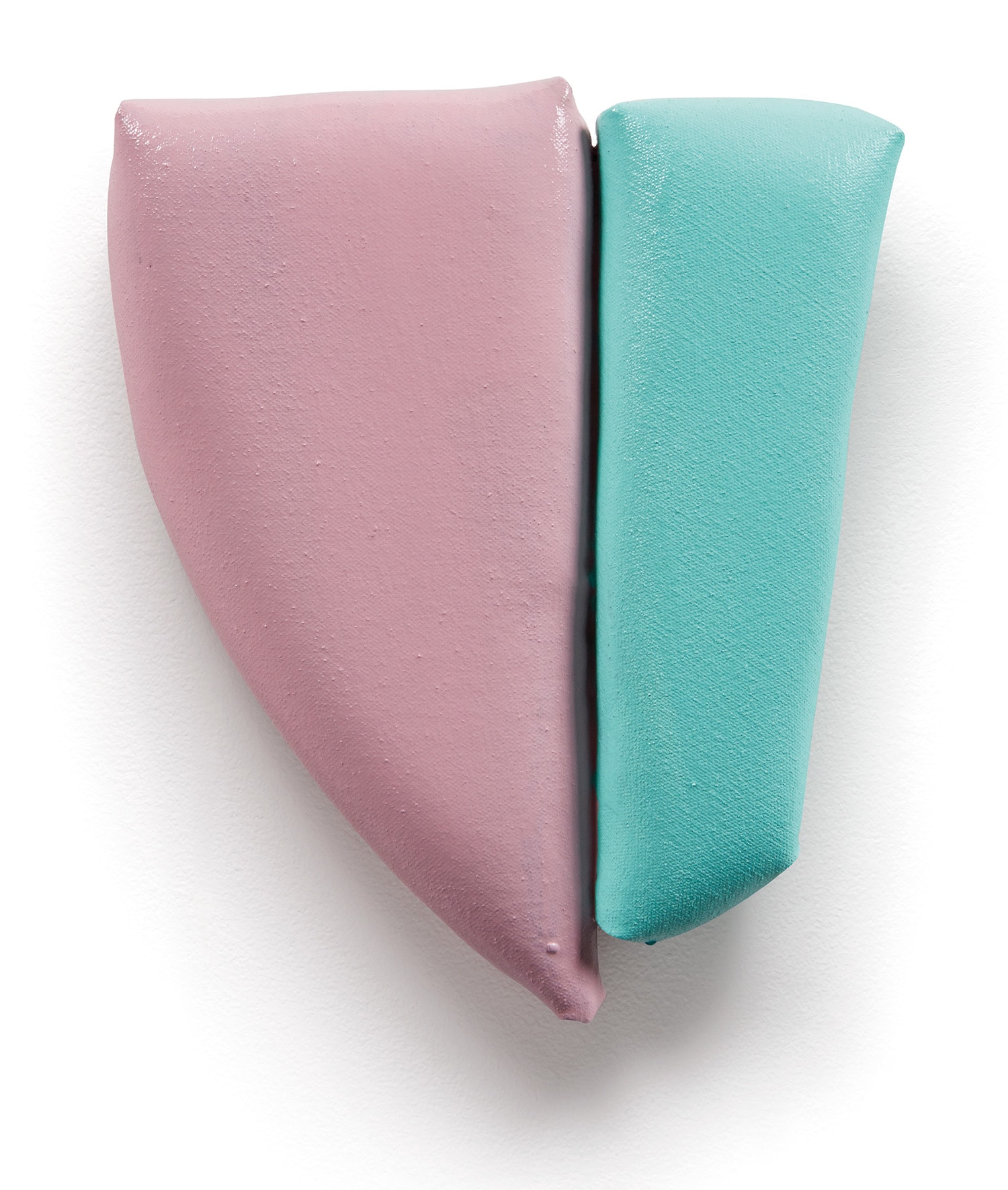
Fun House, 2015
The enamel paint he favors, rich and glossy and uncompromising, gives each work a surface that feels simultaneously industrial and sensuous. Spray paint adds further nuance, creating gradations and halos of tone that prevent the works from ever feeling merely decorative. Among the works that best demonstrate the range and intelligence of his practice are pieces like Fun House, completed in 2015, and Sploosh, from 2014, both executed in oil, enamel, and spray paint on canvas over ester foam. These titles are telling: Adian has a gift for names that are playful without being precious, that invite the viewer in before the formal questions start to press.
Big Fish, Caress, Non Site Healing, Triangle: each title carries a kind of emotional charge that sets up a productive tension with the cool formalism of the object itself. Non Site Healing is a title that rewards sustained thought, invoking as it does the Minimalist legacy of Robert Smithson while also gesturing toward something more personal and restorative. This combination of art historical awareness and genuine feeling is central to what makes Adian's work so compelling. The shaped canvas has an august lineage.
Justin Adian
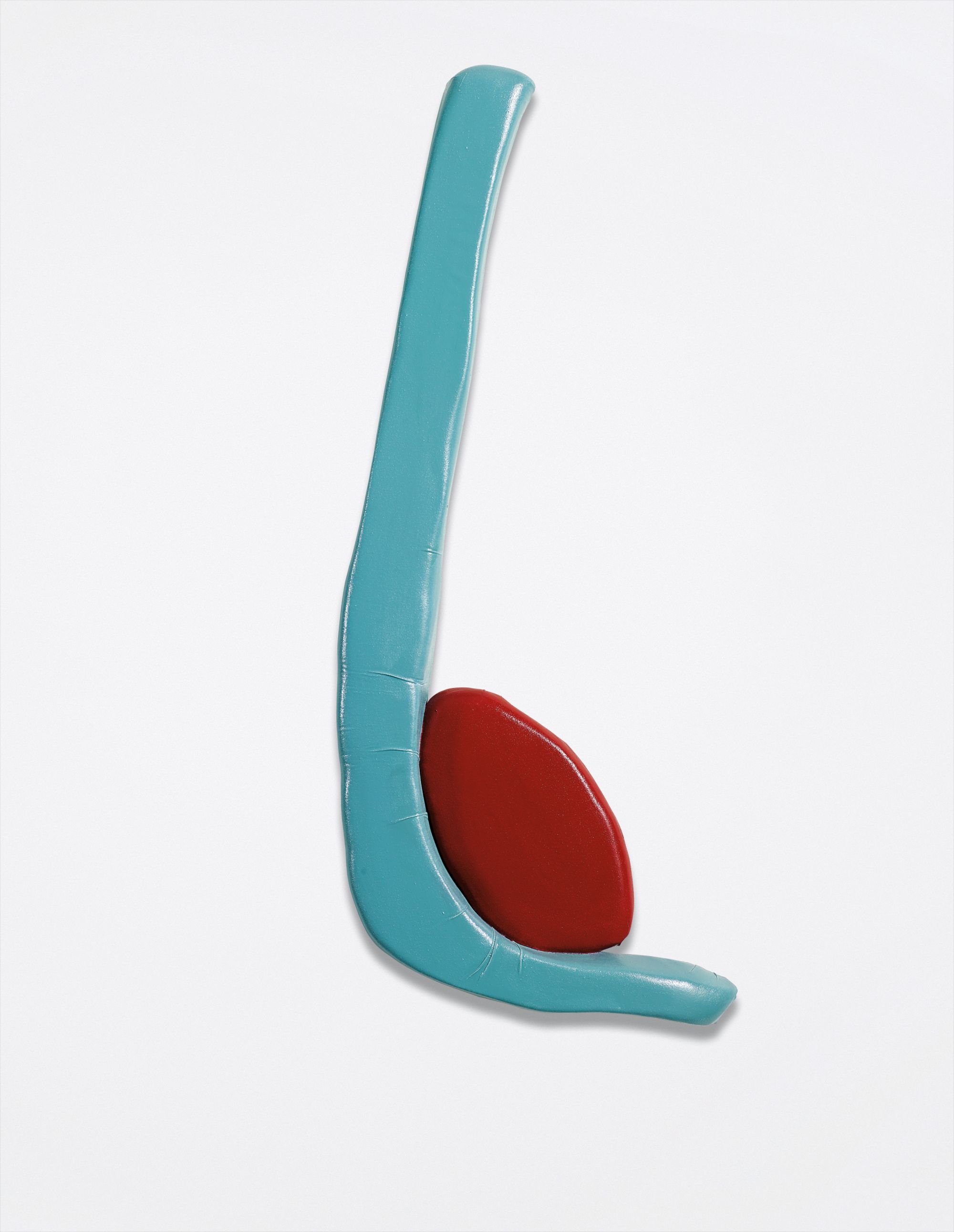
Caress
Frank Stella's explorations of the 1960s are an inescapable reference point, as is the work of Ellsworth Kelly, who spent decades investigating the relationship between the edge of a form and the color it contains. Lydia Okumura and Mary Heilmann offer further context for an artist working at the boundary between the pictorial and the dimensional. But Adian's use of foam padding introduces something that none of these predecessors quite achieved: a bodily softness, an almost tactile vulnerability, that transforms the viewer's relationship to the object. Where Stella's shaped canvases feel architectural and declarative, Adian's feel intimate, even tender.
The comparison to a pillow is not accidental or merely whimsical; it is structurally meaningful, suggesting rest, comfort, and the domestic intimacy of everyday objects elevated into the realm of art. From a collecting perspective, Adian's work occupies an enviable position. His pieces are visually immediate enough to anchor a room and conceptually substantial enough to reward years of looking. The enamel surfaces age with dignity, retaining their luster without the fragility of oil paint in its thinner applications.
Justin Adian
Non-Site Healing
Collectors drawn to the lineage of postwar American abstraction will find in Adian a rigorous and genuinely original contributor to that tradition, while those who came to contemporary art through design or architecture will respond to the sculptural clarity of the objects. The works exist in both public and private collections, and their relatively contained scale in most cases makes them accessible to a broader range of collectors than the monumental installations that dominate so much contemporary discourse. For those building a collection with an eye toward artists whose reputations are still in an ascendant phase, Adian represents exactly the kind of opportunity that serious advisors counsel their clients to pursue with confidence. Adian has shown with Galerie Eva Presenhuber, the Zurich and New York gallery whose program has long been associated with artists working at the intersection of abstraction, Minimalism, and material experimentation.
That association is itself instructive: Presenhuber has an enviable record of identifying artists early and supporting them through sustained institutional engagement. Adian's work has appeared in exhibitions across the United States and internationally, steadily building a presence in the kind of contexts that matter for long term reputation. His inclusion in collections spanning both coasts of America, as well as European holdings, speaks to the cross cultural legibility of an aesthetic that is deeply rooted in American art history while remaining entirely contemporary in its sensibility. What Justin Adian ultimately offers is something rarer than it might first appear: a genuinely new way of thinking about familiar things.
Painting has been declared dead and resurrected so many times that the announcement barely registers anymore, but Adian bypasses that tired debate entirely by simply asking what a painting can be if you remove the assumption of flatness. The answer, in his hands, is something warmer, stranger, and more alive than the question might suggest. In a moment when the art world is hungry for artists who can hold conceptual rigor and sensory pleasure in productive balance, Adian's practice feels not just relevant but necessary. His works do not argue with the wall; they lean into it, settle against it, and in doing so, they make you see the wall differently too.