Julius Shulman
Julius Shulman Made Modernism Feel Like Home
Artist Spotlight · The Collection Editorial
“I don't take pictures of buildings. I take pictures of people living in architecture.”
Julius Shulman
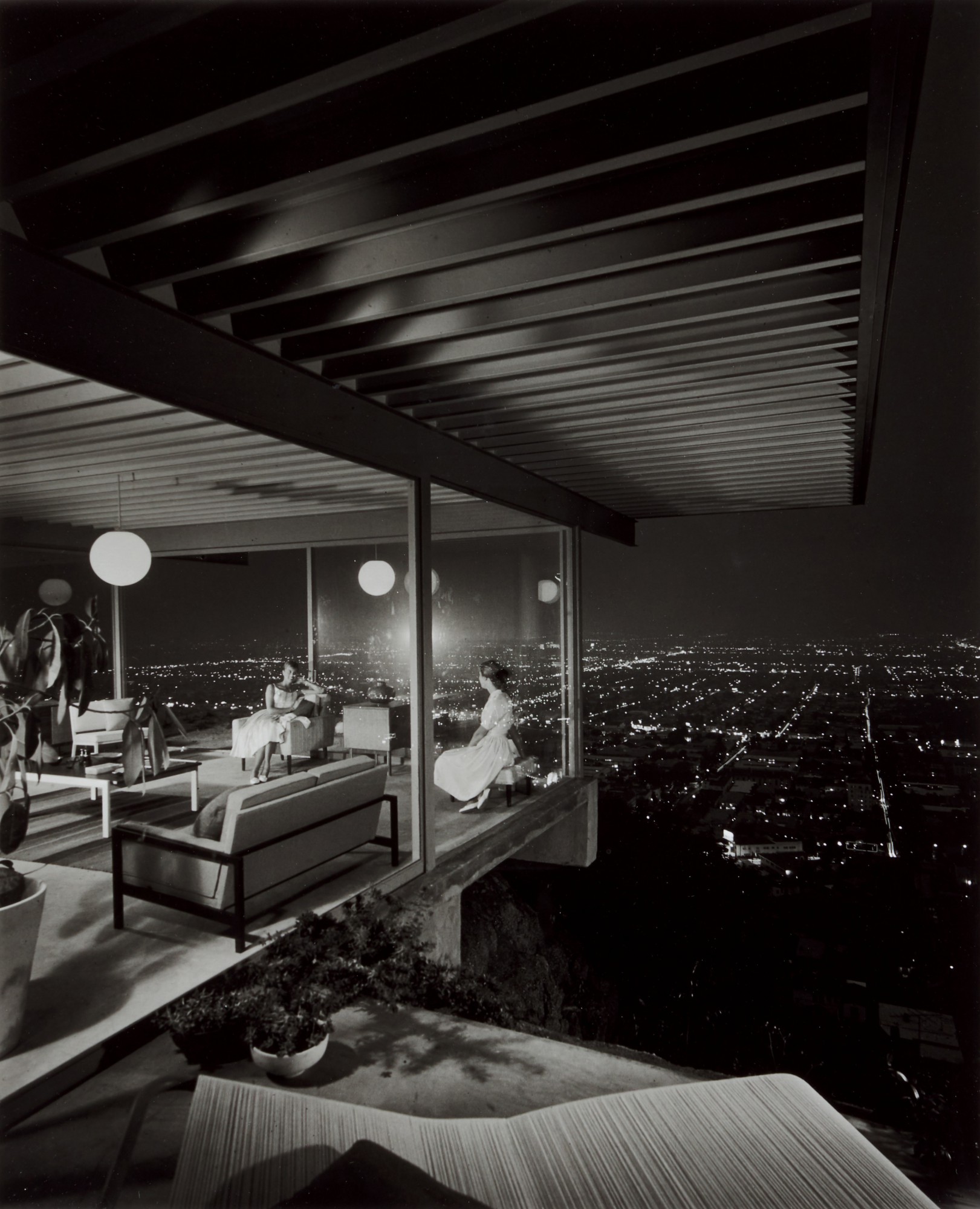
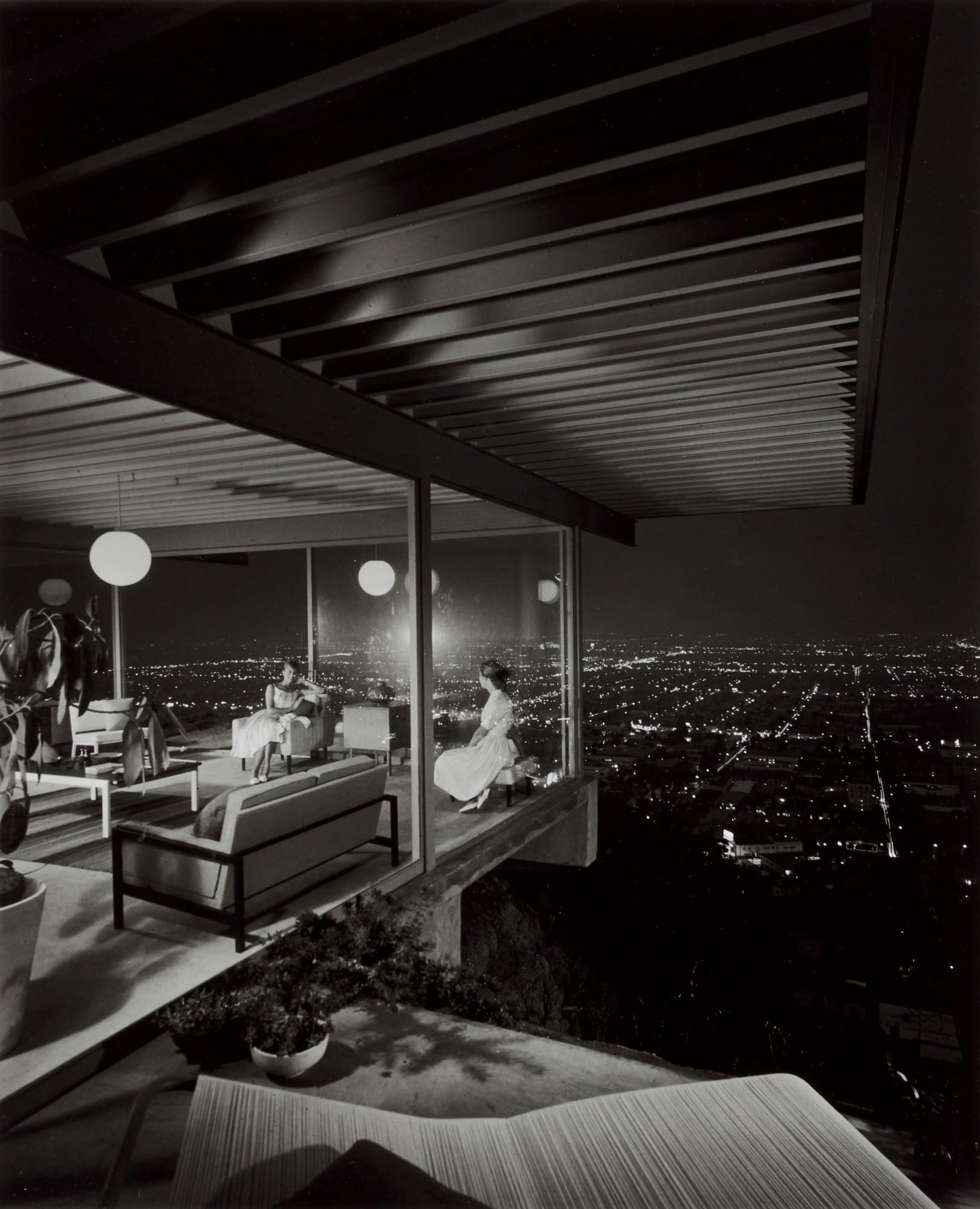
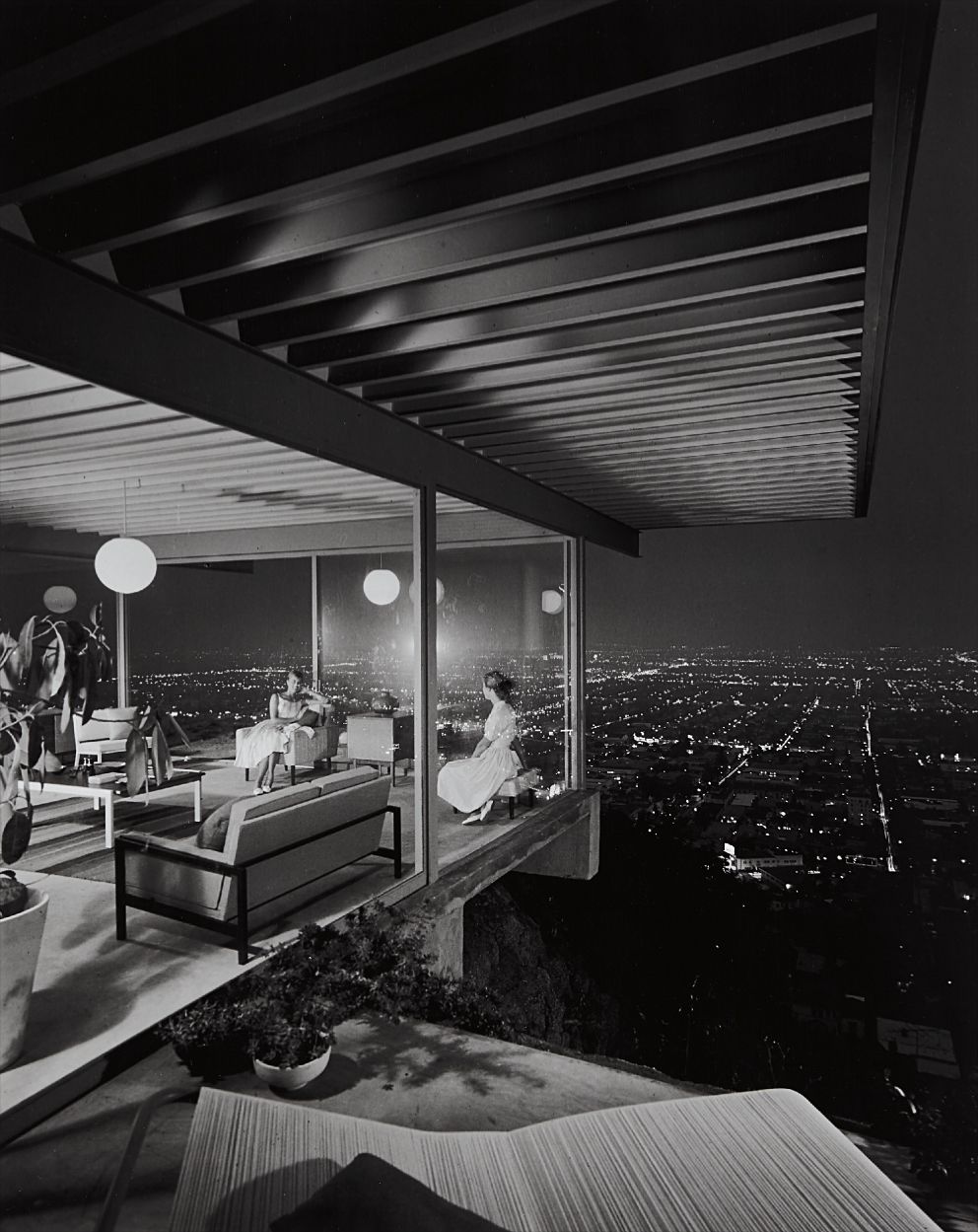
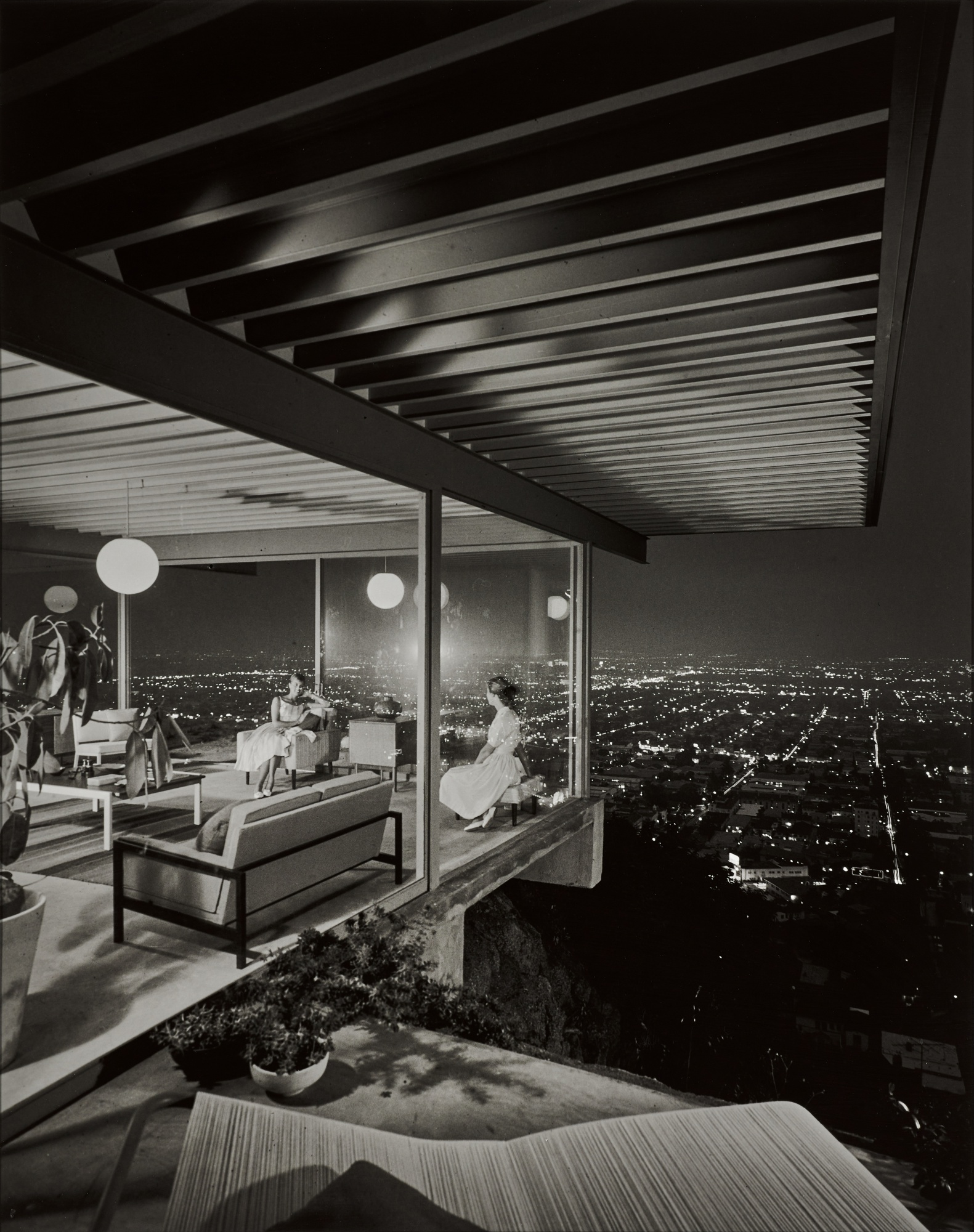
There is a photograph so embedded in the visual consciousness of the twentieth century that it has become something closer to myth than document. Two women in elegant dress sit behind a glass wall suspended above the glittering sprawl of Los Angeles at night, the city's lights cascading beneath them like a second sky. Pierre Koenig's Case Study House Number 22, captured by Julius Shulman in 1960, is not simply an architectural photograph. It is an argument, made in silver and light, that the future could be beautiful, that modernity was something to be inhabited with grace and pleasure rather than endured.
Julius Shulman
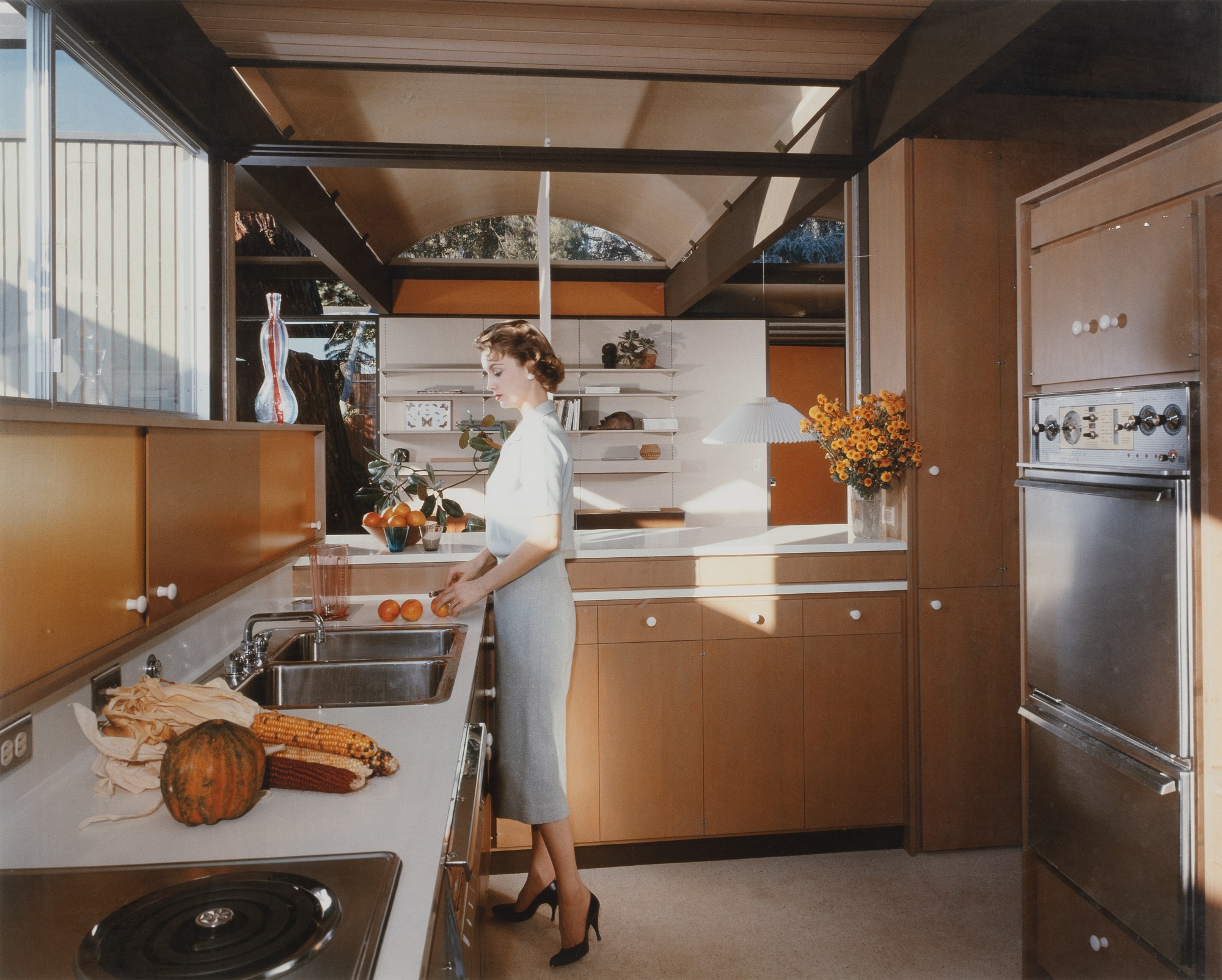
Case Study House #20
Shulman was born in 1910 in Brooklyn, New York, and raised in Connecticut and later Los Angeles, where his family settled when he was a young man. He studied briefly at the University of California, Los Angeles and at Berkeley, though he never completed a formal degree. His path toward photography was intuitive rather than institutional. In 1936, the architect Richard Neutra invited him to photograph a house he had designed, and Shulman, then in his mid twenties and equipped with a borrowed camera, produced images so assured and so compositionally alive that Neutra immediately recognized him as something exceptional.
That first encounter with Neutra set the trajectory of an entire career. What followed was one of the most sustained and consequential partnerships between photographer and architectural movement in the history of either discipline. Shulman became the primary visual chronicler of California Modernism, working alongside architects including Neutra, Rudolph Schindler, Gregory Ain, John Lautner, Craig Ellwood, and Pierre Koenig. He photographed the Case Study House program from its earliest years, the initiative launched by Arts and Architecture magazine in 1945 that challenged leading architects to design affordable, efficient homes using materials and technologies developed during the war.
Julius Shulman
'Case Study House #22', Los Angeles, California, 1960
Shulman did not simply document these structures. He gave them emotional weight and aspiration. He understood that a house had to be shown as a place of life, not merely a technical achievement. His working method was meticulous and theatrical in equal measure.
“A photographer who works with architecture must understand the building before he photographs it.”
Julius Shulman
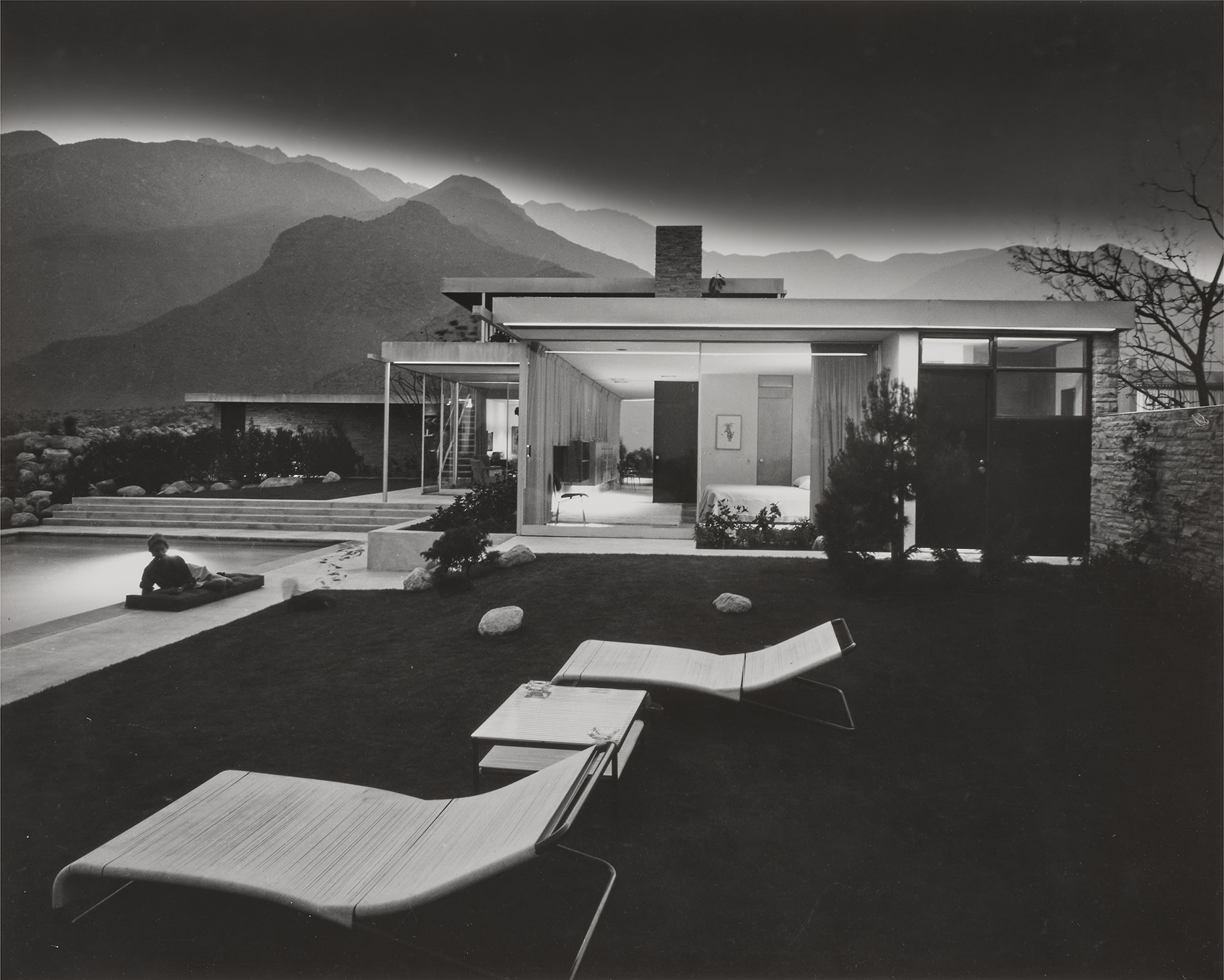
Shulman was known to spend hours preparing a shot, adjusting furniture, introducing props, waiting for the precise quality of available light or, famously, orchestrating artificial illumination to produce the warmth and drama his compositions demanded. The night photograph of Case Study House Number 22 required Shulman to light the interior carefully so that it would register on film against the darkness of the hillside and the ambient glow of the city below. The result feels effortless precisely because the effort behind it was so disciplined. His photographs of the Kaufmann House in Palm Springs, designed by Neutra and completed in 1947, are similarly masterly, presenting the building's clean horizontals and reflecting pool in dialogue with the desert landscape in a way that feels both inevitable and extraordinary.
Julius Shulman
Case Study House #22, Los Angeles, CA, Pierre Koenig Architect
Shulman's work also extended to the Frey House in Palm Springs, Albert Frey's extraordinary structure embedded into a granite boulder outcropping above the desert floor. His photographs of that building, like so much of his Palm Springs work, capture the particular quality of Southern California light and the romance of architecture that treated the natural landscape as a collaborator rather than a backdrop. These images were widely published in magazines including Arts and Architecture, House Beautiful, and major European design journals, disseminating the vocabulary of California Modernism to audiences across the world. It is not an overstatement to say that the global perception of mid century American architecture was substantially shaped by how Shulman chose to frame it.
For collectors, Shulman's work occupies a position of remarkable stability and sustained desirability. Gelatin silver prints, particularly those printed later under his supervision, appear regularly at auction and in the secondary market, with the most iconic images commanding prices that reflect both their art historical importance and their enduring aesthetic power. The Case Study House Number 22 image is among the most recognized architectural photographs ever made, and examples of it in fine condition are genuinely sought after by collectors of both photography and design history. Works such as the Kaufmann House and Frey House photographs appeal strongly to collectors with an interest in California Modernism, Desert Modernism, and the broader mid century design canon.
Julius Shulman
Case Study House #22, Pierre Koenig, Los Angeles, California
What distinguishes Shulman's prints in the market is their combination of documentary significance and genuine pictorial beauty. They function simultaneously as historical record and as autonomous works of art. In the broader context of twentieth century photography, Shulman stands alongside figures such as Ezra Stoller, who performed a comparable function for East Coast and International Style architecture, and Lucien Hervé, who photographed Le Corbusier's buildings with similarly visionary commitment. Yet Shulman's sensibility is distinctly Californian, suffused with a warmth and optimism that reflects both the physical light of Southern California and his own temperament.
He continued working well into his nineties and lived to see a major retrospective of his archive organized by the Getty Research Institute, which acquired his archive of approximately 260,000 images. The Getty's engagement with his work brought renewed scholarly attention and introduced his photographs to a generation of younger collectors and enthusiasts. Shulman passed away in 2009 at the age of ninety eight, having witnessed the full arc of California Modernism from its idealistic postwar emergence to its recognition as one of the defining architectural achievements of the American century. His legacy is inseparable from that movement, but it exceeds it.
The photographs endure because they are technically brilliant, emotionally resonant, and historically indispensable. They remind us of a moment when architects and their collaborators genuinely believed that good design could improve everyday life, and that belief, so vividly present in every carefully constructed frame, is precisely what makes Shulman's work as compelling now as it was when he first pressed the shutter.
Featured Works
Explore books about Julius Shulman
Julius Shulman: Photography and the Built Environment
Pierluigi Serraino
Julius Shulman: The Untold Story
Pierluigi Serraino
Modernism Rediscovered
Julius Shulman and Fred R. Smith
Julius Shulman: A Life in Architecture
Pierluigi Serraino
Richard Neutra: Complete Works
Barbara Lamprecht