Jules Dalou
Jules Dalou, Sculptor of Tender Human Truth
Artist Spotlight · The Collection Editorial
There is a moment, standing before Jules Dalou's monumental Triumph of the Republic in the Place de la Nation in Paris, when the sheer ambition of the man becomes undeniable. Unveiled in its permanent bronze form in 1899, the sculpture is a thunderous civic poem, a gathering of allegorical figures that moves with the energy of a living procession rather than the stiffness of official commemoration. That it still anchors one of Paris's most beloved public squares, more than a century after Dalou's death in 1902, speaks to the enduring vitality of his vision. Yet for all his public grandeur, Dalou was equally a sculptor of intimate tenderness, and it is perhaps in that duality that his greatest fascination lies.
Jules Dalou
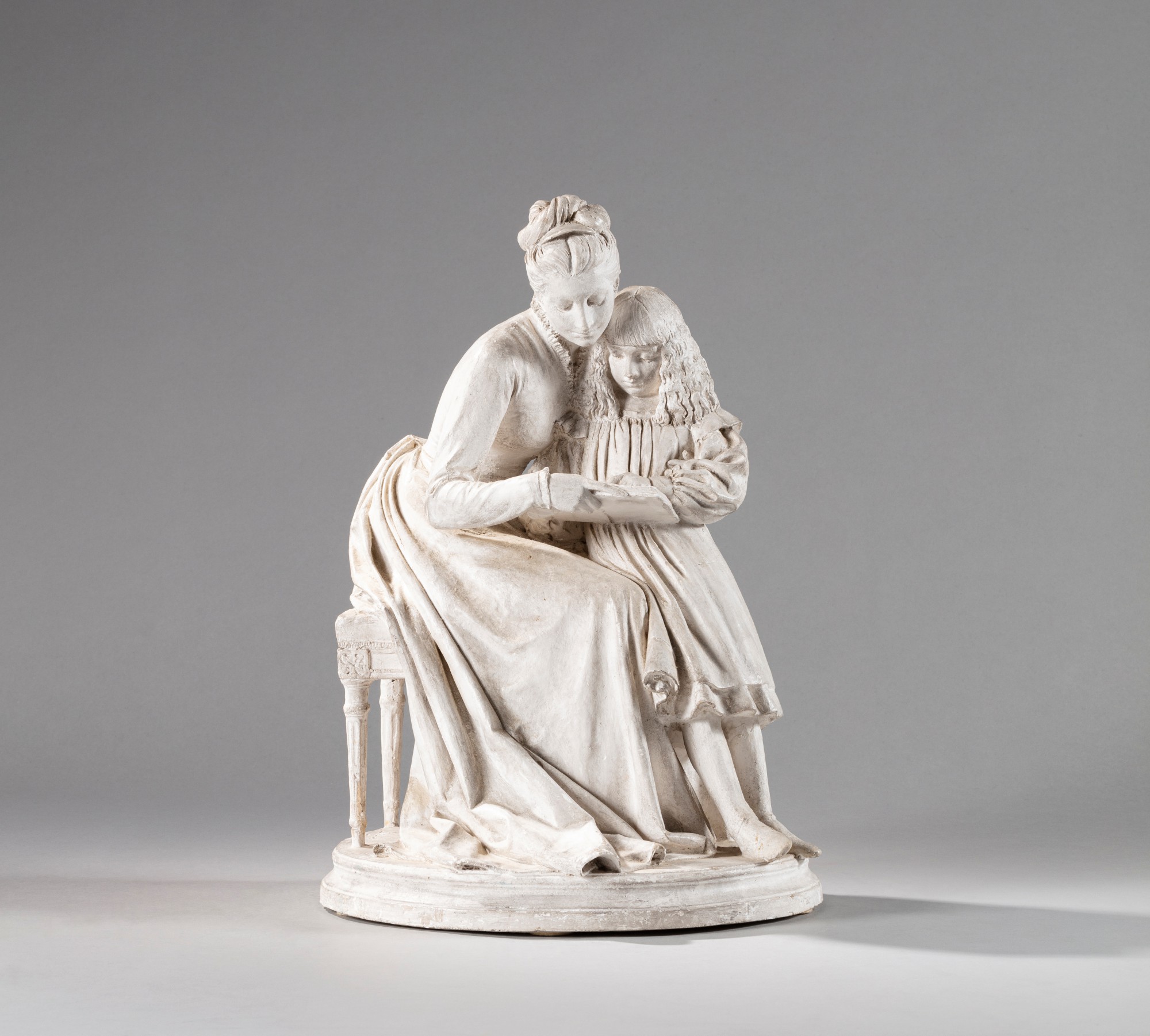
La Leçon de lecture (The Reading lesson)
Aimé Jules Dalou was born in Paris in 1838, the son of a glove maker in the working class district of the Marais. His origins were modest but not without cultural exposure, and the young Dalou showed an aptitude for drawing and modelling from an early age. He came to the attention of Jean Baptiste Carpeaux, the brilliant and restless sculptor whose own sensuous dynamism would prove a formative influence, and through Carpeaux's encouragement Dalou entered the École des Beaux Arts in Paris. He studied there under François Jouffroy and later under Carpeaux himself, absorbing the classical tradition while developing an instinct for naturalism that would eventually set him apart from his peers.
The political upheavals of nineteenth century France shaped Dalou as profoundly as any studio apprenticeship. A committed republican with socialist sympathies, Dalou participated in the Paris Commune of 1871 and served briefly as a curator at the Louvre during that tumultuous period. When the Commune fell, he fled to London rather than face imprisonment, and it was during his years of exile, from 1871 to 1879, that his reputation was first established on an international stage. London society embraced him warmly.
Jules Dalou
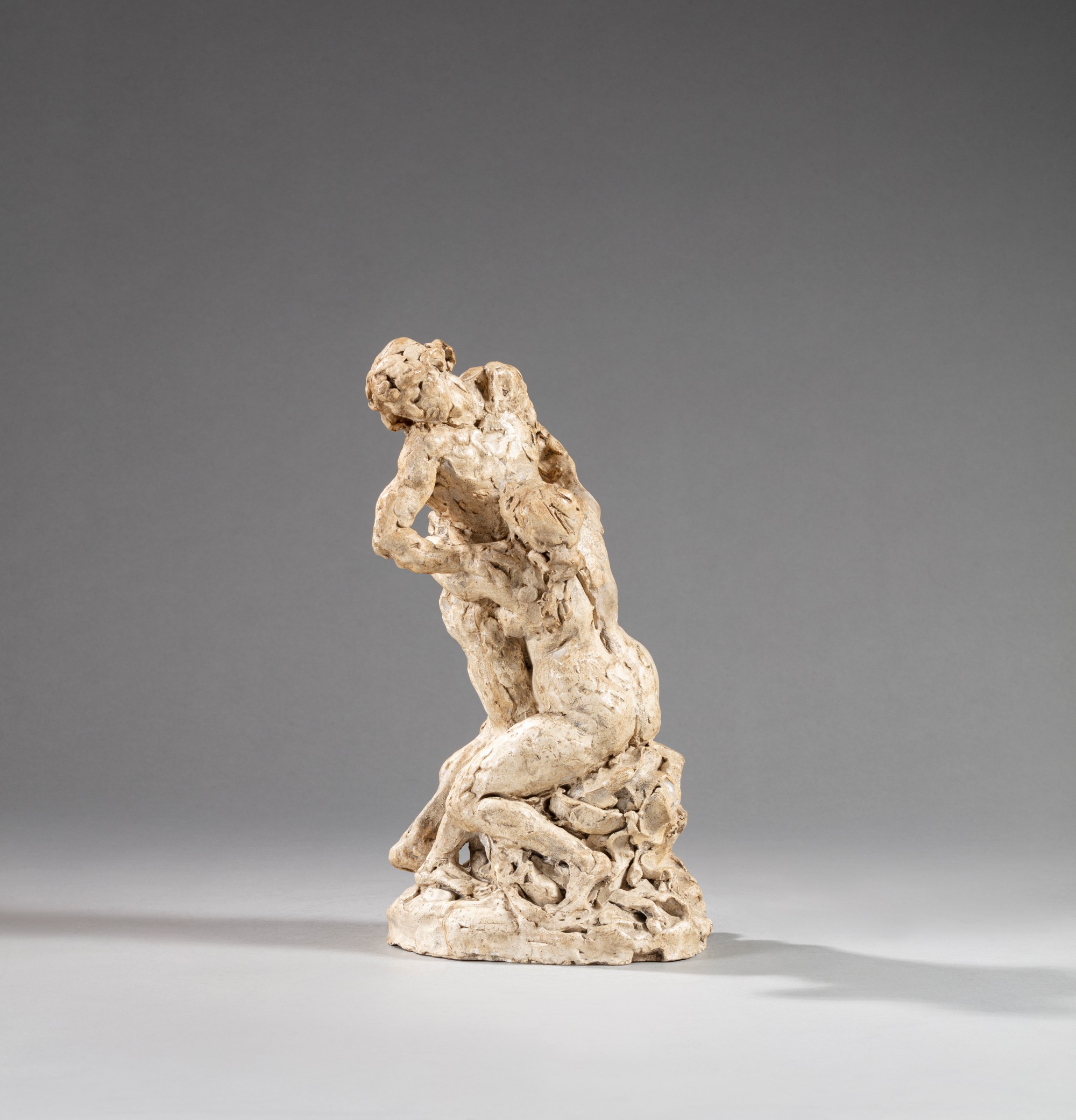
Supplication
He exhibited at the Royal Academy, taught at what is now the Royal College of Art, and found eager patrons among the English aristocracy and upper middle class who admired his refined modelling and his gift for capturing domestic life. Works from this period depicting mothers with children and scenes of everyday English gentility earned him both critical respect and financial stability during years that might otherwise have been purely difficult. When an amnesty allowed Dalou to return to France in 1879, he arrived not as a humbled exile but as a sculptor of considerable European standing. The French state recognised his talent quickly, awarding him the commission for the Triumph of the Republic, a project that would consume much of the following two decades.
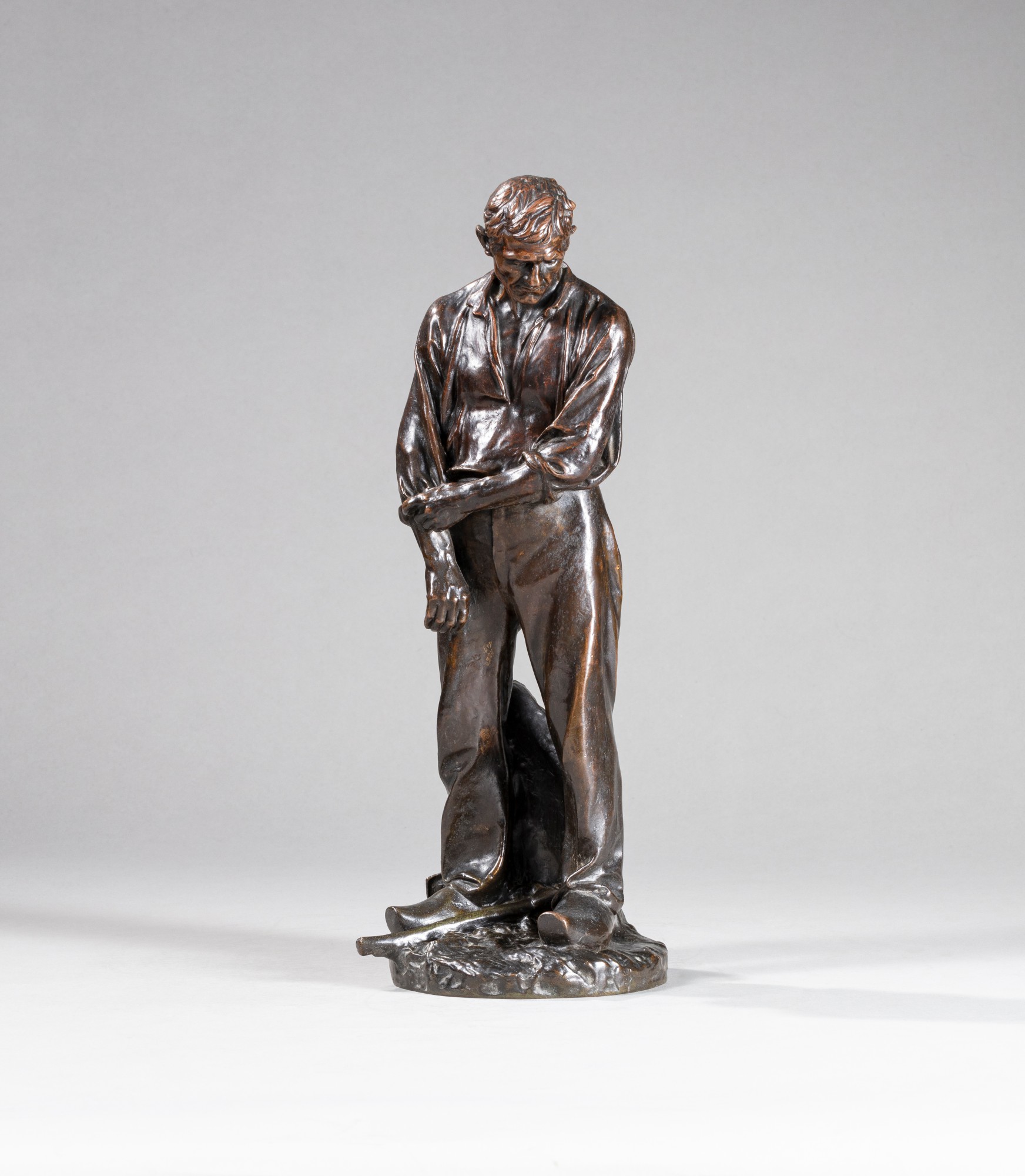
Yet it would be a mistake to understand Dalou only through his public commissions. Running parallel to the grand allegorical work was an extraordinarily rich body of smaller sculpture, studies and sketches in terracotta, plaster, and bronze that reveal a more personal and searching artistic intelligence. His series devoted to workers and peasants, figures bending to labour, resting after toil, or engaged in the quiet rituals of daily life, represent some of the most humane social observation in all of nineteenth century sculpture. The Grand Paysan, a monumental standing figure of a peasant man in bronze, distils this ambition into a single commanding presence, neither romanticised nor condescending but simply and powerfully true.
Jules Dalou
Le Grand Paysan
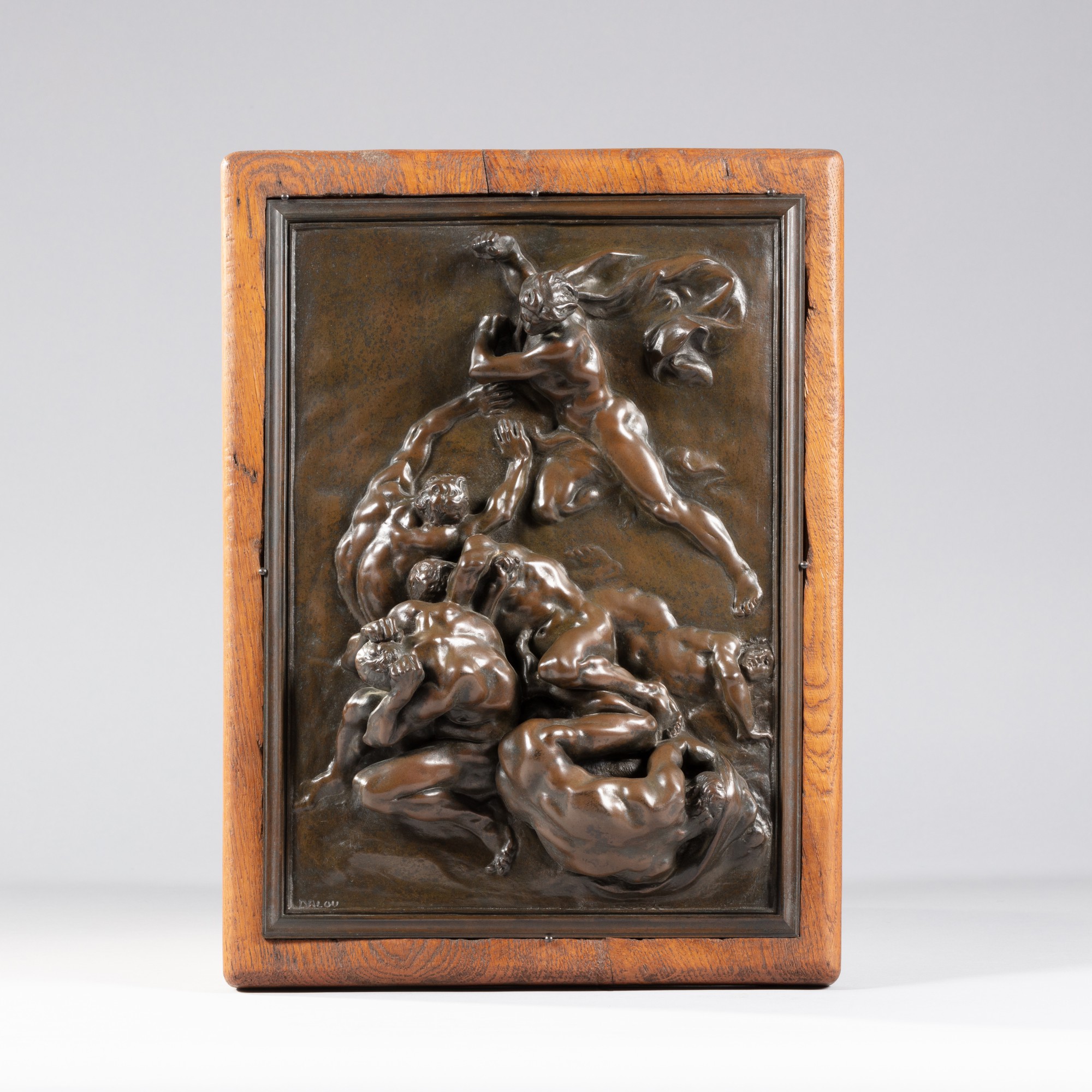
The works available through The Collection illuminate the full range of Dalou's gifts with remarkable breadth. La Leçon de lecture, a scene of a woman teaching a child to read, carries that quality of absorbed domestic attention that made his London work so beloved, every detail of posture and gesture charged with quiet feeling. Buste de bébé endormi, a bronze bust of a sleeping infant set on a verde antico marble base, is a tour de force of observational tenderness, the way the child's features relax into sleep rendered with a delicacy that borders on the miraculous. Les Châtiments, a bronze high relief set in a wooden frame and depicting the punishment of the damned, reveals an entirely different register, one of dramatic invention and psychological force that connects Dalou to the tradition of Rodin, his near contemporary and sometime rival.
The Boulonnaise series, depicting women of the northern French coastal region nursing and carrying their children, shows his sustained fascination with motherhood not as sentimental subject matter but as a site of physical and emotional complexity. For collectors, Dalou presents a genuinely compelling proposition. His bronzes appear regularly at major auction houses including Christie's, Sotheby's, and Drouot in Paris, where his more intimate works, the worker studies, the mother and child groups, and the portrait busts, command consistent and growing interest. The market reflects a broader critical reassessment that has gathered pace since the late twentieth century, as scholars and curators have revisited the generation of sculptors who worked in the shadow of Rodin and found them far richer than previously acknowledged.
Jules Dalou
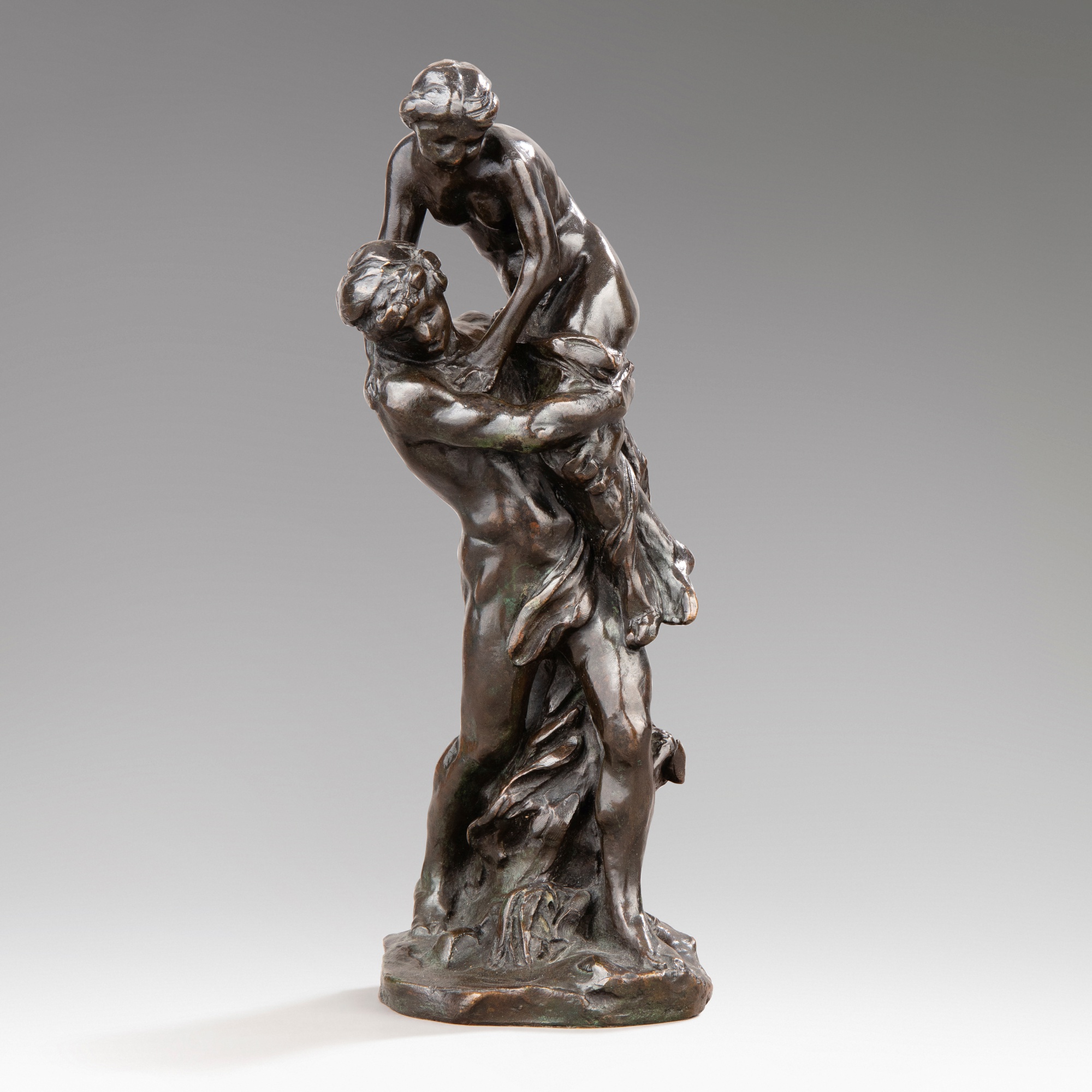
Crossing the Rhine
Dalou's bronzes reward close attention: look for the quality of the patination, which in the finest examples ranges from warm brown to deep reddish tones that speak to careful foundry work, and examine the modelling of surfaces, where his characteristic treatment of fabric, hair, and skin reveals the hand of an artist who trusted tactile sensation above all else. To understand Dalou fully it helps to place him in conversation with contemporaries whose work shares his commitments and his tensions. Carpeaux's influence is visible in the sensuous movement of his figural groups. Rodin, with whom Dalou shared both a circle and a rivalry, pursued a more radical dissolution of classical form, while Dalou retained a faith in resolved, finished composition that aligned him more closely with academic tradition even as his subject matter was often quietly revolutionary.
Constantin Meunier, the Belgian sculptor of workers and miners, pursued related social territory, and collectors drawn to one will often find the other equally compelling. Medardo Rosso's impressionist approach to bronze offers yet another point of contrast, a reminder of how varied and vital the sculpture of this period truly was. Dalou died in Paris in 1902, leaving behind an unfinished Monument to Workers, an enormous projected ensemble that would have been the most ambitious sculptural celebration of labour ever attempted. That it remained incomplete is one of art history's genuine losses, but what survives is more than sufficient to secure his reputation.
He was a sculptor who believed that the life of ordinary people deserved the same monumental attention that had always been given to gods and kings, and he spent his career making that belief visible in bronze and stone. In an era when art collecting increasingly values artists whose work speaks to enduring human experience rather than passing market fashion, Dalou feels not like a figure recovered from the past but like a voice that was always speaking clearly, waiting for us to listen with the attention he deserves.
Explore books about Jules Dalou
Jules Dalou: The Man and His Work
Drude Janson
Dalou
Ludovic Vitet
Jules Dalou: Catalogue Raisonné of His Works
Maurice Dreyfous

The Sculpture of Jules Dalou
Fusco and Janson
Jules Dalou: A Life
Ruth Butler
Dalou and the Politics of French Sculpture
Fred Leeman