Juergen Teller
Juergen Teller, Photography's Most Gloriously Honest Eye
Artist Spotlight · The Collection Editorial
“I want to make images that feel like a punch in the stomach but also make you laugh.”
Juergen Teller
In the spring of 2024, the Foam Fotografiemuseum in Amsterdam drew long queues of visitors eager to immerse themselves in the sprawling, intensely personal world of Juergen Teller, a reminder that his work continues to provoke, delight, and genuinely move audiences decades into a career that shows no sign of softening. That sustained hunger for his vision speaks to something rare in contemporary photography: a body of work that feels more urgent with each passing year rather than less. Teller has become one of those artists whose influence is so thoroughly absorbed into the visual culture around us that it can be easy to forget just how radical his original proposition was. To spend time with his prints in person is to be reminded, forcefully and joyfully, of exactly how radical it remains.
Juergen Teller
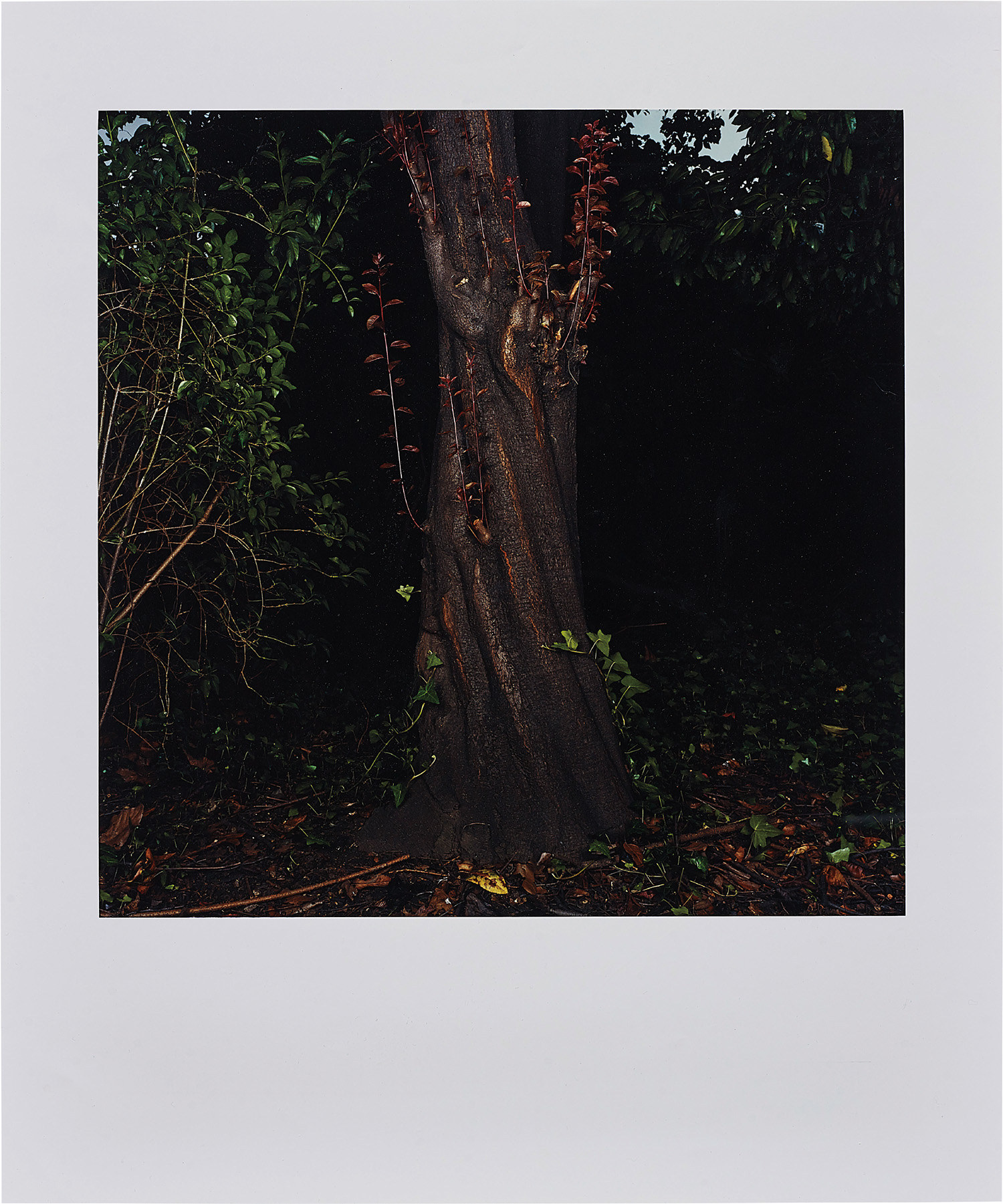
Lola with Nits, 2005
Juergen Teller was born in Erlangen, Germany in 1964, and his early life left unmistakable marks on everything he would go on to make. His father was a musician, and there is something deeply musical about the rhythms of Teller's practice, the way he returns obsessively to the same subjects, the same locations, the same people, building meaning through repetition and variation rather than through singular decisive moments. He studied at the Bayerische Staatslehranstalt für Photographie in Munich, receiving a rigorous technical education that he would spend the rest of his career productively dismantling. In 1986 he moved to London, arriving in a city crackling with creative energy, and the British capital became both his adopted home and a permanent subject of his gaze.
London in the late 1980s and early 1990s was the crucible in which Teller's mature aesthetic was formed. He began shooting musicians almost immediately after arriving, and his portraits of figures including Kurt Cobain, Sinead O'Connor, and Bjork established a visual language that felt genuinely new: flashlit, frontal, uncomfortable in the best possible sense, stripped of the flattering distance that traditional music photography maintained between subject and lens. His fashion work, which began appearing in publications including i D and The Face before graduating to Vogue, Celine, and beyond, carried the same confrontational intimacy. Where other photographers built elaborate sets and perfected the art of the flattering angle, Teller pointed his camera directly at reality and asked it to hold still.
Juergen Teller
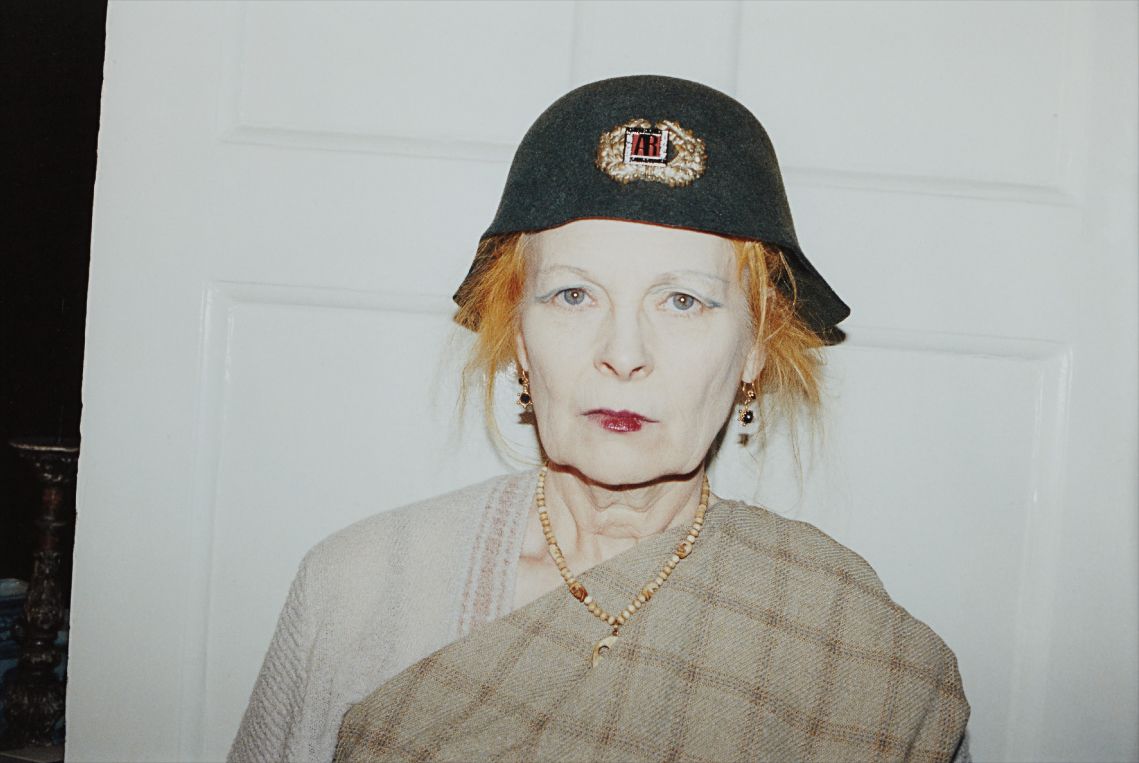
Boadicea Vivienne, London
The signature qualities of a Teller photograph are deceptively simple to describe and almost impossible to replicate. He works predominantly with a direct flash, which flattens space and creates that characteristic bleached, slightly overexposed look that has become instantly recognizable to anyone who has spent time with contemporary photography. His compositions are deliberately awkward, his moments deliberately un precious. Subjects are often caught mid movement, mid thought, mid sentence.
Backgrounds are unremarkable kitchens, hotel rooms, parking lots. Yet within this studied anti glamour there is an extraordinary tenderness, a genuine curiosity about the people and places before his lens that elevates the work far above mere provocation. His ongoing autobiographical series, in which he documents his own family including his son Ed and his long term partner and collaborator Dovile Drizyte, reveals a photographer of profound emotional intelligence working in a mode that looks casual but is in fact deeply considered. Among the works that best represent the full range of Teller's ambition, "Lola with Nits" from 2005 stands as a touchstone.
The image captures a child with a directness and lack of sentimentality that is characteristic of his approach to portraiture, refusing the conventions of how childhood is typically framed and beautified for the camera. Similarly, "Boadicea Vivienne, London," a chromogenic print that exists in the tradition of his London portraiture, demonstrates his gift for finding mythic dimensions within entirely ordinary photographic encounters. The chromogenic print as a medium suits him perfectly: its particular warmth and depth of color reward close looking in ways that reproductions can only hint at, which is precisely why acquiring original prints matters so much for anyone serious about engaging with his work. From a collecting perspective, Teller occupies an enviable position in the market.
He is firmly established as a blue chip artist whose work is held in major institutional collections including the Tate in London and the Museum of Modern Art in New York, which provides the kind of institutional validation that gives private collectors confidence. At the same time, his output is genuinely prolific and his practice spans decades, meaning that collectors at various levels of the market can find points of entry. His prints vary in edition size and scale, and works from his earlier music photography period carry particular art historical significance as documents of a transformative moment in both music and visual culture. Collectors drawn to the intersection of fashion, fine art, and documentary traditions will find in Teller a photographer who has inhabited and enriched all three simultaneously.
Teller's place within the broader history of photography becomes clearer when considered alongside artists who share his commitment to unsentimental truth telling. The lineage runs from Diane Arbus through Larry Clark and Nan Goldin, photographers who understood that real intimacy requires real discomfort, that the most honest images are often the most formally imperfect ones. Wolfgang Tillmans, his fellow German living in London, explores adjacent territory with a similar refusal of conventional photographic beauty, and the two artists together represent one of the most important developments in European photography over the past thirty years. Teller has also been compared to the New Color photographers of the American tradition, though his sensibility is fundamentally his own: more physical, more confrontational, more persistently funny.
What makes Juergen Teller essential to any serious understanding of contemporary photography is not simply the quality of individual images but the integrity of the entire project. He has built, across four decades and counting, a completely coherent world with its own logic, its own recurring characters, its own private jokes and deep sorrows. That world is available to collectors in the form of prints that reward prolonged attention and grow more resonant over time. To acquire a Teller is to bring into your home a piece of one of the most sustained and searching investigations into what photography can be that any living artist has undertaken.
The work does not flatter. It does something much more valuable: it tells the truth with warmth, with wit, and with an inexhaustible appetite for the complexity of being alive.
Explore books about Juergen Teller