Josephine Meckseper
Josephine Meckseper: Glamour, Dissent, and Beauty
Artist Spotlight · The Collection Editorial
Few artists working today navigate the tension between seduction and critique with the precision and visual intelligence of Josephine Meckseper. Her work has appeared in major institutional contexts on both sides of the Atlantic, from the Whitney Museum of American Art in New York to the Hamburger Kunsthalle in Hamburg, and her presence in serious private collections signals a long overdue reckoning with just how prescient her practice has been. In an era when conversations about consumerism, political spectacle, and the aesthetics of late capitalism have moved firmly into the mainstream, Meckseper's installations and photographs feel less like provocations than like careful prophecies. Meckseper was born in Lilienthal, Germany in 1964, and her formation was shaped by the politically charged intellectual climate of postwar West Germany.
Josephine Meckseper
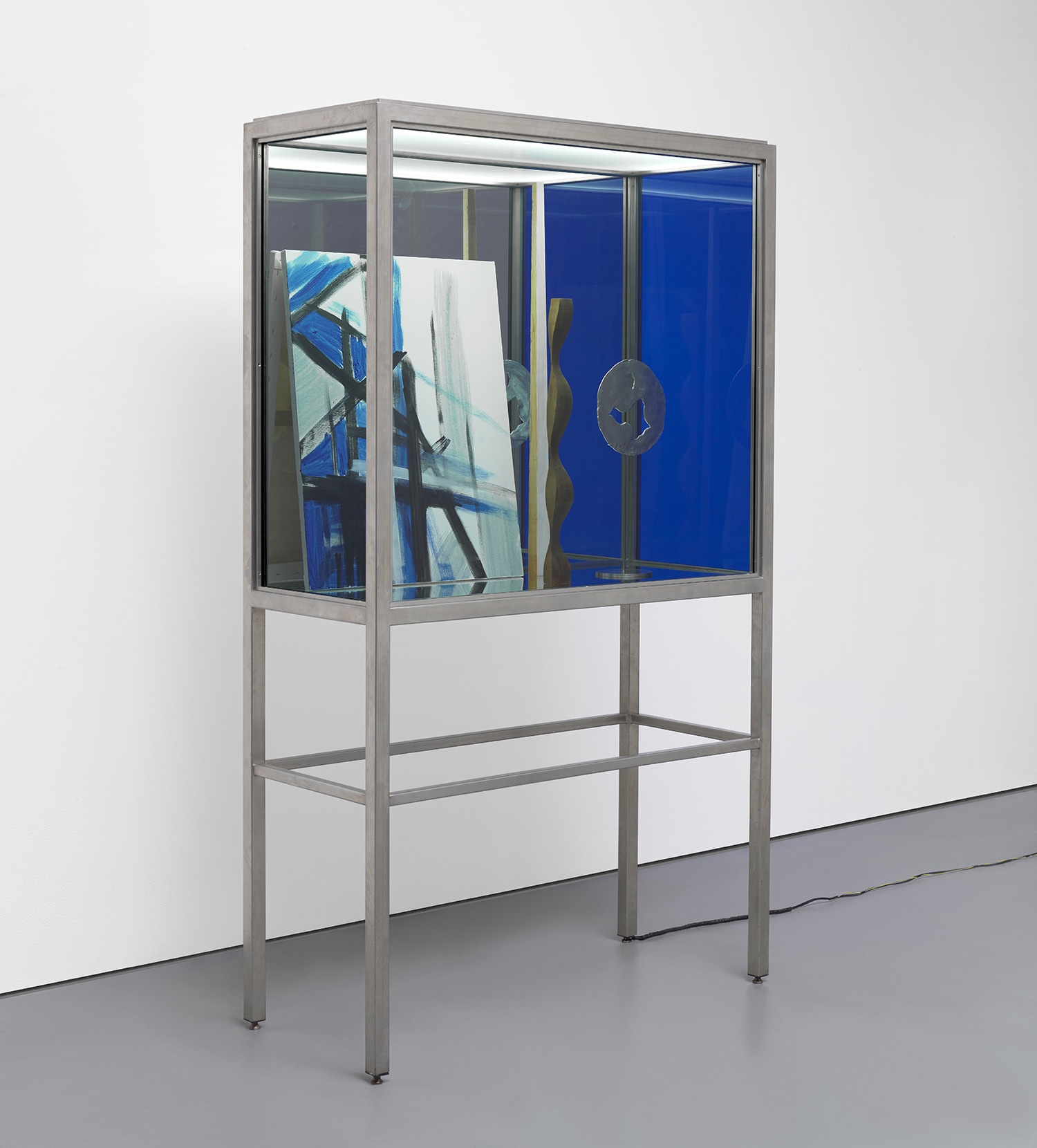
The Possibility of an Island, 2012
She studied at the Hochschule für Bildende Künste in Hamburg before relocating to New York, where she earned her MFA from the California Institute of the Arts. This transatlantic trajectory proved essential to her sensibility. She absorbed the legacy of German critical theory and the traditions of the Frankfurt School while immersing herself in the visual excess of American commercial culture. The resulting tension, between European conceptual rigor and the seductive surface gloss of the American marketplace, became the engine of her entire practice.
Her artistic development through the 1990s and into the 2000s showed a consistent and deepening commitment to the language of display itself. Meckseper became fascinated not just with objects but with the choreography of how objects are presented, the vitrine, the shelf, the department store window, the protest march. She understood that the logic of retail display and the logic of political spectacle share a fundamental architecture: both depend on staging, lighting, and the careful management of desire. Her early photographs and installations began to fuse these two vocabularies with remarkable fluency, producing works that feel simultaneously glamorous and unsettling, beautiful and deeply interrogative.
Josephine Meckseper
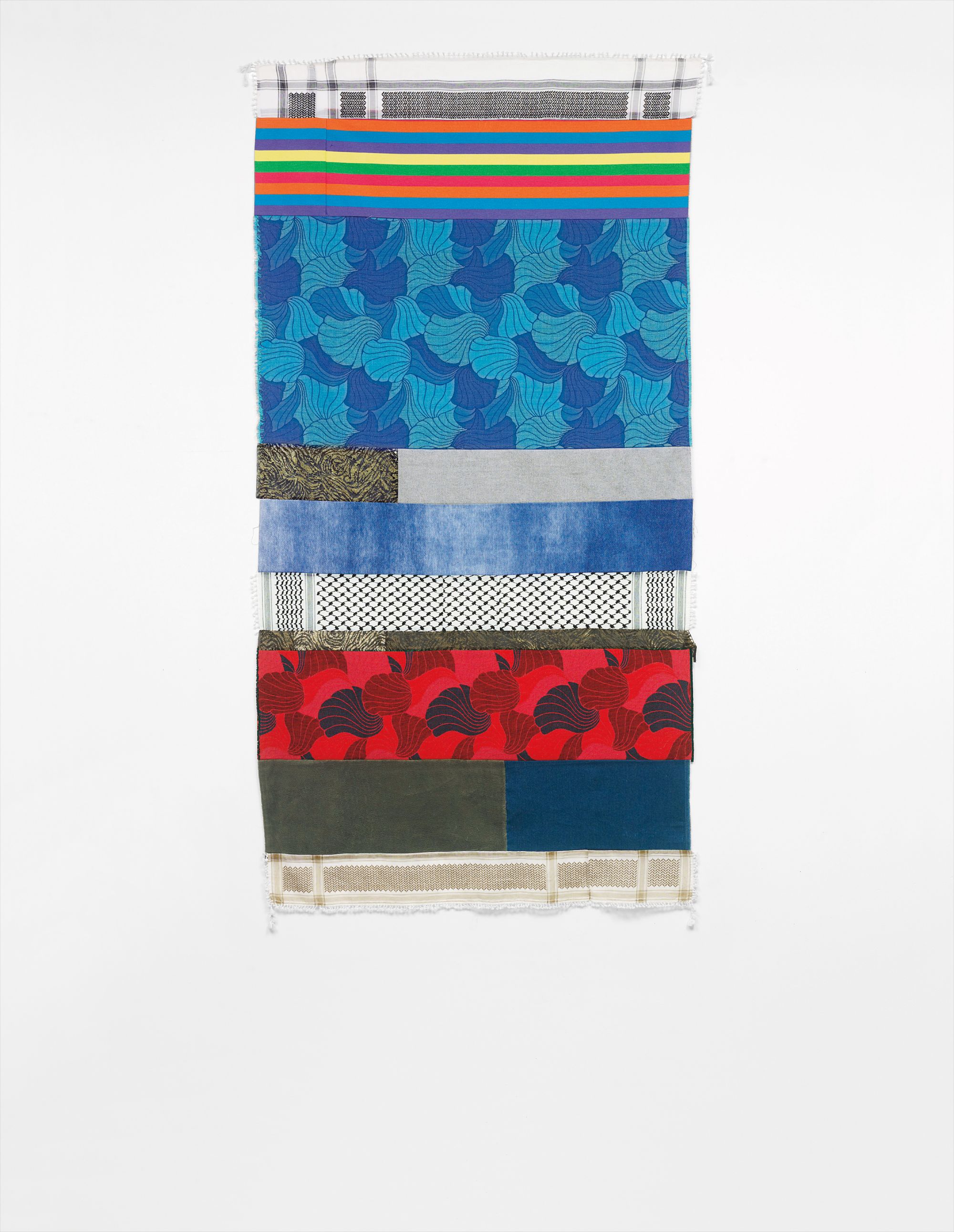
Orient - Occident (Rug 3)
The work titled Shelf 16, made in 2001, is a landmark example of this approach. A chromogenic print is presented alongside found jewelry on a metal stand, glitter on canvas, and lace fabric in a Plexiglas case, all arranged on an acrylic shelf. The composition borrows entirely from the grammar of retail display, yet the accumulation of materials produces something closer to a poem than a sales pitch. The glitter and lace carry associations of femininity and decoration that Meckseper handles without condescension, acknowledging their genuine seductive power while placing them in a context that invites scrutiny.
Works like The Material for U.S.A., which assembles a plexiglas cube, newspaper, a metal stand, an acrylic hand display, a metal plaque, a martini glass, a mirrored ornament, a necklace, and a wood plinth into a single installation, extend this logic into the territory of political iconography, finding in the accumulated debris of American consumer life a portrait of a nation consumed by its own image.
Josephine Meckseper
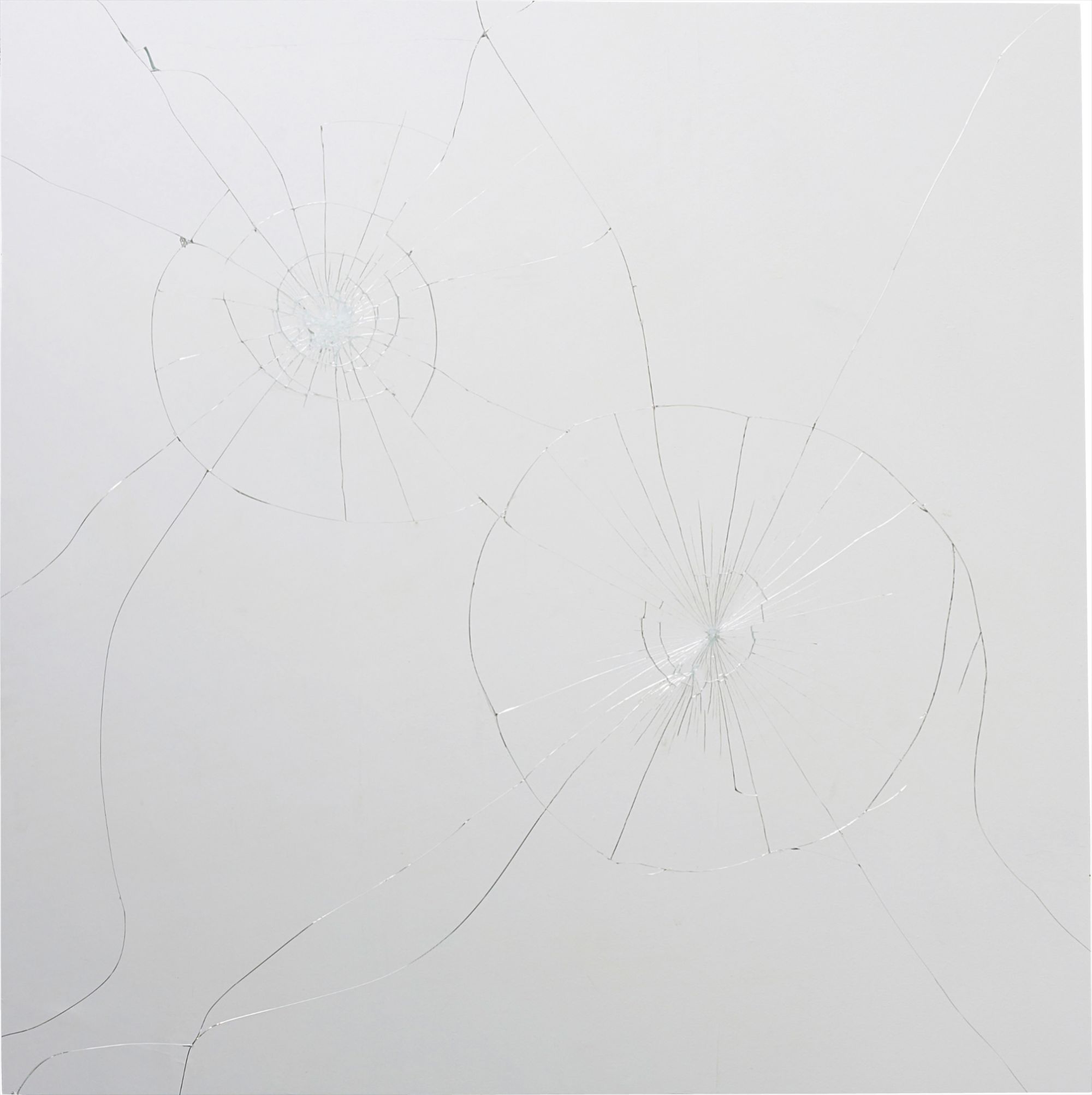
Das Ende des Panoptikums VII
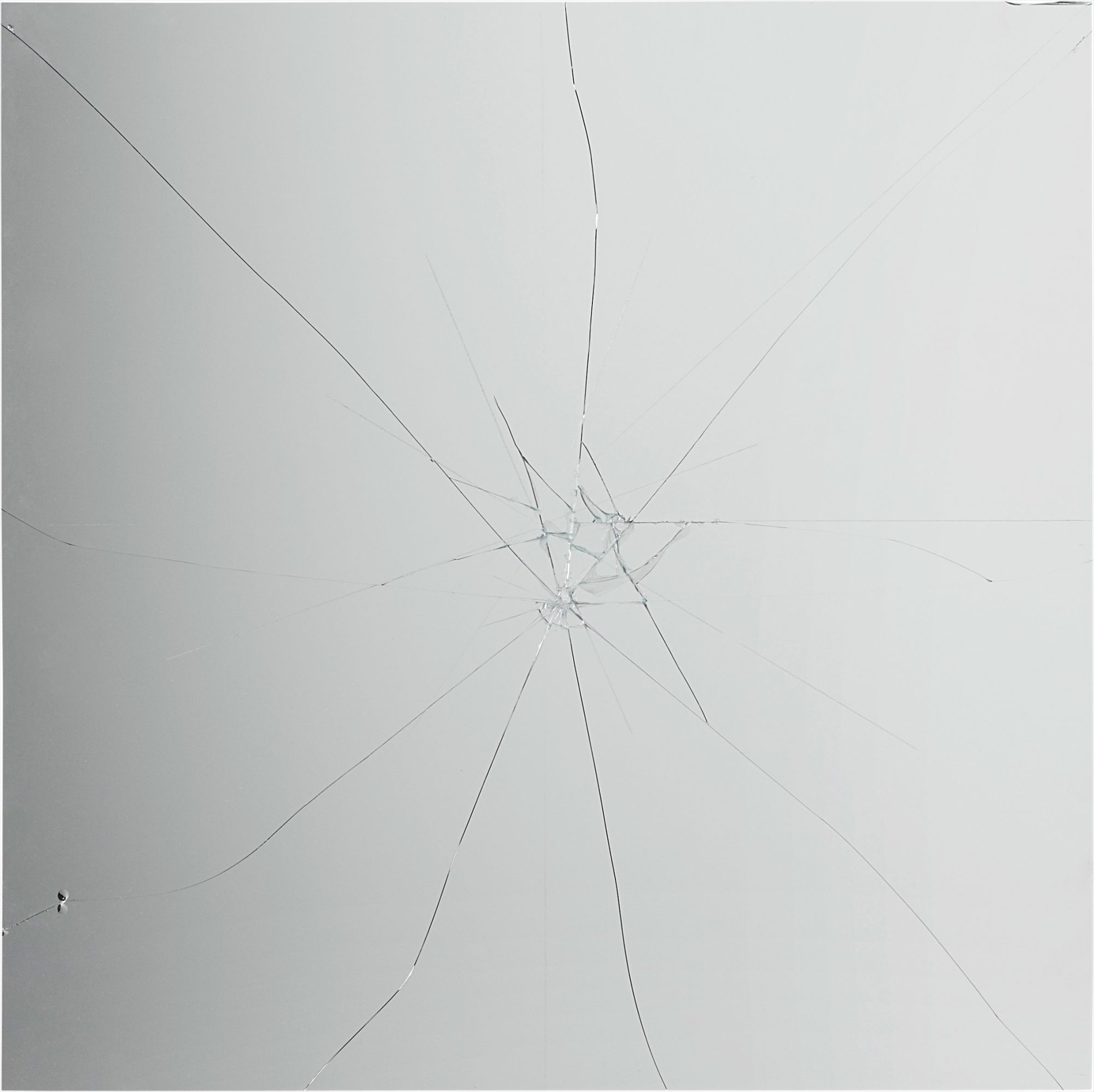
The 2012 work The Possibility of an Island represents one of the most resolved expressions of her mature practice. Presented as a mixed media installation in a stainless steel and glass vitrine with fluorescent light and acrylic sheeting, the work takes its title from the Michel Houellebecq novel of the same name, a text preoccupied with pleasure, alienation, and the failure of utopian fantasy. The clinical fluorescent lighting and the cool industrial materials of the vitrine sit in pointed contrast to whatever is contained within, creating an effect that is simultaneously museological and commercial, as if the boundaries between archive, boutique, and laboratory had been deliberately dissolved. The Das Ende des Panoptikums series, whose title translates roughly as The End of the Panopticon, further develops this interest in systems of surveillance and spectacle, referencing Michel Foucault's influential analysis of power and visibility while grounding those ideas in the physical vocabulary of display.
For collectors, Meckseper's work offers a rare combination of formal rigor and cultural urgency. Her use of materials is always precise and considered: the stainless steel, glass, fluorescent light, acrylic, denim, and found objects that populate her installations are chosen not for novelty but for their specific associative freight. Works on denim, such as the acrylic and gouache piece initialled and dated from 2003, show her extending this material intelligence into a more intimate register, bringing the codes of workwear and American vernacular fabric into dialogue with the traditions of painting. The Orient Occident Rug series situates her practice within a longer art historical conversation about the politics of pattern, ornament, and cultural exchange.
Josephine Meckseper
Das Ende des Panoptikums lV
Collectors drawn to artists such as Barbara Kruger, Hans Haacke, or Haim Steinbach will find in Meckseper a sensibility that shares their critical commitments while charting its own distinctly personal visual territory. Her work also resonates with the installations of Sylvie Fleury and the photographic practice of Wolfgang Tillmans, artists who have similarly refused to accept a clean separation between aesthetic pleasure and political meaning. Meckseper's place in art history is still being fully written, but the contours are becoming clear. She arrived in New York at a moment when the legacy of Pictures Generation artists such as Cindy Sherman, Richard Prince, and Sherrie Levine was still being actively contested, and she absorbed those debates without simply repeating them.
Where the Pictures Generation focused largely on the mediation of images through photography and mass reproduction, Meckseper moved into three dimensions, into the actual physical choreography of objects in space. This shift gave her work an immediacy and a bodily presence that distinguishes it clearly within the broader conversation about art and consumer culture. As the world she has spent decades analyzing, a world of political theater, commodity fetishism, and the aestheticization of dissent, has grown only more extreme and more difficult to parse, her practice has taken on the quality of essential testimony. To collect Meckseper is to invest in one of the most searching and visually compelling critical imaginations working today.
Explore books about Josephine Meckseper
Josephine Meckseper: Consumption
Josephine Meckseper, Iwona Blazwick
Josephine Meckseper: High Performance
Josephine Meckseper, Laura Paulson
Josephine Meckseper: Sculptures, Photographs, and Installations
Josephine Meckseper