Joseph Cornell
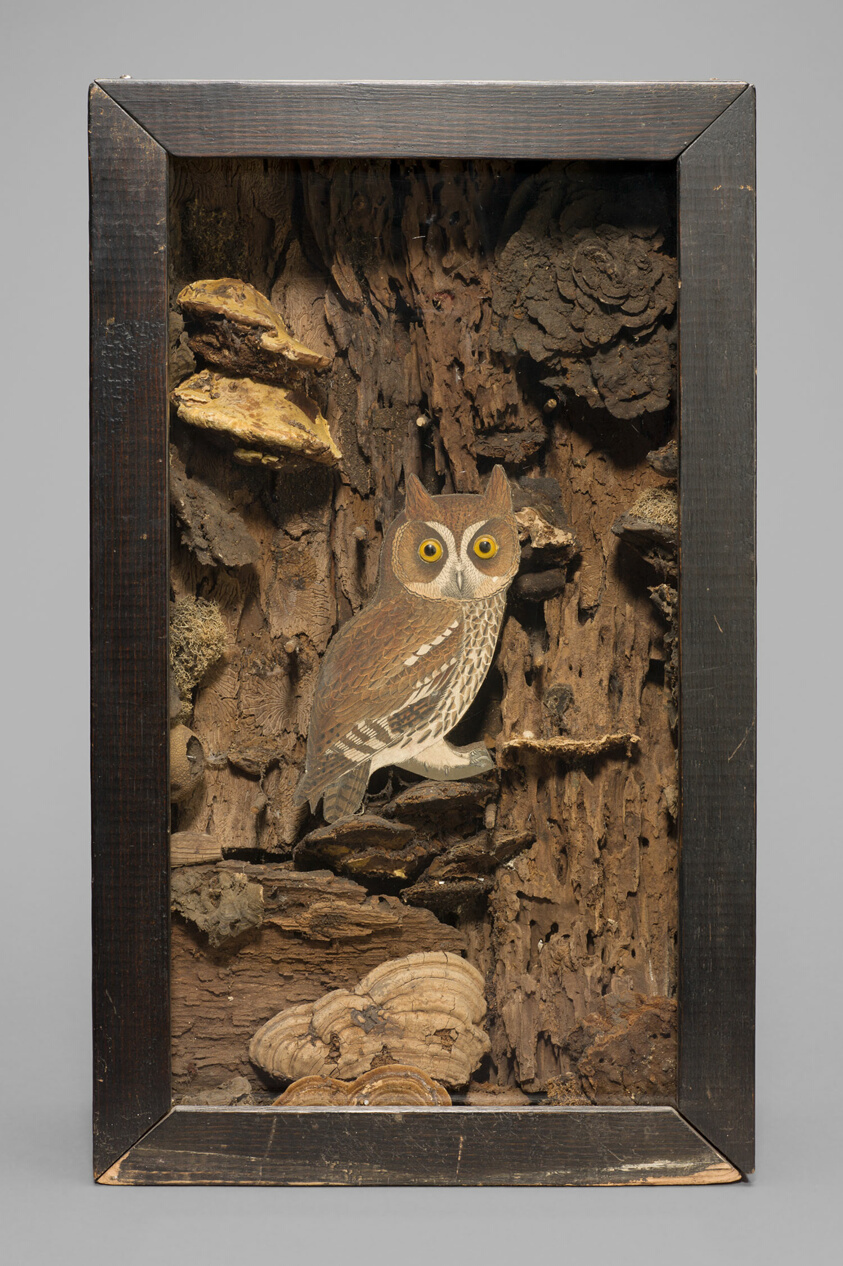
Artist Spotlight · The Collection Editorial
```json { "headline": "Joseph Cornell: Poet of Infinite Wonder", "body": "There is a moment, standing before a Joseph Cornell box construction in a hushed museum gallery, when the ordinary world seems to fall quietly away. A handful of printed paper fragments, a glass marble, a coiled spring, a faded photograph of a nineteenth century ballerina and yet the sum of these parts feels like stumbling upon a private universe, fully formed and trembling with meaning. That sensation has captivated audiences for decades and shows no sign of loosening its grip. Cornell's work continues to command serious attention in the auction rooms of Christie's and Sotheby's, where his shadow boxes regularly achieve prices well into the six figures, and his influence on contemporary artists working across assemblage, collage, and installation remains profound and widely acknowledged.
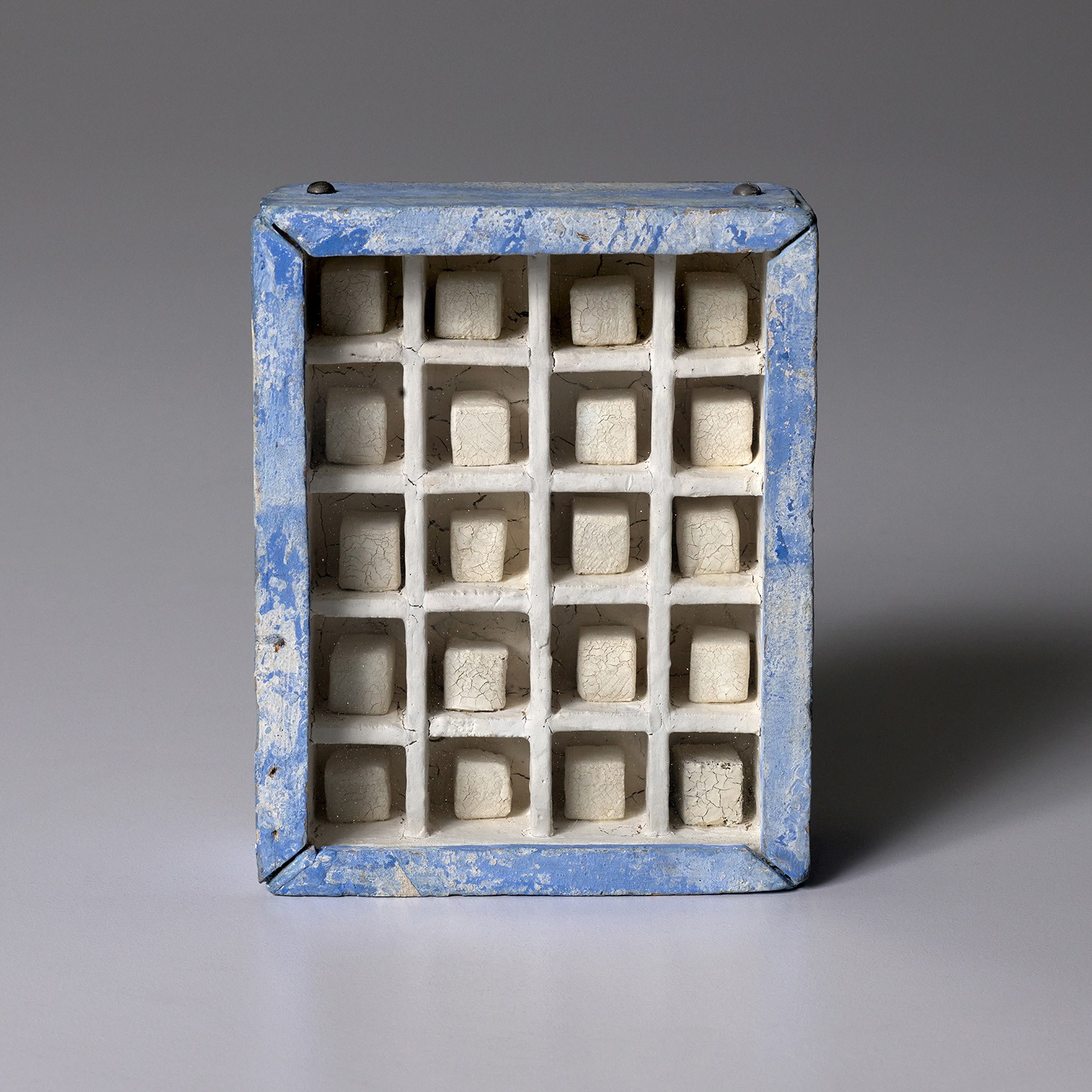
Joseph Cornell
Dovecote, 1960
", "Born in Nyack, New York in 1903, Joseph Cornell grew up in a household shaped by Christian Science, a faith that colored his lifelong tendency toward spiritual contemplation and an almost mystical relationship with material objects. The death of his father when Cornell was thirteen cast a long shadow over the family's finances, and Cornell took on work as a woolen goods salesman to help support his mother and his younger brother Robert, who had cerebral palsy and with whom Cornell would live for the rest of his life in a modest house in Flushing, Queens. This domestic world, far from the bohemian studios of Manhattan, was the crucible of one of the twentieth century's most original artistic imaginations. Cornell largely taught himself, haunting the secondhand bookshops, print dealers, and curiosity stores of lower Manhattan, accumulating the raw material of his dreams.
", "Cornell's encounter with Surrealism in the early 1930s proved decisive. He discovered the movement through the Julien Levy Gallery in New York, where he encountered the work of Max Ernst and Salvador Dalí and felt the electrifying permission those artists gave to the irrational and the poetic. His own first constructions appeared in a group exhibition at the Levy Gallery in 1932, and Julien Levy became an important early champion of his work. Yet Cornell always sat at a slight angle to Surrealism proper.
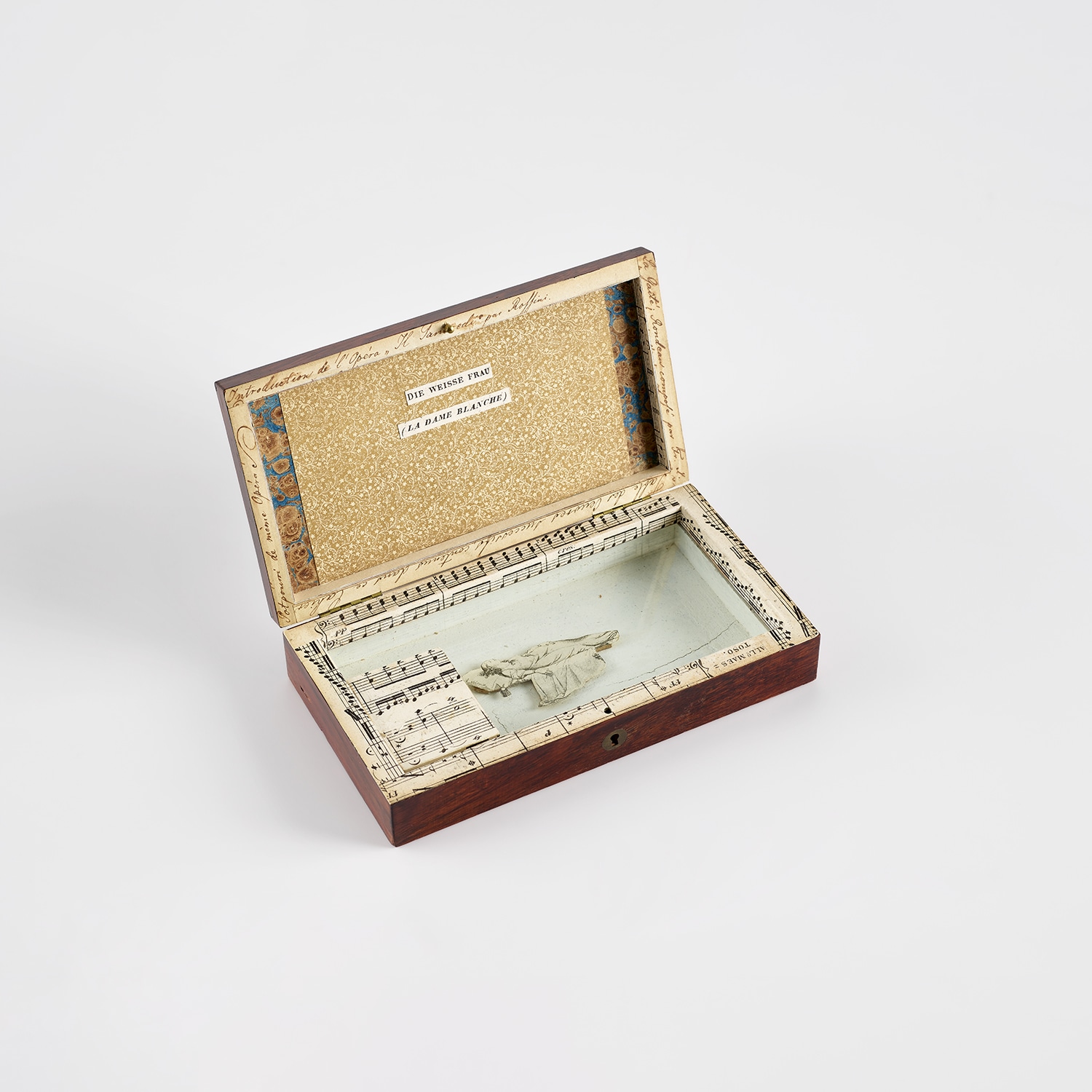
Joseph Cornell
Die Weisse Frau (La Dame Blanche), 1952
Where the European Surrealists pursued the uncanny in order to unsettle and disturb, Cornell used similar strategies to arrive somewhere warmer and more tender, a place of longing rather than dread. His boxes were not traps but shrines, dedicated to beauty, to memory, to the lives of opera singers and ballerinas and silent film actresses he admired from a reverent, often anonymous distance.", "The development of Cornell's signature box constructions through the 1940s and 1950s represents one of the most sustained and coherent bodies of work in American art. His Soap Bubble Sets, Hotel series, Aviary boxes, and Observatory constructions each constitute a distinct visual language, yet all speak with the same quiet, searching voice.
The Dovecote works, of which the 1960 example in The Collection is a particularly fine representative, arrange grids of cylindrical compartments against painted grounds in ways that suggest both the orderly structures of natural history and the fugitive freedom of birds in flight. His collages, equally important to understanding his practice, combine newspaper clippings, Victorian illustrations, astronomical charts, and photographic ephemera into compositions that feel both found and deeply intentional. Works such as Missing Girl from 1962 and the Lead Clue to the Houdini Disappearing Elephant Act from 1967 demonstrate how Cornell used the detritus of popular culture and mass media as raw material for something approaching lyric poetry.", "For collectors, Cornell's work offers an unusually rich field of engagement.
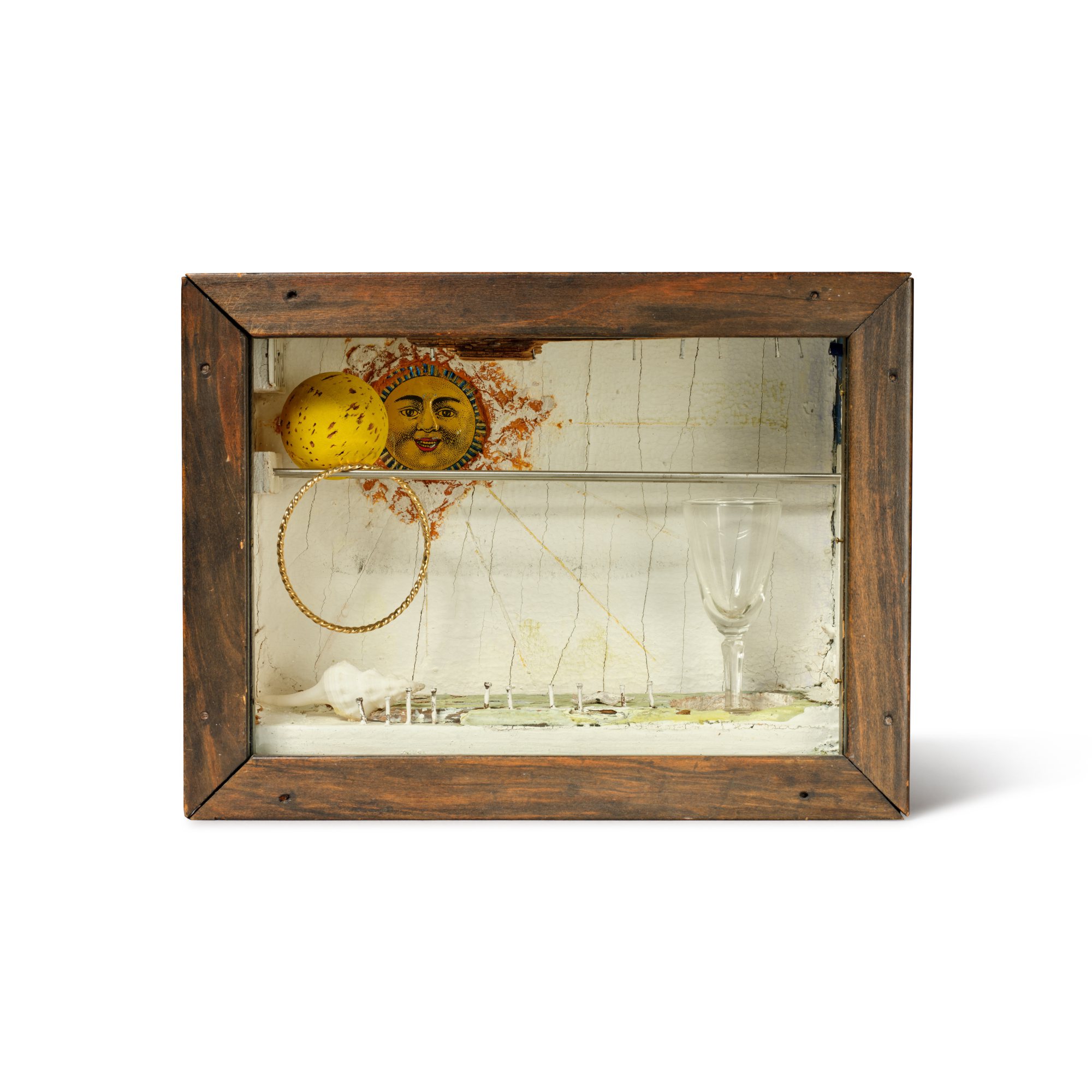
Joseph Cornell
The View at Ostend, 1954
His output was substantial and varied across medium and scale, ranging from major box constructions to intimate collages to dossiers of found material he called his explorations or dossiers. The box constructions tend to command the highest prices at auction, with important examples having sold for well over one million dollars at major auction houses in recent years. Collages and works on paper offer a more accessible point of entry while retaining the full measure of Cornell's poetic intelligence. Works dedicated or inscribed to specific individuals, such as the Die Weisse Frau from 1952, dedicated in Cornell's distinctive handwriting, or the Susan dedication on the 1970 conch shell piece in The Collection, carry particular biographical resonance and have historically attracted strong collector interest.
The material specificity of Cornell's objects rewards close, patient looking, and works that preserve their original glass, frames, and internal arrangements in good condition are especially desirable.", "Cornell occupies a singular position in the history of twentieth century American art, sitting at the intersection of several major currents without being reducible to any single one. He anticipated the Combines of Robert Rauschenberg and the accumulation aesthetics of later artists such as Ed Kienholz and Lucas Samaras. His influence on the Pictures Generation, on the poetic installations of Ann Hamilton, and on countless artists working today in collage and assemblage is difficult to overstate.
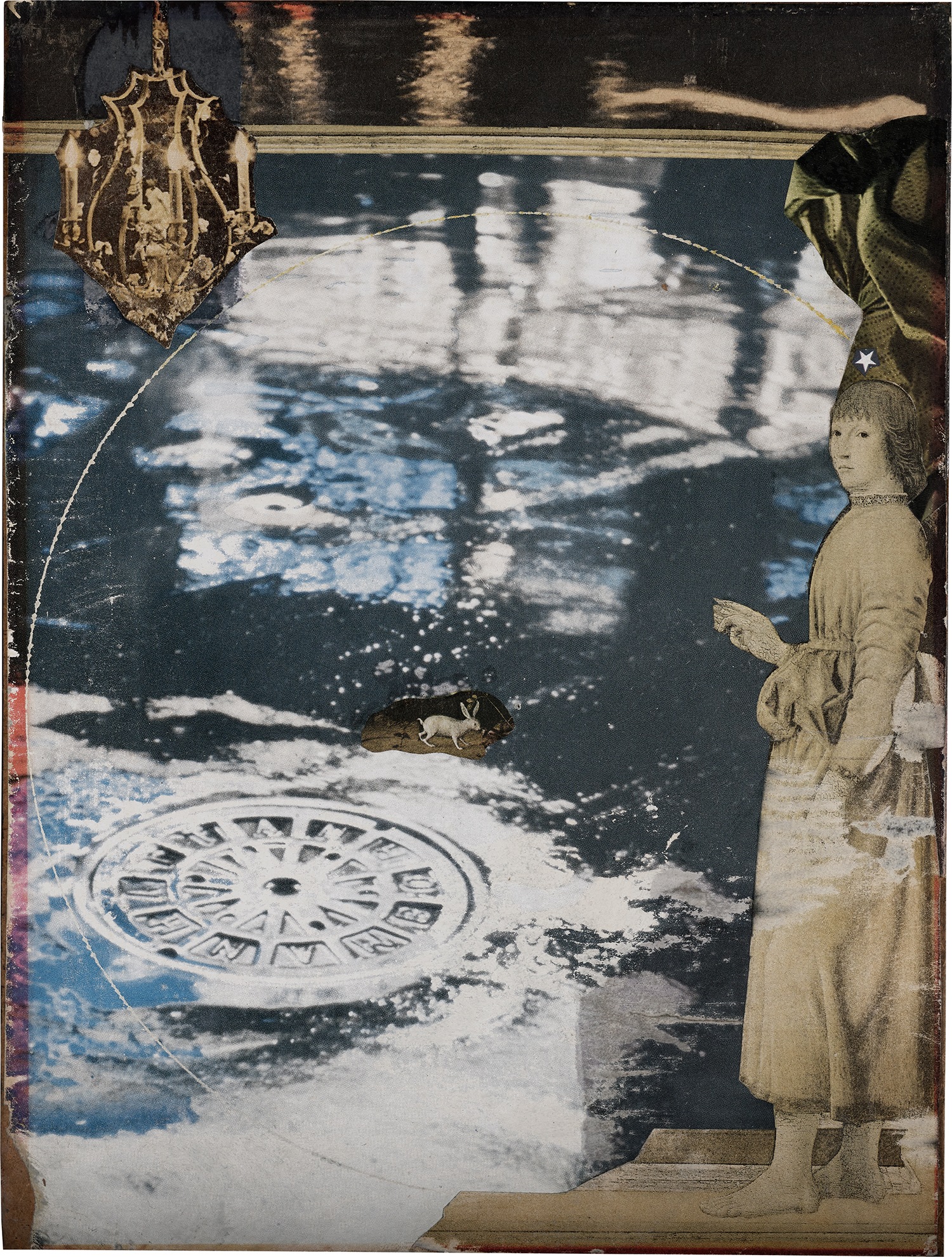
Joseph Cornell
Missing Girl, 1962
He was admired by figures as different as Marcel Duchamp, who recognized a kindred spirit in Cornell's transformation of the readymade, and Mark Rothko, who saw in the boxes a quality of sustained contemplation that resonated with his own painterly aims. Compared to his contemporaries in American abstraction, Cornell seems almost perversely quiet and personal, yet that quality is precisely what gives his work its enduring hold on the imagination.", "The legacy of Joseph Cornell rests on something that statistical measures of influence can never fully capture: the feeling his work produces in those who give it real attention. His boxes and collages insist that the overlooked, the discarded, the small, and the personal carry within them the full weight of human longing and the full span of human curiosity.
In an art world that often prizes spectacle and scale, Cornell's work is a standing argument for intimacy and patience. He died in Flushing in 1972, just a day after his brother Robert, in the same modest house where he had spent his working life, surrounded by the card files and clippings and accumulated material of his extraordinary inner world. That world, transferred into the boxes and collages that now inhabit the collections of the Museum of Modern Art, the Smithsonian American Art Museum, and distinguished private collections around the globe, continues to offer viewers the rarest of gifts: the sense that someone has been paying very close and loving attention to the world, and has found it beautiful beyond measure." , "quotes": [ { "quote": "I am just a learner, ever hopeful and searching for the beautiful.
", "source": "Joseph Cornell, personal diary" }, { "quote": "What a wonderful thing it is to be alive and to have had such dreams.
Explore books about Joseph Cornell

Joseph Cornell: Master of Dreams
Debra Bricker Balken

Joseph Cornell and Astronomy: A Case for the Stars
Lynda Roscoe Hartigan
Joseph Cornell: Shadowplay
Charlotta Kotik
Joseph Cornell's Theater of the Mind
Diane Waldman
Joseph Cornell: Gifts of Surrealism
Peter Reed
Joseph Cornell: The Exploration of Objects
Kynaston McShine
Joseph Cornell and the Ballet
Jennifer Homans
Surrealism and the Sacred: Art and Artists
Gloria Orenstein