José Parlá
José Parlá Writes the City Into Being
Artist Spotlight · The Collection Editorial
“I want my paintings to look like walls that have lived, that have been written on and erased and written on again.”
José Parlá, Studio Interview
In 2015, when One World Trade Center opened its doors to the public, one of the most arresting presences inside the tower was not a piece of conventional gallery art but a sweeping, room sized mural by José Parlá. Titled "Inspire," the work wrapped across 30 feet of wall space in the lobby of Two World Trade Center and announced Parlá as one of the defining public artists of his generation. The commission was a statement of cultural intent: that the rebuilding of Lower Manhattan deserved a voice rooted in the living, breathing texture of New York itself. Parlá delivered exactly that, layering gesture, memory, and the visual language of the street into something that felt both monumental and deeply intimate.
José Parlá
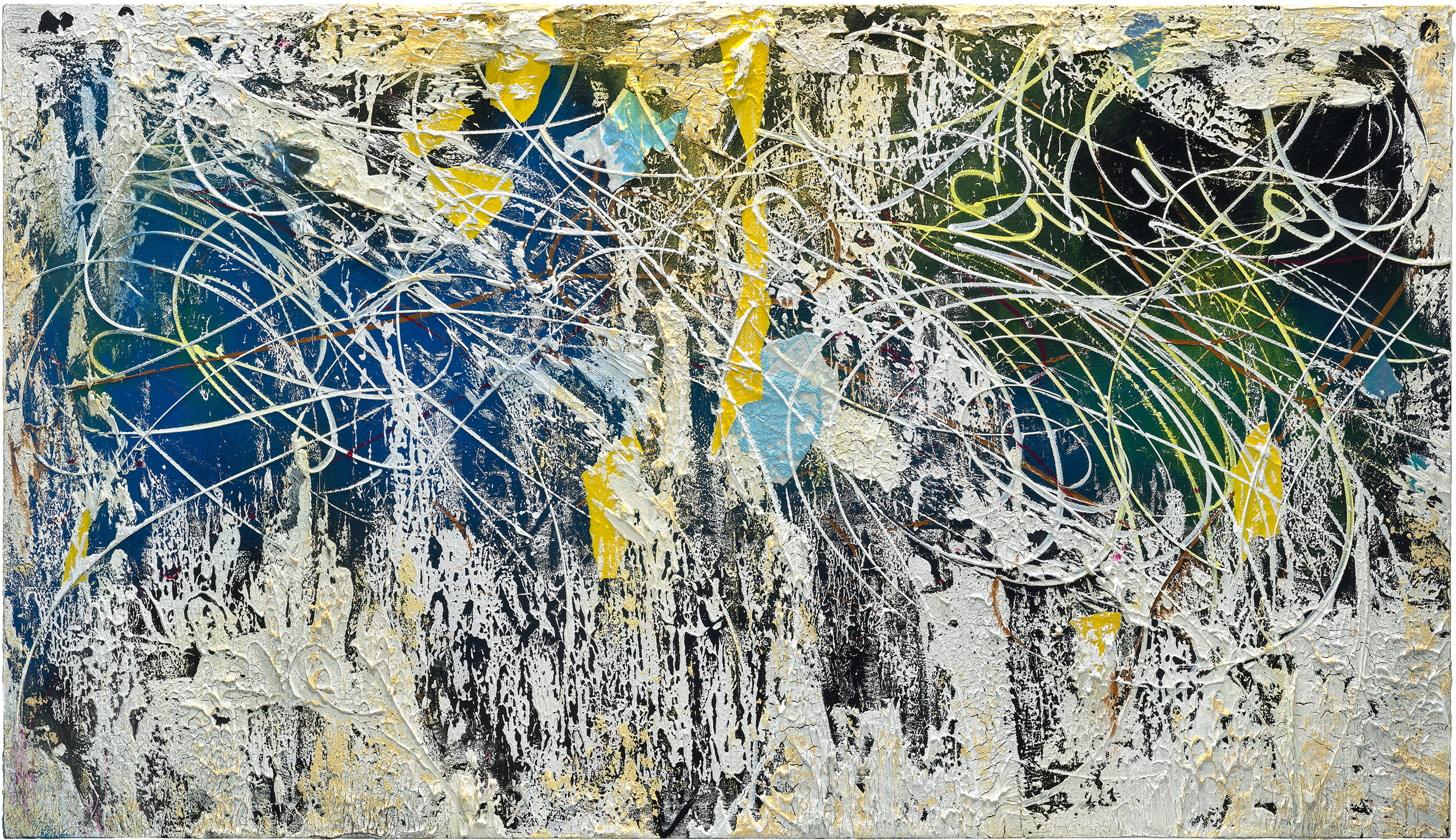
Will The Future Continue To Speed Up?, 2021
Parlá was born in Miami in 1973 to Cuban parents, and that dual inheritance, of the Caribbean and of America, runs through everything he makes. Growing up in Miami in the late 1970s and early 1980s, he came of age during the first great flowering of hip hop culture, a moment when writing on walls was simultaneously an act of rebellion, community, and artistic ambition. He began writing graffiti as a teenager, drawn not just to the adrenaline of the act but to the philosophical questions it raised about language, time, and who gets to mark public space. This was not vandalism for its own sake but a form of urgent communication, and Parlá absorbed its lessons deeply.
He would go on to study at institutions including the Savannah College of Art and Design and the New World School of the Arts in Miami, bringing formal training into conversation with the raw, vernacular education of the street. The evolution of Parlá's practice over the following decades is a story of remarkable refinement. He moved from the walls of Miami and New York to the canvas, but he never left the street behind. Instead, he began to treat the canvas itself as a kind of urban surface, building up layers of plaster, collage, enamel, acrylic, and ink to recreate the palimpsest quality of a city wall that has been written on, painted over, weathered, and written on again.
José Parlá
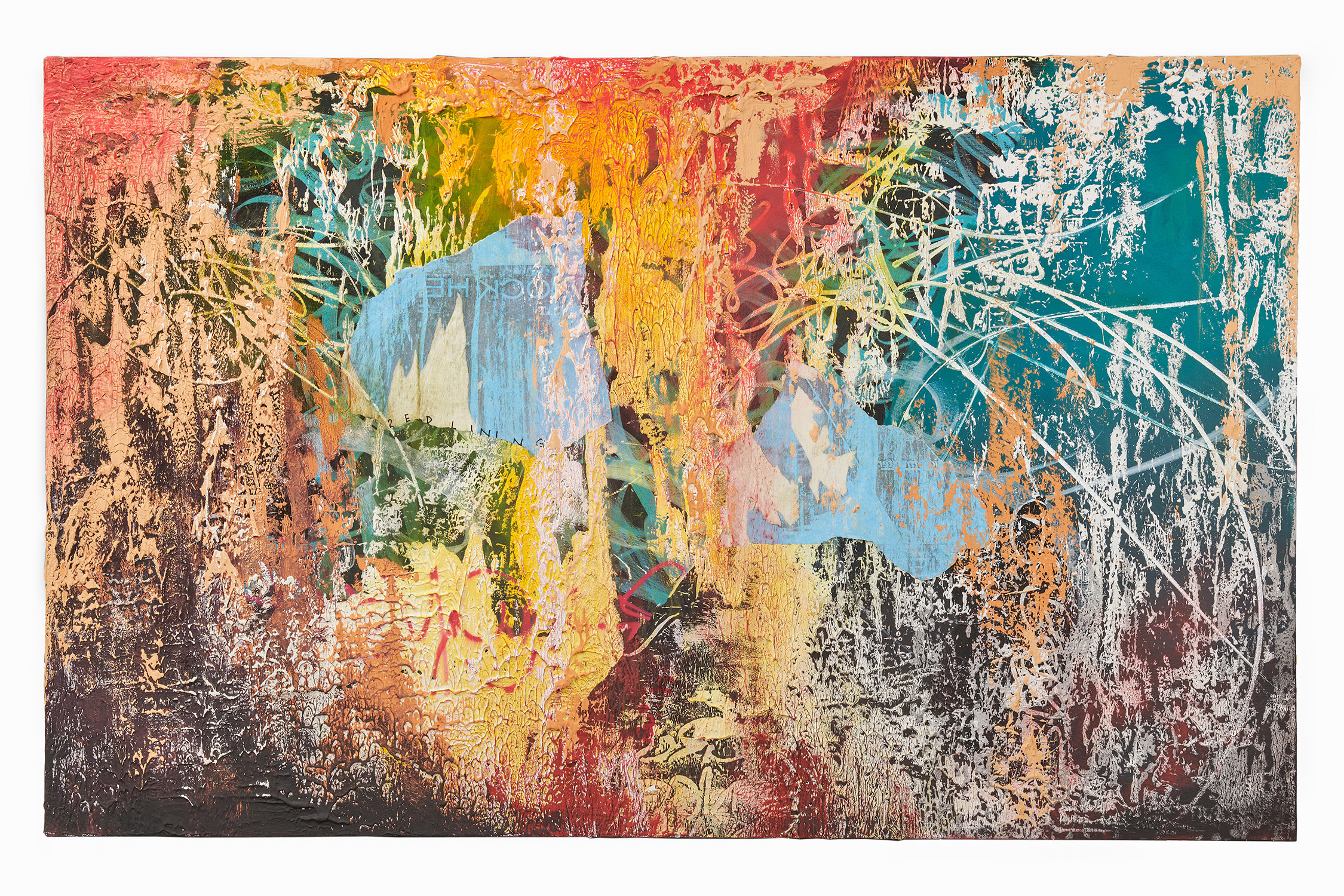
Writers' Bench: Grand Concourse & 149th Street, The Bronx, 2020
He studied the history of calligraphy with genuine scholarly seriousness, looking to Arabic, East Asian, and Western traditions, finding in each a way of understanding how marks carry meaning across time. Abstract expressionism gave him a framework for the gestural and the emotional, while his street roots kept him honest about the social and political dimensions of mark making. The result is a body of work that is intellectually rich without ever becoming cold. The works available through The Collection offer a compelling cross section of where this practice has taken Parlá.
"Writers' Bench: Grand Concourse and 149th Street, The Bronx" from 2020 is an act of homage and elegy simultaneously, a painting that invokes one of the most storied gathering places in the history of New York graffiti culture. The work does not document the bench so much as it channels its spirit, the accumulated energy of countless artists who passed through that corner. "Will The Future Continue To Speed Up?" from 2021 brings Parlá's layered vocabulary into dialogue with questions of temporality and anxiety that feel urgently contemporary.
José Parlá
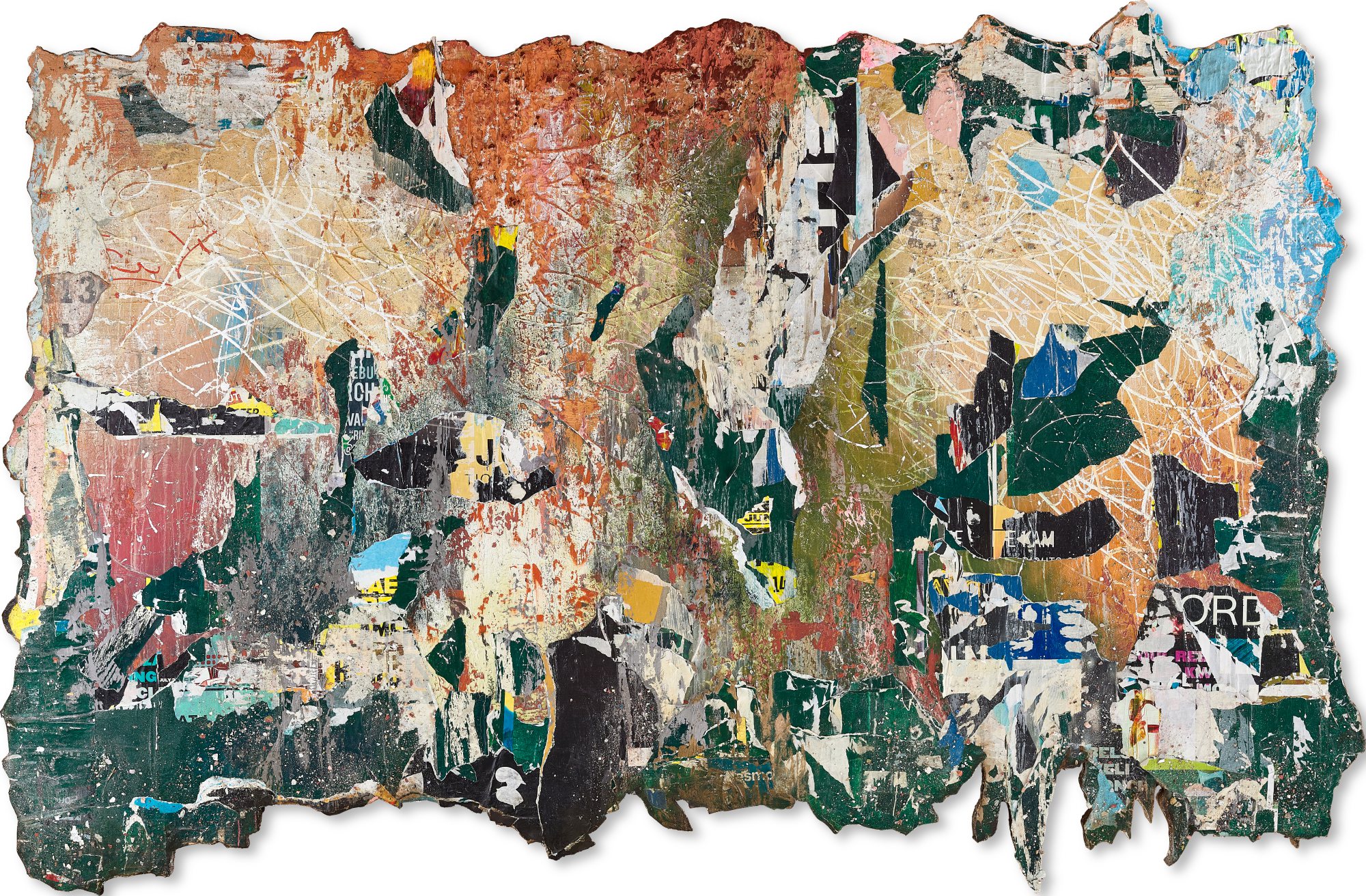
Anonymous Vernacular 匿名方言, 2019
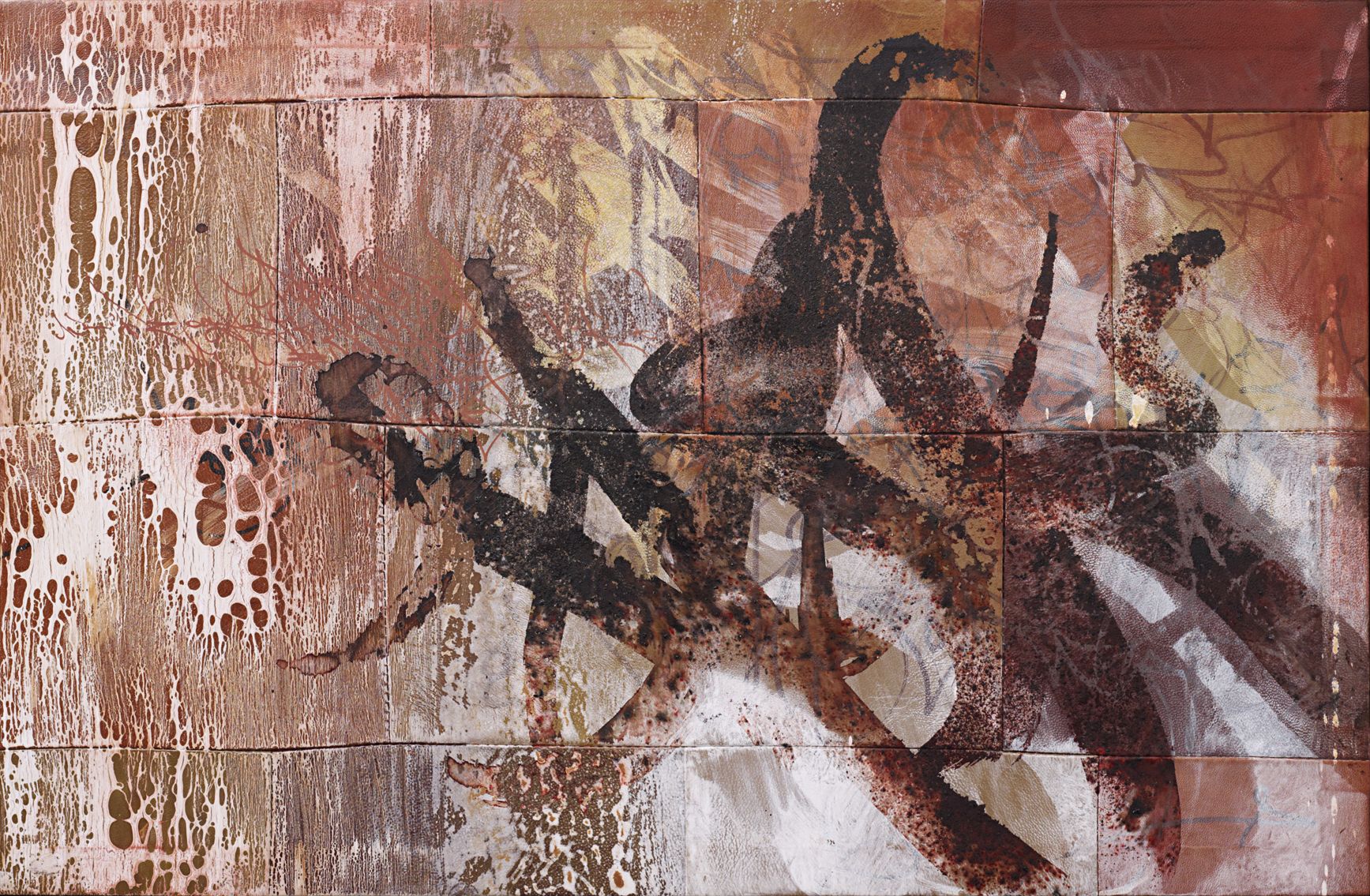
The title alone reads like a found poem, the kind of question a city wall might pose. "Anonymous Vernacular" from 2019, which incorporates oil paint, acrylic, collage, and plaster on canvas and wood, extends Parlá's ongoing conversation across cultures, its bilingual title pointing toward his belief that the marks humans leave behind constitute a universal language that transcends borders and eras. For collectors, Parlá's work presents a genuinely exciting proposition. He operates at a scale and level of institutional recognition that places him firmly in the upper tier of his generation, yet his work retains an accessibility and warmth that more conceptually austere artists sometimes lack.
His paintings reward prolonged looking: the more time you spend with a Parlá canvas, the more layers reveal themselves, both literally and figuratively. Works on paper, such as "Gestures Recaptured in Time" in watercolour and pencil, or "Exercise in Calligraphy II" in graphite, acrylic, and watercolour, offer a different but equally compelling window into his practice. They show the intimacy and immediacy of his mark making at its most direct, without the accumulated surface weight of his larger mixed media canvases. For collectors building a coherent picture of Parlá's range, works across both formats are worth considering seriously.
José Parlá
Ask
Contextually, Parlá belongs to a distinguished lineage that connects the energy of the New York School with the legacy of artists who have treated language and the street as primary materials. One thinks of Jean Michel Basquiat, whose career similarly traced a path from the walls of New York to the walls of major museums, and of Cy Twombly, whose gestural engagement with text and mark making opened up a space that Parlá has inhabited and expanded in his own terms. There are also meaningful resonances with the work of Retna, another artist who has forged a personal visual language from calligraphic traditions, and with contemporaries such as Os Gemeos, who have brought street culture's ambition and scale into sustained dialogue with the fine art world. Parlá occupies a distinct and singular position within this constellation, his Cuban American biography and his scholarly engagement with global calligraphic traditions giving his work a cultural specificity that sets it apart.
What Parlá ultimately offers is something that the art world genuinely needs: a practice that holds together the personal and the political, the local and the universal, the ancient and the urgently now. His walls and canvases are acts of remembrance as much as they are acts of creation, arguments that the marks left by ordinary people in ordinary places are as worthy of attention and preservation as anything in a museum. At a moment when questions of whose stories get told and whose histories get memorialized feel more pressing than ever, Parlá's insistence on the dignity of the vernacular and the written feels not just aesthetically rewarding but morally necessary. His reputation, already substantial, continues to grow, and the collectors who have recognized his importance early will find themselves on the right side of history.
Explore books about José Parlá