Jong Oh
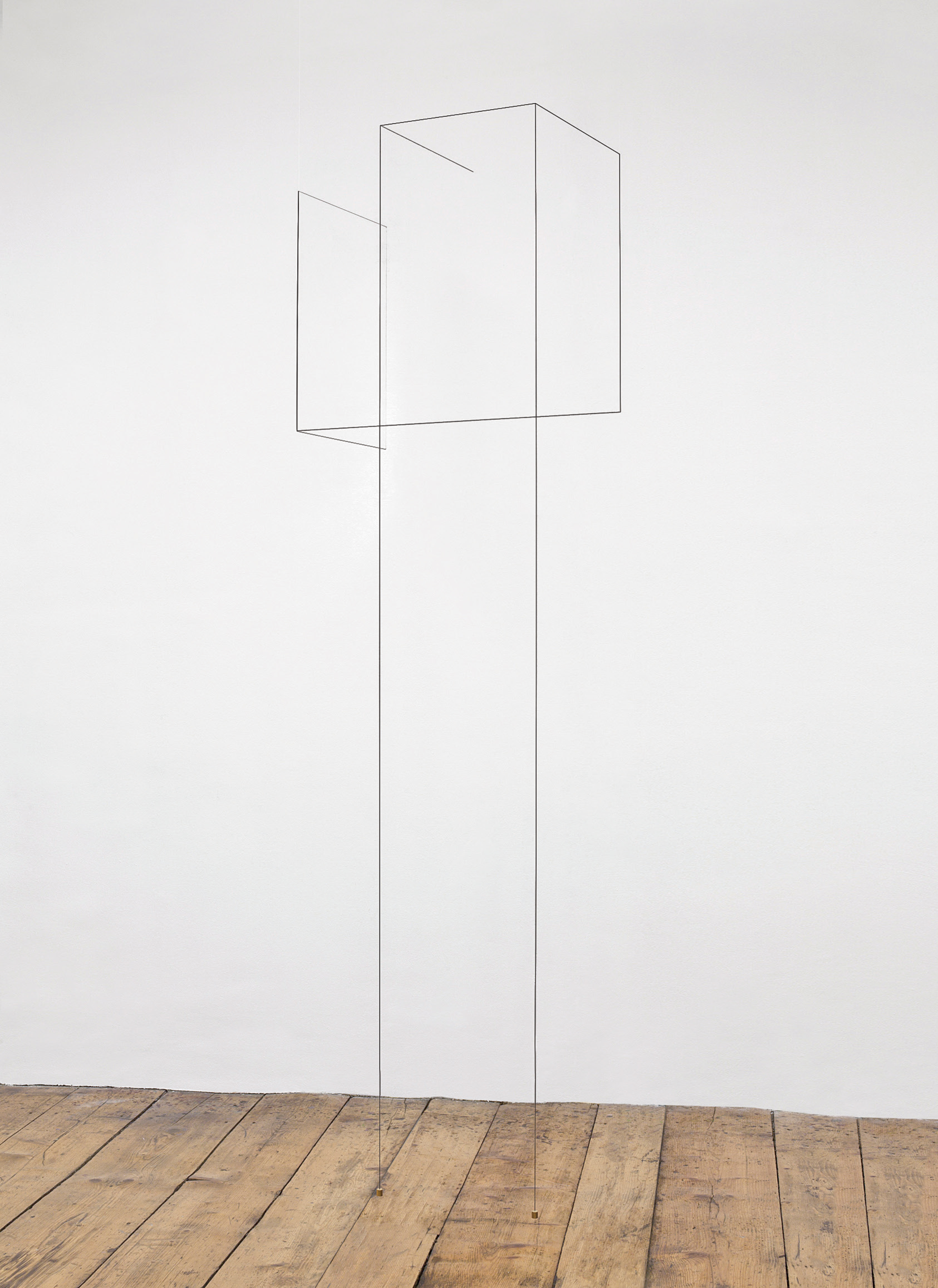
Jong Oh Draws Beauty From Empty Air
Artist Spotlight · The Collection Editorial
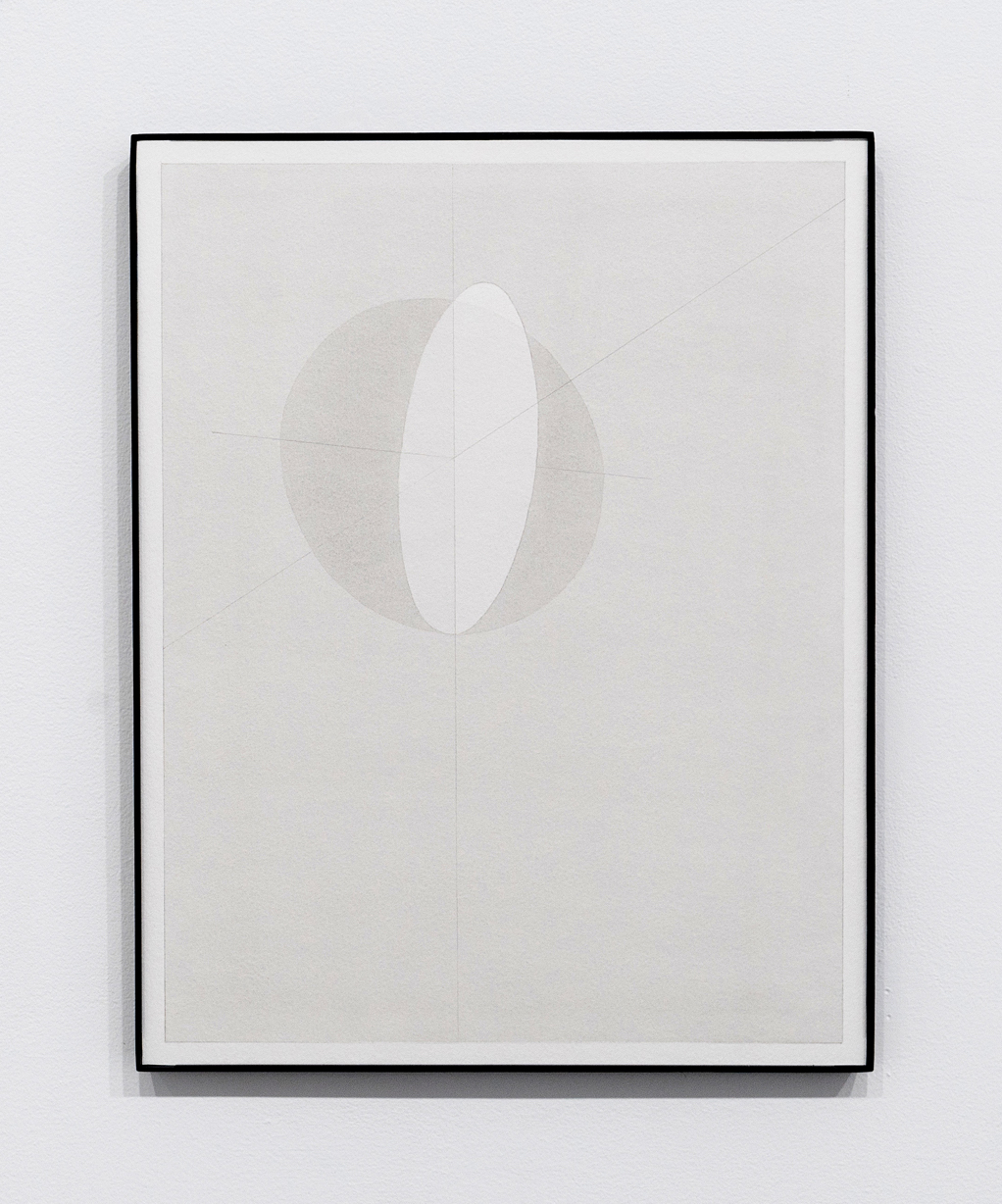
There is a particular kind of stillness that settles over a room when Jong Oh has been at work in it. Visitors to his installations often describe the sensation of walking into a space and feeling, almost before they can articulate why, that something has fundamentally shifted in the atmosphere. In recent years, his reputation for this quality of transformative quiet has spread well beyond the New York art world that first embraced him, earning him solo presentations at galleries and institutions across Europe and Asia. His 2021 watercolor series, represented in part by the work Doosan #14, signaled a meaningful expansion of his practice into two dimensions, confirming that his sensitivity to line and space is not limited to the sculptural and the site specific, but is instead a comprehensive artistic language.
Jong Oh
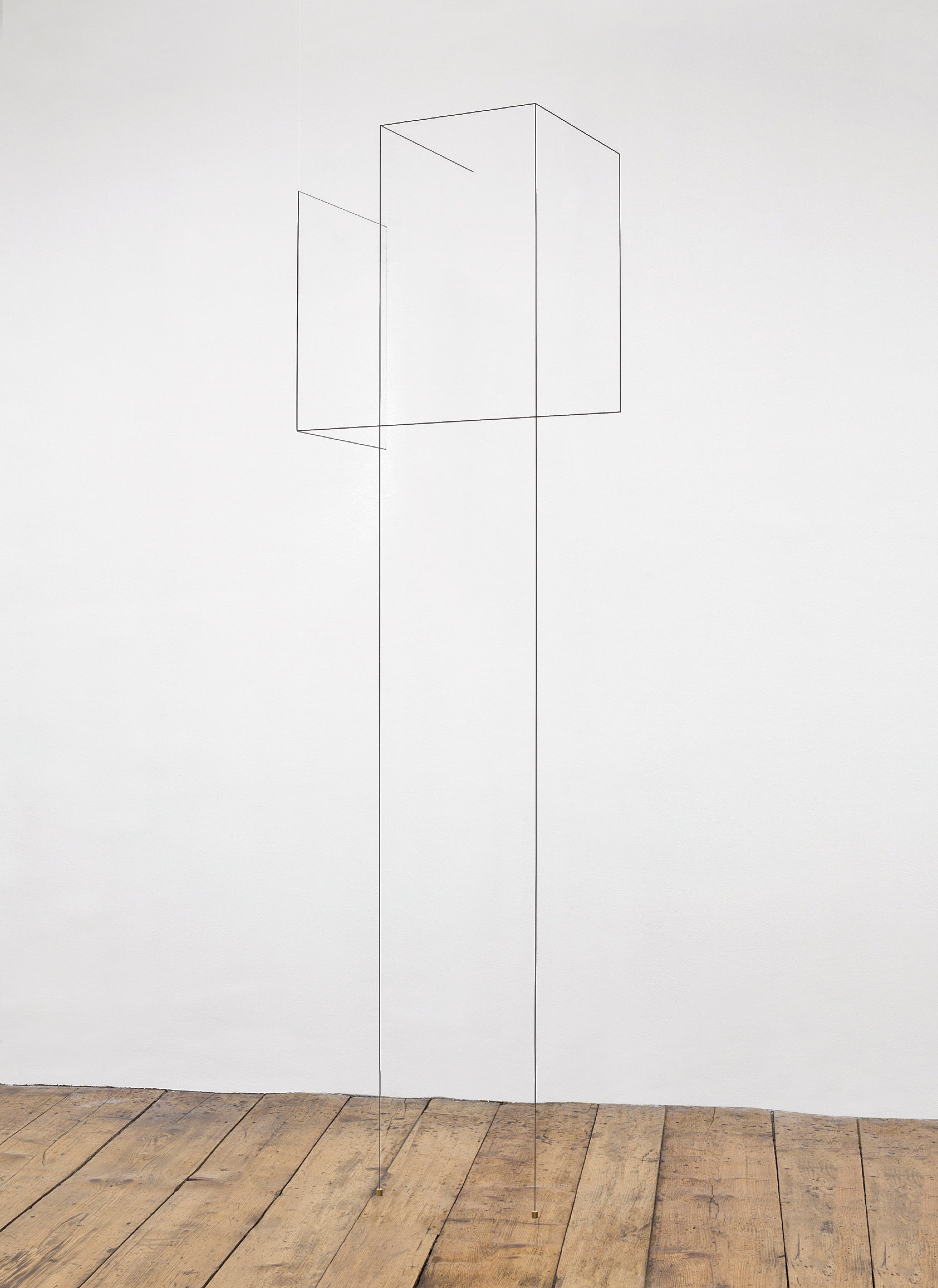
Koko, 2016
Jong Oh was born in Korea in 1981, and it is tempting, though perhaps too easy, to locate the origins of his practice in the traditions of Korean minimalism and the meditative discipline associated with artists of the Dansaekhwa movement. What seems more accurate is to say that Oh arrived in New York carrying an openness to both those traditions and the rigorous spatial investigations of Western post minimalism, and that his practice emerged precisely at the intersection of those sensibilities. The city itself became a kind of education. Its vertical geometries, its play of light through grid windows, and the raw architecture of its studio and exhibition spaces gave him the raw material against which his aesthetic instincts could sharpen and clarify.
Oh's development as an artist has been defined by a commitment to reduction that never tips into austerity. Working with materials that most artists would consider supporting players rather than protagonists, he has elevated thread, fishing line, wire, and small suspended geometric objects into the primary vocabulary of a fully realized practice. The process is painstaking in a way that resists easy documentation. Each installation must be built within the specific room it inhabits, calibrated to that room's particular proportions, light sources, and architectural character.
Jong Oh
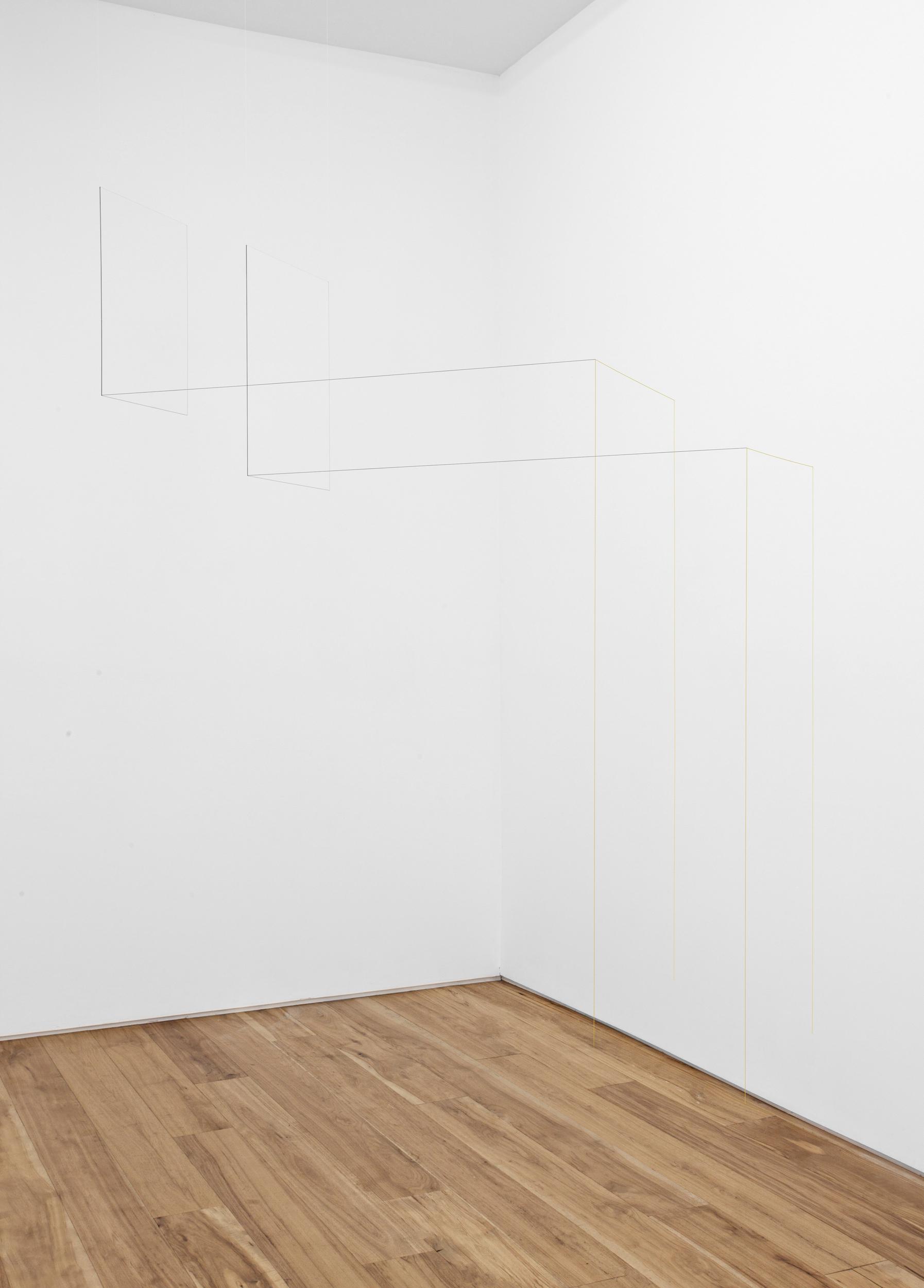
Silver Lace, 2013
When the exhibition closes, the work ceases to exist in its original form. This acceptance of impermanence is not a gesture of avant garde provocation but rather a genuine philosophical position, one that places Jong Oh in a lineage of artists for whom the event of the work matters more than its survival as object. Among the works that have defined his reputation, Koko from 2016 stands as a particularly eloquent example of what he is capable of. The piece exemplifies his ability to create what critics and curators have come to call three dimensional drawings, constructions in which fishing line and small colored elements are arranged in space so precisely that they read, from certain angles, as flat geometric compositions hovering in the air.
Silver Lace, dating to 2013, is an earlier work that already demonstrates the full maturity of this approach, its delicate metallic threads catching available light and dissolving the boundary between sculpture and drawing with remarkable assurance. Jacamatraca, completed in 2018, extended his formal concerns with a lyrical complexity that suggested an artist not content to refine a single formula but genuinely curious about where the logic of his practice might lead. For collectors, Oh's work presents a compelling and in some respects unusual proposition. The site specific installations are by their nature unrepeatable, and acquiring one means entering into a close dialogue with the artist about how it might be re realized in a new context.
Jong Oh
Doosan #14, 2021
This relationship between artist, work, and collector is itself part of the value. His works on paper and in watercolor, such as the Doosan series, offer a more conventional point of entry while sharing fully in the visual intelligence of the installations. The market for his work has grown steadily as institutional validation has accumulated, and early collectors who recognized his potential have found themselves holding works whose cultural significance has only deepened with time. For those approaching his practice for the first time, the watercolors represent an accessible and genuinely beautiful introduction to a body of work that rewards sustained attention.
To understand Jong Oh's position within contemporary art, it helps to think about the tradition of spatial investigation that runs from Fred Sandback's yarn installations through the thread based works of Monika Sosnowska and the architectural interventions of Tomas Saraceno. Oh shares with these artists a conviction that empty space is not a neutral background but an active material, something that can be shaped, measured, and made expressive. He is also in conversation with the legacy of drawing itself, particularly the expanded idea of drawing that artists like Sol LeWitt pursued when they began to treat line as something that could exist in three dimensions and at architectural scale. What distinguishes Oh within this context is a quality of intimacy and restraint that feels distinctly his own.
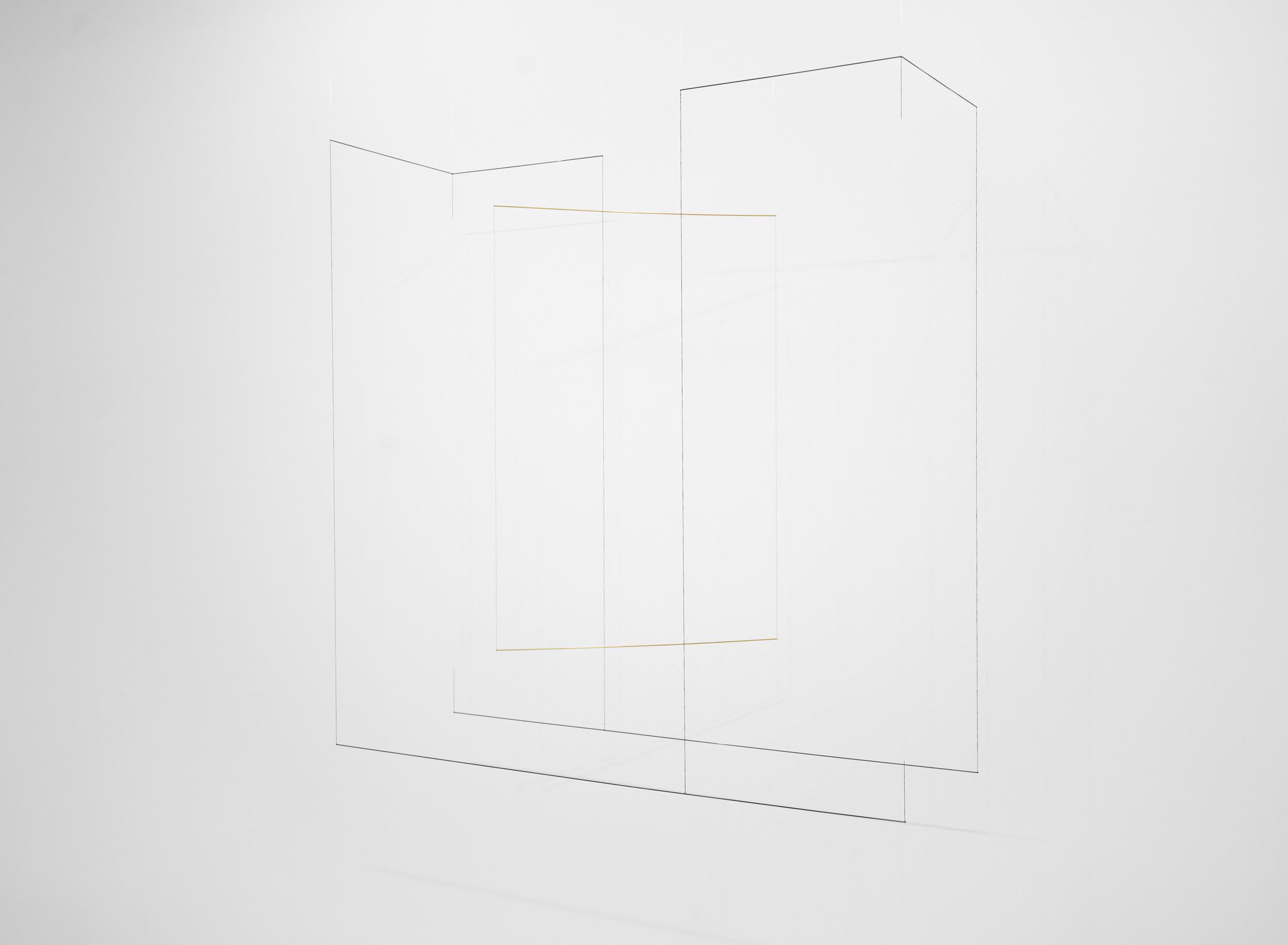
Jong Oh
Jacamatraca, 2018
His works do not fill a room with spectacle; they invite the viewer to slow down and perceive what was always already there. The question of legacy is one that feels almost premature to raise about an artist still in the full flow of his practice, and yet it is worth acknowledging how substantially Jong Oh has contributed to an understanding of what sculpture can be in the early twenty first century. At a moment when the art world often rewards the monumental, the technologically elaborate, and the emphatically material, his commitment to the minimal, the handmade, and the ephemeral carries a quiet argumentative force. He demonstrates, work by work and installation by installation, that beauty does not require mass or permanence, that a length of thread suspended at precisely the right angle in precisely the right light can do everything that art has ever been asked to do.
That is a genuinely remarkable thing, and the collectors and institutions who have recognized it early are on the right side of history.