Jonathan Monk
Jonathan Monk Makes Conceptual Art Wonderfully Personal
Artist Spotlight · The Collection Editorial
There is a particular kind of pleasure that comes from standing before a work by Jonathan Monk and recognising, with a slow smile, exactly what he has done. His practice operates in that charged space between homage and subversion, between the monumental seriousness of Conceptual art's founding gestures and the quietly comic reality of a human life lived alongside them. In recent years, institutions across Europe have continued to affirm his place as one of the most consistently inventive artists working in the lineage of Conceptualism today, with exhibitions at Lisson Gallery in London and continuing representation through Casey Kaplan in New York keeping his work in the conversations that matter most to serious collectors and curators alike. Monk was born in Leicester, England, in 1969, a city whose particular brand of post industrial English ordinariness would prove formative in ways that feel almost too apt in retrospect.
Jonathan Monk
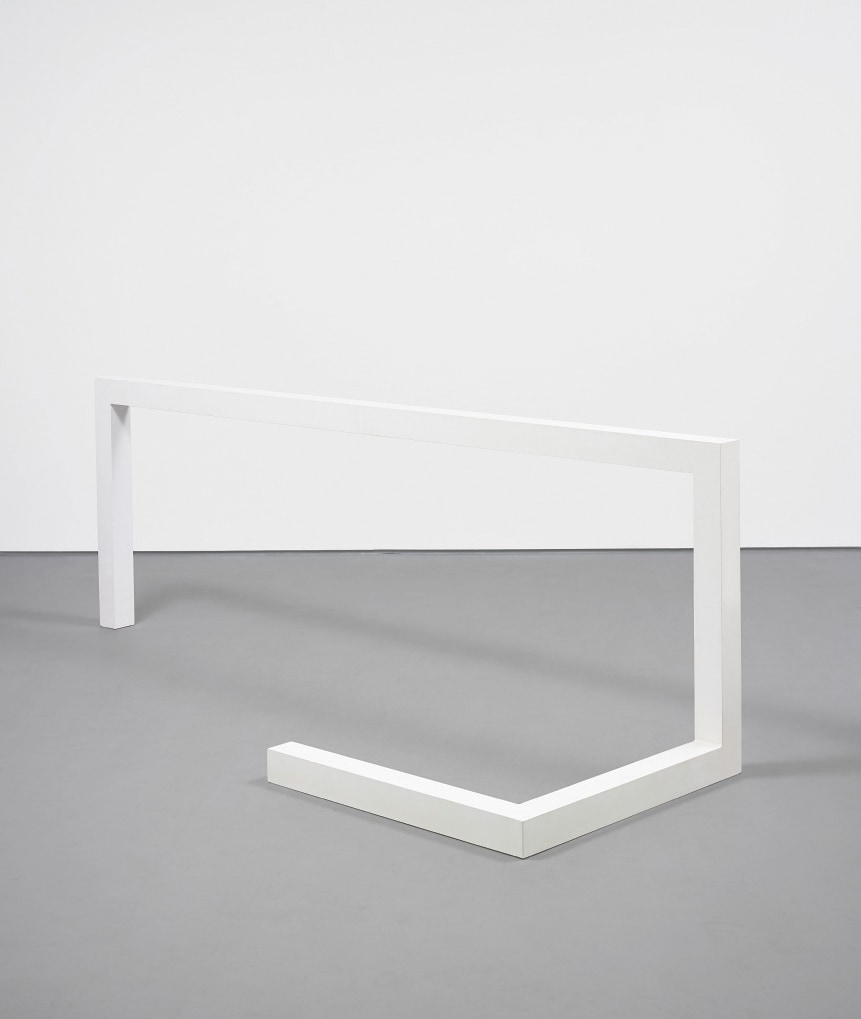
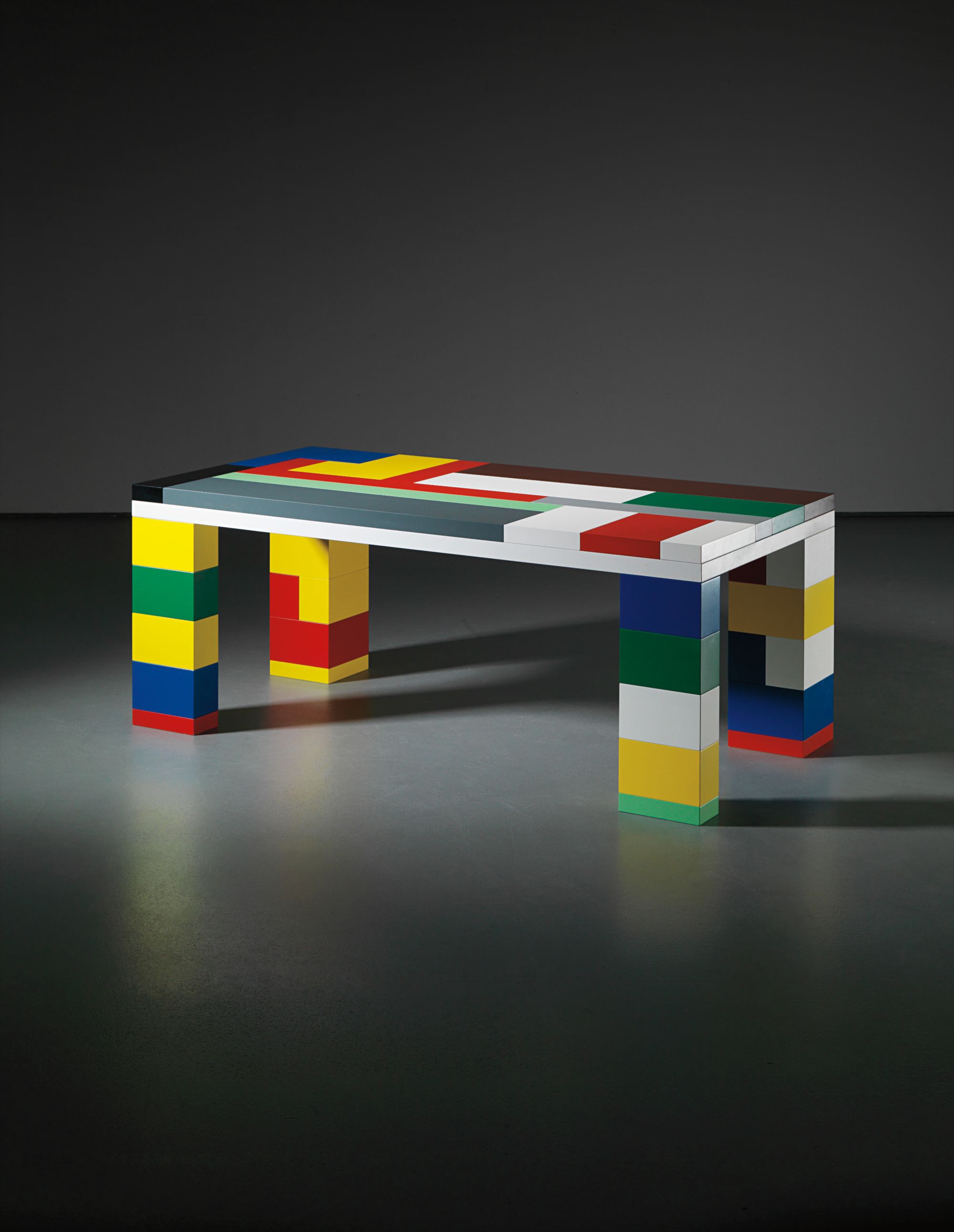
Altered to Suit (Sol LeWitt Incomplete Open Cube 5/9, 1974), 2004
He studied at the Glasgow School of Art in the late 1980s and early 1990s, a time and place of extraordinary creative ferment that produced a generation of artists who would reshape British and international contemporary art. The influence of that Glasgow milieu, with its commitment to ideas, its irreverence, and its communal intellectual energy, runs through everything Monk would go on to make. He later relocated to Berlin, where he has been based for many years, absorbing a European sensibility that sits in productive tension with his thoroughly British sense of absurdist wit. The foundation of Monk's practice is a deep and genuinely affectionate engagement with the canon of Conceptual and Minimalist art, the world of Sol LeWitt, Lawrence Weiner, Ed Ruscha, and Robert Barry.
Where a lesser artist might simply deconstruct or satirise these giants, Monk's approach is more generous and more interesting. He inserts the personal, the accidental, and the sentimental into their rigorous systems, asking what happens when a universal proposition meets a specific biography. The result is a body of work that feels at once art historically fluent and disarmingly human, capable of making you think about the nature of artistic authorship and then, almost immediately, making you laugh. Among his most celebrated bodies of work are his variations on Sol LeWitt's Incomplete Open Cube series, and the works available through The Collection give a particularly rich sense of this engagement.
Jonathan Monk
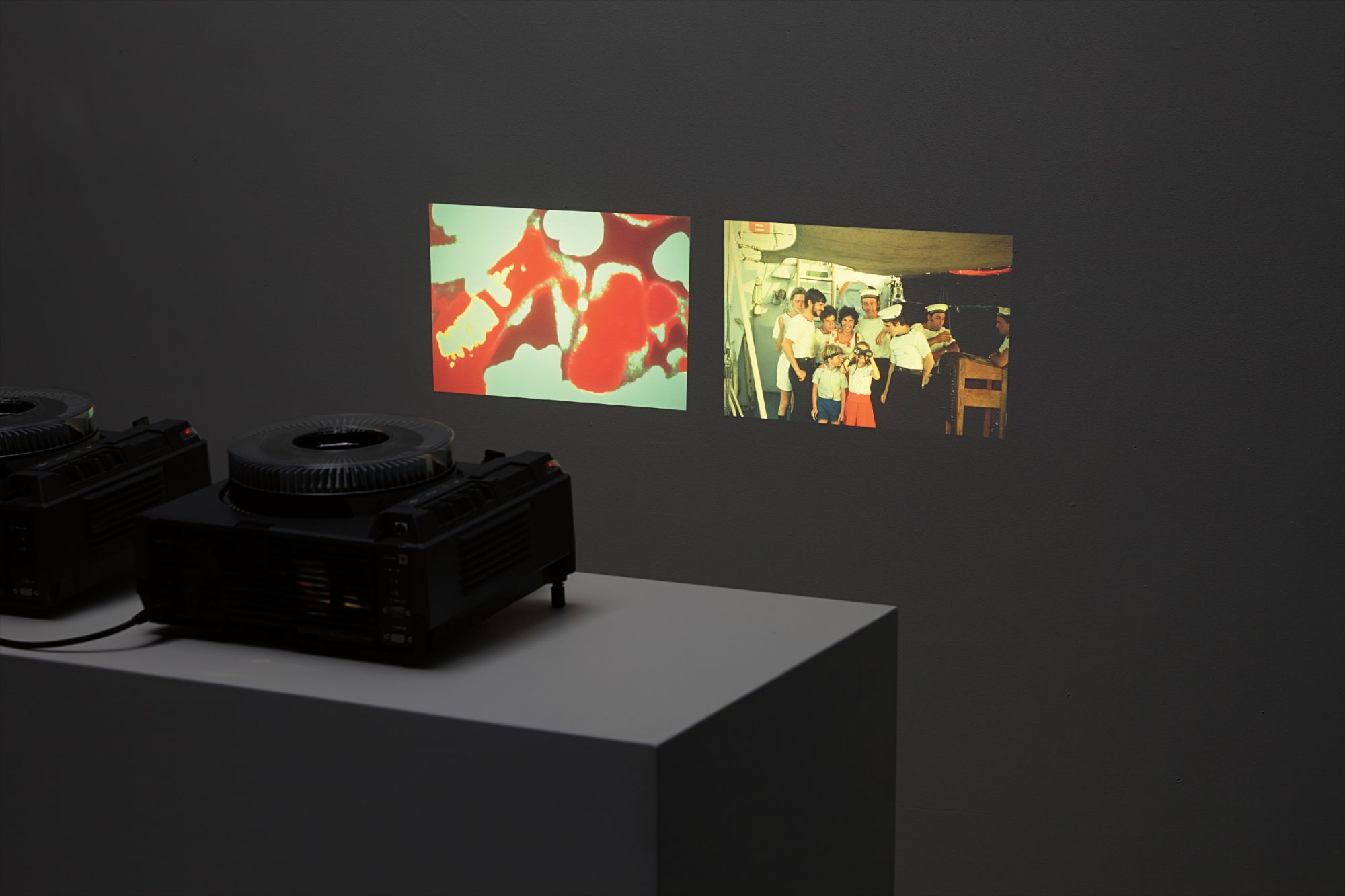
Searching For My Father In My Sister’s Eyes
His "Altered to Suit (Sol LeWitt Incomplete Open Cube 5/9, 1974)" from 2004, realised in coated aluminium, takes LeWitt's austere structural logic and subjects it to a gentle but decisive transformation, the alteration named in the title signalling that something personal and interventionist has occurred. Alongside it, "Complete Incomplete Open Cube (with inside resting on outside forever)" in painted and brushed aluminium, extends this dialogue further, its parenthetical subtitle introducing a poetic, almost paradoxical dimension that LeWitt's original system never quite allowed for. These works are not parody. They are conversation, and they are conducted with real intellectual warmth.
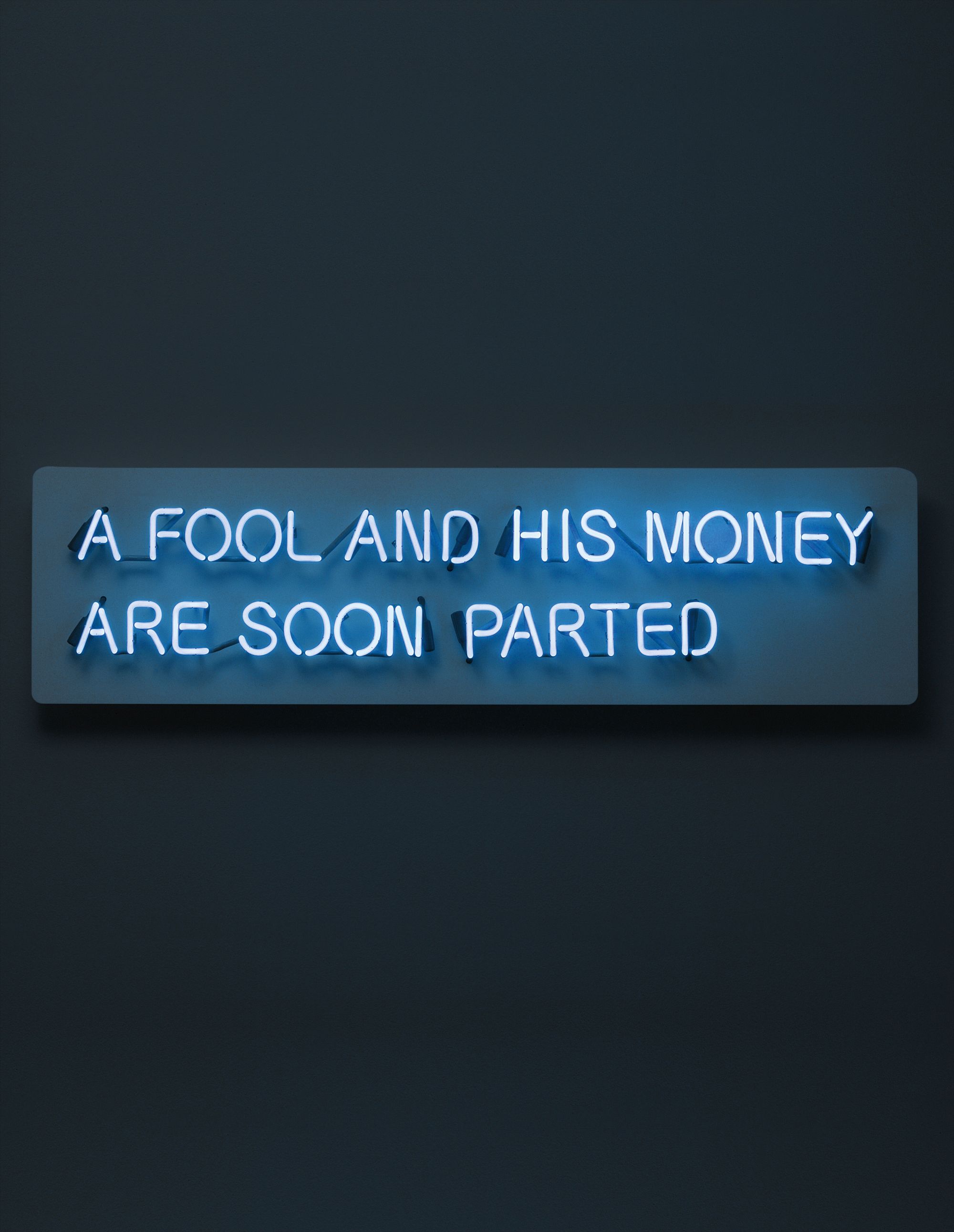
Text and language have always been central to Monk's practice, as they were for the Conceptualists he most admires. His neon works carry this tradition into something more autobiographical and more emotionally direct. "This work is number 2 from an edition of 2 plus 1 artist's proof," rendered in blue neon mounted on white acrylic, turns the dry bureaucratic language of the edition certificate into the artwork itself, a move that is simultaneously a joke about the commodity status of art, a meditation on originality and repetition, and a genuinely beautiful object. "One in ten in one (New York)" extends this interest in text and light into the territory of installation, where language becomes spatial and immersive.
Jonathan Monk
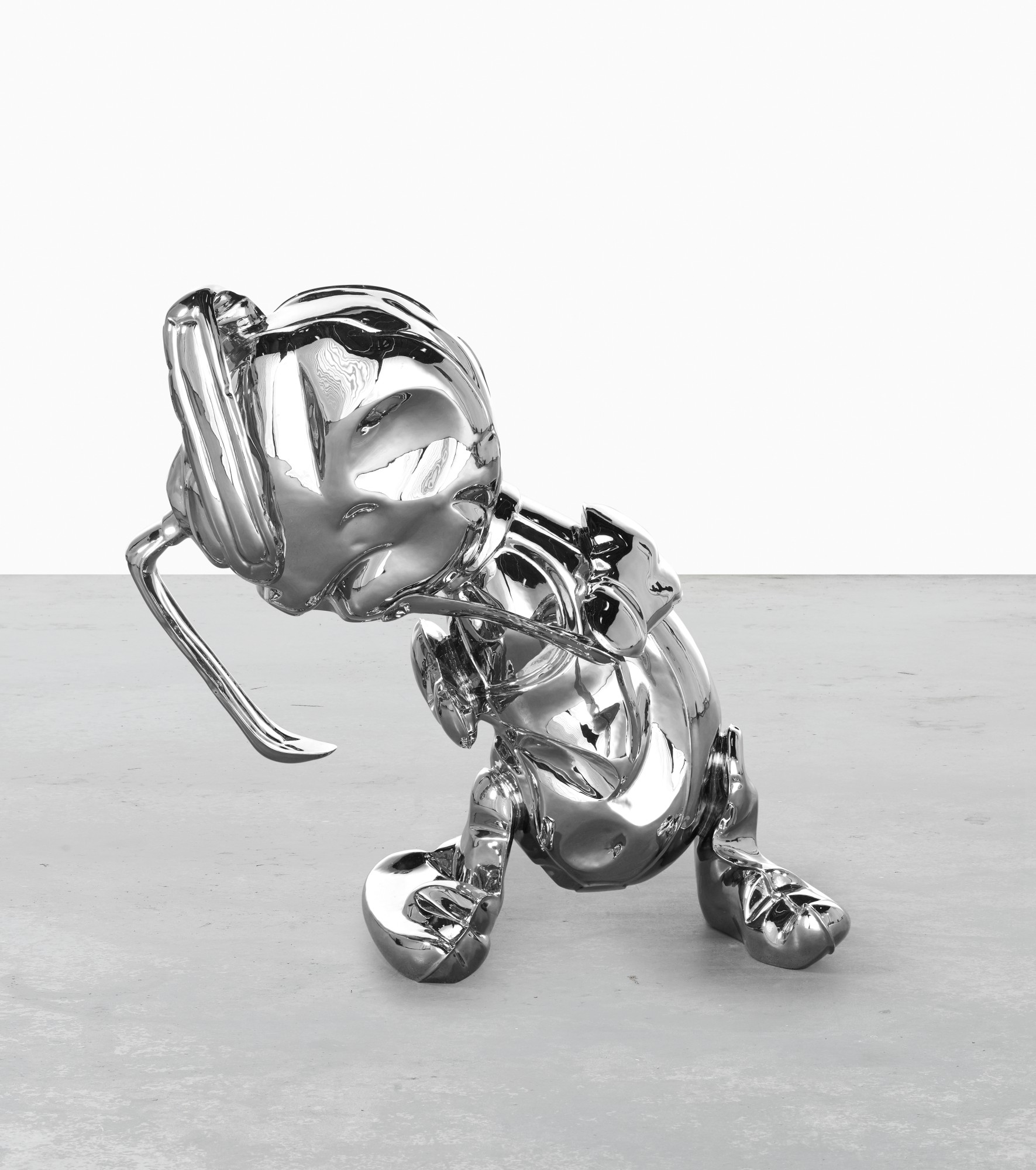
Deflated Sculpture No. II (Standing), 2009
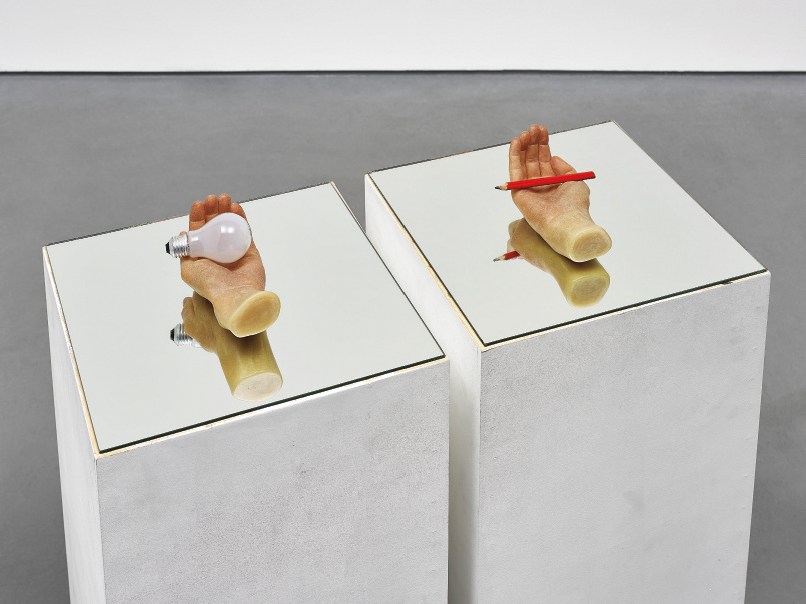
Ruscha's shadow is visible here, but filtered through Monk's characteristic willingness to make things slightly stranger and more personal than his sources would ever permit. The biographical dimension of Monk's work deepens considerably when one considers pieces such as "7 attempts at monoblue using my father's old water colors" and "Searching For My Father In My Sister's Eyes." These works introduce family, memory, and the specific textures of personal history into a practice that might otherwise seem primarily art historical in its orientation. There is something genuinely moving about the way Monk holds these two registers together, the formal and the intimate, without allowing either to overwhelm the other.
"Near Death Experienced (after Jack Goldstein after Chris Burden after)," an oil on canvas presented in a Plexiglas frame, similarly layers art historical reference with something rawer and more urgent, the chain of attributions in the title performing a kind of genealogical thinking about influence and experience simultaneously. For collectors, Monk's work represents an exceptionally coherent and intellectually rewarding proposition. His practice spans sculpture, neon, painting, photography, and installation, offering entry points at various scales and price levels, yet the conceptual integrity of the whole remains remarkably consistent. Works that engage directly with the LeWitt cube series occupy a particularly strong position, both because of the clarity of the art historical argument they make and because of the sustained critical attention they have received.
Jonathan Monk
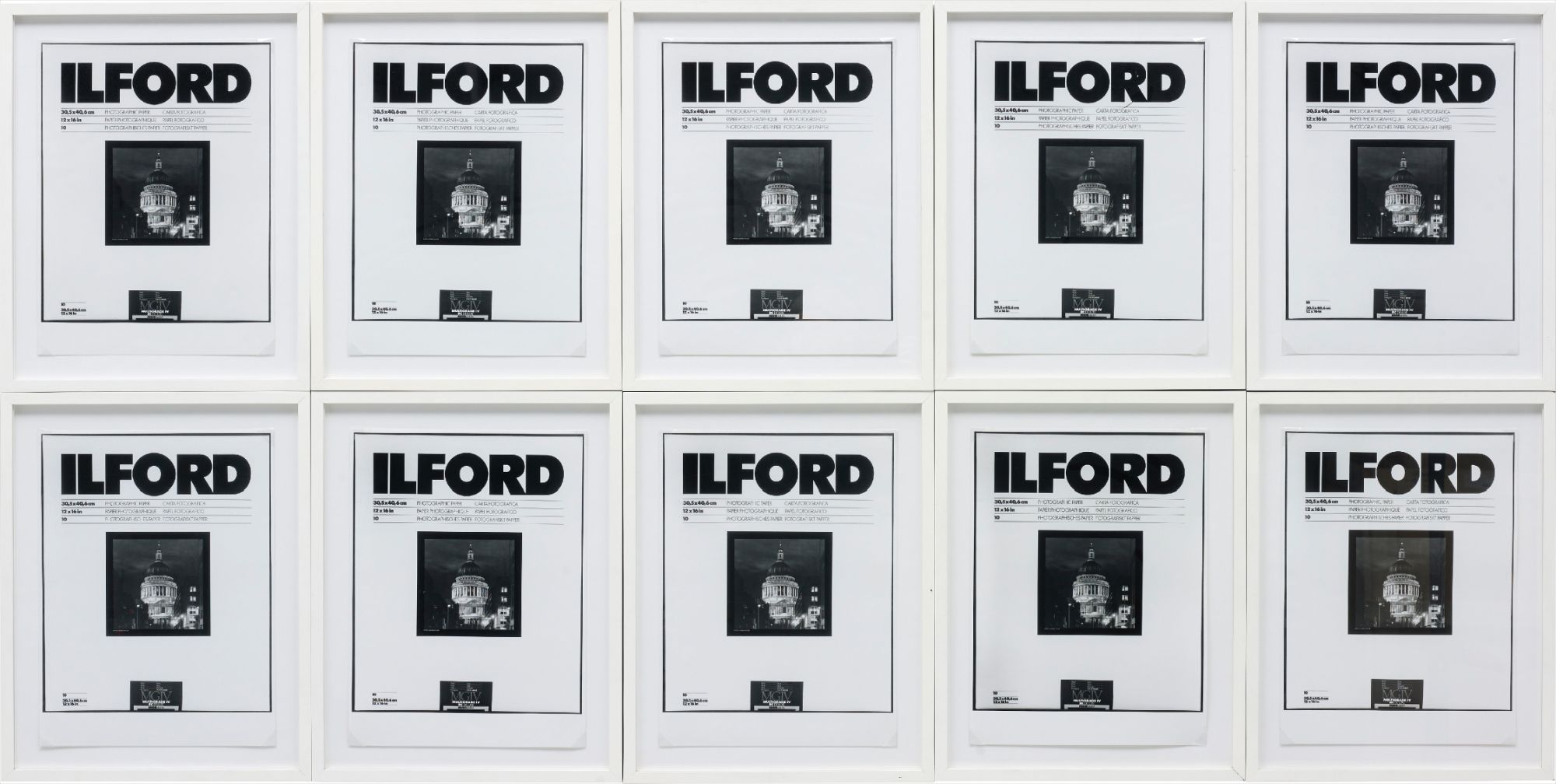
One in ten in one (New York)
Collectors drawn to artists such as Cerith Wyn Evans, Liam Gillick, and Simon Patterson will find in Monk a kindred sensibility, one that takes ideas seriously without taking itself too seriously. His Berlin base has also kept him connected to a European collector community that has long understood the value of conceptually rigorous work with genuine warmth and accessibility. Monk's legacy is still being written, which is precisely what makes this moment such a rewarding one in which to engage with his work. He has spent three decades building a practice that is original in the deepest sense: not because it ignores what came before, but because it transforms its sources through the pressure of a singular and endlessly curious personality.
In an art world that sometimes mistakes novelty for originality, Monk's commitment to working through, rather than away from, the history of ideas feels increasingly rare and valuable. To live with his work is to live with a practice that asks you to think and to feel in equal measure, and that is, in the end, as good a definition of great art as any.
Featured Works
Explore books about Jonathan Monk