Jonathan Gardner
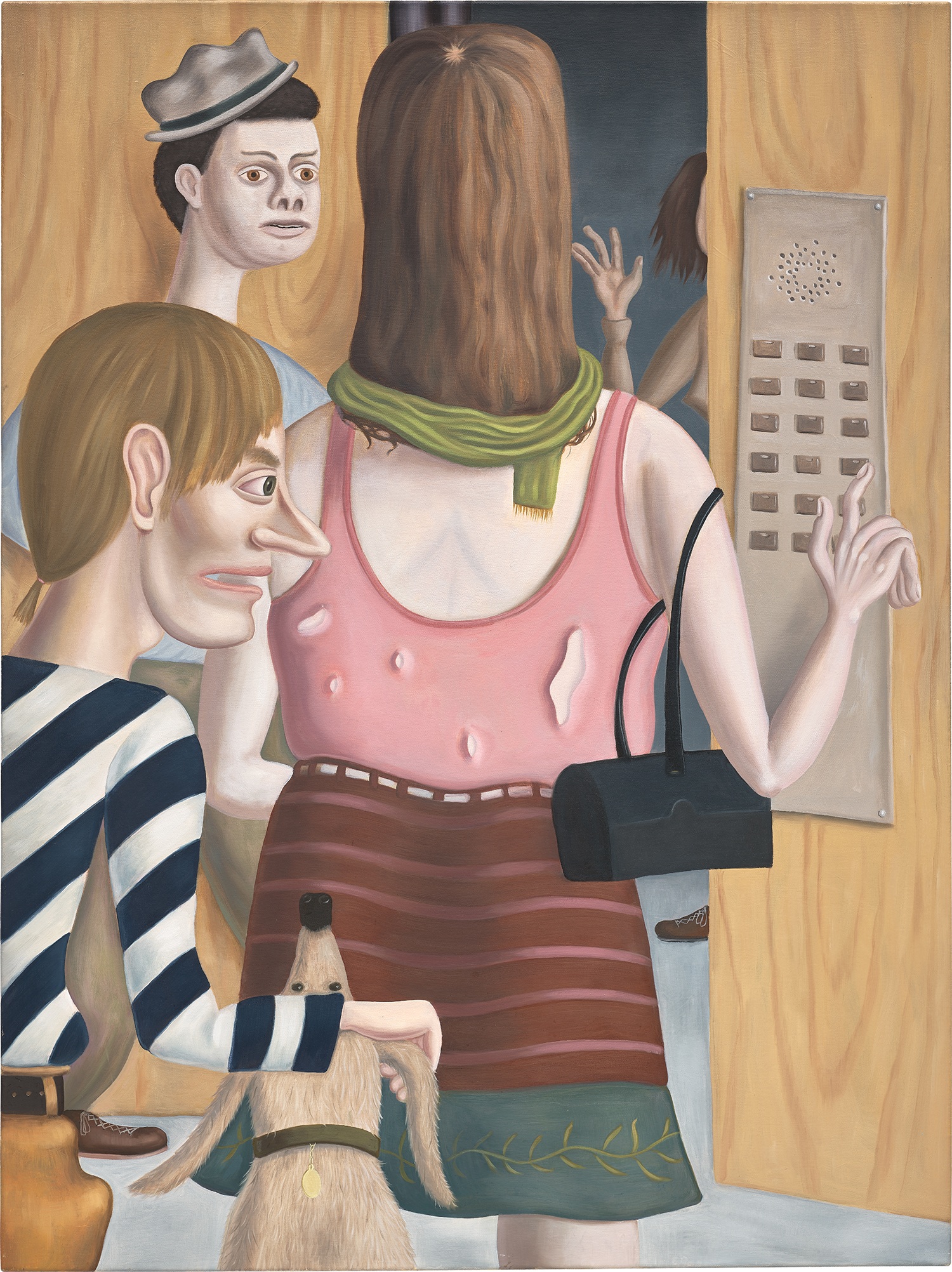
Jonathan Gardner Paints the Quietly Extraordinary Human
Artist Spotlight · The Collection Editorial
Something quietly momentous has been happening in contemporary figurative painting, and Jonathan Gardner sits comfortably at its center. Over the past several years, as collectors and institutions alike have returned with renewed appetite to the painted human figure, Gardner's canvases have emerged as touchstones of a particular kind of seeing: slow, layered, psychologically rich, and suffused with a light that feels borrowed from another century. His recent oil on linen works, including the luminous "Reading Menus" from 2021, confirm what close followers of his practice have known for some time. Gardner is not simply a skilled technician working in a classical mode.
Jonathan Gardner
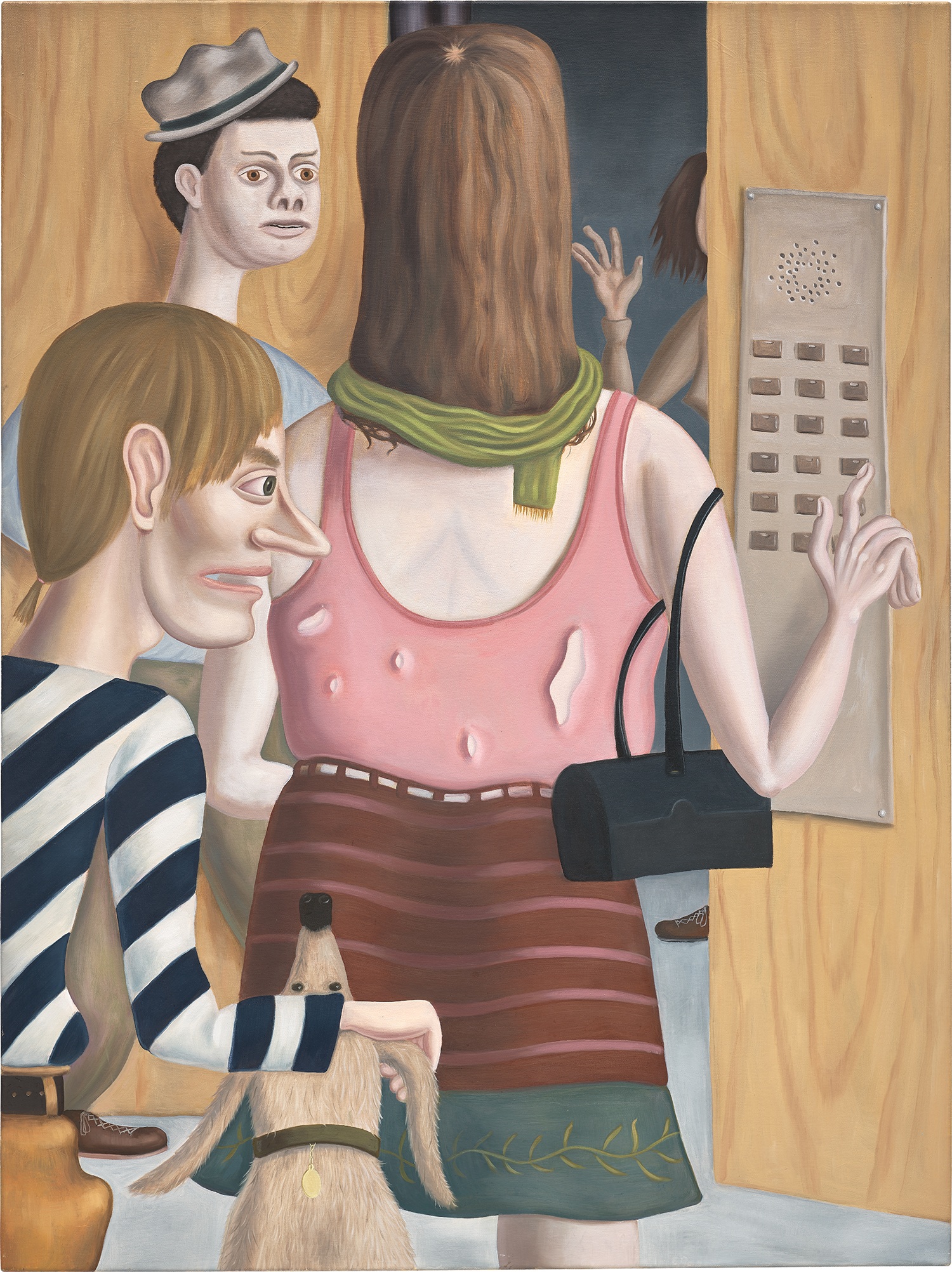
Going Down, 2009
He is a painter of genuine ideas, and those ideas are finding an ever wider audience. Gardner was born in 1976, and his formation as an artist reflects the particular cultural tensions of an American painter who came of age in the 1990s, a moment when figuration was still regarded in many academic quarters with suspicion, squeezed between the lingering prestige of abstraction and the ironic detachment of much postmodern work. That Gardner chose to pursue the figure anyway, and to do so with genuine seriousness and without irony, speaks to a stubbornness of vision that has defined his practice ever since. He pursued his studies with the kind of rigorous attention to craft that has become increasingly rare, steeping himself in the techniques and compositional strategies of the Old Masters while remaining alert to contemporary life and contemporary psychology.
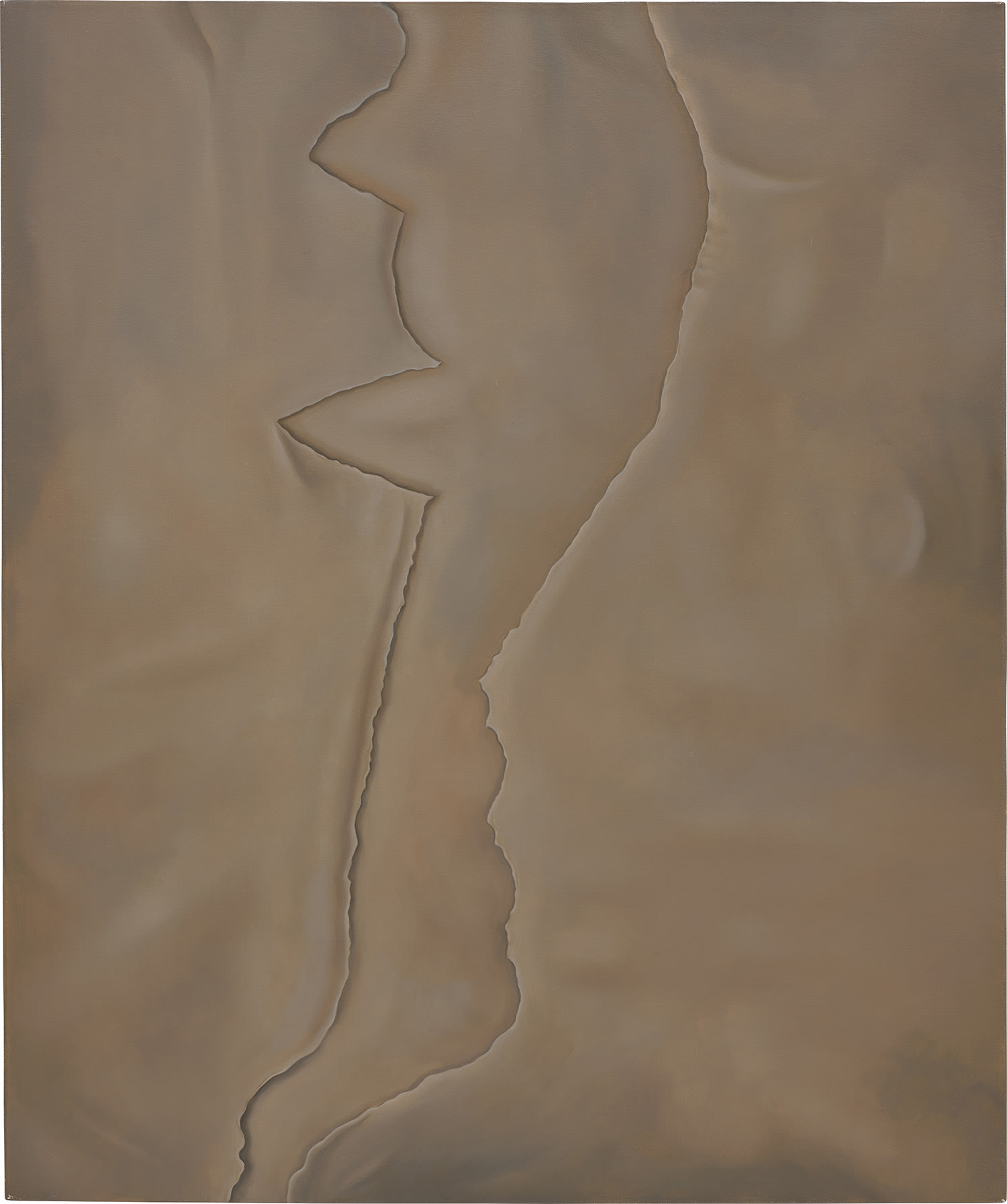
The development of Gardner's artistic voice followed a trajectory that rewards careful attention. His earlier canvases, represented on The Collection by works such as "Going Down" from 2009 and "Ripped" from 2010, show a painter already in confident command of his materials. The figures in these paintings exist in states of suspension, caught mid gesture or mid thought, rendered with a tonal subtlety that owes something to the northern European tradition while remaining unmistakably of their own moment. There is a quality of arrested time in these works that draws immediate comparison to the great tradition of American realism, yet Gardner's psychological register is distinctly more ambiguous and more interior than, say, the social clarity of an Edward Hopper or the documentary impulse of an Andrew Wyeth.
Jonathan Gardner
Ripped, 2010
By the mid part of the last decade, Gardner's practice had deepened considerably, and the move toward oil on linen as his preferred support marked a meaningful shift. "Sculpture in the Studio" from 2016 and "Daisy" from 2014 reveal a painter increasingly interested in the space between the depicted subject and the viewer, a charged and slightly uncertain territory where identity and memory begin to dissolve into one another. The figures in these works are rendered with great care, yet they resist easy interpretation. Their expressions, their glances, and the enigmatic settings Gardner places them in all conspire to create a sense of narrative possibility without ever resolving into straightforward storytelling.
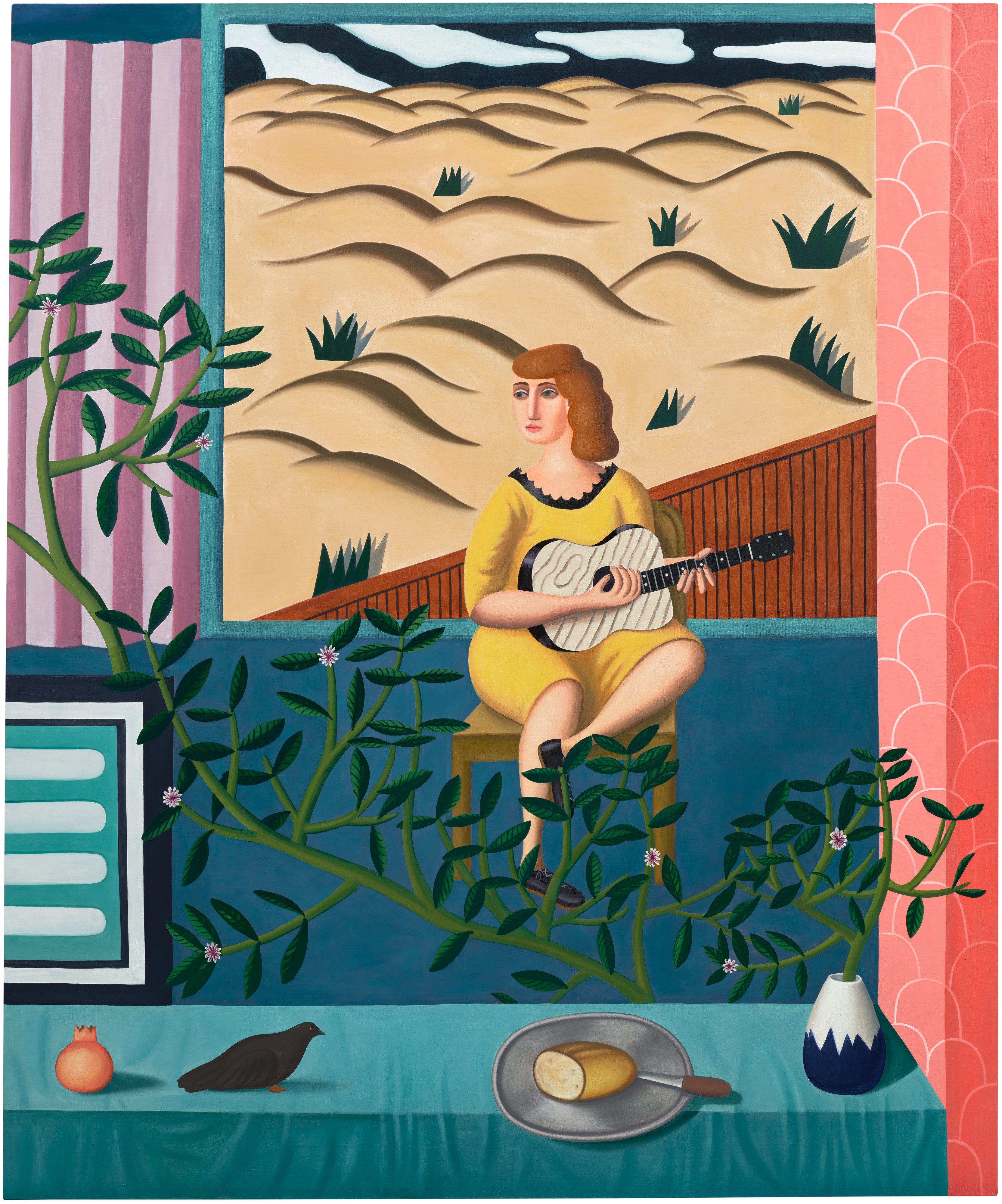
This quality of productive ambiguity is one of the defining characteristics of his mature work. "Desert Wind" from 2018 represents perhaps the fullest expression of Gardner's thematic concerns at that point in his career. The painting deploys a warm, arid palette that feels both geographically specific and emotionally resonant, and the human presence within it carries the weight of someone who has traveled far and is not entirely certain of their destination. It is a painting that rewards prolonged looking, and that is perhaps the simplest way to describe what makes Gardner's work so well suited to living with over time.
Jonathan Gardner
Desert Wind, 2018
These are canvases that change as the light changes, as the viewer's mood changes, as the years accumulate. Collectors who have lived with his work consistently report a deepening rather than a diminishing of their engagement with it. Within the broader context of contemporary figurative painting, Gardner belongs to a distinguished cohort of American painters who have worked to reclaim the figure from both academic dismissal and easy sentimentality. His work invites comparison to painters such as Lisa Yuskavage, whose exploration of psychological complexity through the painted body shares something of Gardner's spirit, or to Neo Rauch, whose dreamlike figurative spaces similarly suspend narrative resolution.
One might also look to the tradition of painters like Luc Tuymans and Peter Doig, artists who have demonstrated that figuration can carry genuine conceptual and emotional weight without sacrificing painterly pleasure. Gardner occupies a particular position within this conversation because his work maintains a warmth and a humanistic faith in the figure that distinguishes it from more coolly cerebral approaches. From a collecting perspective, Gardner's work represents a compelling proposition for those drawn to serious painting with real art historical grounding. His canvases have gained recognition in both gallery and auction contexts, and the consistency of his output over more than two decades suggests a practice of genuine durability.
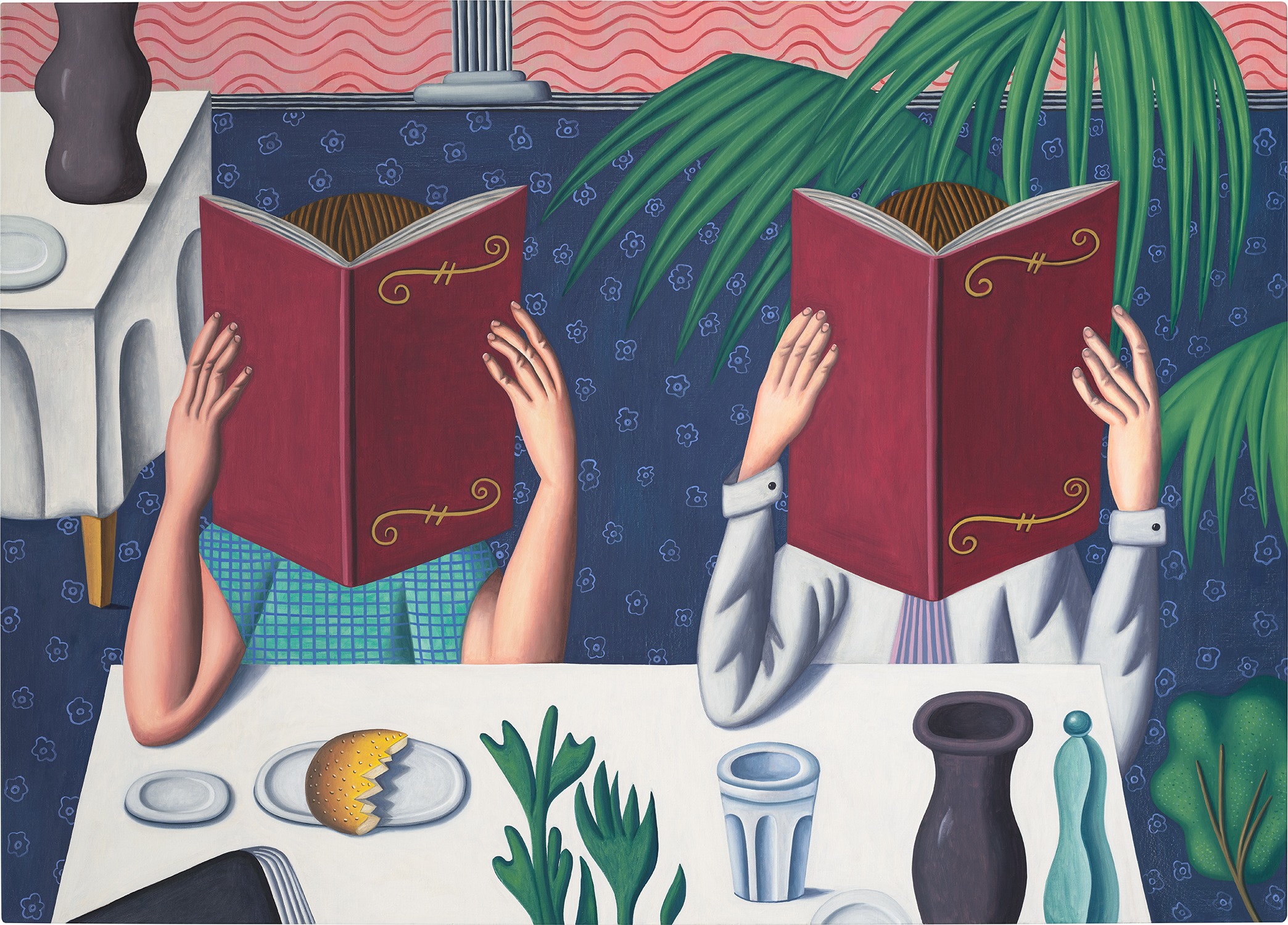
Jonathan Gardner
Reading Menus, 2021
Collectors approaching his work for the first time would do well to pay attention to the quality of light in a given canvas and to the specificity of the figure's relationship to its setting. Gardner's best paintings achieve a balance between technical accomplishment and psychological openness that is genuinely difficult to arrive at, and that balance is what drives sustained collector interest. Works from his transitional period in the early 2010s, when his move toward more complex figurative environments was fully under way, are particularly worth seeking out. Gardner's importance to contemporary painting ultimately rests on something quite simple and quite profound: he trusts the viewer.
He does not over explain, he does not retreat into conceptual armor, and he does not mistake difficulty for depth. His paintings ask us to sit with uncertainty, to remain present with figures whose inner lives we can sense but never fully access, and to find in that experience something that feels genuinely true about what it is to be human. In a moment when the painted figure is once again being recognized as a vehicle for serious thinking about identity, memory, and connection, Jonathan Gardner's quiet, luminous practice stands as a reminder of what painting at its best has always been capable of doing.