Jonas Wood
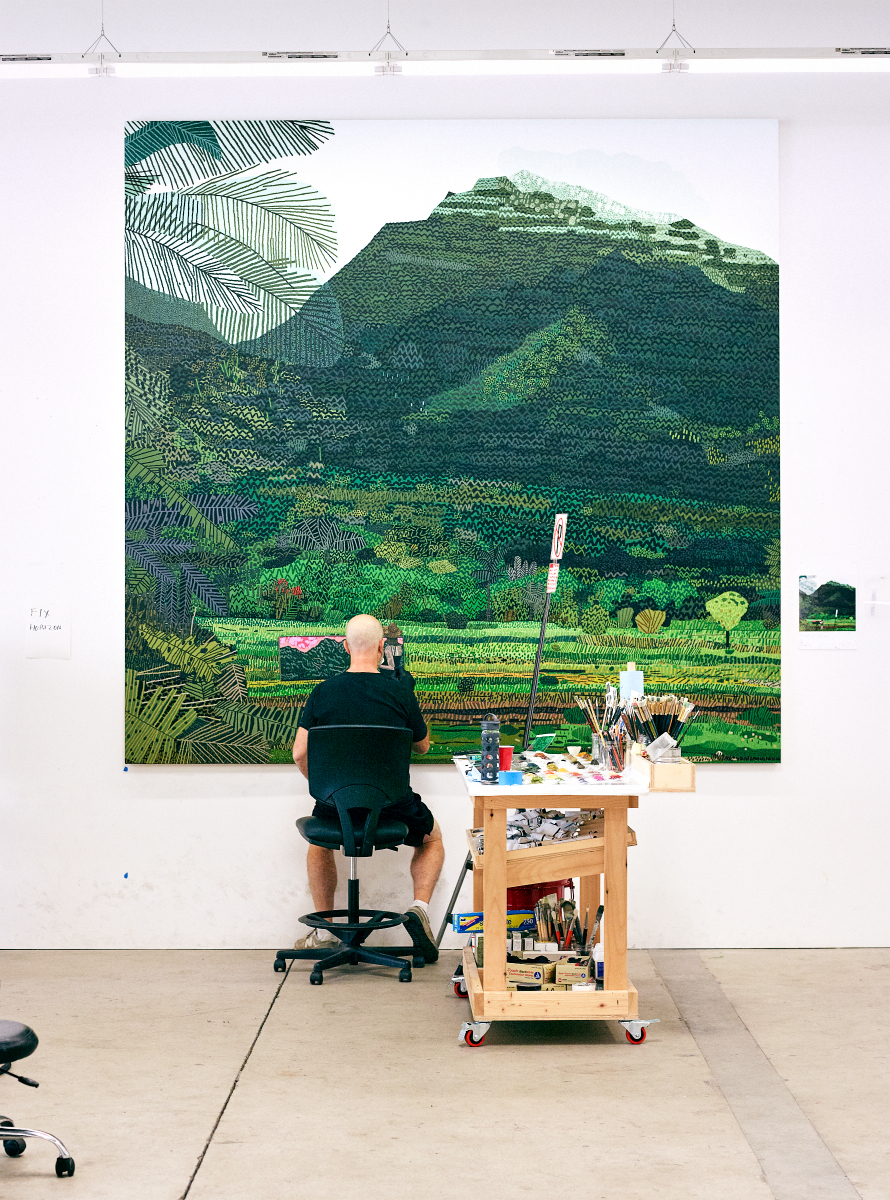
Jonas Wood Finds Beauty Everywhere He Looks
Artist Spotlight · The Collection Editorial
“I want the work to feel like it could be anywhere, in anyone's house, but also totally specific to my life.”
Jonas Wood, interview with David Kordansky Gallery
When the Hammer Museum in Los Angeles mounted its survey of Jonas Wood's work, the art world paid close attention. Wood had spent the better part of two decades quietly building one of the most distinctive and beloved bodies of work in contemporary American painting, and the moment felt earned. Critics and collectors alike recognized something rare in his canvases: a painter who had found a way to make the familiar feel monumental, and the monumental feel like home. Wood was born in Boston in 1977 and raised in southern California, and that coastal upbringing left a lasting imprint on his sensibility.
Jonas Wood
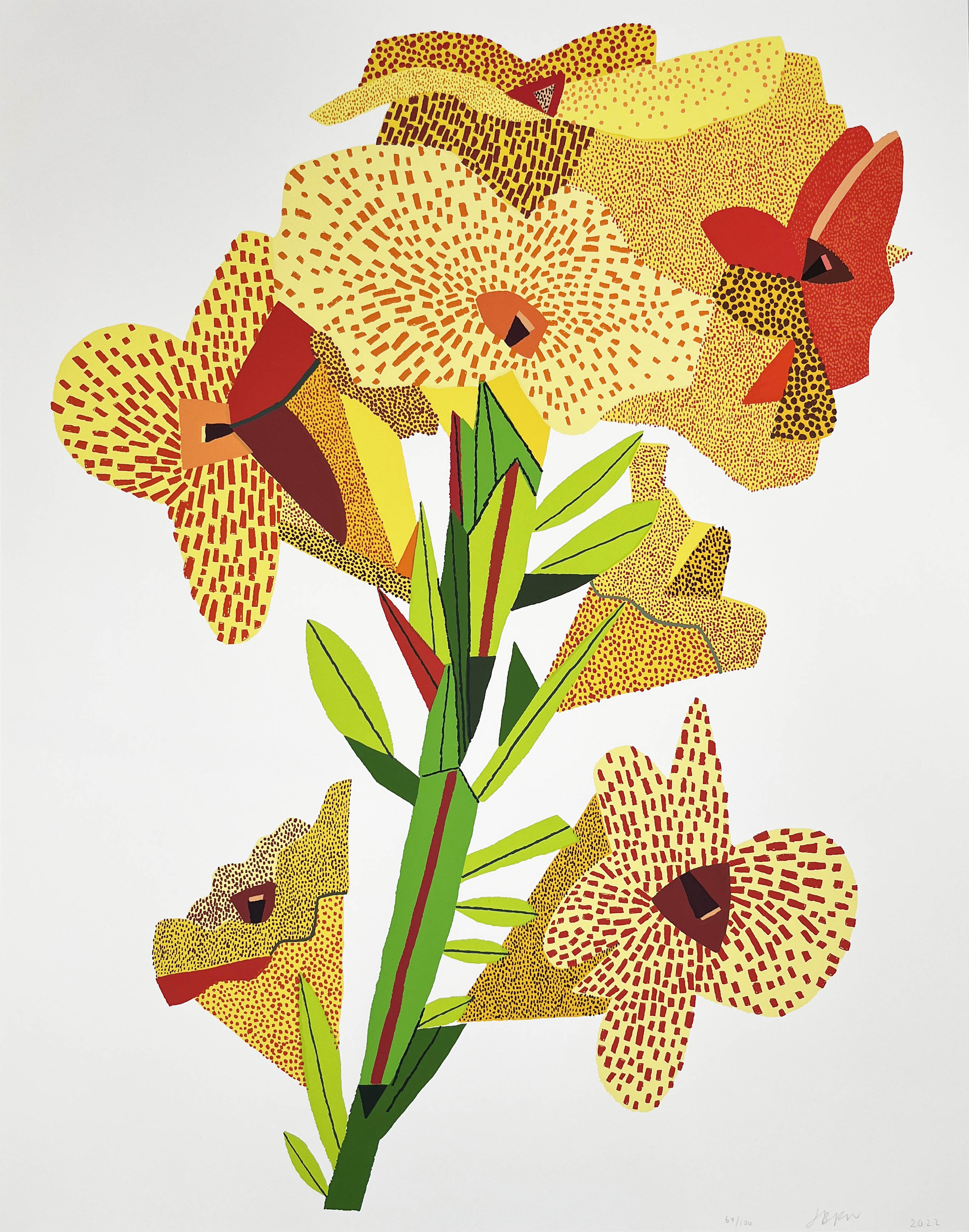
Yellow Flower, 2022
The light of Los Angeles, where he has lived and worked for many years, saturates his paintings with a warmth that feels both photographic and deeply personal. He studied at Hobart and William Smith Colleges and later received his MFA from the University of Washington in Seattle, where he sharpened the observational rigor that would become his calling card. From the beginning, Wood was drawn to the world immediately around him: the rooms he occupied, the plants he tended, the art on his walls, the people he loved. His artistic development unfolded with unusual steadiness and confidence.
Rather than chasing successive movements or reinventing himself for each new critical moment, Wood deepened his commitment to a singular vision rooted in observation, pattern, and the layering of pictorial space. He drew on the legacy of artists like Henri Matisse, David Hockney, and the Japanese woodblock printmakers who informed his flattened, graphic approach to color and composition. Philip Guston's influence is also present, particularly in the way Wood allows cartoonish simplification to coexist with genuine emotional weight. These references never feel labored; they are absorbed into a style that is unmistakably his own.
Jonas Wood
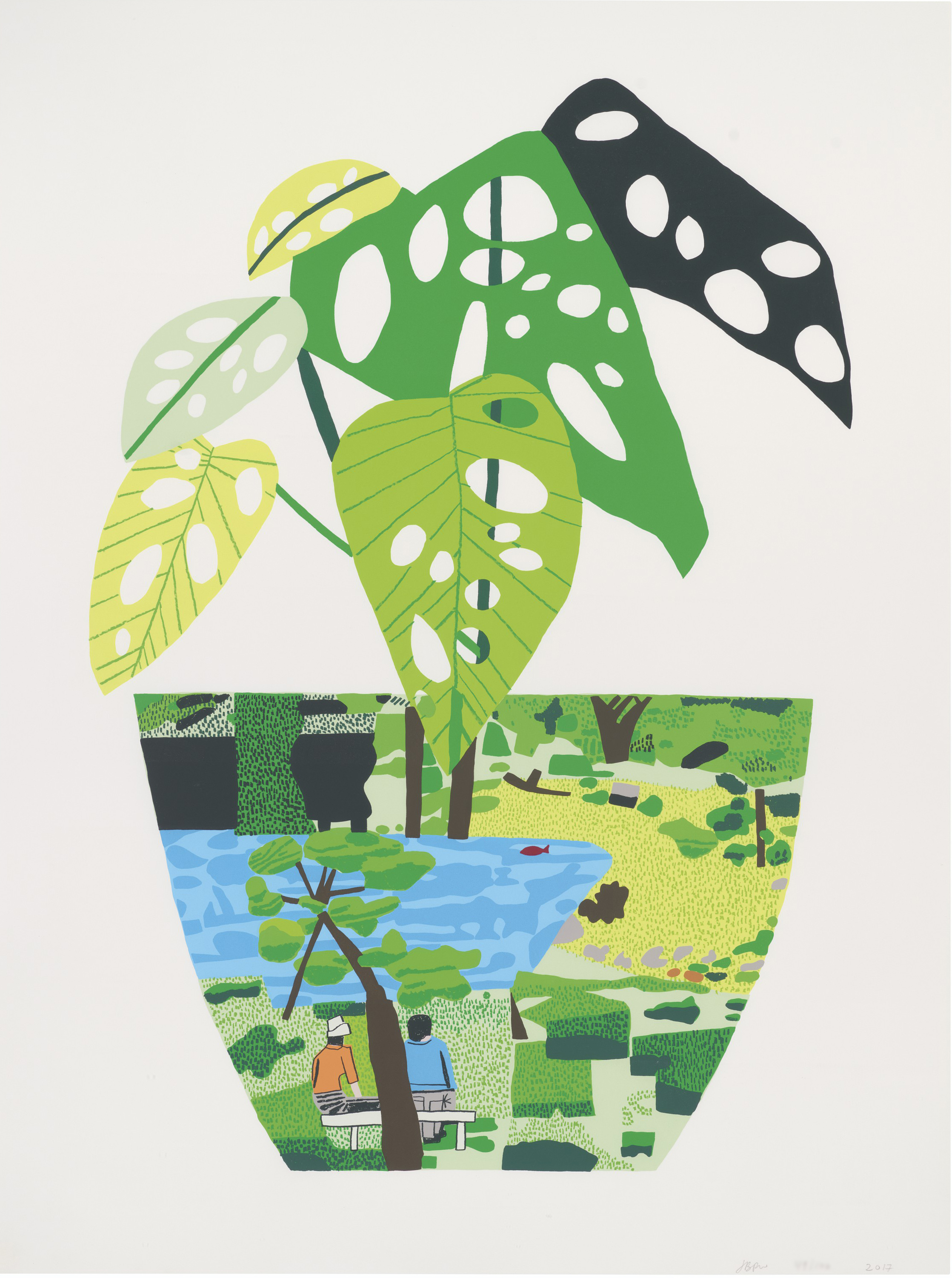
Landscape Pot with Plant, 2017
What defines a Jonas Wood painting is the sense that you are looking at something both hyperrealistic and entirely constructed. He works from his own photographs, collaging multiple images and perspectives into a single composition that defies easy spatial logic. A room might contain a basketball player's portrait alongside a lush ceramic pot overflowing with orchids, a woven rug asserting its own geometry beneath both. His still lifes of ceramic vessels have become particularly celebrated, and works like "Landscape Pot with Plant" from 2017 demonstrate why.
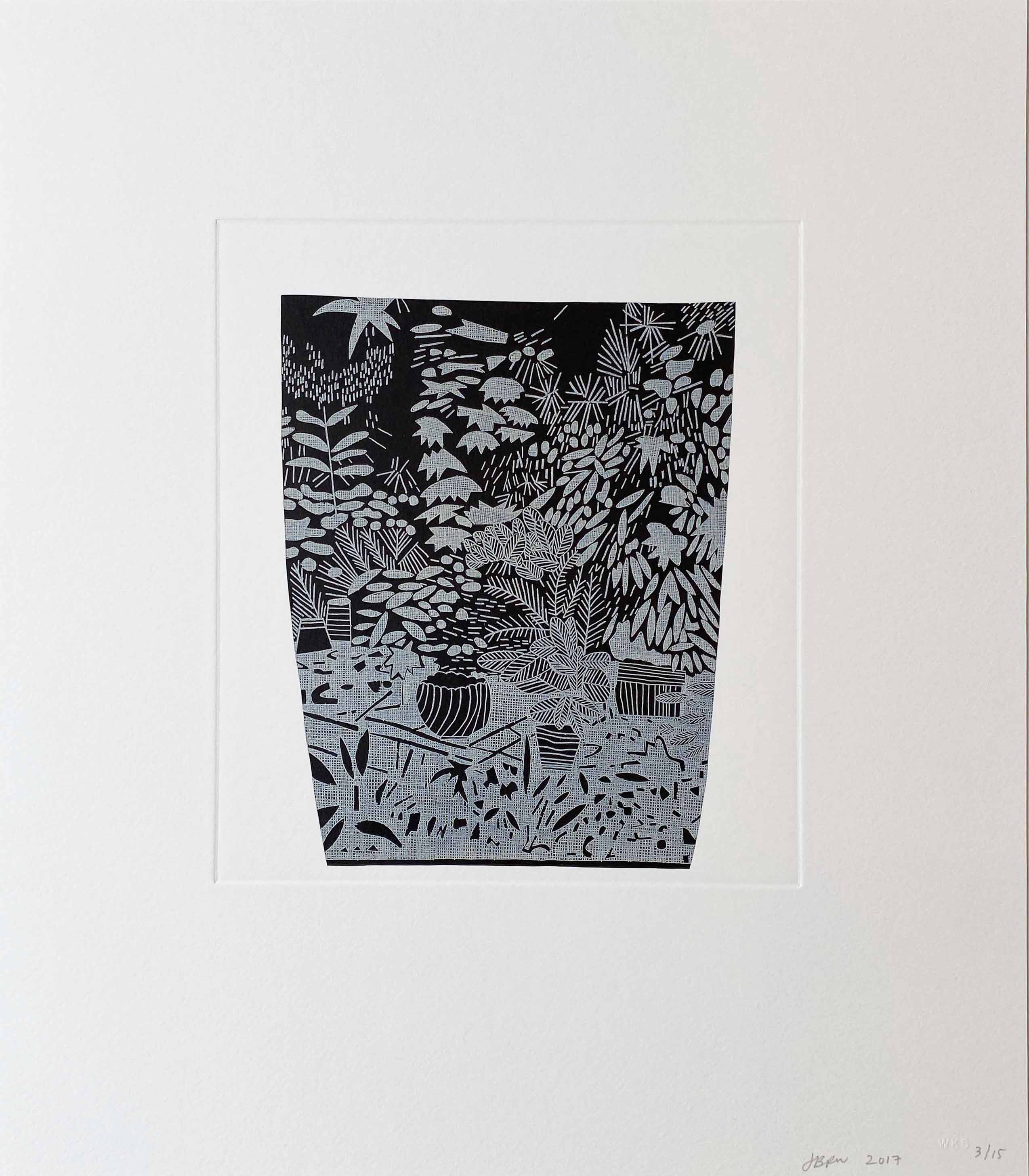
The pot is not simply rendered; it is inhabited, its surface carrying its own interior landscape, its presence in the room both anchor and invitation. His printmaking practice, including the acclaimed "8 Pots" etching series and his richly layered screenprints, extends these investigations into editions that make his world accessible to a broader range of collectors without diminishing the intimacy of the work. Wood is represented by David Kordansky Gallery in Los Angeles and Gagosian, and his relationship with these galleries has helped position him as one of the defining painters of his generation. His work entered major museum collections early in his career, and his auction results have reflected sustained collector enthusiasm over many years.
Jonas Wood
Untitled (8) from 8 Pots, 2017
Works on paper and prints like the "Double Basketball Orchid" lithographs and the "Yellow Flower" screenprints are particularly sought after, offering entry points into his practice for collectors who may be building toward a major canvas. The consistency of his printmaking, produced in close collaboration with master printmakers and published through editions studios of the highest caliber, means that his works on paper carry the same intentionality and craft as his paintings. To collect Jonas Wood is to align oneself with a particular tradition of American painting that takes seriously the idea that beauty is not trivial. His contemporaries and peers include artists like Oscar Murillo, Njideka Akunyili Crosby, and Henry Taylor, all of whom share his interest in domestic space and personal mythology as subjects worthy of serious attention.
But Wood occupies a specific corner of this conversation, one that looks as much to the decorative arts and to the history of still life painting as it does to contemporary figuration. His ceramics, which he makes in collaboration with his wife Shio Kusaka, a celebrated ceramicist in her own right, blur the boundary between fine art and craft in ways that feel genuinely generative rather than merely fashionable. The market for Wood's paintings has remained robust and increasingly competitive. Major canvases have achieved significant results at auction, and demand continues to outpace supply, a dynamic that speaks to both the quality of the work and the depth of collector conviction behind it.
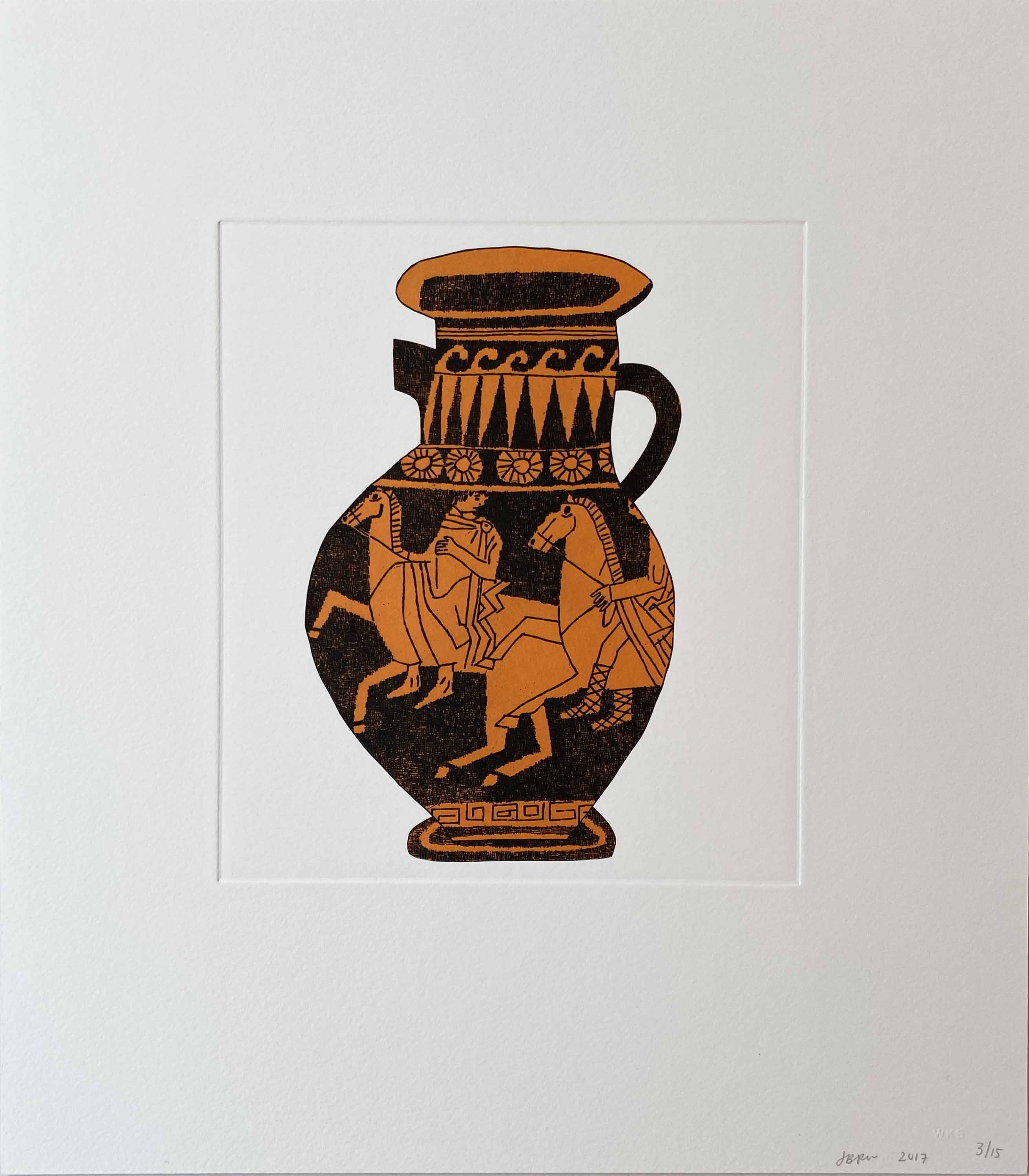
Jonas Wood
Untitled (3) from 8 Pots, 2017
His prints and works on paper provide more accessible price points while representing the full range of his visual intelligence. For collectors building a thoughtful collection around contemporary American painting, Wood is not simply a name to have; he is an artist whose work rewards prolonged looking, whose compositions reveal new layers with each encounter, and whose subjects, pots and plants and portraits and rooms, accumulate into something that feels like a philosophy of attention. Jonas Wood matters today because he reminds us that the act of looking carefully at the world around us is itself a form of generosity. In a cultural moment saturated with spectacle and irony, his paintings offer something quieter and more lasting: the conviction that a well placed pot of flowers, rendered with love and precision, can hold as much meaning as any grand historical narrative.
His legacy is still being written, but the foundation is already extraordinary, and the collectors, museums, and galleries that have recognized it early will be understood, in time, as people who knew what they were looking at.