John Piper
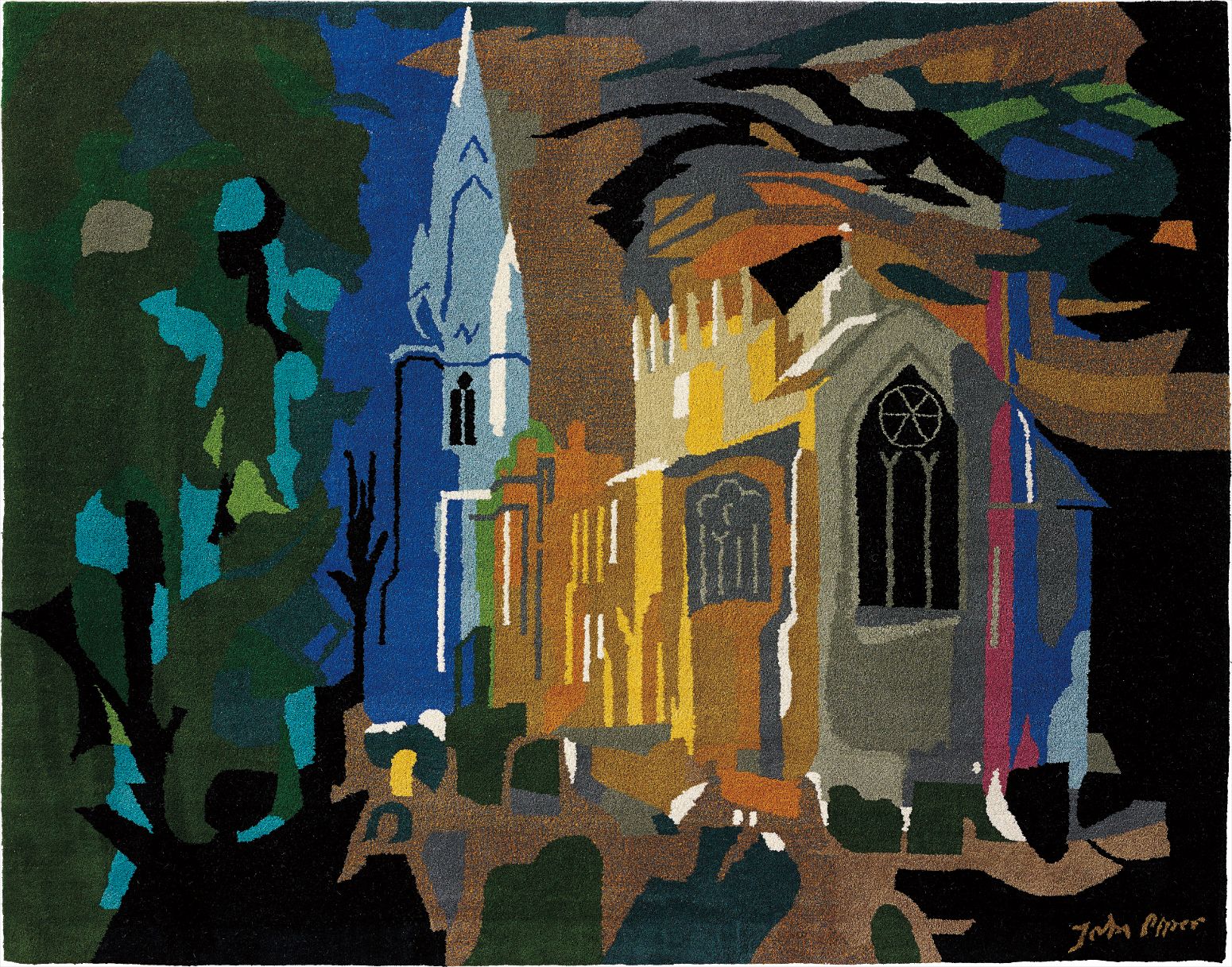
John Piper, Poet of the British Soul
Artist Spotlight · The Collection Editorial
“I have always had a weak spot for ruins, buildings that look as if they might fall down tomorrow.”
John Piper, interviewed in The Guardian
There is a moment, standing before one of John Piper's storm charged depictions of a Gothic church or a rain soaked country house, when the architecture seems to breathe. The stone pulses. The sky presses down with genuine menace and beauty. It is a feeling that has drawn collectors, curators, and admirers to his work for decades, and it shows no sign of diminishing.
John Piper
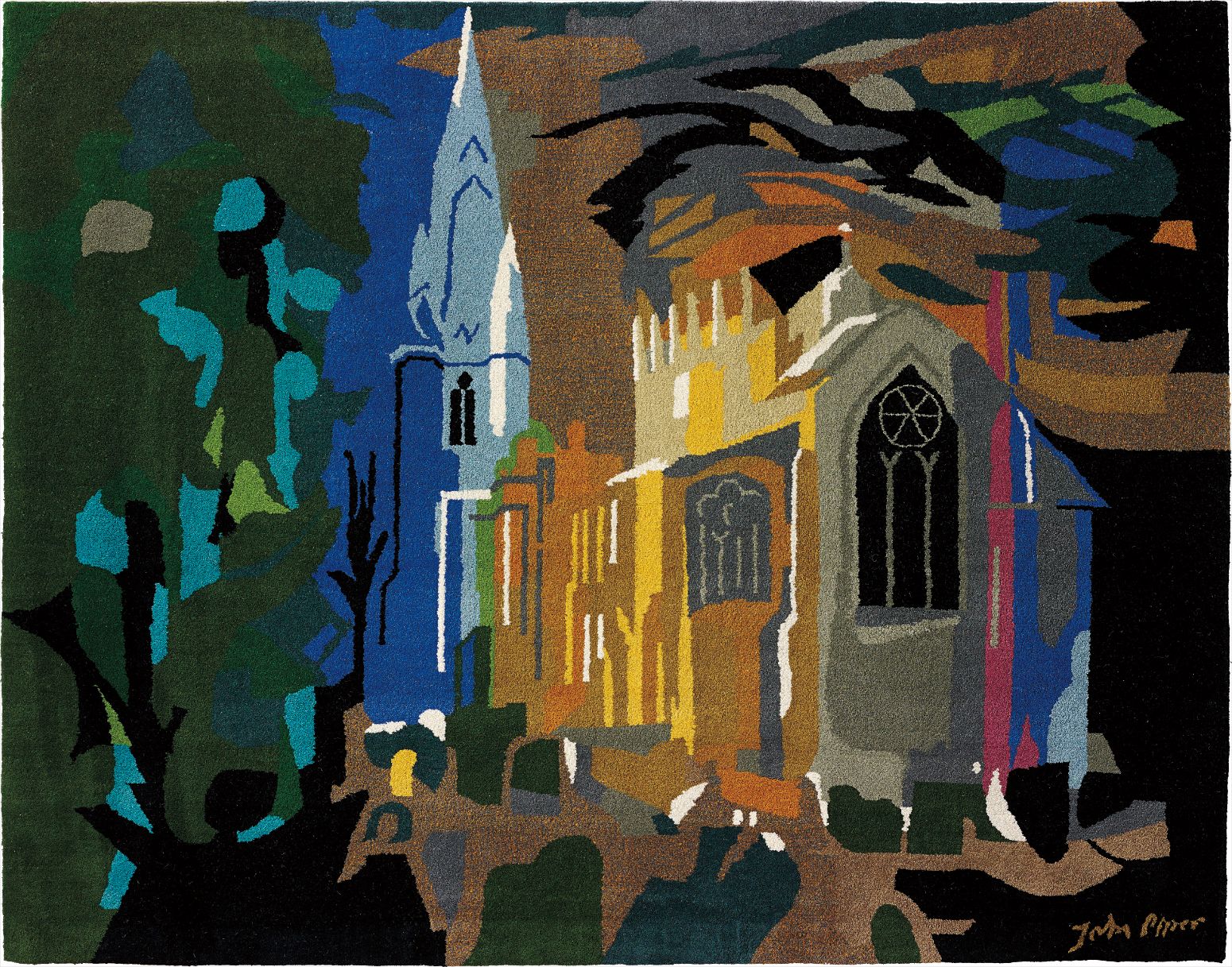
Long Sutton, Lincolnshire
Major auction houses continue to see strong results for his works on paper and canvas, and institutional holdings across the Tate, the Victoria and Albert Museum, and the Ashmolean speak to a reputation that has only deepened with time. For those who love the particular poetry of the British landscape, Piper remains its most eloquent painter. John Egerton Christmas Piper was born in 1903 in Epsom, Surrey, into a family with a strong legal tradition. His father was a solicitor and expected his son to follow the same path, and for a time the young Piper dutifully obliged, working in his father's firm after leaving school.
But drawing and painting were always his true vocation, and after his father's death in 1926, Piper enrolled at Richmond School of Art and later the Royal College of Art in London. These years of formal training gave him a rigorous technical foundation, but it was his voracious intellectual curiosity and his love of travel through the English countryside that truly formed his sensibility. He was drawn instinctively to old churches, to crumbling facades, to the way centuries of weather and faith had left their marks on stone. In the 1930s, Piper moved through a period of serious engagement with abstraction, influenced by his encounters with the European avant garde and his friendships with figures such as Ben Nicholson and the circle around the Abstraction Creation group in Paris.
John Piper
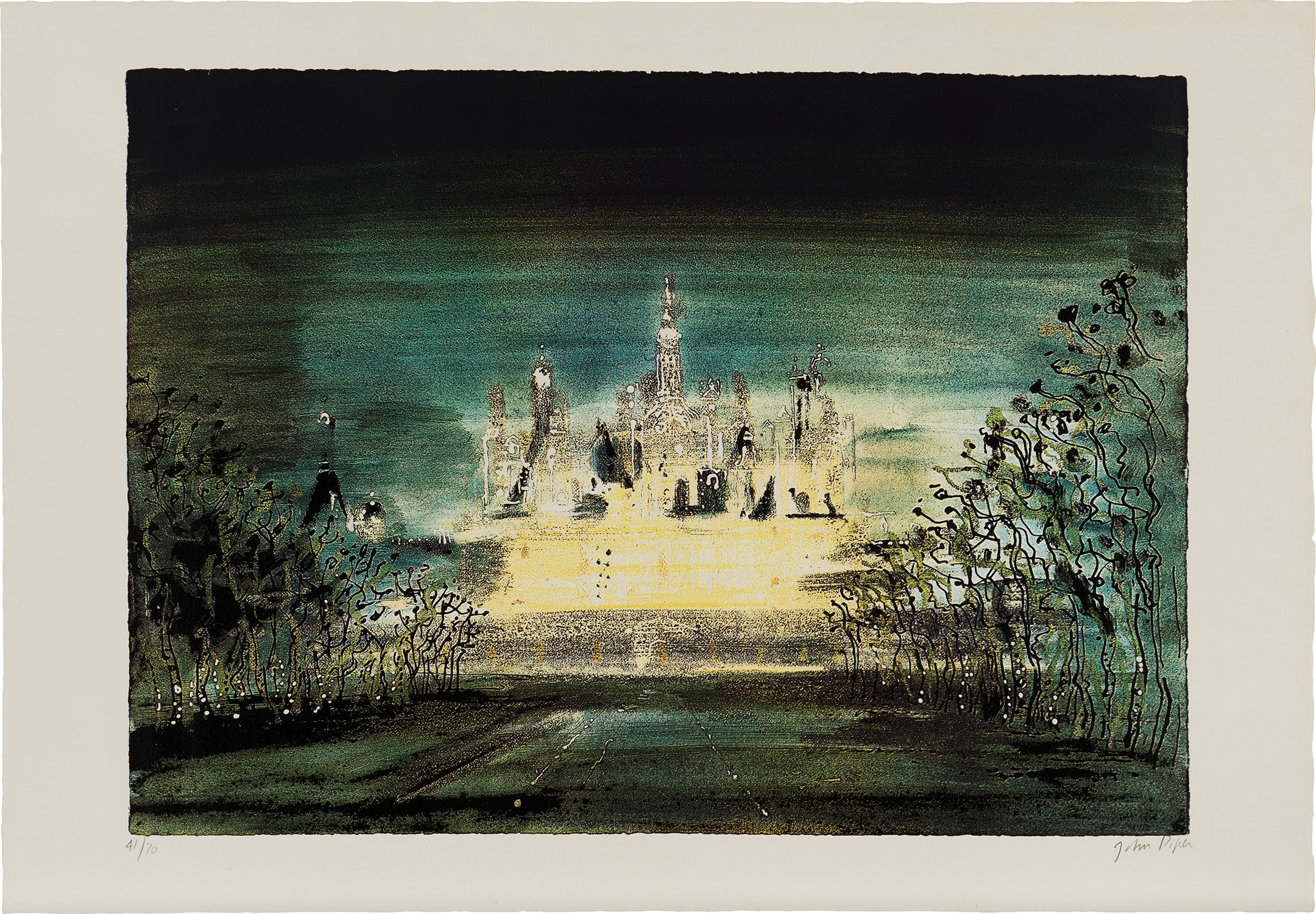
Chambord
He contributed to the landmark 1937 publication Axis, a journal of abstract art, and his paintings of that period show a genuine and sophisticated command of non representational form. Yet something in Piper resisted the full austerity of pure abstraction. By the late 1930s he had begun to move back toward the landscape and architectural subject, finding a synthesis that was entirely his own: shapes and colours that carried the weight of abstraction but were animated by place, by history, by atmosphere. This was not a retreat from modernism but a distinctly British inflection of it.
The Second World War became a defining chapter in Piper's artistic life. Appointed as an official war artist, he was commissioned to document bombed and damaged buildings across Britain, most famously recording the ruins left by the Blitz in Coventry and Bath. These works, produced with urgency and deep feeling, are among the most powerful documents of that era in British art. His images of Coventry Cathedral after the bombing of November 1940 are haunting and magnificent, transforming destruction into something almost sublime.
John Piper
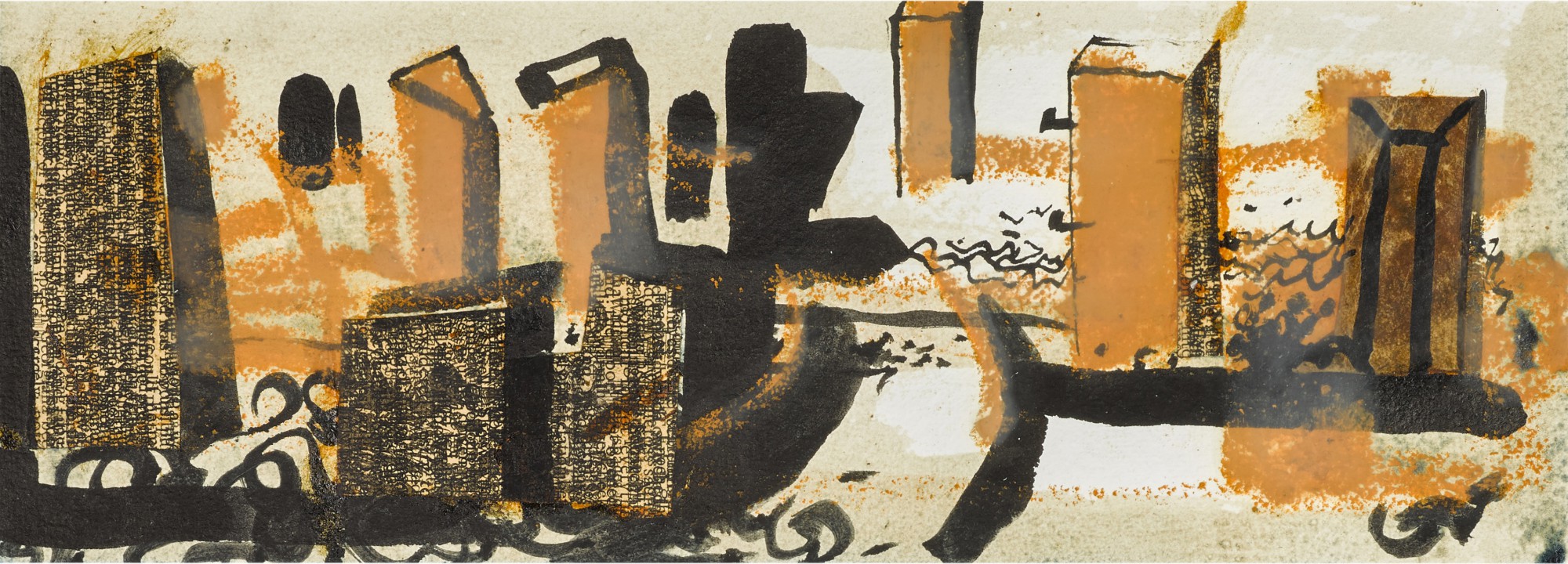
Portland Stones
The wartime commissions also deepened his relationship with the country houses and churches that would occupy him for the rest of his long career. He had found his great subject: the enduring, endangered, magnificently imperfect fabric of England. The breadth of Piper's practice is one of the things that makes him so consistently rewarding for collectors. He worked with equal facility in watercolour, gouache, oil, screenprint, and collage, and he was also a distinguished designer of stained glass, most notably for the new Coventry Cathedral completed in 1962 to the design of Basil Spence, and for the baptistery window at the same building created in collaboration with Patrick Reyntiens.
His prints are accessible and collectible, carrying the full force of his vision in a more intimate format. Works such as the screenprint Chambord, with its saturated colour and electric atmospheric tension, demonstrate how completely he could translate his painterly instincts into the print medium. His mixed media works on paper, layering crayon, ink, watercolour, and gouache in compositions of extraordinary richness and texture, represent some of his most personal and sought after output. For collectors approaching Piper today, the works on paper offer a particularly compelling entry point.
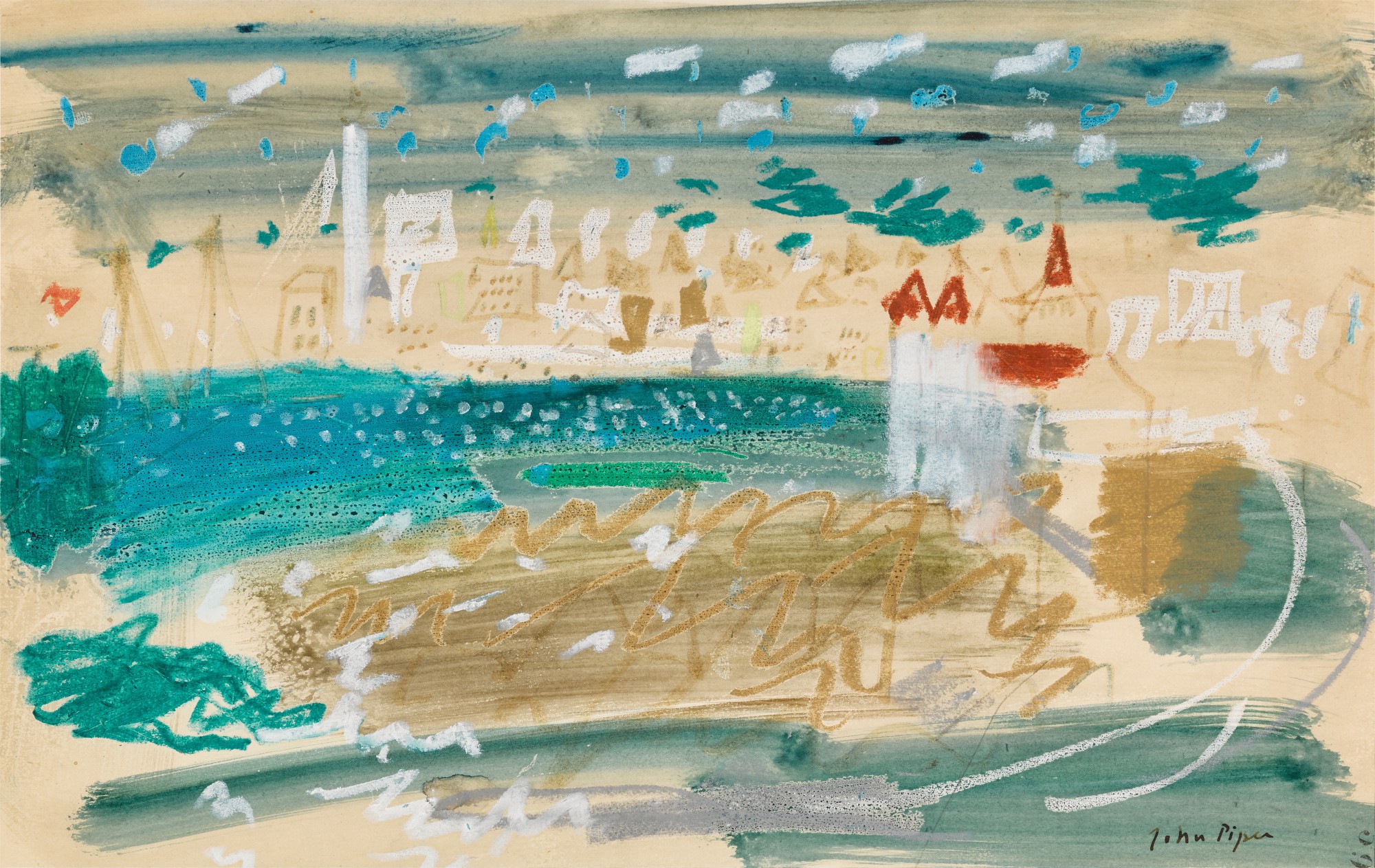
John Piper
Turpault Castle
Pieces such as Saltfleetby, All Saints from 1975, rendered in pen, ink, crayon, watercolour, and gouache, exemplify his mature method: the nervous energy of the drawn line anchored by pools of saturated colour, the whole composition vibrating with his characteristic sense of drama and place. Similarly, Huntansworth, Co. Durham from 1976, with its layering of ink, crayon, charcoal, and gouache, shows how he could evoke the specific character of a building and its landscape with a combination of precision and romantic intensity. His larger canvases, such as Harlaxton Manor, Lincolnshire from 1977, demonstrate the full ambition of his vision, where the architecture becomes almost operatic in its grandeur.
Collectors who have spent time with these works consistently speak of their emotional power, the sense that Piper understood these places not merely visually but spiritually. Within the broader context of British art history, Piper occupies a space that is genuinely his own, though he can be meaningfully compared with artists who shared his fascination with landscape and the picturesque tradition. The romanticism of Samuel Palmer, whose visionary treatment of the English countryside Piper greatly admired and wrote about perceptively, is an ancestor of sorts. Among his contemporaries, Graham Sutherland shared certain affinities, particularly in the wartime work, and both artists drew from a similar well of neo romantic feeling.
Paul Nash, another war artist and a painter of haunting landscapes, is another natural point of comparison. But Piper's combination of architectural obsession, printmaking virtuosity, and decorative ambition across stained glass and stage design for the theatre and opera sets him apart as a figure of exceptional range. John Piper died in 1992 at the age of eighty eight, leaving behind a body of work of remarkable scope and consistent quality. His legacy is not simply that of a painter of beautiful pictures but of someone who devoted his life to paying attention: to the textures of old stone, to the drama of changing English light, to the way buildings carry the memory of the people who made and used them.
In a cultural moment when questions of national identity and landscape feel more charged than ever, his work offers not nostalgia but a genuine depth of feeling, a way of seeing that is both rigorously observed and warmly, passionately human. For collectors who value work that rewards long looking and rewards it again, Piper is one of the essential British artists of his century.
Explore books about John Piper

John Piper: A Life
Stephen Coare
John Piper: Romantic Modernist
Andrew Causey
The Complete Graphic Work of John Piper
Wilfried Hütter

John Piper: Paintings, Drawings and Theatre Designs
Museum of Modern Art

John Piper: The Thirties
Alan Powers
John Piper: Building and Landscape
David Fraser Jenkins