John Moyers
John Moyers Paints the West Alive
Artist Spotlight · The Collection Editorial
There is a moment in standing before a John Moyers painting when the boundary between image and memory dissolves. His figures possess such physical certainty, such warmth of skin and weight of cloth, that the viewer is drawn not merely into a scene but into a relationship with the people depicted. That quality has earned Moyers a devoted following among serious collectors of Western American art, and his continued presence at the Prix de West Invitational Art Exhibition and Sale, one of the most prestigious gatherings of Western art in the country held annually at the National Cowboy and Western Heritage Museum in Oklahoma City, marks him as one of the defining voices of his generation in this tradition. John Moyers was born in 1958 into a household already saturated with paint, canvas, and the particular discipline of a working artist.
John Moyers
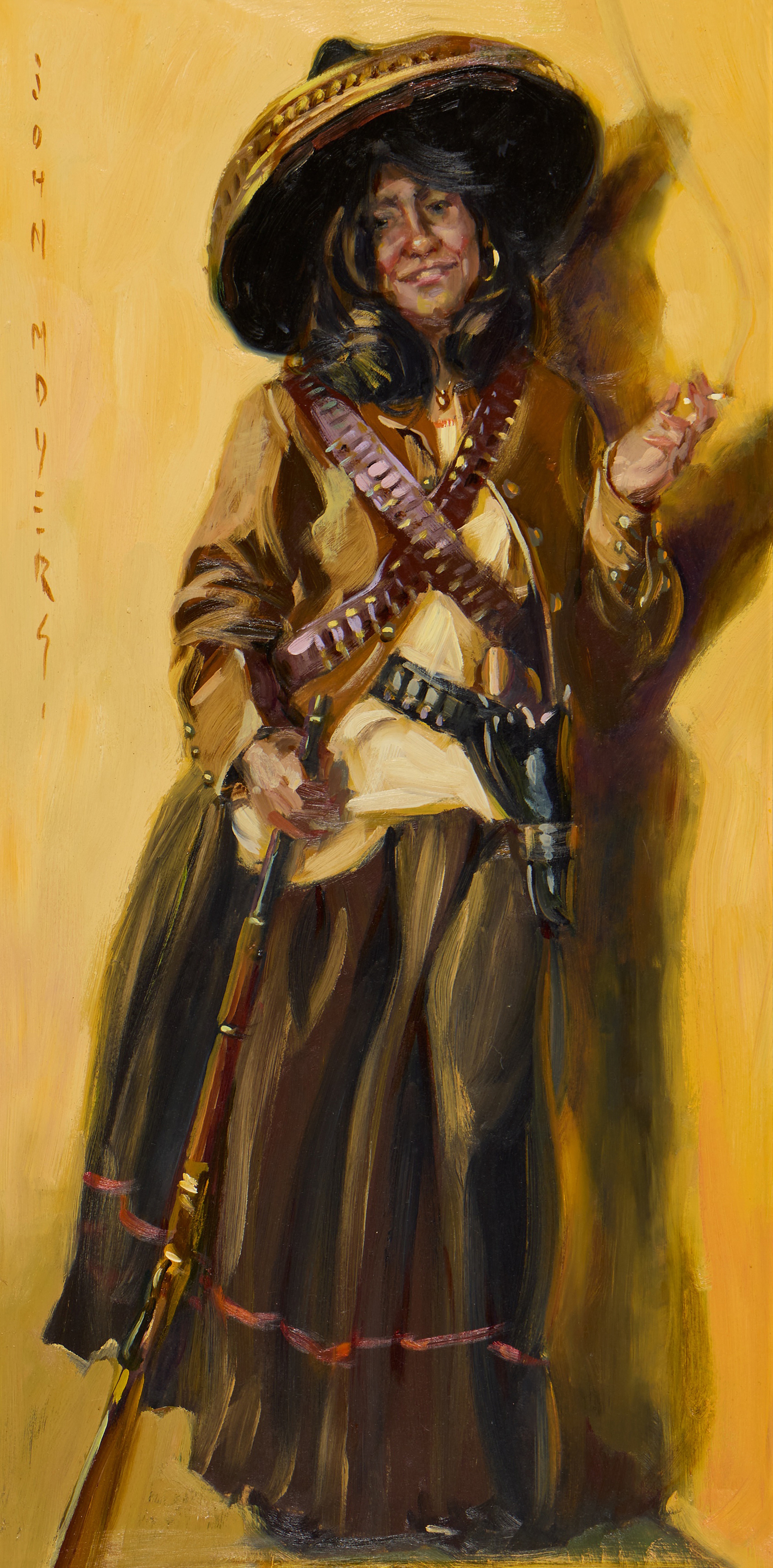
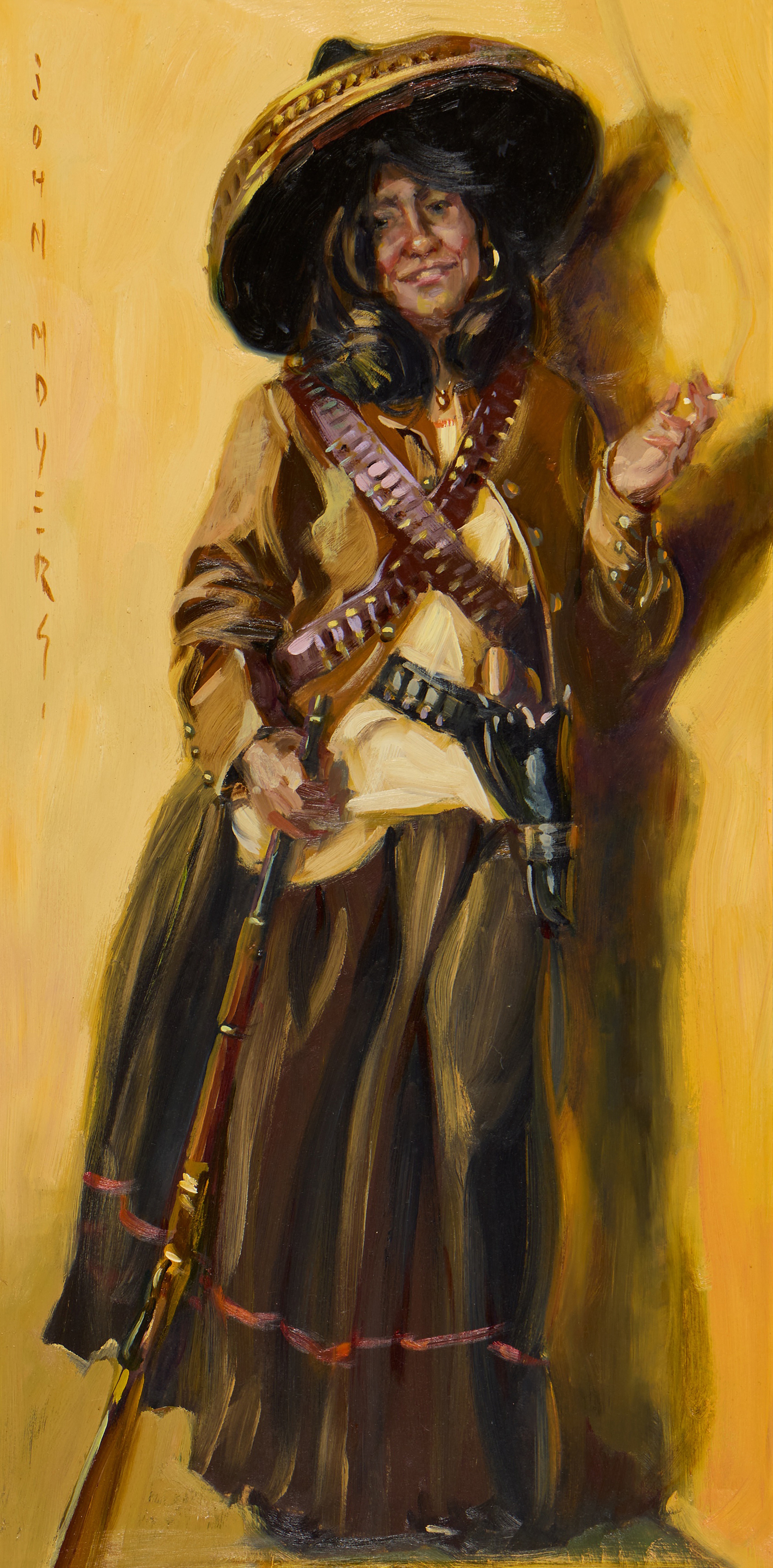
Revolution’s Daughter, 2011
His father, William Moyers, was himself a celebrated sculptor and painter of the American West, and growing up in that environment gave John something that no formal curriculum alone can provide: an understanding of art as a daily practice, as a vocation rather than a career. The Southwest was not a subject he discovered later in life but a world he was raised inside, and that intimacy with the land and its people gives his paintings a quality of genuine belonging rather than romantic projection. He pursued his formal training at the Art Center College of Design in Los Angeles, an institution with a rigorous emphasis on technical mastery and observational accuracy. The school shaped generations of American image makers across disciplines, and for Moyers it reinforced what his father had already begun to teach: that feeling and craft are not opposites but partners.
The classical foundations he built there, understanding light, anatomy, the architecture of a composition, would become the scaffolding upon which a deeply personal vision would eventually be hung. Over the decades Moyers developed a style that is best described as luminous realism. He works primarily in oil, exploiting the medium's capacity for depth and translucency to render skin tones that seem to hold warmth within them. His palette leans toward the ochres and siennas of sun baked earth, the cool shadows of adobe interiors, and the particular quality of Southwestern light that arrives not gently but decisively.
John Moyers
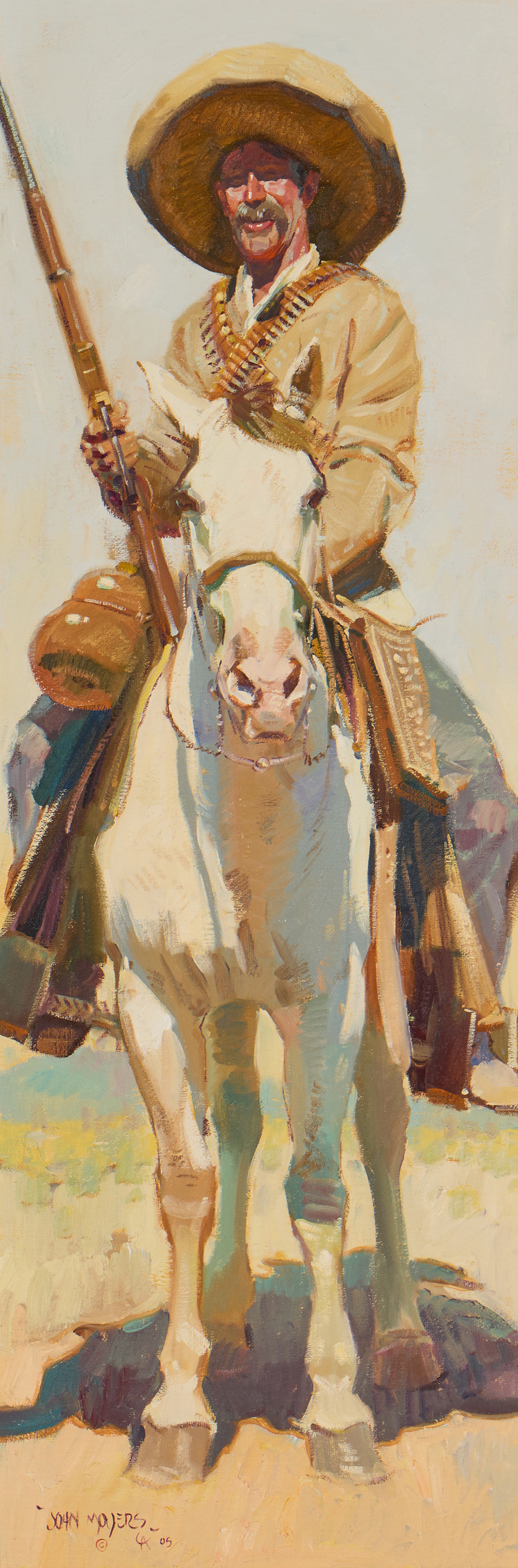
Portrait of the Revolution, 2005
His Native American subjects are painted with a specificity of dress, ornament, and expression that speaks to long standing relationships of trust and respect, never the generalized romanticism that has sometimes flattened the work of artists drawn to similar themes. Among his most significant works is Revolution's Daughter, completed in 2011 and executed in oil on board. The painting exemplifies what makes Moyers so compelling as a portraitist: the subject is rendered with the full weight of an individual rather than a type, her gaze carrying its own internal narrative. Portrait of the Revolution, painted in 2005 in oil on canvas, similarly demonstrates his gift for conferring dignity and psychological depth through composition and light.
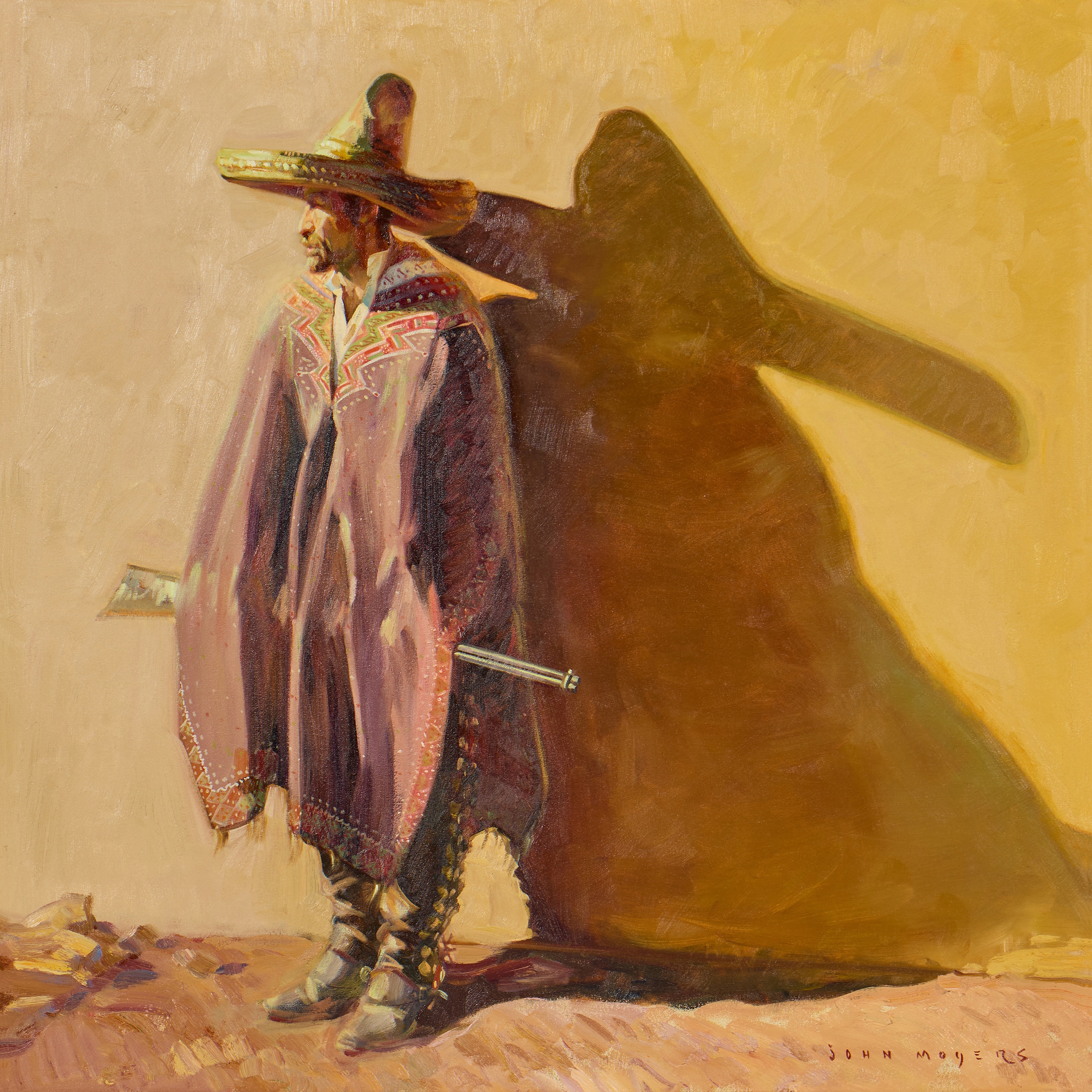
He Cast a Big Shadow, also from 2011, moves into the iconography of the cowboy with the same seriousness of intent, using shadow and stance to evoke presence and history simultaneously. Taken together these works reveal an artist engaged not in nostalgia but in the ongoing task of bearing witness. For collectors, Moyers represents a rewarding convergence of accessibility and depth. His works have appeared in major Western art auctions including those associated with the Prix de West, where demand for serious figurative painting of the American West has remained robust across market cycles.
John Moyers
He Cast a Big Shadow, 2011
Buyers are drawn initially to the technical beauty of his surfaces, the way light falls across a figure as though arriving from an actual source just outside the frame. But what keeps collectors returning, and what makes his work appreciate in meaning over time, is the emotional intelligence embedded in each composition. These are not decorative objects but inhabited ones, paintings that change with the viewer's own accumulation of experience. To understand Moyers fully it helps to place him in a lineage of American painters who have taken the West seriously as both subject and philosophical territory.
Artists such as Howard Terpning and Ned Jacob explored similar themes with comparable commitment to figure and culture, while the broader tradition of American realism connects Moyers to painters like Andrew Wyeth in his devotion to specific place and specific people. What distinguishes Moyers within this company is his particular quality of stillness. His paintings do not dramatize so much as contemplate. They ask the viewer to slow down, to look, to remain.
John Moyers matters today not as a keeper of a fading tradition but as proof that the tradition remains alive and capable of genuine surprise. The American West continues to be one of the most mythologized and misunderstood regions in the cultural imagination, and painters who can approach it with both technical authority and human empathy perform a genuine service to our collective understanding. Moyers does exactly that. His canvases remind us that behind every icon of the West, the cowboy, the Native American elder, the sun drenched landscape, there are real people with real interiority, and that art at its best is the act of making that interiority visible.
Collectors who have found their way to his work understand instinctively that they are holding something essential.