John Marin
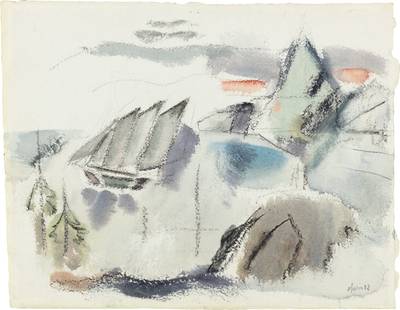
John Marin, America's Visionary Watercolor Poet
Artist Spotlight · The Collection Editorial
“I see great forces at work, great movements, the large buildings and the small buildings, the warring of the great and the small.”
John Marin, statement on New York, c. 1913
There is a moment, standing before a John Marin watercolor, when the boundary between seeing and feeling dissolves entirely. The Metropolitan Museum of Art holds some of his finest sheets, and when the museum mounted a major survey of American modernism in recent years, Marin's work consistently drew the longest gazes. His paintings hum with an almost electrical frequency, as though the paper itself has been charged by the energy of whatever landscape or cityscape he witnessed. That quality, so difficult to name and so impossible to forget, is why Marin remains one of the most enduring and beloved figures in the history of American art.
John Marin
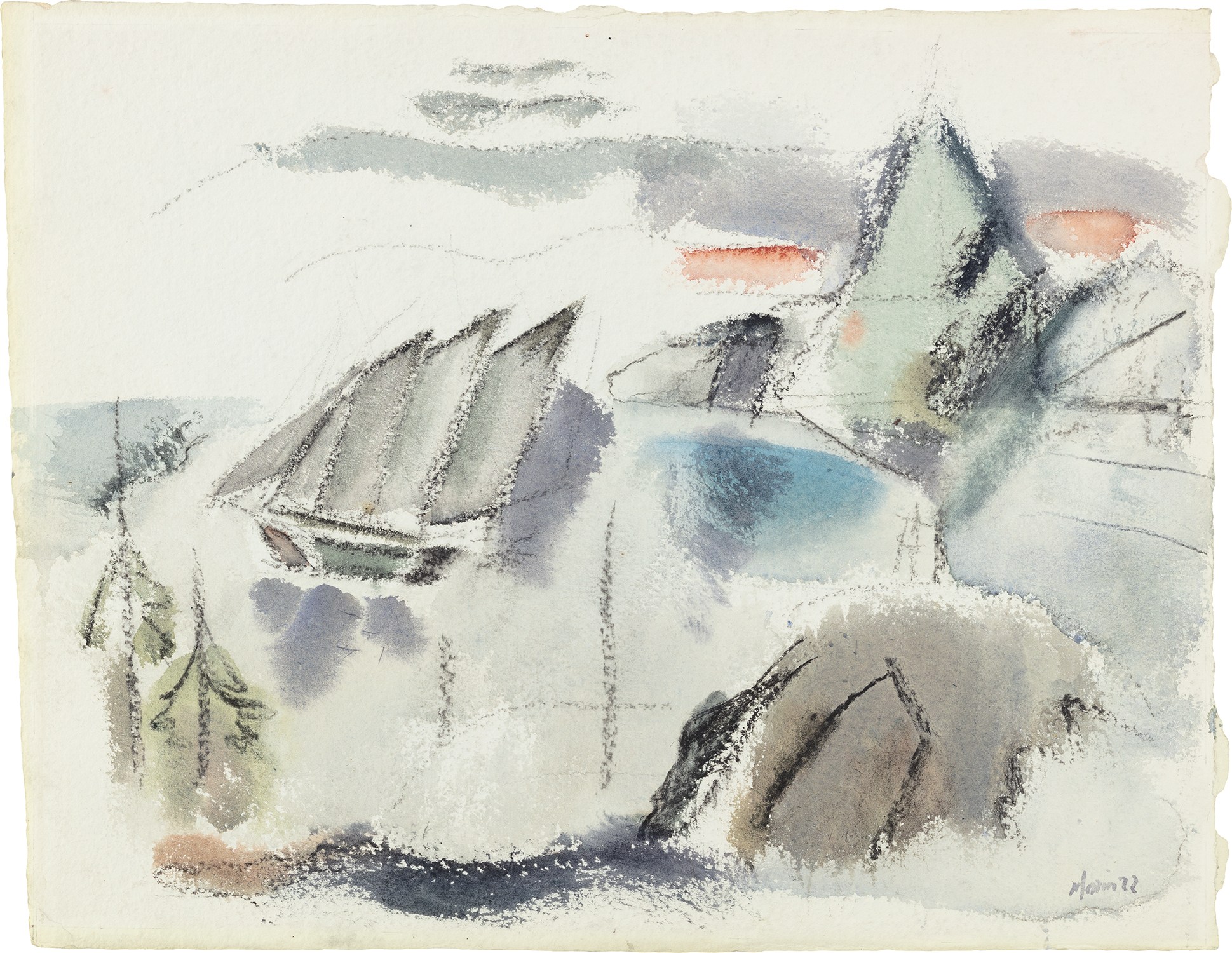
From Green Head, 1922
John Marin was born in 1870 in Rutherford, New Jersey, into a middle class family shaped by practical ambitions rather than artistic ones. His mother died shortly after his birth, and he was raised largely by his maternal aunts, women of quiet refinement whose sensibility left a lasting impression on him. He worked for some years as an architectural draftsman before his true calling asserted itself, and he enrolled at the Pennsylvania Academy of the Fine Arts in Philadelphia, then one of the most rigorous and prestigious art institutions in the country. He later studied at the Art Students League in New York, absorbing the technical foundations that would serve him even as he eventually abandoned their constraints entirely.
In 1905, Marin departed for Europe, and the years he spent there from 1905 to 1911 proved to be genuinely transformative. He traveled through France, Italy, and beyond, producing etchings and watercolors that already showed a restless intelligence at work. His encounters with avant garde movements then reshaping the Parisian art world exposed him to the structural experiments of Cubism and the blazing chromatic freedom of Fauvism. Yet Marin was never a follower.
John Marin
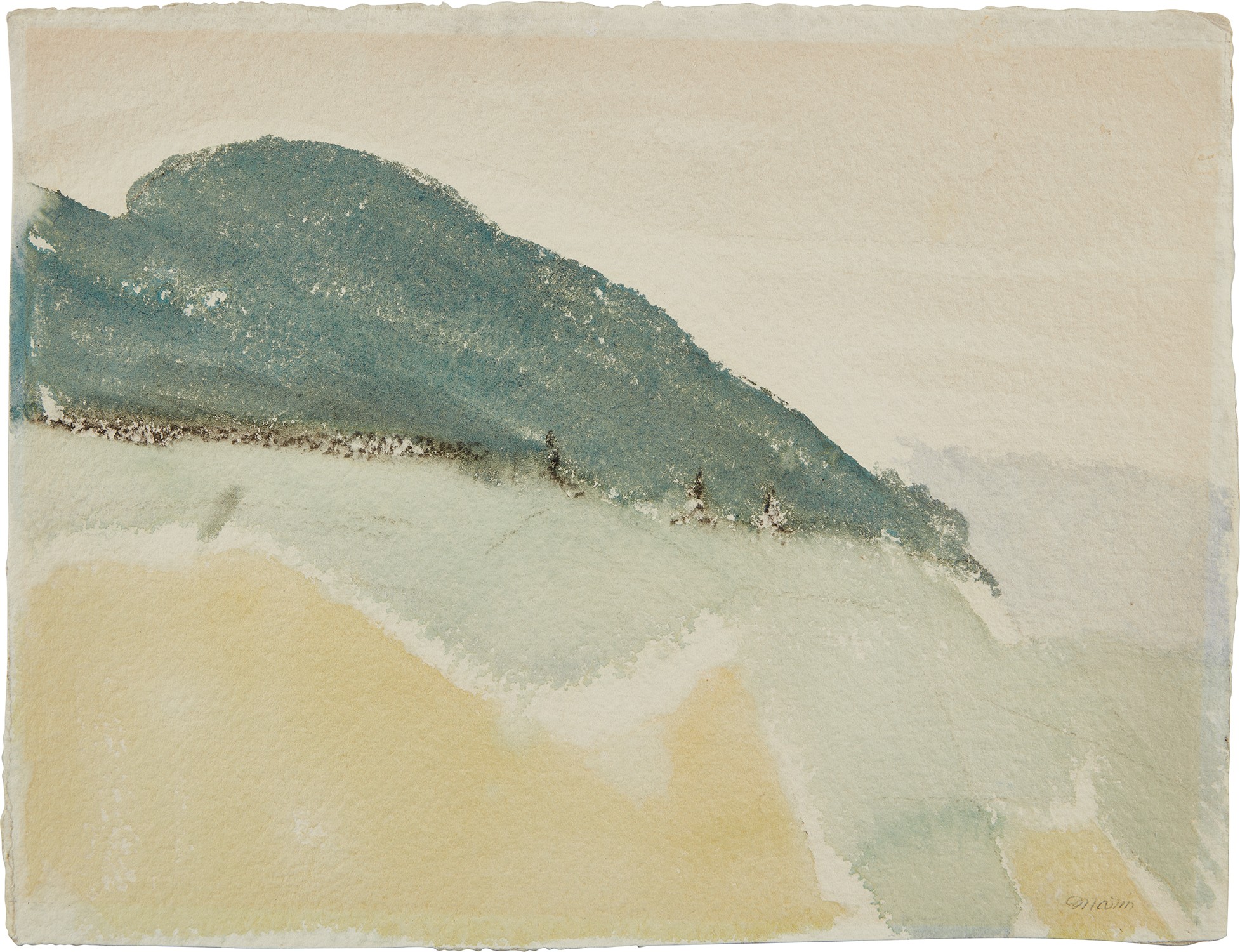
Lake and Mountains
He absorbed these influences the way a strong river absorbs tributaries, folding them into a current that remained distinctly his own. By the time he returned to the United States, he was carrying within him the seeds of something genuinely new. The decisive relationship of his career began when Alfred Stieglitz, the legendary photographer and gallerist, took Marin under his wing. Stieglitz showed Marin's work at his celebrated 291 gallery in New York as early as 1909, positioning him alongside European modernists and a handful of equally adventurous Americans.
“The sea that I paint may not be the sea, but it is a sea, not an abstraction.”
John Marin
This association would last decades and place Marin at the very center of the American modernist project. It was through the 291 circle and later through Stieglitz's An American Place gallery that Marin found both his audience and his critical champions. The poet and critic William Carlos Williams admired him. So did collectors who recognized that something genuinely rare was happening on those sheets of paper.
John Marin
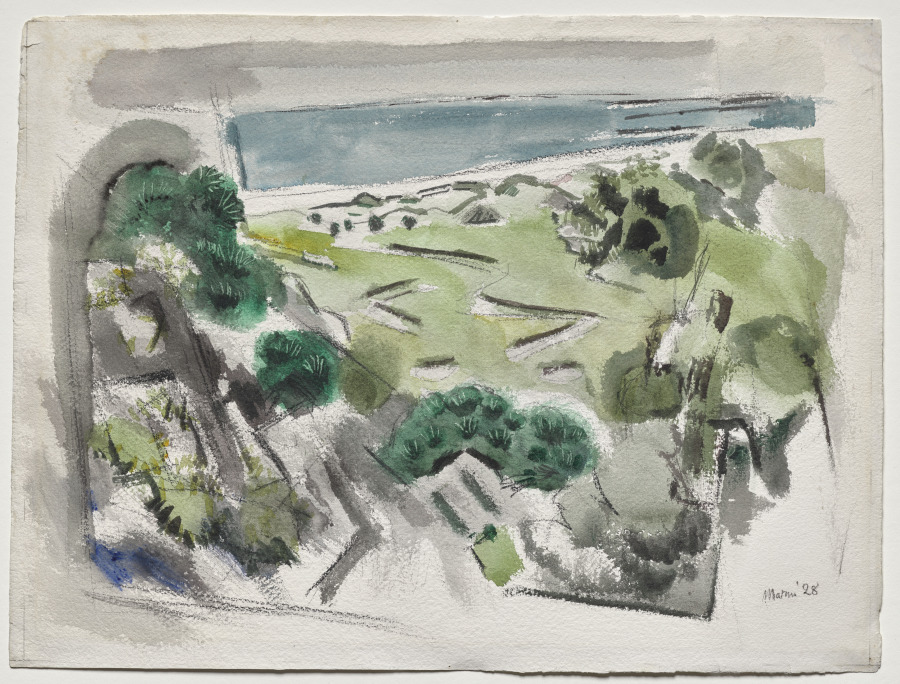
On Morse Mountain, No. 6, Maine, 1928
Marin's mature work divides itself naturally across two great subjects: the urban dynamism of New York and the wild coastal grandeur of Maine. His depictions of Lower Manhattan, the Brooklyn Bridge, and the elevated railway lines of the city are among the most thrillingly alive images ever made of urban America. Works such as the Weehawken Sequence from 1916 and Movement Lower Manhattan capture the city not as architecture but as force, as a thing of competing pressures and vibrations. His lines fracture and overlap, his washes of color push and pull against one another, and the result feels less like a view of the city and more like the experience of being inside it.
Maine offered him an opposite but equally compelling theater. In watercolors such as From Green Head from 1922, On Morse Mountain No. 6 Maine from 1928, and the luminous Tree and Sea Maine from 1919, Marin rendered the coast as a place of perpetual contest between elements, where sea and sky and rock seem to negotiate their boundaries with each new tide. The Green Sea, Movement, Stonington, Maine from 1921 is a particularly ravishing example, its wiped passages and charcoal accents creating an image that seems to move even as you stand still before it.
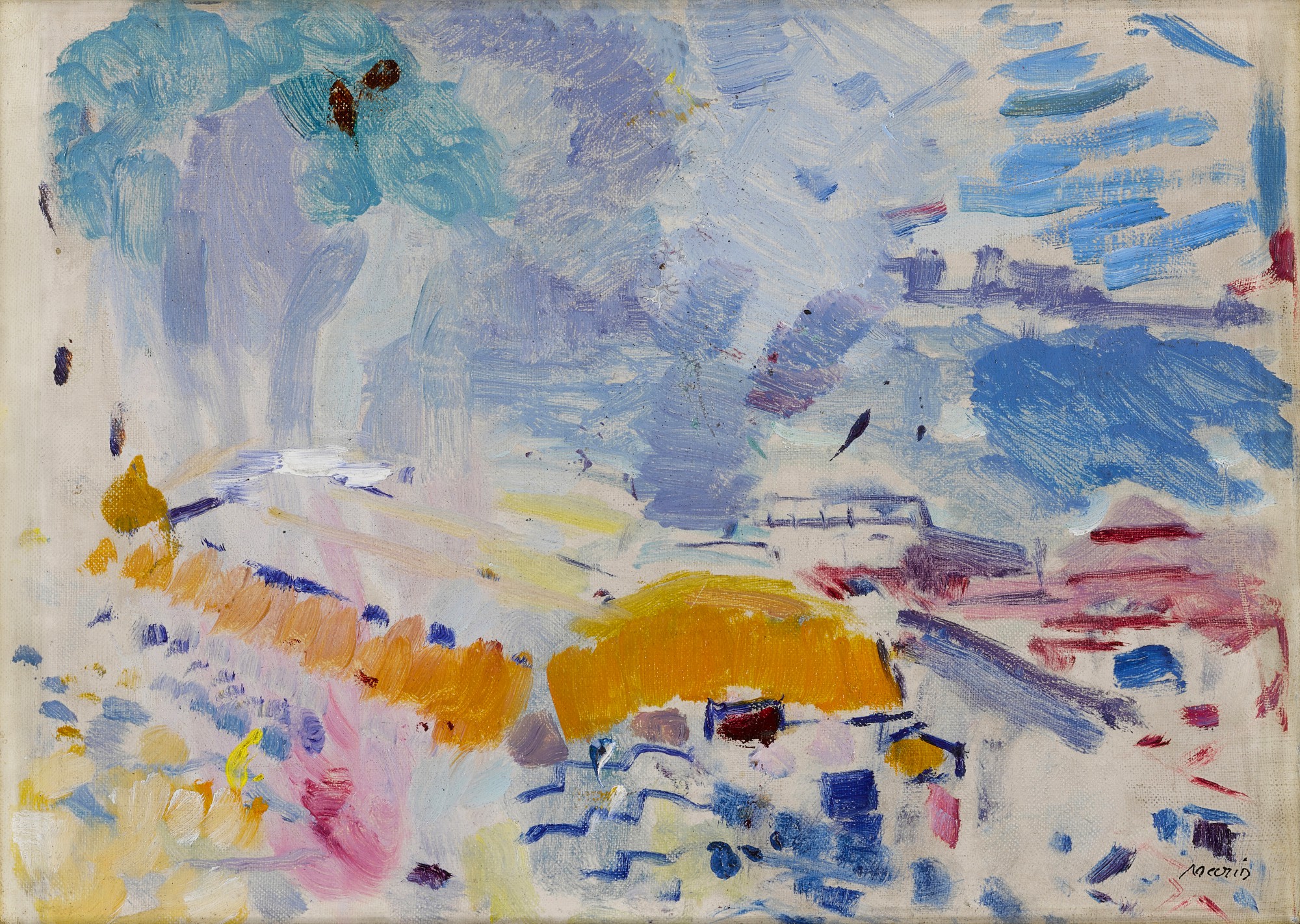
John Marin
Weehawken Sequence, 1916
The technical range Marin brought to his printmaking deserves its own consideration. His etchings, works such as Downtown the El and Sailboat, demonstrate a mastery of the medium that is entirely self assured. The richly inked lines carry burr and tone with an intimacy that only comes from a printmaker who genuinely loves the physical conversation between needle and plate. These are not secondary works or studies toward something else.
They are fully realized achievements, and collectors who have focused on Marin's prints have been rewarded with some of the most nuanced and collectible impressions in the American printmaking tradition. For collectors and advisors, the Marin market has long rewarded attentiveness and knowledge. His watercolors regularly appear at major auction houses including Christie's and Sotheby's, where strong examples command significant prices and where condition and provenance remain paramount. Works with clean ownership histories, particularly those that passed through the Stieglitz circle or early American collections, carry a particular resonance.
The variety within his output also means there are meaningful points of entry across a range of budgets and collecting philosophies. Collectors drawn to works on paper find in Marin one of the unassailable masters of the medium in any national tradition. Those assembling a focused collection of American modernism will find that no representation of that movement feels complete without at least one of his sheets. Marin belongs to a generation of Americans who defined modernism on their own terms rather than simply importing it from abroad.
His peers and contemporaries included Marsden Hartley, Arthur Dove, Georgia O'Keeffe, and Charles Demuth, artists who all shared the Stieglitz circle and a conviction that American subjects deserved a fully contemporary language. Among these artists, Marin stands out for the sheer physicality and spontaneity of his touch. Where Hartley built his canvases with somber deliberation and O'Keeffe pursued a radiant precision, Marin worked fast, with a confidence that looked almost casual but was in fact the product of decades of discipline and looking. John Marin died in 1953 in Addison, Maine, the state that had given him so much of his richest subject matter.
He left behind a body of work that feels, even now, astonishingly present. His watercolors do not belong to history in the way that academic paintings do. They belong to the same perpetual now that all great art inhabits, the instant in which a human being looked at something and found a way to transmit not just what they saw but what it felt like to see it. For collectors, for museums, and for anyone who has ever stood before one of his vibrating sheets of paper and felt the world reorganize itself slightly, John Marin remains an indispensable artist and an ongoing source of genuine wonder.
Explore books about John Marin
John Marin: A Stylistic Analysis and Catalogue Raisonné
Sheldon Reich
John Marin
Sheldon Reich
John Marin: The Artist's Vision
Ruth E. Fine
John Marin and the Sea
Debra Bricker Balken
John Marin: Modernism and Tradition
Glenn C. Peck

Writings of John Marin
Dorothy Norman
John Marin: Selected Paintings and Drawings
Amon Carter Museum