John Giorno
John Giorno: Poetry Loud, Life Luminous
Artist Spotlight · The Collection Editorial
“I always wanted to give people something real, something they could use in their lives.”
John Giorno, interview with Artforum
Picture New York in the early hours of a summer morning in 1963. A young man sleeps. Andy Warhol trains his camera on him and lets it run for five hours and twenty minutes. The resulting film, Sleep, introduced the world to John Giorno, then twenty six years old and already at the electric center of one of the most consequential artistic networks of the twentieth century.
John Giorno
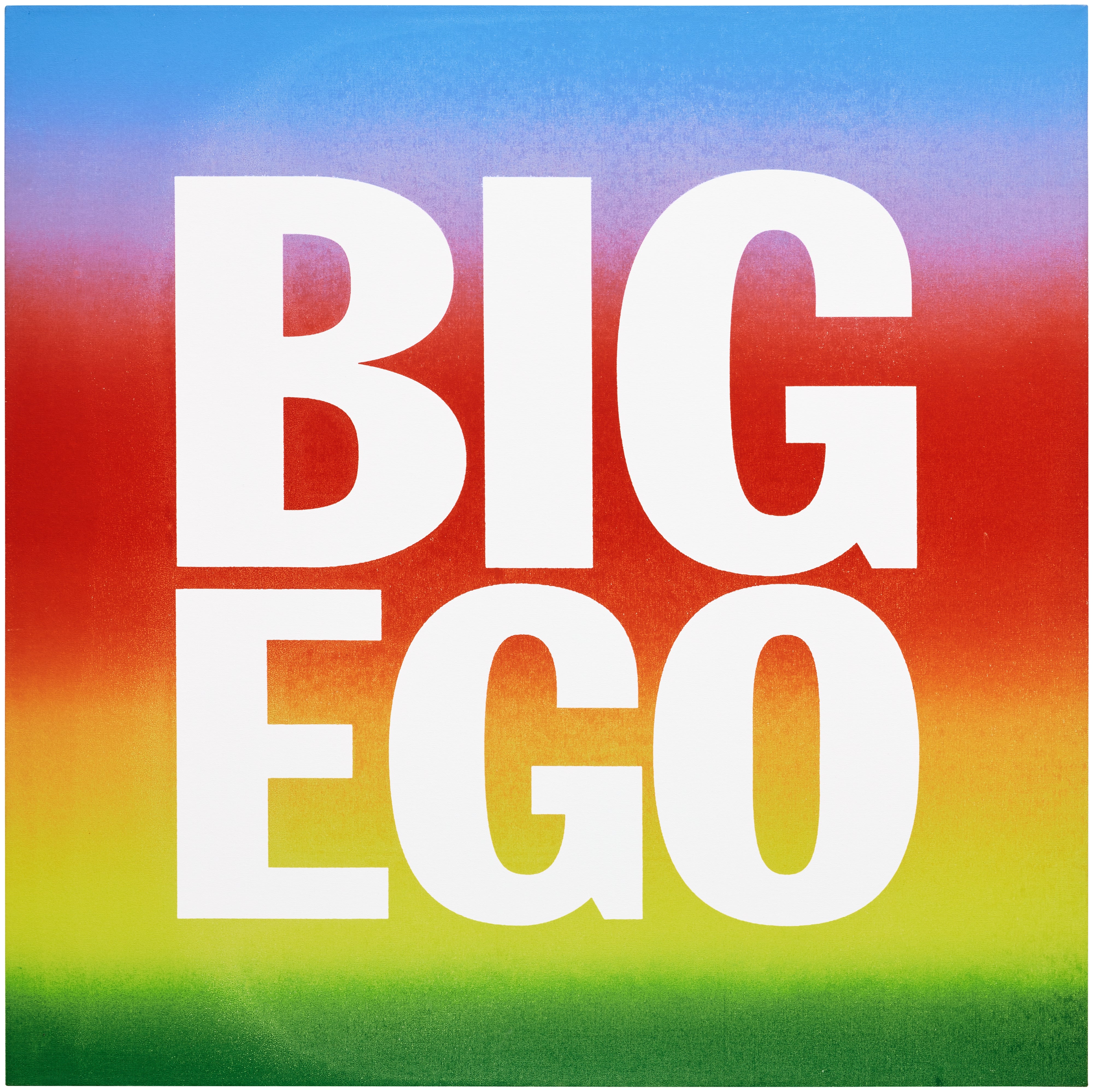
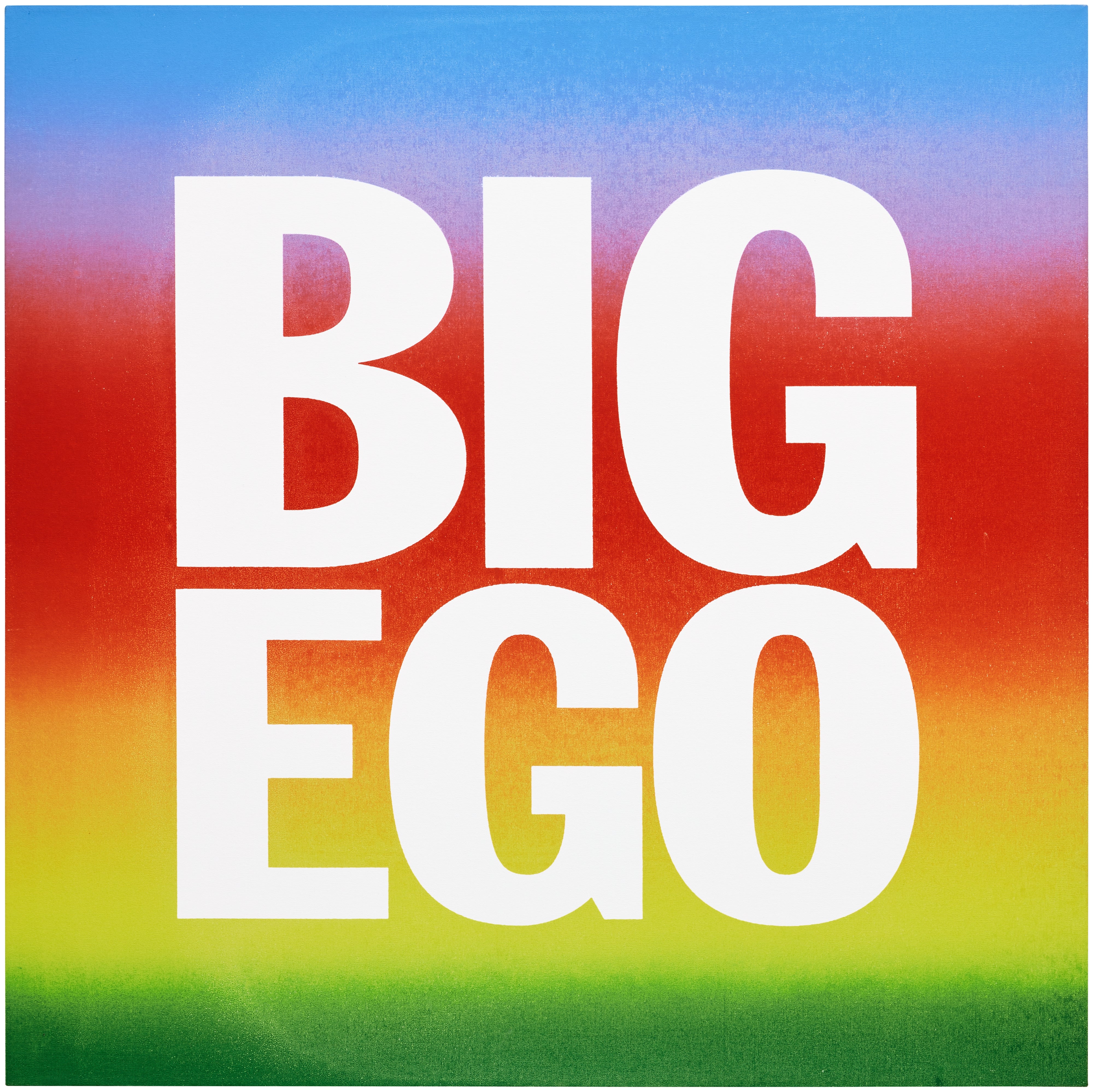
Big Ego, 2015
That image, of a body at rest becoming a canvas for pure duration and attention, turns out to be one of the great ironies of art history. John Giorno was never really still. For more than five decades, he transformed poetry into spectacle, activism into aesthetics, and language itself into a visual medium of startling beauty and force. Giorno was born in New York City in 1936 and grew up in a world far removed from the downtown lofts and experimental galleries he would eventually inhabit.
He studied at Columbia University, graduating in 1958 with a degree that gave him the literary foundations he would spend the rest of his life gleefully subverting. New York in the late 1950s and early 1960s was crackling with possibility. Abstract Expressionism was giving way to something stranger and more promiscuous in its influences. Pop Art was arriving.
John Giorno
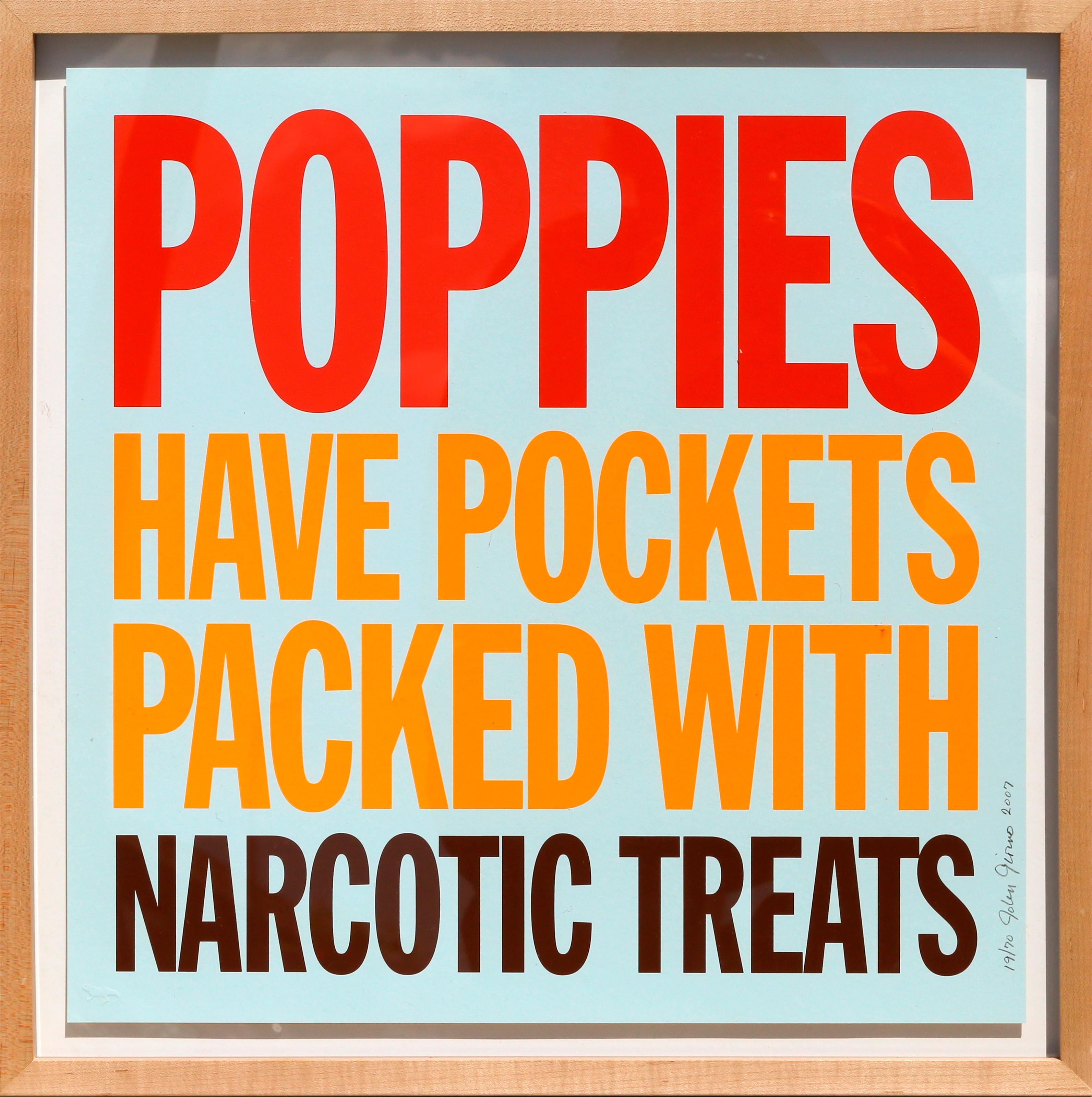
Poppies Have Pockets Packed With Narcotic Treats
The Beats were rewriting the rules of what a poem could do and where it could live. Giorno absorbed all of it and pushed further still. His friendship and romantic relationship with Andy Warhol placed him at the very origin point of Pop's transformation of American culture, but Giorno was never simply a satellite in someone else's orbit. By 1968 he had founded Dial A Poem, a telephone service that allowed anyone in New York to call a number and hear a poem read aloud.
It was a radical democratisation of art, reaching people in their homes, bypassing the gallery system entirely, and anticipating the logic of networked media by decades. The project eventually expanded into an international phenomenon, attracting contributions from Allen Ginsberg, William S. Burroughs, Patti Smith, and Frank O'Hara among many others. It also led to a Grammy nominated record release, a remarkable crossover moment for a poet working in the experimental tradition.
John Giorno
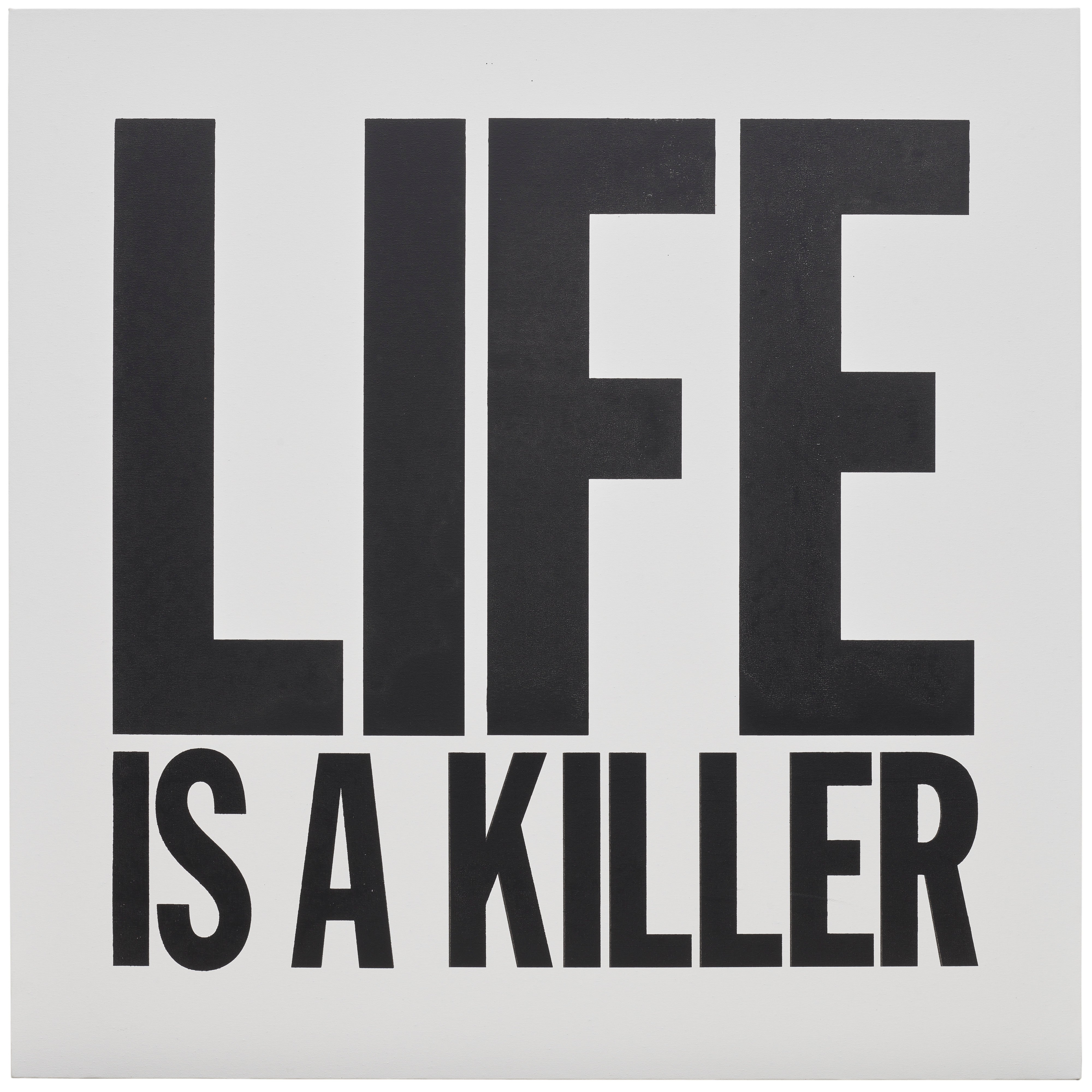
Life Is A Killer, 2012
Giorno's relationship with William S. Burroughs and Brion Gysin deepened his practice considerably. From Gysin and Burroughs he absorbed the cut up method, the idea that language could be fragmented, reassembled, and made to yield new meanings through collage like operations. But where Burroughs used these techniques to generate a kind of paranoid, destabilising prose, Giorno brought them to bear on something more directly emotive, more bodily, more concerned with the lived rhythms of pleasure, grief, and spiritual awakening.
His involvement with Tibetan Buddhism, particularly his long study under Dudjom Rinpoche and later Chatral Rinpoche, gave his work a contemplative dimension that ran beneath its raucous surface energy. It is in his visual works that Giorno's full range becomes most legible to collectors today. Beginning in the 1960s and continuing through the last years of his life until his death in 2019, he developed a body of text based works that transformed his poems into bold graphic objects. Large scale screenprints on canvas became his signature format.
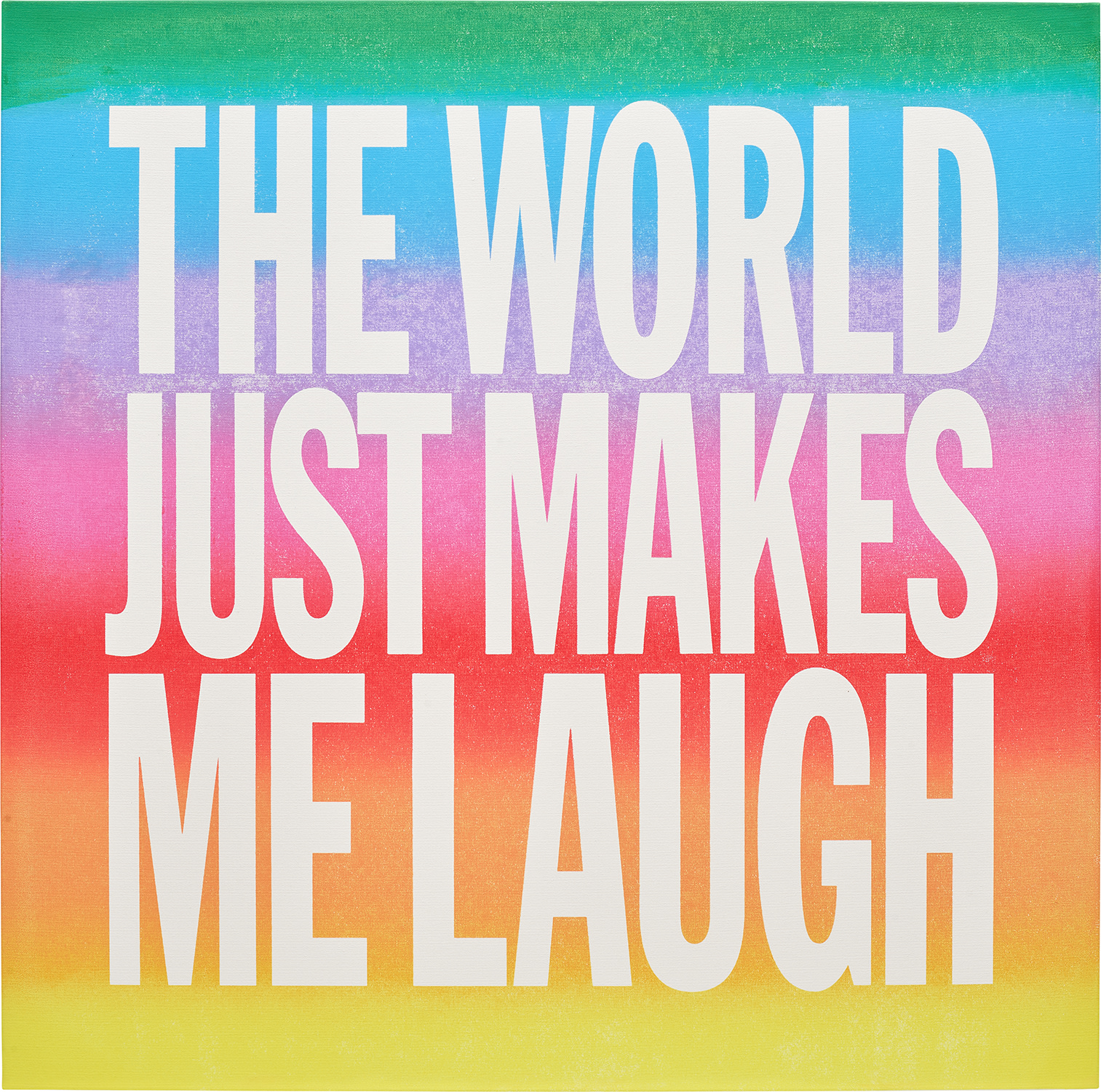
John Giorno
The World Just Makes Me Laugh, 2018
Works like Life Is A Killer, produced across multiple editions including the striking black and blue variant from 1988, demonstrate how Giorno wielded typography as both hammer and caress. The phrases he selected, short, declarative, and often paradoxical, land with the force of a fist but open into something meditative upon reflection. Big Ego from 2015 and The World Just Makes Me Laugh from 2018, one of the last major works completed before his death, show the consistency and confidence of an artist who had fully inhabited his visual language. The latter, painted in acrylic on canvas, carries a buoyancy that feels hard won, the laugh of a man who had seen everything and still chose joy.
For collectors, Giorno's works occupy a genuinely singular position. They exist at the crossroads of several major movements and collecting categories simultaneously. They are Pop in their graphic directness and their willingness to use commercial printing techniques without apology. They are conceptual in their insistence that the text is the work.
They are tied to the history of performance and sound poetry in ways that give them a biographical resonance few other visual objects can claim. Works on paper, including screenprints such as Poppies Have Pockets Packed With Narcotic Treats, offer an accessible point of entry, while the large canvas works carry the kind of room commanding presence that serious collectors prize. Collaborative editions, such as the prints made alongside Tom Slaughter and published by George Mulder Fine Arts in New York, reveal the generosity and communal spirit that defined his practice throughout his career. Giorno belongs to a lineage that includes Jasper Johns, whose flag paintings made text and image inseparable, and Ed Ruscha, whose word based canvases share Giorno's interest in the visual weight of language.
He anticipates artists like Barbara Kruger, Jenny Holzer, and Lawrence Weiner, all of whom would mine similar territory between poetry, politics, and graphic form in the decades that followed. Yet Giorno remains distinct. His work is warmer than Kruger's, more sensuous than Weiner's, and more rooted in the body and in spiritual practice than almost any of his peers. He was also deeply committed to AIDS activism throughout the 1980s and 1990s, a dimension of his life and work that gives his statements about mortality and endurance a specific historical gravity.
John Giorno died in New York on October 11, 2019, at the age of eighty two. The tributes that followed were remarkable in their breadth, coming from poets, visual artists, musicians, activists, and spiritual practitioners in equal measure. In the years since his death, institutional attention to his work has grown steadily. His legacy is that of an artist who refused every available silo, who moved between media and communities with an openness that was itself a kind of philosophy.
To live with a Giorno work is to live with language that insists on being felt rather than merely read, with art that was made for exactly the walls it now inhabits.
Explore books about John Giorno
Dial-A-Poem Poets
John Giorno
Holy Soul Jelly Roll: Poems and Songs 1949-1993
John Giorno
Subduing Demons in the Land of Bliss
John Giorno
Please Master
John Giorno
Vibrations: The Life and Work of John Giorno
Various Contributors