John Gerrard
John Gerrard Illuminates Our Planetary Moment
Artist Spotlight · The Collection Editorial
“The work is about the Sun. The Sun is a kind of engine that drives everything on Earth.”
John Gerrard, interview on Solar Reserve
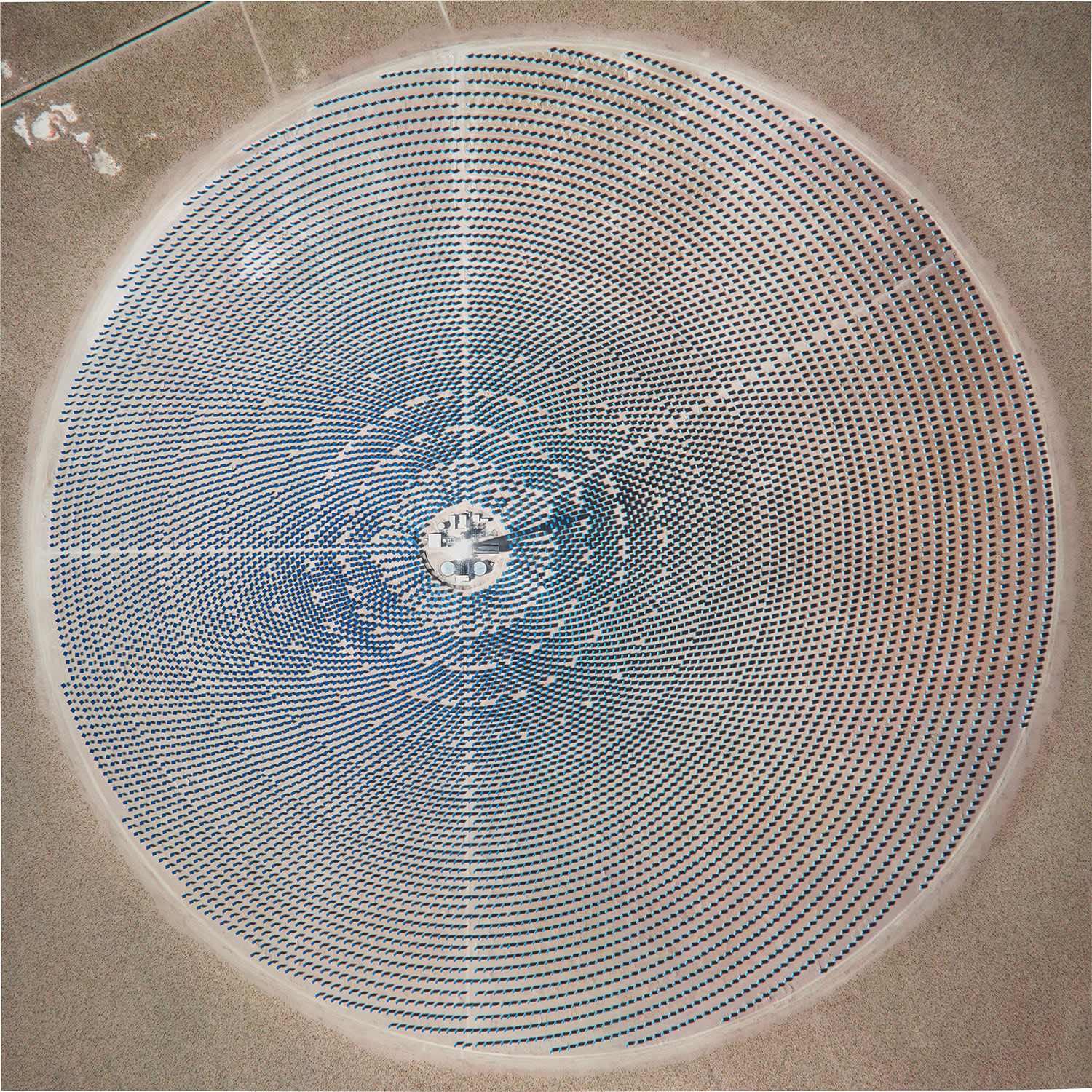
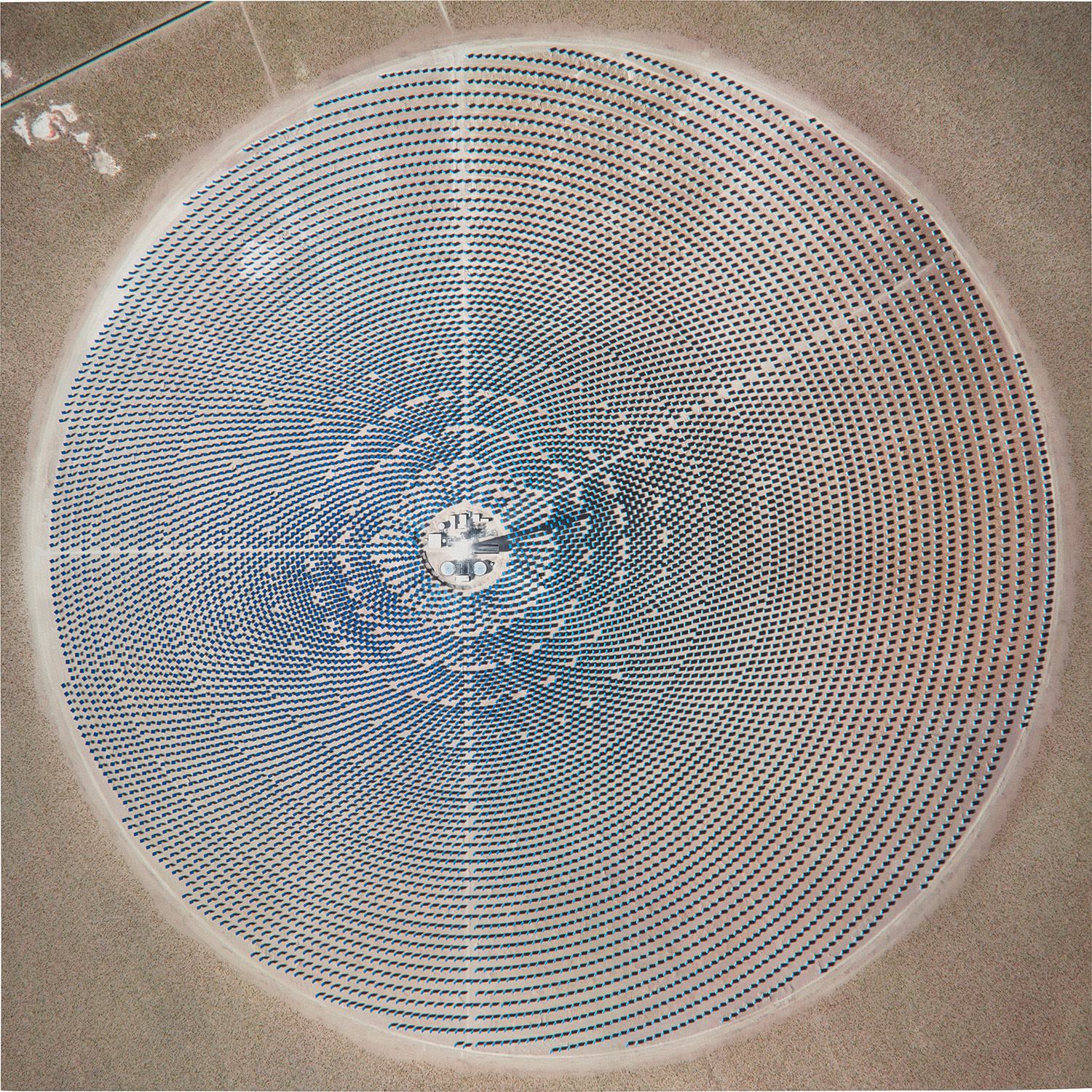
When John Gerrard's Solar Reserve flickered to life across a vast screen, viewers found themselves watching a single concentrated solar power plant in Nevada trace its slow arc through a simulated year, its thousands of mirrors tilting in unison toward a blazing sun. The work unfolded in real time, synchronized to the actual rotation of the earth, a feat of computational precision that felt less like art and more like witnessing a new form of consciousness. That piece, which drew significant critical attention when it was presented at major international venues including the 2012 Venice Biennale, crystallized everything that makes Gerrard one of the most urgent and formally rigorous artists working today. He operates at the intersection of technology, ecology, and power in ways that no other artist quite manages.
John Gerrard
John Gerrard, 2014
Gerrard was born in Dublin in 1974, coming of age in an Ireland that was undergoing rapid modernization while still carrying the weight of agricultural and industrial tradition. He studied at the Ruskin School of Drawing and Fine Art at the University of Oxford and later pursued advanced work at the Städelschule in Frankfurt, an institution that has nurtured some of the most demanding conceptual and media artists of the past several decades. That European formation gave Gerrard a rigorous theoretical grounding, but it was his sustained attention to the American landscape and its infrastructure of extraction that would ultimately define his voice. There is something quietly radical about an Irish artist choosing the flatlands of Oklahoma and Texas as his primary subject matter, finding in those ordinary and overlooked places the grand systems that shape contemporary life.
His development as an artist has been inseparable from his embrace of real time computer graphics, the same rendering technology used in high end video game production and military simulation. Rather than creating pre rendered animations, Gerrard builds living computational environments that run continuously, governed by the actual position of the sun and the coordinates of specific geographical locations. This means his works are never exactly the same twice, unfolding over months, years, or in some cases an entire century. The ambition embedded in that formal choice is staggering.
John Gerrard
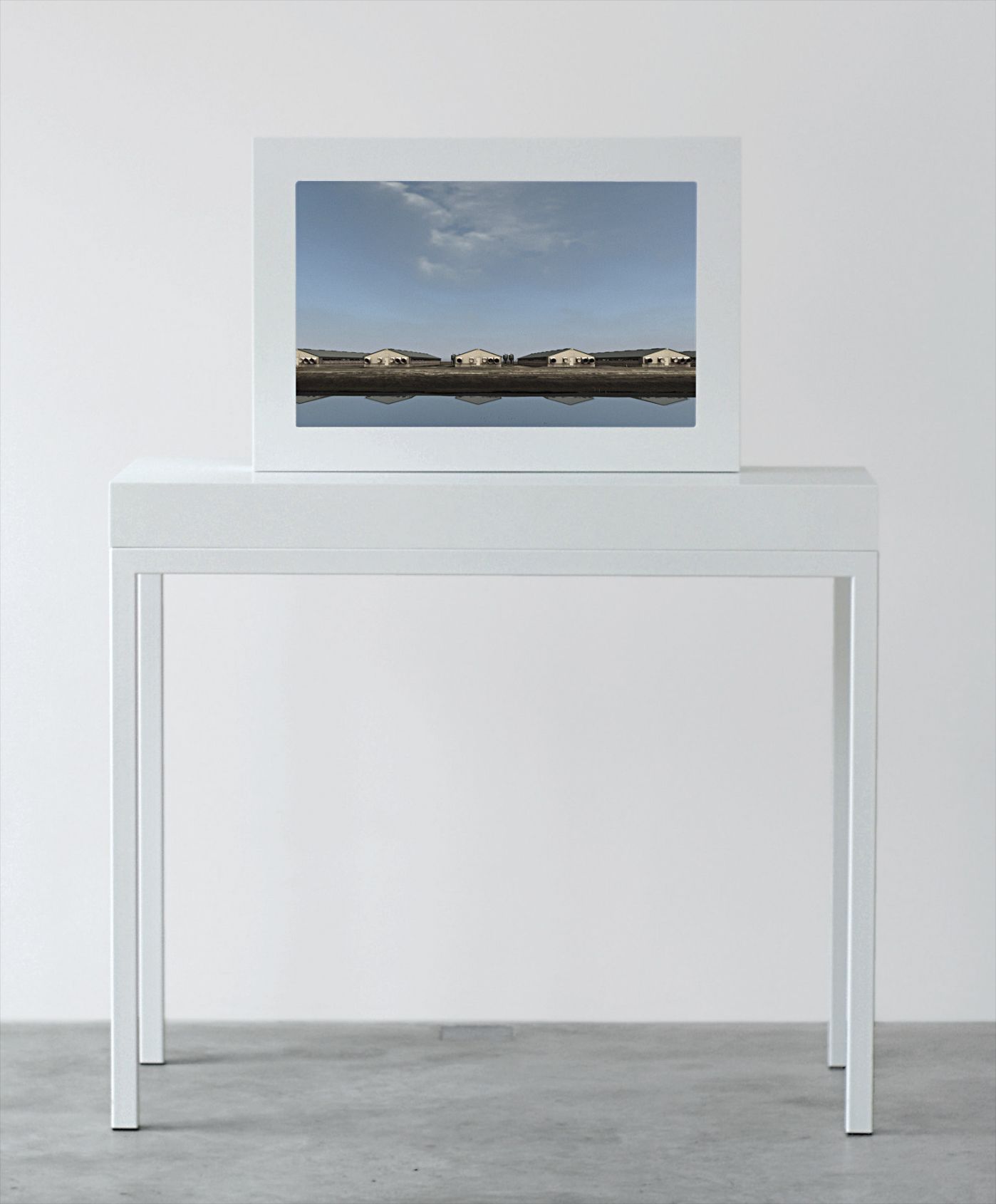
Grow Finish Unit (Eva, Oklahoma)
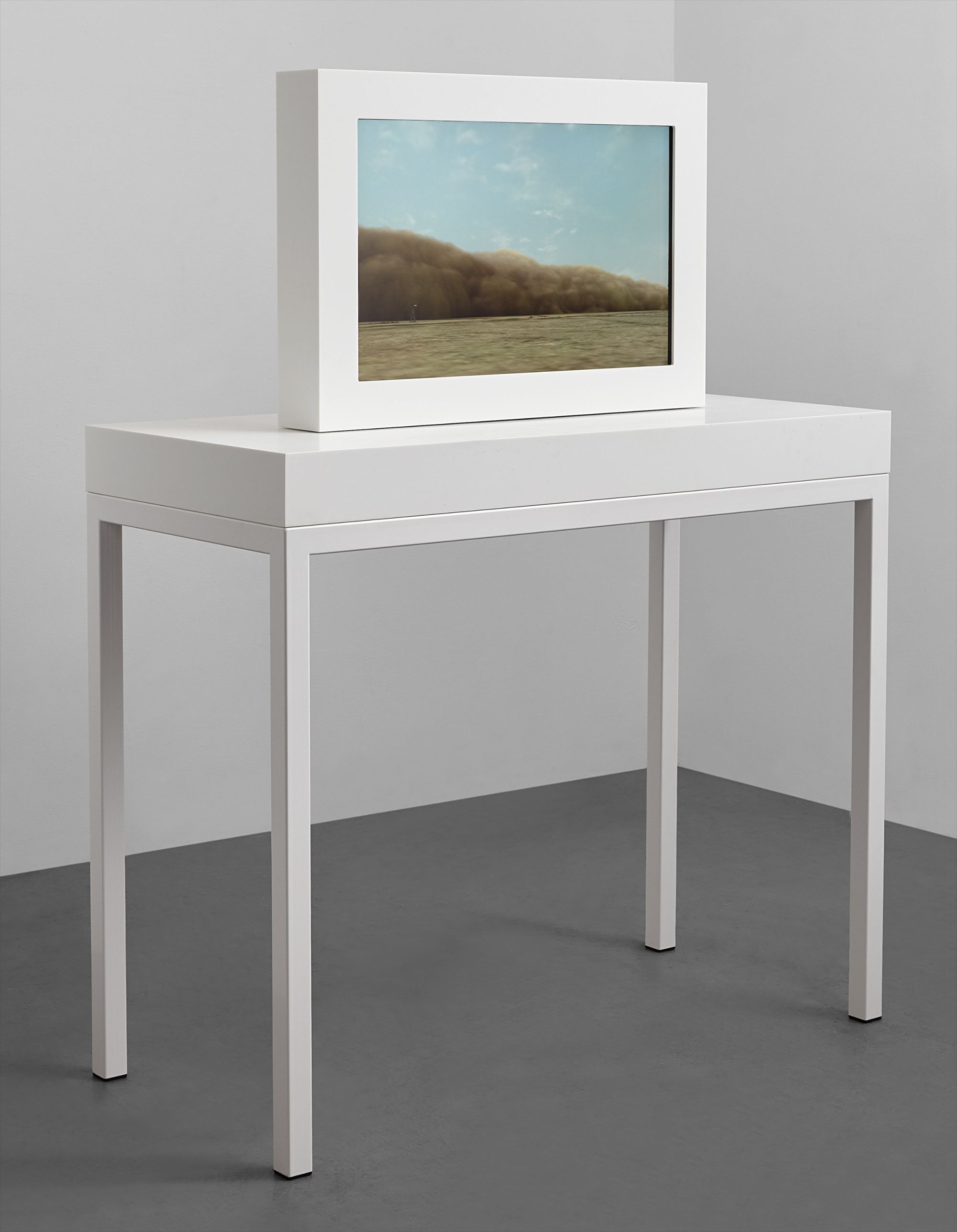
Where many digital artists settle for the loop, Gerrard insists on duration, on the slow revelation of systems that operate beyond ordinary human attention spans. Among the works that best illuminate his practice, Dust Storm (Dalhart, Texas) stands as a particularly haunting achievement. The piece recreates a massive dust storm moving across the Texas panhandle, evoking the ecological catastrophe of the 1930s Dust Bowl with a precision that feels both documentary and elegiac. Sow Farm (Near Libbey, Oklahoma) and Grow Finish Unit (Eva, Oklahoma) take a similarly unflinching look at industrial agriculture, presenting vast animal farming operations in photorealistic simulation that strips away any possibility of sentimentality.
These are not polemical works in any simple sense. They observe. They render. They allow the scale and strangeness of these systems to accumulate meaning without editorial interference.
John Gerrard
Dust Storm (Dalhart, Texas)
Lufkin (near Hugo, Colorado) continues this geographic specificity, naming actual places and locking his simulations to their real world coordinates with the devotion of a cartographer or a witness. The market for Gerrard's work reflects the seriousness with which institutions and collectors regard him. His editions, including the Solar Reserve five plates series in which signed and numbered prints offer collectors a tangible portal into his larger conceptual universe, have found homes with sophisticated buyers who understand that collecting at the frontier of technology and ecology requires a particular kind of vision. Works presented in his characteristic Corian frames and consoles carry a material elegance that complements rather than competes with the digital imagery they contain.
The Corian format, which Gerrard has developed into something of a signature aesthetic device, gives his plasma and screen based works a sculptural authority that holds its own in any serious collection. Collectors drawn to artists such as Andreas Gursky, whose large scale photographic works also inventory global industrial systems, or to the time based media practices of artists like Hito Steyerl, will find in Gerrard a compelling and complementary proposition. Gerrard belongs to a generation of artists who came to prominence in the early 2000s and who have used digital tools not to celebrate technology but to interrogate it, to ask what it costs and whose labor sustains it. His work shares a concern with energy and infrastructure that connects him to artists such as Edward Burtynsky, whose photographs of oil fields and manufacturing zones occupy adjacent territory, though Gerrard's chosen medium of simulation introduces a layer of philosophical complexity that photography cannot quite reach.
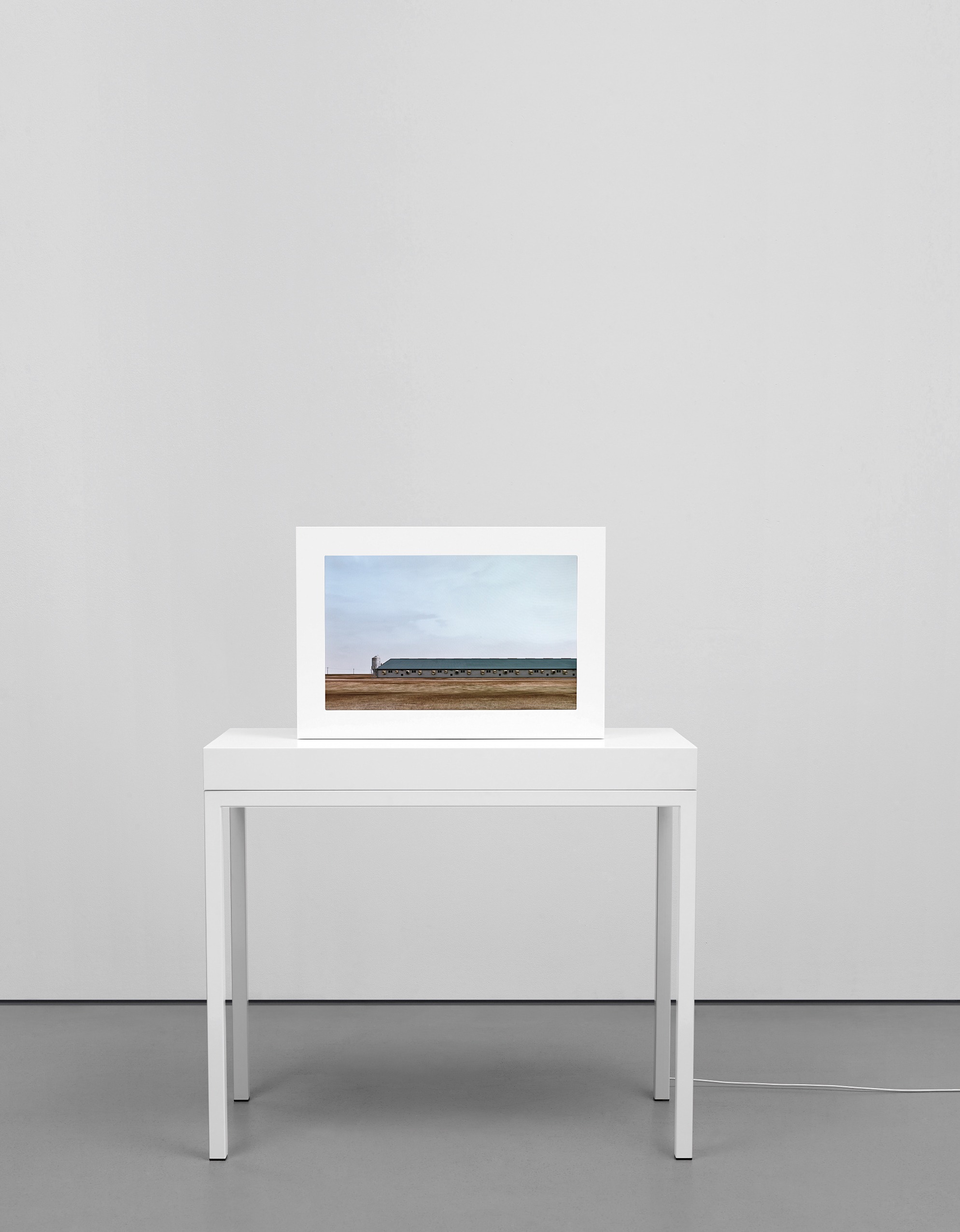
John Gerrard
Sow Farm (Near Libbey, Oklahoma)
A simulation is always a proposition about reality rather than a record of it, and Gerrard uses that distinction with great intentionality. His works ask: what does it mean to model a place, to run it forward in time, to watch it without being able to intervene? The presentation of his work in Times Square in New York brought these questions to one of the most commercially saturated public spaces on earth, a context that amplified the quiet subversiveness of his practice. Surrounded by advertising and spectacle, his simulations of oil fields and solar infrastructure read as a kind of counter programming, images of the actual systems of energy and extraction that underwrite the illuminated city around them.
That intervention demonstrated a quality that distinguishes the very best of Gerrard's work: the ability to reframe familiar environments by introducing something slow, geological, and unglamorous into spaces that demand the instant and the spectacular. As attention to climate, energy transition, and the environmental costs of digital infrastructure continues to intensify, Gerrard's work feels not merely timely but genuinely necessary. He has been making these works for two decades, and their prescience is only becoming more apparent. For collectors, institutions, and audiences, this is an artist whose practice rewards long attention, whose formal intelligence deepens on return visits, and whose commitment to a singular vision has produced a body of work that will endure.
To live with a John Gerrard is to live with a quiet reckoning, a window onto systems that are always running, whether we are watching or not.
Explore books about John Gerrard