John Constable
Constable's Light, Forever Fresh and True
Artist Spotlight · The Collection Editorial
“I should paint my own places best; painting is but another word for feeling.”
Letter to John Fisher, 1821
There is a moment in the galleries of the Victoria and Albert Museum in London where visitors reliably slow their pace and fall quiet. It happens in front of John Constable's full scale oil sketches, where the sky seems to breathe and the Suffolk earth appears genuinely wet underfoot. The V&A holds the largest collection of Constable's works in the world, a bequest from the artist's daughter Isabel in 1888, and the paintings remain among the most visited and emotionally affecting works in the building. That a landscape painter working in the early nineteenth century can still stop people in their tracks today speaks to something essential in his achievement.
John Constable
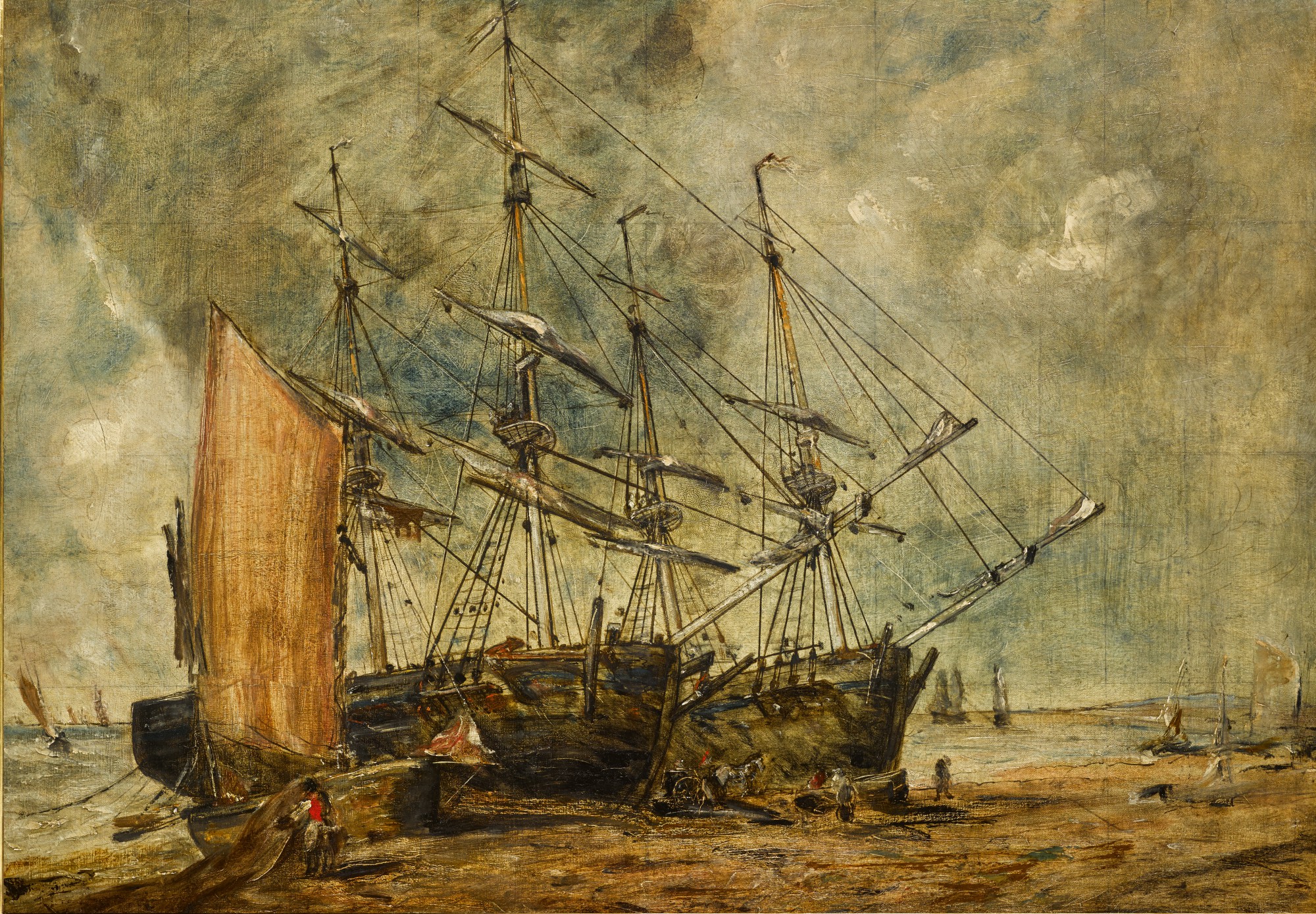
Colliers unloading on Hove Beach, looking towards Shoreham, Brighton《荷夫灘上卸貨的運煤船,遠眺布萊頓索爾海姆》
Constable did not merely paint the English countryside; he reimagined what paint itself could do in the service of felt, immediate experience. John Constable was born in June 1776 in East Bergholt, a village in the Stour Valley on the border of Suffolk and Essex. His father, Golding Constable, was a prosperous corn merchant who operated windmills and watermills across the region, and the rhythms of agricultural and river life shaped the young Constable with a specificity that would never leave his paintings. He was not a child prodigy drawn early to galleries and academies.
Instead he spent his formative years roaming the meadows, towpaths, and locks of the Stour, absorbing a landscape with the intimacy of someone who expected to live and work within it forever. It was his friendship with the amateur artist and collector Sir George Beaumont, who introduced him to the work of Claude Lorrain and carried a small Hobbema in his carriage as a traveling companion, that first sharpened Constable's sense of what landscape painting could aspire to be. Constable entered the Royal Academy Schools in London in 1799, arriving later than many of his peers and with less of the conventional ambition that drove fashionable portraitists and history painters. He was uninterested in the Grand Tour and never traveled to Italy, a decision that set him apart from virtually every other serious English artist of his generation.
John Constable
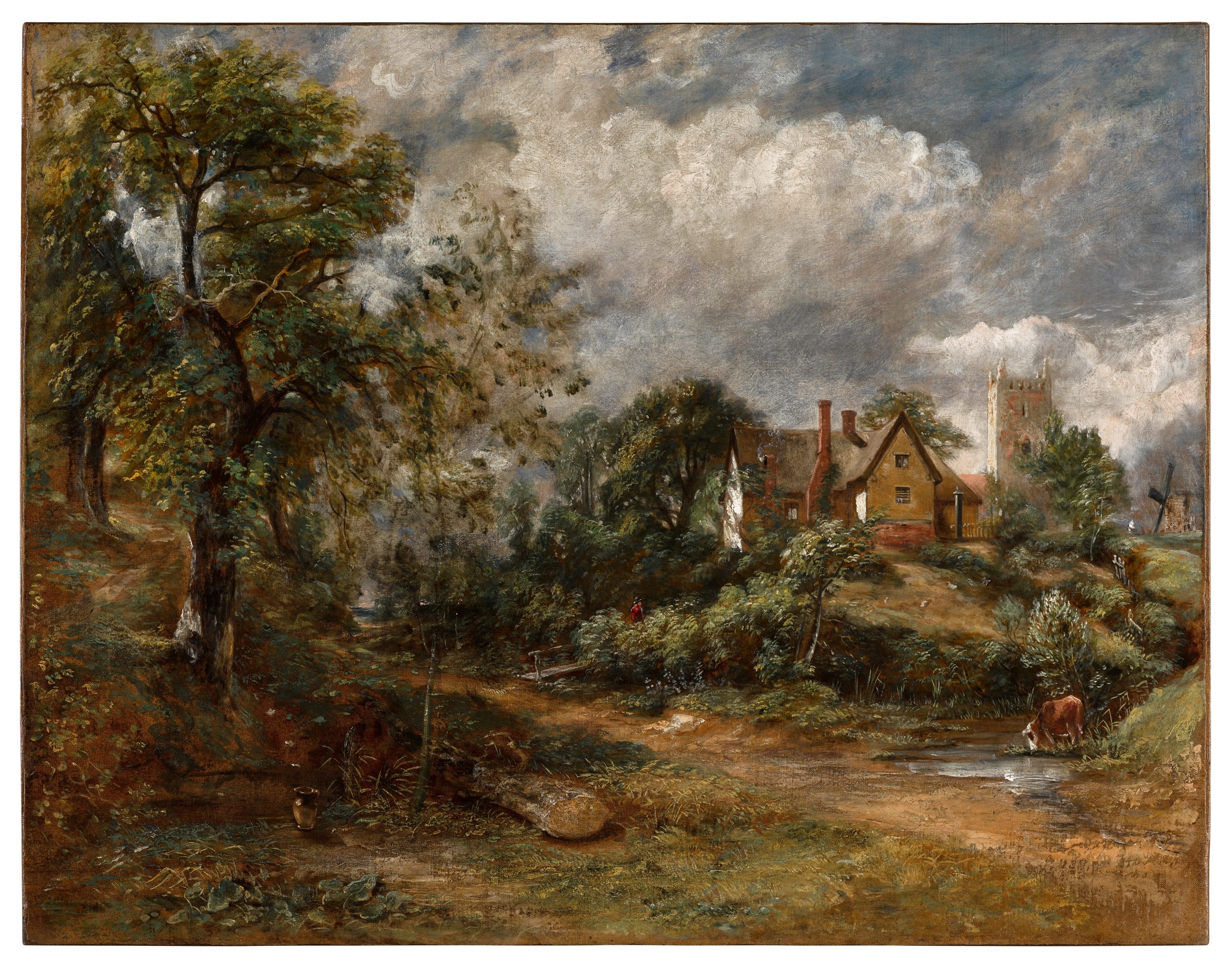
The Glebe Farm 《教區農場》
Where his contemporaries looked to the classical south for elevation and authority, Constable looked home, to the fields around East Bergholt, the sky over Hampstead Heath, the barges moving slowly along the Stour. His early work showed careful study of Dutch landscape masters, particularly Jacob van Ruisdael, whose atmospheric skies and honest rendering of ordinary terrain gave Constable a precedent for the kind of painting he was reaching toward. By the second decade of the nineteenth century his practice had begun to crystallize into something genuinely new. The breakthrough years of the 1810s and 1820s produced the works by which Constable is most fully understood.
“The sky is the source of light in nature and governs everything.”
John Constable, lecture notes, circa 1830s
He developed the practice of painting large scale oil sketches directly from observation before producing the finished exhibition paintings he called his "six footers." This two stage process allowed him to capture transient effects of weather and light with a freedom and urgency that the exhibition works would then interpret rather than simply copy. The Lock, dating to 1824, exemplifies his mature vision: a working river scene animated by shifting cloud and a quality of particular, damp English light that no painter before him had achieved with such conviction. His View of Dedham Vale, connecting the panoramic sweep of the countryside he had known since childhood with a painterly confidence fully earned by decades of study, remains one of the defining images of English landscape art.
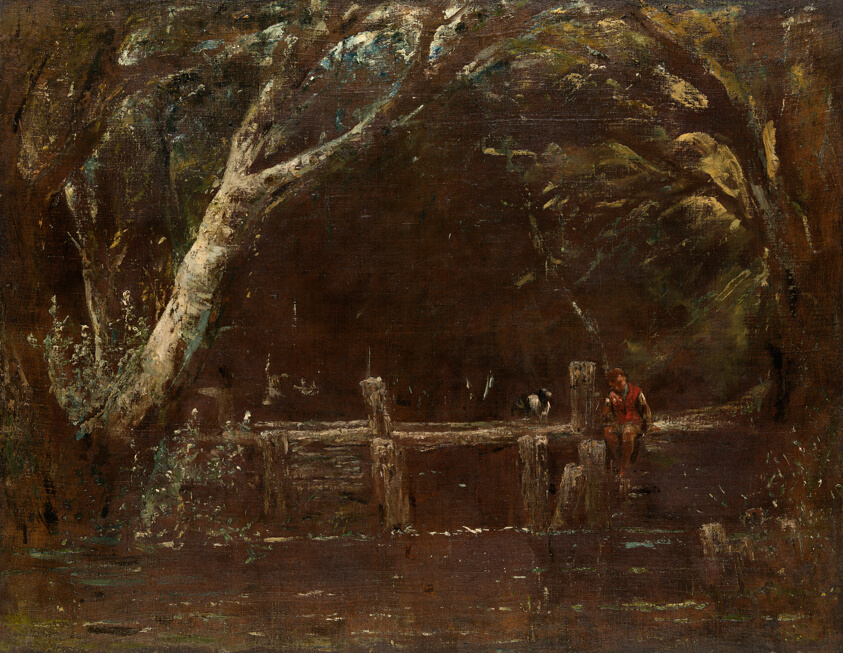
John Constable
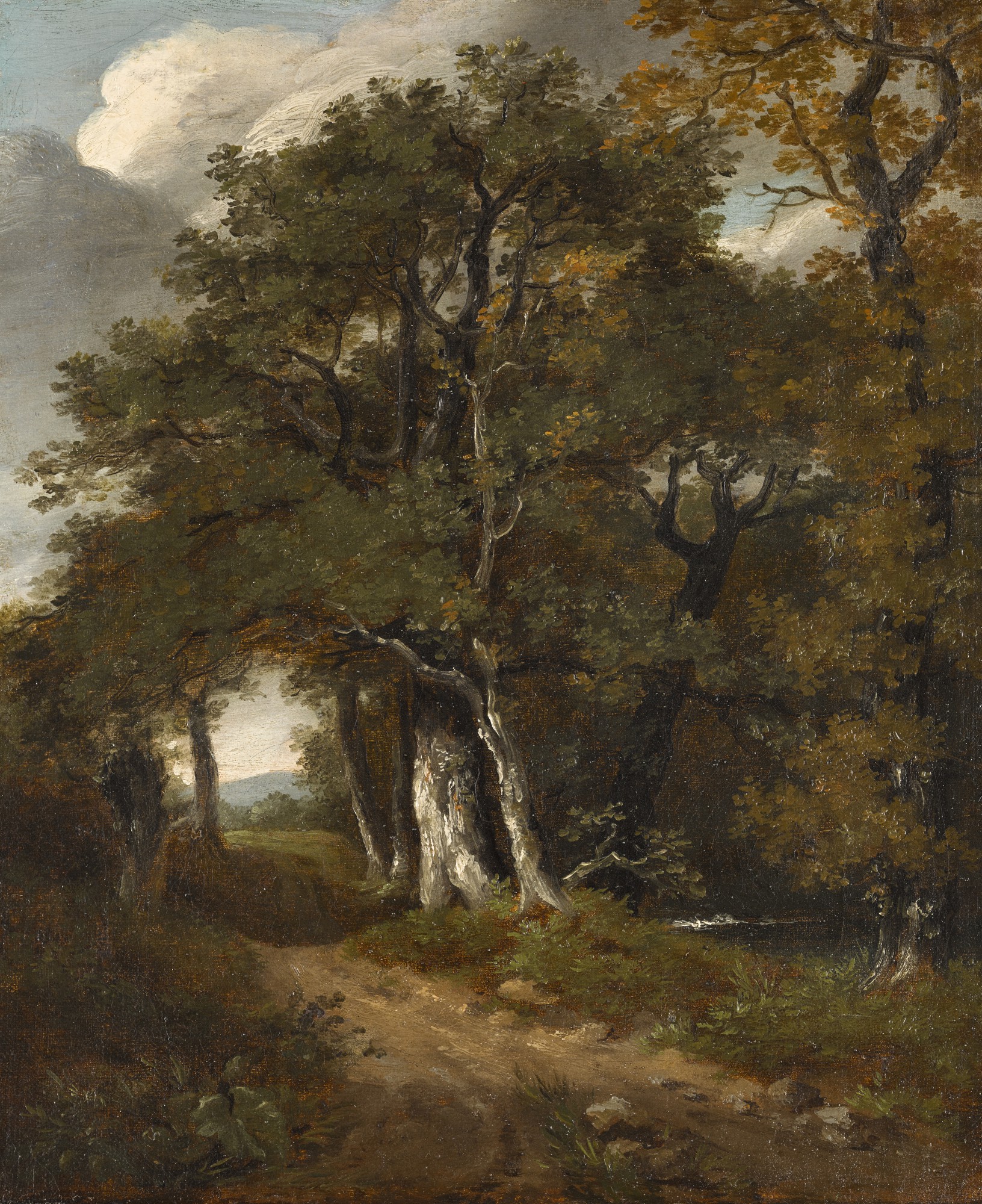
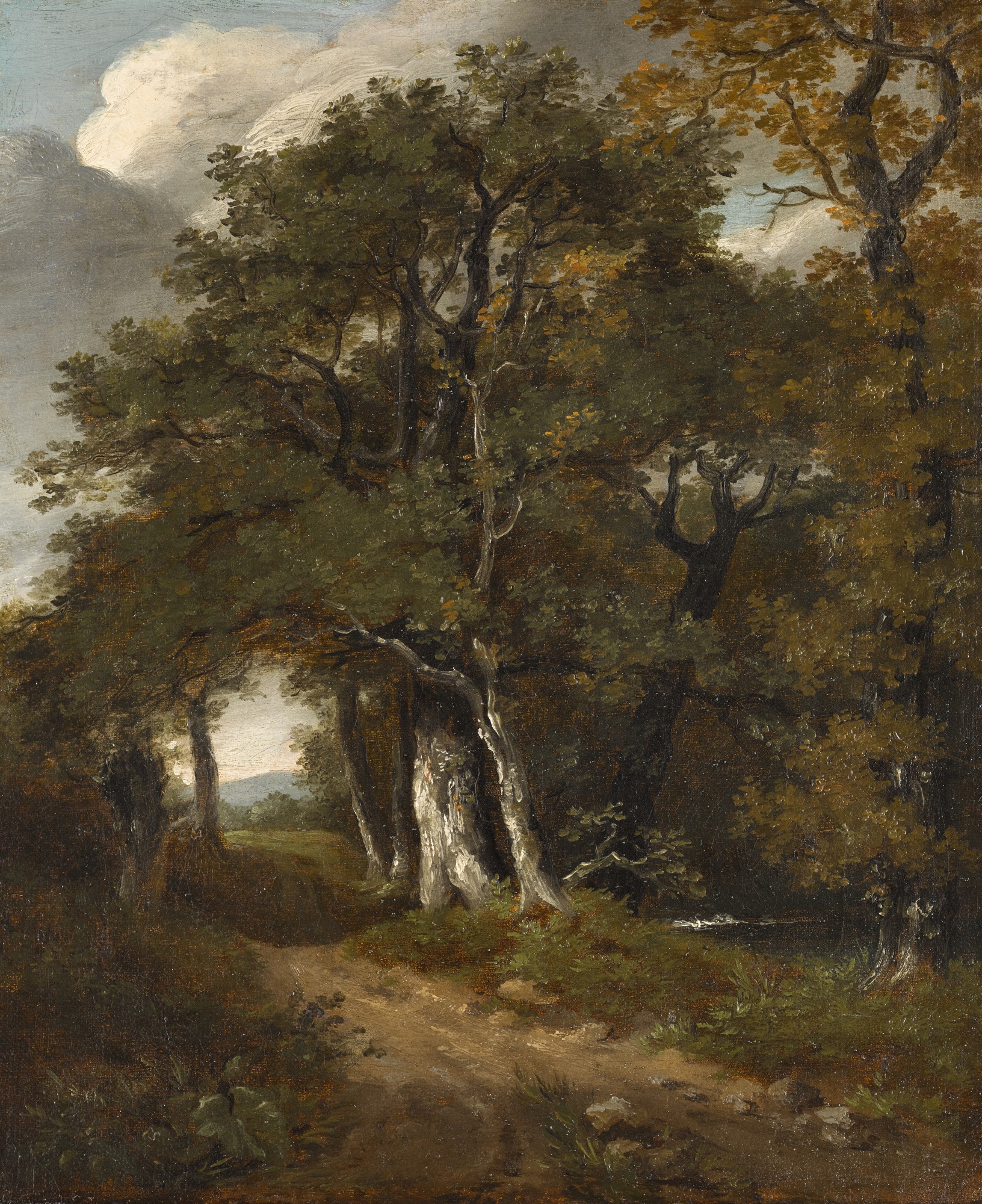
A woodland scene 《樹林一景》
The oil sketch Study for the White Horse reveals the vitality of his preparatory process, a work of such freshness that it rivals the finished painting in expressive power. Hampstead became a second creative home for Constable after he began renting houses there in 1819, partly for the health of his wife Maria, who suffered from tuberculosis. The Heath offered him a new and liberating subject: sky. He made hundreds of studies of clouds from Hampstead, noting on the backs of his sketches the time of day, the direction of the wind, and the temperature.
“I never saw an ugly thing in my life: for let the form of an object be what it may, light, shade, and perspective will always make it beautiful.”
John Constable
Branch Hill Pond, Hampstead, from 1828, and Hampstead Heath Looking Toward Harrow, from 1821, demonstrate how completely the Heath entered his imagination as a subject distinct from but continuous with Suffolk. These Hampstead works, painted on paper and canvas with a directness that feels startlingly modern, show an artist pressing constantly against the boundaries of what finished painting was supposed to look like. His use of palette knife, his broken touches of white to suggest light on moving water and foliage, his refusal to idealize or smooth, these were qualities that disturbed conservative critics and electrified younger artists across Europe. The French response to Constable was decisive for the history of painting.
John Constable
Landscape (The Lock), 1815
When The Haywain and two other works were shown at the Paris Salon of 1824, they caused a sensation among French painters, most famously prompting Eugene Delacroix to repaint sections of his own Salon submission after seeing what Constable could do with broken color and atmospheric immediacy. The Barbizon painters, who gathered around the Forest of Fontainebleau from the 1830s onward, drew directly on Constable's example, and their influence in turn flowed into the early Impressionists. To trace a line from Constable's cloud studies of the 1820s to Monet's series paintings of the 1890s is not to overstate the case; it is simply to follow the current of influence where the evidence leads. Collectors drawn to Barbizon works, to early Impressionism, or to the rich tradition of plein air painting will find in Constable the generative source of much they admire.
On the market, Constable's works command serious and sustained attention. Finished exhibition paintings and the celebrated "six footers" appear rarely and when they do they achieve prices that reflect their canonical status. Oil sketches and smaller studies offer collectors a more accessible entry point while delivering much of the expressive vitality for which Constable is prized. Works on paper, including pencil drawings such as his cottage and landscape studies, represent the artist in a more intimate register and reward close looking with evidence of his extraordinary observational discipline.
Collectors should attend to provenance with care, as Constable's popularity has long made his work a target for misattribution, but authenticated works across all formats carry both cultural weight and long term market confidence. The works held on The Collection span his key subjects and formats, from the coastal observation of Colliers Unloading on Hove Beach to the late visionary breadth of Stoke by Nayland from 1836, one of his final and most luminous statements. Constable died in London in March 1837, leaving behind a body of work that had never quite received the recognition in England that it earned in France and across Europe during his lifetime. History has more than corrected that imbalance.
Today he stands as one of the essential figures in the Western landscape tradition, an artist whose insistence on the particular, the local, and the empirically observed changed the course of painting not through grand theoretical programs but through the patient, passionate act of looking. His skies are still the most honest skies in the history of art.
Explore books about John Constable
John Constable: A Biography
Charles Robert Leslie
John Constable's Correspondence
R.B. Beckett
John Constable: Paintings, Drawings and Watercolours
Graham Reynolds
Constable
Michael Rosenthal
John Constable: The Making of a Master
Judy Crosby Ivy
John Constable
Anne Lyles
Constable: The Great Landscapes
William Vaughan
John Constable: A Biography
Andrew Shirley