John Chamberlain
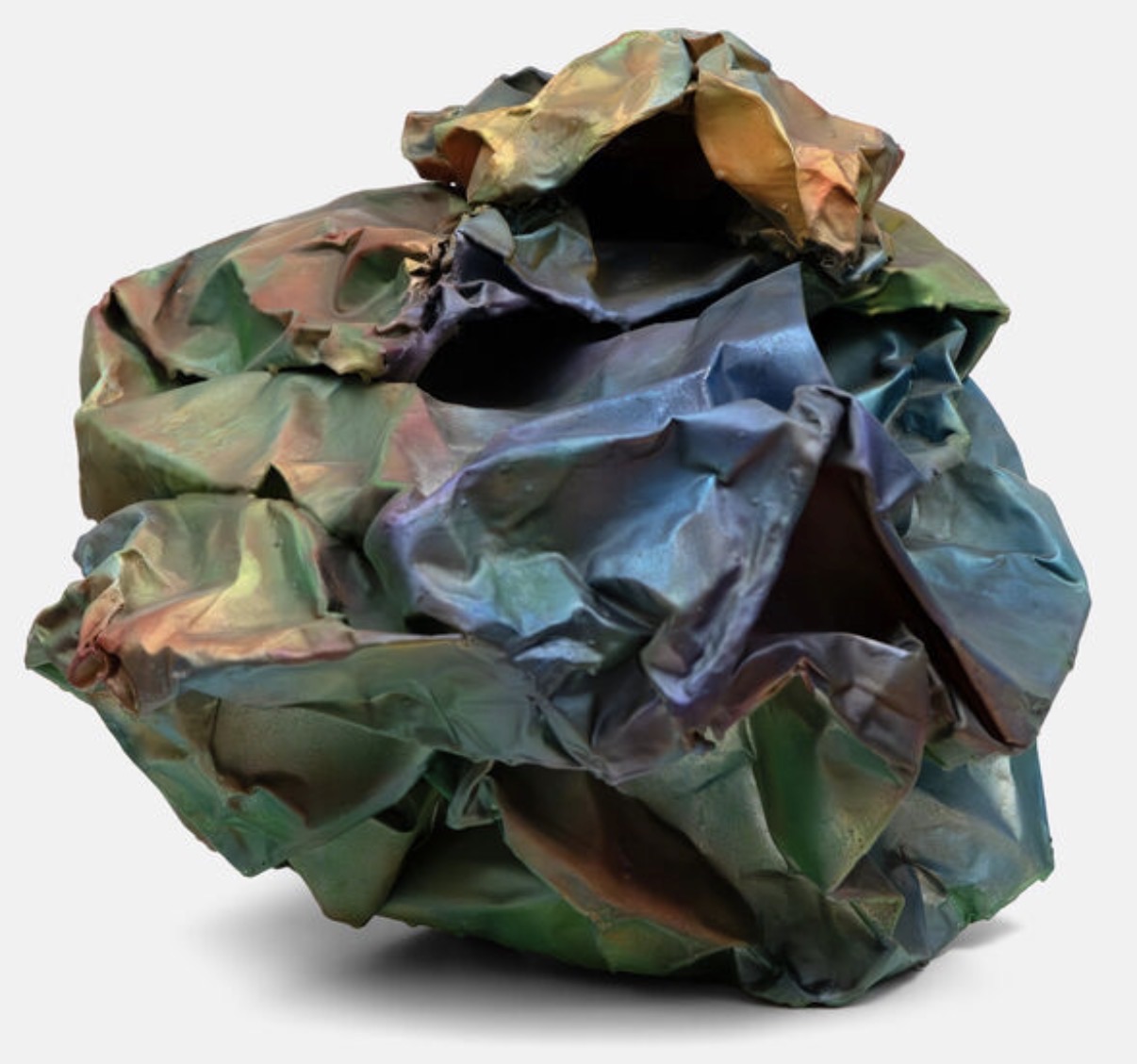
John Chamberlain: Steel, Speed, and Sublime Freedom
Artist Spotlight · The Collection Editorial
“I never thought of the car parts as car parts. I thought of them as color and form.”
John Chamberlain, interview with Phyllis Tuchman, 1972
There is a moment, standing before a large John Chamberlain sculpture, when the mind catches up with the eye. What first reads as chaos resolves into something deeply intentional: the crumple of chrome catching light, the layered lacquers of automotive paint blooming like bruised peonies, the whole compressed mass holding tension and release in perfect balance. It is one of the genuinely thrilling experiences postwar American sculpture has to offer, and it has lost none of its voltage. Major institutions continue to affirm his standing.
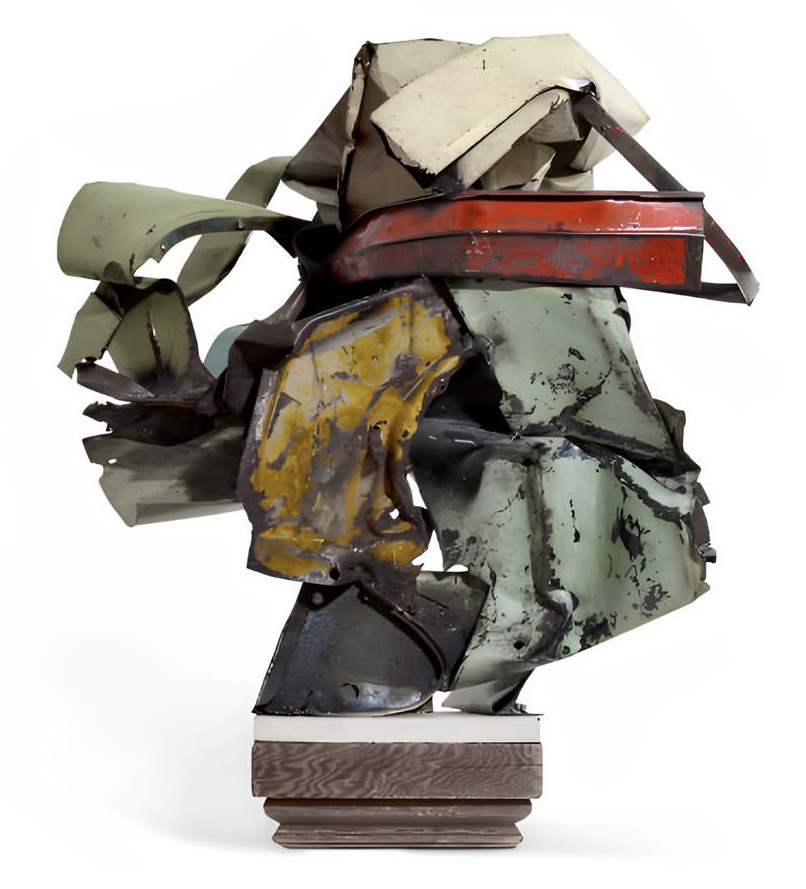
John Chamberlain
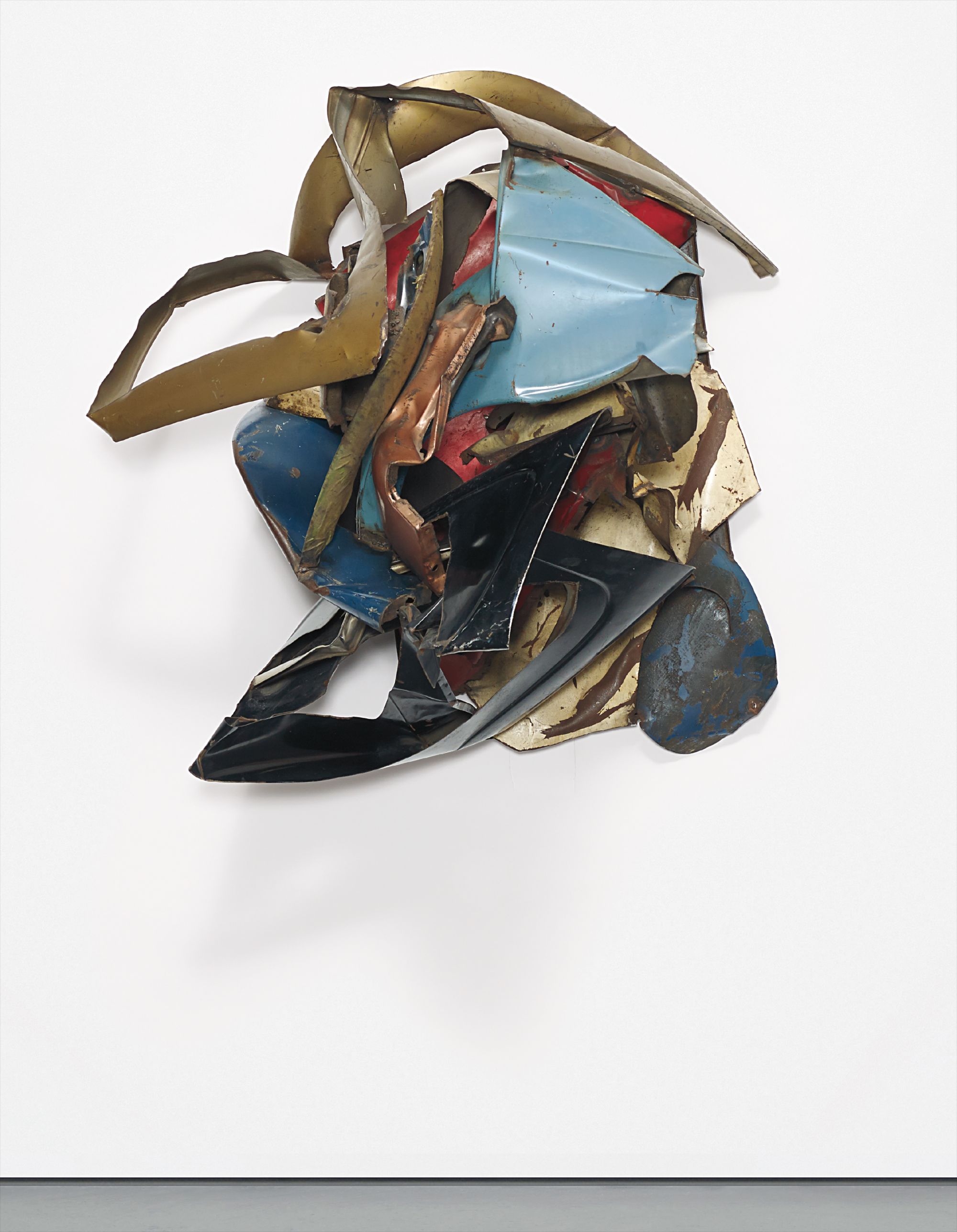
JO-SO, 1960
The Solomon R. Guggenheim Museum mounted a landmark retrospective of his work in 2012, the year after his death, cementing his place among the defining figures of twentieth century sculpture and introducing his practice to a new generation of collectors and museum visitors. John Chamberlain was born in Rochester, Indiana in 1927, and his early years were marked by restlessness and geographic movement. He spent time in Chicago, where he eventually enrolled at the School of the Art Institute of Chicago in the late 1940s.
His formation as an artist accelerated dramatically when he attended Black Mountain College in North Carolina in 1955 and 1956, the legendary experimental school that was, at that precise moment, a crucible of American avant garde thought. There he encountered the poet Charles Olson, whose ideas about composition and energy left a lasting impression. He absorbed the atmosphere of a community where painting, poetry, music, and sculpture were understood as deeply related practices, and where the prevailing mood was one of fearless improvisation. By the late 1950s, Chamberlain had settled in New York and begun working with automobile parts, a material choice that would define his legacy.
John Chamberlain
ASARABACA, 1973
The decision was partly circumstantial and partly visionary. Scrap metal was available and inexpensive, and the forms that crushed car bodies produced were unpredictable, generous, and alive in a way that no other material quite matched. His early works from around 1959 and 1960 brought him to the attention of the Leo Castelli Gallery, one of the most consequential commercial galleries in the history of American art. The association helped place him in conversation with the leading figures of his generation, including Donald Judd, who wrote admiringly about his work, and Dan Flavin, who was a close friend.
“Fit is the issue. It is always about fit.”
John Chamberlain, artist statement
Yet Chamberlain always occupied his own territory, resisting easy categorization. His practice evolved with restless intelligence over five decades. Through the 1960s he refined his vocabulary of crushed and welded steel, developing works of increasing scale and compositional sophistication. He experimented with foam rubber sculptures and urethane works during the late 1960s and 1970s, demonstrating that his interest was never simply in a single material but in the broader question of how form and color could generate feeling.
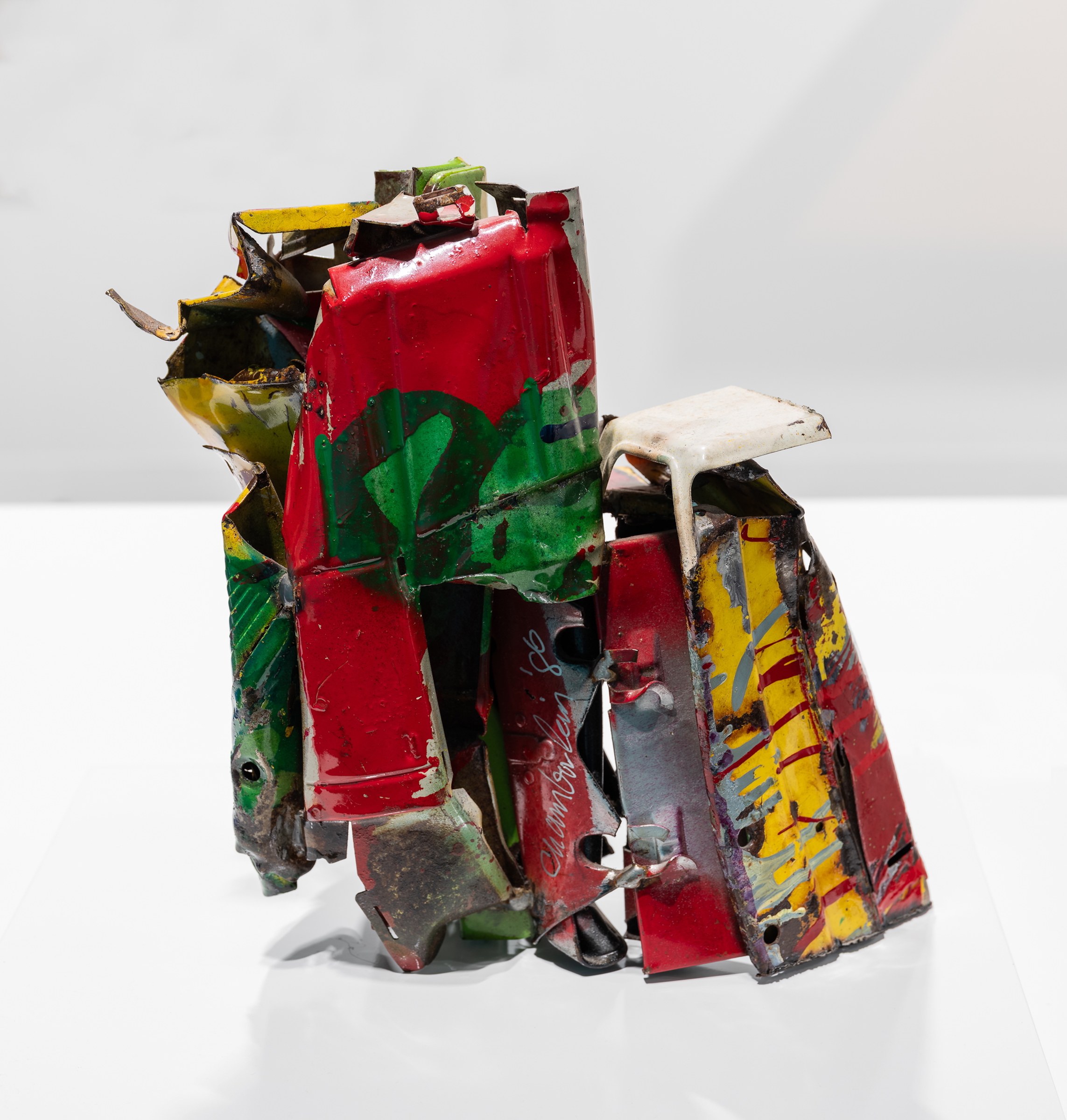
John Chamberlain
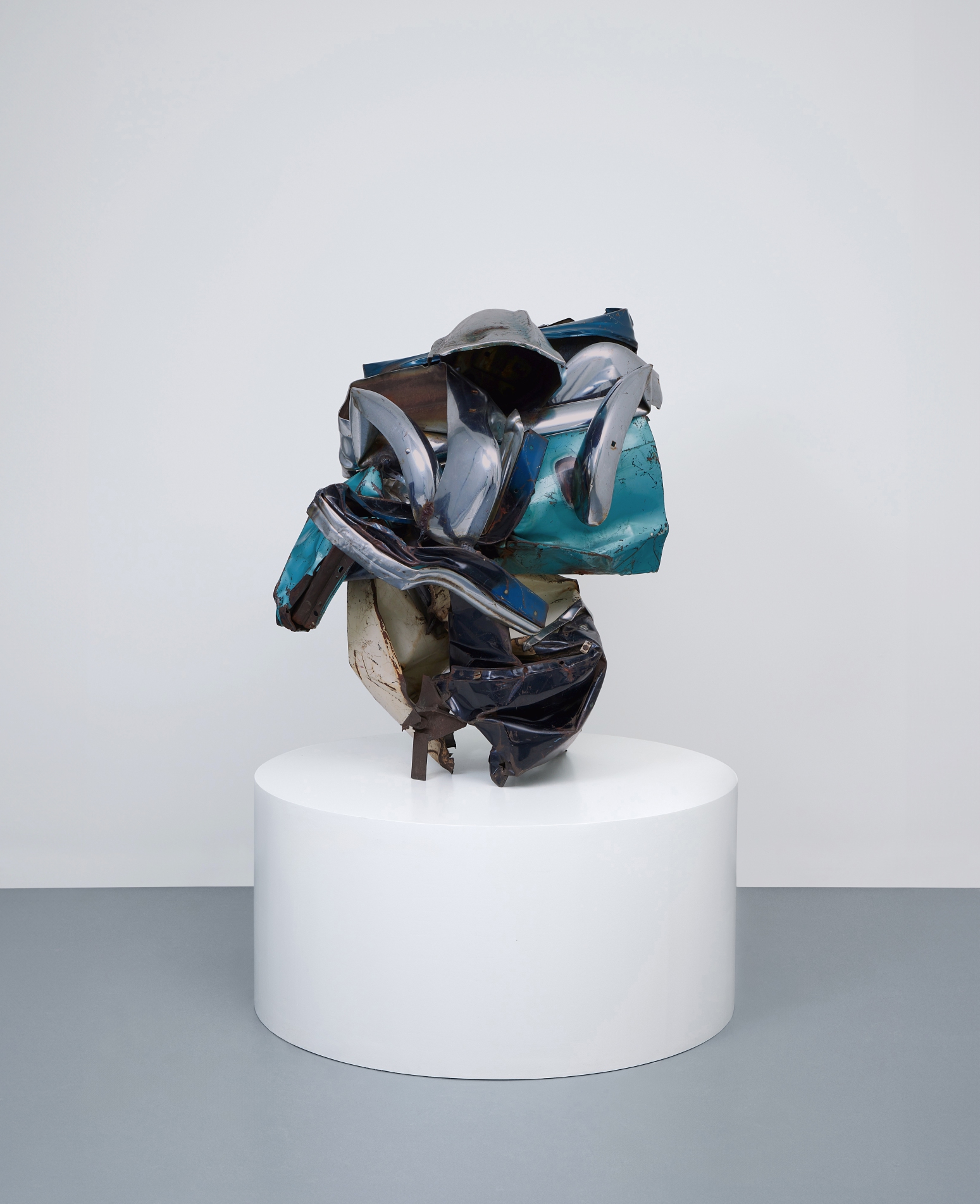
Tonk #2-86, 1986
Works in painted aluminum, such as the monumental ASARABACA from 1973, showed his ability to achieve weightlessness and buoyancy even at significant scale. His painted and chromium plated steel pieces from the late 1960s, including Whitmore Wash and Shamoonia, both from 1969, demonstrate the full range of his chromatic ambition. The reflective surfaces of plated steel transformed the sculptures into active participants in their environment, shifting with light and the movement of the viewer. The works that collectors prize most are those in which color and form achieve a kind of operatic unity.
Etruscan Romance from 1984 and Fredrico Alonzo Morelli from 1983 represent the mature confidence of an artist who had fully internalized his own language. The automobile paint he favored carried connotations of American popular culture and postwar prosperity, but Chamberlain sublimated those references entirely into pure visual experience. His smaller pieces, such as Tiny Piece Number 7 from 1961, offer collectors access to his earliest and most historically significant period, when the terms of his practice were still being established and every work was a kind of discovery. Mezzomangle from 2007 demonstrates that his powers remained undimmed into the final years of his life, the forms still urgent, the color still electric.
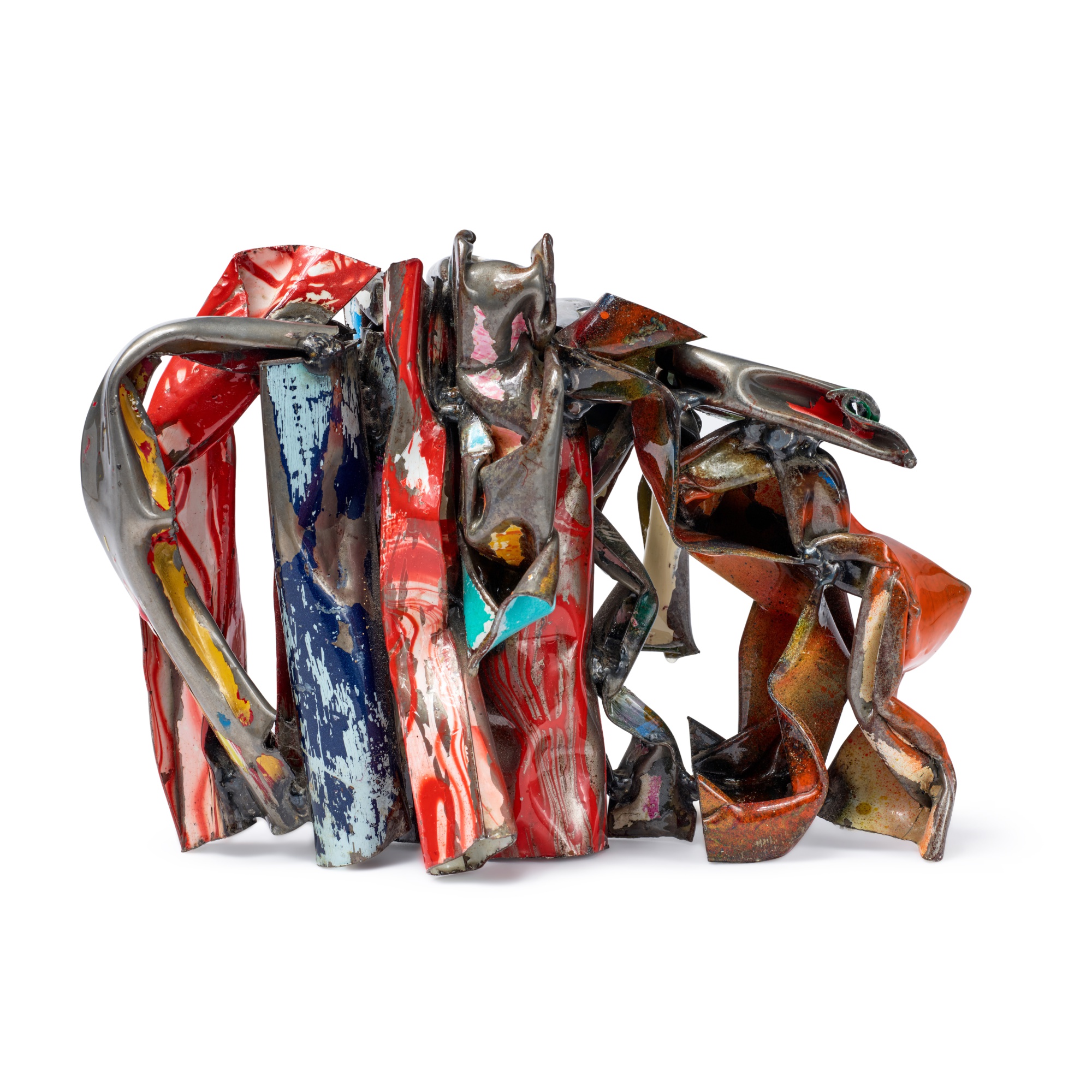
John Chamberlain
Law of the Bungle, 1992
For collectors, Chamberlain represents one of the most compelling propositions in the postwar American market. His auction results have consistently reflected the esteem in which he is held by serious collectors globally, with significant works in painted and chromium plated steel achieving results well into the millions of dollars at Christie's and Sotheby's. The range of his output means that entry points exist across the collecting spectrum, from intimate early works to monumental mature pieces. Collectors are advised to attend closely to the integrity of the painted surfaces and the quality of the chromium plating, both of which contribute enormously to the visual vitality of individual works.
Provenance that traces back to early gallery relationships or well documented private American collections carries particular weight. To understand Chamberlain fully it helps to place him in the company of artists who shared his appetite for material transformation. He has natural affinities with Mark di Suvero, whose welded steel constructions also draw on industrial materials with an Abstract Expressionist energy. The assemblage tradition connects him to Louise Nevelson and Richard Stankiewicz, both of whom found sculptural possibility in found and discarded objects.
Internationally, his practice resonates with the work of the French sculptor Jean Tinguely, whose kinetic machines shared Chamberlain's delight in the expressive potential of metal and mechanism. Yet none of these comparisons fully account for what makes Chamberlain singular, which is the combination of painterly color sense and sculptural authority that he achieved at the highest level over a career spanning more than five decades. John Chamberlain died in December 2011 in Sarasota, Florida, but his work continues to generate the kind of sustained critical and market attention reserved for artists of genuine historical importance. His sculptures stand in major public collections including the Museum of Modern Art in New York, the Art Institute of Chicago, and the Menil Collection in Houston.
They have an irreducible physical presence that photographs can suggest but never fully convey. To encounter them in person is to understand why the Guggenheim retrospective drew such sustained attention, and why a new generation of collectors is approaching his work with the seriousness and appetite it has always deserved. He transformed the wreckage of American industrial life into something luminous and enduring, and the full weight of that achievement is still being appreciated.
Explore books about John Chamberlain
John Chamberlain: A Catalogue Raisonné of the Sculptures
Gagosian Gallery
John Chamberlain
Donald Judd
John Chamberlain: Reliefs 1960-1982
Museum of Modern Art
John Chamberlain: Sculpture and Works on Paper
Various
Chamberlain: The Spontaneity of Hot Colors
Fairweather
John Chamberlain: Childhood Drawings and Sculpture
Various