Joel Mesler
Joel Mesler Paints the Joy of Being Alive
Artist Spotlight · The Collection Editorial
In the spring of 2023, Joel Mesler opened to considerable fanfare at Karma Gallery in New York, presenting a body of work that felt at once like a confession and a celebration. Canvases crowded with hand lettered phrases, radiant color fields, and imagery drawn from Jewish liturgy and American childhood sat alongside prints that crackled with the energy of a man fully at peace with what he has to say. Critics and collectors alike noted something rare in contemporary painting: an artist who had arrived, after years of restless searching, at a voice so singular it was almost impossible to look away. That moment crystallized what many in the art world had been sensing for some time, that Mesler is one of the most genuinely original painters working in America today.

Joel Mesler
Thank You (White Columns)
Born in 1977, Mesler grew up steeped in the textures of Jewish American life, and those textures have never left him. His childhood memories, the rituals of the synagogue, the warmth and occasional absurdity of family, and the particular cadence of growing up Jewish in the late twentieth century United States form the bedrock of his artistic imagination. Where many painters of his generation looked outward toward theory or institutional critique, Mesler looked inward with disarming honesty. That willingness to mine autobiography not as a private exercise but as a universal language is what gives his work its unusual warmth and accessibility.
Before he was known as a painter, Mesler built a respected career as an art dealer. He founded Rental Gallery in New York and was a partner at the influential UNTITLED gallery in Los Angeles and New York, working alongside and championing artists at a moment when the American gallery scene was undergoing significant transformation in the early 2000s. This immersion in the commercial and critical life of contemporary art gave him an intimate understanding of what painting could and could not do, and perhaps more importantly, what it was allowed to feel like. When he turned his full attention to his own studio practice, he brought with him an unusually clear sense of purpose, unencumbered by the anxieties that often plague artists who have spent their careers inside institutions.
Joel Mesler
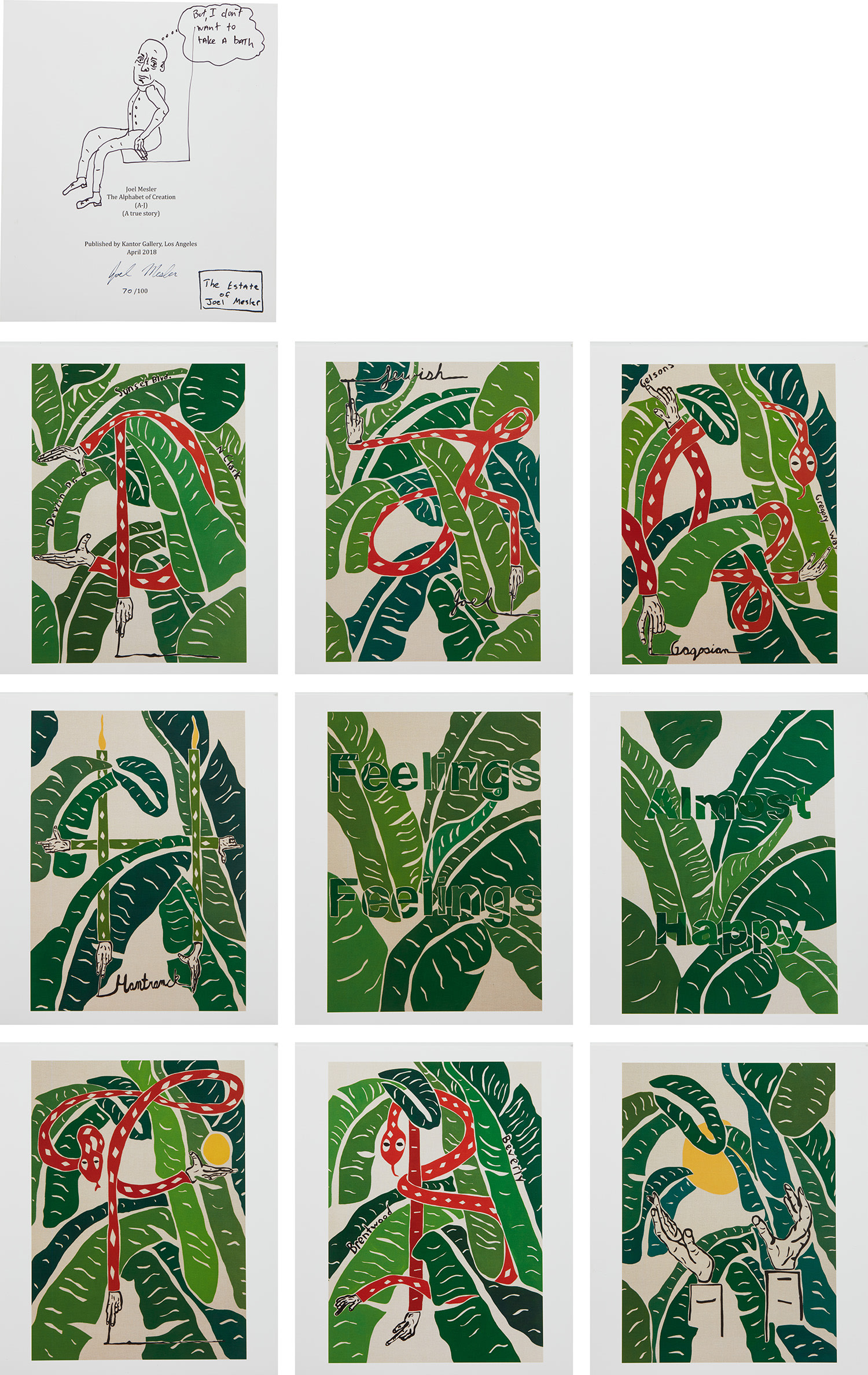
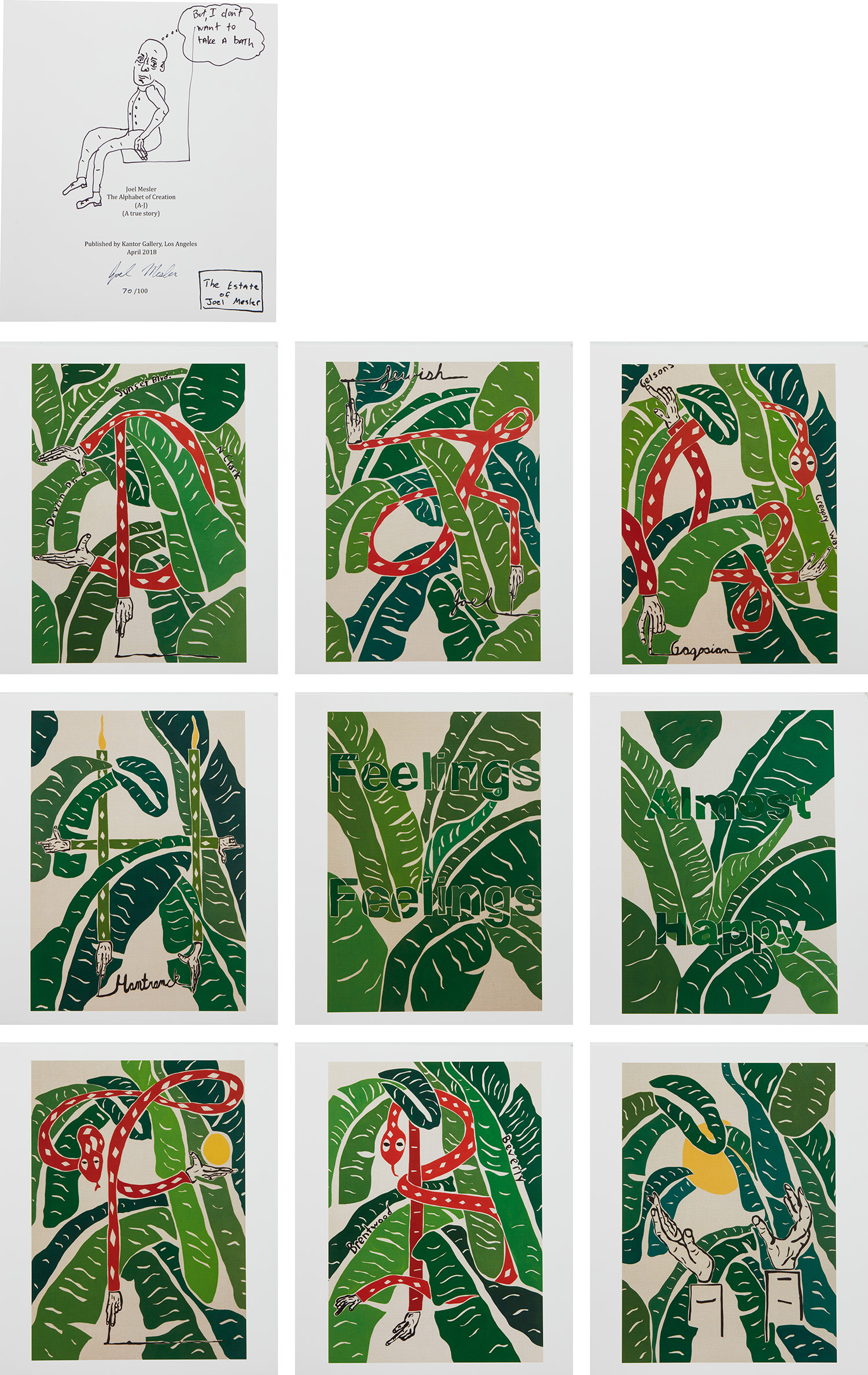
The Alphabet of Creation (A-J) (A true story), Box Series II
The development of Mesler's mature painting style represents one of the more quietly radical moves in recent American art. Working with pigment on linen and acrylic on canvas, he developed a visual language in which hand lettered text and gestural imagery coexist on equal terms. Phrases drawn from recovery culture, Jewish prayer, childhood games, and personal revelation float alongside figures, animals, and symbols rendered with the directness of folk art. Works like "Untitled (Sunrise Sunset)" from 2020 and "I Am Happy Joyous and Free" show how completely he synthesized these elements into something that reads simultaneously as painting, poetry, and testimony.
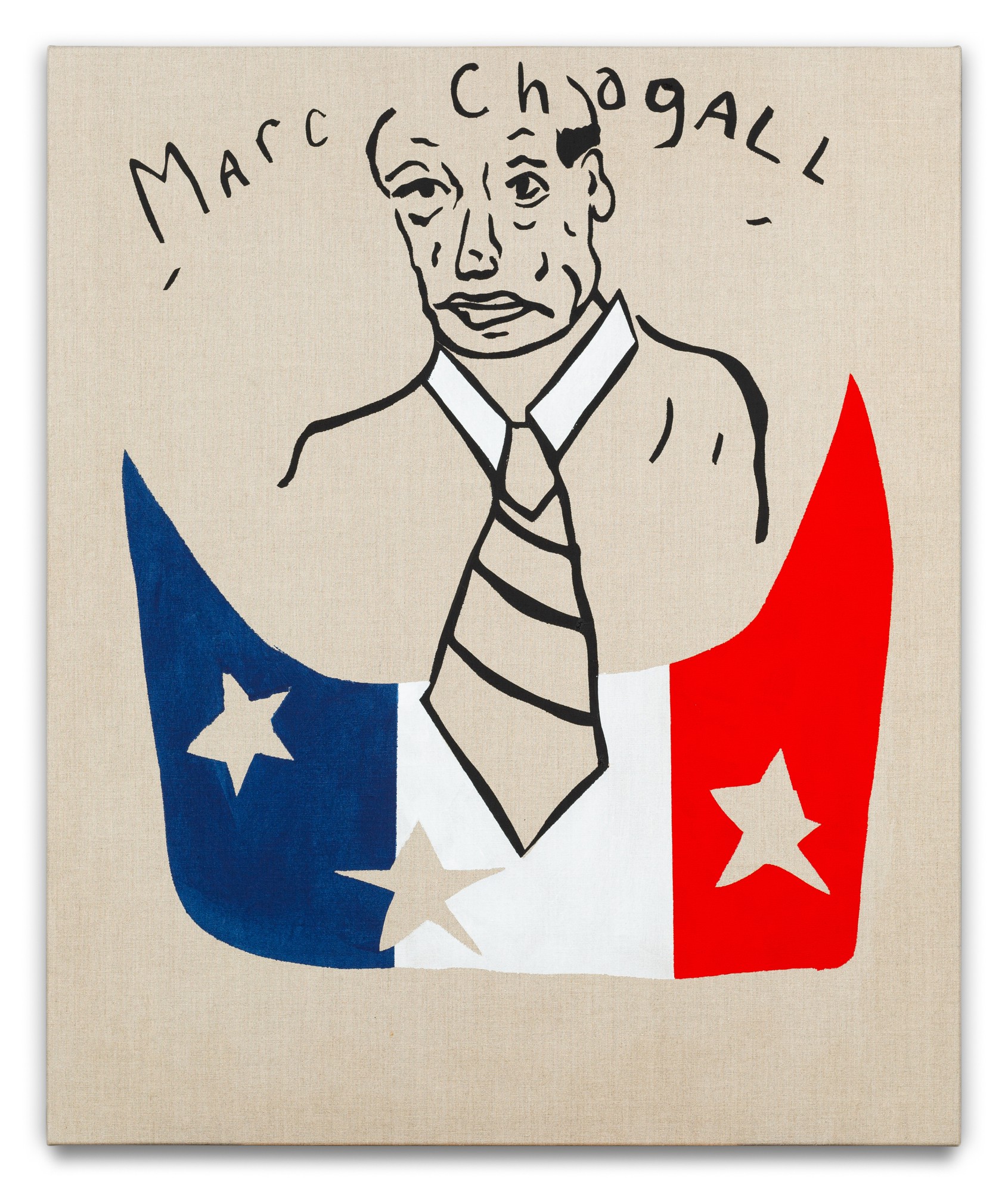
The influence of Marc Chagall, whose dreamlike imagery and Jewish spirituality Mesler has openly acknowledged, is visible in the emotional register of the work, though Mesler's palette and cadence are entirely his own. Among his most discussed works are those that engage directly with language and repetition as a form of devotion. "The Alphabet of Creation," part of his Box Series, treats the Hebrew alphabet as both sacred text and visual structure, creating a framework in which letters become image and image becomes letter. His screenprints, including the richly textured "Gold Love" from the Chrome Love Gold Love series and the luminous "Candy Land" from 2023, demonstrate that his sensibility translates powerfully into the print medium, with hand coloring in acrylic wash adding an intimate touch that prevents any sense of mechanical distance.
Joel Mesler
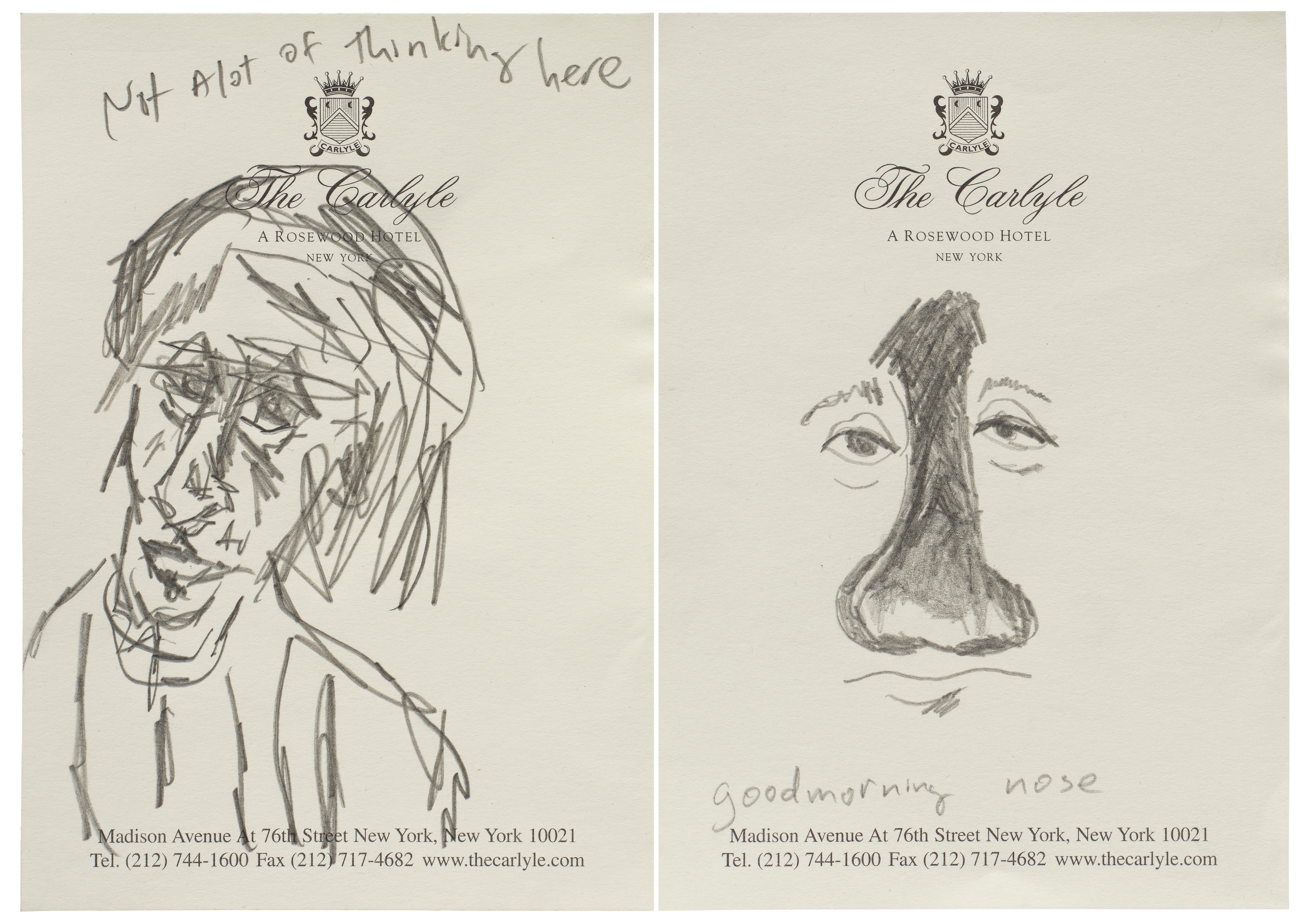
Two works: (i-ii), 2017
The hotel stationery drawings from 2017 are particularly beloved among collectors for the way they capture the artist thinking aloud, pencil marks that feel like prayers scrawled in the margins of ordinary life. From a collecting perspective, Mesler represents a compelling proposition at a moment when the market for emotionally legible, narratively rich painting is genuinely strong. His works on paper and prints offer accessible entry points for newer collectors, while his larger canvases have attracted serious institutional and private attention. The combination of his career as a dealer, his deep grounding in art history, and the unmistakable sincerity of his practice gives his market a stability that purely trend driven artists rarely sustain.
Collectors are drawn not only to the beauty of the objects but to the sense that they are acquiring something with genuine biographical and spiritual weight. Works like "Untitled (Makin Bacon)" and "Thank You (White Columns)" have become touchstones for those who follow his practice closely, offered through galleries including Karma in New York, which has been central to his recent visibility. The artists with whom Mesler belongs in conversation form a rich and varied lineage. Beyond Chagall, one thinks of Philip Guston in his later, figurative period, another painter who turned away from abstraction toward an almost painfully honest personal imagery and faced initial skepticism before being recognized as prophetic.
Joel Mesler
Untitled (Marc Chagall), 2016
The text based intimacy of Cy Twombly, the autobiographical courage of Louise Bourgeois, and the folk inflected spirituality of outsider traditions all hover productively in the background of Mesler's practice. Yet none of these comparisons quite captures him, because what he is doing with Jewish identity, recovery, memory, and joy has no precise precedent in the canon. What makes Mesler matter right now is not simply the quality of the individual objects, remarkable as many of them are, but the coherence of the project they represent. At a time when painting is often asked to justify itself through conceptual complexity or critical positioning, Mesler offers something more demanding in its own way: radical sincerity.
He paints what he loves, what he has survived, and what he believes, and he does so with a technical confidence and formal intelligence that rewards sustained looking. The result is a body of work that is expanding steadily in ambition and depth, made by an artist who spent years learning the art world from the inside before claiming his place within it as a maker. That place, it is now clear, is a significant one.