Joe Tilson
Joe Tilson: A Life Magnificently Lived in Art
Artist Spotlight · The Collection Editorial
“I have always been interested in the relationship between the word and the image, the sign and the symbol.”
Joe Tilson, interview
When the Royal Academy mounted a survey of British Pop Art in recent years, one name kept returning to the foreground with a particular warmth and insistence: Joe Tilson. Born in London in 1928 and active across seven decades, Tilson outlived many of his contemporaries and went on making work of genuine ambition and beauty until the very end of his long life in 2023. His passing at the age of ninety five was met with an outpouring of admiration from curators, collectors, and fellow artists who recognised in him not merely a survivor of a golden era but one of its most consistently inventive and emotionally generous voices. Tilson grew up in a working class household in London, a background that would never leave him and that gave his art a directness and physical honesty that distinguished him from more rarefied contemporaries.
Joe Tilson
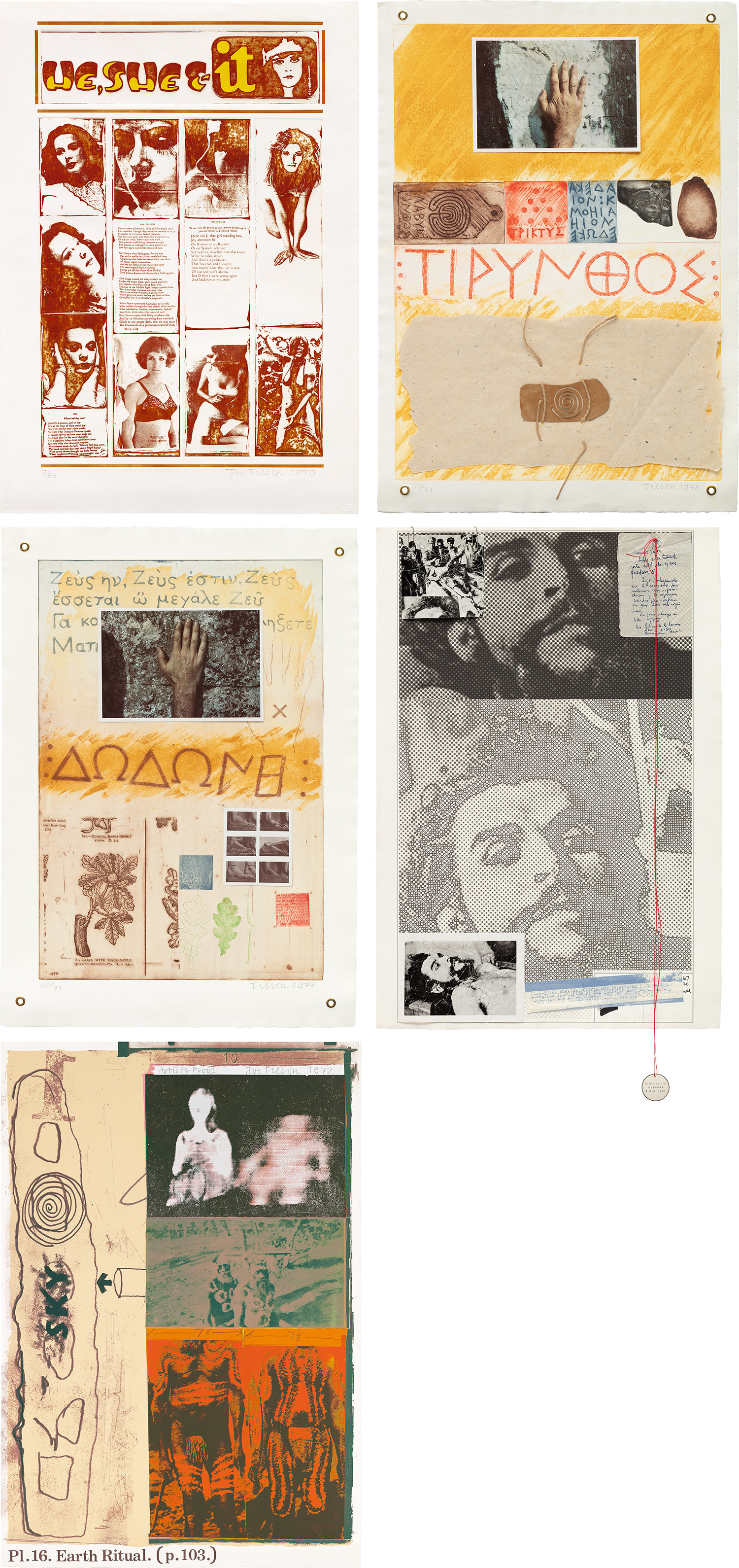
He, She and It; Proscinemi, Tiryns; Proscinemi, Dodona, Oracle of Zeus; Letter from Che; and Earth Ritual
He served in the Royal Air Force and worked as a carpenter before enrolling at Saint Martin's School of Art and then the Royal College of Art, where he studied from 1952 to 1955 alongside Peter Blake and Richard Smith. That cohort was extraordinary, animated by a shared hunger for meaning in the postwar world, and Tilson absorbed its energy while developing a sensibility all his own. He won the Rome Prize in 1955 and spent two formative years in Italy, a country whose ancient textures, classical mythology, and Mediterranean light would become lifelong preoccupations. Returning to Britain in the late 1950s, Tilson found himself drawn into the orbit of the Independent Group and the emerging conversation about mass media, popular culture, and the meaning of images in an age of advertising and television.
He became associated with British Pop Art, exhibiting at the Marlborough Gallery in London and gaining recognition alongside contemporaries such as Peter Blake, Patrick Caulfield, and David Hockney. Yet Tilson was always slightly apart from the coolness that Pop sometimes affected. His work carried heat, political urgency, and a craftsman's deep respect for materials, reflecting his early training as a carpenter. He built his canvases as much as he painted them, constructing relief panels and wooden structures that gave painting a three dimensional presence and tactile weight.
Joe Tilson
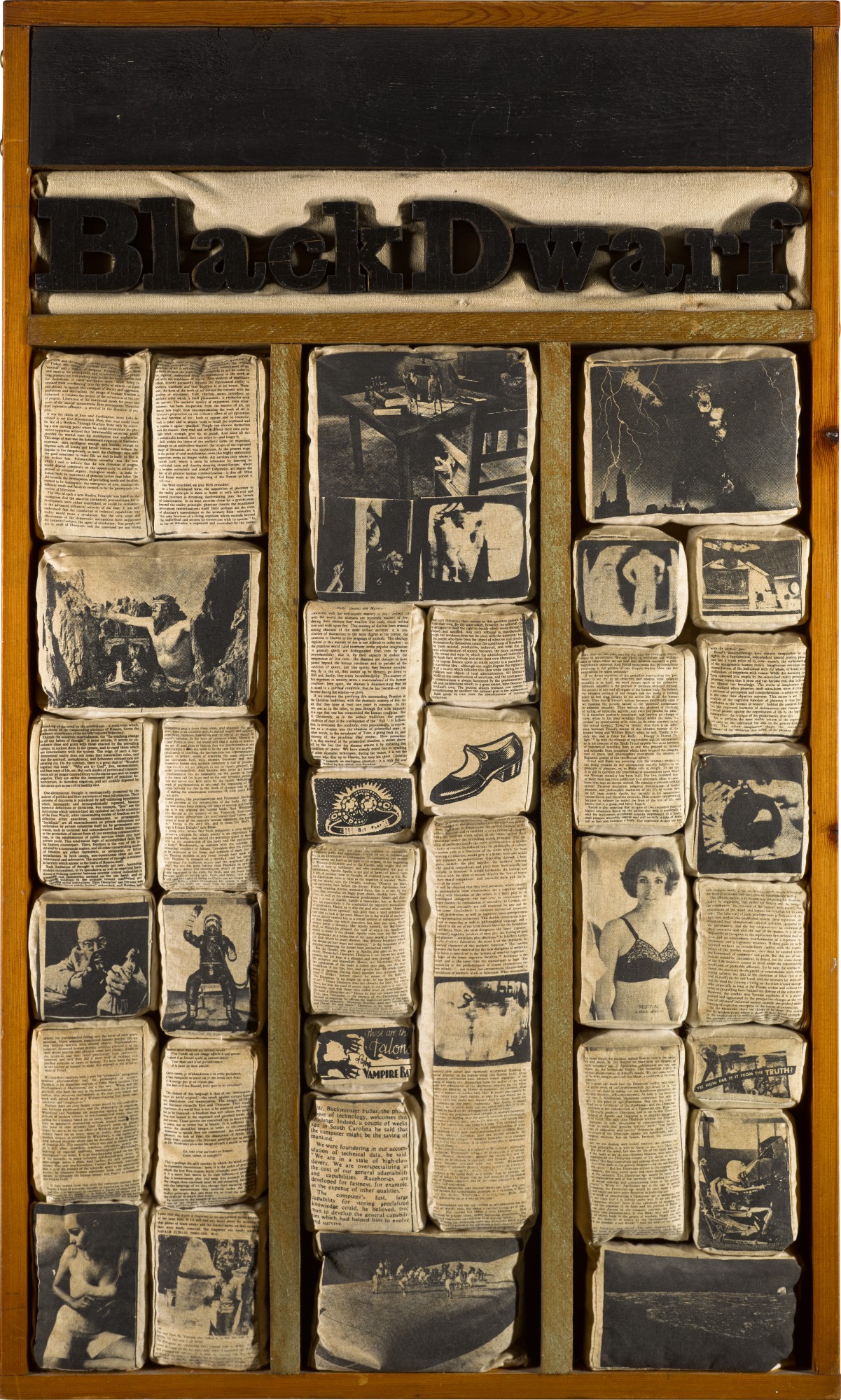
Page 4: Snow White & The Black Dwarf, 1969
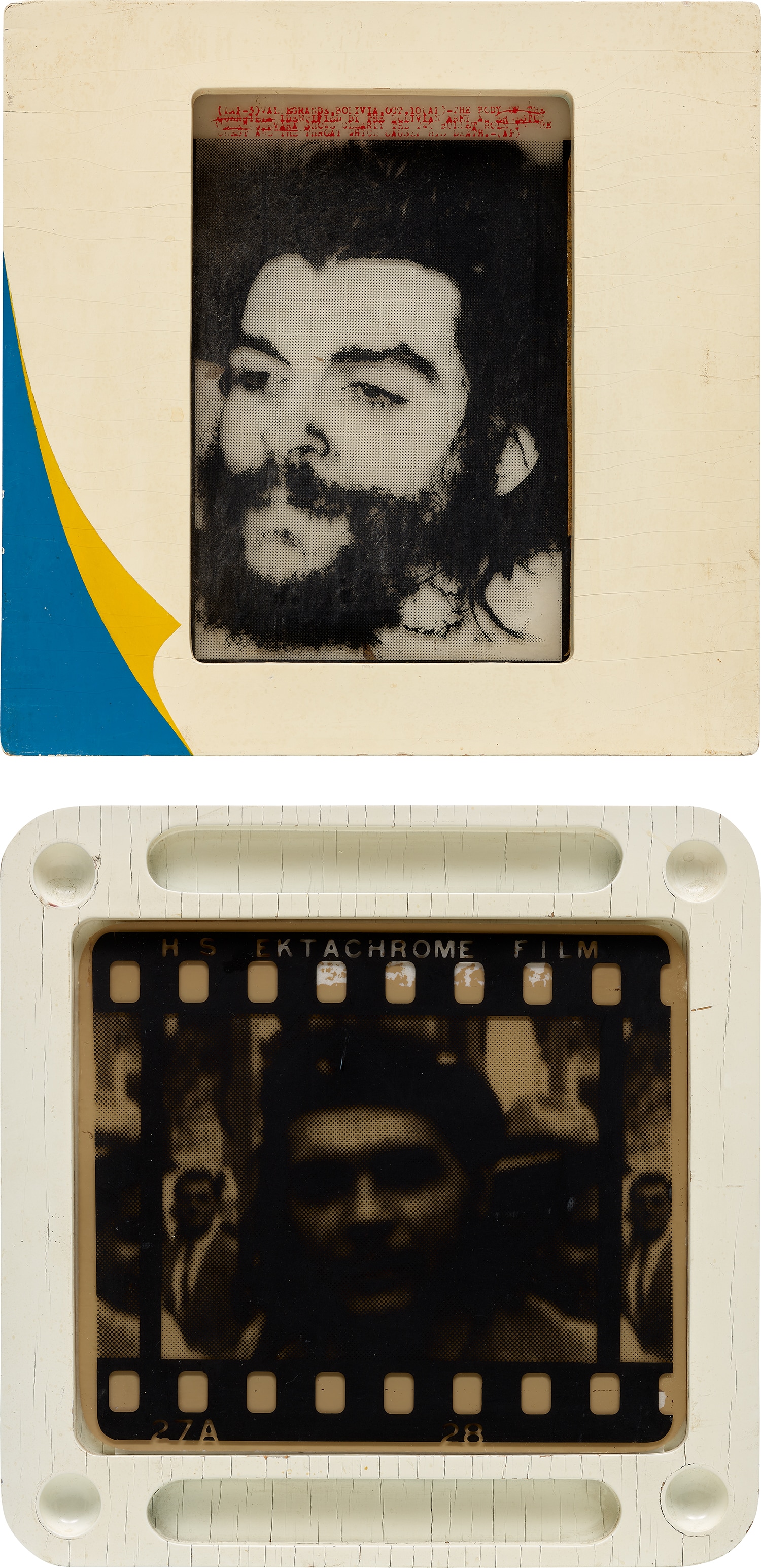
The 1960s produced some of his most celebrated and politically charged work. The series of screenprints and mixed media pieces engaging with Che Guevara, most powerfully the pair of screenprints on acrylic known as Transparency, Che Guevara II and I, October 9th 1967, represented a convergence of aesthetic innovation and political conscience that was rare in British art of the period. The date in the title is the day of Guevara's execution, and Tilson's decision to embed that historical specificity into the work transforms what might have been agitprop into something closer to elegy. His Letter from Che belongs to the same moral and formal universe, treating the printed word and the photographic image as equally loaded artifacts.
These works remain among the most powerful political prints made in postwar Britain. As the decades turned, Tilson moved away from the hard edges of Pop toward something more ancient and mythological. His return to Italy, where he eventually settled for extended periods in Tuscany, deepened his engagement with the classical world. The Proscinemi series, engaging with the oracle sites at Tiryns and Dodona, drew on Greek ritual and landscape as sources for printmaking of extraordinary refinement.
Joe Tilson
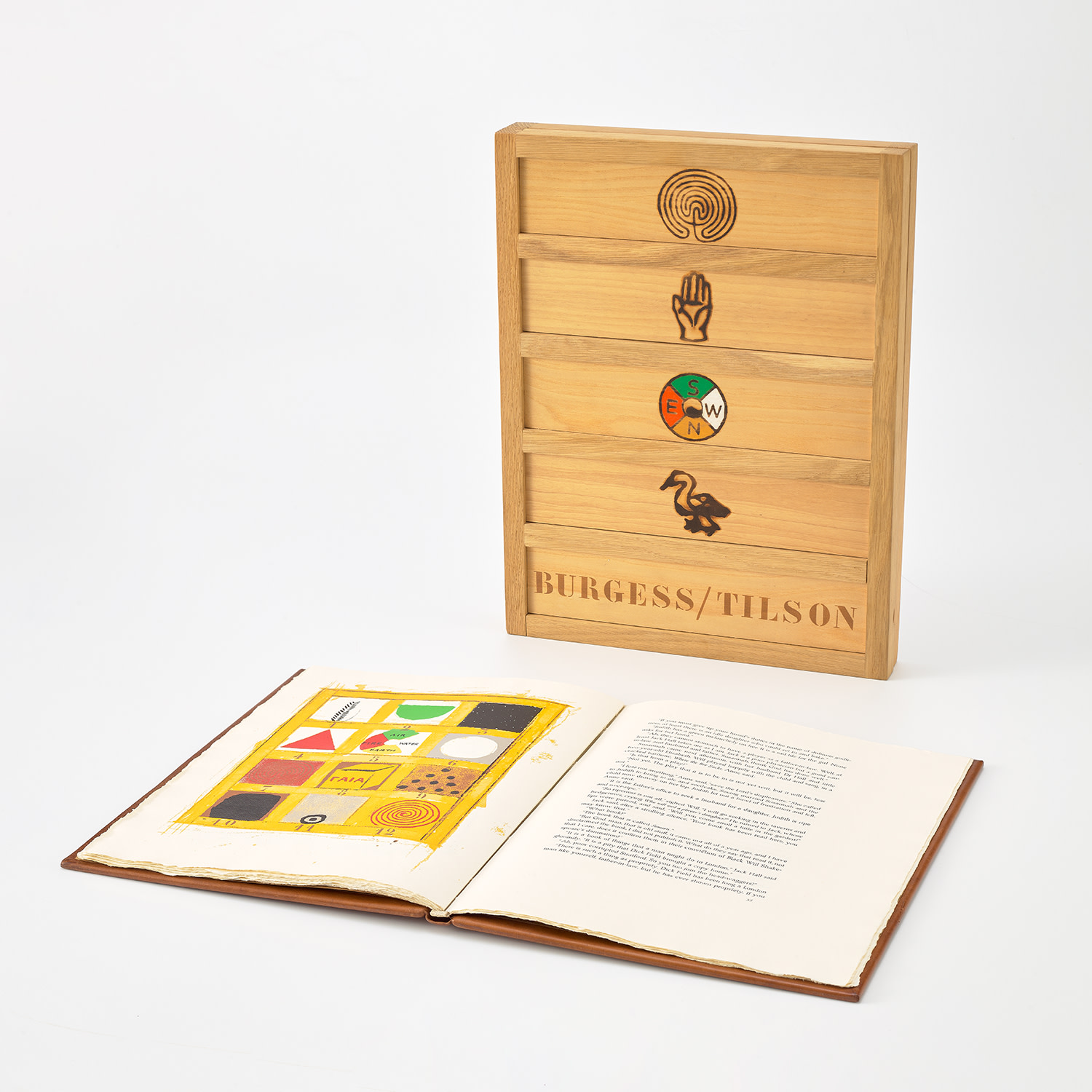
Will and Testament
His Signatures series, a complete set of six etchings and aquatints in colours with hand applied gold and white gold leaf on Khadi paper, represents one of the summits of his later practice, combining the technical ambition of the old masters with a deeply personal iconography. The Metamorphosis of Daphne, produced as an etching, aquatint and woodcut in colours with carborundum on Arches paper, shows how fully he absorbed the mythological imagination of Ovid and translated it into a contemporary visual language. These are works that reward sustained attention and that grow richer the longer one lives with them. For collectors, Tilson presents a genuinely compelling opportunity across several distinct phases and price points.
His screenprints from the 1960s, including the celebrated Page 4 from the Snow White and the Black Dwarf series of 1969, have performed consistently well at auction and are held in significant public and private collections internationally. The printed work of his later years, particularly the elaborate portfolio editions involving etching, aquatint, gold leaf, and handmade papers, represents exceptional value for collectors interested in the intersection of fine printmaking and serious artistic vision. Works such as Will and Testament, a signed and numbered collaboration with the writer Anthony Burgess published by Plain Wrapper Press in Verona, hold particular appeal for collectors who value the book arts and the literary dimensions of visual practice. Tilson's work sits comfortably in company with that of Eduardo Paolozzi, Richard Hamilton, and Allen Jones while remaining distinctly itself.
Joe Tilson
Transparency, Che Guevara II and I, October 9th 1967
The broader art historical context for Tilson is a rich one. He belongs to a generation of British artists who transformed what painting and printmaking could mean in the postwar period, absorbing American influence while remaining rooted in European tradition. His friendships and professional relationships extended across the Atlantic, and his work was shown in New York and across Europe with consistent critical respect. Unlike some of his peers who achieved greater commercial visibility, Tilson maintained a commitment to the handmade and the politically engaged that sometimes placed him outside the most fashionable currents but that now looks prescient.
In an art world increasingly interested in questions of craft, materiality, and political responsibility, his example carries renewed relevance. Tilson's legacy is that of an artist who never stopped asking what images are for and what they owe to the world. From the constructed wooden reliefs of the early 1960s to the gold leafed mythological prints of his final decades, his work insists on the sacred dimension of making, on the idea that art carries ethical as well as aesthetic responsibilities. He was a carpenter who became a painter, a Pop artist who fell in love with ancient Greece, a political radical who found beauty in ritual and landscape.
That combination of qualities made him singular in British art and ensures that his work will continue to matter to collectors and curators who understand that the best art is never merely decorative but is always, at its deepest level, a form of testimony.
Explore books about Joe Tilson