Joana Vasconcelos
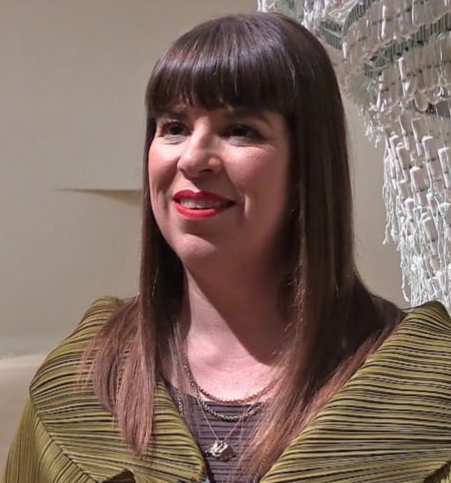
Joana Vasconcelos Stitches the World Together
Artist Spotlight · The Collection Editorial
“I think my work is very political, but I use seduction. I seduce people and then they get the message.”
Joana Vasconcelos, interview with The Guardian
When Joana Vasconcelos became the first woman and the youngest artist ever to exhibit at the Palace of Versailles in 2012, it felt less like a milestone and more like an inevitability. Her monumental installations, cascading with hand crocheted wool, burnished faience, and the accumulated labor of countless hands, filled the gilded halls with a kind of joyful, feminist electricity that the palace had never quite experienced before. The exhibition, titled Joana Vasconcelos at Versailles, drew hundreds of thousands of visitors and announced to a global audience what Portugal had long understood: that Vasconcelos was one of the most vital and inventive artists working anywhere in the world. Vasconcelos was born in Paris in 1971 to Portuguese parents and grew up between France and Lisbon, a double cultural inheritance that gave her an early, intimate understanding of how identity is constructed and performed.
Joana Vasconcelos
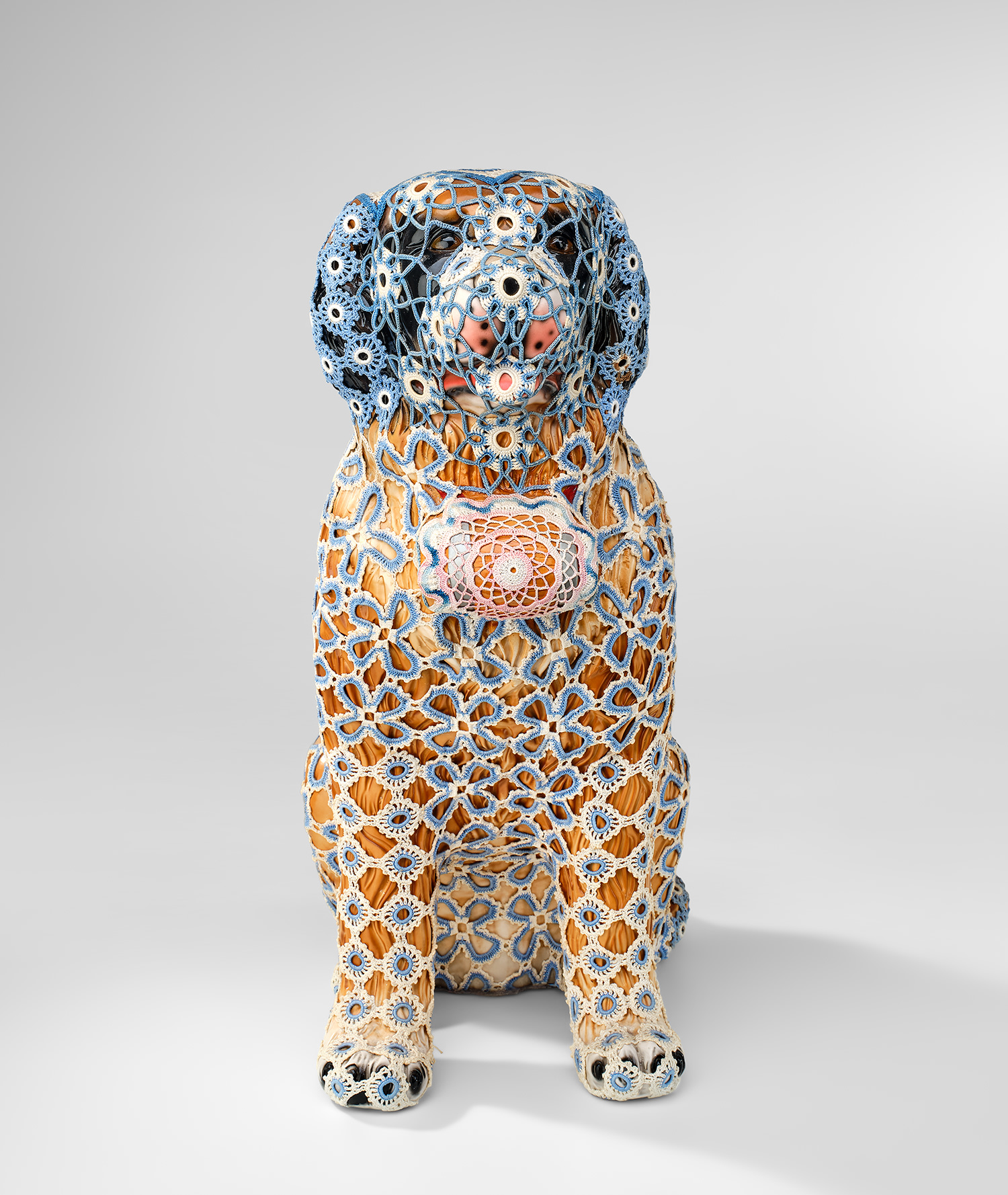
Lancelot, 2011
The family returned to Portugal during her formative years, and Lisbon became the city that shaped her artistic sensibility most deeply. She studied at the Ar.Co Centre for Art and Visual Communication in Lisbon during the 1990s, a period when Portugal was still finding its footing within a newly integrated Europe and when contemporary art in the country was beginning to assert itself with fresh confidence. That context of national reinvention and cultural negotiation runs through virtually everything she has made since.
Her breakthrough came at the Venice Biennale in 2005, where her work A Noiva, a towering chandelier constructed entirely from OB tampons, stopped international visitors in their tracks. The piece was at once formally dazzling and politically pointed, embedding a conversation about femininity, labor, and the domestic body within an object of breathtaking sculptural ambition. Venice established her as an artist whose work could operate simultaneously in the registers of beauty, craft, humor, and critique. She returned to the Venice Biennale in 2013, representing Portugal in the national pavilion, and by that point her reputation was firmly international.
Joana Vasconcelos
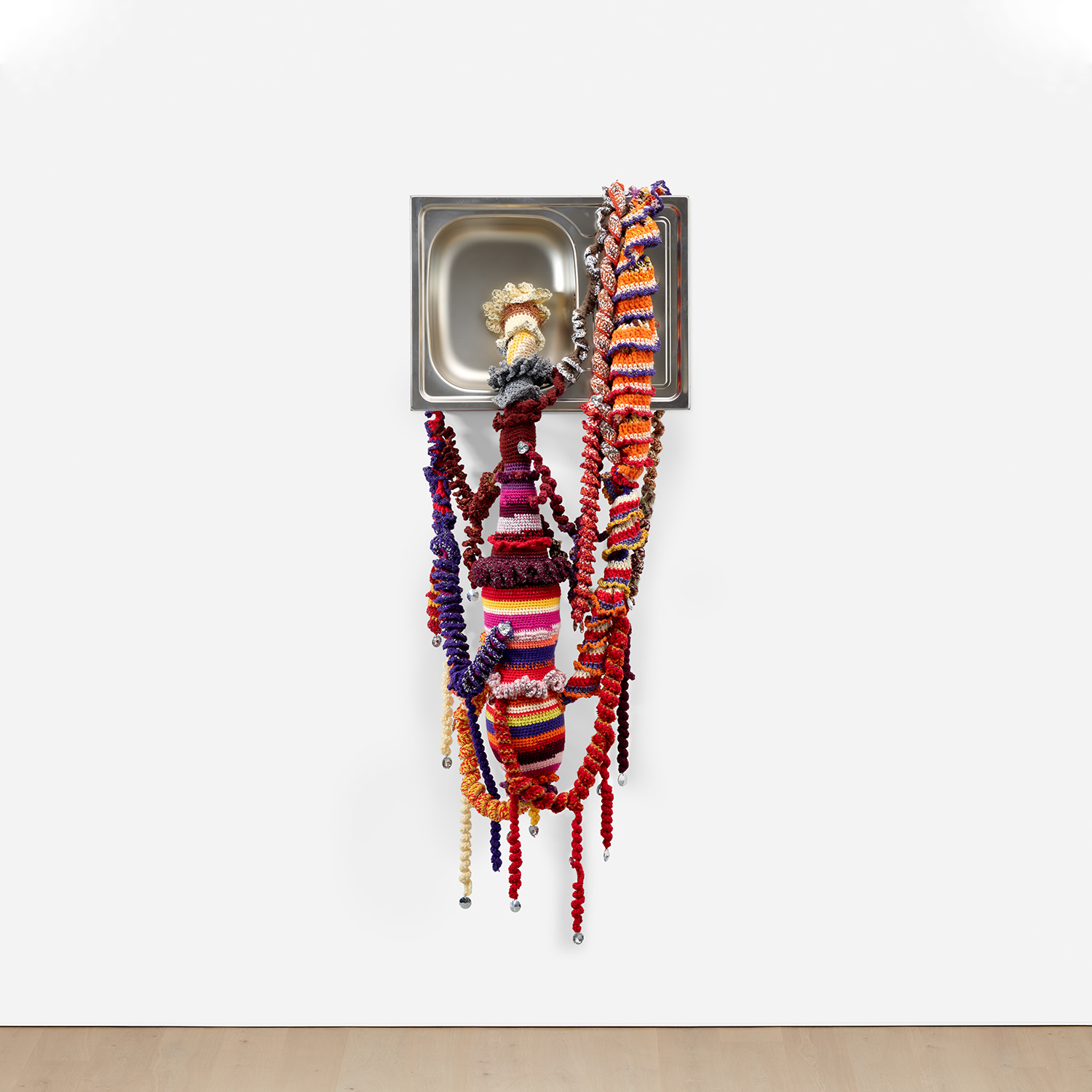
Colormaq, 2011
At the center of her practice is an abiding commitment to handcraft, most visibly the art of crochet, which she deploys at an almost architectural scale. Works like Emmeline and the Cromwell series, which incorporate Rafael Bordalo Pinheiro faience painted with ceramic glaze and wrapped in meticulously executed handmade cotton crochet, demonstrate how she transforms familiar, domestically coded techniques into something monumental and politically charged. Rafael Bordalo Pinheiro is himself a defining figure in Portuguese visual culture, a nineteenth century ceramicist whose work is woven into the country's national identity, and Vasconcelos's decision to incorporate his faience into her practice is both an act of homage and a provocative reframing. By encasing his iconic forms in layer upon layer of crochet, she simultaneously honors a heritage and subjects it to feminist revision.
“Crochet is a female language. It is a way of speaking about women's work, women's time, women's history.”
Joana Vasconcelos, artist statement
The works titled Lancelot and Poe follow a similar logic, using Bordalo Pinheiro painted faience as a foundation and building outward through glazed ceramics and handmade cotton crochet into something that feels entirely contemporary. Ginger and Fred, presented in two parts and sharing the same material vocabulary, introduces a note of playful cinematic reference that is characteristic of Vasconcelos's wit. She is an artist who takes ideas seriously without taking herself too seriously, and that quality gives her work an accessibility that does not come at the expense of intellectual depth. Colormaq, which presents a stainless steel sink transformed by handmade woolen crochet and ornamental detailing, is perhaps her most direct meditation on the politics of the domestic space, reclaiming the kitchen sink as a site of artistic and feminist statement.
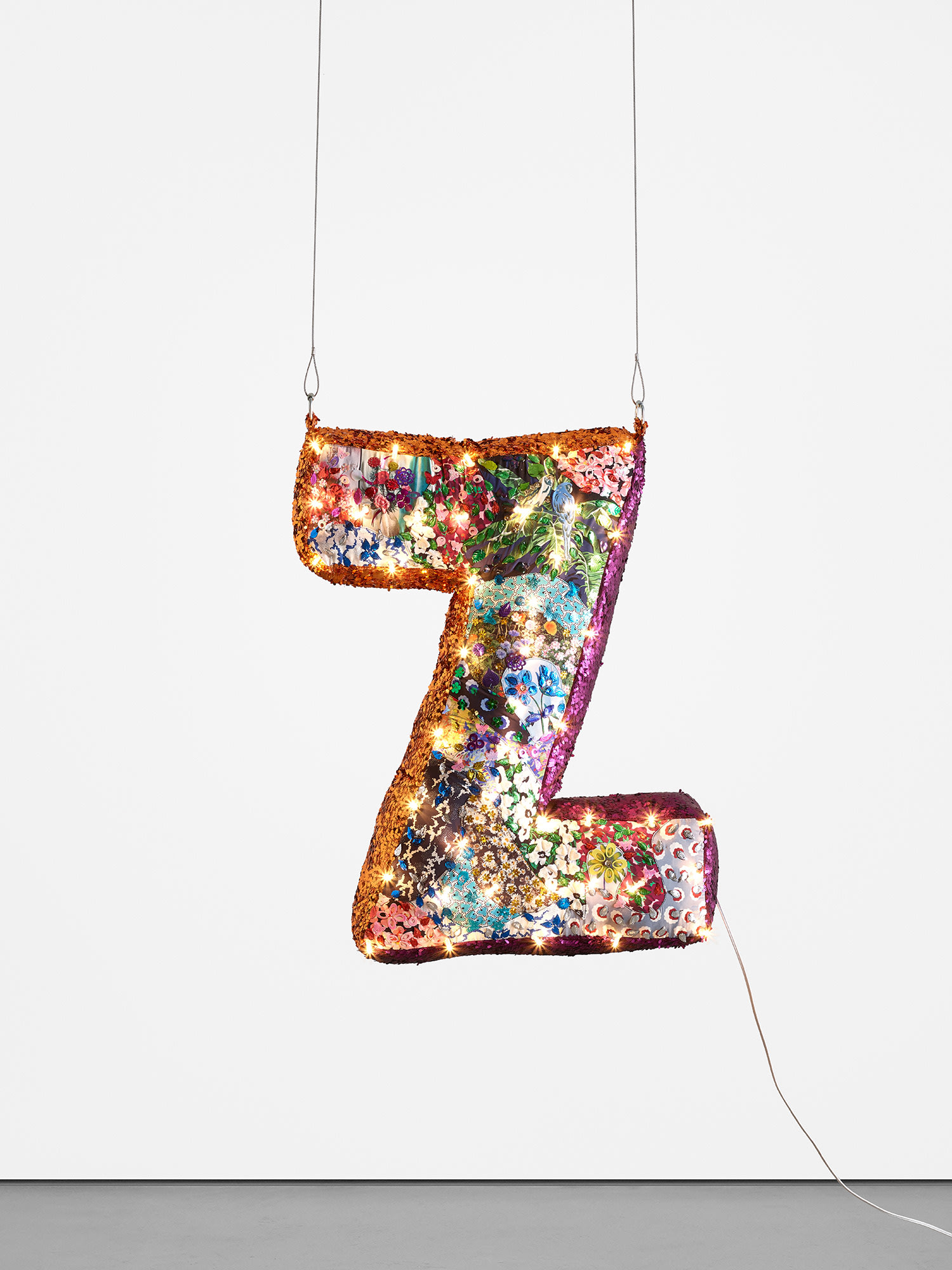
Joana Vasconcelos
Zen, 2020
For collectors, Vasconcelos's work offers something genuinely rare: a practice that is rooted in strong conceptual foundations but that communicates with immediate, sensory force. The handmade quality of her crochet means that each piece carries within it an enormous investment of human time and skill, and that labor is itself part of the meaning. Her prints, such as Vitrail 2 from 2014, published by Adamson Editions in a limited edition of twenty five with additional artist's and printer's proofs, allow collectors to engage with her visual language at a different scale. Signed, titled, dated, and numbered by the artist, these works on paper reward close attention and represent a considered entry point into a body of work that has grown significantly in institutional and market stature over the past two decades.
Within the broader landscape of contemporary art, Vasconcelos belongs to a generation of artists who reclaimed craft as a vehicle for serious critical inquiry, alongside figures such as Yayoi Kusama, whose obsessive repetition shares something of Vasconcelos's own relationship to accumulated labor, and Mike Kelley, whose engagement with vernacular and domestic materials opened pathways that she has walked in her own distinctive direction. She is also in conversation with a long tradition of feminist art practice that stretches from Judy Chicago through Louise Bourgeois, artists who insisted on the political dimension of materials historically associated with women's work. What distinguishes Vasconcelos is the particular Portuguese cultural specificity she brings to this conversation, grounding her practice in a national tradition while speaking fluently to global audiences. Her legacy is already substantial, and it continues to deepen.
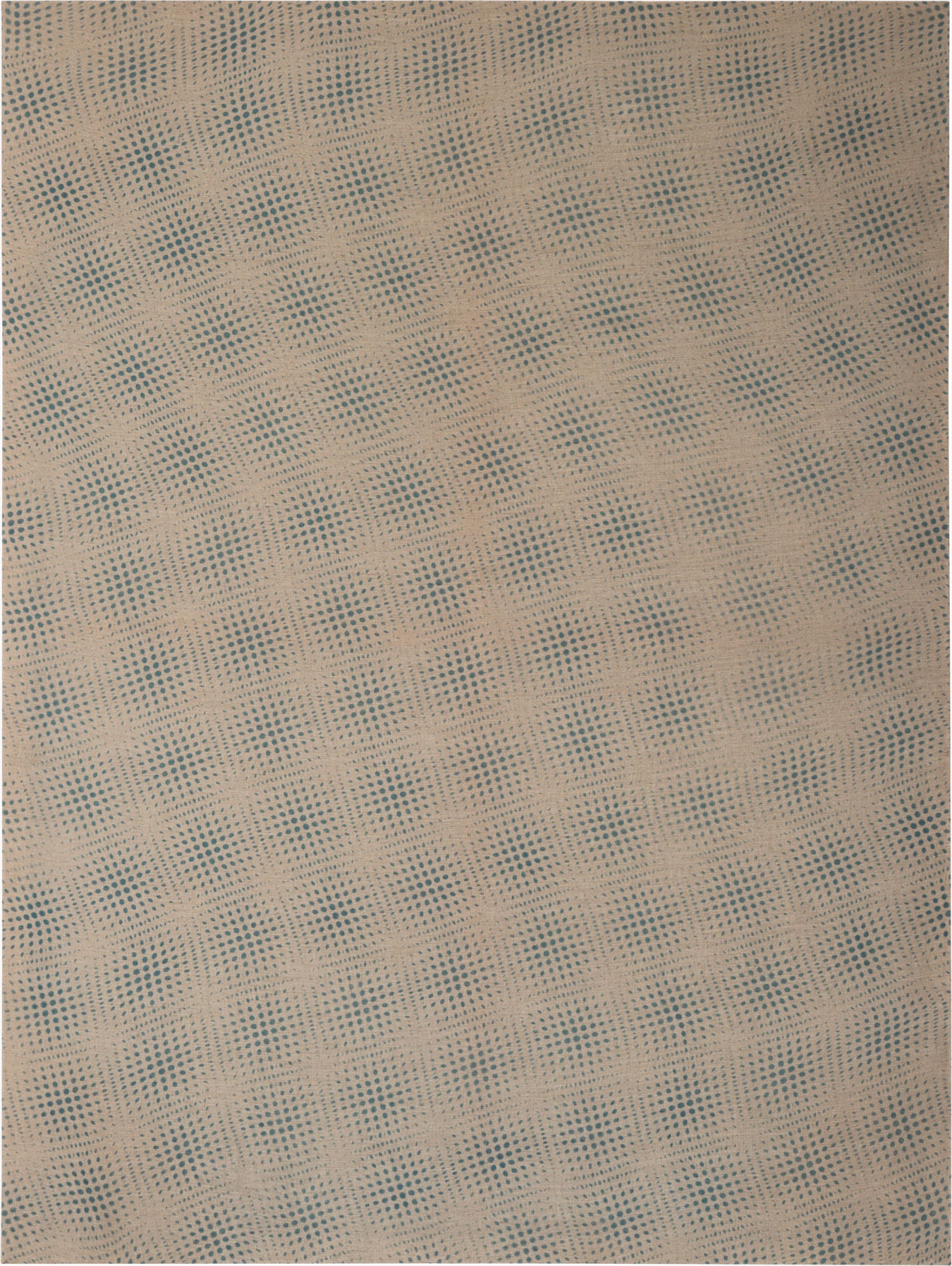
Joana Vasconcelos
Ginger & Fred
Major museum collections across Europe and beyond hold her work, and her studio in Lisbon operates as a collective enterprise, with teams of artisans and collaborators contributing to the production of pieces that could not exist any other way. That collaborative model is itself a kind of manifesto, a demonstration that making art can be a communal, generous act rather than a solitary or hierarchical one. As institutions continue to reassess the histories of craft, feminism, and national identity in contemporary art, Vasconcelos finds herself at the intersection of all three conversations at once. For collectors who want to hold a piece of that conversation in their hands, and who appreciate the extraordinary beauty that can emerge when concept and craft are held in genuine balance, her work represents one of the most compelling opportunities available in the contemporary market today.
Explore books about Joana Vasconcelos