Joan Snyder
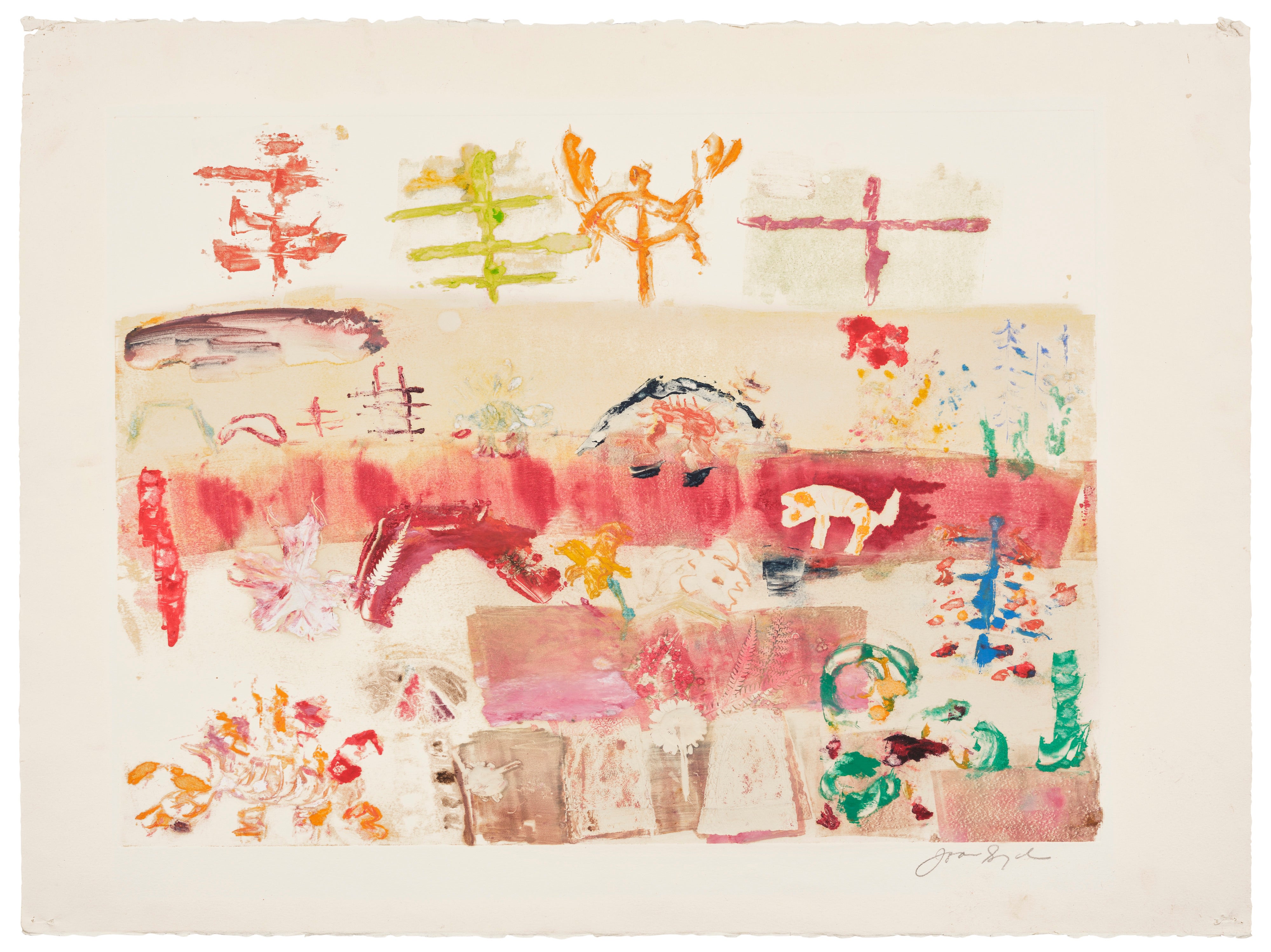
Joan Snyder: Painting From the Deepest Place
Artist Spotlight · The Collection Editorial
“I want my paintings to be about what it feels like to be alive.”
Joan Snyder, artist statement
In 2020, the Brooklyn Museum mounted a long overdue survey of Joan Snyder's work, bringing together paintings that span five decades of one of American art's most sustained and searching practices. The exhibition affirmed what devoted collectors and museum curators have known for years: Snyder is not simply a painter of feeling but an architect of it, someone who builds emotion into the physical substance of her canvases with an intelligence and generosity that few of her contemporaries have matched. At eighty four years old, she continues to work from her studio in Brooklyn and Woodstock, New York, producing paintings that carry the full weight of a life lived in close attention to what matters. Joan Snyder was born in 1940 in Highland Park, New Jersey, and came of age in a postwar America that offered women artists little in the way of institutional encouragement.
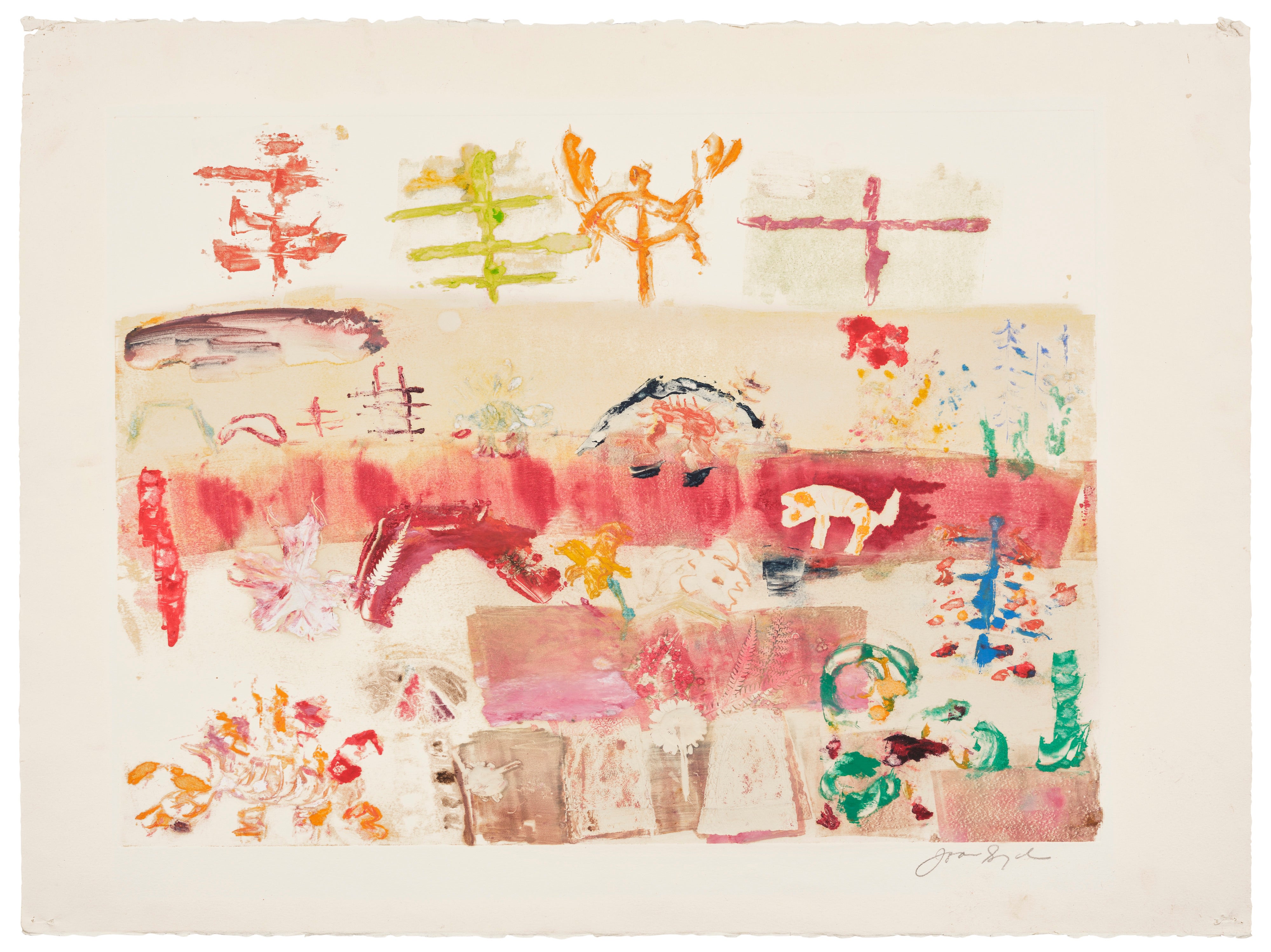
Joan Snyder
c. 1978
She studied at Douglass College, the women's college of Rutgers University, where she earned her undergraduate degree, and later completed her MFA at Rutgers in 1966. The intellectual atmosphere at Rutgers in that period was unusually fertile, shaped in part by the influence of Allan Kaprow and a broader questioning of what art could be and do. Snyder absorbed those questions and made them her own, developing early on a conviction that painting had to mean something beyond its own formal conditions. Her breakthrough came in the late 1960s and early 1970s with what became known as her stroke paintings, canvases in which gestural marks are arranged in grids or sequences that read almost like musical notation or coded language.
These works announced a painter who was thinking rigorously about the relationship between the act of painting and the experience of emotion, between the hand that makes and the self that feels. They were shown at Paley and Lowe Gallery in New York and attracted serious critical attention, earning Snyder a Guggenheim Fellowship in 1974. The stroke paintings remain among the most important contributions to American abstraction of their era, standing alongside the work of painters such as Elizabeth Murray and Susan Rothenberg as evidence of a generation that transformed what gestural painting could hold. Over the following decades, Snyder's practice expanded in ways that felt both inevitable and surprising.
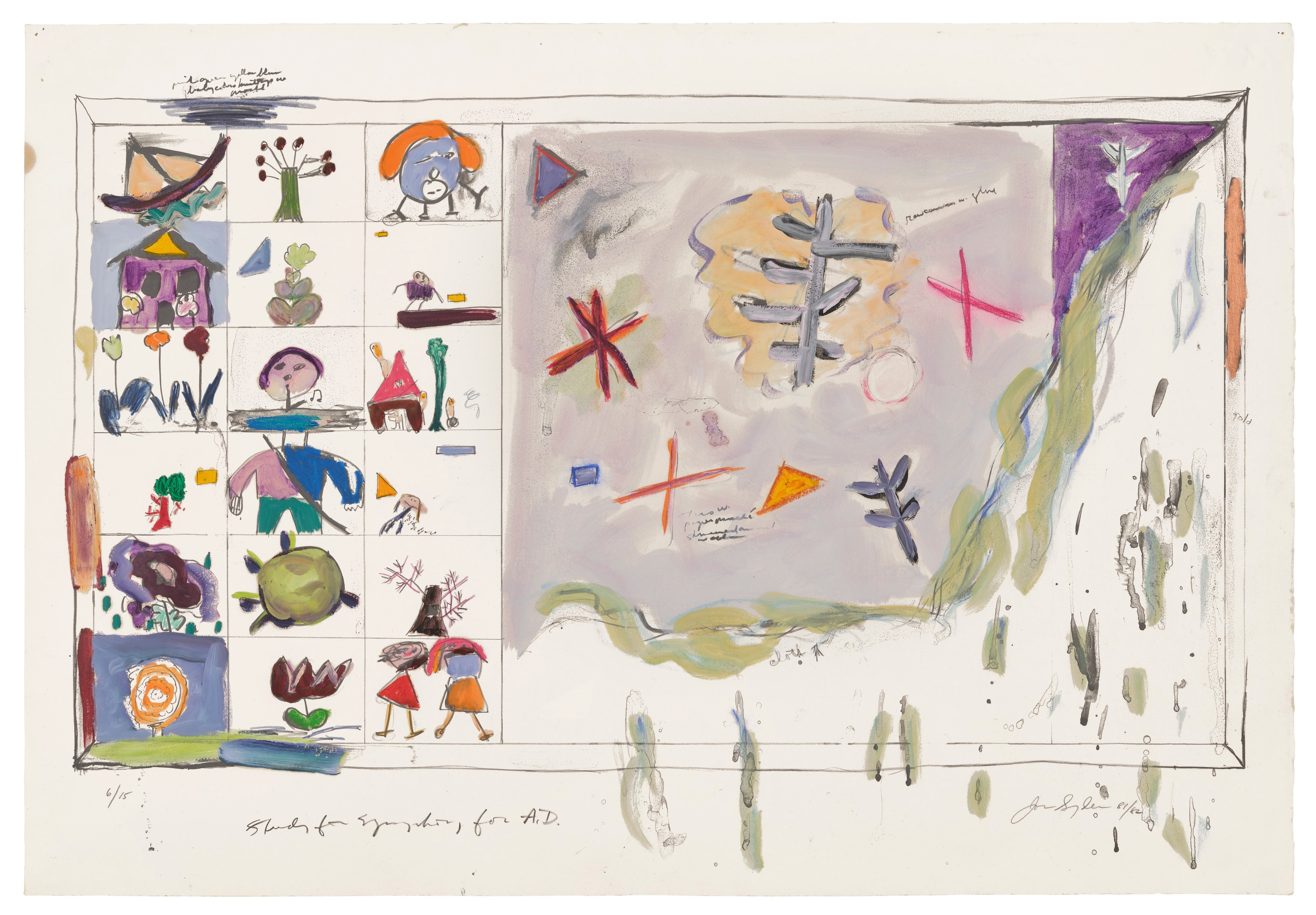
Joan Snyder
Study for Symphony, for A.D. (see S. 19.2)
She began incorporating text into her canvases, weaving words and fragments of language into the painted surface so that the boundary between image and inscription dissolved. Collage elements followed, then organic matter: herbs, seeds, cloth, rose stems, wooden objects pressed into or layered onto the painted ground. Works such as All the Way from 2003, which brings together oil, acrylic, herbs, seeds, wooden balls, and cloth on a wood panel, exemplify this approach, where the painting becomes something closer to an altar or a garden than a conventional picture. Her Red Field, built from velvet, papier mache, oil, and acrylic on canvas, carries a tactile intensity that makes the idea of simply looking at it feel inadequate.
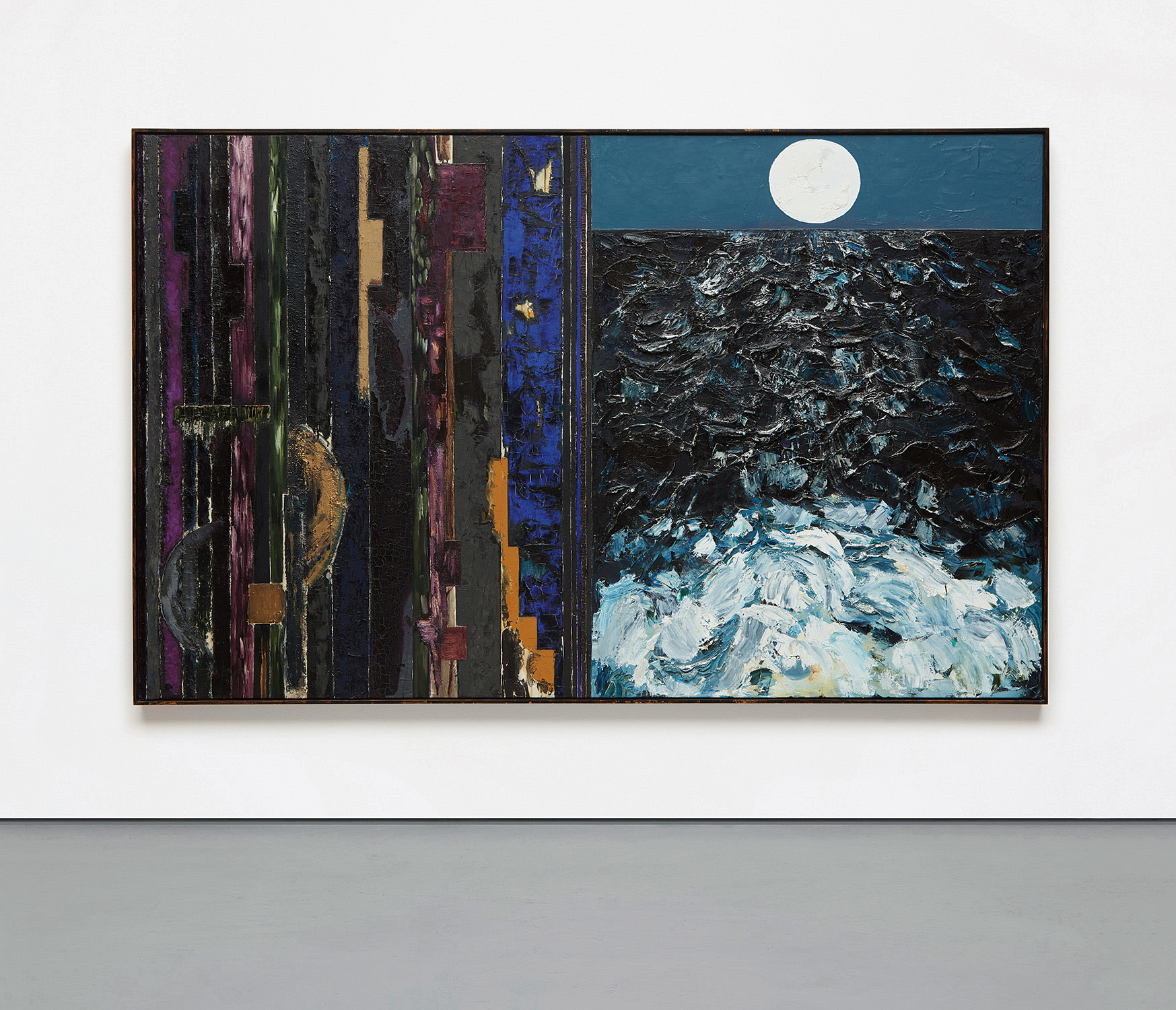
These are works that ask to be experienced as much as seen. Snyder's engagement with the pastoral deepened from the 1980s onward, influenced by the land around her Woodstock home and by a sustained meditation on themes of growth, loss, mourning, and renewal. To Transcend and The Moon, painted in 1985 in oil and acrylic on canvas, captures this period beautifully: the composition moves between abstraction and allusion, between private symbol and shared myth, in a way that feels wholly original. House I from 1983, in oil and fabric on canvas, shows her integrating textile into the painted surface with a naturalness that makes the gesture feel not experimental but necessary.
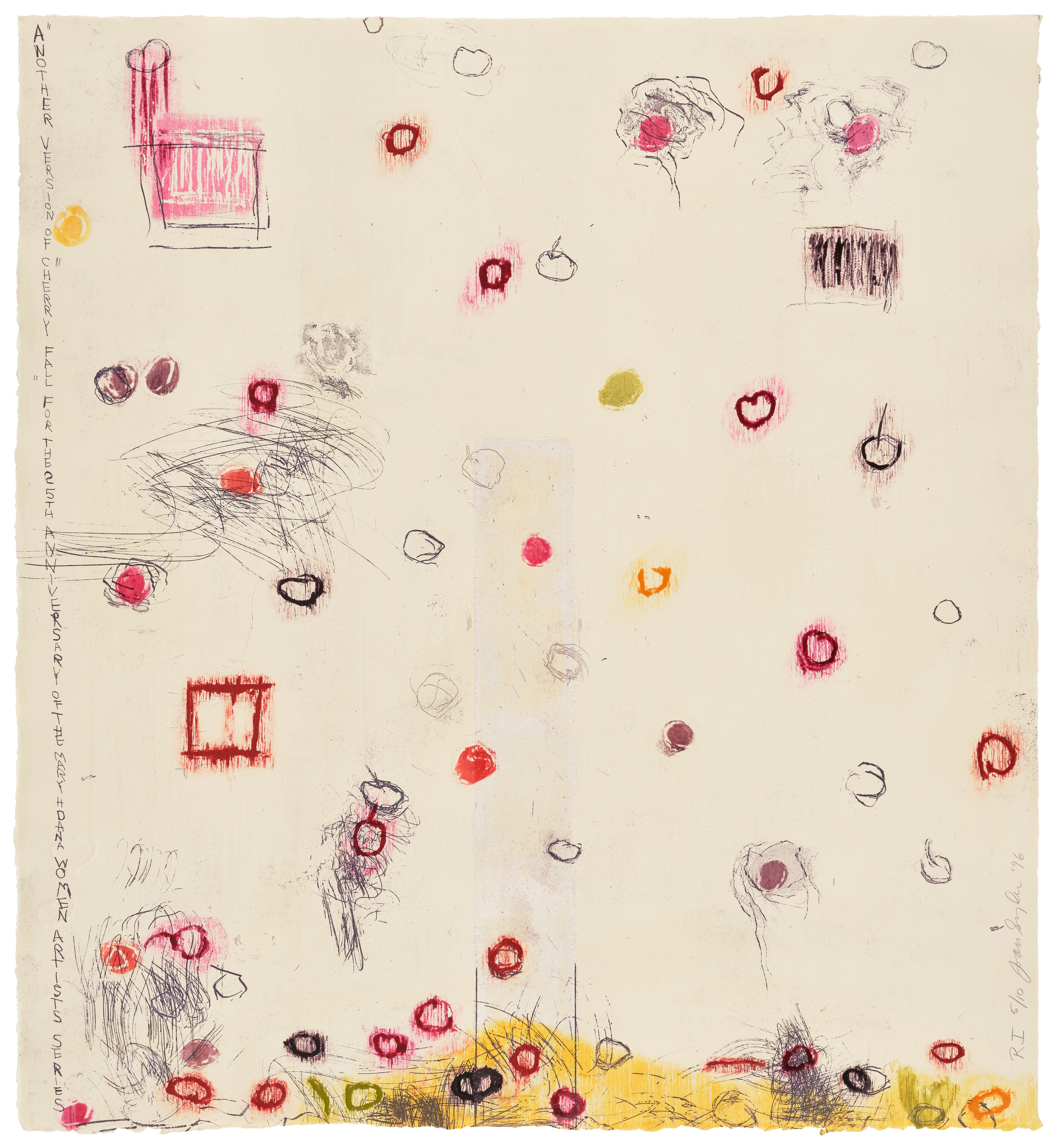
Joan Snyder
Another Version of Cherry Fall (S. 52)
Her printmaking practice runs parallel to her work on canvas and panel, and works such as Another Version of Cherry Fall and Black Lake Redux demonstrate that Snyder brings the same emotional and material ambition to the print studio that she brings to painting. The monotypes, lithographs, and woodcuts she has produced over the years are significant bodies of work in their own right, held in major print collections and eagerly sought by collectors who understand their quality. For collectors, Snyder's work presents an opportunity of a particular kind: the chance to acquire paintings and works on paper by a major American artist whose market, while active and appreciating, has not yet fully caught up with her art historical importance. Her works are held in the permanent collections of the Museum of Modern Art, the Metropolitan Museum of Art, and the Jewish Museum in New York, among many others, and they have been acquired by serious private collectors who recognize that her place in the canon is secure.
The range of her output, from large scale oil and mixed media canvases to intimate prints and works on paper, means that there are meaningful points of entry across collecting budgets. Works from the 1970s and 1980s represent the core of her achievement and command sustained interest, while later works such as OH Elena from 2020, with its oil, acrylic, rose stems, leaves, and glitter on canvas, show that her late style carries the same urgency and originality as everything that came before. Snyder belongs to a generation of American women artists who remade the possibilities of abstract painting from the inside. Her peers and near contemporaries include Elizabeth Murray, Susan Rothenberg, and Mary Heilmann, painters who brought autobiographical depth, feminist consciousness, and material experimentation into a field that had long been dominated by a cooler, more impersonal set of values.
Joan Snyder
To Transcend/The Moon, 1985
Snyder's particular contribution was to insist on the full range of human emotion as legitimate subject matter for serious painting, not as sentimentality but as something structural and real. The critics who recognized this early, including Lucy Lippard, helped establish the framework through which her work could be properly understood, and the institutional recognition that has followed over five decades reflects a broad consensus about her significance. What makes Joan Snyder's work feel so urgent and alive today is its refusal of distance. These paintings do not stand apart from experience and observe it; they are made of it, built from the materials of a life that includes grief and celebration, the beauty of the natural world and the difficulty of being human within it.
In an art world that often rewards irony and detachment, there is something radical and deeply moving about a painter who has spent sixty years insisting on directness, on the validity of feeling, on the capacity of paint and cloth and seeds and words to carry what matters most. To live with a Joan Snyder is to have something in your home that will not let you forget what painting, at its best, can do.
Explore books about Joan Snyder