Jiten Thukral
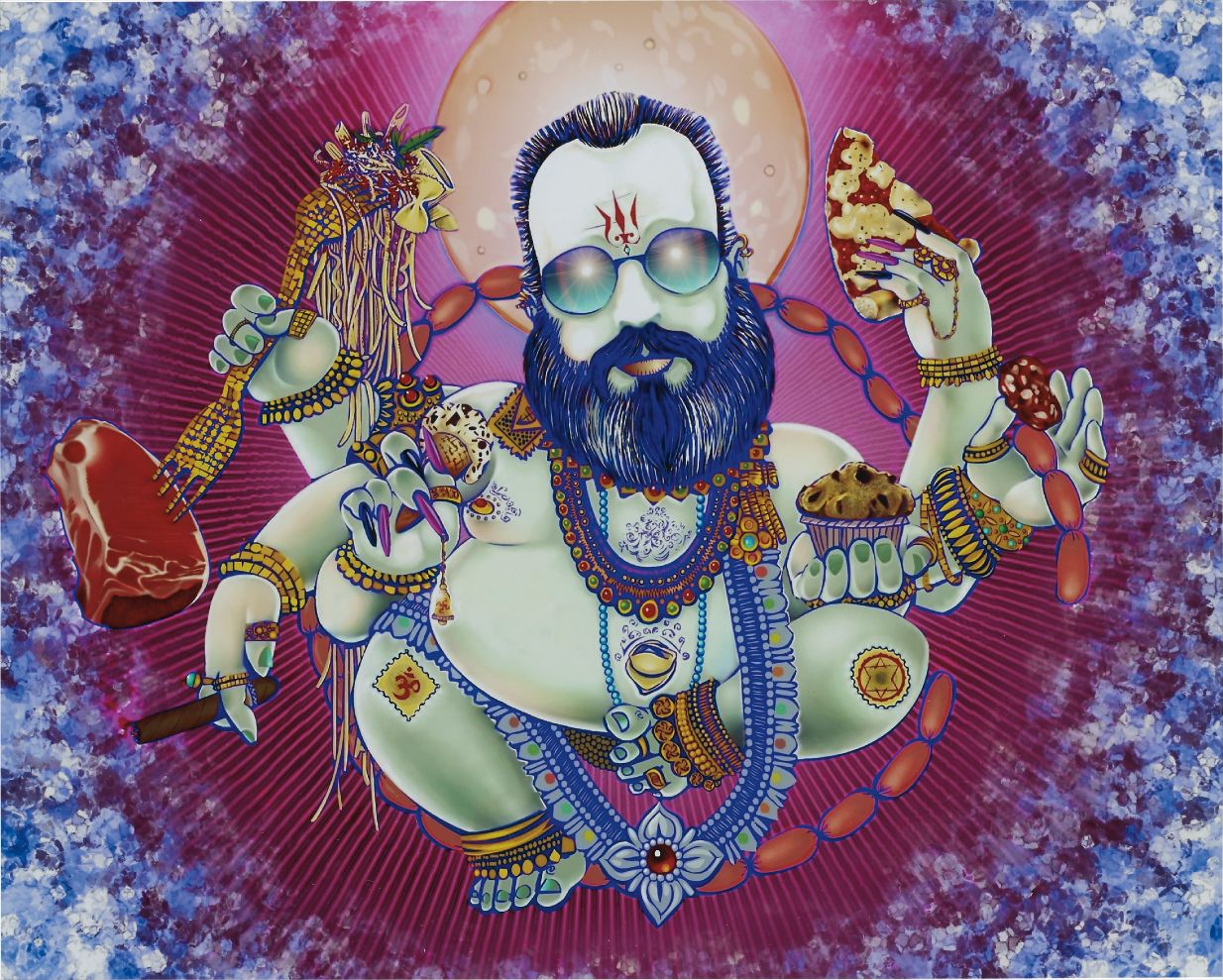
Jiten Thukral, Illuminating the World We Inhabit
Artist Spotlight · The Collection Editorial
There is a particular kind of artist who makes you feel, standing before their work, that you have been given new eyes. Jiten Thukral is that kind of artist. Working from New Delhi, where the ancient and the hypermodern exist in constant, vivid negotiation, Thukral has built a practice over more than two decades that is at once visually seductive and intellectually rigorous. His installations, sculptures, and multimedia works have found audiences across Asia, Europe, and beyond, earning him a place among the most compelling voices in contemporary Indian art today.
Jiten Thukral
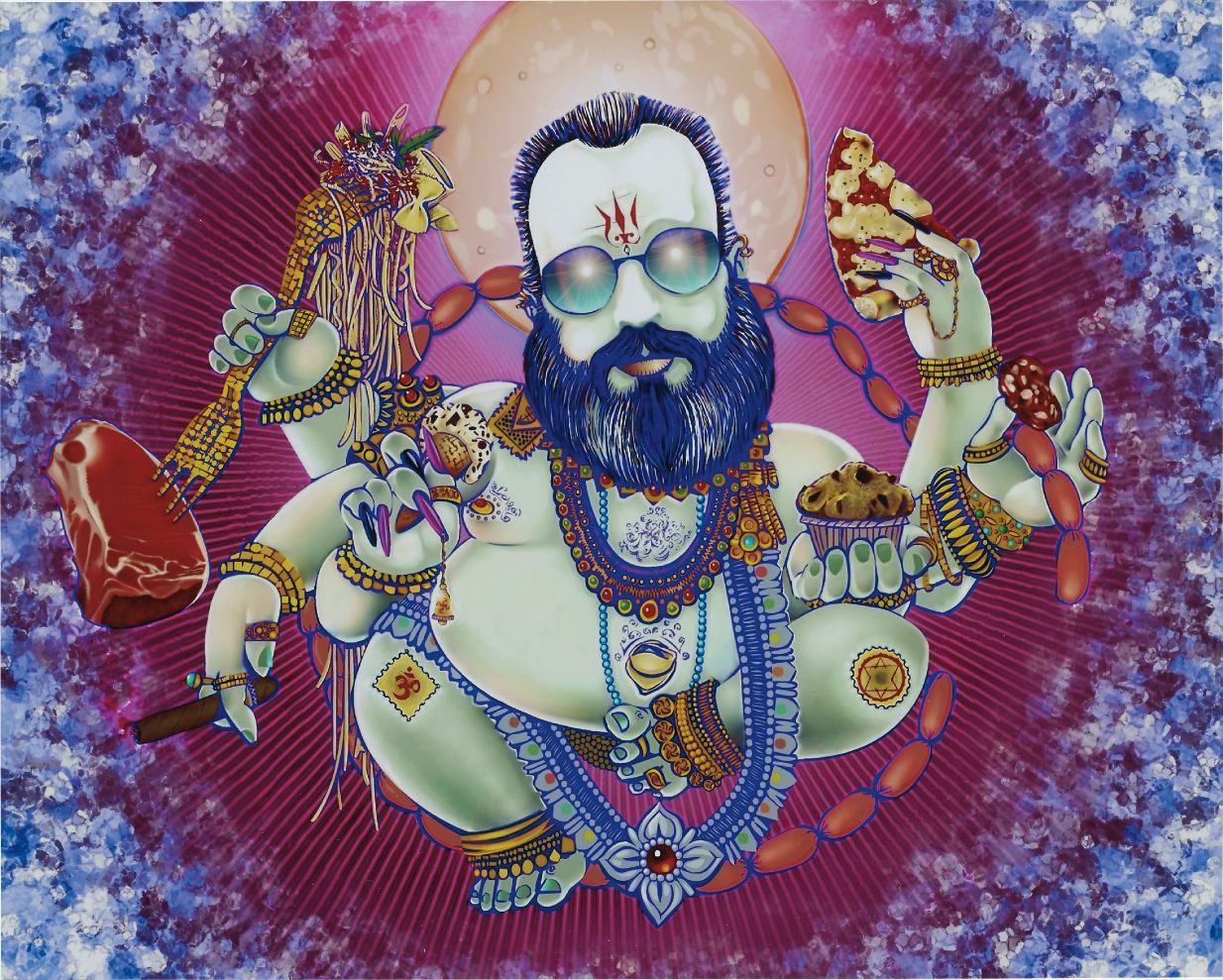
Dominus Aeris, Mirage XX
Thukral was shaped by the particular energy of urban India at a moment of rapid transformation. The economic liberalization of the 1990s remade the country's visual landscape with extraordinary speed, flooding cities with advertising imagery, global brand identities, and the shimmering promises of consumer culture. For a young artist coming of age in this environment, that flood was not merely backdrop. It was subject matter.
Thukral developed an acute sensitivity to the language of desire that commerce speaks, and he has spent his career interrogating that language with both affection and critical intelligence. His artistic development has always been collaborative in spirit. Thukral works closely with Asha Scharying, a partnership that has become central to his practice and to the way his ideas move from conception to realized form. This mode of working, rooted in dialogue and shared vision, gives his output a quality of considered layering that sets it apart from work made in solitude.
Jiten Thukral
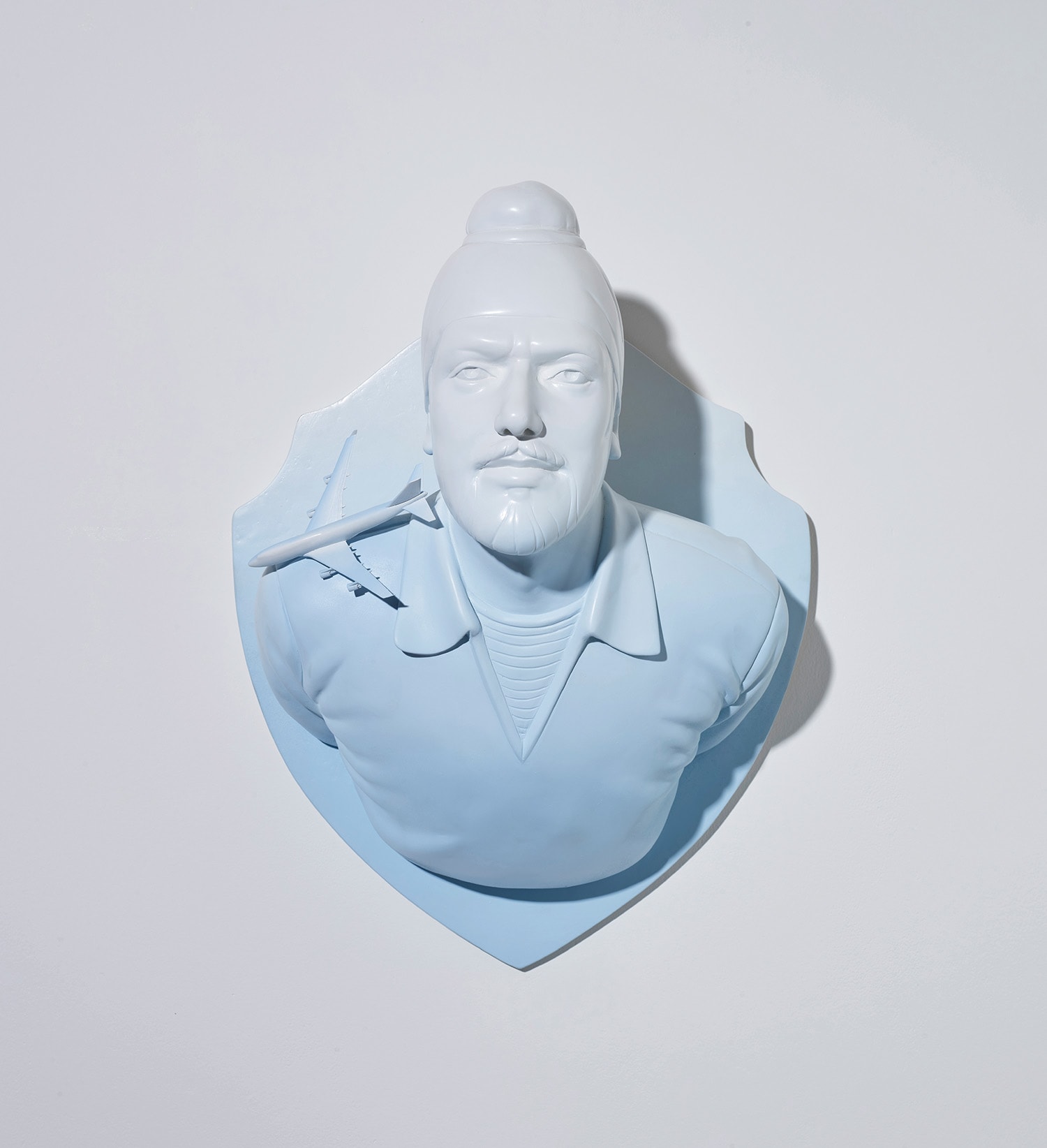
Immortalis XI
The collaborations allow for a productive friction between perspectives, and the results carry the weight of that sustained conversation. Together they have explored how globalization reshapes identity, community, and aspiration, asking what it means to desire in a world where desire itself has been designed by forces far beyond any individual's horizon. At the heart of Thukral's mature practice is a fascination with the systems through which contemporary life is mediated. He is drawn to the aesthetics of commerce and communication, to logos and interfaces and the visual grammar of mass appeal, but he approaches these not as a cynic.
Rather, he engages with the beauty that exists within these systems even as he asks searching questions about their costs. This doubleness, the capacity to find genuine wonder in what he is simultaneously scrutinizing, gives his work its particular charge. Viewers find themselves drawn in by surfaces that are genuinely gorgeous before they become aware of the conceptual architecture beneath. Among his most celebrated works is "Dominus Aeris, Mirage XX," an oil on canvas that exemplifies his command of painterly tradition in service of contemporary inquiry.
Jiten Thukral
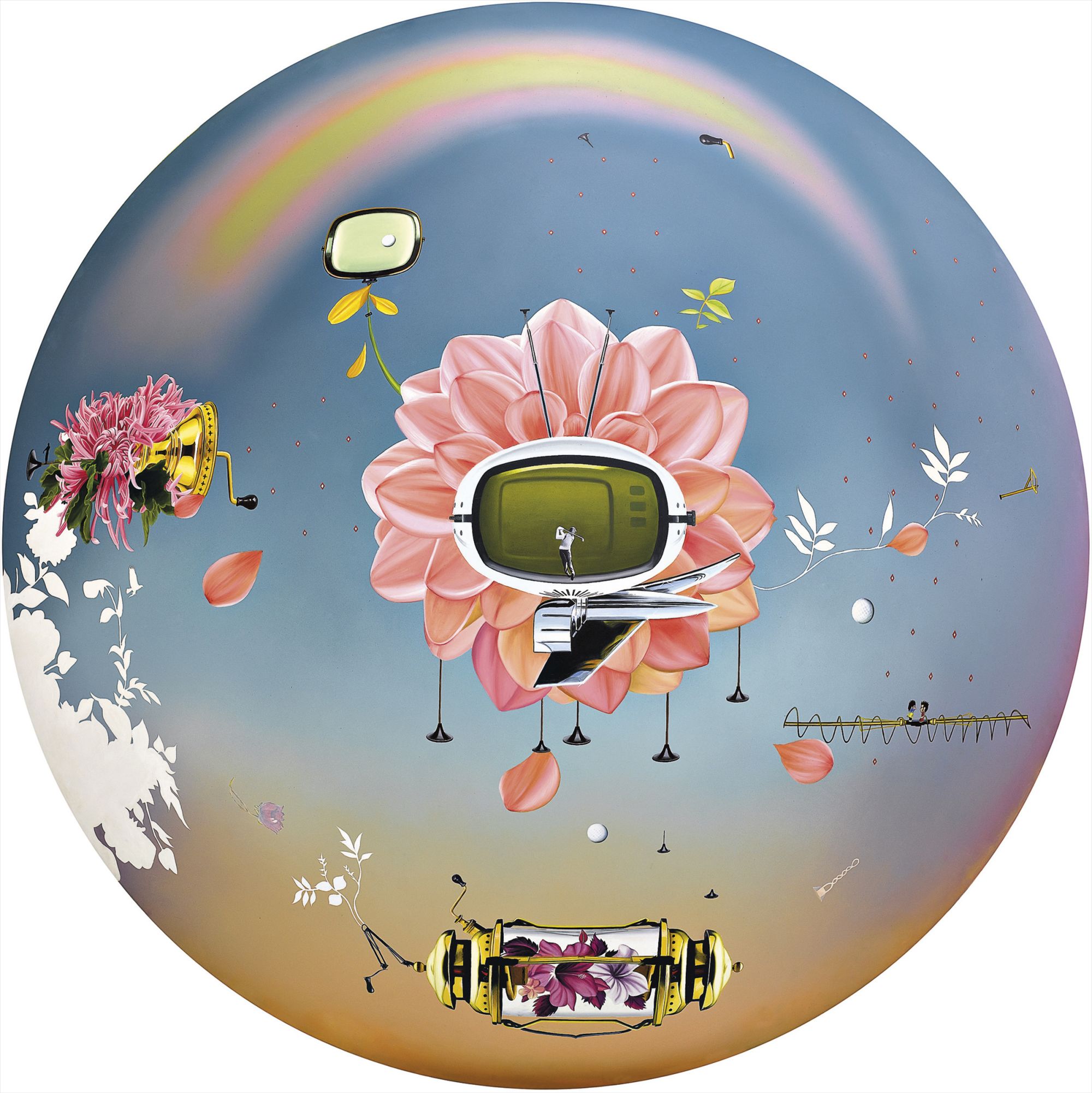
Somnium Genero -Self
The work carries the grandeur of classical painting while its imagery belongs unmistakably to the present moment, weaving together references to aspiration, illusion, and the architectures of power that organize modern life. "Immortalis XI" extends this project into three dimensions, demonstrating his versatility as a sculptor and his ability to sustain a coherent set of questions across radically different materials and forms. "Somnium Genero, Self," executed in oil on metal, is perhaps the most formally audacious of the three: the choice of metal as a support introduces a reflective quality that implicates the viewer directly, making the act of looking at the work inseparable from the act of seeing oneself within it. These are not passive objects.
They demand and reward sustained attention. From a collecting perspective, Thukral represents an exceptionally compelling proposition. His work sits at an intersection that collectors of discernment increasingly recognize as vital: the meeting point of technical accomplishment, conceptual depth, and urgent thematic relevance. The questions he asks about consumerism and globalization are not fading in importance.
If anything, the decade to come will make them more pressing, and art that grapples seriously with those questions will only accrue greater cultural and market significance. His works in oil on canvas and oil on metal speak to collectors who value painterly craft alongside intellectual ambition, while his installations appeal to institutions seeking work that can command a room and sustain programming and conversation. Early acquisition of his work by thoughtful private collectors has laid the groundwork for a market trajectory that follows the logic of sustained critical attention and genuine institutional interest. Thukral's practice invites comparison with a constellation of artists who share his interest in the aesthetics of globalization and the critique of consumer systems.
The Indian contemporary scene has produced a remarkable generation of artists working in this territory, and Thukral belongs to that generation's most serious and gifted cohort. Internationally, his concerns rhyme with artists who have examined the visual language of capitalism and global image culture, from those working in the tradition of institutional critique to those who have found in popular imagery the raw material for a new kind of painting. What distinguishes Thukral is his rootedness in a specifically Indian experience of these phenomena, an experience marked by the speed and intensity of transformation that has no precise equivalent elsewhere, and by the particular textures of New Delhi as a city where multiple histories coexist and collide. The legacy Thukral is building is one of clarity and courage.
It takes genuine intellectual bravery to engage with the imagery and infrastructure of consumer capitalism without either romanticizing it or dismissing it, to hold open the space where beauty and critique can coexist without resolving into simple judgment. That is the space his best work inhabits, and it is a space that art history has always needed. As his practice continues to evolve and as institutions and collectors around the world develop a deeper understanding of the extraordinary vitality of contemporary Indian art, Thukral's place within that story will only become more luminous. The work he is making now will matter for a very long time.