Jia Aili
Jia Aili: Visionary of the Vast and Beautiful
Artist Spotlight · The Collection Editorial
In the years since Jia Aili first emerged from the Northeast China art scene in the late 2000s, his reputation has grown with the quiet, inexorable force of the landscapes he paints. Major international institutions and serious collectors have steadily turned their attention to this singular painter, whose towering canvases feel as though they were pulled from both the deepest recesses of memory and the farthest reaches of the imagination. His work has appeared at Christie's and Sotheby's to considerable attention, with secondary market results affirming what curators and advisors have long sensed: that Jia Aili is among the most important painters to emerge from China in a generation. The art world has a way of eventually catching up to genuine talent, and with Jia, that moment feels fully, gloriously arrived.
Jia Aili
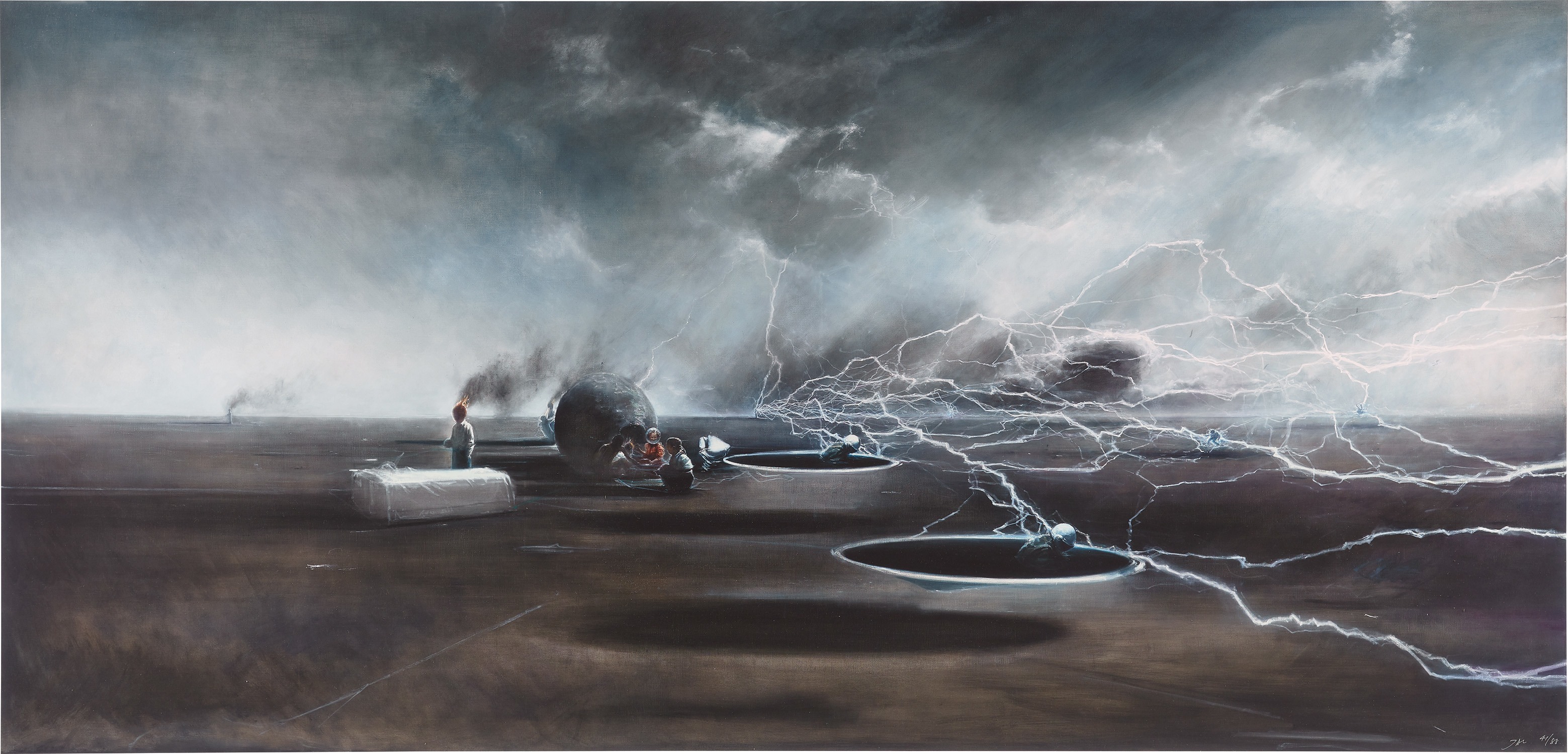
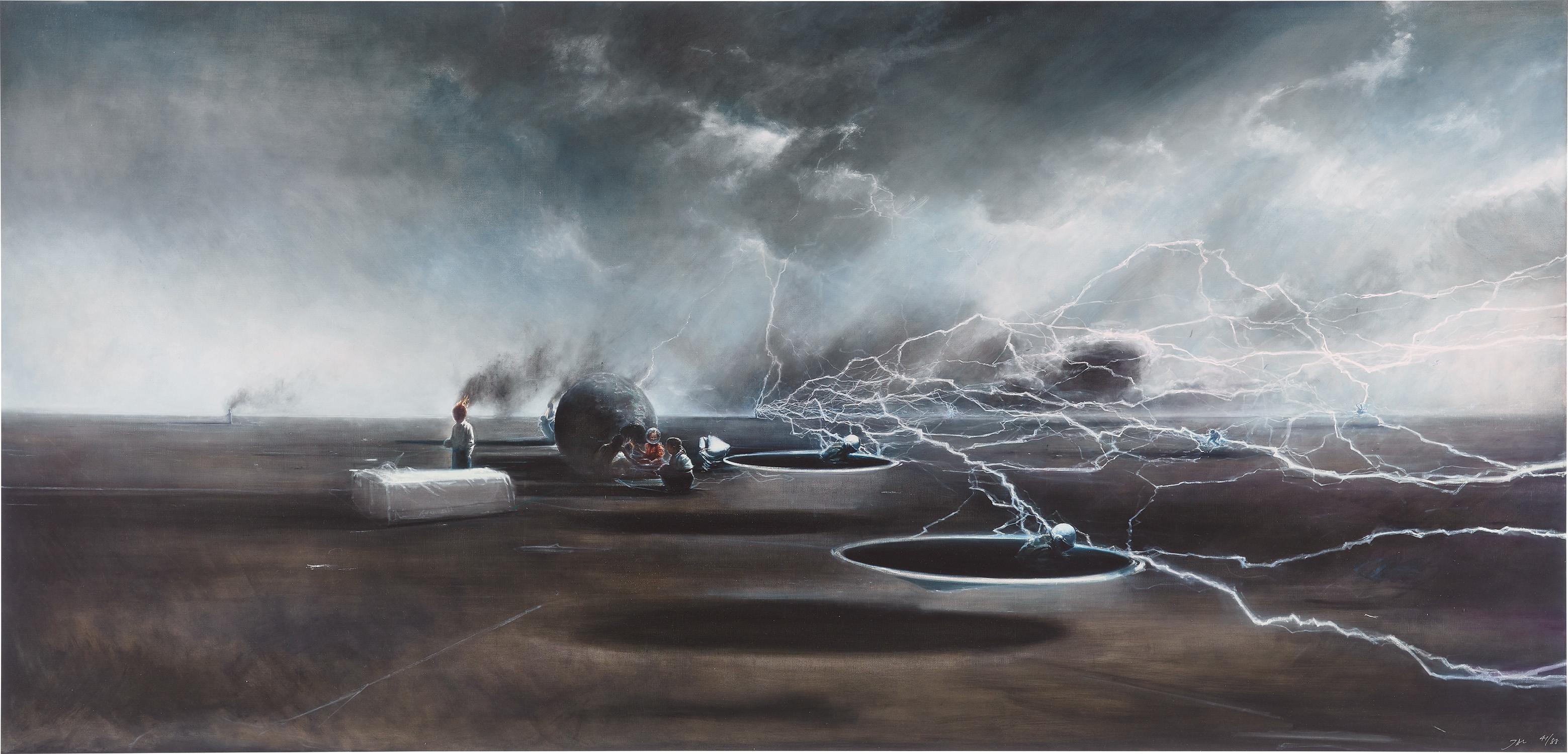
Untitled 無題
Jia Aili was born in 1979 in Dandong, a city in Liaoning Province in China's industrial Northeast, a region defined by its heavy manufacturing heritage, its harsh winters, and its complicated relationship with both Soviet era modernism and traditional Chinese culture. Growing up in this environment shaped his visual sensibility in ways that are unmistakable in his work: there is always a sense of scale, of cold air, of vast distances between things that should perhaps be closer together. He went on to study at the Lu Xun Academy of Fine Arts in Shenyang, one of China's most storied art institutions, where he developed a rigorous foundation in both technique and art history. He later pursued further study at the China Central Academy of Fine Arts in Beijing, bringing him into contact with the broader currents of contemporary Chinese and international practice.
His artistic development unfolded during a period of extraordinary transformation in China, and that transformation is everywhere legible in his painting without ever reducing his work to mere social commentary. Jia absorbed the lessons of Western painting with unusual depth and seriousness, finding particular resonance in the existentialist traditions of twentieth century European art, in the sublime landscapes of Caspar David Friedrich, in the dramatic scale of Baroque painting, and in the psychological intensity of Francis Bacon. At the same time, he brought to these influences an entirely distinct set of references drawn from science fiction literature and cinema, from the Cold War visual culture of his childhood, and from the specific textures of life in northeastern China. The synthesis he achieved is rare: a visual language that feels simultaneously rooted and utterly universal.
Jia Aili
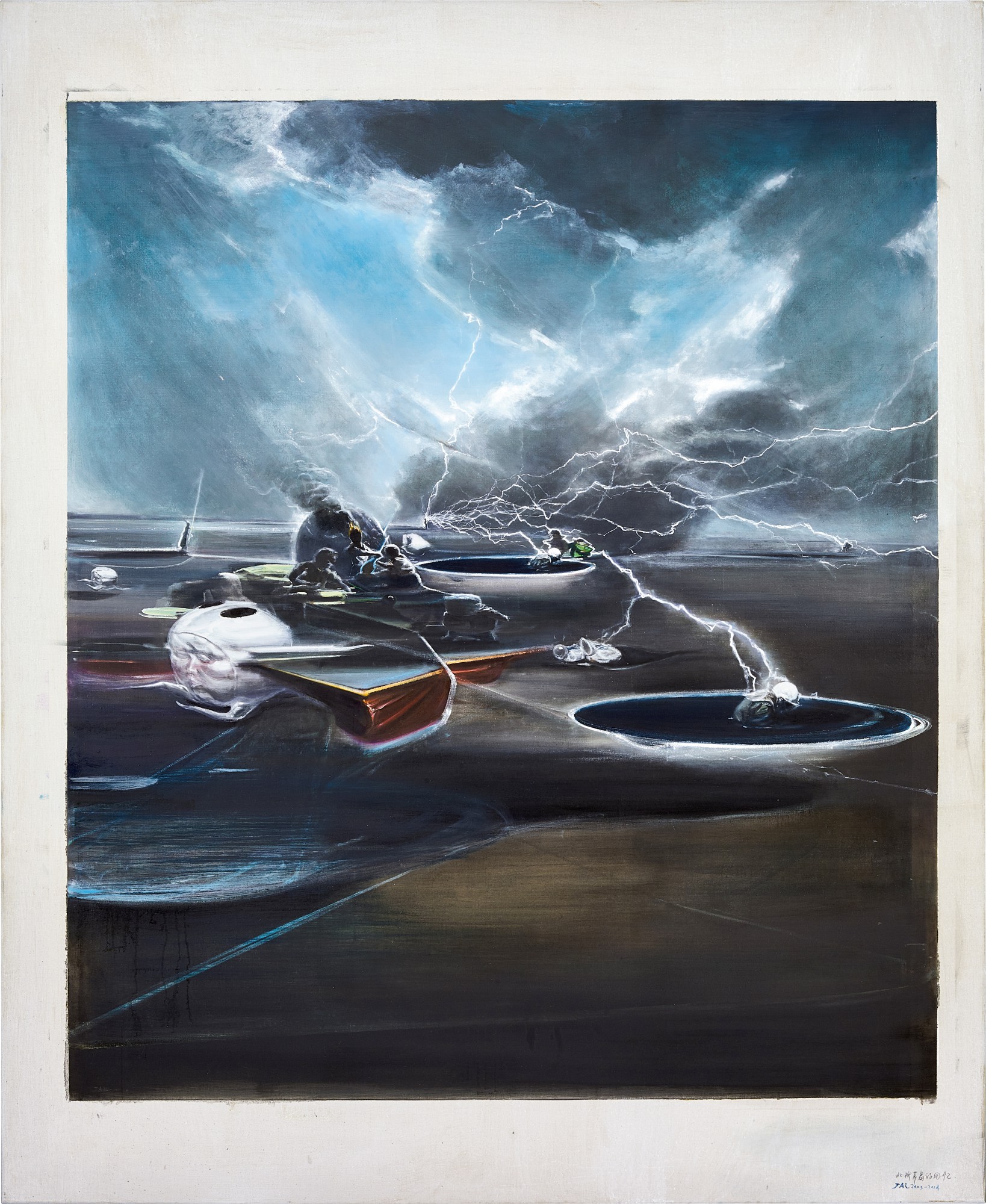
The Memory of North Liucao Island I, 2018
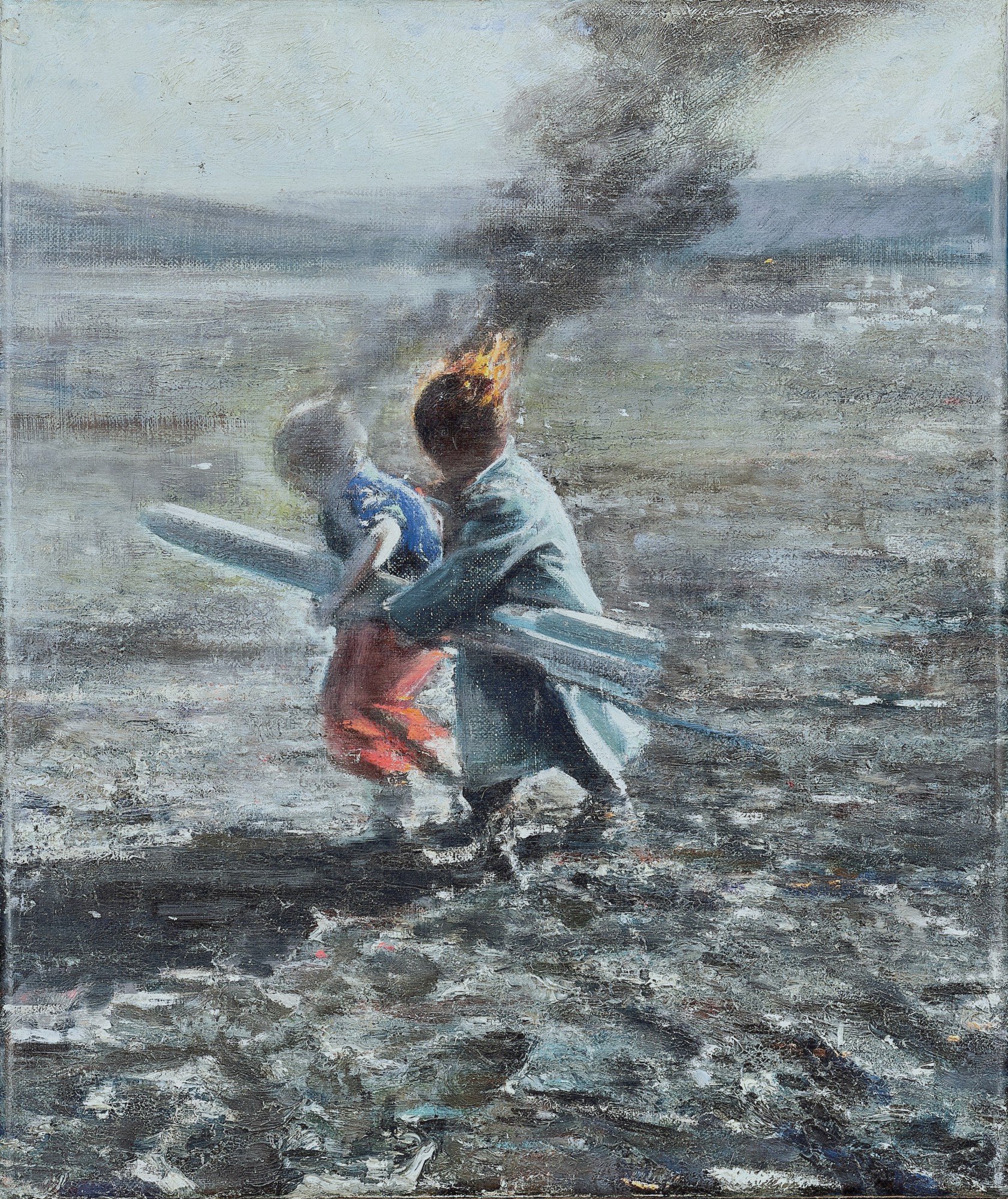
The works that established his reputation are among the most compelling paintings produced anywhere in the world during the first decade of this century. Large scale canvases populated by solitary figures who wander through or stand within landscapes that feel simultaneously post industrial and primordial, these paintings ask enormous questions about human scale, about what persists after collapse, about the relationship between the individual and the vast indifferent world. Works such as "The Young," painted in 2012, demonstrate his extraordinary ability to invest figurative painting with a philosophical weight that never tips into didacticism. The figure is present but dwarfed, contemplative but unresolved, caught in a moment that feels both particular and eternal.
It is painting that earns its ambition. The series "The Memory of North Liucao Island," including the 2018 canvas of that name, represents a significant evolution in his practice toward a more intimate engagement with specific place and personal memory. North Liucao Island, a remote landmass in the waters near his native Liaoning, becomes in his hands something far larger than geography: a site of psychological excavation, a landscape charged with the accumulated weight of individual and collective history. The paintings in this series retain the monumental quality of his earlier work while introducing a new tenderness, a quality of longing that makes them among the most emotionally resonant works of his career.
Jia Aili
The Memory of North Liucao Island 北柳草島的回憶
His untitled works in oil on canvas similarly reward sustained attention, their apparent open endedness an invitation rather than an evasion, asking viewers to bring their own histories to the encounter. From a collecting perspective, Jia Aili occupies a position of real distinction. His work appeals to collectors who are drawn to painting with genuine intellectual and emotional ambition, to those who understand that the best contemporary Chinese art is in profound dialogue with global art history rather than existing apart from it. His canvases have been acquired by significant private collections across Asia, Europe, and North America, and institutional interest has grown steadily as museum programs dedicated to contemporary Chinese painting have expanded.
Collectors who have followed his career from early in his trajectory have been rewarded both aesthetically and in terms of market recognition, and there remains considerable opportunity for those coming to his work now to acquire pieces of lasting significance. Within the broader context of contemporary painting, Jia Aili's closest points of reference are artists who have similarly constructed ambitious figurative practices informed by art history, literature, and philosophy. His work invites comparison with the large scale figurative painting of Neo Rauch, whose canvases also operate in a dreamlike register saturated with historical residue. There are resonances too with the psychological landscapes of Peter Doig, whose work shares Jia's preoccupation with memory, solitude, and the uncanny.
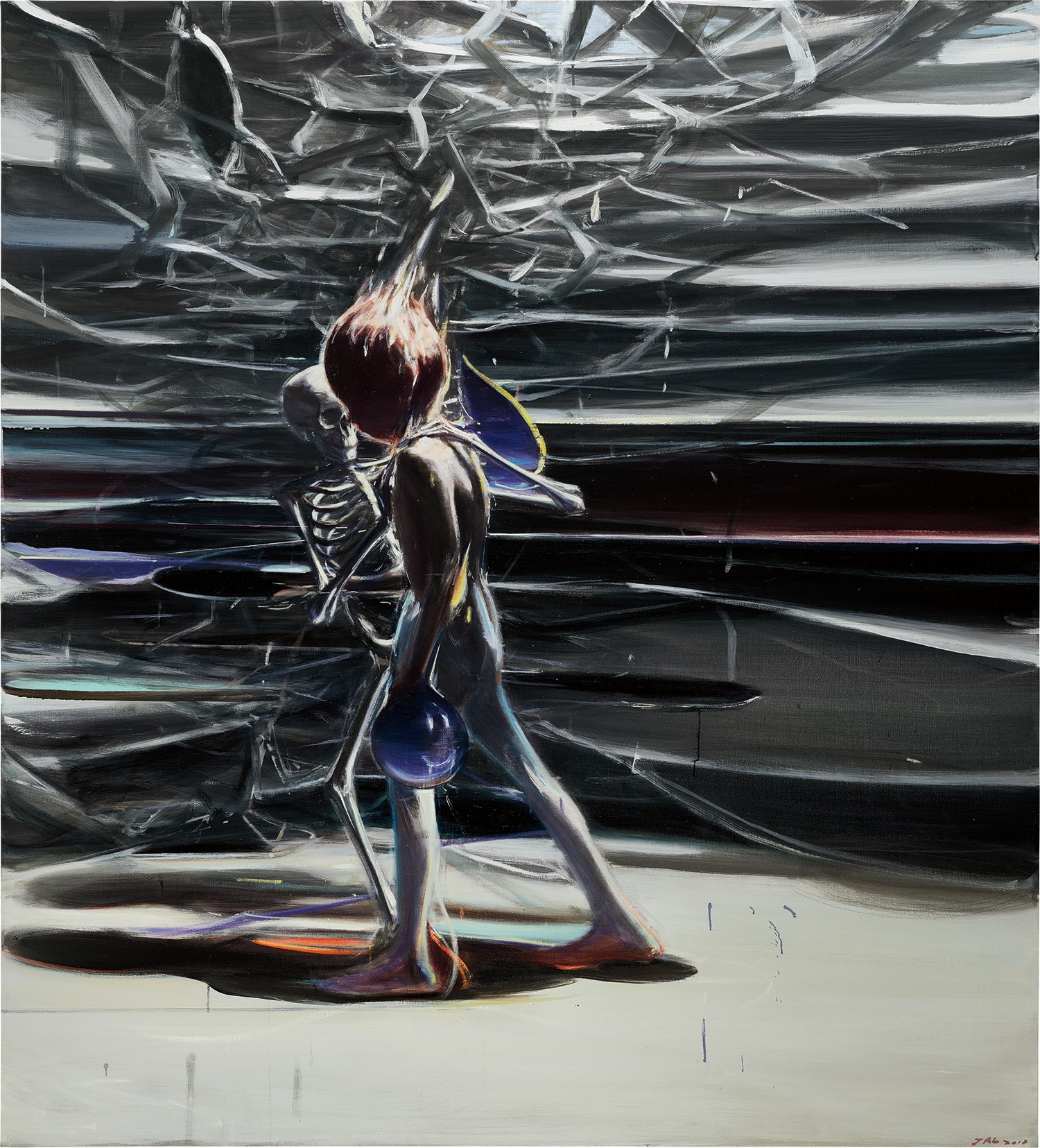
Jia Aili
The Young, 2012
Within the Chinese context, he belongs to a generation that includes Liu Wei and others who came of age after the immediate aftermath of the Cultural Revolution and found themselves navigating an extraordinary plurality of influences and possibilities. Jia's particular achievement has been to forge from this plurality something entirely his own. What ultimately makes Jia Aili matter, and matter increasingly, is the combination of technical mastery and philosophical seriousness that animates every canvas. At a moment when painting is constantly being declared obsolete and then constantly being rediscovered, he has proceeded with the quiet confidence of an artist who knows that the medium remains capable of saying things that no other form can say.
His paintings are not documents of their time so much as they are encounters with something more durable: the experience of being alive in a world larger and stranger than any single perspective can contain. For collectors, for institutions, and for anyone who cares about where painting is going, Jia Aili is an artist whose work demands and generously repays the closest possible attention.