Jerry Uelsmann
Jerry Uelsmann, Master of the Impossible Image
Artist Spotlight · The Collection Editorial
“In my work there is an attempt to evoke a sense of mystery and wonder that transcends the rational.”
Jerry Uelsmann
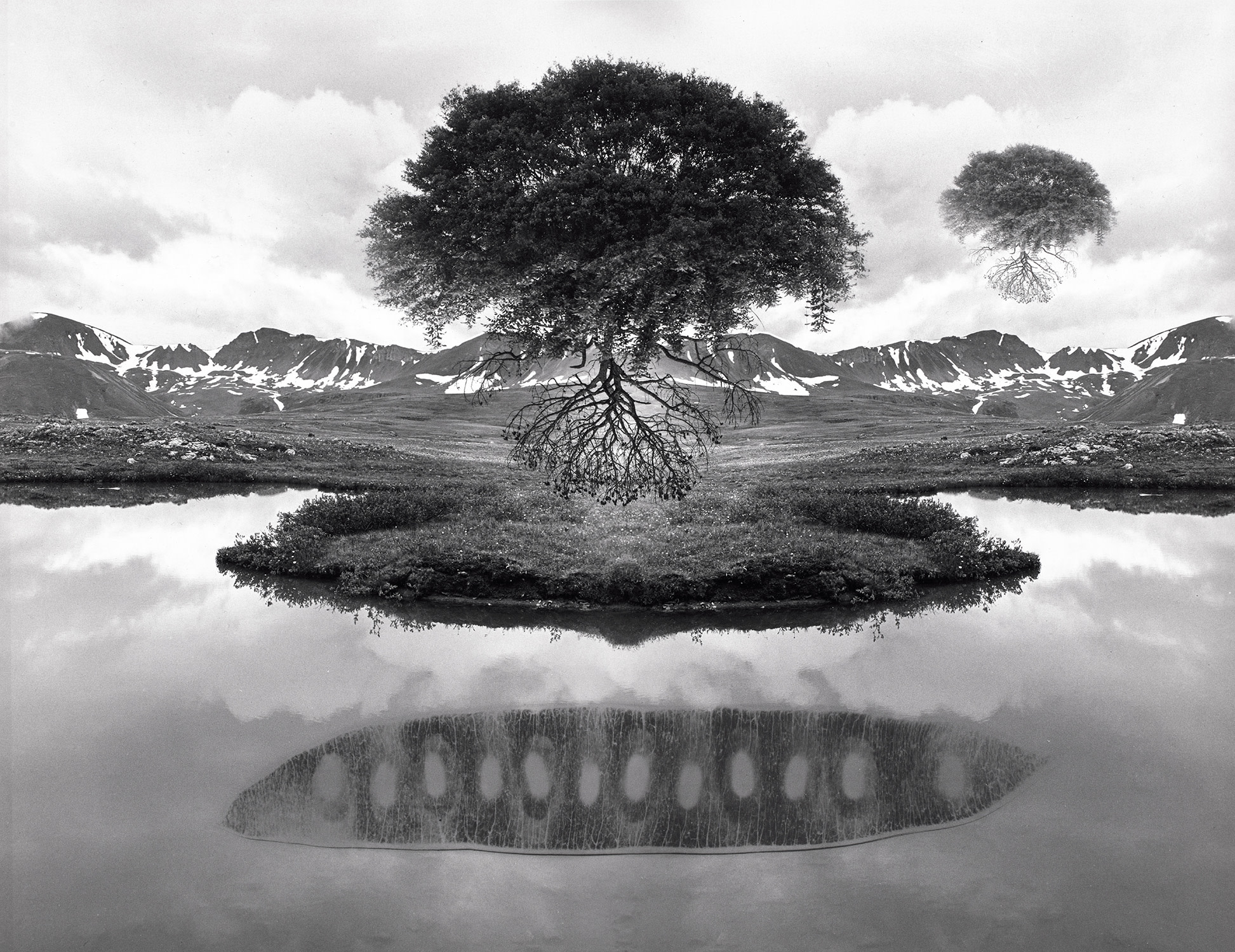
There is a photograph that stops visitors in their tracks. A tree grows from the surface of still water, its roots dissolving into their own reflection, the sky above it simultaneously day and night. No seam is visible. No trick is immediately obvious.
Jerry Uelsmann
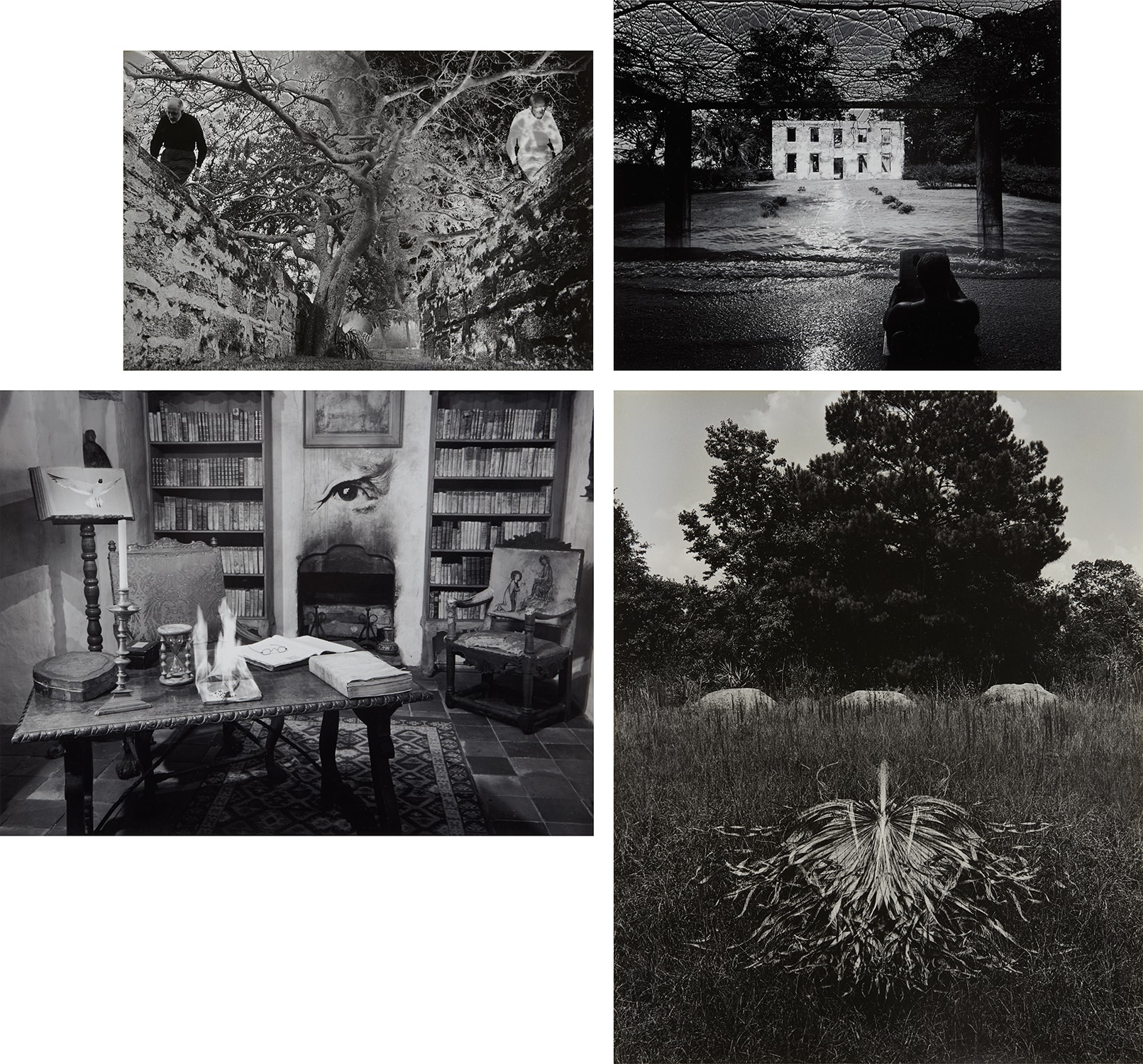
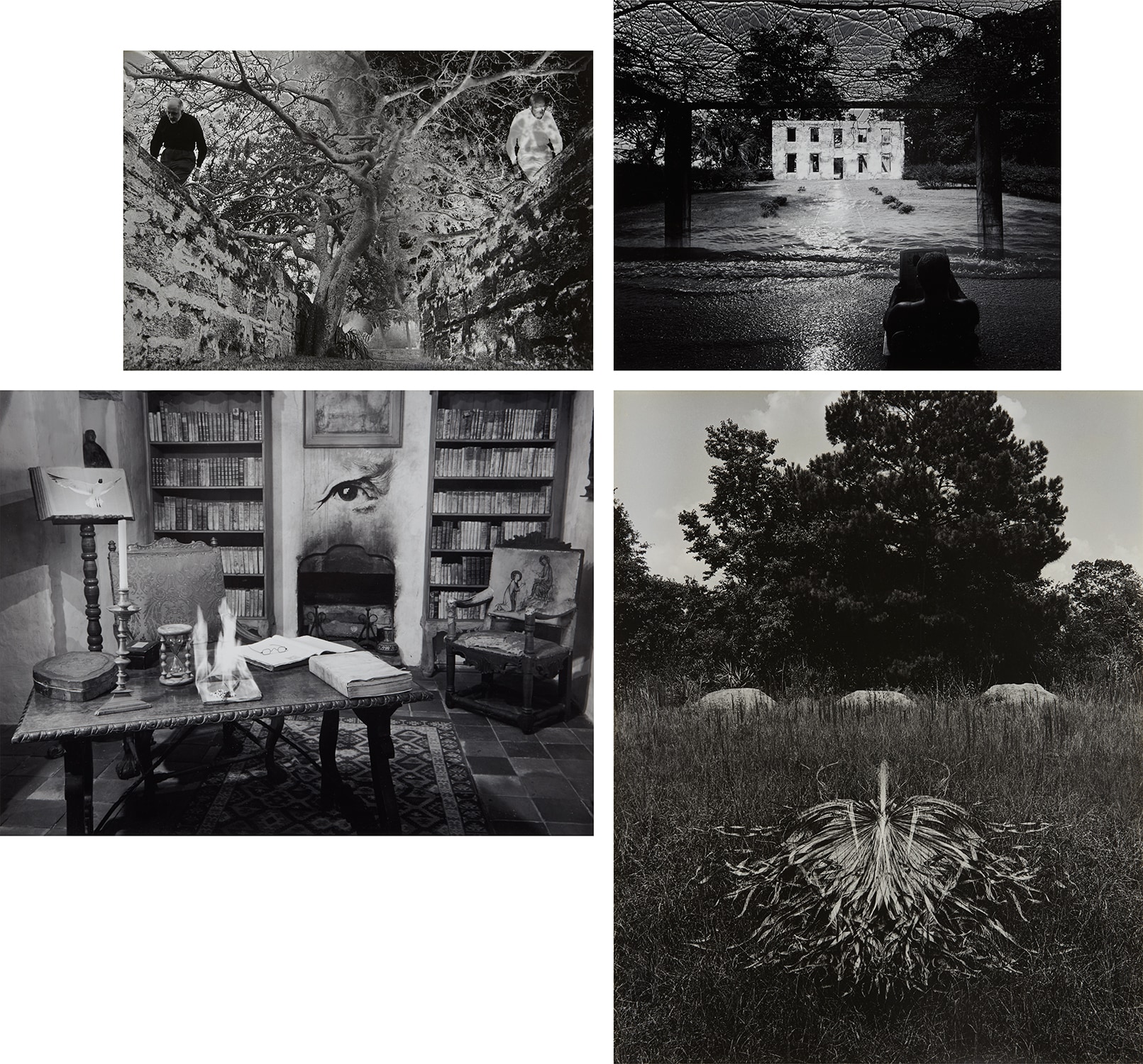
Four Selected Images
The image simply exists, whole and haunting, as though nature itself agreed to bend its rules for the camera. This is the world Jerry Uelsmann built, one enlarger at a time, in the amber light of the darkroom, across a career that spanned more than six decades and permanently altered how the world understands photography as an art form. Jerry Norman Uelsmann was born in Detroit, Michigan, in 1934, and came of age in a postwar America that was still debating whether photography deserved a place on the gallery wall alongside painting and sculpture. He studied at the Rochester Institute of Technology, where he received his Bachelor of Fine Arts in 1957, before going on to Indiana University, where he earned both his Master of Science and Master of Fine Arts degrees.
At Indiana, he studied under Henry Holmes Smith and Minor White, two towering figures in American photographic education whose influence on Uelsmann was profound. Smith in particular encouraged an experimental, process driven approach to image making, and White introduced Uelsmann to ideas about photography as a form of visual poetry. These years in Bloomington planted the seeds of everything that would follow. In 1960, Uelsmann joined the faculty of the University of Florida in Gainesville, where he would remain for the next four decades.
Jerry Uelsmann
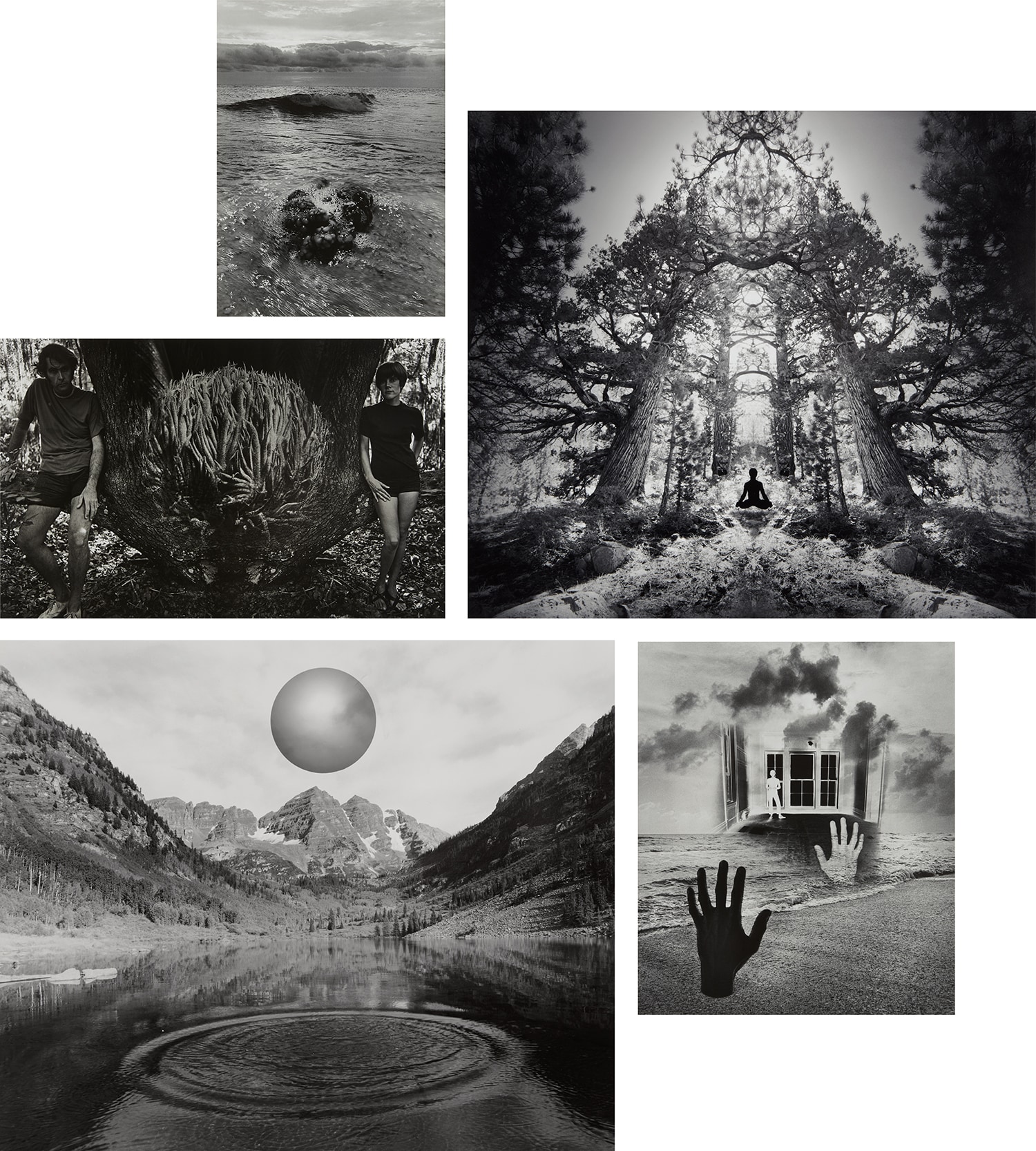
Five Selected Images
What he built there was not merely an academic career but an entire philosophical practice. He began developing his distinctive method of what he called post visualization, a deliberate counterpoint to the prevailing doctrine of pre visualization championed by Ansel Adams. Where Adams believed the final image should be fully conceived before the shutter was pressed, Uelsmann trusted the process itself, allowing meaning to emerge through the act of making. He worked with as many as a dozen enlargers simultaneously in his darkroom, projecting multiple negatives onto a single sheet of photographic paper, burning and dodging with extraordinary precision to create images that read as utterly seamless.
“The darkroom is a magic place where you can be the author of your own reality.”
Jerry Uelsmann
This was painstaking, physical, deeply skilled work, achieved entirely without computers. The results were unlike anything American photography had seen. Uelsmann drew on the traditions of Surrealism, on the dream logic of René Magritte and the uncanny juxtapositions of Max Ernst, but his medium was not paint or collage. It was light and silver, chemistry and patience.
Jerry Uelsmann
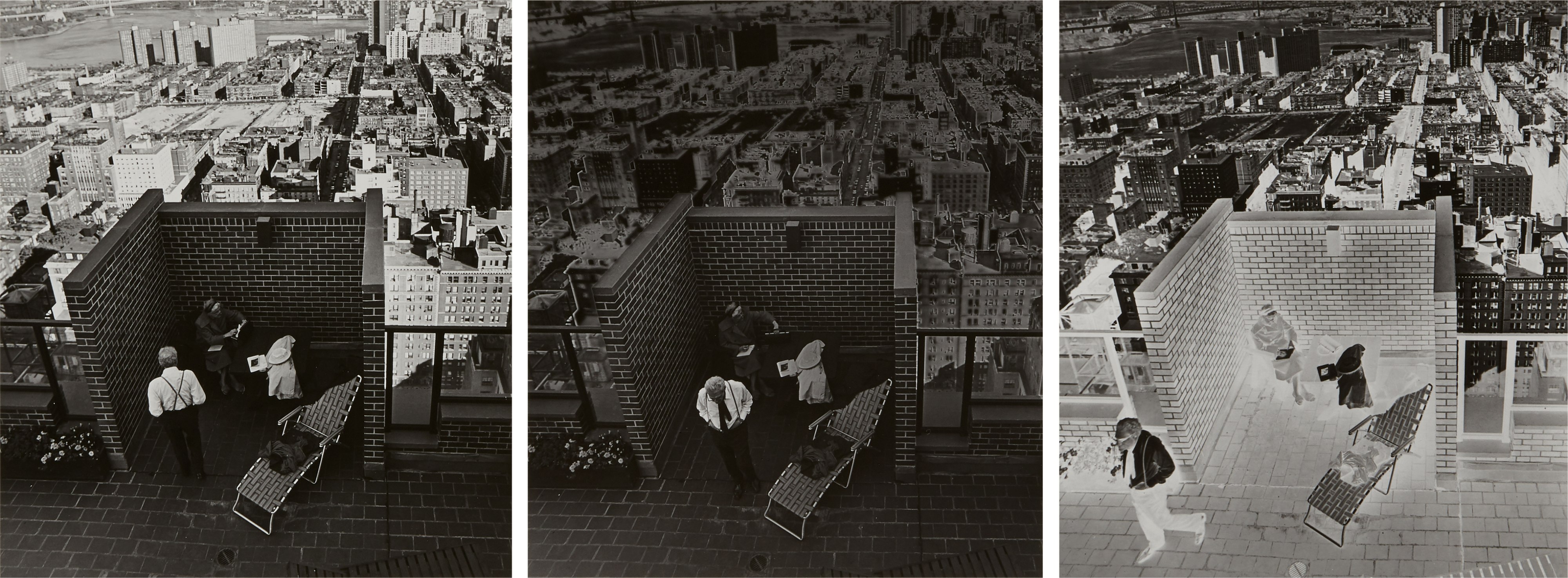
Reminiscing About the Future
Hands floated in water. Books opened onto skies. Figures stood in rooms that were also forests. The images operated somewhere between the rational and the unconscious, between documentary record and pure invention.
By the late 1960s and into the 1970s, his work was being exhibited widely, and in 1967 he became only the second photographer in history to be named a Fellow of the Guggenheim Foundation, a recognition that announced his arrival as one of the most serious image makers of his generation. Among the works that best represent his achievement, the gelatin silver prints held in distinguished private collections offer an intimate window into his practice. Works from the collection assembled by Peter C. Bunnell, the pioneering photography curator and scholar who did so much to institutionalize photography within American museums and universities, are particularly significant.
Jerry Uelsmann
Jerry Uelsmann
Bunnell was among the earliest and most perceptive champions of Uelsmann's vision, and the prints he gathered, including works such as "Reminiscing About the Future," carry the weight of that distinguished curatorial history. These are not merely photographs. They are handmade objects, unique in their tonal richness, produced through a process that can never be exactly replicated. For collectors of serious photography, they represent the highest expression of the medium's analog possibilities.
The market for Uelsmann's work reflects the enduring power of his imagery. His prints have been collected by major institutions including the Museum of Modern Art in New York, the Art Institute of Chicago, the Smithsonian American Art Museum, and the International Center of Photography, among many others. On the secondary market, his gelatin silver prints attract consistent attention from collectors who value both the visual authority of the images and the irreplaceable craft of their making. Works of strong provenance, particularly those with exhibition histories or those traceable to notable early collections, command the most sustained interest.
As with all photography of this period, condition is paramount: the characteristic warmth and tonal depth of a well preserved Uelsmann print is something no reproduction can approximate. To understand Uelsmann fully, it helps to place him in dialogue with his contemporaries and the broader history of photographic innovation. He belongs to a lineage that includes not only his teachers Smith and White but also figures such as Ralph Eugene Meatyard, whose psychological intensity shares something of Uelsmann's dreamlike quality, and Duane Michals, who was similarly committed to photography as a vehicle for inner rather than outer reality. In Europe, the Surrealist photographers Man Ray and Hans Bellmer had explored related territory, but Uelsmann's approach was distinctly American, rooted in a craft tradition and sustained by the institutional structure of the university.
He was also, crucially, a generous teacher, and his influence radiates outward through generations of photographers he trained in Gainesville. Jerry Uelsmann died in April 2022 at the age of 87, just as the art world was beginning to reckon seriously with the long aftermath of digital image making. The timing felt almost pointed. The techniques he pioneered in the darkroom, the layering of realities, the construction of the impossible image, had become the default grammar of contemporary visual culture, deployed by designers, filmmakers, and social media users daily.
And yet what Uelsmann made by hand, in the dark, with light and chemistry, retains a quality that no algorithm has yet matched: the evidence of human presence, of a mind working in real time with real materials toward a vision it could feel but not entirely predict. That quality is irreplaceable, and it is precisely why his work matters as much today as it ever did. To encounter a Uelsmann print is to be reminded that imagination, when given the right tools and enough patience, can make the impossible not merely visible but beautiful.
Explore books about Jerry Uelsmann
Jerry Uelsmann: Twenty-Five Years of Photographs
Jerry Uelsmann
Jerry N. Uelsmann: A Retrospective
Peter C. Bunnell
The Photograph and the Soul
Jerry Uelsmann and Wendy Watriss
Uelsmann: Process and Perception
James L. Enyeart
Jerry Uelsmann: The Multi-Image Vision
Jerry Uelsmann