Jerkface
Jerkface Turns Nostalgia Into Pure Joy
Artist Spotlight · The Collection Editorial
Something quietly remarkable has been happening in the upper echelons of the contemporary art market. Works by the anonymous New York based street artist known as Jerkface have been migrating steadily from the walls of downtown galleries and urban facades into the curated homes of serious collectors, commanding prices and attention that would have seemed surprising even a decade ago. The artist's signature kaleidoscopic treatments of iconic cartoon characters have found devoted audiences across the United States, Europe, and Asia, with collectors drawn not only to the visual exuberance of the work but to the deeper formal intelligence that underpins it. Jerkface has become one of the most compelling figures in the post street art generation, a painter who has transformed the vocabulary of pop nostalgia into something genuinely rigorous and emotionally resonant.
Jerkface
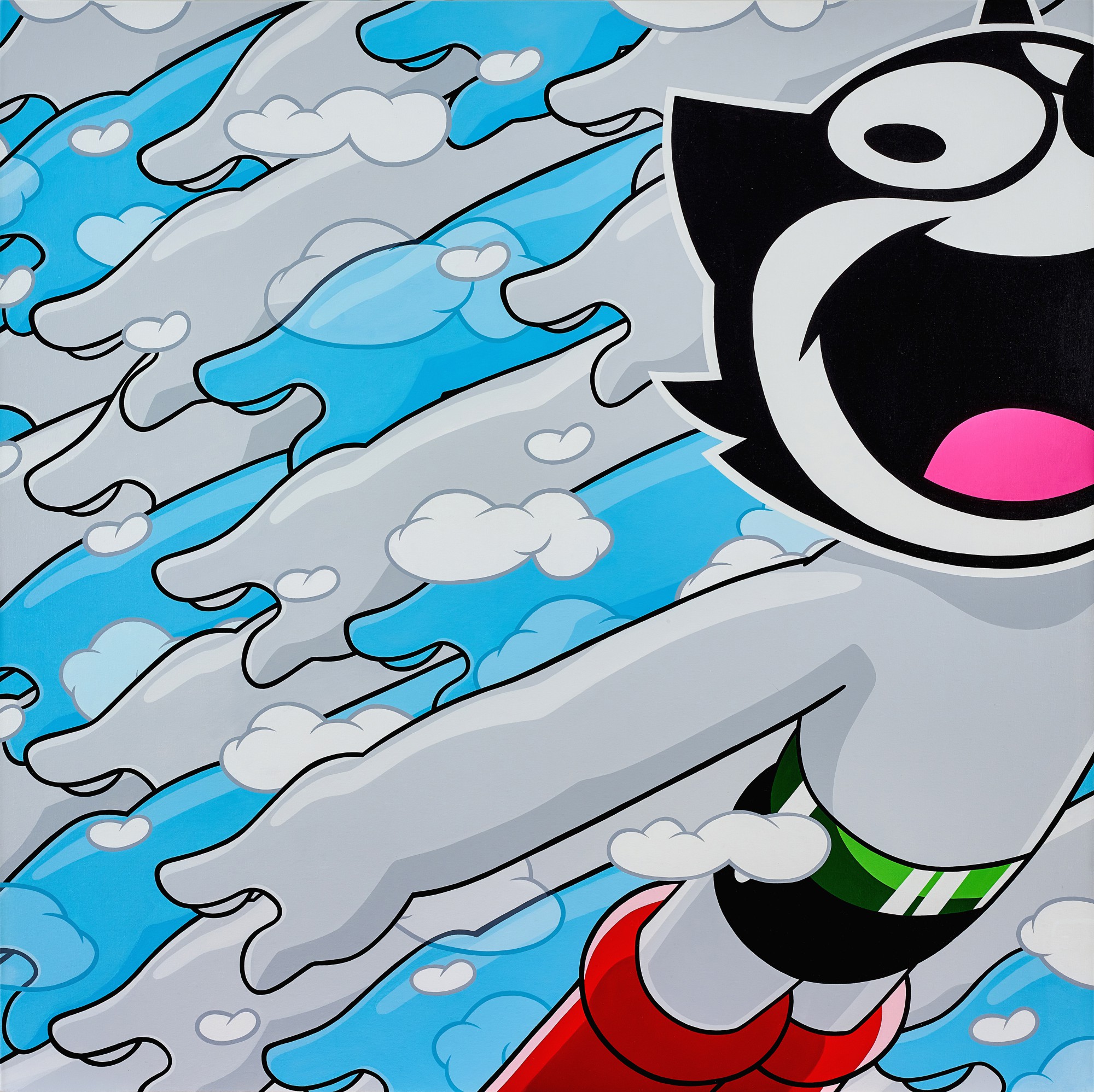
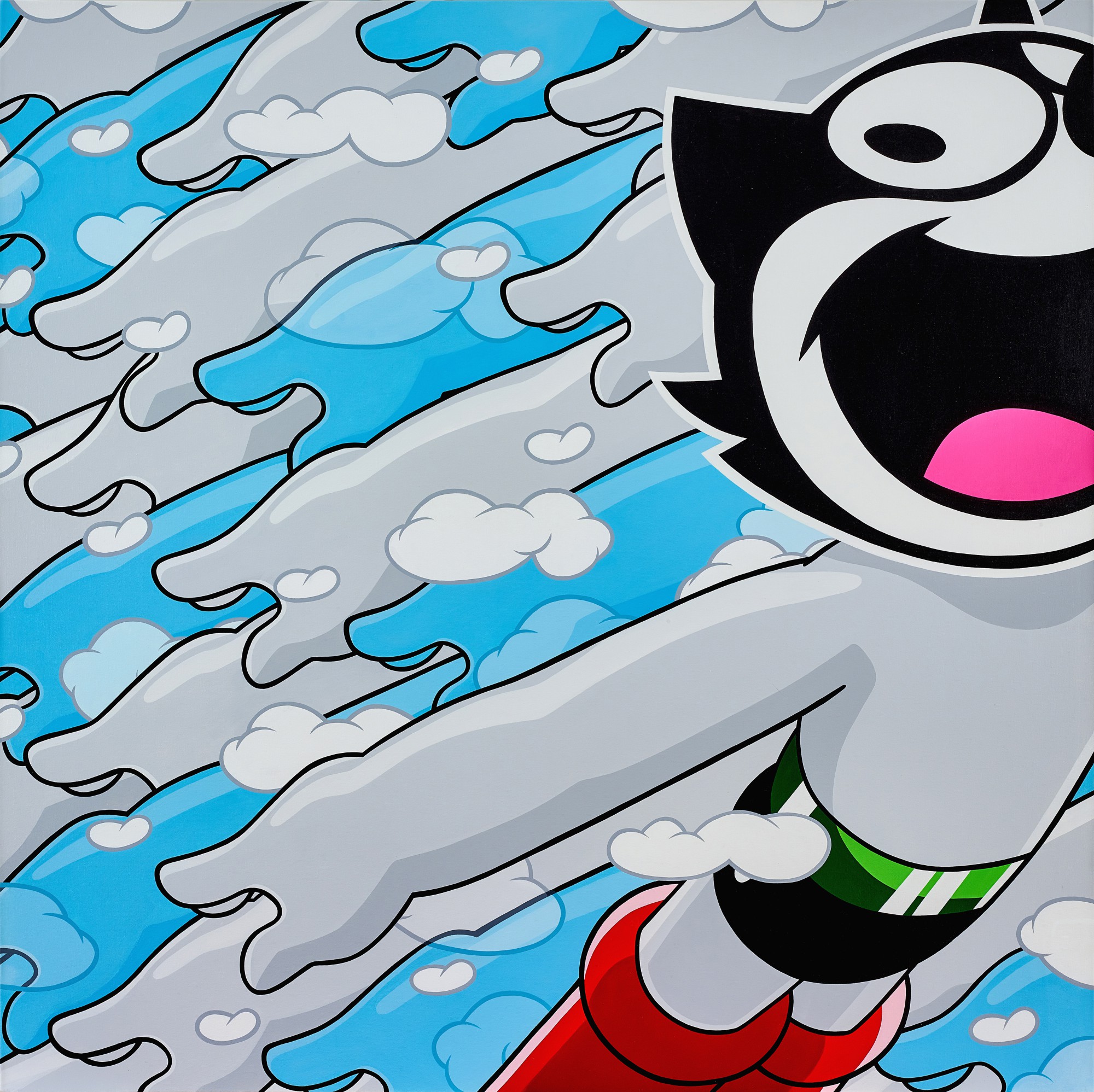
阿童木雲
The details of Jerkface's early life remain deliberately obscured, a choice consistent with the long tradition of anonymous street artists who allow their work to speak entirely for itself. What is known, and what the work itself makes unmistakably clear, is that the artist grew up immersed in the visual language of American animation. The great cartoon studios of the twentieth century, Walt Disney, Warner Bros. with its Looney Tunes stable, the Hanna Barbera universe, and the later television animation that defined childhood for generations of Americans born in the 1970s and 1980s, provided Jerkface with a visual education as rich and as formally structured as any art school curriculum.
These characters were not simply entertainment. They were a shared symbolic language, instantly legible across cultures and generations, and Jerkface recognized early on that they carried enormous aesthetic and emotional weight. New York itself was the crucible for Jerkface's artistic development. Emerging from the city's vibrant and fiercely competitive street art scene, the artist absorbed lessons from a tradition that stretches from the subway murals of the 1970s through the gallery crossover moments of Keith Haring and Jean Michel Basquiat, and onward through the globally influential work of artists like KAWS and Shepard Fairey.
Jerkface
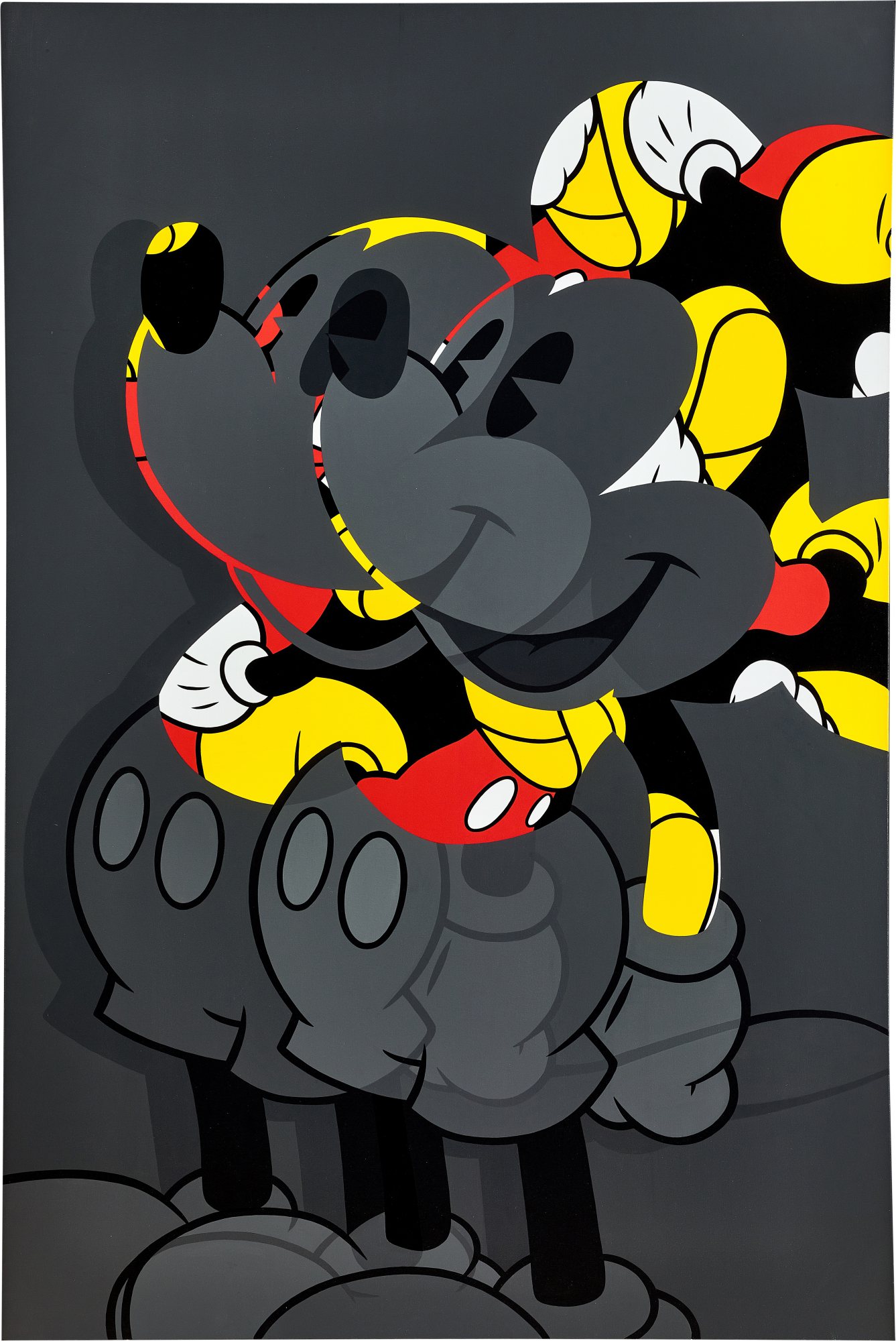
雙重踢黑(米奇)
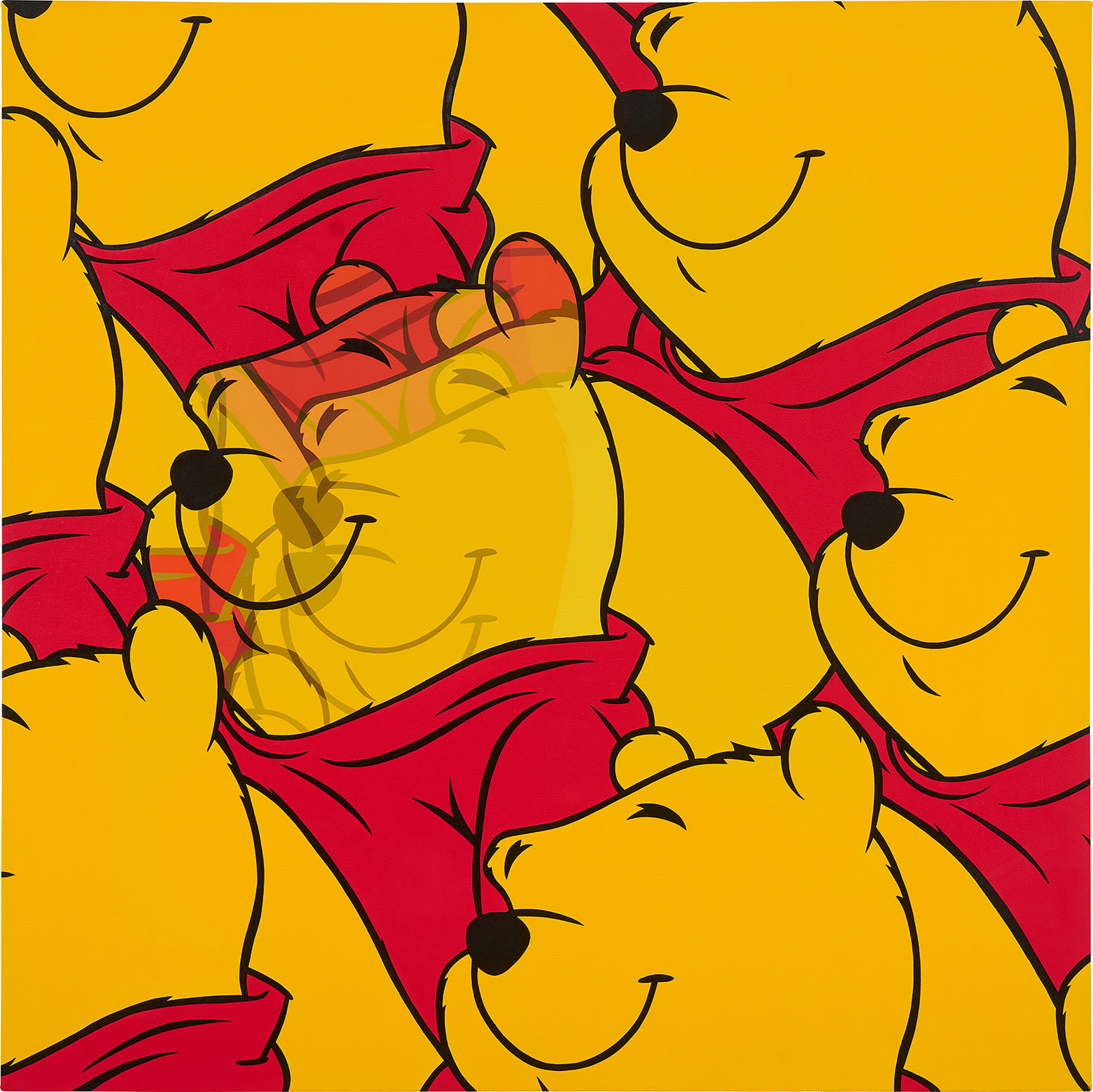
What distinguished Jerkface from the earliest moments of their public visibility was a particular formal strategy: rather than simply reproducing or subverting a beloved character, the artist began deconstructing these figures into their component visual elements and then reassembling them in dense, repeating, pattern based compositions. The result was something that functioned simultaneously as portraiture, abstract painting, and graphic design, a genuinely new synthesis that drew from all three traditions without being reducible to any one of them. The breakthrough works that established Jerkface's reputation share a distinctive visual logic. A canvas like "Pooh," created in 2017 and rendered in acrylic, takes the instantly recognizable yellow form of Winnie the Pooh and multiplies, rotates, and interlocks it until the composition approaches the geometric intensity of a textile pattern or a work of optical art.
The character is simultaneously everywhere and nowhere, dissolved into pure form and color while remaining stubbornly, cheerfully itself. Similar strategies animate works like "Homer" and the Mickey Mouse series, most notably "Double Kick Black," where the silhouette of Mickey's ears becomes a rhythmic unit in a composition that recalls both Andy Warhol's serial repetitions and the visual complexity of Islamic geometric ornament. The bilingual title of "Double Kick Black" in Chinese characters alongside its English translation also signals the genuinely international reach of Jerkface's cultural references and audience. "Astro Boy Cloud," likewise titled in Chinese, demonstrates the artist's engagement with Japanese animation alongside the American cartoon tradition, broadening the emotional and cultural register of the work considerably.
Jerkface
Pooh, 2017
For collectors, Jerkface represents a particularly compelling proposition at this moment in the market. The work sits at a productive intersection of several powerful collecting currents: the ongoing institutional and market validation of street art and post graffiti painting, the sustained collector enthusiasm for artists who engage meaningfully with pop culture iconography, and a growing recognition that formal sophistication and popular appeal are not mutually exclusive qualities. Collectors who have built significant holdings in artists like KAWS, Takashi Murakami, or Mr. Brainwash will find in Jerkface a practice that shares certain thematic DNA while pursuing its own distinct formal agenda.
The acrylic on canvas works in particular reward close looking in ways that reproductions cannot fully convey: the layering of paint, the precision of the repeated forms, and the careful calibration of the color relationships reveal a painter's hand of considerable skill and intentionality. Contextually, Jerkface belongs to a generation of artists who grew up in the long shadow of Pop Art and who have developed genuinely post Pop sensibilities in response. Where Warhol and Lichtenstein treated popular imagery with a cool, ironic distance, and where appropriation artists of the 1980s often foregrounded critique, Jerkface works with an affect closer to celebration and genuine affection. The warmth toward the source material is real, and it creates an emotional accessibility that distinguishes this work from cooler, more conceptually distanced approaches.
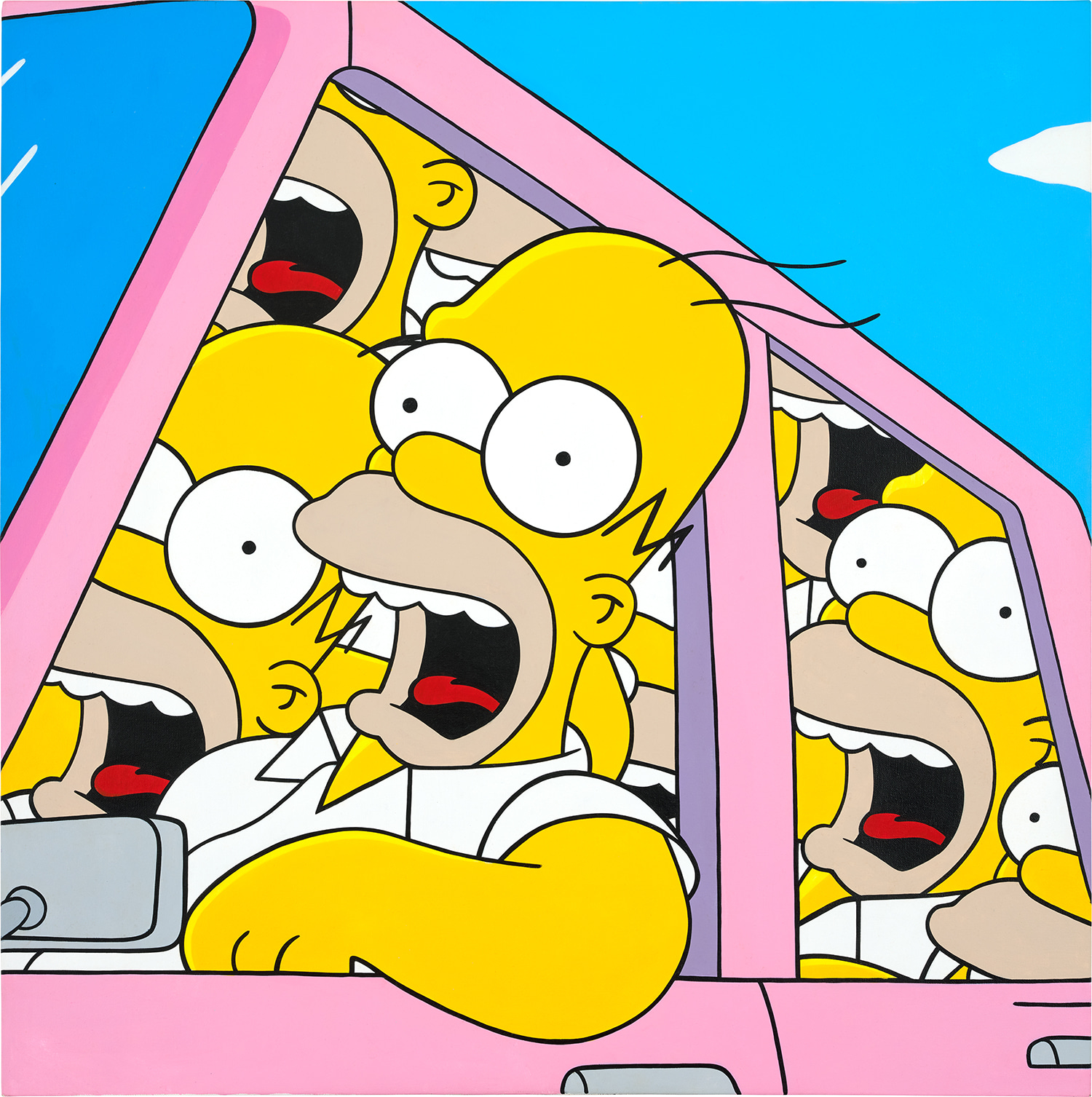
Jerkface
Homer
At the same time, the formal rigor prevents any slide into mere novelty or nostalgia. The closest analogies in recent art history might be found in the decorative complexity of Yayoi Kusama's pattern based works, in the brand literacy of KAWS, or in the way that certain works by Hebru Brantley or Swoon manage to combine street art credibility with genuine painterly ambition. What Jerkface ultimately offers both to viewers and to collectors is a kind of sustained, intelligent optimism about the emotional and aesthetic resources available in popular culture. The work insists that the images we absorbed in childhood, the cartoons that shaped our earliest visual experiences, are not merely products to be consumed or icons to be subverted but genuine repositories of feeling and form that repay serious artistic attention.
In an art world that can sometimes feel overly weighted toward darkness, irony, and conceptual obscurity, Jerkface makes a quietly persuasive case for joy as a legitimate and demanding artistic ambition. That case is being heard by an expanding audience of collectors and institutions, and the work's presence on platforms like The Collection reflects a broader recognition that this anonymous New Yorker has made something genuinely lasting.