Jeppe Hein
Jeppe Hein Invites You To Play
Artist Spotlight · The Collection Editorial
“I want people to feel something, to be touched by the work, and to reflect on their own situation in the world.”
Jeppe Hein
Something quietly revolutionary is happening in the white cube spaces of contemporary art, and Jeppe Hein has been at the center of it for more than two decades. The Danish artist, now based in Berlin, has built one of the most distinctive and beloved practices in international sculpture by doing something deceptively simple: he refuses to let the viewer stand still. In recent years, major institutions across Europe and North America have continued to seek out his participatory installations, and his work sits with increasing confidence in the collections of serious private collectors who understand that art can be simultaneously rigorous and joyful. That combination, rarer than it sounds, is Hein's great gift.
Jeppe Hein
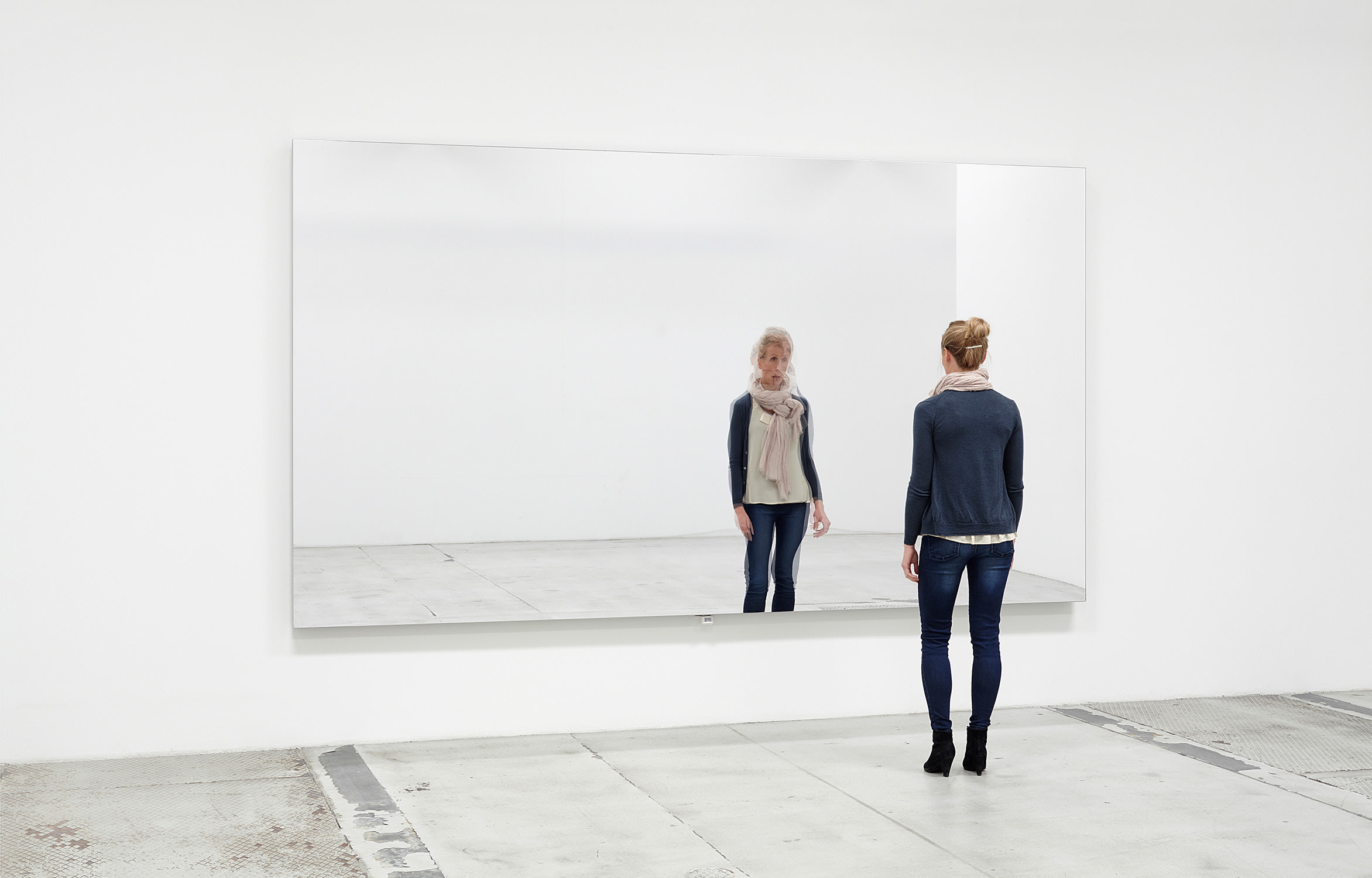
Mirror Wall
Born in Copenhagen in 1974, Hein grew up in a Denmark shaped by a strong tradition of design thinking, craft, and a democratic relationship between art and everyday life. He studied at the Royal Danish Academy of Fine Arts in Copenhagen before moving to the Städelschule in Frankfurt, one of Europe's most intellectually serious art schools, where he deepened a practice rooted in Conceptualism but always oriented toward the body and the senses. The move to Berlin, a city that has long served as a crucible for experimental art and international exchange, gave his work a broader stage and connected him to a generation of artists thinking hard about space, perception, and the social contract between artwork and audience. Hein's early work drew immediately on the legacy of kinetic and interactive art, particularly the traditions associated with artists like Dan Flavin, whose use of neon as a primary sculptural material casts a long shadow over Hein's luminous practice.
He also absorbed lessons from the Minimalists, from Bruce Nauman's corridor pieces to James Turrell's investigations of light and architecture, but he filtered these influences through something warmer and more inviting. Where Minimalism could be austere, Hein introduced wit. Where Conceptualism could be closed, he opened doors. By the early 2000s, he had found a voice that was unmistakably his own.
Jeppe Hein
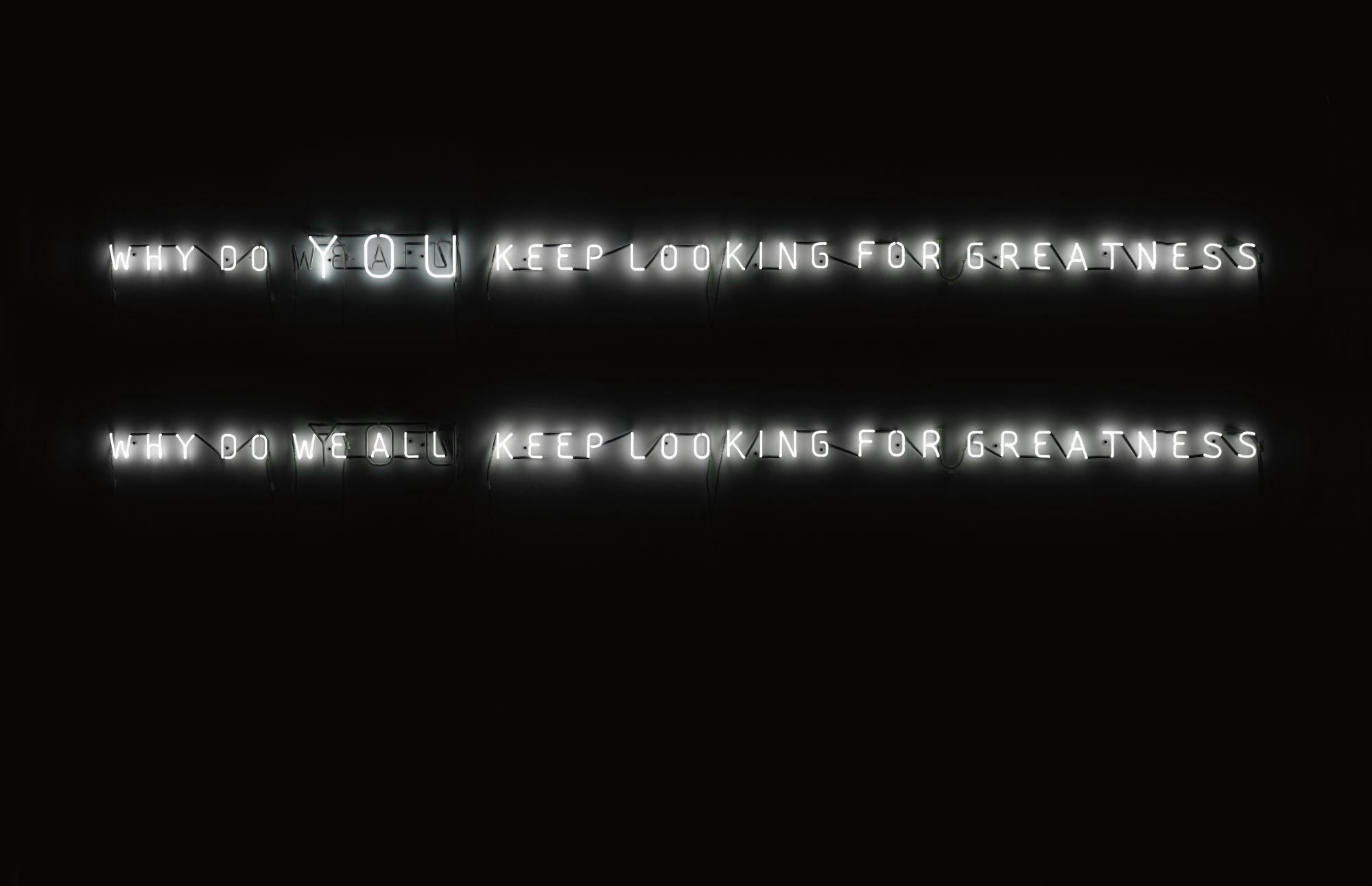
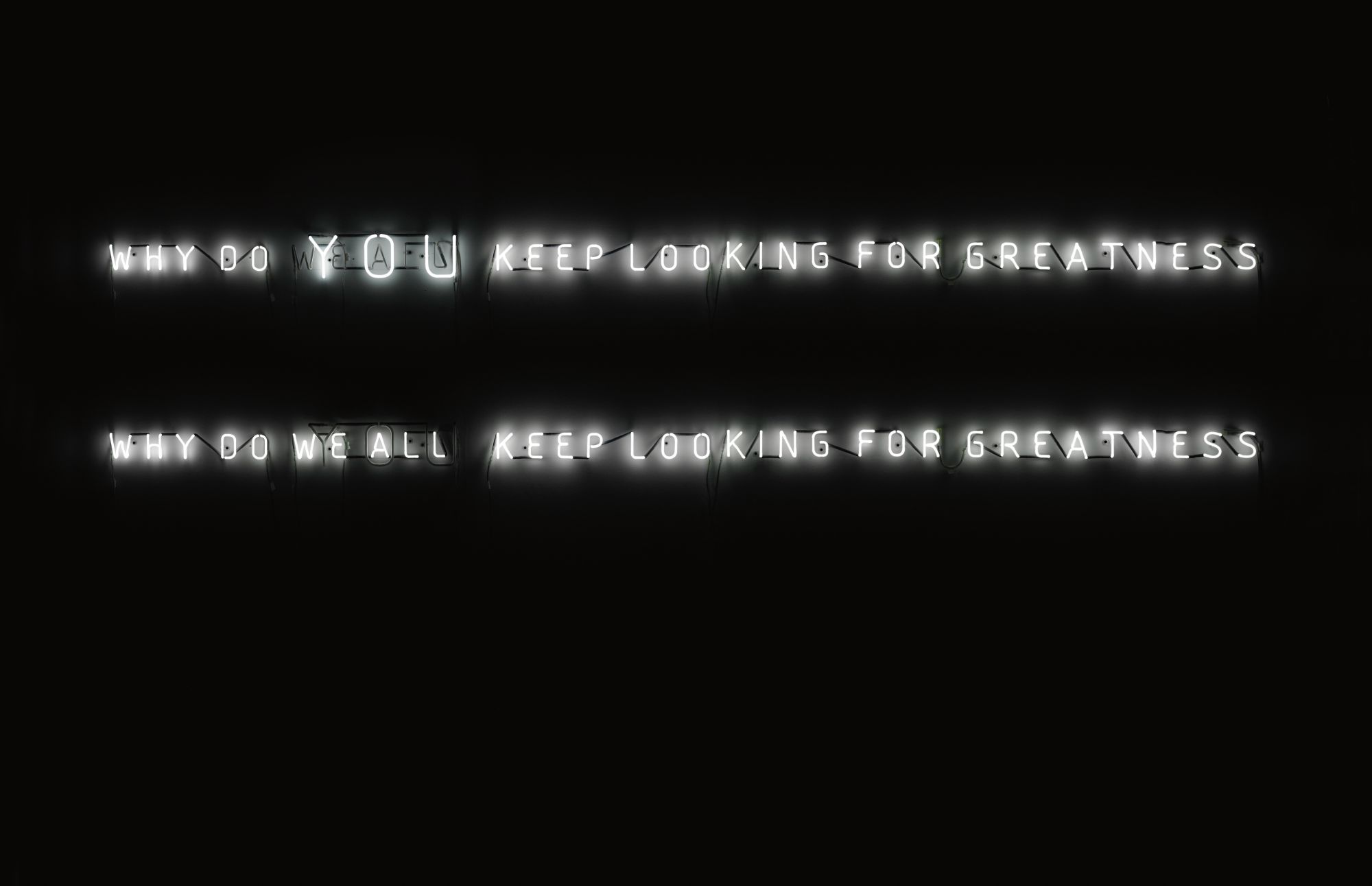
Why Do we all Keep Looking for Greatness
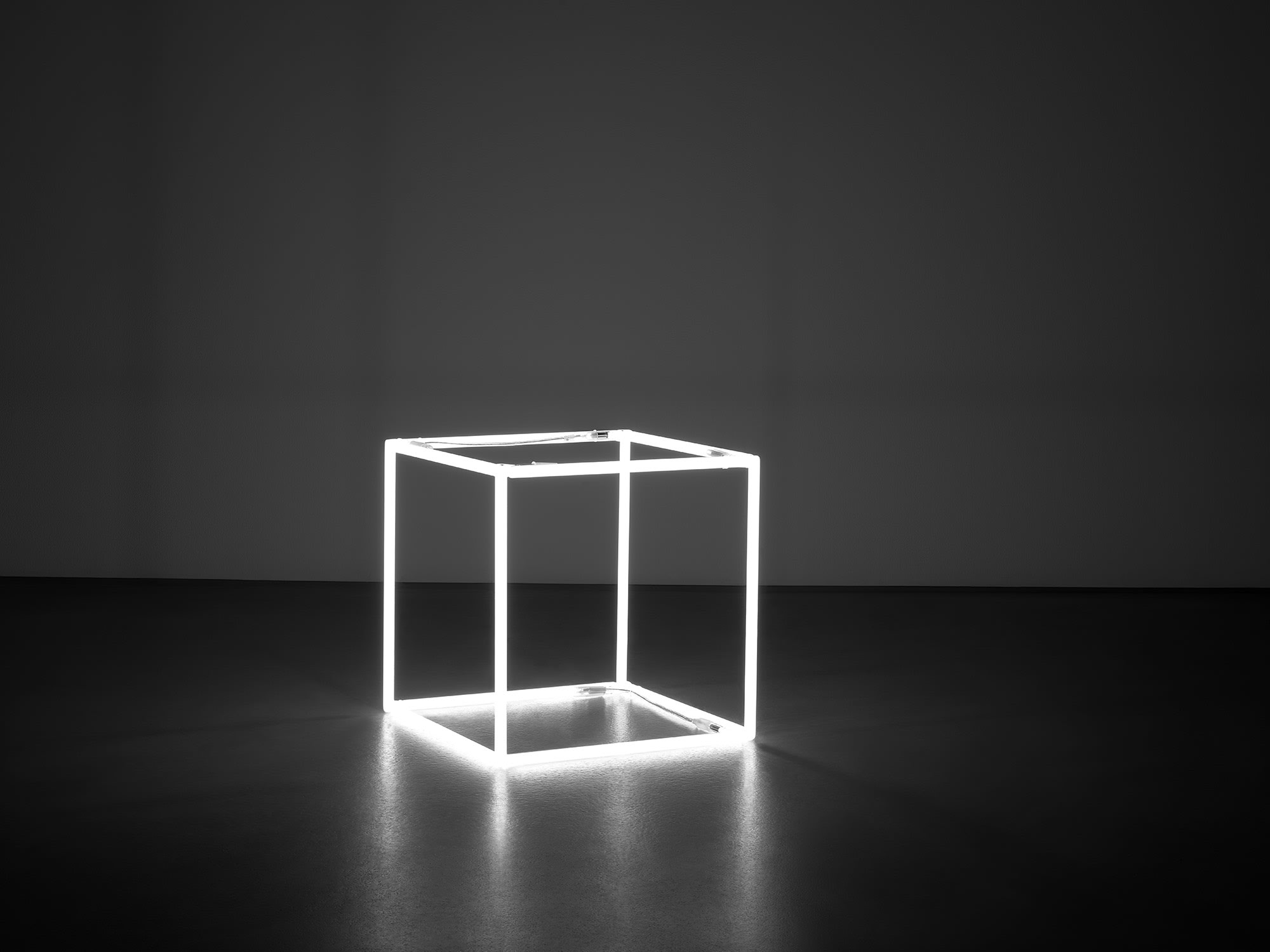
The works that first brought Hein to wide attention were his interactive and kinetic sculptures, pieces that responded to the presence of viewers, moved unexpectedly, or subverted the viewer's assumptions about what a gallery object was supposed to do. "Neoncube" from 2004 is a precise and delightful example: neon lamps arranged into a geometric form that activates in response to a motion detector, turning the act of looking into a kind of conversation. "Flying White Cube" from the same year takes the most iconic shape in art world architecture and makes it levitate through the use of electromagnets, a gesture that is both formally elegant and gently satirical. These works announced an artist who thought seriously about space and illusion while remaining committed to the idea that art should produce something like pleasure.
Neon has remained central to Hein's visual language, and his text works in neon represent some of his most emotionally resonant output. "Please Do Not Touch" from 2009 takes a phrase ubiquitous in museum culture and renders it in glowing tubes, transforming institutional authority into something tender and almost absurd. "Why Do We All Keep Looking for Greatness" poses a question in light that hangs in the air long after you have left the room. "If You Cant Change the World, Change Yourself" from 2016, realized in powder coated aluminium, neon, two way mirror, and powder coated steel, is among his most ambitious text works, layering material complexity with a message that feels genuinely philosophical rather than decorative.
Jeppe Hein
Neoncube, 2004
These are works that collectors return to because they continue to mean something, and because they look extraordinary in any interior. The mirror works occupy a distinct and particularly compelling chapter in Hein's practice. "Mirror Wall" uses mirror foil, a wooden frame, and a vibration system to make the reflective surface tremble and distort, so that the viewer never quite sees a stable image of themselves. This is not merely a formal trick: it speaks to questions of identity, self perception, and the instability of how we understand ourselves in relation to the world.
The "Mirror" series from 2001, combining neon tubes with wood and Plexiglas, shows how early and how completely Hein had integrated light and reflection into a unified sculptural language. For collectors, these works offer something that purely optical art rarely achieves, which is an experience that changes each time you encounter it, depending on the light, the hour, and who you are standing with. From a collecting perspective, Hein's work occupies a compelling position in the contemporary market. His practice is represented by established galleries including 303 Gallery in New York and König Galerie in Berlin, both of which have built strong institutional relationships for his work.
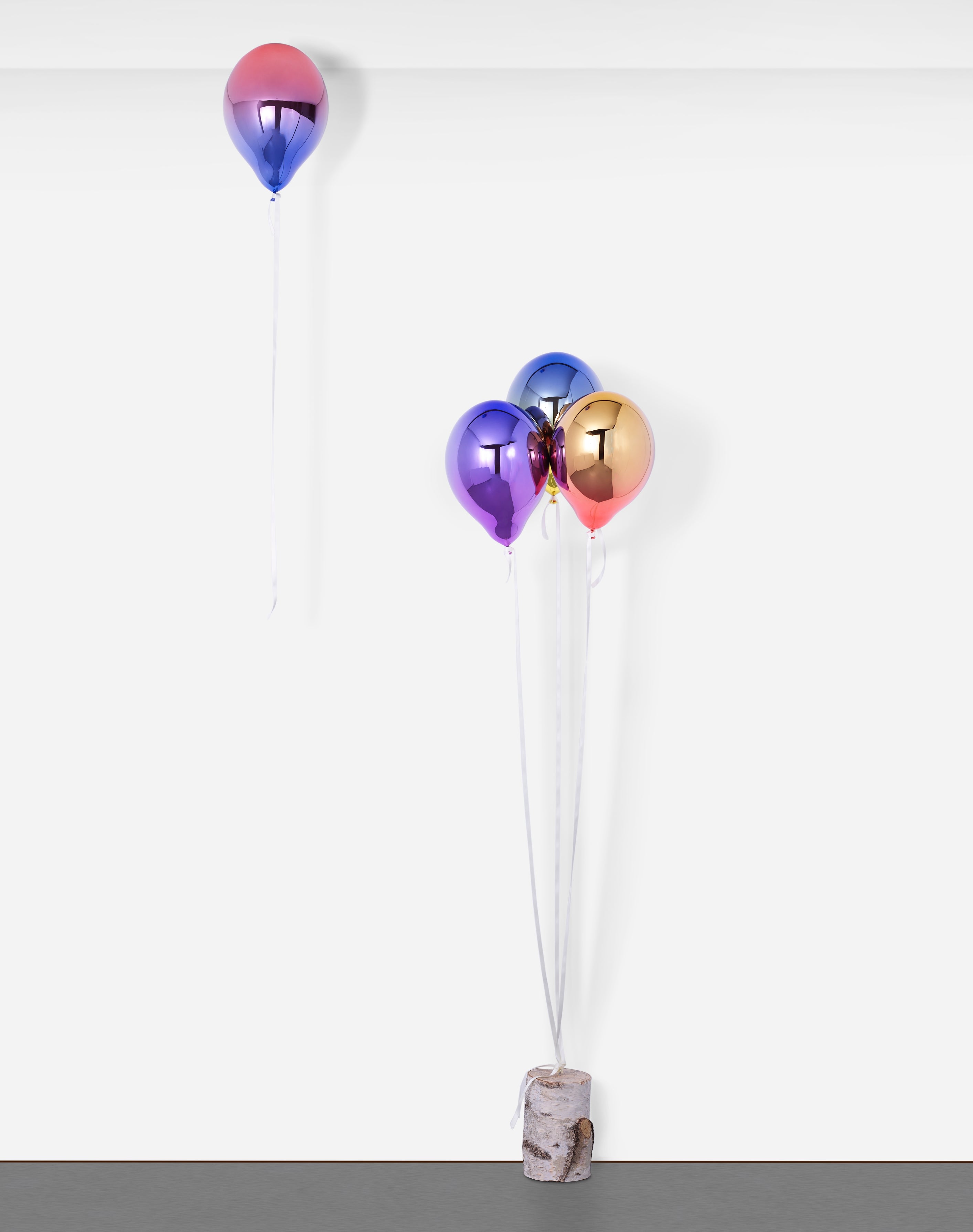
Jeppe Hein
Thoughts #7
Collectors who have acquired Hein over the past decade have seen both the cultural and the financial value of that decision affirmed as his institutional profile has grown. His work appeals to a sophisticated buyer who wants something that functions as more than decoration, something that generates conversation, activates a room, and rewards sustained attention. The neon works in particular have proven highly sought after, combining the materialist appeal of light sculpture with the literary resonance of text art. Hein's place in art history sits at a rich intersection.
He belongs to a tradition that includes the Fluxus movement's interest in playfulness and participation, the kinetic art of Jean Tinguely, and the institutional critique embedded in work by artists such as Michael Asher and Andrea Fraser. At the same time, his closest contemporaries include artists like Carsten Höller, with whom he shares an interest in the viewer as active participant, and Olafur Eliasson, the Icelandic Danish artist whose environmental light installations have brought participatory practice to the very largest stages in the world. Hein operates at a more intimate scale than Eliasson, which may be precisely why collectors find his work so liveable and so sustaining over time. What makes Jeppe Hein matter today, as much as or more than he did when "Neoncube" first startled gallery visitors two decades ago, is that his core proposition has only become more urgent.
In an era saturated with passive digital imagery and algorithmic distraction, he insists on the presence of the body, the irreducibility of the live encounter, and the transformative possibility of genuine surprise. His art does not tell you what to feel. It creates the conditions in which feeling becomes possible. That is a profound and increasingly rare thing, and it is why collectors who discover Hein tend to stay devoted to him.