Jennifer Steinkamp
Jennifer Steinkamp Brings the Garden Alive
Artist Spotlight · The Collection Editorial
When the lights dim and the projectors hum to life in a Jennifer Steinkamp installation, something genuinely remarkable happens: walls breathe, branches sway, and petals drift across architectural surfaces as though nature itself has taken up residence in the gallery. It is a transformation that audiences at the Los Angeles County Museum of Art, the Albright Knox Art Gallery in Buffalo, and the San Jose Museum of Art have experienced firsthand, and it remains one of the most quietly radical gestures in contemporary art. Steinkamp has spent more than three decades perfecting this language of light, motion, and digital nature, and her work has never felt more resonant than it does today, as conversations about the natural world, technological mediation, and immersive experience sit at the very center of cultural life. Steinkamp was born in 1958 and came of age as an artist in Los Angeles, a city whose particular light, sprawl, and relationship to spectacle would prove formative.
Jennifer Steinkamp
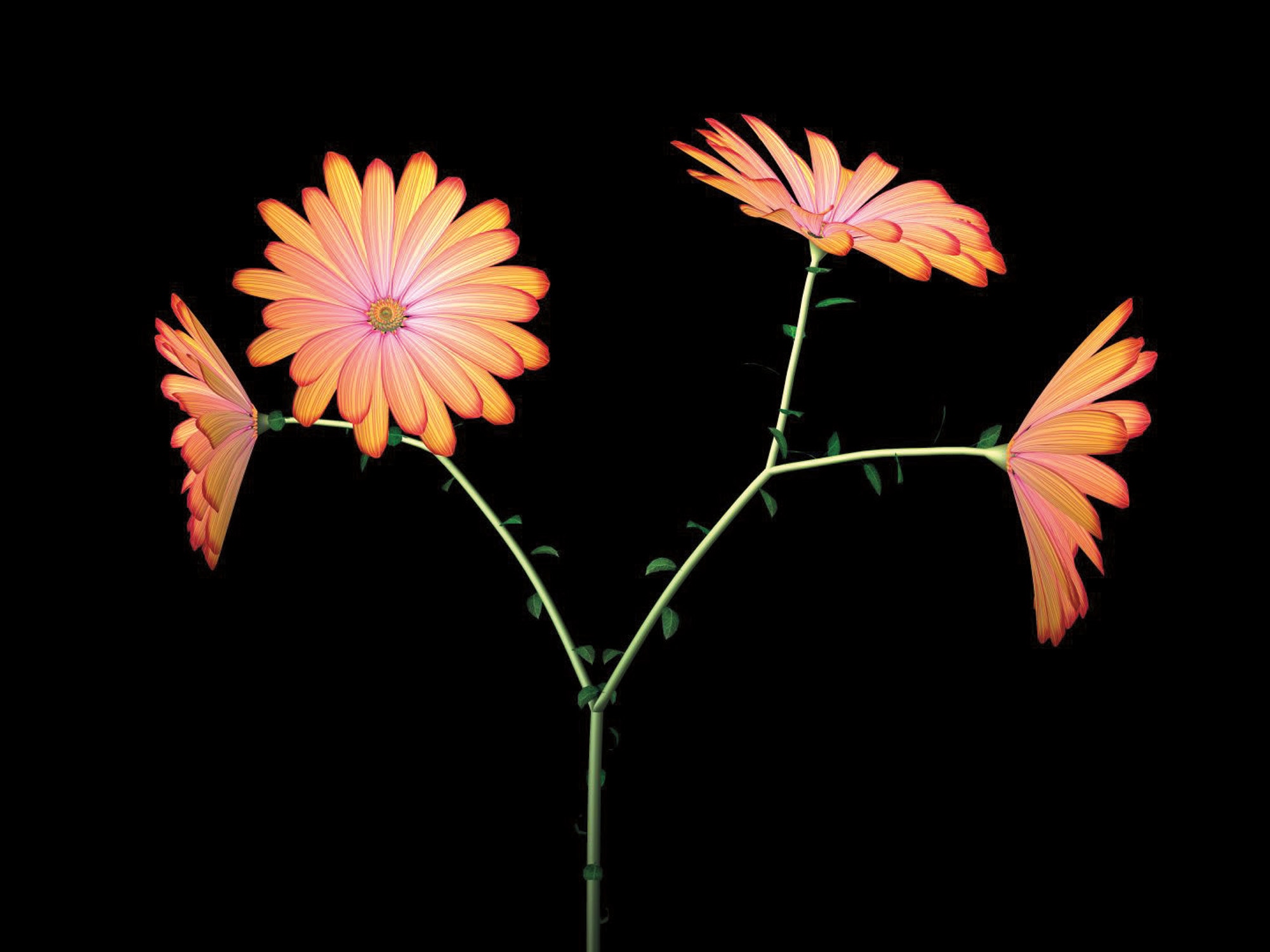
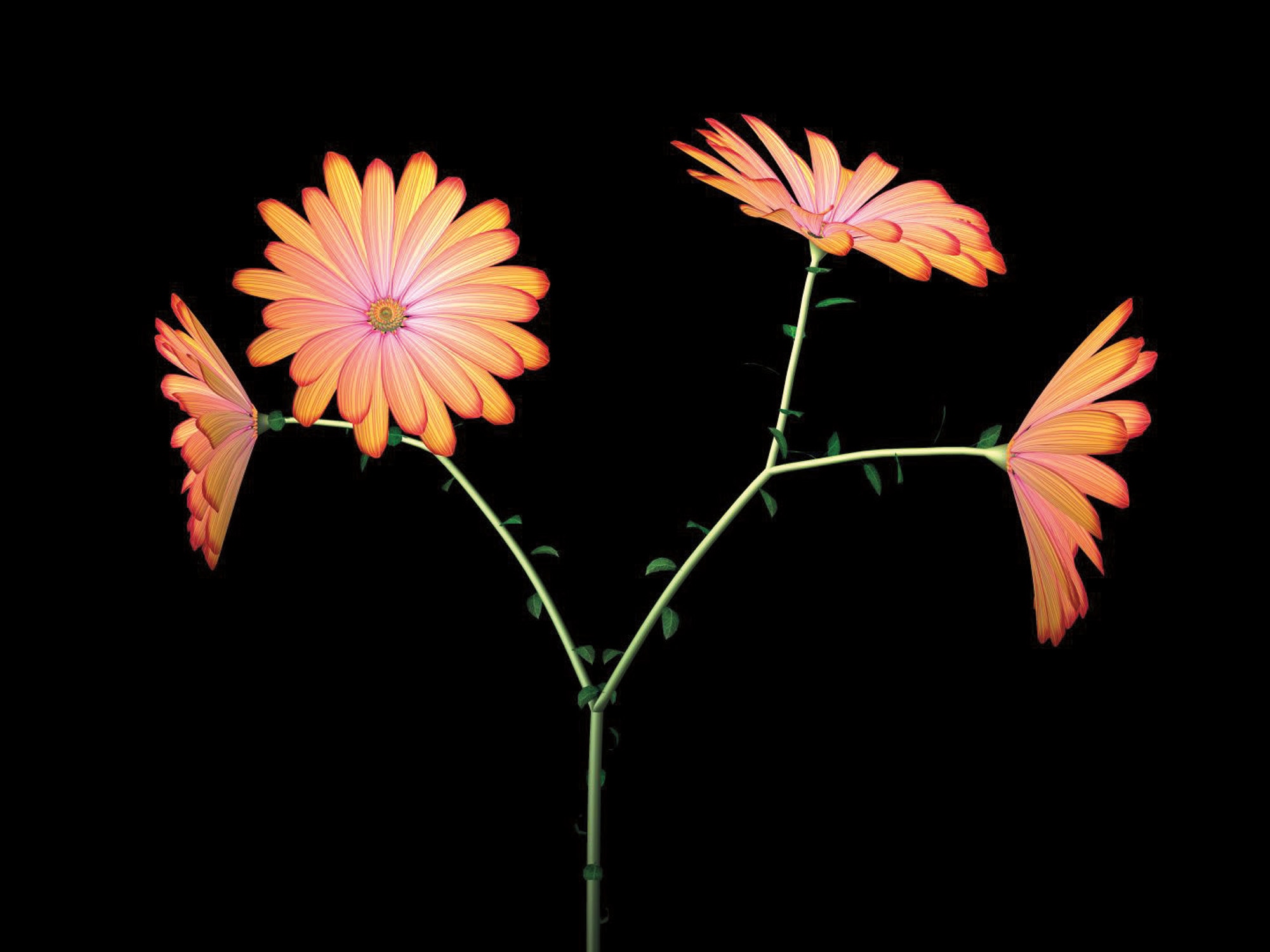
Dance Hall Girl 3 (daisies), 2004
She studied at the Art Center College of Design in Pasadena, an institution known for rigorous training in visual communication and design thinking, and it was there that she began to understand image making as something inseparable from space and environment. The move from static image to moving projection was not a sudden leap but a gradual recognition that her true subject was transformation itself, the way a living thing grows, turns, and responds to its surroundings. Los Angeles, with its deep roots in both the entertainment industry and a quietly serious art scene, gave her permission to think at architectural scale. The development of her practice through the 1990s coincided with the broader emergence of digital art as a serious medium, though Steinkamp was never simply a technologist.
Where many artists of that period were dazzled by the novelty of computation, she was focused on what the computer could do that painting and sculpture could not: sustain duration, simulate growth, and fill a room with a presence that felt simultaneously organic and entirely constructed. Her early installations drew attention from curators who recognized that she was doing something distinct from video art in the traditional sense. She was not presenting a screen; she was redesigning the room. The work that brought her to wide international attention, Dervish, first presented in 2004, exemplifies her approach with particular clarity.
Jennifer Steinkamp
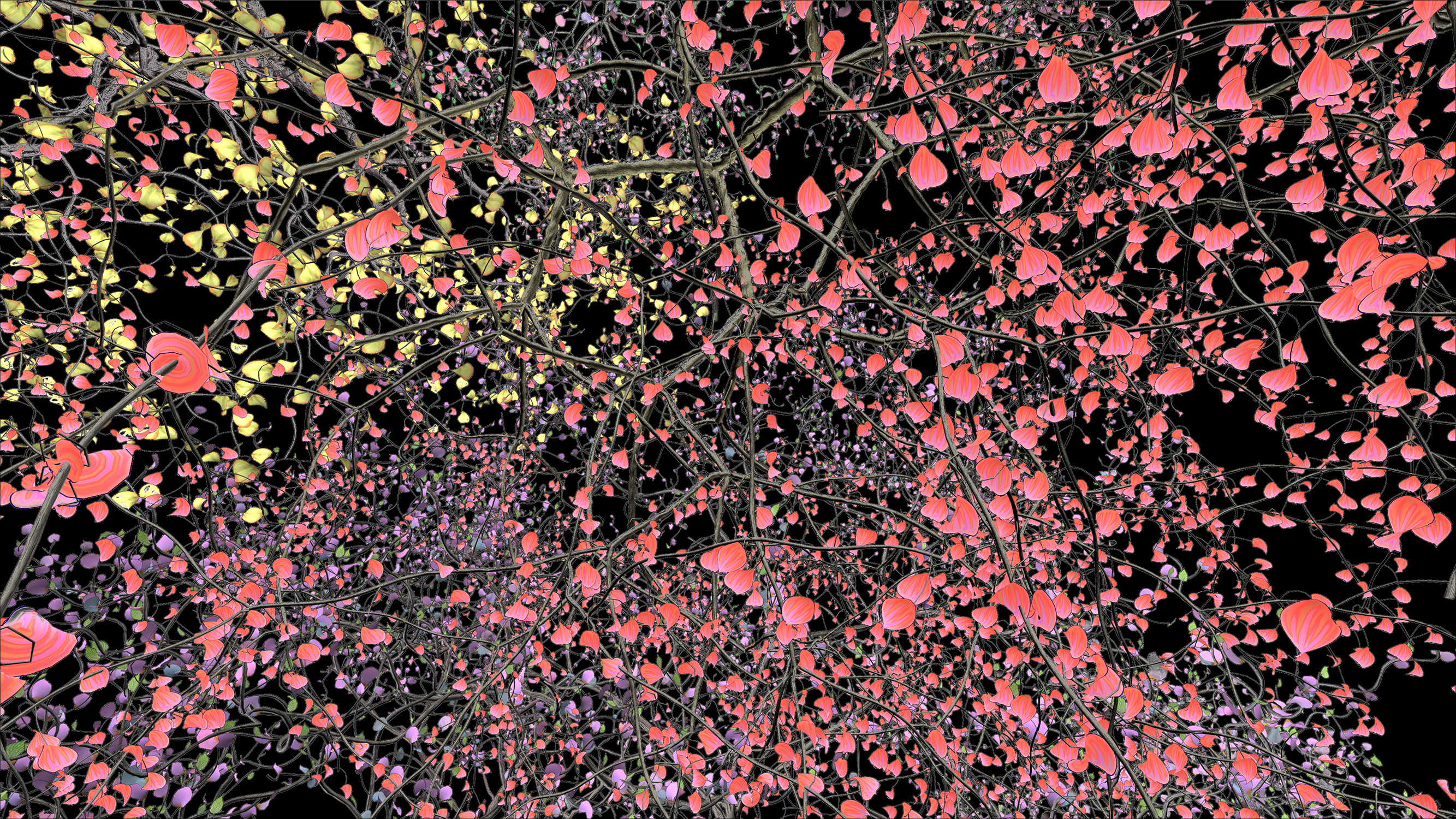
Orbit 3, 2009
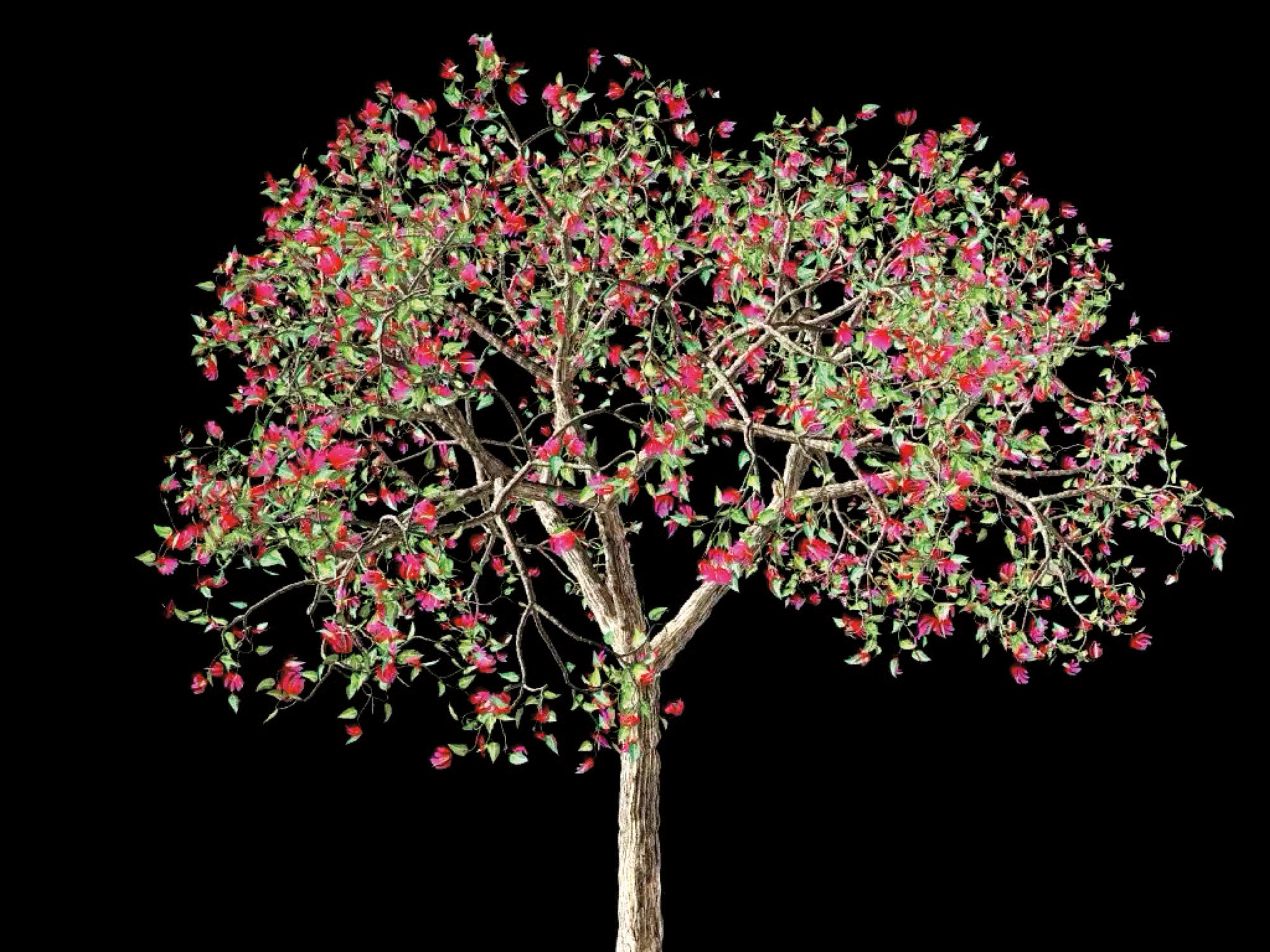
Named for the spinning Sufi practitioners whose meditative rotation is both devotional and dizzying, Dervish fills a darkened space with digitally animated trees whose branches rotate in slow, hypnotic cycles. The movement is not chaotic but deeply rhythmic, and the viewer standing inside the projection becomes part of the composition. Blind Eye, which followed in 2007, continued this investigation with a characteristic mixture of beauty and unease, wrapping gallery visitors in animated imagery that felt simultaneously welcoming and slightly vertiginous. These are not passive works.
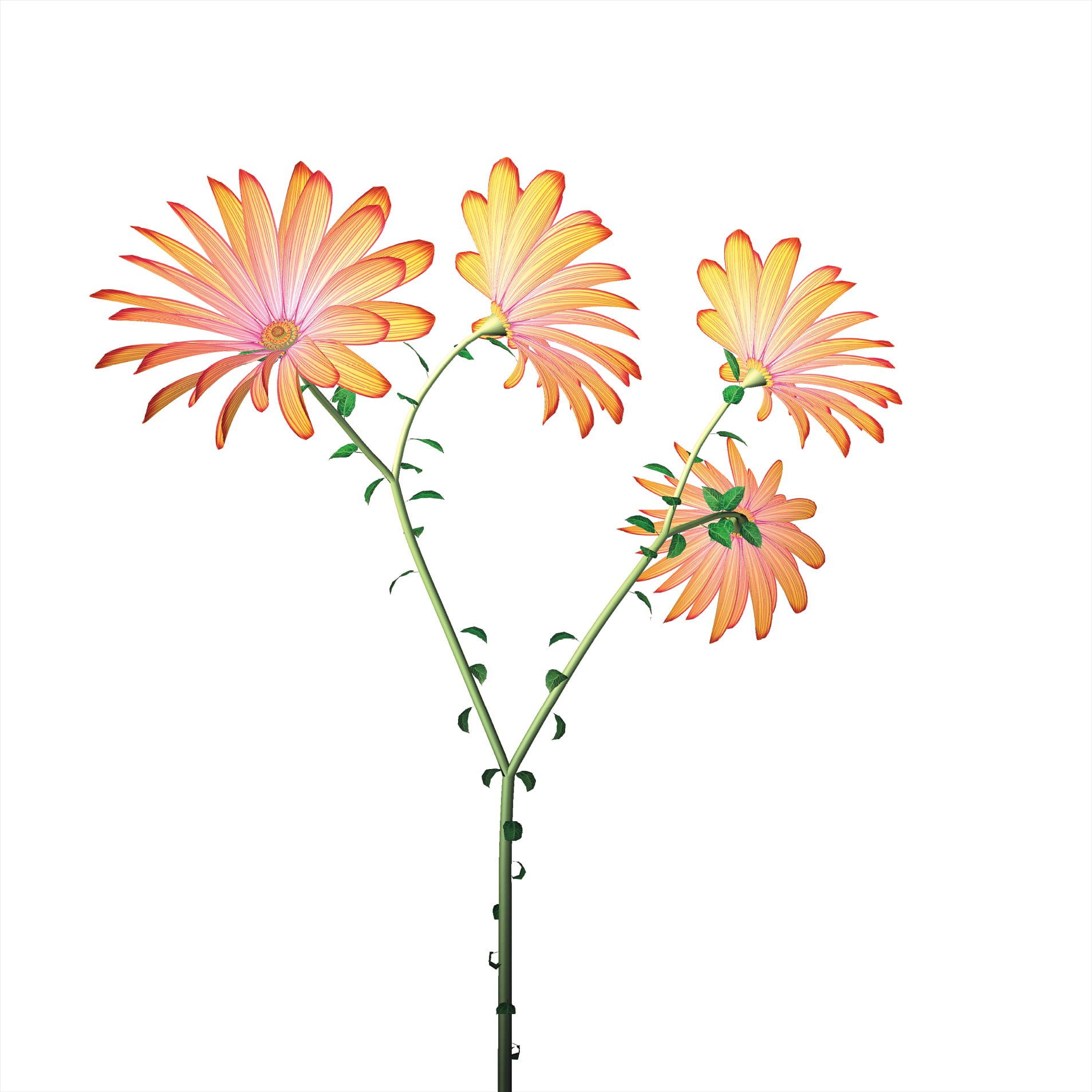
They require the body as well as the eye. Among the works available to collectors today, Dance Hall Girl 3 in its daisy variation stands as one of the most beloved expressions of her sensibility. Created in 2004, the piece features cascading animated flowers rendered with the kind of attentiveness usually associated with botanical illustration, though here the illustration never stops moving. The title series draws on the iconography of American vernacular culture, cheerful and a little melancholy, and transforms it into something genuinely contemporary.
Jennifer Steinkamp
Dervish 15, 2005
Dervish 15 from 2005 offers collectors an opportunity to live with the rotating tree imagery in an intimate context, and Orbit 3 from 2009 extends her vocabulary into more abstract territory, with luminous forms tracing paths through darkness. Each of these works demands thoughtful installation, and part of the pleasure of collecting Steinkamp is the ongoing collaboration between artwork and architecture that any new installation requires. Ronnie Reagan 1 deserves particular attention as evidence of the range within her practice. Steinkamp is not an artist who traffics in blunt political statement, but she has always been alert to the way images carry history, and works that draw on American political iconography sit alongside her purely botanical pieces as reminders that her practice is rooted in cultural as well as natural landscapes.
Formation C, a computer video installation, demonstrates her capacity to move between organic and geometric modes, finding in abstract form the same sense of living duration that her flowers and trees express through figuration. The series breadth on offer reflects a career of sustained invention rather than a single repeated gesture. For collectors considering Steinkamp's work, several factors make her an exceptionally compelling acquisition. Her pieces are held by major public institutions, lending any private collection that includes her work a sense of alignment with serious museum thinking.
Jennifer Steinkamp
Dance Hall Girl #3 (daisies)
The video installation format requires care in acquisition, with close attention to edition numbers, display specifications, and the technical infrastructure that brings the work to life, but these practical considerations are well managed by the galleries and foundations that represent and support her practice. Unlike works on canvas or paper, a Steinkamp installation is also a kind of ongoing relationship: it can be reinstalled in new spaces, scaled to different architectures, and experienced freshly by each new audience. There is something deeply generous about an art form that renews itself every time the projector turns on. Within the broader history of immersive and installation art, Steinkamp occupies a distinctive position.
Her interest in natural form connects her to a long tradition of artists who have looked to botany and landscape as sources of both beauty and meaning, from the luminists of the nineteenth century through to the land art movement of the 1970s. Yet her digital means place her firmly in conversation with contemporaries who are exploring computation, generative imagery, and the boundaries between the natural and the artificial. Collectors who admire the immersive environments of artists working in projection and light based installation will find in Steinkamp a rigorous and poetic practitioner whose work rewards deep looking. What endures about Jennifer Steinkamp is the quality of attention she brings to the living world.
In an era saturated with screens, she has made a career of asking what it means to truly see a flower unfold, a branch turn, a petal fall. Her installations do not offer escape from the present moment; they intensify it, returning viewers to their own bodies and to a sense of the world as something dynamic, generative, and worthy of sustained contemplation. To collect her work is to bring that quality of attention into a home or institution, and to offer it as a gift to everyone who enters the room.
Explore books about Jennifer Steinkamp
Jennifer Steinkamp: Light and Shadow
Peter Halley
Jennifer Steinkamp: Madness
Various
Jennifer Steinkamp: Drosophila
Various
Jennifer Steinkamp: Blooms
Various
Jennifer Steinkamp: Supernova
Various