Jennifer Bartlett
Jennifer Bartlett: Systems, Beauty, and Boundless Vision
Artist Spotlight · The Collection Editorial
“I wanted to use every kind of mark there is and every kind of subject there is.”
Jennifer Bartlett, interview on Rhapsody
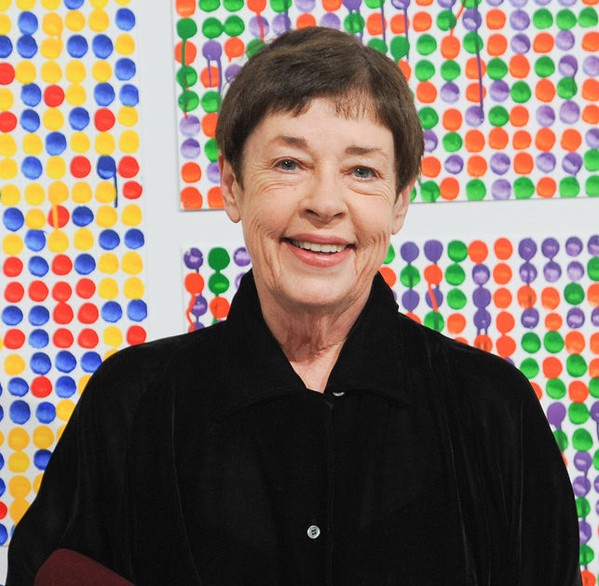
In the spring of 2023, the art world paused to take full measure of Jennifer Bartlett, who had passed the previous year at eighty years old, leaving behind one of the most intellectually ambitious and visually generous bodies of work in postwar American art. Museums and galleries began reassessing her legacy with fresh urgency, and collectors who had long admired her intricate interplay of system and sensation found themselves returning to her works with new reverence. The moment felt not like an ending but like a proper introduction, a recognition that Bartlett had always operated at a register that rewarded patience and depth. Jennifer Bartlett was born in Long Beach, California in 1941, and came of age in a period when American art was undergoing seismic transformation.
Jennifer Bartlett
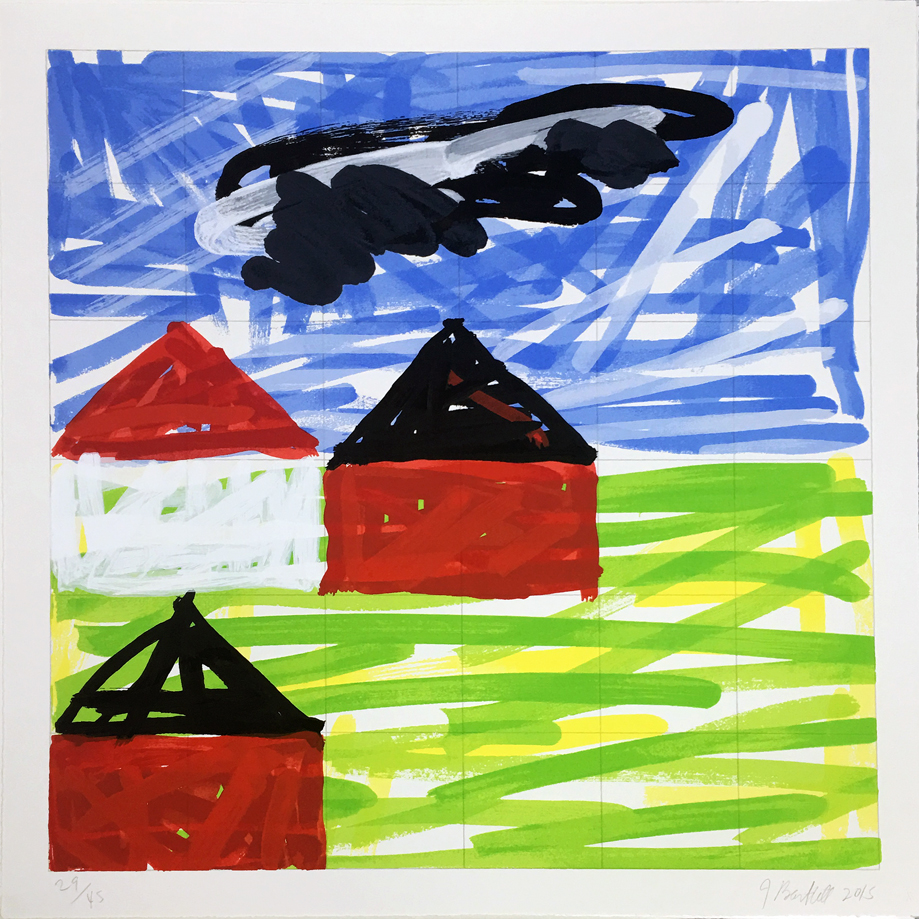
House II #4, 2014
She studied at Mills College before moving east to attend the Yale School of Art and Architecture, where she encountered a generation of artists who would define the late twentieth century. Yale in the 1960s was a crucible of rigorous thinking and fierce ambition, and Bartlett absorbed its intellectual atmosphere fully while developing her own instinct for rule making as a form of freedom. She settled in New York, becoming part of the downtown Manhattan scene in SoHo during its formative years, surrounded by peers who were dismantling and rebuilding the language of painting. What distinguished Bartlett from the outset was her refusal to accept the binary choices her moment seemed to demand.
Where Minimalism insisted on reduction and Conceptual art prioritized idea over sensation, Bartlett wanted both, and more. She developed a working method centered on one foot square baked enamel steel plates, a surface that allowed her to apply silk screened grids and then paint over them in countless configurations. The grid became her grammar, a neutral scaffold from which she could explore every mode of mark making, from the purely abstract to the tentatively representational. It was a system that generated rather than constrained, and she used it with extraordinary fluency across decades.
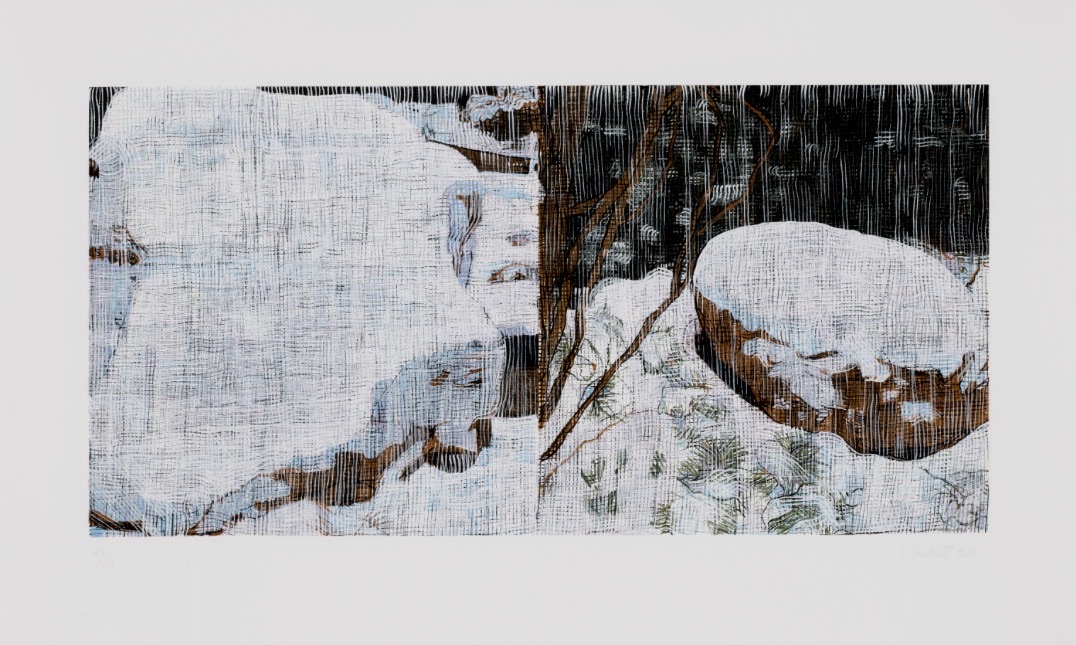
Jennifer Bartlett
Two Boulders, 2011
The work that secured her place in art history arrived in 1976, when Rhapsody was exhibited at the Paula Cooper Gallery in New York. Spanning one hundred and fifty three feet and comprising nine hundred and eighty seven individual steel plates, Rhapsody was unlike anything the art world had seen. It moved through abstraction and figuration, through mountains and houses and trees and oceans, through every scale of mark and every temperature of color, in a sustained visual argument that painting could contain multitudes. The critical response was immediate and electric.
Roberta Smith, writing at the time, recognized it as a landmark, and MoMA and the Whitney Museum both brought Bartlett's work into their permanent collections. Rhapsody was eventually acquired by the Saatchi Collection and has remained one of the defining monuments of late twentieth century American art. Bartlett's practice never rested on that achievement. Through the 1980s she developed her celebrated Garden series, inspired by a rain soaked winter she spent in Nice with a view of an overgrown garden she could not actually enter.
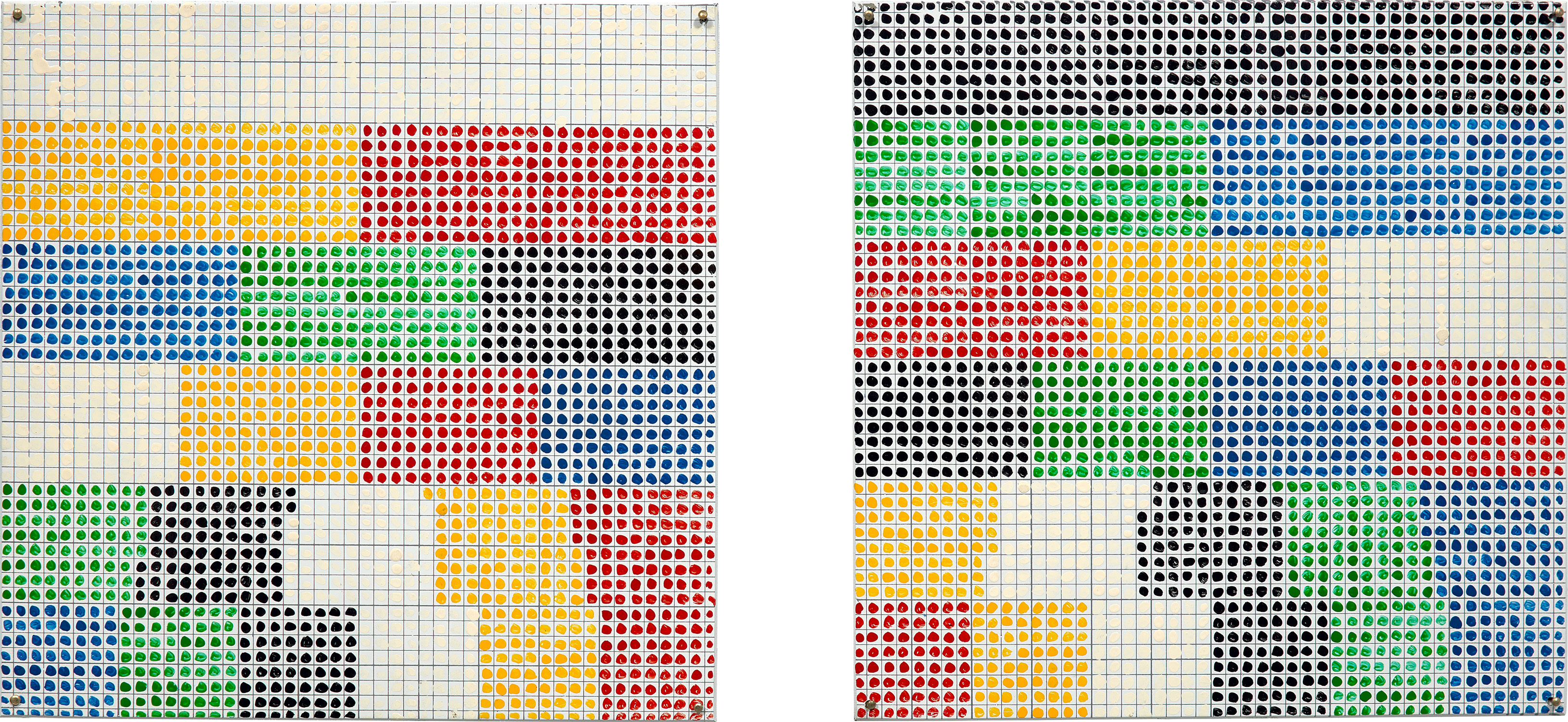
Jennifer Bartlett
Plates Divided by 6 Colors: two plates
That enforced distance produced a body of work of remarkable range, as she painted, printed, and drew the same garden from multiple perspectives and in multiple mediums simultaneously. Works like In the Garden #6 from 1980 and In the Garden III #6 from 1982, combining enamel and silkscreen on steel plates with enamel on glass, show her thinking across surfaces and systems at once. The Garden works are among the most beloved of her career, combining intellectual structure with a sensory richness that feels almost Mediterranean in its warmth. Her printmaking deserves particular attention, because it was in this medium that Bartlett demonstrated the full range of her technical ambition.
Works like Graceland Mansion, which combines drypoint, aquatint, screenprint, woodcut, and lithograph across five panels, reveal a printmaker willing to layer processes in ways that most artists would find overwhelming. The suite titled House, a complete set of twenty five screenprints on Somerset paper issued in a yellow cloth covered portfolio, exemplifies her commitment to the series as a form of sustained inquiry. Each work in such a suite is both autonomous and part of a larger argument, a quality that makes her prints deeply satisfying to live with and rewarding to study over time. Her later works, including December, Amagansett #17 from 2002 and House II #4 from 2014, show a late career loosening, a willingness to let atmosphere and gesture have the final word.

Jennifer Bartlett
Graceland Mansion
For collectors, Bartlett represents a particularly compelling opportunity because her work operates across such a wide range of scales, mediums, and price points. Her prints and works on paper offer genuine access to a major artistic intelligence, and works like Two Boulders from 2011, a screenprint in colors on wove paper, carry the full weight of her vision in a format that translates beautifully to domestic and institutional spaces alike. The steel plate works, when they appear on the market, command serious attention, as they represent the core of her practice and the surface on which she made her most original contributions. Collectors drawn to artists who think rigorously about systems while remaining committed to visual pleasure will find her work endlessly generative.
She belongs in conversations alongside Agnes Martin, Sol LeWitt, and Elizabeth Murray, artists who each found ways to turn constraint into abundance. Jennifer Bartlett's legacy is one of expansive generosity. She demonstrated that intellectual ambition and sensory beauty are not in competition, that a painter could think like a philosopher and still make work that stops you at the threshold of a room. Her influence is visible in generations of artists who work across disciplines and refuse to be confined to a single mode, and her major works continue to reward the sustained attention she always believed art deserved.
As institutions continue to reassess her place in the canon and as collectors deepen their understanding of her full range, it becomes clear that Bartlett was not simply of her moment. She was working toward something larger, a vision of painting as a form of thinking, feeling, and discovering all at once.
Explore books about Jennifer Bartlett