Jean Royère
Jean Royère, The Poet of Living Beautifully
Artist Spotlight · The Collection Editorial
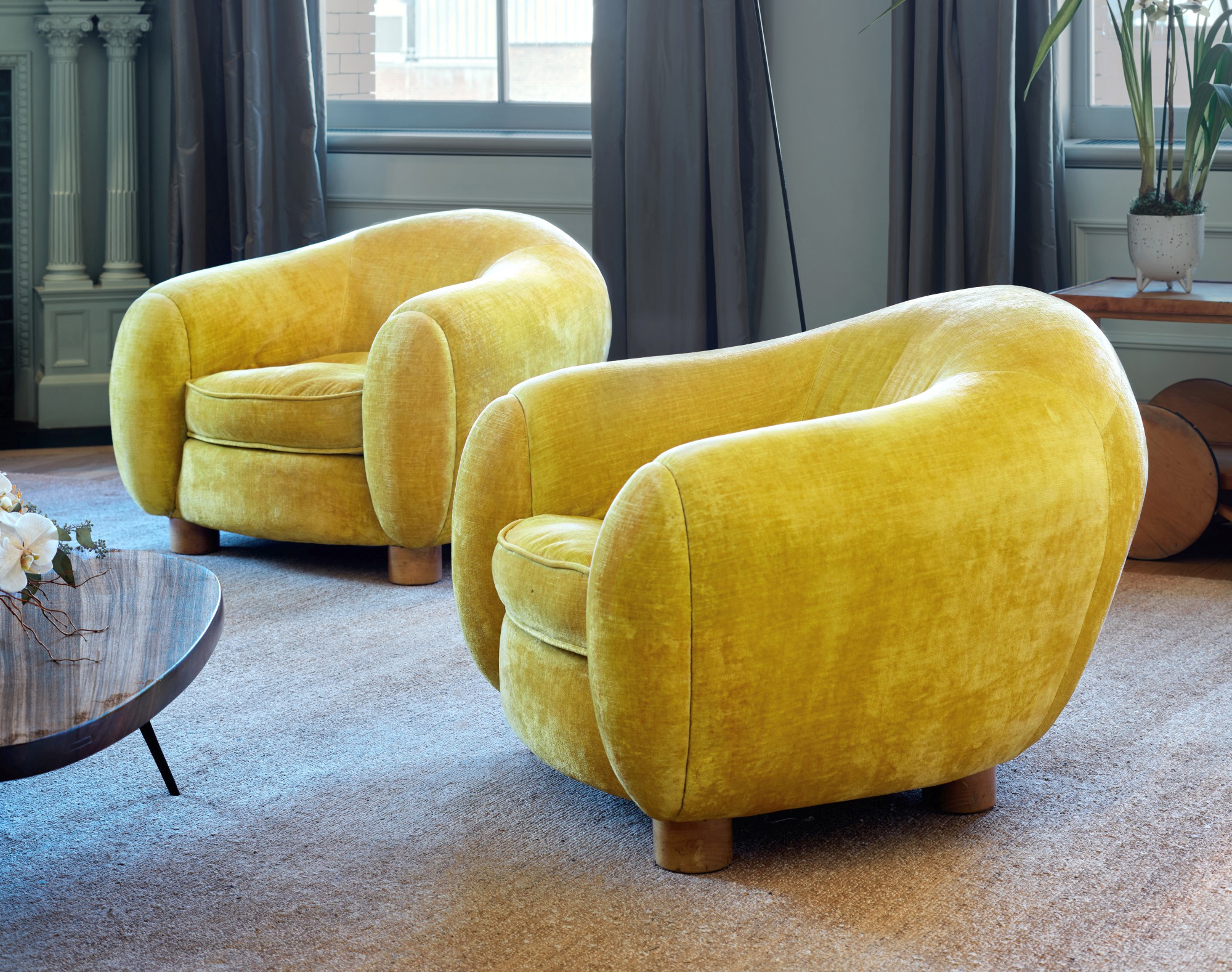
When a pair of Ours Polaire armchairs last appeared at auction, the room held its breath. The pieces, upholstered in their original ivory bouclé and resting on their characteristic gilded iron legs, sold well above estimate, a testament to the enduring magnetism of a designer who spent his career insisting that furniture should feel like an embrace. Jean Royère is no longer a rediscovered secret. He is, by any serious measure, one of the most coveted names in the decorative arts market, and the appetite for his work among collectors in Europe, the Americas, and the Gulf shows no signs of softening.
Jean Royère
Pair of "Ours Polaire" Armchairs
Royère was born in Paris in 1902, into a world where the applied arts were still considered a noble and serious pursuit. His early formation was shaped by the particular energy of interwar Paris, a city intoxicated by the possibilities of modernism yet deeply attached to its own traditions of luxury and craftsmanship. He trained initially in a commercial direction, but the pull of design proved irresistible. By the late 1930s he had established himself as a decorator of genuine originality, working at a moment when the dominant currents of functionalism and Bauhaus rationalism were beginning to feel, to certain sensibilities, a little cold.
Royère would spend his career offering an alternative. His artistic development through the 1940s and 1950s represents one of the most distinctive trajectories in postwar European design. Where his contemporaries were drawn toward the grid, the right angle, and the machine aesthetic, Royère moved in the opposite direction, toward the curve, the biomorphic form, and the frankly sensuous. He was deeply attentive to natural forms, to the way ice forms in a drift or a flame bends in still air, and these observations fed directly into his design vocabulary.
Jean Royère
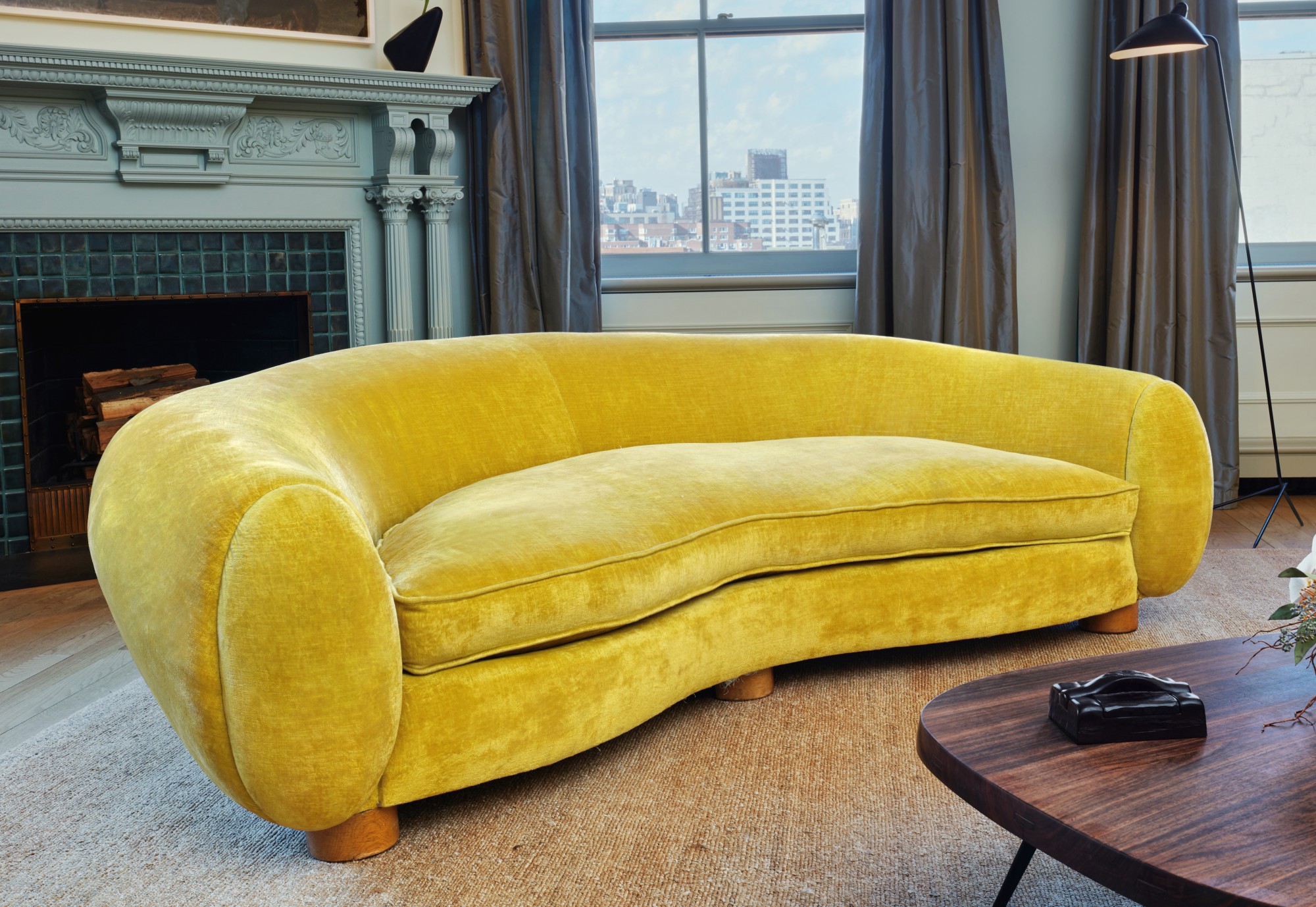
"Ours Polaire" Sofa
His furniture does not sit quietly in a room. It occupies space with confidence and warmth, inviting not just admiration but physical engagement. The Ours Polaire, or Polar Bear, sofa and its companion armchairs remain the works most associated with his name, and for good reason. Introduced in the late 1940s, the design takes its name from the deep, shaggy upholstery that was often used to cover its generous, rolling form.
The silhouette is at once monumental and inviting, with a continuous curve that wraps from back to arm without interruption, suggesting both sculpture and sanctuary. The Lollipop lamp, with its circular disc shade on a slender stem, carries the same spirit of playfulness elevated to high art. These are not pieces designed to recede into a background. They are the presiding presences of any interior fortunate enough to contain them.
Jean Royère
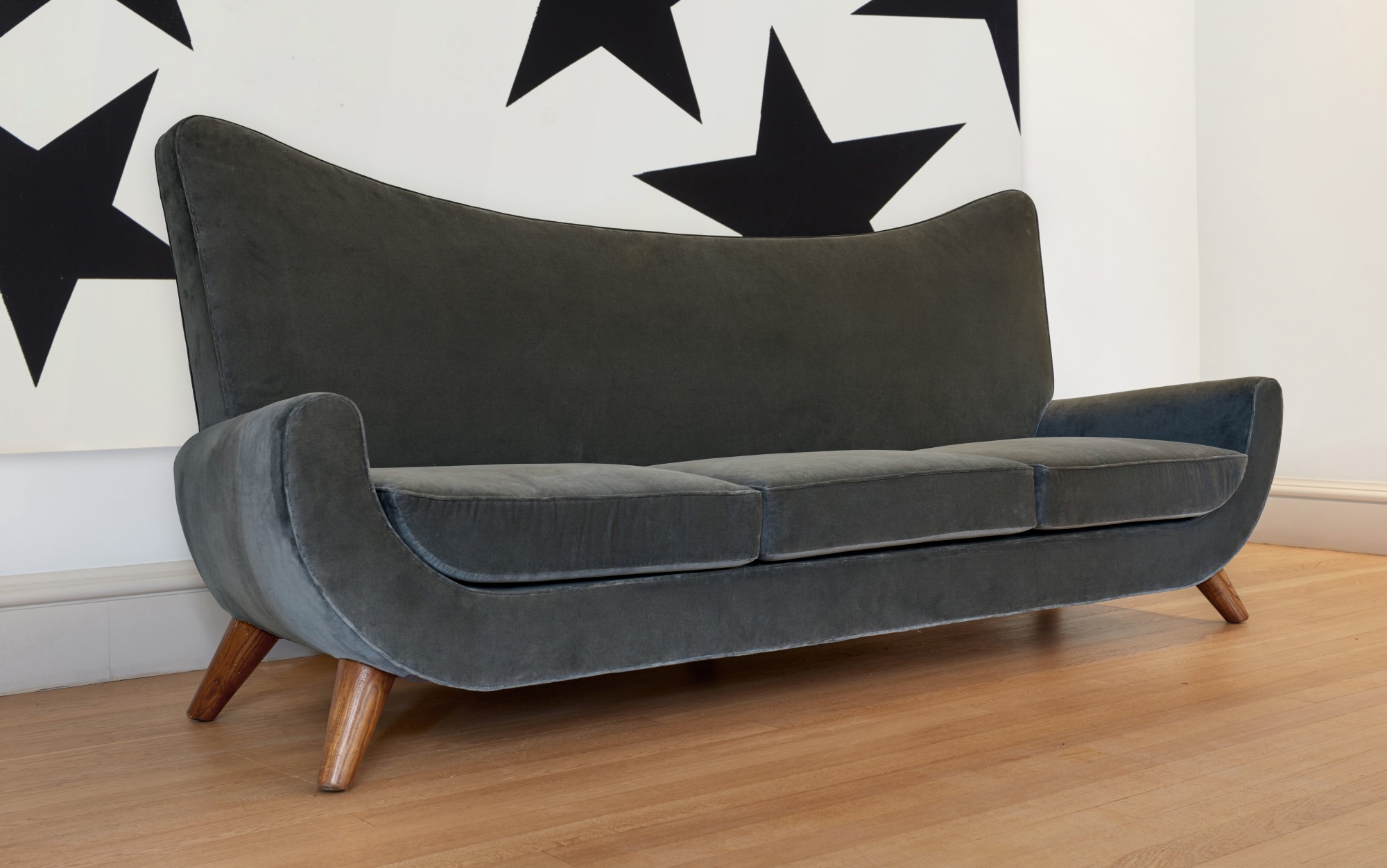
"Ambassador" Sofa
Royère worked extensively for private clients across France, the Middle East, and beyond, creating complete interior environments in which his furniture, lighting, mirrors, and decorative objects functioned as a unified language. His commissions in Egypt during the 1950s and 1960s are particularly celebrated, bringing his organic modernism to palaces and private residences in Cairo and beyond. The Ambassador sofa, another signature form, showcases his gift for scale and proportion, its long, low profile combining grandeur with approachability. Works such as the Yo Yo bar stools and his various suites of fauteuils demonstrate his range, from the whimsically domestic to the architecturally ambitious.
For collectors, Royère represents a compelling convergence of factors. His output was relatively limited by the standards of industrial design, given that his pieces were produced in small numbers for specific commissions and patrons. Authentic examples, particularly those in original upholstery or with documented provenance linking them to his key projects, command extraordinary premiums. The market matured significantly in the 1990s and 2000s as a generation of design collectors began to look seriously at postwar French decorative arts, and major auction houses in Paris and New York have since handled landmark Royère pieces.
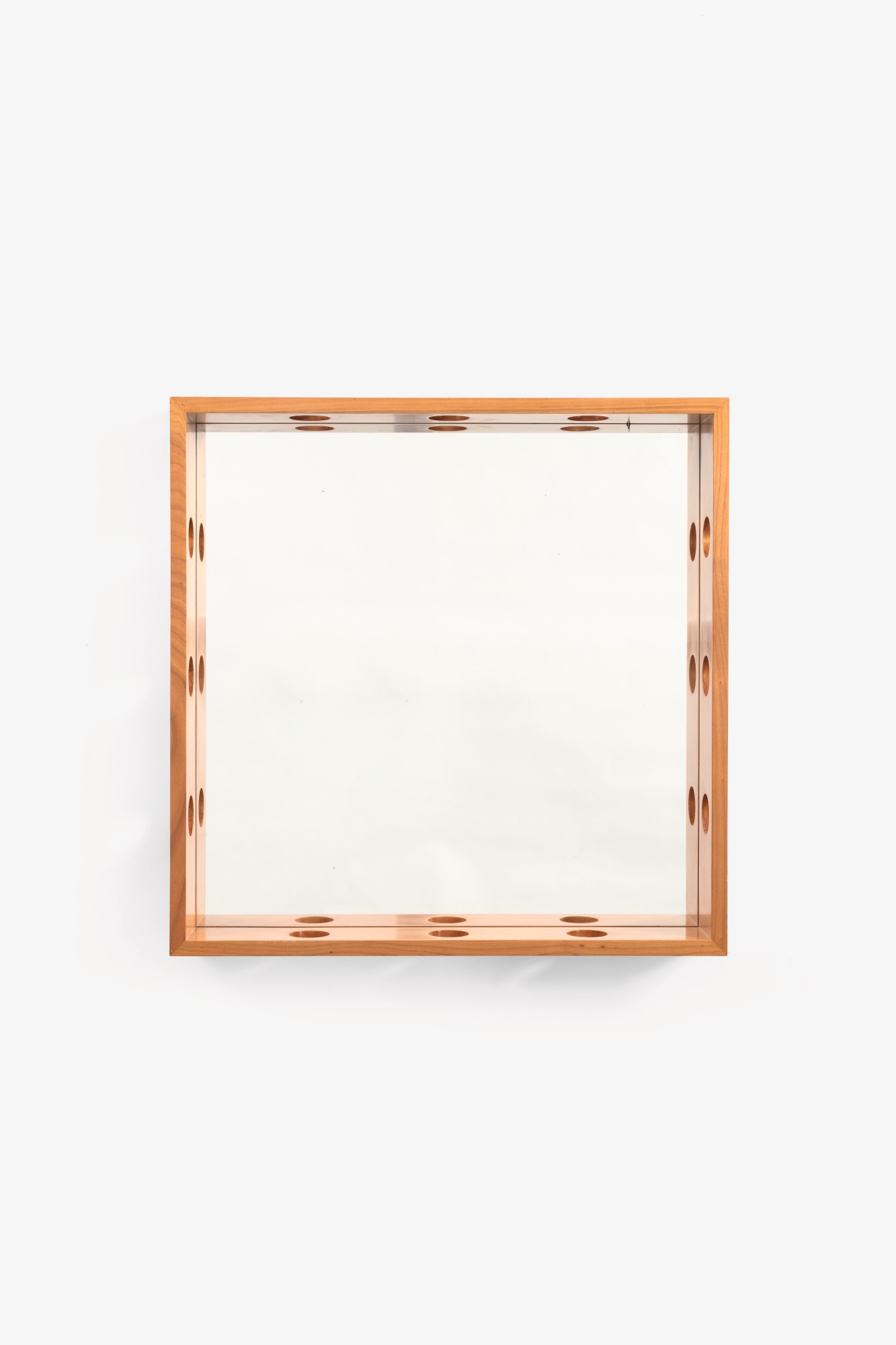
Jean Royère
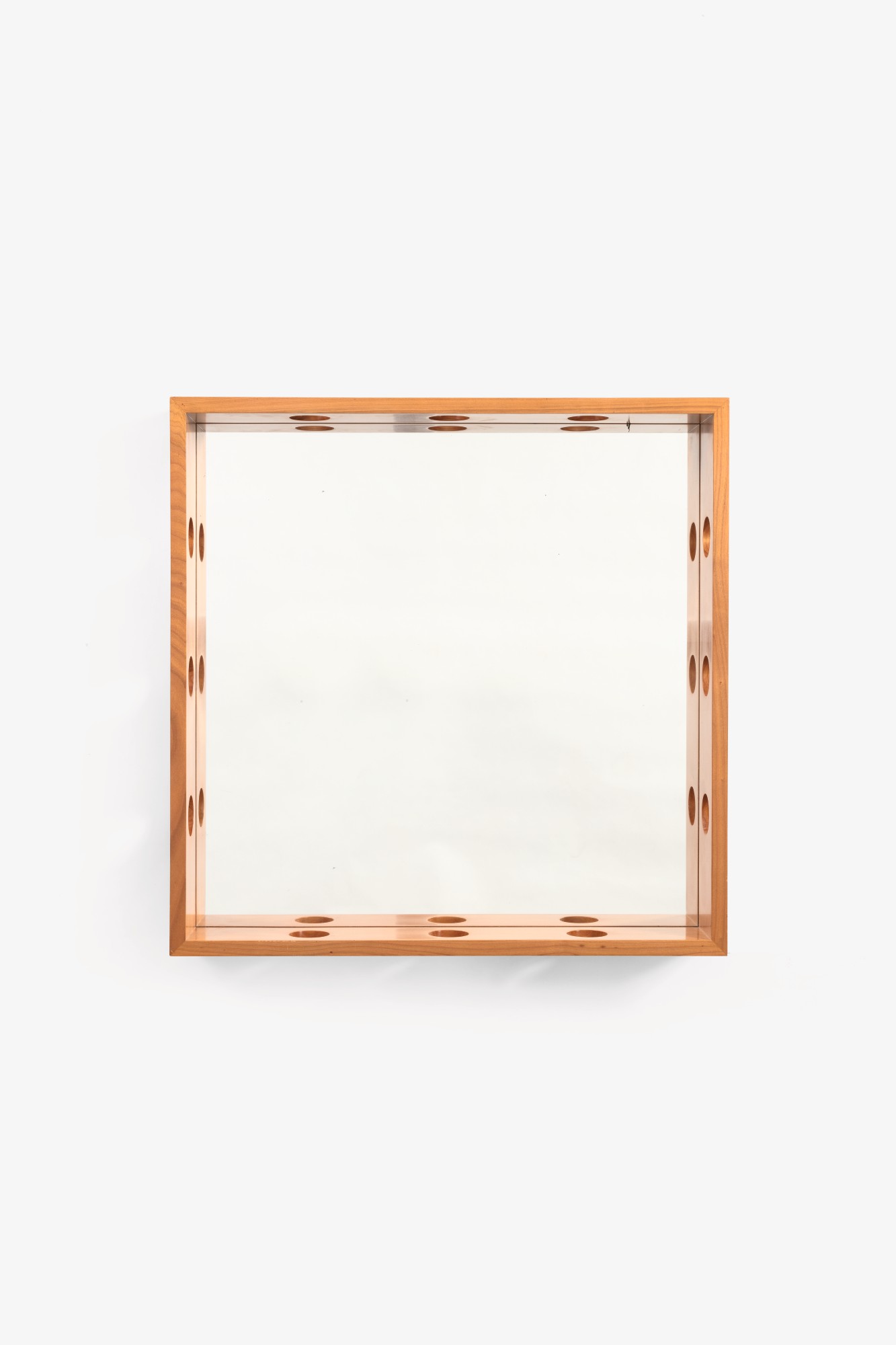
Miroir
What to look for: the quality of the original metalwork, particularly his characteristic gilded and wrought iron bases, the coherence of any suite of furniture, and provenance that connects a piece to his documented interiors. Royère belongs to a constellation of French designers who together define the high point of postwar decorative arts. His closest spiritual relative is perhaps Jacques Adnet, with whom he shared an appreciation for refined craftsmanship and the integration of furniture into architectural space. André Arbus and Gilbert Poillerat also orbit the same world, each bringing their own inflection to the French tradition of the interior as a total artwork.
Further afield, the organic biomorphism of Royère's work places him in conversation with American designers such as Vladimir Kagan, who was pursuing related ideas about comfort and sculptural form in New York at roughly the same time. Together these figures represent a humane and sensual counter to the austerity that dominated much postwar design thinking. The legacy of Jean Royère is, at its core, a legacy of generosity. His furniture proposes that beauty and comfort are not competing values, that a room should delight the eye and receive the body with equal attentiveness.
In an era when the design world is once again questioning the cold severity of minimalism, his work feels newly urgent and newly instructive. Museums including the Musée des Arts Décoratifs in Paris hold examples of his work, and gallery exhibitions in recent years have introduced his practice to younger generations of collectors who respond instinctively to his warmth. For those who encounter his pieces through The Collection, the experience is one of immediate recognition: here is a designer who understood, with rare clarity, what it means to live well.
Explore books about Jean Royère

Jean Royère: Mobilier et Décoration
Alastair Duncan
Jean Royère: 1902-1981
Mohsen Bryner
Jean Royère: Créateur de Formes Modernes
François Baudot
The Complete Works of Jean Royère
Henriette Vanier
Jean Royère: Sculpteur et Décorateur
Yves Plantin